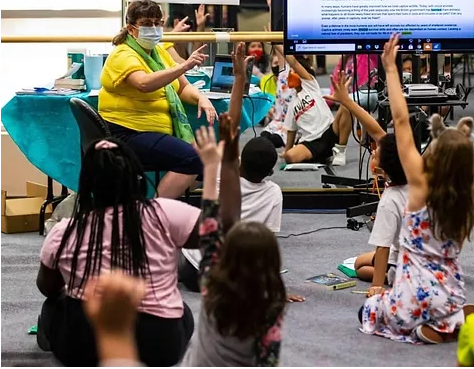
MicroschoolingNV, an initiative of Nevada Action for School Options, focuses on building two significant areas of microschooling: Partnership Microschooling, an agreement between employer, association, municipality or other host organization to create onsite, innovative microschools; and Independent Microschooling, typically smaller, one-campus locations in studios, homes, gyms, or other work spaces usually comprised of five to 14 children, often multiage.
Editor’s note: This commentary from Kerry McDonald, senior education fellow at the Foundation for Economic Education, appeared Friday on the foundation’s website.
When Elon Musk created a small school for his children and some of his SpaceX employees on the company’s California campus, he created a spark that could just now be catching on in other workplaces across the country.
In a 2015 interview about the school, the billionaire inventor said: “The regular schools weren’t doing the things that I thought should be done. So I thought, well, let’s see what we can do.”
A year earlier he had pulled his boys out of an elite private school in Los Angeles and launched Ad Astra, a project-based school with no grade levels, no mandatory classes, and an emergent curriculum. Now, more companies may be recognizing that offering an on-site, innovative school for employees’ children is an enticing workplace benefit.
Employer-based daycare and preschool programs have long been a fixture in many workplaces, helping employees to better balance their job and family life. Once children reach school-age, however, employers largely leave parents on their own.
That could be changing, fueled by the rising popularity of microschools and the ease with which they can be integrated into corporate and other organizational settings.
Microschools are modern twists on the one-room schoolhouse model, where a multi-age group of a dozen or so students learn together with an adult educator using a highly-personalized, often modular curriculum.
Some of the microschooling networks that began to gain a foothold pre-pandemic saw demand for their services skyrocket amidst school closures and related disruptions. One such network is MicroschoolingNV, an initiative through the non-profit organization, Nevada Action for School Options.
To continue reading, click here.
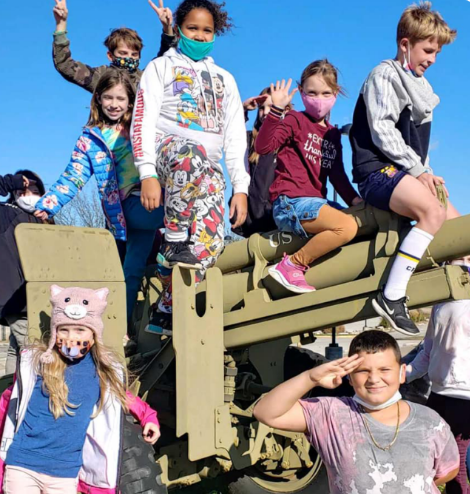
At the start of the pandemic, team members at The Discovery Center opted to serve the community in person rather than wait out COVID-19 at home. They rapidly built out classrooms and turned the center into a COVID-safe, licensed emergency childcare center capable of caring for hundreds of children a day – and then it became so much more.
Two years ago, as the coronavirus pandemic began shuttering childcare centers nationwide, a Springfield, Missouri, center that had been providing STEM education activities faced a critical decision.
Should it close, or should it attempt to fill the area’s childcare gap?
The team at The Discovery Center voted to stay open. Within 48 hours, it transitioned its 60,000-square-foot building into a support center for the children of the area’s essential workers. As the pandemic raged, the center served the educational needs of more than 1,500 students and provided more than 50,000 free meals and snacks.
“In five days, we went from a science center to licensed emergency childcare,” executive director Rob Blevins told OzarksFirst.com. “We took the kids right then and there. It was one of those moments where we felt it was our patriotic duty to take these kids and let health care workers do their job.”
Then The Discovery Center pivoted to become something more.
It poured its 20 years of experience in STEM education into creating hybrid learning support in a student-centered environment to benefit children who struggle in a traditional school setting. The daycare operation expanded to in-person learning pods and donated supervised space for students using the district schools’ remote instruction programs. A preschool was added, along with a science museum for K-8 students.
Combined, these efforts earned The Discovery Center $1 million, the grand prize in the inaugural STOP Awards, created through a partnership between Forbes and the Center for Education Reform. The awards program recognizes education innovators, providers and entrepreneurs who continued to support underserved communities during the pandemic.
The Discovery Center’s efforts aligned with the very essence of the STOP Awards: Sustainable, Transformational, Outstanding, and Permissionless – four words that form the program’s acronym. Four finalists aligned with each of the four pillars.
Louisiana Key Academy in Baton Rouge was recognized for providing a sustainable education during the pandemic to its 441 students with dyslexia. The public charter school uses evidence-based instruction to serve its population, 70% of which are minorities and 60% of which are economically disadvantaged.
Dallas Education Foundation shone in the Transformational category, fighting the impact of COVID with 21st century technology and creating a metaverse of innovations and opportunities for the district’s 145,000 students.
CARE Elementary School in Miami was recognized in the Outstanding category. The no-cost private school reopened quickly to in-person learning, with state-of-the-art technology powering dozens of learning pods.
The entrepreneurial start-up Rock by Rock, developed in partnership with educators nationwide, was the finalist in the Permissionless category. Rock by Rock provided thousands of underserved families whose children lacked effective education during COVID affordable, relevant, and engaging materials in a homeschool environment that made learning come alive.
All four finalists plan to use their award money to continue pushing the envelope, moving forward in even more inventive ways to provide additional education choices for families. But the grand prize winner, The Discovery Center, has especially big plans.
Among them: expanding current offerings to become a full-time school for hundreds of students with the addition of a STEM-themed playground and then scaling and disseminating that model to its network in more than 27 rural counties over 30 states. The center also hopes to expand classes to high school freshmen and sophomores.
“Educators, whether they’re homeschool, public school, charter school, private school or pod school will be able to provide the type of knowledge we want to provide our parents as far as how their kids are attaining grade level in real-time,” executive director Blevins said. “When you get a grade card, that’s a backward look of how things went this semester. We want to provide a real-time look so you can look forward and say, ‘Are we on target to hit our grade-level standards this year?”
Forbes and the Center for Education Reform recently announced a second round of STOP Awards, which will offer more than $10 million in grants.
“In the wake of COVID-19, educational declines and mental health challenges, the 2022 STOP Awards are dedicated to celebrating and expanding the education providers who are going above and beyond for their students,” said Forbes chief content officer and editor Randall Lane. “We’re proud to continue our partnership with the Center for Education Reform and help launch the STOP Foundation 4 Education to honor education innovators who are creating new pathways for underserved students across the country.”
Center for Education Reform CEO founder and CEO Jeanne Allen knows that overcoming education deficiencies wrought by the pandemic will continue to be a huge undertaking.
“While COVID is not nearly the threat it once was, challenges remain,” Allen said. “In 2021, we uncovered hundreds of pioneering education providers who were defying the odds and serving as a beacon for what education can and should look like, and I can’t wait to promote the efforts of more outstanding leaders in 2022.”
Applications, limited to U.S.-based individuals and groups who serve K-12 students, are open through July 15. For more information about the STOP Award, how to apply, and the education providers who made last year’s list, click here.
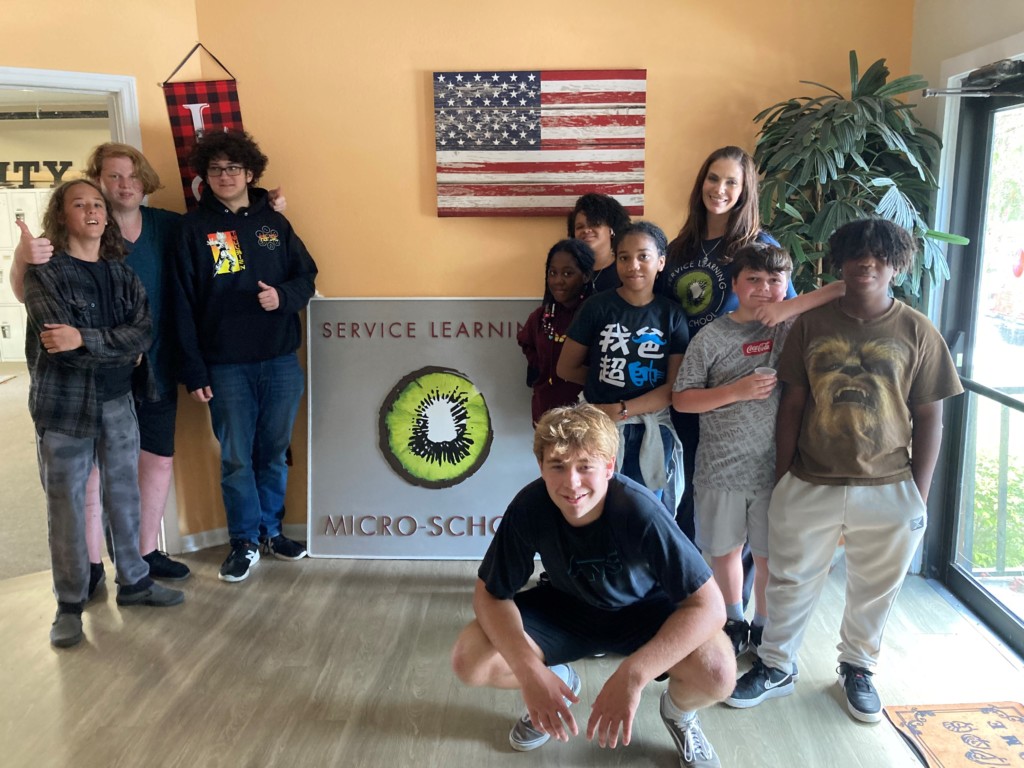
Service Learning Micro-school is a private K-12 school with a foundation firmly rooted in service to humanity, steered by goals such as the elimination of prejudice, economic justice, equality of men and women, balance of science and religion, individual investigation of the truth, oneness of humanity and unity in diversity.
CLEARWATER, Fla. – Before all the buzz about learning pods and micro-schools, some folks were already creating learning pods and micro-schools.
Jaime Manfra went down this path 10 years ago.
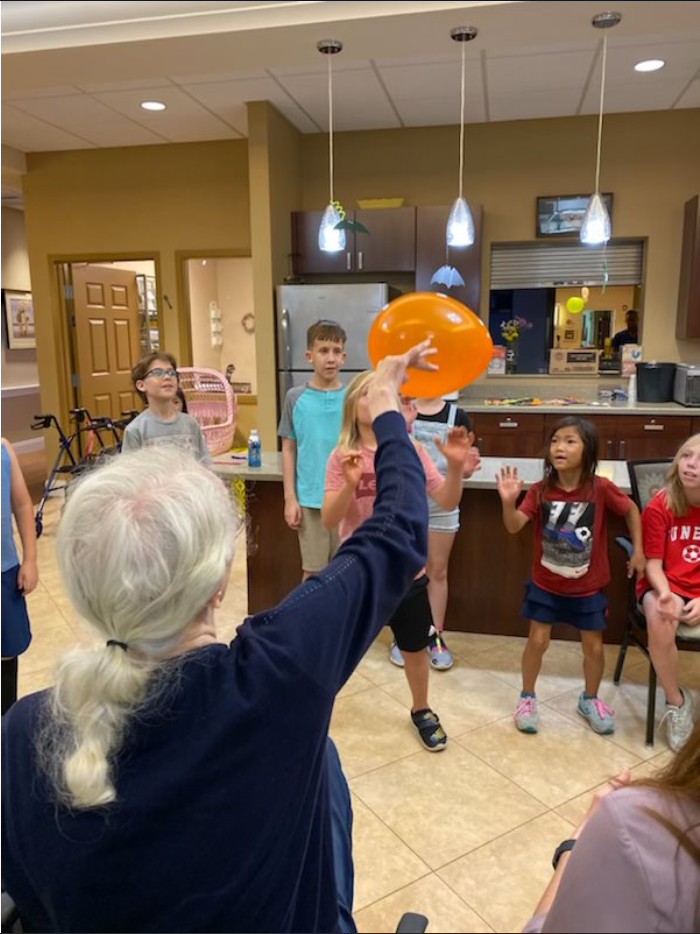
Her Service Learning Micro-school (SLS) is all about flexibility, diversity, community service. Students here spend a lot of time helping others, whether it’s making sandwiches for the homeless, volunteering at a horse rescue, or playing balloon volleyball with residents at the assisted living facility next door.
“Service is love in action, it’s virtue in action,” Manfra said. Students “need concrete ways of applying kindness.”
SLS isn’t for everybody. But with education choice, it shows what’s possible for everybody. Options that can be created and customized. For and by families and educators. To address whatever needs they feel are paramount.
To be sure, hurdles remain. SLS, for example, wrestled for years with finding a good facility. But policies to maximize flexibility for families and educators continue to get traction.
As they do, more problem-solvers like Manfra will find a way.
***
SLS began as a pod in 2012.
Manfra’s son Ajay turned out to be too much of a square peg for public school. So Manfra, who once taught classes in natural medicine, began homeschooling Ajay & a handful of other students.
Teacher-created activities demonstrate the inspiration a teacher feels, sparked by the students they work with. These adaptable lessons are balanced with the Edgenuity online school platform, which allows for measurable progress available to parents. Homework is optional and students are encouraged to spend after school hours with their families and friends, pursuing sports or other interests.
Word spread. The pod grew.
Now SLS has 44 students in K-12, most in middle & high.
All but two use school choice scholarships.
About 75 percent attended public schools. Many left because of peer pressure and bullying. Others left because of an academic environment their parents described as stifling.
At SLS, they found smaller classes, a competency-based approach, and far less pressure.
“I don’t see my children suffering anymore,” said Soji Jacobs, who enrolled her three children in SLS last fall. “They’re no longer ruled by grades, like it was decided who you were in life based on a grade,” continued Jacobs, a floral designer and former private school teacher. “They feel at home. They’re accepted for who they are. They’re genuinely loved.”
Barbara Warne enrolled her daughter Elizabeth into SLS six years ago, after six years at a highly touted magnet school. The school has a long waiting list, but for Elizabeth, who has ADHD, it never worked.
“I was brainwashed into thinking that this was the best school choice,” said Warne, a stay-at-home mom whose husband is an Army veteran and airplane mechanic. “Every day, they made her feel like a failure. It started to get to her mentally.”
Warne said she was sold on SLS as soon as she and Elizabeth attended an open house. She watched her daughter interact with Manfra and other students and immediately “start coming out of her shell.”
“It was unfolding in front of me,” Warne said. “I was getting my kid back.”
***
For Manfra, finding a good facility was the biggest hurdle.
Facilities are an issue for many on the education frontier. Official definitions of “school” can be a challenge for smaller, harder-to-define operations. There’s a hodge podge of zoning rules and building codes regulating “schools.”
Facility one for the pod that became SLS was in a house. But the pod outgrew it.
Facility two was in a community rec center. But it wasn’t ideal. School supplies and equipment had to be moved to and from the facility every day.
Facility three was another house. At this point, the pod had nine or 10 students. But the pod couldn’t stay because the house did not meet building codes for “educational occupancy.” Getting the pod up to code would have cost at least $50,000, Manfra said. And there was still the possibility local officials would not approve a zoning change and building use exemption.
Facility four was in a church. But if the pod wanted to become a private school – so it could accept school choice scholarships and be accessible to more families – the church would need upgrades.
Facility five was in another community rec center. It did meet requirements for a private school, so SLS could now accept scholarships. But when the center got a grant to renovate, it didn’t renew the lease.
Facility six is SLS’s current home. It’s a 4,600-square-foot commercial building that once housed a day care and construction company. Manfra had to be persistent to get a building use exemption, but in the end, SLS got what it needed.
***
SLS’s motto is “unity in diversity.”
Half the students are students of color. Nearly all are from working-class families.
A fifth are from military families.
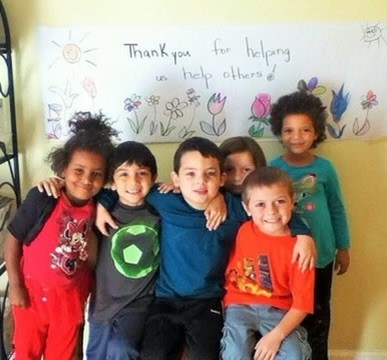
Although the school encourages students to choose their battles, staff do not seek to prevent conflict or difference of opinion, seeing it as an opportunity for development, and assist with consultation when necessary.
They are Christian, Muslim, atheist, agnostic. Manfra & her two kids are Baha’i.
School choice enabled SLS to be diverse and different.
“Without the scholarships, only one type of family would be here,” Manfra said. “School choice scholarships make it so all families can be here.”
SLS occasionally holds “diversity BBQs” for its families.
Parents and students debate hot topics. Race. Religion. Politics.
The students “need to know that someone that doesn’t believe the same as you, or look the same as you, does not make them a bad person,” Warne said.
“I want my kids to hear all sides,” continued Warne, a registered Republican. People may disagree on some issues but “we’re trying to get somewhere, together.”
Things can heat up at the BBQs. But there is mutual respect and friendship.
The BBQs ends in hugs.
***
SLS is now seeking to help other micro-schools grow – and avoid the mistakes it made.
This year Manfra helped a former private school teacher in Tampa start her own micro-school. It’s a dual language school.
But there’s no end to the variety teachers can create, Manfra said.
“Give them their space, give them their freedom,” she said, “and they will show you what they can do.”
With education choice in the mix, the same is increasingly true for anybody with a good idea.
Manfra said if she can do it, anybody can.
“I’m not special,” she said. “There’s a lot of me’s.”
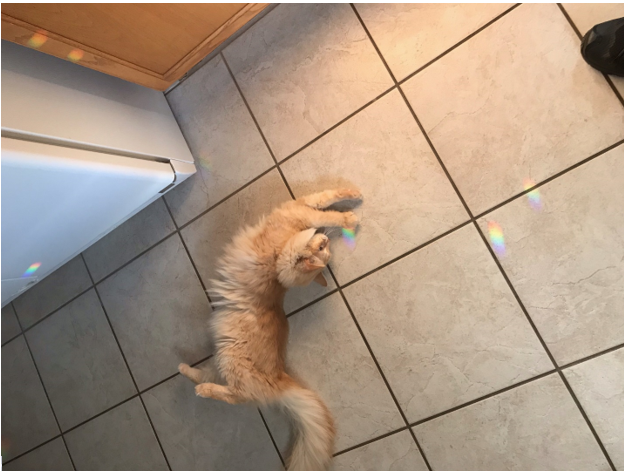 In the morning, when the sun hits our kitchen window just right, a dangling crystal refracts light, sending Serafina (the much-adored Ladner family cat, pictured above) on the “shiny hunt.”
Serafina doesn’t understand the properties of light, but she never seems to tire of hunting shiny things. They are shiny and they need to be caught. Tomorrow morning, Serafina will be back at it again, as if she’s convinced next time, the shiny things won’t get away!
Watching Serafina pounce at the ever-elusive shiny things reminded me of K-12 education reform.
If Serafina understood light, she probably could save her energy for chasing more tangible prey. Alas, the American collective understanding of how to produce a high-quality education system seems little better than Serafina’s understanding of light.
Like Serafina, we are eager to chase the shiny. Humans are more intelligent than cats, but that does not mean we can collectively come up with a solid strategy for improving education and stick to it.
The Texas public high school I graduated from had open classrooms. These supposed student-centered learning spaces used to be (and may yet again become) a shiny. As a middle schooler, I took one of the earliest standardized tests based on state academic standards – another shiny. Also while a student, eccentric Texas billionaire Ross Perot inspired a “no pass, no play” fad.
Strangely enough, the problems with the Texas K-12 system persisted.
Some shiny objects can be relatively harmless, others counterproductive. Well before I was born, the country began chasing the shiny object of school district consolidation. That didn’t work out as hoped.
Unions pushed for class size reduction. This shiny very conveniently required a large increase in the number of potential union members who were hired but did not deliver the hoped-for academic improvement.
Generation after generation arrives eager to retry failed strategies. We know school board takeovers by the trail of dead reform efforts, but next time it won’t get away!
American politician, diplomat, and sociologist Daniel Patrick Moynihan provided what I regard as the most elegant summary of the theory behind the education freedom movement:
Diversity. Pluralism. Variety. These are values, too, and perhaps nowhere more valuable than in the experiences that our children have in their early years, when their values and attitudes are formed, their minds awakened, and their friendships formed. We cherish these values, and I do not believe it excessive to ask that that they be embodied in our national policies for American education.
The number of American communities with meaningful diversity in K-12 schooling options continues to grow with homeschooling, micro-schools, charter schools and private choice programs. The number of states focused on advancing this strategy rather than constantly following the shiny lights remains small, but also continues to grow.
The K-12 status-quo was unsustainable before the COVID-19 pandemic. Two years from now, federal COVID dollars will have washed out of the K-12 system. It seems likely the Federal Reserve will continue to struggle to put the inflation genie back in the bottle. Meanwhile, more than 7 million additional Baby Boomers will have reached the age of 65.
American schools couldn’t hire enough bus drivers and special education aids when they were awash in federal dollars. The second half of the 2020s will test these school systems’ ability to become anti-fragile.
Diversity, pluralism, and variety are dependent upon freedom for educators to try new school models. Rather than chasing the shiny, the successes and failures of school systems will require cumulative knowledge and a path to improvement, features noticeably absent in centralized shiny theories.
New school model development is underway. The question is: To what degree will our policies accelerate or slow the pace, and to what degree will the public be allowed to participate?
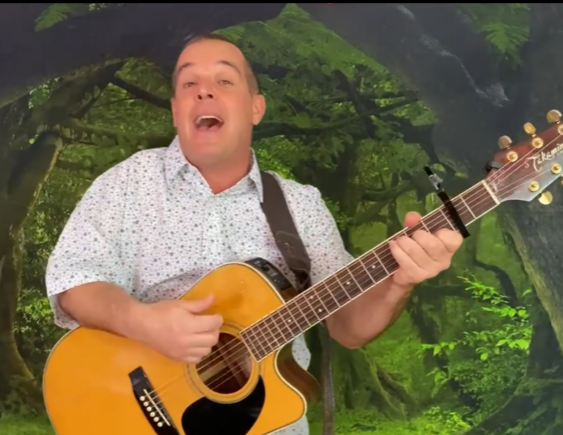 On this episode, reimaginED Senior Writer Lisa Buie talks with Michael Bonick, an elementary teacher and guitar player at Florida Virtual School, who engages students by incorporating music in core academic subjects.
A teacher for 22 years, Bonick’s interest in music blossomed when his father suggested that he play the saxophone to address an injury that prevented him from moving his right arm. Bonick, who was 7 at the time, quickly lost interest in the sax but later taught himself how to play the guitar because his condition created a challenge, and he thought his success would inspire students someday.
Bonick began his academic career as a pre-school teacher, transitioned to teaching elementary students, and joined Florida Virtual School in 2020 when the coronavirus pandemic hit. Despite campus re-openings, Bonick never looked back.
He always shows up for his online classes with his guitar and composes ditties on the spot that incorporate students’ names with the concepts he’s teaching.
“The first day I taught at the preschool, and we had lunch and I walked out, and I thought, ‘Okay are you going to walk back into that classroom?’ It was one of those defining moments … I said, ‘Go back. It’ll be the best decision you ever made.’ And it was. It has been for 22 years.”
EPISODE DETAILS:
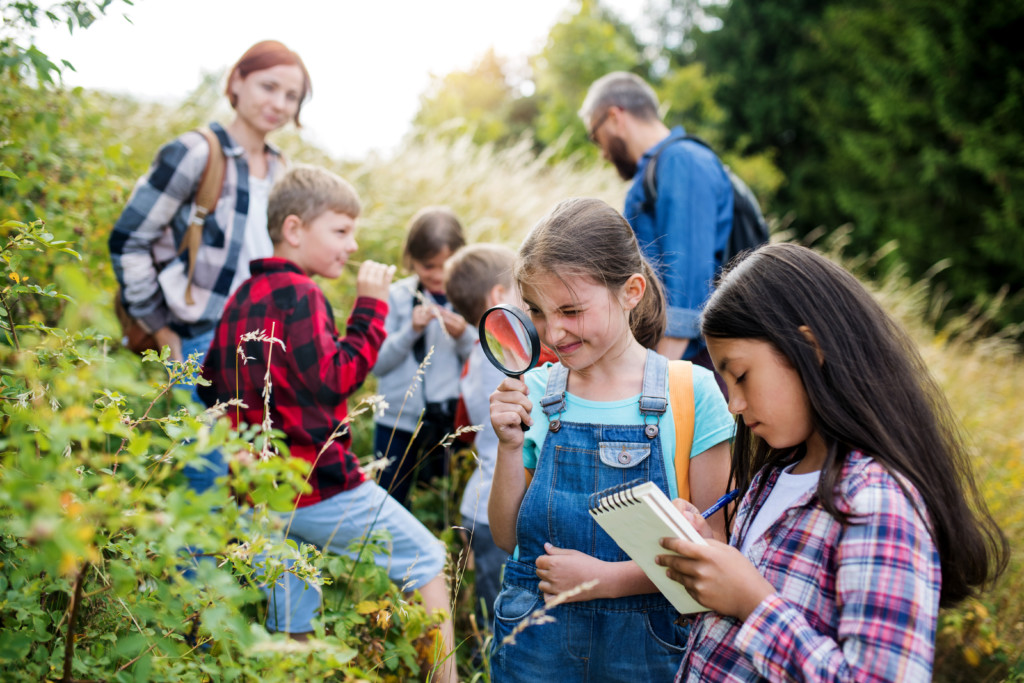 Editor’s note: This article from Kerry McDonald, senior education fellow at the Foundation for Economic Education, appeared recently on the foundation’s website.
They’re not exactly schools, but they’re not homeschools either. They have elements of structured curriculum and institutional learning, while offering maximum educational freedom and flexibility.
They provide a consistent, off-site community of teachers and learners, and prioritize abundant time at home with family. They are not cheap but they are also not exorbitant, with annual tuition costs typically half that of traditional private schools.
Hybrid schools are, in the words of Kennesaw State University Professor Eric Wearne, the “best of both worlds,” drawing out the top elements of both schooling and homeschooling while not being tied too tightly to either learning model. Wearne studies hybrid schools and is the director of the National Hybrid Schools Project, which seeks to better understand this educational approach and why it’s been gaining popularity in recent years.
Hybrid schools are as diverse as the people who launch them and the communities they serve. Some of these schools think of themselves as a group of homeschoolers that comes together in a physical building for formal learning several times a week, while other hybrid schools think of themselves as formal private schools that meet on a part-time basis.
The ability of these schools to emerge in varied and spontaneous ways to meet local learning needs, and to define their communities however they see fit, exemplifies the promise of free-market education solutions and the process of voluntary exchange.
The unique structure of hybrid schools makes it easier for entrepreneurial parents and educators to open one, and often enables them to avoid government regulation and oversight that can limit innovation and experimentation.
To continue reading, click here.
The Classical Academy of Sarasota, which has experienced a growth surge in recent years, has become more accessible to families of modest means thanks to Florida’s private school choice programs.
Editor’s note: You can read about classical schools in Florida here, here and here.
There is a lot of unhappiness these days. A recent Monmouth poll revealed that 73% of Americans are unhappy with the direction of our country. Teachers are especially grumpy, with a survey reporting that 54% of them are seriously considering leaving teaching.
Clearly, that survey didn’t include many teachers at classical schools.
I just returned from the National Symposium for Classical Education 2022, in Phoenix. The annual gathering included 495 teachers, administrators, supporters, and scholars of the classical model of K-12 schooling. Wow, are they happy!
Why shouldn’t they be? Classical education teachers are doing what they love to do: elucidating the messages of classical works from around the world to eager young minds. Not only that, but classical education is a fast-growing model of for K-12 education in the U.S., with dozens of new classical schools opening every year.
Classical education is an approach to nurturing the whole person: mind, body, heart and soul. As the Institute for Classical Education website puts it, “Through the study of languages, the sciences, history, mathematics, literature, and fine arts, classical education helps students recover a sense of wonder in their search for knowledge, alongside a deeper purpose—namely, the pursuit of wisdom and development of virtue.”
One imagines a possible motto for classical education: “Nurturing students for over 2,000 years.”
The three primary objects of classical education are truth, goodness, and the appreciation of beauty. That sure sounds like a prescription for happiness.
Classical education draws heavily from the Western canon, including classic works from the Greeks, Romans, Jews, and a certain English bard who wrote some cool plays. Most classical curricula, however, also include a solid dose of non-Western classics from Eastern societies and both African and African-American sources.
The theme of this year’s Symposium was “For the Love of Poiesis: Teaching the Fine Arts.” The goal was to deepen attendee’s appreciation for, and skill at, exposing students to beauty through artistic expression.
Frederick Turner of the University of Texas at Dallas kicked the conference off in grand style with a keynote speech on “Why Beauty Matters.” Turner led us through material on the fine arts, quantum physics, psychology and biology in a veritable tour de force. One vital way in which beauty matters, Turner explained, is that it drives us to reproduce. Beauty sparks desire.
One can imagine a conversation in the Turner household: “Daddy, where do babies come from?” “Well Joey, they come from a person seeing a beautiful person, thus sparking their brain to produce pheromones, leading to …”
Anika Prather of Howard University delivered a second stirring keynote address on “The Black Tradition of Artistic Expression of Classical Literature.” She shared her personal story of how exposure to classical works sparked her love of learning and gave her life much needed direction.
The most inspiring aspect of classical books and art, according to Prather, is that they address universal truths about human nature. Classics unify. They don’t divide.
Even Mark Bauerlein was an instrument of joy. An Emeritus Professor of English at Emory University and the author of dour books including The Dumbest Generation and The Dumbest Generation Grows Up, Bauerlein led a session titled, “Yes, the Arts Have Standards: Very High Ones.” His message was that educators and policymakers should not shy away from demanding rigor in fine arts classes.
Bauerlein was the person who inspired me to write this post. During a break he said, “Look around you. These people are so happy.”
A session on music appreciation concluded with the participants filing out of the conference room, forming an impromptu choir, and serenading the delighted souls who were lunching in the convention center food court. Well, that’s not something you see every day!
Christine Perrin of Messiah University presented a delightful seminar on “Tolkien the Poet and the Education of the Poetic Imagination.” She explained how the 60 poems in the Lord of the Rings trilogy – including pieces spoken by central characters such as Bilbo and Frodo Baggins, Samwise Gamgee, and Tom Bombadil – advance the narrative of the story and draw emotional responses from the reader. We all are called to purposeful adventures in our life, and poetry helps us to appreciate and express the thoughts and emotions wrapped up in our quests.
My University of Arkansas colleague, Albert Cheng, Director of the Classical Education Research Lab, presented the results of his empirical study of the effect of integrating poetry into areas of the curriculum outside of the fine arts. In his cleverly designed experimental analysis, Cheng finds that students understand more about birds, the weather, or the moon by reading a poem about them than by reading a dry analytic description, of the same length, about them.
Good poetry engages, informs, and moves the reader. Science proves it!
I presented on the founding of two new classical schools in Northwest Arkansas, Anthem Classical Academy and Ozark Catholic Academy. I began my talk with a twist on the famous Harvard Law School orientation quip, “Look to your left, look to your right, one of you won’t be here next year.” I instructed my audience of classical teachers and administrators, “Look to your left, look to your right, one of you will found a new classical school next year.”
The main point of my talk was that founding a new school is challenging, but every obstacle can be overcome by people committed to delivering a classical education to eager students. The mission propels one forward!
We all seek joy in our work, whenever and wherever we can find it. Classical educators seem to find joy often and everywhere. They are The Happiest People on Earth.
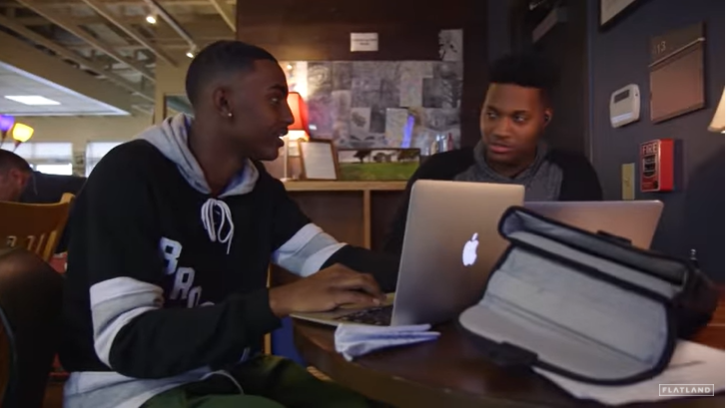
At Liberty Academy High School, learning is project and competency based with no traditional grades and no traditional seven-period day. Students are encouraged to work in small groups and interact frequently with teachers.
Editor’s note: You can watch videos of how Liberty Academy High School is rethinking education here and here.
A virtual tour of Liberty Academy High School in Liberty, Missouri, a suburb with a population of 30,167, is as notable for what you don’t see as much as for what is visible.
Instead of traditional classrooms crammed with desks, you’ll see multipurpose spaces with comfy chairs. The walls and ceilings are decorated with student artwork. Teachers collaborate with groups of students on projects and chat about goals for the day.
Rather than responding to a bell schedule, students move freely from area to area and are encouraged to come and go from campus as they practice the skills they’re learning in real life settings, thanks to agreements with more than 100 community business partners.
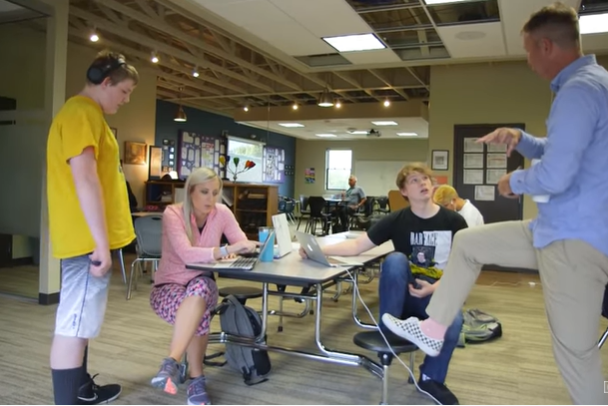
Social studies teacher Art Smith, right, believes strongly in each student's ability to pursue projects that interest them as a way to keep them focused on school.
Social studies teacher Art Smith, a 24-year veteran of Liberty Public Schools and a self-described “crazy guy,” redesigned the 26-year-old alternative high school’s format in 2016 with his colleagues so it would be more in line with what he calls “schools of the future.”
“We’re probably in a period of history where technology is allowing us to rethink schools,” said Smith, who doesn’t shy away from the title “education disruptor.”
During his career, Smith has tried almost every possible way to help kids derive meaning from what they’re learning, from carving canoes to building Conestoga wagons to staging archeological digs. He is among a rapidly expanding breed of educators who believe a break with the established educational model is necessary to improve the existing one.
Though Liberty Academy is a traditional district school, it looks and feels more like a public charter or private school with a model that draws inspiration from the unschooling movement of the 1960s, which encouraged exploration of activities initiated by students themselves. The basic idea is that the more personal learning is, the more meaningful it will be.
Here’s how it works. When students enter the program, they are allowed four weeks to determine their interests and long-term goals. Learning is then organized in six-week bursts of interest-based learning, which often includes participation with one of the school’s community partners in what school officials describe as “a reverse internship.”
Among the partners: a miniature horse farm, a greenhouse operation, cosmetology schools, a homeless shelter, and a host of nonprofit organizations. The aim is to allow students to explore careers, help others, and solve problems.
Students set goals based on three or four success skills during each segment. Teachers, who are referred to as advisers, help students document their growth each week and link their projects to standard and class credits.
At the end of each project, students give a presentation to a panel of at least three adults. At the end of each semester, they write an essay and display artifacts for a school and community showcase.
Learning is project based and competency based; there are no traditional grades and no traditional seven-period day. For staff members, it all adds up to an environment that looks more like life than school.
“Until you come and visit, it’s really hard to describe,” said Summer Kelly, Liberty Schools’ 2020-21 Teacher of the Year. (You can learn more about her here.) “I’m obviously a teacher, but I do way more than just teaching.”
A former middle school math teacher, Kelly left her traditional teaching job in the district three years ago to join the faculty at the alternative high school, which serves about 100 at-risk students.
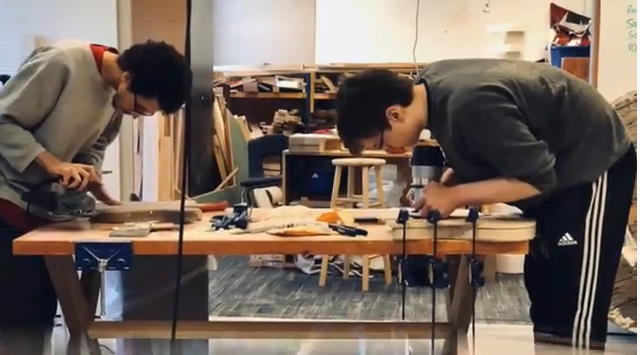
Among the project-based activities available to students at Liberty Academy High is guitar building, which teaches math and engineering skills.
A typical day starts with physical activity, with a yoga class offered weekly. Afterward, students gather for a “circle meeting” and check in with their advisers and learn about trips available that day. Students then go out in small groups to participate with advisers.
“Nothing about our building is traditional in any way, and I think that’s where I needed the change,” Kelly said. “It gave me new motivation.”
Smith, the social studies teacher who helped redesign the school, said he came to a conclusion early in his career that school needed to look different to be effective, especially for students who don’t like going to school.
“They’re forced to be there, and they’re compliant and sitting in their classroom and sitting in their desks, but a lot of kids weren’t interested in anything happening on a day-to-day perspective, and that bothered me,” he said. “If they don’t love it and don’t feel intrinsically driven to be a part of it, then we should try to build a framework that does that, because no human wants to be a part of something that they don’t have ownership of and empowerment in.”
The school, which has the support of the district and school board, has won several awards and was named a grand prize winner in the 2020 Magna Awards sponsored by the National Association of School Boards. Other nearby districts have taken notice and are seeking to incorporate parts of Liberty Academy's model.
Said Smith: “We all feel blessed to be in this position at this time and to continue pushing the envelope of what school can be for kids.”
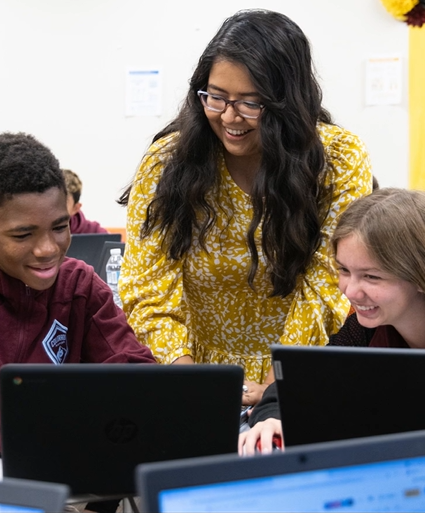
ASU Prep Academy and ASU Prep Digital serves 3,500 students in kindergarten through 12th grade through in-person learning at four Arizona campuses and supports 7,500 K-12 students worldwide through full-time digital education.
Editor’s note: You can listen to Step Up For Students president Doug Tuthill interviewing Julie Young, founder and former CEO of Florida Virtual School who is now deeply engaged with digital education at Arizona State University, here and here.
The nation’s leading education disruptors – proactive individuals who are thinking beyond traditional boundaries – have rallied in recent months around a universal prediction: Families in a post-pandemic world will increasingly be looking for freedom from a once-size-fits-all, single delivery method of education, along with a greater emphasis on blended education, technology, and digital citizenship.
Teachers, many who learned remote instruction on the fly at the start of the pandemic, have taken notice and are upgrading their skills to become more agile as hybrid models become mainstream.
“The choice movement has forced schools to up their game because parents now have so many choices,” said Julie Young, vice president of education outreach and student services for Arizona State University and managing director of ASU Prep Academy and ASU Prep Digital. “If schools don’t meet those students where they are, they have so many options to go elsewhere.”
Young and three members of her staff spoke with reimaginED about their organization’s progress during the past year and discussed emerging trends as the nation continues its transition from pandemic crisis to normalcy.
Bottom line, “normalcy” will look nothing like 2019. Families and educators both are demanding options, which ASU has provided plenty of during the past year. Among ASU’s accomplishments, itemized in a recent video:
Jill Rogier, the organization’s digital head of school, said retention numbers are top of mind for ASU leaders.
“We’re really pleased a lot of parents came to us during the pandemic, and they’re staying or they’re leaving and then coming back,” Rogier said.
The digital school, which began in 2017 as a high school, last year added grades K through 8 in response to pandemic demand. The on-campus and online schools also partner with Arizona State University to offer early college courses.
Additionally, ASU is partnering with parents who want to continue with learning pods, a trend that came on the scene at the height of the pandemic when many campuses across the nation shut down. Rogier received a lot of requests for pods, mainly from parents of students in lower grades, so ASU worked to facilitate a pilot.
“They want that sense of community,” she said. “The parents want to collaborate and get their kids together. It’s really becoming more than just a pilot.”
Hybrid services, where students spend a couple of days each week on campus and a couple of days online, also remain popular, a trend that is expected to continue.
“I think parents don’t want their kids home all the time, but they like them home sometimes,” said Amy McGrath, chief operating officer for ASU Prep and deputy vice president of ASU educational outreach.
Young agreed. “The hybrid model was the one that parents seized upon,” she said. “I think schools are going to lose kids hand over fist if they don’t have strong hybrid models to offer their families.”
As blended education becomes the norm, a K-20 model that includes college will be the wave of the future, the team agrees. ASU is working with Arizona State to incorporate the college experience by allowing high school students to spend a few days a week taking college classes on the university campus as well as offering on-demand courses for college credit.
“We’re hoping to be a rival of AP,” Young said.
Another trend Young identified is the infusion of digital citizenship in all instruction.
“What we’re seeing in schools in terms of misuse and poor behavior with technology and cybersecurity, I think it’s very much top of mind, she said.
The demand for services has come not only from families. Teachers are also recognizing the need to upskill as blended learning becomes more mainstream.
“The demand level has been pretty intense,” McGrath said. “Immediately, we had 800 teachers that heard about it through the Department of Education’s announcement. We set up a landing page and we kept getting hit over and over with teachers saying, ‘We need help.’”
ASU opened evening and weekend workshops to meet the demand.
“We don’t even really have to market,” McGrath said. “Teachers are just spreading the word.”
ASU is now bringing in alums of the program to do the training.
“We’re trying to take ourselves out of it and be a rich place for teachers to share learning and best practices,” she said. “It’s continued to be very dense and robust, and we’ve got some really great stories about teachers who have felt invigorated again.”
One trend that ASU Digital Prep school leaders hope doesn’t last is the tendency for some educators and administrators to sort themselves into tribes that advocate all-or-nothing approaches to education, with one side pushing all in-person instruction and the other all digital.
“They’re risking alienating parents in the long run,” said Kay Johnson, director of strategic communication for ASU Prep Digital. “We as education leaders and innovators need to push people to stop ‘either this or that’ and adopt ‘both-and’ ways of thinking and how we can have a win-win, because we can.
“One size does not fit all.”
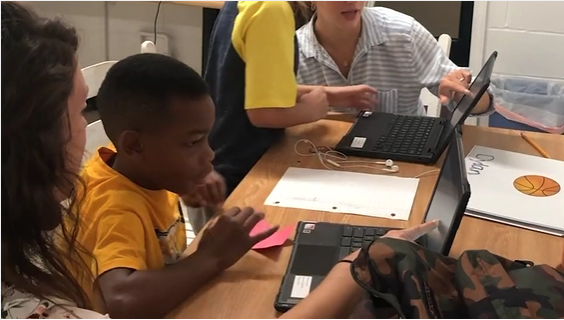
Students study in a pandemic learning pod organized by a group of South Carolina churches, business, nonprofits and individuals in underserved communities.
As the pandemic gripped the nation in the spring of 2020, American schools shut down and sent students home to finish the semester through online learning. The hastily organized programs were thought to be short-term solutions.
But as the rising numbers of coronavirus cases ended administrators’ hopes of fully reopening in the fall, Allan Sherer, a member of the pastoral staff at an Upstate South Carolina church, saw trouble ahead, especially for low-income minority students who had suffered academically in the spring.
The effort Sherer and his church made to educate low-income students over the course of the past two years received national recognition, placing as a semi-finalist for a $1 million STOP Award from Forbes Magazine and the Center for Education Reform.
Sherer’s North Hills Church, a non-denominational suburban congregation that draws 2,000 weekly worshipers, had sponsored academic summer camps for the past nine years. These camps focused on students in economically disadvantaged neighborhoods with the goal of preventing the annual summer learning slide. Now, with the pandemic sending students home permanently, Sherer feared these disadvantaged students in would suffer learning losses so steep that they would never recover.
“We heard numerous stories of children who, when sent home with Chromebooks, never even turned those Chromebooks on,” said Sherer, who has overseen local and global outreach for 15 years at the church in Greenville, S.C. The Palmetto State’s sixth-largest city, Greenville has a population of 70,720 and includes former textile mill villages that sit one county away from BMW’s first North American manufacturing plant, which has brought more than 11,000 jobs and contributed other economic development to the state. Still, intergenerational poverty remains an issue.
After seeing stories about how affluent families were banding together and hiring teachers to deliver in-person instruction to their kids, Sherer immediately thought, “Why shouldn’t children who do not have the means for pods like this also be served?”
Allan Sherer, pastor of missions and outreach at North Hills Church and leader of pods project
Sherer’s vision quickly led to the start of Come Out Stronger, an initiative to offer learning pods in the most underserved communities of the city. North Hills already had relationships with churches in those communities, including Black churches, community organizations and individuals committed to making a difference.
Less than six weeks later, the group raised more than $300,000, identified more than 40 staff members, and set up 10 Covid-compliant locations, each of which was able to serve as many as 24 public school virtual learners.
Sherer said the initiative succeeded because of two major factors: an unprecedented awareness of the intractable gap minority and low-income families face; and a unifying belief that those who have the least opportunity receive an excellent education. The fact that so many community members stepped up in a state that flew the Confederate battle flag on the statehouse grounds until 2015 is a testament to the efforts made toward racial progress in recent years.
“As a faith-based institution leading the way in this initiative we found no resistance or even hesitancy among businesses, public school administrators, predominantly white or African-American churches, and other community stakeholders to coalesce around doing whatever it takes to make sure children were not irreparably left behind,” Sherer said.
In Judson Mill community, which derives its name from the former textile plant there, 76% of children live in homes below the poverty line, placing it in the lowest .3% of comparable communities in the United States. Organizers identified it as a great place for a pod, and the community came together to help make it and other pods a reality.
A regional gas station chain provided financial support while also providing breakfast each day. The lead counselor in the community’s Title I school went door-to-door to persuade parents to place their children in the pod. A Black church offered its building and recruited volunteers of color to help. A white Presbyterian church supplied “a phenomenal reading specialist” who tested each student at the beginning of the school year, laid out personalized plans for reading development and then re-tested students at the end to gauge progress.
“Every child experienced significant reading improvement over the course of the year,” Sherer said.
Each pod was designed to serve 12 children at one time, with one group attending Monday and Wednesday and the other attending Tuesday and Thursday. Students arrived each day at 7:45 a.m. Trained staff helped children log into their school e-learning platform and stay on task with their work. The pods also provided tutoring, structure, snacks, and recreation. Most ended at 2 p.m. Each pod had a budget of $25,000.
The biggest challenge, Sherer said, was the uneven and inconsistent delivery of virtual learning.
For example, one first-grader was expected to log into four different learning platforms to complete her work. Each platform had its own log-in routine and its own method of completing and uploading work.
“This child lives with her grandmother, who cares for three other primary-age children,” Sherer said. “The challenge of navigating these platforms was immense.”
Sherer said establishing standard performance metrics also proved difficult.
“Because of the chaotic nature of the school year, with schedules shifting and children at times coming in and out of our pods it was not feasible to create an evidence-based measure of our success,” he said. “Anecdotally, we have dozens and dozens of stories of children who had never been successful in school who made the A-B honor roll.”
A few examples of that success can be found in the personal stories shared by staff on a video.
One student, described as a “quiet hoodie kid” who had nothing to say, came from a single-parent home and claimed affiliation with a local gang. His grades were all failing.
“We began to speak to him and love him and tell him who he could be,” said staff member Miriam Burgess. She said being around her son, who works in the pod, offered the student a positive male role model.
Within a couple of weeks, his “F’s” became “B’s” and “A’s” and he started talking.
“Now he runs through the pod like he owns it,” Burgess said. The boy’s mother told Burgess that he renounced his gang affiliation and “his whole demeanor is different.”
When another student joined one of the pods, he had been to class only four times since the beginning of the pandemic. He had forgotten how to read, did not know his math facts, and could not remember the order of the alphabet.
“He has gone from reading 35 words per minute to 102 words per minute,” said pod staffer Brittany Meilinger.
Then there were the three siblings who were in the custody of grandparents who also were raising a set of kindergarten twin siblings.
“Their grandmother had no hope of keeping up with all five children and their assignments,” pod staffer J.P. Camp said. “The pod has been life-changing for this family.”
Success stories like those earned the project a place on the list of 20 semi-finalists for the STOP Award. Sponsored by the Center for Education Reform and Forbes, it awarded a $1 million prize to an education provider, exceptional group of people, or organization that demonstrated accomplishment during the coronavirus pandemic by providing an education experience that was “Sustainable, Transformational, Outstanding, and Permissionless.”
Despite the success, Sherer’s pandemic pods ended when local schools reopened in August 2021. Although the pods were closed, church volunteers continued their work in education, logging more than 400 tutoring hours at local public schools so far this year.
Sherer said the experience offered valuable insights about the future of education and inspired the Greenville pod organizers to think even bigger.
The coalition is now working to open a network of private, hybrid, community-based schools that will serve the poorest regions of South Carolina.
“These smaller networks have the potential to drive a new era of innovation. We are re-imagining the entire in-person learning experience, and our partners are lining up,” Sherer said.

