As the movement for education options gains momentum across the country, there remains a clear national leader: Florida.
This school year, the Sunshine State’s education savings account programs are larger than their counterparts in every other state put together. Including programs that provide flexible funding to public-school students, they are on track to serve more than 500,000 students this year.
To put the scale of these options in perspective, if students in Florida’s scholarship programs counted as a school district, it would be the third largest in the country, after New York City and Los Angeles.
But this is not simply a story about scale or numbers. ESAs allow families to direct education funding to eligible learning options of their choice. The ability to personalize a child's education empowers families in profound ways.
Meet five families who have taken control of their children’s educational destiny.
Caleb Prewitt
 Caleb has been riding horses since he was 4 years old. Caleb is now 17 years old and has participated in 36 triathlons. He recently raced the international distance, which is an 800-meter swim, 16-mile bike, and 10k run. He was the youngest competitor (all divisions) for the International.
“We have set out from early on not to put limits on him; to keep our expectations high,” his mom, Karen, told me. “With opportunities and support, so much is possible for people with disabilities. So much more than is expected.”
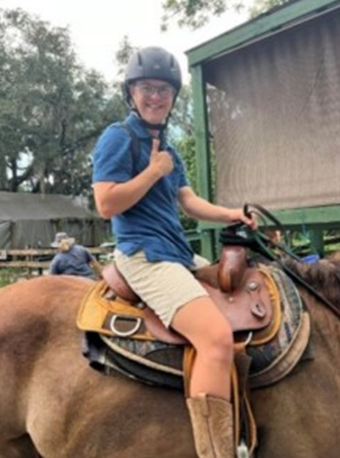
Caleb is a well-known figure in his community and on social media, where he shares uplifting news, spreads joy and offers cooking lessons to his followers. Caleb’s love for the culinary arts shines through as he bakes cookies for Happy Brew, a local coffee shop that employs individuals with unique abilities.
Caleb loves going to school, says Karen. He attends North Florida School of Special Education in Jacksonville. She notes that the scholarship not only brightens Caleb’s life but also brings joy to their family, as it has created many opportunities and opened doors for them. “For several years, Caleb has benefitted from the FES-UA scholarship, which has provided him with a supportive learning environment and numerous unique opportunities,” Karen said. “We are deeply grateful for the positive impact it has had.”
Viktoriia Galushchak
The Galushchak family immigrated to the United States from Ukraine three years ago to escape the war. The family was in a new country, speaking a different language with no car and little money. But at age 11, Viktoriia really wanted to go to school to make some friends. “We are so grateful for Step Up because it allowed us to put our children into private school,” her mother, Olga Galushchak, explained.

The family found St. Paul Catholic School that was a 10-minute walk from their house, and Viktoriia enrolled in the spring of 2022. Olga says it was such a blessing. Viktoriia’s English was strong from studying it in Ukraine, so her transition to school went well. At home, the family speaks only English one day a week to strengthen their skills.
Viktoriia entered the school science fair in seventh grade. Her project: creating a computer program to help deaf and mute people. She was inspired by an experience with car trouble during their journey to America. They received help from two men who were deaf and mute, and Viktoriia was determined to find ways to help people like them communicate more effectively. The project won third place in the state science fair in 2023.
Viktoriia set her sights on first place for the eighth-grade science fair. She created a program to help children learn foreign languages that would give them real-life examples while they used it. This project won first place in the state science fair, and she received a grant award for the project. Viktoriia and her family are eagerly waiting to learn if she will be selected to present her project at the national science fair in Washington, D.C.
Viktoriia is now a freshman at a Bishop Kenny High School in Jacksonville, still using the Florida Tax Credit scholarship to help pay tuition. The family is grateful for the scholarship, and they do not think Viktoriia’s last three years would have been the same if she did not have the opportunity to attend a school that fit her needs so well.
Kingston, Zecheriah and Gabriel Lynch III
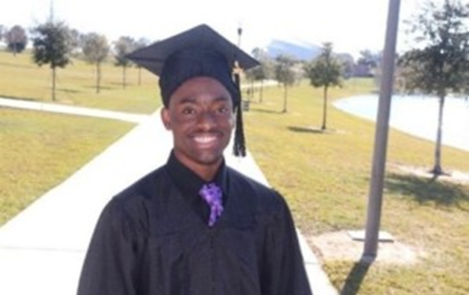
When the COVID-19 pandemic hit, the Lynch family had to quickly adapt, and they chose to transition from a private school to homeschooling.
Even after the pandemic ended, the family continued homeschooling. In 2023, their three children received the newly established Personalized Education Program (PEP) scholarship, which they say has been instrumental in their journey.
The scholarship provided invaluable resources, including one-on-one tutoring. This personalized support made a profound difference in Kingston, who struggled in math but began to make significant strides. Mom said the scholarship allowed him to receive tutoring with a certified math teacher, who can pinpoint his needs and ensure he understands the material before moving on.

The Lynch family’s homeschool setup now includes daily tutoring, vocal lessons, and a range of educational resources, transforming their learning environment into one that nurtures each child's growth. Parents Krystle and Gabe Jr., who is a district school PE teacher, have successfully balanced their professional and family responsibilities while supporting their children's education. Their Jamaican and Panamanian heritages have added depth to their homeschool experience: the boys are taking Spanish this year. Both parents are very committed to a strong education and work ethic, so they try to incorporate these values in their schooling. Reflecting on the impact, Krystle says, "I am so excited for the families that will receive the PEP scholarship this year. [It’s] an amazing program that caters to students individually. Such a blessing."
Sebastian and Alejandro Broche
Aimée Uriarte, a dedicated single mother from Costa Rica, made a pivotal decision four years ago to move to the United States, driven by her commitment to providing her sons with a strong educational environment that would offer exceptional opportunities.
Her eldest son, Sebastian, now 18, graduated with honors from Christopher Columbus High School in Miami which he attended thanks to the Family Empowerment Scholarship for Educational Options (FES-EO). As president of the school's student-run broadcast news program, Sebastian led a team that won numerous national accolades. In fact, the brothers have combined to win more than 60 awards for directing and graphics. Sebastian earned a $4,500 per semester scholarship from the National Academy of Television Arts & Sciences, received a $7,500 grant from Media for Minorities, and received the Mike Wallace Memorial Scholarship, worth $10,000, funded by CBS News.
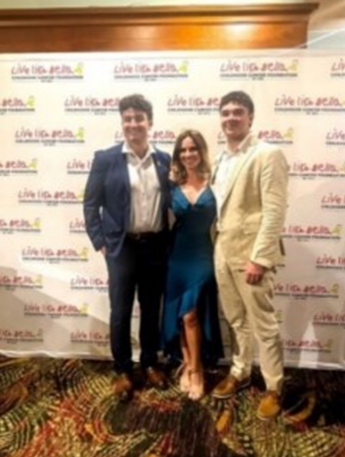
Alejandro, who recently turned 16, has attention deficit disorder, which qualified him for the Family Empowerment Scholarship for Students with Unique Abilities (FES-UA). The previous school he attended during the pandemic wasn't meeting his needs, but Aimee was confident that the Catholic high school was the right environment for her son to reach his full potential. Her belief was confirmed when Alejandro, as a freshman, won a Student Television Network national award in Long Beach, California, following in his brother's footsteps. A year later, he took first place for a nationwide commercial and won several Student Emmys, including one for best graphics in the recognized documentary "Live Like Bella."
Aimée credits these remarkable accomplishments and transformative opportunities available to her sons to the vital support of the scholarships. “I think every family deserves the scholarships, regardless of income or their child’s conditions,” said Aimée, who added, “I think the whole country should emulate Florida.”
Vanessa Giordano
 Vanessa is a thriving 16-year-old in 10th grade. However, her early years as a premature twin were not so easy. She struggled to meet developmental milestones and was diagnosed with dyslexia. Her mom, Alicia, worked hard to advocate for education options in Texas. In 2023, their family moved to Florida and were delighted to learn the state offered a scholarship program for children with unique abilities.
Fast forward. Vanessa is now in her second year at Bishop McLaughlin High School in the Tampa Bay area and using the Family Empowerment Scholarship for Unique Abilities. Her teachers have encouraged her to explore her talents and try new things. She is an active member of the worship team and enjoys singing at school events. She had her first role in a school play as “Chip” from “Beauty and the Beast.” She is also a sideline cheerleader and part of the competitive cheer team. Despite her robust extracurricular schedule, Vanessa always maintains grades that keep her on the honor roll.
“I am so grateful for Step Up for Students for helping my daughter,” Alicia Giordano says. "Every child can soar if given the opportunity to be in the right school for them and Step Up for Students makes this dream possible.”
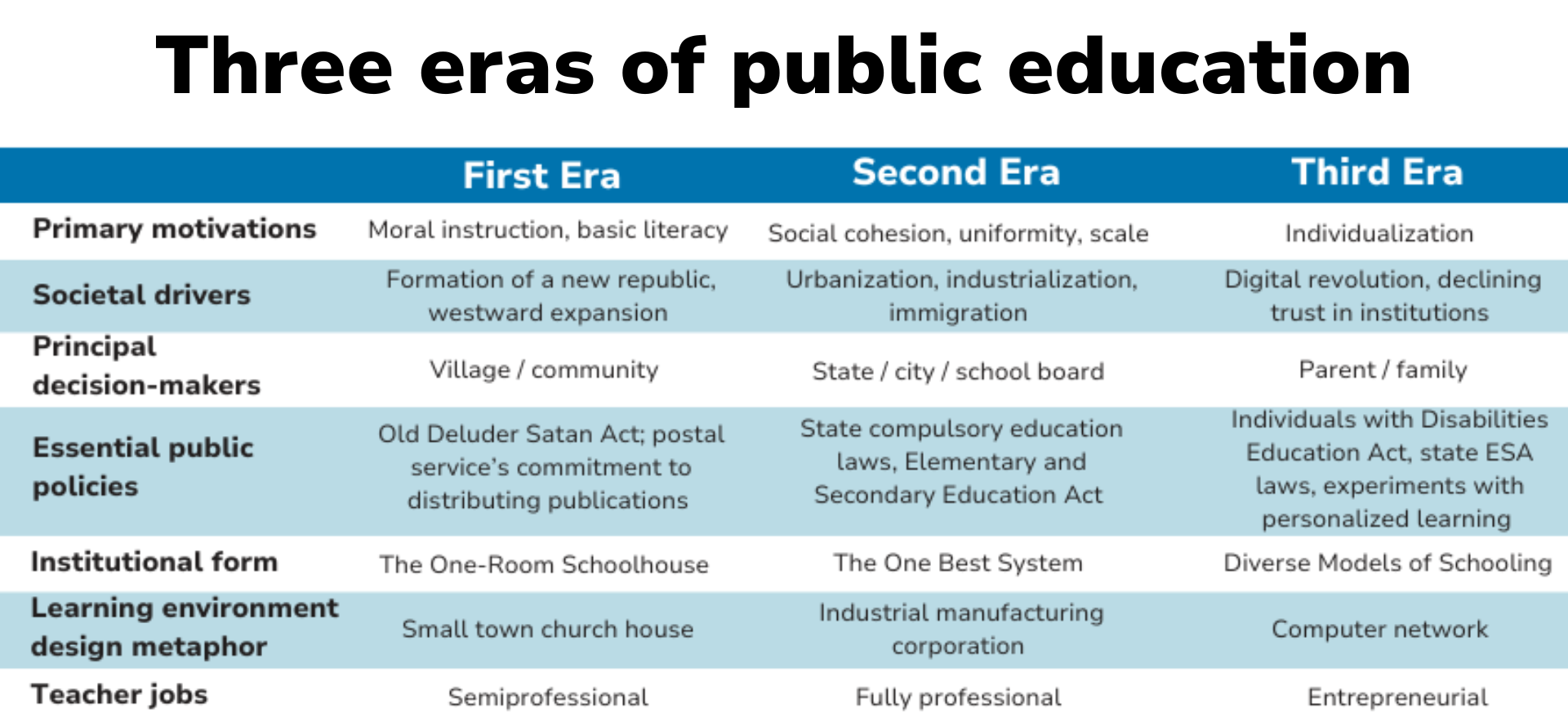
Public education in the United States is transitioning from its second to third paradigm.
Paradigm shifts in public education occur when larger societal changes force public education to change to meet these new conditions. Current technological advances and the accompanying social changes are pushing public education into a new paradigm and a third era.
To best meet society’s current and future needs, this third paradigm aspires to provide every child with an effective and efficient customized education through an effective and efficient public education market.
A paradigm: The lens through which communities do their work
In his 1962 book, “The Structure of Scientific Revolutions,” Thomas Kuhn described a paradigm as the lens through which a community’s members perceive, understand, implement, and evaluate their work. A paradigm includes a set of assumptions and associated methodologies that guide how communities construct meaning and determine what is true and false and right and wrong.
A paradigm shift occurs when inconsistencies, which Kuhn called anomalies, begin to occur, and some community members begin to question their paradigm’s veracity and effectiveness. As these anomalies accumulate, community members begin proposing new ways of understanding and implementing their work and a prolonged contest emerges between the existing paradigm and proposed new paradigms. If a majority of the community ultimately decides a new paradigm enables them to resolve the anomalies and better understand their discipline, this new paradigm is adopted. In scientific communities, Kuhn calls these paradigm shifts scientific revolutions.
Paradigm shifts are disruptive and revolutionary because they require community members to reinterpret all their previous work and adopt new ways of conducting and evaluating their future work. Senior community members are particularly resistant to changing paradigms because their status comes from applying the existing paradigm over many years. Consequently, paradigm changes are rare and require several decades to complete.
Albert Einstein’s General Theory of Relativity (GTR) was a new physics paradigm that challenged Newtonian mechanics and Newton’s law of universal gravitation (i.e., the dominant physics paradigm at the time). It took over 40 years before GTR gained wide acceptance among physicists. Einstein never won a Nobel Prize for GTR because the Swedish physicists on the Nobel committee refused to accept his new paradigm.
Although Kuhn’s work focused on the role of paradigms in scientific communities, his description of how paradigms function and change is relevant for all communities, including public education. The struggle in U.S. colonial times to transition from a monarchy to a democracy was a paradigm shift. It was a revolutionary change in how government works, was fiercely resisted by those in power, and took decades to complete.
Public education’s first paradigm
Public education’s first paradigm began before the United States was a country, when the Massachusetts Bay Colony enacted the “Old Deluder Satan Act” to ensure the colony’s young people learned scripture. As the name of that early legislation implies, this first era prioritized basic literacy and religious instruction. Most children were homeschooled, and formal instruction tended to be ad hoc, improvised, and organized around the agricultural calendar.
Religious organizations provided most of the structured instruction outside the home in the 1700s and early 1800s. Children and adults attended Sunday schools, and communities organized what today we would call homeschool co-ops, which allowed rural children to receive instruction when their chores permitted.
The federal government supported public education through the U.S. Postal Service by subsidizing the distribution of magazines, pamphlets, books, almanacs, and newspapers, and establishing post offices in rural communities. By 1822, the U.S. had more newspaper readers than any other country.
Public education’s first paradigm started failing in the early 1800s as innovations in transportation and communications began connecting the country and promoting more industrialization and urbanization. About 90% of Americans lived on farms in 1800, 65% in 1850, and 38% in 1900.
This transition from rural to urban created childcare needs. Increased industrialization necessitated a more highly skilled workforce. And concerns about social cohesion grew as the growing country welcomed immigrants from Ireland and later from Southern and Eastern Europe. These were demands the informal, decentralized, and family-driven first public education paradigm was ill-equipped to meet.
Public education’s second paradigm
In 1852, Massachusetts passed the nation’s first mandatory school attendance law. This accelerated public education’s shift from its first to second paradigm.
The massive influx of European immigrants beginning in the 1830s was a primary reason Massachusetts decided to make school attendance mandatory. The U.S. experienced a 600% increase in immigration from 1840 to 1860 compared to the prior 20 years. Most of these immigrants were illiterate, low-income, and Catholic. Massachusetts’ mandatory school attendance law was intended to help turn these new immigrants into “good” Americans, meaning they needed to be literate, financially self-sufficient, and well-versed in Protestant theology.
Protestant hostility toward Catholic education in the U.S. continued deep into the following century and included the infamous Blaine Amendments that many states adopted in the late 1800s to forbid public funding of Catholic schools, and the 1922 constitutional amendment in Oregon that required all students to attend Protestant-controlled government schools.
The U.S. Supreme Court ruled the Oregon amendment unconstitutional in its 1925 decision Pierce v. Society of Sisters, ensuring every American family had the right to choose public or private schools for their children. This ruling would later help make public education’s transition to its third paradigm possible.
By 1900, 31 states had passed mandatory school attendance laws. While these laws were not initially well enforced, they did significantly increase school attendance, which created management challenges.
As David Tyack chronicles in “The One Best System,” a history of how this first paradigm shift unfolded in America's cities, a new class of professional administrators, known as schoolmen, set out to modernize public education practice and infrastructure. One-room schoolhouses serving students were no longer adequate, so public education began adopting the mass production processes that enabled industrial manufacturers to create large numbers of products at lower costs. The most famous example was the assembly line that Henry Ford created to mass produce affordable Model Ts.
This new industrial model of public education replaced multi-age grouped students with age-specific grade levels that functioned like assembly line workstations. Just as Ford’s assembly line workers were taught the skills necessary for their workstations, public school teachers were trained to teach the skills associated with their assigned grade level, and children were moved annually from one grade level to the next en masse.
Mississippi became the last state to pass a mandatory school attendance law in 1918. By then the bulk of multi-aged one-room schools were being replaced with larger schools that reflected the best practices of 19th century industrial management. This was the paradigm through which government, educators, families, and the public were now seeing and understanding public education. This change marked U.S. public education’s second paradigm.
Ford famously told customers they could have any color of Model T they wanted provided it was black. Public education adopted this one-size-fits-all approach to increase efficiency. Car consumers began demanding more diverse options over the next several decades, and so did public education consumers. The auto industry diversified its offerings much quicker than public education because it faced competitive pressures the public education monopoly did not. But in 1975, President Gerald Ford signed the Education for All Handicapped Children Act, which required all school districts to begin adapting instruction to serve special needs students. This was the first instance of government requiring public education to provide a large group of students with customized instruction.
Public education’s third paradigm
This expansion of instructional diversity accelerated in the late 1970s and early 80s as school districts started creating magnet schools to encourage voluntary school desegregation. The school district in Alum Rock, California even experimented with a short-lived voucher program that fostered an ecosystem of small, specialized learning environments that today would be called microschools.
Most of the beneficiaries of early magnet schools were white middle-class and upper middle-class families who were attracted by the additional resources and high-quality specialized instruction. But magnet schools created for desegregation could serve only a limited number of students. In response to political pressure from influential constituents, school districts began creating magnet schools unrelated to desegregation, which expanded and normalized specialization and parental choice within school districts and accelerated the transition to public education’s third era.
Florida added significant momentum to this transition with the passage of its 1996 charter school law, the founding of the Florida Virtual School in 1997, and the 2001 creation of the nation’s largest tax credit scholarship program.
Two decades later, the COVID-19 pandemic further hastened public education’s current paradigm shift. Magnet schools, virtual schools, charter schools, homeschooling, open enrollment, homeschool co-ops, and tax credit scholarship programs were already expanding nationally when COVID arrived in March 2020. The pandemic turbo charged the growth of these options and newer options such as microschools, hybrid schools, and education savings accounts (ESAs).
Just as 19th century innovations in communications, transportation and manufacturing led to public education’s first paradigm shift, the rise of digital networks, mobile computing, and artificial intelligence are transforming all aspects of our lives, including where and how we work, communicate, consume media, and educate our children. These technical and societal changes are driving a decline of trust in institutions that no longer enjoy a monopoly on public information. They are also driving increased demand for flexibility to determine when, where, and with whom teaching and learning happen. Public education has begun to adopt a paradigm more aligned to 21st century demands, which include parents gaining more power to decide how their children learn.
Government’s changing role
Government’s role in public education will be impacted by a new public education paradigm that reflects these ongoing technical and cultural changes. Under the second paradigm, government had a near-monopoly in the public education market. This quasi-monopoly undermined public education’s effectiveness and efficiency because it failed to take full advantage of the knowledge, skills and creativity of students, families and educators.
In public education’s third era, government will regulate health and safety and help facilitate support services for families and educators but will no longer be the dominant provider of publicly-funded instruction. This regulatory and support function is like the role government currently plays in the food, housing, health care, and transportation markets. Most of the responsibility for how children are educated will shift from government to families and the instructional providers families hire with their children’s public education dollars.
Shifting government’s primary role from instructional monopoly to market regulator and supporter will require operational changes. Families will be able to choose from a plethora of instructional options and will need access to information that allows them to make informed decisions, as well as education advisers who can help them evaluate their child’s needs and develop and implement customized education plans to meet these needs. Government will need to ensure data accuracy and truth in labeling – much as it currently ensures food labels accurately describe what’s in the package.
Third paradigm issues
Providing each child with a high-quality customized education through a more effective and efficient public education market will require public education’s stakeholders to rethink all aspects of how it operates. Here are some issues we will need to address.
Public education’s third paradigm has old roots
In 1791, Thomas Paine proposed an ESA-type program for lower-income children in “The Rights of Man.”
“Public schools do not answer the general purpose of the poor. They are chiefly in corporation towns, from which the country towns and villages are excluded; or if admitted, the distance occasions a great loss of time. Education, to be useful to the poor, should be on the spot; and the best method, I believe, to accomplish this, is to enable the parents to pay the [sic] expence themselves.”
Paine’s recommended funding method was, “To allow for each of those children ten shillings a year for the expence of schooling, for six years each, which will give them six months schooling each year, and half a crown a year for paper and spelling books.”
Over 150 years after Paine’s proposal, Milton Friedman proposed a similar but more comprehensive plan in 1955. Many of the third paradigm’s core ideas existed in the 1700s prior to the industrial revolution. But they were not technically or politically feasible.
Thanks to modern technology and a growing acceptance of families’ rights to direct their children’s education, these ideas are viable today. We can now provide every student with an effective and efficient customized public education. While all students will benefit from customized instruction in a more effective and efficient public education market, lower-income students will benefit the most because they have historically been the most underserved by the current government monopoly. Underserved groups always benefit greatly when the markets they rely on for essential goods and services are more effective and efficient.
Public education’s transition to its third paradigm is happening faster in Florida than in other states. Over 500,000 students using ESAs is rapidly improving Florida’s public education market. Floridians are seeing in real time the creation of a virtuous cycle between supply and demand. More families using ESAs is encouraging educators to create more innovative learning options, which in turn is causing even more families to use ESAs, which in turn is causing even more educators to create more learning options. These rapidly expanding options increase the probability that all students, but especially lower-income students, can find and access learning environments that best meet their needs.
Public education’s first paradigm shift took about 100 years to complete (1830-1930). This second transition began around 1975 and will likely also take about 100 years to complete nationally. Like all paradigm changes, this one is proving to be a long slog. But larger societal changes will help ensure this transition’s success.
Education is no longer about students sitting in rows of desks from 8 a.m. to 3 p.m. And school choice, the term supporters used for years to describe the movement for education options is out. Parent-directed education is in.
That was the call to arms Florida charter school leaders received from one of their earliest supporters on the closing day of an annual gathering convened by the state’s Department of Education.
“We were charged to be laboratories of innovation,” said Jim Horne, a former Florida education commissioner and lawmaker who sponsored the Sunshine State’s first charter school bill. “I challenge you to step out of the proverbial box. If you don’t innovate, you will stagnate.”
Education savings accounts, which allow parents to direct public education funding to private schools, tutoring, curriculum and other options for their children, have been sweeping the country and are now in effect in 19 states.
This has led some national observers to wonder whether charter schools risk losing momentum or becoming political orphans.
Manny Diaz Jr., Florida’s education commissioner, has pushed to counter that chatter. In his keynote address last year, he said education options of all kinds can flourish in the Sunshine State, which is home to the nation’s largest ESA programs and a growing charter school sector.
“We’re capitalizing on this historic school choice and charter school movement. We’re giving parents the ability to choose the best path for their students, regardless of background, regardless of income.”
Last year, the state rechristened its annual convening of charter school leaders as the Florida Charter School Conference and School Choice Summit. This year, private school leaders and educators made up nearly a quarter of the 1,300 attendees.
This year’s event featured main-stage presentations by Success Academy founder Eva Moskowitz, whose New York-based charter school network began eyeing a Florida expansion, as well as presentations on improvements in public-school student achievement, and multiple sessions that highlighted the opportunities growing scholarship programs offer to charter schools.
Last year’s House Bill 1 supercharged the growth of Florida’s ESA programs and created a new Personalized Education Program for students who don’t attend school full-time. That, combined with continued growth of New Worlds Scholarship Accounts for public-school students who need extra academic help, and the existing program for students with unique abilities, creates a substantial opportunity for public schools, including charters, to offer services to scholarship students.
Between those three programs alone, “we’re talking about $1 billion from students that do not have to go to school,” David Heroux, senior director of provider development and relations for Step Up For Students, which manages the bulk of Florida’s K-12 education choice scholarships, said during one session.
School districts, including Brevard and Glades counties, have already begun offering individual courses to scholarship students, with others planning announcements soon or expressing interest in participating.
Adam Emerson, executive director of the Florida Department of Education’s Office of Independent Education and Parental Choice, urged attendees to join the school districts in embracing a la carte learning and the possibilities it has unlocked for charter schools.
“We are entering into a whole new universe of choice,” he said.
By Shaka Mitchell
After this month’s election, which has resulted in a surprising Republican trifecta, the first action GOP lawmakers should take is to pass and sign the Educational Choice for Children Act (ECCA). This bill aims to provide educational opportunities outside the public school system for millions of students over the next four years alone.
The push for educational choice has been growing across the country, primarily driven by state legislatures, which control most K-12 education legislation. However, states like California, Kentucky, Colorado, New York, and Michigan have faced challenges in advancing such legislation, largely due to Democratic majorities and significant influence from teachers' unions.
The ECCA would create a federal scholarship tax credit program that allows tax-paying individuals to direct up to ten percent of their adjusted gross income to a Scholarship Granting Organization (SGO). SGOs already grant scholarships to students in 22 states, but they are products of state-level legislation and implicate the state tax code. Therefore, these programs are non-starters in states without personal income tax. The ECCA represents a first at the federal level and just this year the bill made significant progress, having passed the House Finance Committee.
Be like water
While subject to change, if the ECCA passes with a $10 billion cap, it would likely benefit more than a million students from low- and middle-income families. Families would apply to an SGO for a scholarship, and upon receiving one, parents could use the funds for a range of educational expenses including tuition at private schools, online courses, special education services, and tutoring. Some families will likely choose to keep their student enrolled in a public school and use scholarship funds to supplement the experience with technology or tutoring – enhancements normally reserved for more wealthy families.
The federal nature of the ECCA presents a new opportunity to deliver educational options for children in states where state legislatures have been resistant to educational freedom.
California serves as a prime example. Despite substantial investment in public education (on average more than $18,000 is spent on K-12 students in the state), student outcomes remain disappointing. Only 3 in 10 students in 8th grade are proficient in reading, according to the 2022 National Assessment of Educational Progress (NAEP).
Earlier this year, and at the behest of the California Teachers Association, the state legislature defeated a proposal that would have created an $8,000 voucher program. Like water flowing around a stubborn obstacle, the ECCA would give donors and parents another option in their quest for an educational best fit.
While not a cure-all, this bill would significantly improve educational outcomes for all children.
Elections matter
Finally, the ECCA allows Republicans to fulfill the responsibilities entrusted to them by voters, ensuring a prosperous future for all children, regardless of their state's political leaning.
Famously, or infamously depending on your point of view, President Jimmy Carter established the Department of Education as a way to further endear himself to the National Education Association (NEA), the country’s largest teachers union. The Department’s creation was the fulfillment of his 1976 campaign promise, and he was further rewarded in 1980 by receiving the union’s endorsement.
In a similar fashion, candidate Trump and many other Republican candidates including Tim Sheehy (MT), Bernie Moreno (OH), Dave McCormick (PA), and Gov. Jim Justice (WV), expressed their desire to support American families through education choice. President Trump was rewarded on election night in large part thanks to increased support among Black and Latino voters.
On election night, NBC News chief political analyst Chuck Todd noted that “Latino voters align more closely to the conservative party [on] school choice.” Many of these voters live in states with little hope of state-initiated school choice legislation.
The ECCA could deepen the bonds between Republicans and Latino voters and bring much-needed opportunities to students who need them most.
— Shaka Mitchell is a senior fellow at the American Federation for Children.
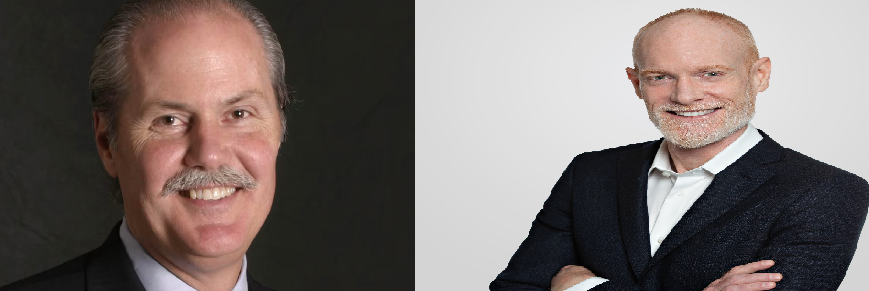
School choice champions Chip Mellor, left, and Caleb Offley, each died last week.
Sad news this week: Two great warriors for education choice, Institute for Justice co-founder Chip Mellor and the Walton Family Foundation’s Caleb Offley, died on the same day. The Wall Street Journal wrote a memorial for Mellor here which reads in part:
Many young lawyers hope for careers in which they can use the law to promote justice and change lives, but few succeed. One who did was William “Chip” Mellor, who died Friday at 73 years old.
Myles Mendoza and Jason Gaulden wrote tribute to Offley, which read in part:
Caleb made a significant and lasting contribution to the field of education philanthropy, and his impact will continue to shape the lives of the many leaders he supported for years to come.
His approach was always selfless and humble. He worked quietly behind the scenes. Caleb never sought the spotlight. Instead, he was deeply committed to elevating others, believing that real leaders don’t care about followers; real leaders care about developing other leaders. That’s exactly what Caleb did throughout his life.
If there were a School Choice Valhalla presided over by Milton Friedman, Valkyries would be depositing Chip and Caleb into the hallowed halls for a rip-roaring celebration and feast. Well done gentlemen- may your memories be a blessing for us to treasure and your lives examples for us to follow.

The story: Students with disabilities and English language learners were poorly served before the pandemic and will need urgent, long-term help to recover from learning losses, according to a report from the Center for Reinventing Public Education.
The Arizona State University think tank released its annual State of the American Student report today, with a bit of good news but mostly bad news.
“Our bottom line is we’re more worried at this point than we thought,” said Robin Lake, the center’s executive director. “COVID may have left an indelible mark if we don’t shift course.”
The good: Students are bouncing back in some areas. The average student has recovered about a third of their pandemic-era learning losses in math and a quarter in reading.
States and districts nationwide have implemented measures like tutoring, high-quality curricula, and extended learning time, and more school systems are making these strategies permanent. Florida, which offers the New Worlds Scholarship for district students struggling in reading and math, is on a list of states lauded for providing state-funding for parent-directed tutoring.
 Rigorous evaluations confirm the effectiveness of tutoring at helping students catch up.
Education systems across the country – as well as students and families – are starting to recognize the value of flexibility. “As a result, more new, agile, and future-oriented schooling models are appearing.”
That includes microschools and other unconventional learning environments, which are multiplying to meet increasing parent demand.
The bad: These proven strategies aren’t reaching everyone. The recovery is slow and uneven. Younger students are still falling behind. Achievement gaps are also widening with lower-income districts reporting slower recoveries. And the positive studies that show tutoring’s massive boosts to student learning tended to operate on a small scale. Making high-quality academic recovery accessible to every student remains an unmet challenge.
Districts face “gale-force headwinds,” including low teacher morale, student mental health issues, chronic absenteeism, and declining enrollment.
The ugly: The report singled out services to vulnerable student populations for a special warning. The report said this group, poorly served before the first COVID-19 infection, suffered the most. Evidence can be found in skyrocketing absentee rates and academic declines for English language learners.
Special education referrals also reached an all-time high, with 7.5 million receiving services in 2022-23. The report attributed some of this to the pandemic’s effects on young children, especially those in kindergarten who were babies at the pandemic’s onset, but other factors, such as improved identification techniques and reduced social stigma around disability, are also at play.
In short, school systems face larger numbers of students requiring individualized support than ever before.
‘Heart-wrenching struggles’: While some families adapted well, most parents reported difficulty getting services for their children with unique needs. Schools were often insufficient in their outreach. Even the most proactive parents reported difficulty reaching school staff, the report said. Parents who were not native English speakers also had the additional burden of trying to teach in a language they were still learning.
“Many families said schools didn’t communicate often or well enough, and many parents felt blindsided when they found out just how far behind their child had fallen,” the report said.
Recommended fixes: Schools should improve parent communication. The report called for schools to “tear down the walls” by adding schedule flexibility to ensure students’ special education services don’t conflict with tutoring and adding more individual tutoring and small-group sessions. It said schools should also seek help from all available sources, including state leaders, advocates and philanthropists. Schools should also prioritize programs such as apprenticeships and dual enrollment to prepare students for life after graduation.
How policymakers can help: The report urged policymakers to gather deeper data on vulnerable populations so problems can be identified and corrected; provide parents with more accurate information about their children’s progress and offer state leaders a clearer picture of whether those furthest behind are making the progress they need, and help teachers use AI and other tech tools to engage students with unique needs.
The report urged policymakers to place more control in the hands of families by making them aware of their right to compensatory instruction or therapies for time missed during school closures. It also advocated offering parents the ability to choose their tutors at district expense.
The bottom line: Urgent efforts to improve education for students with exceptional needs will benefit all students, the report said. “There can be no excuse for failing to adopt them on a large scale. National, state, and local leadership must step up, provide targeted support, and hold institutions accountable.”
The Japanese art of pottery, kintsugi, uses gold in the process of reconstituting something broken. Rather than attempting to conceal the repair, kintsugi makes something new and even more beautiful than the original. Author Jay Wolf notes a spiritual lesson:
The story of kintsugi — this style of pottery — may be the most perfect embodiment of all our trauma-shattered lives... Instead of throwing away the broken beloved pottery, we’ll fix it in a way that doesn’t pretend it hasn’t been broken but honors the breaking—and more so, the surviving — by highlighting those repaired seams with gold lacquer. Now the object is functional once again and dignified, not discarded. It’s stronger and even more valuable because of its reinforced, golden scars.
South Carolina choice supporters have suffered a trauma in a recent ruling striking down the state’s Education Scholarship Account program. In an absurd 3-2 ruling, the majority found that the ESA program violated language in the South Carolina Constitution prohibiting “direct” state funding to private schools. ESA funding goes to a parent-directed account, which has numerous educational uses other than private school tuition. The Arizona courts, for example, recognized this distinction between ESAs and vouchers when choice opponents made a similar challenge in the Grand Canyon State. From the unanimous Appeals Court decision (which the Arizona Supreme Court later refused to reconsider):
The ESA does not result in an appropriation of public money to encourage the preference of one religion over another, or religion per se over no religion. Any aid to religious schools would be a result of the genuine and independent private choices of the parents. The parents are given numerous ways in which they can educate their children suited to the needs of each child with no preference given to religious or nonreligious schools or programs. Parents are required only to educate their children in the areas of reading, grammar, mathematics, social studies, and science.
Where ESA funds are spent depends solely upon how parents choose to educate their children. Eligible school children may choose to remain in public school, attend a religious school, or a nonreligious private school. They may also use the funds for educational therapies, tutoring services, online learning programs and other curricula, or even at a postsecondary institution.
The specified object of the ESA is the beneficiary families, not private or sectarian schools. Parents can use the funds deposited in the empowerment account to customize an education that meets their children’s unique educational needs.
Thus, beneficiaries have discretion as to how to spend the ESA funds without having to spend any of the aid at private or sectarian schools.
South Carolina students deserved a Supreme Court majority which would have recognized the soundness of this thinking. As an alternative, South Carolina choice supporters should emulate the actions of their Grand Canyon State peers in performing school choice kintsugi. It was the loss of two small voucher programs, one for students with disabilities, the other for foster care students, that inspired the creation of the nation’s first account-based choice program. Lawmakers from across the country obviously appreciated the beauty of Arizona’s kintsugi choice program, as it has been widely emulated.
While the loss in the South Carolina Supreme Court leaves thousands of families in limbo, Palmetto State lawmakers should seize the kintsugi opportunity. Judges would have to engage in truly absurd mental gymnastics to find a version of Oklahoma’s Parental Choice Tax Credit to be “direct” aid. What Oklahoma lawmakers created lawmakers in South Carolina can optimize and perfect. A perfected Oklahoma style credit could be even more robust and indeed more beautiful than the ESA program. Beauty, as Dante observed, awakens the soul to act.
Public education is in the early stages of transitioning from its second to third paradigm.
In his 1962 book, The Structure of Scientific Revolutions, Thomas Kuhn described an organization’s paradigm as the lens through which the organization’s members perceive, understand, implement, and evaluate their work. A paradigm includes a set of assumptions and associated methodologies that guide a community’s determination of what is right and wrong and true and false.
A paradigm shift occurs when anomalies begin to occur, and some community members begin to question the veracity and effectiveness of their paradigm. Eventually, a few community members begin proposing new ways of understanding and implementing their work, and a prolonged contest emerges between the existing paradigm and proposed new paradigms. If a majority of the community ultimately decides a new paradigm enables them to be more successful, a paradigm shift occurs, and this new paradigm is adopted. In scientific communities, Kuhn calls these paradigm shifts scientific revolutions.
Paradigm shifts are disruptive because they require community members to reinterpret all previous work and adopt new ways of conducting and evaluating future work. Senior community members most strongly resist changing paradigms because their status comes from their application of the existing paradigm over many years. Consequently, paradigm changes are rare and require several decades to complete.
While Kuhn’s work focused on the role of paradigms in scientific communities, his description of how paradigms function and change is relevant for most organizations and communities, including public education.
Public education’s first paradigm shift occurred in the 1800s. The United States was a sparsely populated rural agrarian society in the 1700s and early 1800s, and public education was highly decentralized. Most children were homeschooled, and literacy focused primarily on reading the Bible. Religious organizations provided most of the structured instruction outside the home.
Public education’s paradigm during this period emphasized decentralization, family control, flexibility, basic literacy, and religious instruction.
This paradigm began failing as innovations in transportation and communications in the early 1800s started to connect the country and promote more industrialization and urbanization. About 90% of Americans lived on farms in 1800; 65% in 1850, and 38% in 1900. This transition from rural to urban created child care needs, and increased industrialization necessitated more people becoming more literate.
The influx of European immigrants in the early 1800s, most of whom were Catholic, caused Protestant-controlled state and local governments to see public schools as the best way to ensure newly arriving Catholic children would be properly assimilated and turned into good Protestants. However, this first paradigm was ill-equipped to address this concern.
By the early-to-mid 1800s, a consensus was forming that a new way of conceptualizing, organizing, and implementing public education (i.e., a new paradigm) was needed. First, a desire for greater centralized management and standardized instruction and curriculum led states to begin creating school districts to own and manage local public schools.
Next was the passing of mandatory school attendance laws. Massachusetts passed the nation’s first modern mandatory school attendance law in 1852 to help assimilate a growing influx of immigrants from Ireland and other predominantly Catholic countries. By 1900, 31 states had followed suit. Eventually, every state joined them, with Mississippi being the last to do so in 1918.
Mandatory attendance laws significantly increased school attendance, which created management challenges for school districts, especially in growing, urban communities. To address this surge in student attendance, school districts began adopting industrial mass production methods such as batch processing that enabled the nation’s manufacturers to produce large numbers of products with consistent quality at a lower cost.
In addition to centralizing school district management and standardizing instruction and curriculum, this new industrial model of public education replaced multi-age grouped students with age-specific grade levels which functioned like assembly line workstations that moved students annually from one grade level to the next en masse. This was the new lens through which government, educators, families, and the public were now seeing and judging public education. This was U.S. public education’s second paradigm.
Just as public education’s transition from its first to second paradigm was driven by changes in transportation, communications, and manufacturing innovations in the 1800s, the rise of digital networks, mobile computing, and artificial intelligence in the 21st century is generating changes that are causing discontent with public education’s second paradigm.
Decentralization and customization are becoming core societal values that are transforming all aspects of people’s lives, including how we work, communicate, and consume media and entertainment. Consequently, decentralization and customization will be at the core of public education’s third paradigm.
Since public education is a government responsibility, this shift from the second to the third paradigm will impact government’s role in public education. Currently, government has a monopoly in the public education market, which undermines the market’s effectiveness and efficiency primarily because it underutilizes the market’s human capital.
In this emerging third paradigm, government will regulate the public education market but will no longer be a monopoly provider. This is like the role the government now plays in the food, housing, health care, and transportation markets. Most of the responsibility for how children are educated will shift from the government to families as families assume control over how most of their children’s public education dollars are spent.
This shift in government’s role from monopolist to regulator will require many operational changes. For example, as a public education monopoly, government holds its schools accountable for achieving performance goals. Without a government monopoly in the public education market, customers (i.e., families) will hold schools accountable for performance and change schools when they are dissatisfied.
Taxpayers also are customers in the public education market, and the government is responsible for meeting their needs through how it regulates this market. While families bear the responsibility for ensuring their children’s needs are met, government continues to be responsible for ensuring the public’s needs are met.
Kuhn’s research suggests that paradigm shifts are always long and contentious. This is particularly true for public education, given how much certain groups benefit financially and politically from the status quo. Lower-income students are the ones being most underserved by public education today and will benefit the most from public education becoming an effective and efficient market. But these students’ families have the least amount of political power.
In 1791,Thomas Paine proposed an ESA-type program for lower-income children in The Rights of Man. “Public schools do not answer the general purpose of the poor. They are chiefly in corporation towns, from which the country towns and villages are excluded; or if admitted, the distance occasions a great loss of time. Education, to be useful to the poor, should be on the spot; and the best method, I believe, to accomplish this, is to enable the parents to pay the expenses themselves.”
Paine’s recommended funding method was, “To allow for each of those children ten shillings a year for the expense of schooling, for six years each, which will give them six months schooling each year, and half a crown a year for paper and spelling books.”
More than 150 years after Paine’s proposal, Milton Friedman proposed a similar but more comprehensive plan in 1955 for making the public education market more effective and efficient. Now, almost 70 years later, we are starting to see some states adopt education choice programs similar to what Paine and Friedman suggested.
Apparently, U.S. public education is more fiercely resistant to change than the scientific communities Kuhn studied, but I am hopeful public education’s current paradigm shift will be completed within the next 30 to 40 years.

Recently, because this is the sort of thing your friendly neighborhood school choice mad scientist likes to do, I examined the Arizona Superintendent of Public Instruction annual reports. Stick with me; this will be more interesting than you might suspect. So, if you go back to the 1994-95 report (the last year before any charter schools or district open enrollment) and go to page 273 you find that the Arizona school system spent almost $1.3 billion on teacher salaries, on a total spend of $3.5 billion. In other words, 37% of Arizona’s K-12 investment went to teacher salaries.

The latest edition of this same report keeps districts and charter schools separate for these calculations. In 2022-23 (see page I-253) Arizona’s total spend on school districts had increased to $13.2 billion, and the line item for district teacher salaries stood at $3.2 billion. Teacher salaries had dropped from 37% of the total spend to 25%. Dividing the total district teacher salary by the number of teachers and then adjusting for inflation revealed that the average teacher salary remained essentially flat in real terms over the 30 years.
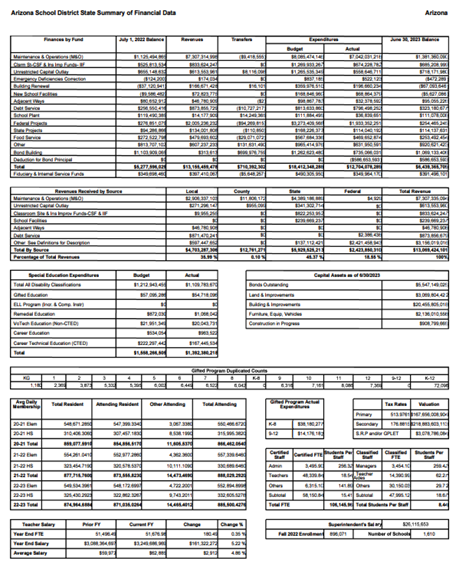
That might seem odd at first. Arizona more than doubled the investment in school districts after accounting for inflation but somehow managed to prioritize every other type of spending except teacher salaries. How does this fit with the notion that school districts have been politically captured by teachers unions?
This puzzle is not overly difficult to solve. “Teachers unions” are actually “district employee unions,” and district employee unions can maximize their dues revenue by maximizing the employment of non-teachers. If for example you can hire two non-teachers for the same cost as hiring a single teacher, you can potentially double your dues revenue. The same reports cited above show that Arizona’s district system somehow soldiered on with one non-teacher employee per 19 students in 1994-95, but that had dropped to one per 15 students in 2022-23.
If in fact Arizona’s school districts spent 37% of their revenue on teacher salaries in 2022-23, it would have pushed the average annual teacher salary over $100,000. This could have been achieved without changing student-teacher ratios and would have left 63% of revenue to spend on everything else.
Other factors are at play as well; districts constructing buildings to the 21st century nowhere, etc. Chubb and Moe instructed us back in 1990 that the central problem in K-12 education is politics, a lesson that we seem prone to forget. The K-12 system isn’t just broken. Rather it is broken on purpose, and teachers have been hugely shortchanged in the process. Fortunately, the development of a solution is underway, and choice is key:
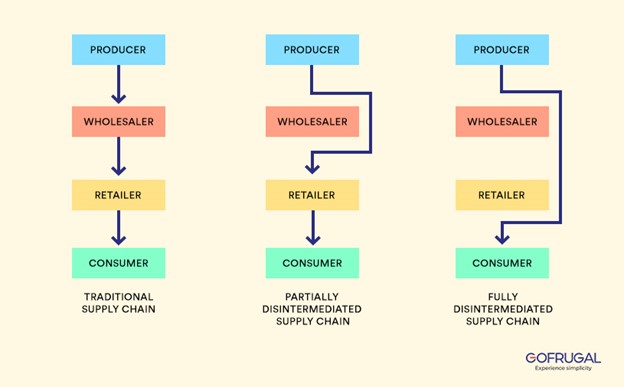
Education choice critics often assert that allowing families to choose the best learning environments for their children undermines our civic culture. They say our democracy is strengthened when children are required to attend public common schools.
The idea of public common schools originated in the early-to-mid 1800s in response to increased emigration from Europe. A surge of Irish immigration into Massachusetts led that state’s Protestant-dominated government to create the nation’s first mandatory school attendance law in 1852. Horace Mann, Massachusetts’ first secretary of education, led the campaign to teach Irish Catholic children how to be good Protestants in government-run common schools.
The Catholic community in Massachusetts and elsewhere rebelled against the Protestants’ public common schools and began creating Catholic schools. This ongoing conflict came to a head in Oregon in 1922 when the state amended its constitution to require all children to attend public (i.e., Protestant) common schools. The Ku Klux Klan (KKK) helped lead the effort to pass this amendment.
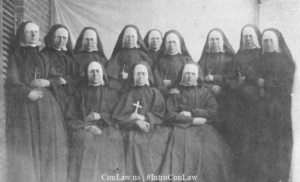 An order of Catholic nuns sued to prevent their Catholic school from being closed and prevailed in a 1925 U.S. Supreme Court decision, Pierce v. Society of Sisters. This decision ended the public common schools movement as envisioned by Mann, the KKK, and others, but the common school myth endures.
Education choice opponents regularly assert that returning to the days of most children attending public common schools is the best way to improve our polarized civic culture. But those days never existed. Most U.S. children have never attended public common schools. For most of our history, Black and white children attended racially segregated schools. My high school was racially segregated until my junior year (1971-72), which is about 140 years after Mann helped launch the common schools movement. Neighborhood attendance zones cause public schools to be segregated by family income. Public magnet schools separate students by interests and aptitude, and academic tracking within schools segregates students by academic achievement levels.
The non-existence of mythical public common schools does not refute the criticism that education choice programs undermine our civic culture. Fortunately, a growing body of research does refute this criticism and suggests education choice programs help improve our civic culture.
Patrick Wolf is a distinguished professor at the University of Arkansas’ College of Education and Health Professions. Wolf and his research team recently reviewed 57 studies that examined the relationship between private school choice and the quality of civic engagement. These studies consistently showed that participating in private school choice is associated with higher levels of political tolerance, political knowledge, and community engagement. Wolf concluded that, “Private schooling is a boost, not a bane, to the vibrancy of our democratic republic. The benefits of private schooling in boosting political tolerance are especially vital, as we need to be able to disagree with others without being disagreeable.”
Charles Glenn is professor emeritus of educational leadership and policy studies at Boston University’s Wheelock College of Education & Human Development. Glenn conducted research that helps explain Wolf’s findings.
Glenn examined the role Islamic schools play in helping Muslim immigrant children assimilate into the U.S. culture. He found these children assimilated much better when they attended Islamic schools that help them maintain their religious and cultural identity while successfully adapting to American values and norms. Glenn concluded that these schools helped students develop a sense of belonging in both their cultural community and the wider U.S. community by focusing on cultural preservation and adaptation. This dual focus was apparently crucial to helping these Muslim children successfully integrate into U.S. society.
Glenn’s findings are similar to what we see students experiencing in the education choice programs Step Up For Students manages. Most of the students we have served over the past 23 years have come from lower-income and minority families. When we poll these families as to why they are participating in our programs, the top answer is always safety.
All people, but especially children, have a basic need to be physically and psychologically safe. Children who do not feel safe in school go into fight or flight mode, which shows up as them refusing to go to school or going to school and constantly getting into trouble.
Parents regularly report amazing transformations in their child’s behavior when they use education choice scholarships to enroll their troubled child in a school where this child feels safe. While parents often see these changes as miraculous, these improvements reflect normal human psychology. Most people’s behavior is better when they feel safe and secure.
This need for safety and security while participating in public education is why education choice programs help improve our civic culture. As Glenn’s research shows, education choice programs help families find environments in which their children learn to feel secure about who they are and learn to use this security as the basis to interact appropriately with those who are different from them.
Much of the polarization and hostility we see in our civic culture stems from people feeling unsafe and insecure. The immigrant Muslim children Glenn studied learned to feel secure about themselves and their native culture in private Islamic schools and used this security as the basis to interact successfully with our diverse society. They became secure and confident and saw cultural differences as opportunities to learn and grow, not as threats.
The evidence suggests that the choice critics are wrong. Education freedom does not contribute to unhealthy social discourse. When done well, it is part of the solution.

