
By David Heroux and Ron Matus
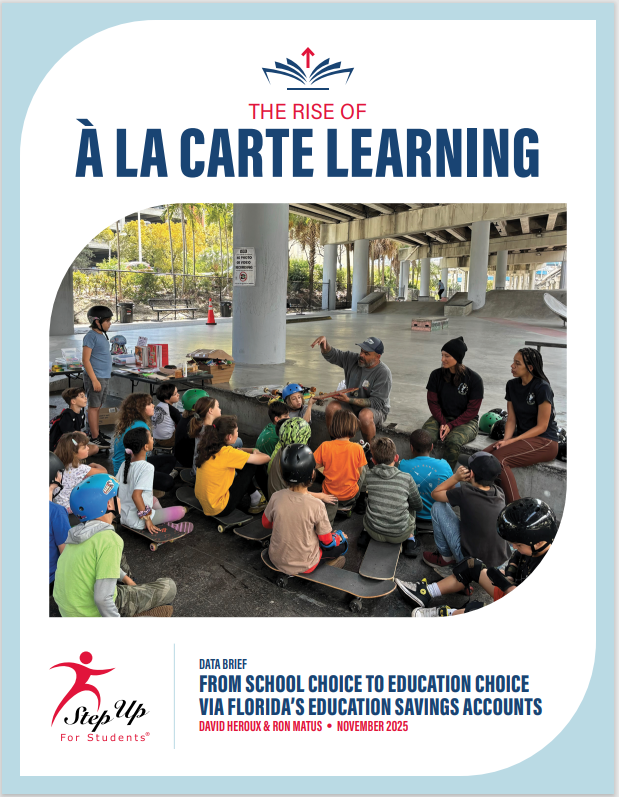
In the blink of an eye, à la carte learning in Florida has become one of the fastest-growing education choice options in America.
This school year, 140,000 Florida students will participate in à la carte learning via state-supported education savings accounts, up from 8,465 five years ago. Their parents will spend more than $1 billion in ESA funds.
These families are at the forefront of epic change in public education. Completely outside of full-time schools, they’re assembling their own educational programming, mixing and matching from an ever-expanding menu of providers.
Nothing on this scale is happening anywhere else in America.
To give policymakers, philanthropists, and choice advocates a snapshot, we produced this new data brief. In broad strokes, it shows a more diverse and dynamic system where true customization is within reach for any family who wants it.
ESAs shift what’s possible from school choice to education choice. They give more families access not only to private schools, but tutors, therapists, curriculum, and other goods and services.
Adoption of these more flexible choice scholarships has been booming nationwide; 18 states now have them. But nowhere is their full potential more fully on display than in Florida.
Last year, 4,318 à la carte providers in Florida received ESA funding, more than double the year prior. Many of them are tutors and therapists, but a growing number offer more specialized and innovative services, as we highlighted in our first report on à la carte learning. Former public school teachers are also a driving force in creating them, just as they’ve been with microschools.
How far and fast à la carte learning will grow remains to be seen. For now, check out our brief to get a glimpse of what’s ahead.

States with recent education choice lawsuits involving EdChoice Legal Advocates and the Institute for Justice.
As education choice options expand for families across the nation, opponents are stepping up their fight to preserve the status quo.
Observers say these conflicts are examples of growing pains that come when a society undergoes transformational change.
 “It’s just part of the cost of doing business,” said Michael Q. McShane, director of national research at EdChoice, a national nonprofit think tank. “Educators are not alone in challenging policies they don’t like. New laws get passed; people who can’t do things democratically try to do things through the courts.”
Michael B. Horn used a famous quote (often misattributed to Mohandas Gandhi) to describe the spate of lawsuits: “First they ignore you, then they laugh at you, then they fight you, then you win.”
“I think we’ve entered the fight stage,” said Horn, the co-founder, distinguished fellow, and chairman of the Clayton Christensen Institute and an author of several books on disruptive innovation. “Education choice has gotten big enough that the entrenched interests dedicated to preserving the status quo are starting to see it as a threat.”
Legal fights over education choice began in the 1800s when Catholic families opposed the Protestantism taught in public schools. In 1925, the U.S. Supreme Court ruled in Pierce v. Society of Sisters that parents had the right to put their children in private schools. In 2002, the high court issued another landmark decision, Zelman v. Simmons-Harris, which upheld an Ohio scholarship that allowed parents to spend the money on religious schools. The high court found that when the parent controls the expenditure, the state has no role in determining whether the parent will choose to use funding at a religious or secular school.
With the Zelman ruling settling that question, choice opponents began trying to insert race-based arguments using the language of state constitutions. Michael Bindas, a senior attorney at the Institute for Justice who argued the landmark case Carson v. Makin before the U.S. Supreme Court, outlined that shift in a paper published in the Syracuse Law Review. According to Bindas, common arguments center on education clauses requiring states to maintain uniform or common public school systems. Education choice opponents, he said, take that a step further and claim that private scholarship programs could upset racial balances that state constitutions require state governments to maintain. They also argue that the requirements that states maintain public school systems bar them from establishing concurrent private education choice programs. Lower court judges in Ohio and Utah recently cited this argument in striking down choice programs. Ohio plaintiffs also raised the issue of racial balance argument, which the judge rejected.
McShane and Horn say the spate of lawsuits won’t stop education choice programs from becoming the norm in public education. However, they will delay the transition.
“Yes, these cases are a headache and can delay implementation, but school choice has a good track record,” McShane said. “It will take numbers and time, and it’s going to tip over into a different mindset.”
Where things stand
Montana: Families are waiting on a judge to rule on a lawsuit brought by opponents of a 2024 education savings account program for students with special needs. Plaintiffs argue that the law allowing reimbursements for $6,800 per child violates several provisions of the state constitution and redirects tax dollars to private institutions at the expense of students with special needs who remain in public schools. The judge denied the plaintiff’s motion for a temporary halt to the program, allowing families to continue using their ESAs while the case is pending.
Ohio: The state has appealed a lower court’s ruling that declared the state’s $700 million Educational Choice Scholarship Program (EdChoice) unconstitutional. In siding with the coalition of school districts and other choice opponents, the judge said that the program was not a subsidy program, as the state argued, but a separate system of schools in violation of the state constitution. However, the judge rejected the plaintiffs’ argument that the program violated the state constitution’s education clause by creating racial imbalances in the district schools. The 10th District Court of Appeal is expected to hear the case in 2026.
Utah: Families are continuing to receive funds from the Utah Fits All scholarship program while a district court ruling in favor of a teachers union-backed lawsuit is under appeal to the state Supreme Court. A district judge ruled that the state constitution prevents lawmakers from using tax revenue to fund education programs other than public education, higher education, and services for people with disabilities. The judge rejected the state’s argument that it had met its funding obligations to public education and that nothing in the law prohibited it from funding a separate program to support families choosing private or home education.
Wyoming: Families seeking to use Steamboat Legacy Scholarship ESAs had to find other options for the 2025-26 school year after a trial judge blocked the state from distributing funds in July at the request of the Wyoming Education Association and other plaintiffs until the judge rules on their lawsuit against the program. The judge recently denied a motion by state officials and attorneys for two families to dismiss the lawsuit based on their argument that the plaintiffs lacked legal standing.
Missouri: Education choice advocates scored a win last month when a judge denied the teachers union’s request to freeze payments to the MOScholars K-12 scholarship program as their lawsuit continues. MOScholars began in 2021 as a tax credit program supported by private donors. Earlier this year, the state allocated $51 million to the program, prompting the Missouri Education Association to file the complaint, which contends that the allocation unconstitutionally diverts taxpayer funds to private schools.
Arkansas: The state’s Education Freedom Account program is being fought on two fronts. In June 2024, opponents sued in state court, arguing that the program illegally diverted tax dollars from the public school system to benefit private schools. The judge denied the state’s motion to dismiss the complaint, so state attorneys are appealing to the state Supreme Court.
The same plaintiffs filed another lawsuit a year later in U.S. District Court. It argues that the program violates the Establishment Clause of the First Amendment because “it aids in the establishment of religion” by providing state funding to private schools operated by religious organizations. The state refutes that by arguing that the money can go to schools representing a wide variety of faiths, as well as secular schools.
They also argue that the program violates the Equal Protection clause of the 14th Amendment because it discriminates against low-income families, families in rural areas where there are fewer private schools and students with disabilities, because private schools are exempt from the federal Individuals with Disabilities Education Act. The program is also discriminatory, according to the complaint, because private schools are not held to the same standards as public schools. The state attorney general has filed a motion to dismiss the case, arguing that the plaintiffs lack standing.
Kentucky: The Kentucky Supreme Court heard arguments on Sept. 11 about whether the state’s charter school funding law violates the state’s constitution. Charter schools have been legal in the Bluegrass State since 2017, but there was no state funding mechanism. Lawmakers passed House Bill 9, which allocated money to charter schools, which are publicly funded but independently managed. A trial court judge ruled in 2023 that the law violated the state constitutional ban on the use of tax dollars to support non-public education and the constitutional requirement for “an efficient system of common schools.”

Opponents of education freedom, facing a series of legislative defeats, have responded by going off the deep end with conspiracy theories and crackpot fables. The formula works something like this: start with tortured and incomplete reading of the research on school choice which ignores a large majority of the findings and studies. Add a fabricated history of the K-12 choice movement that ignores the likes of Thomas Paine and John Stuart Mill, and that implicitly requires you to believe that such prominent left of center luminaries such as Daniel Patrick Moynihan, Jack Coons, Stephen Sugarman and Howard Fuller (among many others) were either knowingly or unknowingly part of a vast right-wing conspiracy. The bards singing this saga also want you to ignore the fact millions of Black and Hispanic families have voluntarily entrusted choice schools with the education of their children. This vast right-wing conspiracy is a racist vast right-wing conspiracy meant to destroy public education!
Quite appropriately, neither lawmakers nor teachers seem to be buying much of this double-plus good duck-speak. EdChoice and Morning Consult released conducted a national survey of K–12 teachers. In addition to hopeful signs of optimism regarding the teaching profession and some signs of improvement in student behavior and absenteeism, the survey found strong support for ESA policies:
 Public school teachers send their children to private schools at approximately twice the rate of the general public. Little surprise there, as they have a front row seat to district dysfunctionality. The Ed Choice survey also shows strong support for vouchers, charter schools and open-enrollment policies. Despite a non-stop agit-prop effort by unions, most teachers support families having options.
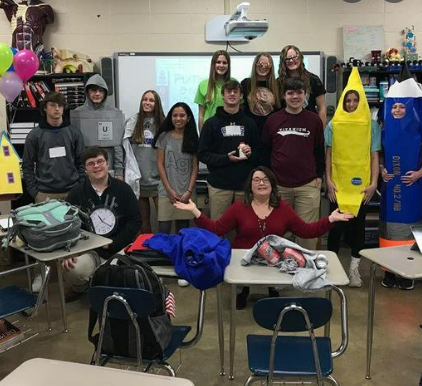
From its start in 1964 as “the little schoolhouse on the bayou," Bayou Academy in Cleveland, Mississippi, has changed location as its population grew. Today, the academy is home to more than 500 students and 70-plus faculty and staff members who strive to provide an excellent education in an environment that promotes rigorous academic challenges, Christian values, and student-engaged instruction.
Editor’s note: This first-person essay from Mississippi mother Leah Ferretti was adapted from the American Federation for Children’s Voices for Choice website.
When our son Thomas was about to move to first grade, his teacher told us he should repeat kindergarten. Being a teacher myself, and trusting the education system, I agreed without asking any questions.
But three weeks into Thomas’ second year of kindergarten, I told my husband that beyond Thomas’ speech difficulties, for which he was receiving services, something was not right. We decided to have him evaluated and learned he was struggling with severe dyslexia, attention deficit disorder, and anxiety.
We went to the school with this information and assumed Thomas would receive appropriate additional services and that everything would be fine. That was not the case.
School officials disagreed with the doctor’s recommendation that Thomas be taught using the Orton-Gillingham approach, arguing it was not what he needed. They said he would be fine, adding that Thomas was not the first dyslexic child they had enrolled.
I had not intended to continue my education after receiving my teacher certification, but to give Thomas a fighting chance, I returned and earned a master’s degree so I could help him myself. I asked the school district to let me come into Thomas’ classroom and be a provider during the school day so he wouldn’t have to spend so many hours on homework, but the administrators turned me down.
We had no choice but to begin doing our own research. That’s when we found Empower Mississippi, a grassroots movement that helps students with special needs and families like ours. Empower Mississippi puts people over divisive politics and works to give voice and hope, educating, engaging, and electing Mississippians dedicated to removing barriers to opportunity.
We learned about a state scholarship program for students with dyslexia, but soon found out access to it was limited. Then we learned that the Equal Opportunity for Students with Special Needs Act, enacted by the Mississippi Legislature during the 2015 legislative session, had created the Education Scholarship Program.
This education savings account program was designed to give parents of children with special needs the option of withdrawing their child from the public school system and receiving a designated amount of funds to help defray the cost of private school tuition and other allowable educational activities.
In the meantime, we found a local independent school, Bayou Academy. The teachers welcomed the help I was credentialed to provide to special needs children – and they welcomed Thomas as well. Even though we were still on the waiting list for the ESA, we moved Thomas to the academy.
A few months later, when I got the letter saying Thomas had been approved for the ESA, I cried and cried.
Eventually, our younger son, Henry, also was diagnosed with dyslexia. This time, we knew what to do. We applied for an ESA for him, he went on the waiting list, and was approved.
It was stunning to us that no one provides parents with information about these opportunities. We, like many families, had to find our own path. Because of that, it’s become our mission to help other families by sharing our story.
It’s been three years since Thomas transferred to Bayou Academy and he’s now at the point where he is successful in the classroom. He enjoys going to school and he has a host of friends.
Watching his smiling face, we are convinced that families should have the right to choose the best educational setting for their child. Income should not be a barrier. In any other sector, people have a choice. They also should be able to choose when it comes to their child’s education.
We are grateful to Empower Mississippi, the Education Scholarship Program, and Bayou Academy.
A bill that would expand a K-12 state scholarship program originally intended to offer safer educational options for bullied district school students passed its first hurdle Tuesday.
Members of the Senate Education committee voted 6-4 along party lines, with Republican supporting and Democrats opposing, to approve Senate Bill 506, which would expand eligibility and change the funding method of the Hope Scholarship program, which was established in 2018 as a tax-credit funded program to allow students who experienced bullying at district schools to transfer to a private school or another public school. Students who choose another public school could use the scholarship toward transportation costs.
If given final approval, Senate Bill 506 would expand the program to include students in school districts that have been sanctioned by the state Board of Education for failing to follow state rules or laws.
The bill, currently a traditional school choice scholarship program that allows students to transfer to private schools or pay for transportation costs to public schools outside their district, would convert the scholarships to education saving accounts, or ESAs, which are flexible spending accounts.
Students who opt to attend other public schools would still receive a transportation scholarship.
The bill would allow the funds to be spent on private school tuition and fees, curriculum, devices, assistive technology, instructional materials, and contributions to the Stanley G. Tate Florida Prepaid College or Florida College Savings Program.
Bill sponsor Manny Diaz Jr., R-Hialeah, said the proposed ESA spending rules are aligned with existing law.
“It doesn’t change anything in the current statute,” said Diaz, who called the bill “student centered.”
“This goes back to a philosophical discussion about what your education system should be about,” he said.
Under the bill, if the state later determines a district has returned to following state law, students in those schools could no longer be approved under those provisions. Bullied students, however, would still be eligible.
Diaz added that the program allows parents to have rights regarding their children’s education and allows them to have options “in a case where they feel hopeless.”
Editor's note: Be sure to listen to the first podcast in this series here.
In the second in a two-part series hosted by Kevin Roberts of the digital innovation firm Robots and Pencils, Tuthill and Bradshaw continue discussing a partnership between Step Up For Students and Jacksonville-based artificial intelligence company NLP Logix that aims to create a simple and customizable online platform for families who use education savings accounts to support their children’s education.
Tuthill, Roberts and Bradshaw discuss the new platform and its potential to create greater social capital for families that traditionally lack the resources of more affluent communities. They also discuss how tools such as artificial intelligence-based predictive analysis can assist families in successfully navigating the complex decisions they need to make to support their children’s unique educational needs.
“Having an (artificial intelligence and data) partner to educate us about what kind of data to collect privacy issues to manage ... having that relationship is really important. It's going to be transformational for education choice."
EPISODE DETAILS:
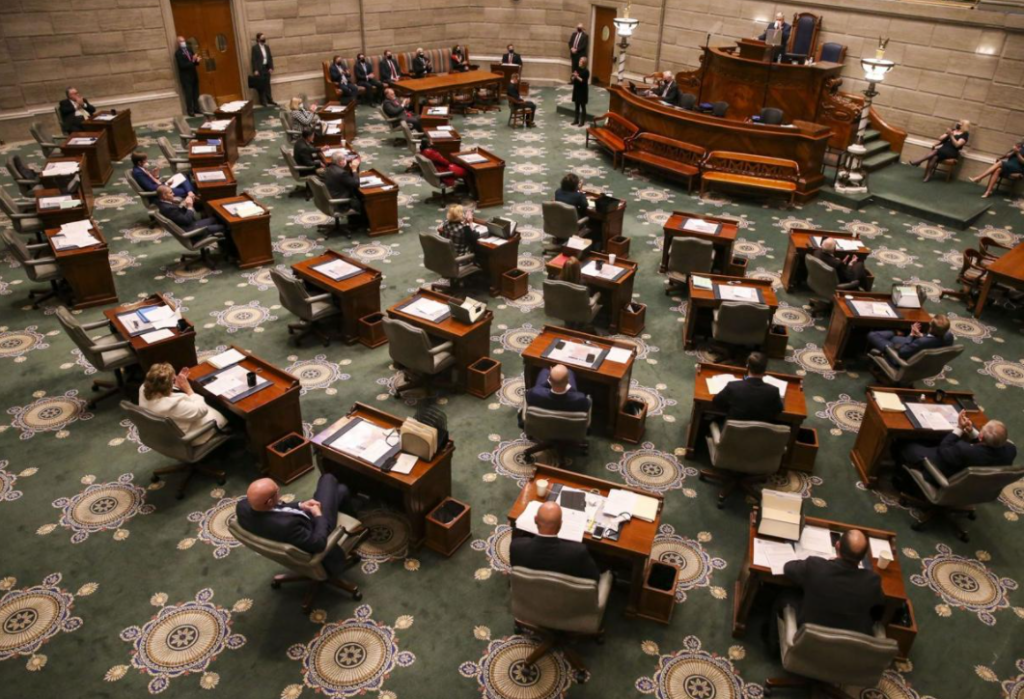 Missouri has become the latest in an increasing number of states that are embracing education choice with the creation of its first private school choice program.
Gov. Mike Parson signed into law earlier today HB349, which will grant Missouri families access to resources and tools to assist with various educational needs for their children.
The legislation creates a $25 million education savings account program that provides eligible students $6,350 for educational expenses to attend the public, charter, virtual, private or homeschools of their choice. Any student who attended a public school in the previous year or is entering school for the first time is eligible.
Students with special needs who have an Individual Education Plan or a family income below federal free and reduced-price lunch guidelines will be given first preference. Those from families making less than 200% of that amount will be given second preference.
Tommy Schultz, chief executive officer of the American Federation for Children, praised lawmakers, saying the program will empower parents to make the best decisions for their children.
“School choice is on the rise nationwide, and this represents vital progress for educational opportunity in Missouri,” Schultz said. “We are all thankful for Gov. Mike Parson and the courageous Missouri legislative leadership – especially Speaker Rob Vescovo, Senate Leader Caleb Rowden, Sen. Andrew Koenig, and Rep. Phil Christofanelli and their commitment to putting students first."
The Ohio Senate’s education plan for the state budget for 2022–23 would prioritize families’ needs and wants.
Editor’s note: this commentary from Aaron Churchill, the Ohio director for the Thomas B. Fordham Institute, appeared recently on the Institute’s website.
Across the nation, state lawmakers have been heeding the call for parents to have more control over their children’s education.
Recognizing that there is no “one-size-fits-all” model that meets every kid’s need, legislators have been actively strengthening school-choice policies and expanding options for families. Florida, for instance, recently expanded its nation-leading private school scholarship programs. Iowa just significantly improved its charter school law. West Virginia and Kentucky created brand-new educational savings account (ESA) programs that offer parents flexibility in how they meet (and pay for) their kids’ educational needs.
So far this year, Ohio’s education debates have paid scant attention to choice. Lawmakers have focused on technical issues with the school funding formula and overall spending levels. But that changed last week with the unveiling of the Senate’s education plan for the state budget for the fiscal years 2022–23 (HB 110). If enacted, its proposals would be a huge step forward in putting families’ needs and wants at the center of education policy. Here are highlights of the Senate approach:
Removes caps on the number of EdChoice scholarships available. EdChoice, the largest of Ohio’s scholarship programs, allows children from low- and middle-income households to attend private schools of their choice. The program has grown significantly over the past decade, but legislators have limited the number of available scholarships, which in the past has left some children in the lurch. The Senate plan would ensure that any eligible student applying for an EdChoice scholarship receives one.
Increases the EdChoice and Cleveland scholarship amounts. The EdChoice and Cleveland scholarship amounts have fallen well behind public school spending. Today, they’re worth just $4,650 in grades K–8 and $6,000 in grades 9–12, even as Ohio’s public schools spend on average $14,000 per pupil. The Senate plan narrows that gap somewhat by lifting these scholarship amounts to $5,500 and $7,500 in grades K–8 and 9–12, respectively. Importantly, it also ensures that in future budgets, scholarship amounts will automatically rise in proportion to any increase in public schools’ base funding. This provision would create more predictability and fairness for families that rely on these programs.
To continue reading, click here.
 Recently, I looked under the hood of Arizona’s nation-leading academic growth by examining district and charter schools in downtown Phoenix. Two things stood out: lots of academic growth and a great deal of variety in approaches.
District and charter schools in combination operating within the boundary of Phoenix Elementary (a high poverty district covering downtown Phoenix) have a rate of academic growth 27% higher than average. I believe that the variety of approaches is key; Phoenix kids had access to two classical/traditional schools, two Montessori schools, two schools focused on the arts, and a school sponsored by Arizona State University.
The options for these students don’t end there, however. About one-third of Phoenix-area students utilize open enrollment to attend a district school that is not their zoned school. Phoenix kids can attend suburban districts like Madison Unified and Scottsdale Unified. Arizona also has scholarship tax credit programs and the Empowerment Scholarship Program to enable students to attend private schools.
All is far from perfect. Charter schools have waitlists, as to do School Tuition Organizations providing tax credit assistance. Only about one-quarter of Arizona students qualify for the education savings account program. Open enrollment is available, but transportation is the sole responsibility of families.
Downtown Phoenix may look great from a growth and choice perspective relative to most central city areas, but work remains to be done. Every waitlist is a policy failure.
This system continues to evolve, and educators continue to create new opportunities for Arizona’s inner-city families. State lawmakers are considering transportation assistance for low-income students. Moreover, the Arizona Black Mothers Forum has begun opening micro-schools as another option for inner-city families.
Click here to learn more about Black Minds Matter’s inaugural Black-Owned Schools tour. The video gives a glimpse into what empowerment means to people via an interview conducted by Florida’s own Denisha Merriweather with Janelle Wood, founder of the Arizona Black Mothers Forum Micro-school. The interview is a tour de force of community empowerment.
“It’s time for the mothers to take over and do what we need to do,” Wood states. “We can’t just talk about it, we need to be about it.”
I highly encourage you to watch the interview in full, as I cannot do it justice.
Millions of mothers made the decision to leave the workforce during the COVID-19 pandemic. Choice policies give these women the tools they need to take control of their children’s education.
Another big trend we may see in Arizona: districts expanding and replicating their high-demand schools. #TeamEdsel of course will resist, but the positive incentives are in place and there are highly capable and innovative professionals operating in Arizona districts.
Stay tuned to this channel for updates.

Tristan Drummond, 8, has increased his attention span, improved his hand-eye coordination, and developed his core strength through virtual reality.
Danielle Drummond was skeptical when she first saw the virtual reality headsets and consoles, and even the large-screen TVs, that are available to families who receive Florida’s Gardiner Scholarship for students with special needs.
“At first, I even wondered, ‘What on earth is the educational value of this?’” said Drummond, who lives in Fort Lauderdale.
It was 2018 and Drummond’s son Tristan, who is on the autism spectrum and is homeschooled, had recently undergone back surgery to correct a tethered spinal cord, which he had since birth. Drummond hoped Tristan, 6 at the time, could relearn to walk with the help of virtual reality.
Virtual reality has been used since the mid-1990s to help people on the spectrum learn to communicate and connect with others. Adults can use the technology to prepare for job interviews. Children use it to improve cognitive and gross motor skills.
Drummond believed the VR equipment could do the same for her son. She purchased the equipment with funds from Gardiner’s education savings account (ESA) through MyScholarShop, Step Up For Students’ online catalog of pre-approved educational products. It includes curriculum materials, digital devices, and education software.
Families can also purchase items or services that are not on the pre-approved list. They must submit a pre-authorization request that includes supporting documentation and an explanation of how the purchase will meet the individual educational needs of the student.
A review is then conducted by an internal committee, which includes a special needs educator, to determine if the item or service is allowable under the program’s expenditure categories and spending caps, and a notification is sent to the parent. The item or service may then be submitted on a reimbursement request, and it must match the corresponding pre-authorization.
Step Up For Students employs numerous measures to protect against fraud and theft. For example, if a service provider’s reimbursement request is submitted from an IP address and the platform sees that the parental approval came from the same IP address, the anti-fraud staff is alerted to investigate.
Thanks to the VR equipment made possible by the ESA, Tristan, now 8, did relearn to walk. But that was just the beginning.
“Then we discovered it had a lot more value,” Drummond said.
 Since he began using virtual reality, Tristan has increased his attention span, improved his hand-eye coordination, and developed his core strength. He has learned how to interact socially, how to count and how to exercise.
Tristan cannot go on field trips like other students. He can’t even sit in a movie theater.
However, through virtual reality, Tristan has visited Walt Disney World’s Epcot Center and the Smithsonian Institute in Washington, D.C. He landed on the moon with Apollo 11, and went scuba diving through the Great Barrier Reef in Australia, where he swam with sharks.
“It’s enriched his life in ways that we would have been otherwise unable to do,” Drummond said.
Tristan also uses VR for his occupational and physical therapy. Drummond said it used to be a chore to get Tristan to participate in therapy.
“We would lose 75% to 80% of therapy lessons trying to get him into a groove to enjoy what he is doing,” she said. “It’s a struggle every parent with a child like Tristan knows.”
But with virtual reality now part of the sessions, Drummond said it only takes Tristan a few minutes to get into the therapy groove.
“So, we’re now getting full therapy sessions and because of that, he’s talking more, he’s interacting with us more. He’s actually becoming more social,” she said. “It’s gotten him into being healthier, because he has the ability to do physical therapy, which is absolutely his favorite thing to do.”
The technology also helps Tristan overcome his fear of visiting a place for the first time, like a medical facility. He can tour the facility virtually ahead of time.
“But now with the virtual reality, I can set him up on that, have the exact place we are going on it, and allow him to look around in a safe environment,” Drummond said. “That way when he finally goes, I don’t have to make plans for our arrival like an army general. I don’t have to have 500 contingency plans because he’s expecting it. He knows what it’s going to sound like. What it’s going to look like. He’s going to know where things are. All these things help him get acclimated and actually get more out of going to these places.”
Drummond never thought that Job Simulator on Oculus Quest, or the Ring Fit Adventure game for Nintendo Switch, or Beat Saber would improve Tristan’s life in so many ways, but they have.
“They’re a lot of fun, but it’s also a way to sneak education into him,” Drummond said. “I don’t know if I can really say it enough about it. It just helps him to do pretty much everything. He has a blast with it.”

