Maxwell “Max” Johnson knows something about you. Maybe you know it, too. Maybe not. Either way, Max wants you to know this:
You are smart.
He’s so sure you are that he wrote a book about it.
Published last December, “Let Me Help You … BE SMART: A Kid’s Guide to Confidence, Focus, and Smart Choices” is a self-esteem book aimed at children ages 8-13 and is available on Amazon.
“My goal is that every reader finishes this book feeling more confident, more smart, and more prepared for life,” Max said.
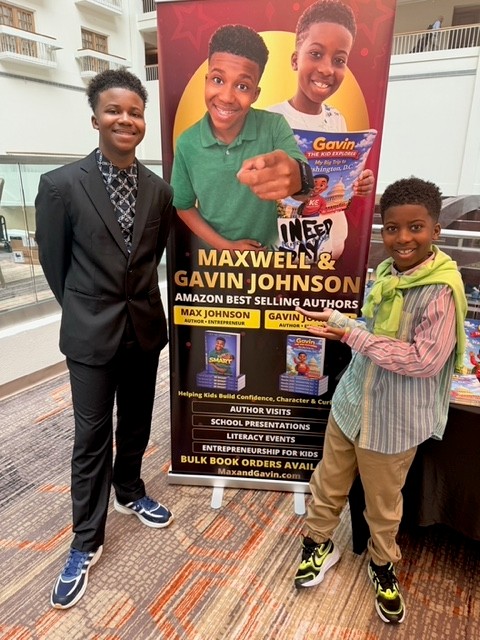
Max, 14, lives with his family in Lake Mary. He and his younger brother, Gavin, 11, receive Florida education choice scholarships managed by Step Up For Students, which their father, Stephen, said has put them in environments that allow them to succeed.
“Their ideas and their ability to learn at a high level are because of Step Up,” Stephen said.
Max, who once attended a private school, is home-educated, learning both at home and through a hybrid program at a private school, which he attends two days a week. His Education Savings Account covers both his home-education curriculum and a portion of his tuition for the private school.
“The Step Up scholarship is important to us, because Max was an honor roll student in private school and takes honors courses now, but because of his desire for entrepreneurship, the scholarship works better for him, because he can still do things like get into business, work on his books, and also find school a priority,” Stephen said.
“I love the fact that he still participates in school, still has school relationships, still goes and gets a dose of school, but also gets to come home and focus on the things that he really cares about.”
Gavin attends a private school.
“We like that environment for Gavin,” Stephen said. “He loves a full day, and it's cool for him to go to school. He comes home, and then when he has time, he works on his stuff, maybe on the weekends. So, the week is all about school. The weekend is his time to do other things. I just want him to focus on school, do everything else on the weekend.”
Like Max, Gavin is also a published author.
“Gavin The Kid Explorer: My Big Trip to Washington, D.C.” is a travel guide for children ages 4-9 and is available on Amazon.
“These kids, they're fearless. I love it,” Stephen said. “They really believe that they can do anything. They believed they could write a book, and then they actually did it.”

Belief is a big part of the brother’s makeup.
Stephen works in video production for a motivational speaker, and their mom, Erin, is an entrepreneur who started her own cleaning service as a college sophomore.
As long as they can remember, the boys have joined their parents at motivational seminars. Those forums are for adults, but Max was able to take what he learned and translate it into messages children can understand.
When he was 8, Max made motivational wristbands for his peers that contained messages like “You can do it,” “You’re smart,” and “I’m a winner.”
Max keeps a journal where he wrote about how he sometimes felt in school. There were times when he didn’t understand the lesson. Other times, he felt confused.
Sometimes he didn’t feel smart.
The success of his wristbands taught him that his confusion and lack of self-esteem are normal parts of growing up. He began to address those in his journal, which in turn started to read more like a self-help book than a diary.
And just like the motivational messages he heard when his dad was working, Max felt he needed to share his message.
“The reason why I wrote this book is because I wanted to help kids learn lessons that they don't really learn in school, things like making smart decisions, working hard, treating people with respect, managing money, and building good habits,” Max said. “I wanted a book that was under 100 pages for young people to understand, but powerful enough that they can use the lessons for the rest of their lives.
“I wanted to show them that, really, they are smart. Anyone can be smart. It depends on how you think about yourself.”
Meanwhile, Gavin took notes during a family trip to Washington, D.C., with the idea of turning it into a book. This way, he could bring young readers along on his adventure. He detailed each place they visited, sites like the Washington Monument, the Smithsonian, the Jefferson Memorial, and added three notes of interest for each.
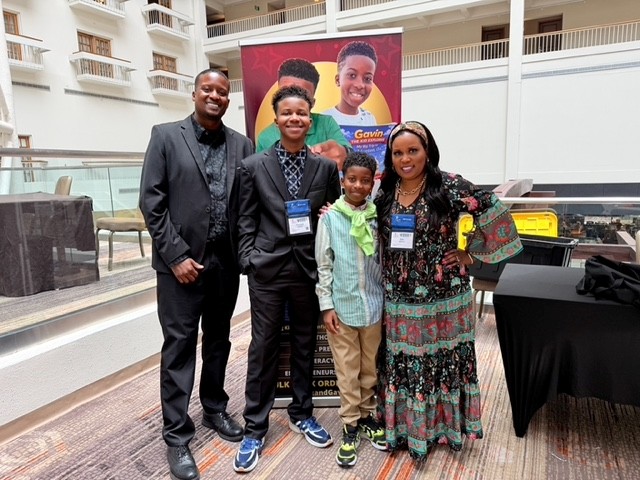
Erin and Stephen turned the journals into books and presented them to the boys on Christmas morning.
“Surprised and amazed” is how Gavin described the feeling of seeing his journal become a book.
He was even more surprised and more amazed when his book was mass-produced and made available on Amazon. Within a week, it was Amazon’s top-selling travel guide.
“I love motivating kids and teaching them things that they haven't thought of before,” Gavin said. “It's so fun and surprising that they love the topics that I choose, like traveling to D.C., and they love the character that I picked and how I illustrated the book.”
Max’s book reached No. 3 on Amazon’s list of social skills books.
“That was just surreal,” Max said.
He’s currently finishing his second book, which addresses confidence. It is set to be released Nov. 27 -- Black Friday.
Gavin is hard at work on his second, as well – a travel guide of New York City.
The brothers spent part of their summer promoting their books and speaking at camps around Central Florida. It’s a prelude to what they hope to be doing as adults – motivational speaking.
“I feel so empowered,” Max said. “I feel I can empower kids to become better versions of themselves, and then they can pass it on for generations.”
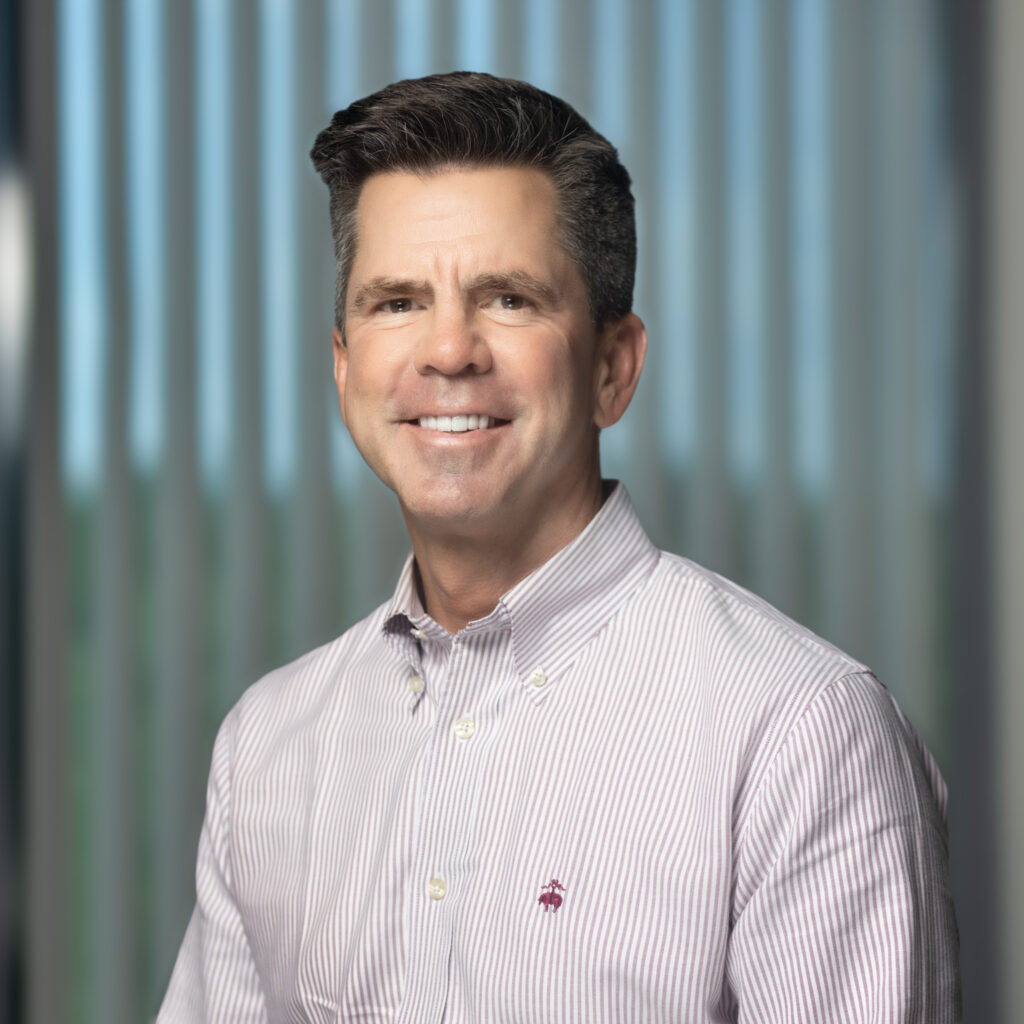
Editor’s note: Harvard University Program on Education Policy and Governance devoted its annual spring research conference to helping policymakers assess education choice: What is and is not working, the trade-offs involved in different programs, and the long-term effects. John F. Kirtley, the founder and chairman of Step Up For Students, the nation’s largest nonprofit scholarship funding organization, told attendees in a keynote address about his home state of Florida, where 30 years of robust education choice across the district, charter, and private sectors are not only working but have set a national standard for the other states taking their first steps on the journey. His remarks are summarized below. You can read the entire speech here. To learn more about Harvard’s Emerging School Models conference, scheduled for Sept. 17 and 18, go here.
Redefinition of public education
Growth of choice programs
Supply-side developments
Impact on rural and district schools
Educational outcomes and research
By Lauren May, Mary Camp, and Ron Matus
First, Florida. Now, Indiana. Which state will be next for a Catholic school comeback?
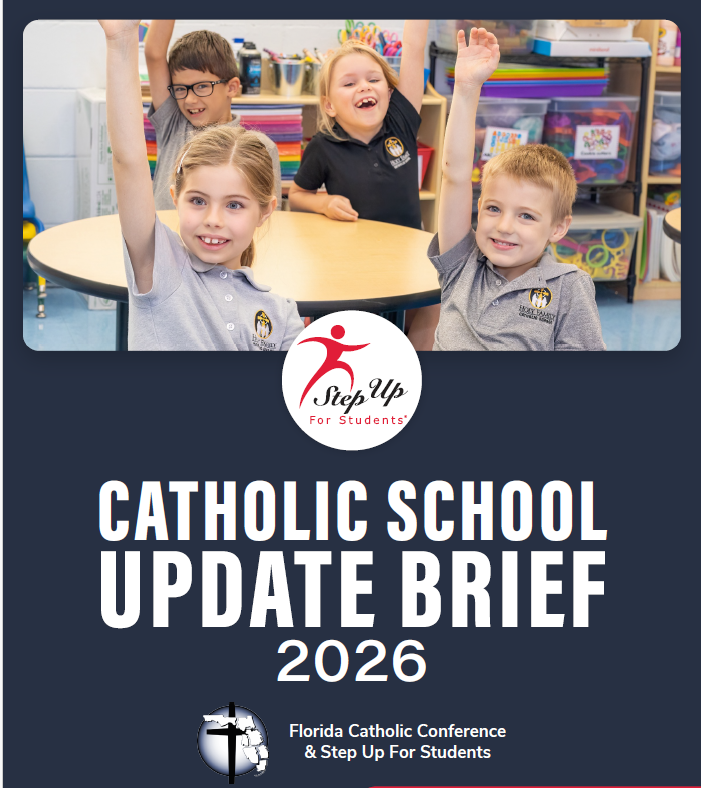
Our new, 2026 “Catholic school update brief” highlights not only continued Catholic school growth in Florida – which saw enrollment rise for a fifth straight year – but signs of resurgence beyond Florida, nudged by the historic expansion of school choice across America.
As we noted when the latest National Catholic Educational Association statistics were released in March, Indiana is now, like Florida, showing net enrollment growth over the past decade. Among the Top 10 states for Catholic school enrollment, the Sunshine State and Hoosier State are, for now, the outliers.
But don’t sleep on Ohio, which saw its Catholic schools grow by more than 3,000 students this year; or Texas, where a jaw-dropping 274,000 students applied for that state’s brand-new choice program. Don’t overlook smaller states with big choice programs and momentum, including Iowa and New Hampshire. And don’t forget about the potential of the new federal scholarship tax credit to enhance what’s been happening in the states.
Our brief includes a 50-state chart where you can track Catholic school enrollment year-by-year over the past decade. (Big thanks to the NCEA for collecting the data.)
It also includes more insight into the pace-setting growth in Florida, including a rapid rise in the number of students using special-needs scholarships.
If you have any questions, don’t hesitate to reach out. Our emails are in the bios at the end of the brief.
Editor's note: This post is shared by our sister organization, Step Up, Step Further Scholarship Fund, a new federal scholarship program launching in 2027 to support students in public and private schools.
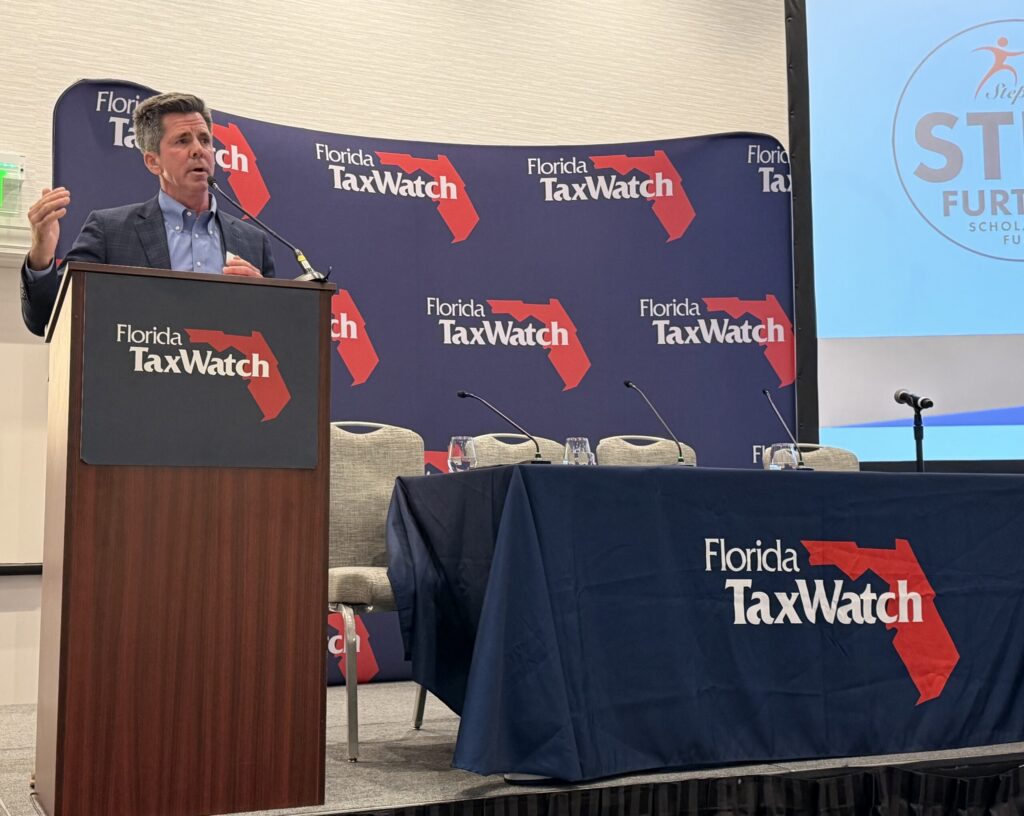
At Florida TaxWatch’s policy forum, Step Up For Students Founder and Chairman John Kirtley shared how the new federal Education Freedom Tax Credit will help expand opportunity for K-12 low income district school students. “The income levels that the federal law allows are, in my opinion, pretty generous,” Kirtley said. “They’re 300% of the area’s median income, which in Florida will be anywhere up to probably $250,000. However, a scholarship organization can set its own income limits.”
The new tax credit will continue to allow Step Up, Step Further, sister organization of Step Up For Students, to focus on serving the lowest-income students in Florida.
Kirtley went on to illustrate how Florida school districts have seen a dramatic increase in graduation rates since 1981, when the graduation rate hovered under 50%. He noted that a statewide push for greater accountability in schools and grading them has resulted in a graduation rate of over 90%.
“That’s an incredible improvement, and we should all be very proud of that. A great example of how the districts have responded is very close to home for me. My high school, Fort Lauderdale High School, when schools were first graded back in 1999, my high school was an ‘F.’ And it was an ‘F’ for several years,” Kirtley said.
Read the full article at Florida Politics > https://floridapolitics.com/archives/791109-john-kirtley-makes-case-for-choice-encouraging-use-of-education-savings-accounts/
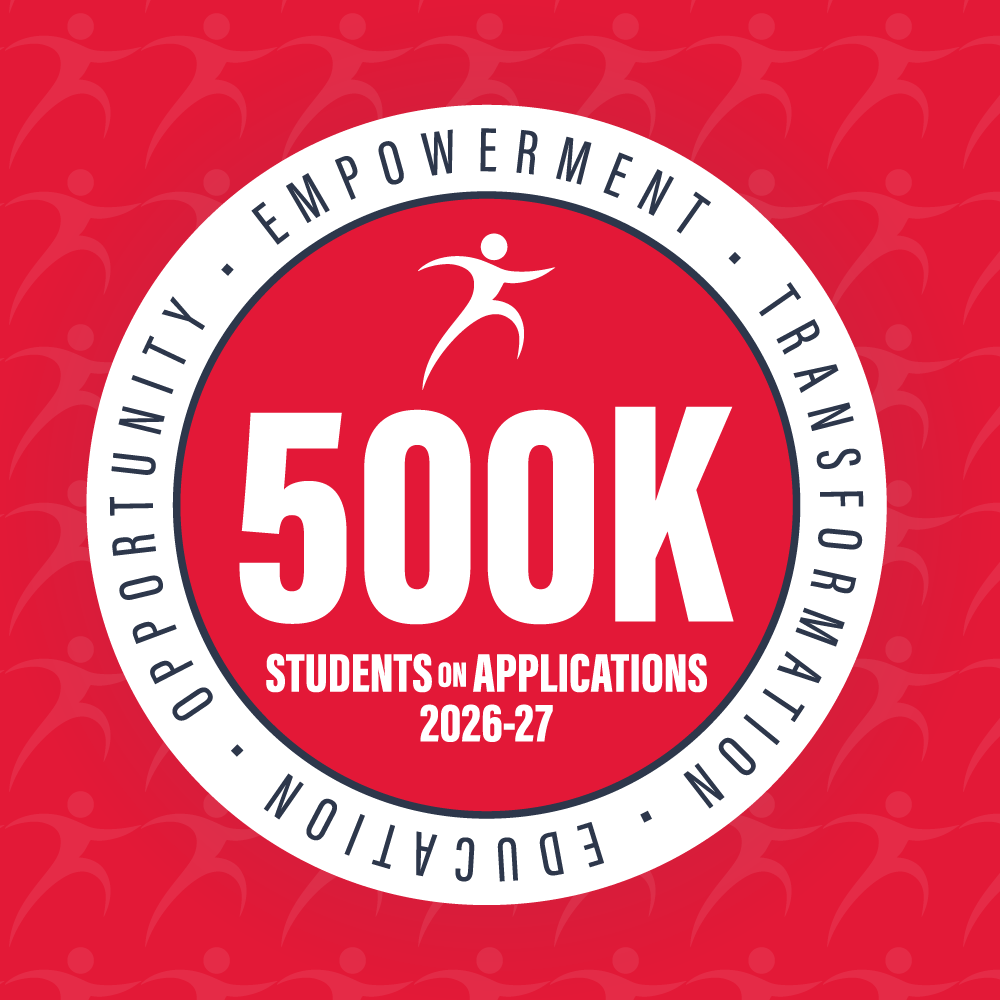
Less than two months after the application season began, record-breaking interest continues with more than 500,000 students applying for Florida’s K-12 education choice scholarships.
Step Up For Students, the nonprofit organization that administers 98% of the state’s scholarships, opened applications for the 2026-27 school year on Feb. 1. A record 200,000 applied during the first three days.
By midday Feb. 10, a total of 300,106 students had applied for scholarships, which represents an 11.7% increase over the same 10-day period last year. By Friday morning, Feb. 27, a total of 401,507 students had applied.
Applications reached the 500,000 mark on March 30, which was 22 days earlier than in 2025.
Step Up For Students CEO Gretchen Schoenhaar said last week that the organization’s team and systems were ready for the surge of interest. Step Up’s technology systems processed 15% more applications on the first day this year than at the same time last year. Of the families who called for assistance, more than 90% reported being “satisfied” or “very satisfied” with the support they received.
“Florida continues to set the pace for the nation in education choice,” Schoenhaar said. “Families have become accustomed to seeking options in their children’s education and Step Up For Students is proud to support them every step of the way.”
Since its inception in 2002, Step Up has administered more than 3 million scholarships.
During the 25-26 school year, more than 525,000 students have been funded on Florida’s K-12 scholarship programs to access learning options of their choice. If these students were counted as a single school district, it would be the largest in the state and the third largest in the country. That makes Florida the national leader in education options.
However, not all families end up using their scholarships. Top reasons include: Their preferred private school lacked capacity; they were on a waitlist for a charter school and were accepted; they chose to attend a district school, etc.
Step Up is on track this school year to have 2.75 million transactions on MyScholarShop, its online marketplace, for over $425 million. Step Up is on track to process over 4.5 million reimbursement requests this year, worth over $595 million, four times what it had just two years ago.
Current scholarship families have until April 30 to renew their scholarships for the next school year. All families who want a PEP scholarship must also apply by April 30.
Applications and more details are available here.
We will continue to update the numbers in this post until applications close.
Greater collaboration is being credited for a dramatic decrease this year in the number of Florida K-12 scholarship students experiencing scholarship funding delays because their names were also found on public school rolls.
According to the latest state figures, the rate of matched students in the Family Empowerment Scholarship for Educational Options was less than 1%, while the rate of students applying for the Family Empowerment Scholarship for students with Unique Abilities Scholarship was about 5%. Officials attributed the higher match percentage for FES-UA to that group’s greater mobility, given the various services available through the public school system.
In the latest quarter, fewer than 6,000 scholarship students were reported in public schools compared with 27,000 in the quarter that included the start of the 2025-26 school year.
The improvements occurred after officials at the Florida Department of Education worked with the state’s 67 school districts and Step Up For Students to improve the crosscheck process and pinpoint more students who were being double counted.
During the 25-26 school year, there are six crosschecks where the Florida DOE compares Step Up’s list of students who are on scholarship with school districts’ lists of students who were reported as attending a public school. If a student appears on both lists, Step Up For Students immediately freezes the student’s funds to ensure that public tax dollars are spent properly.
Step Up then contacts the families of these students and requests documentation showing that they were not enrolled in a district school, which is sent to the DOE. These students are funded on the scholarship only after the DOE clears them.
All scholarship accounts that were frozen from 2024-25 and the first two quarters of 2025-26 due to students appearing in a public school crosscheck have been resolved.
TALLAHASSEE, Fla.– Amanda Thompson said she will be the president of the United States.
Not wants to be or hopes to be but will be.Amanda Thompson said she will be the president of the United States.
Not wants to be or hopes to be but will be.
Just like she will be the attorney general of Florida, the governor of Florida, and the United States attorney general before reaching the Oval Office.
“That’s the plan,” she said. “I’m going to get there.”
Of course, there is some prep work to be done before she begins a career of service to her state and country.
First, Amanda, 17, is set to graduate this May from St. John Paul II Catholic High School (JPII), where she will be class valedictorian. She attends the parochial school in Tallahassee with the help of a Florida education choice scholarship managed by Step Up For Students.
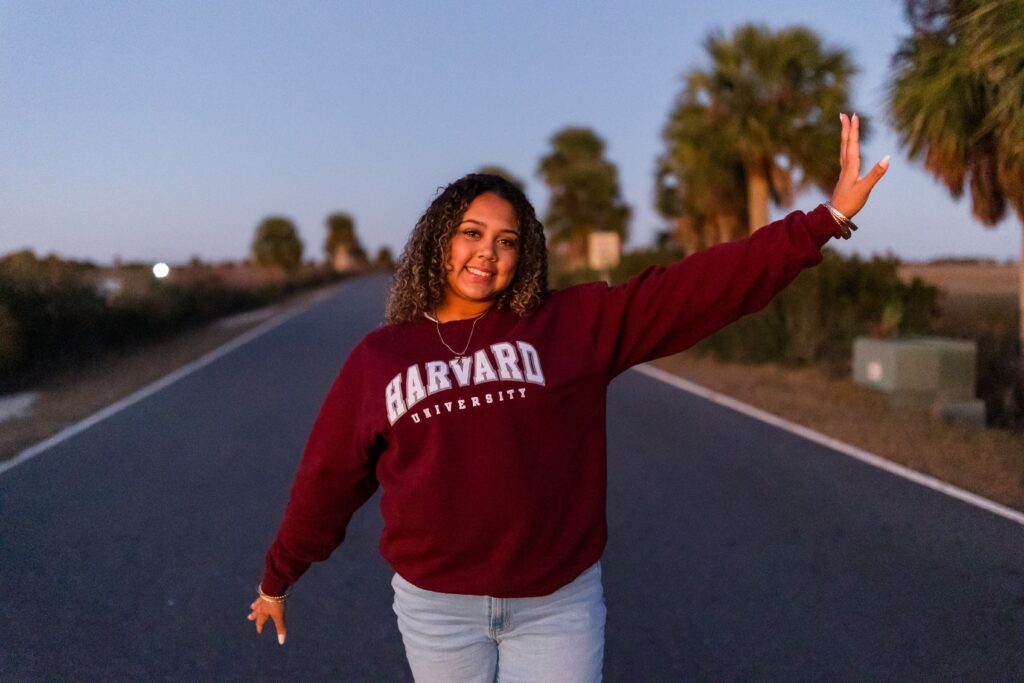
Then it’s off to Harvard University, where she plans to double-major in government and history and earn a degree from its prestigious law school. Along the way, Amanda will pitch for the Crimson softball team with designs on leading the program to its first appearance in the Women’s College World Series.
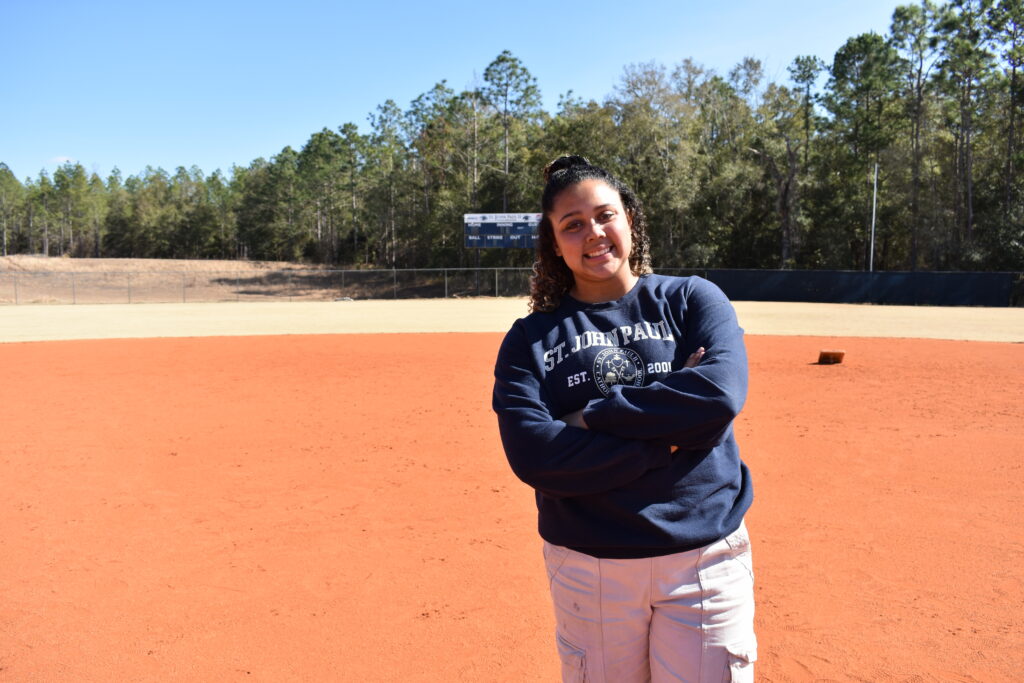
As that unfolds, Amanda is determined to play softball in the Olympics. She has attended tryouts for Team USA and is a member of the United States Virgin Islands national team.
Taken separately, any one of her goals is ambitious.
But combined?
“She has very, very high expectations,” said JPII Principal Luisa Zalzman. “She’s a go-getter, a high achiever. She has a drive that is very mature for her age.”
“She's done everything she's ever put her mind to,” said Amanda’s mother, Ashley Williard. “She said she wanted to be valedictorian, and I said, ‘OK, go be valedictorian.’ And she did it.”
Amanda is a bundle of energy and confidence. On the softball field, she has a running dialogue with everyone – teammates, opponents, coaches, umpires. In the classroom, she’s involved in every class discussion.
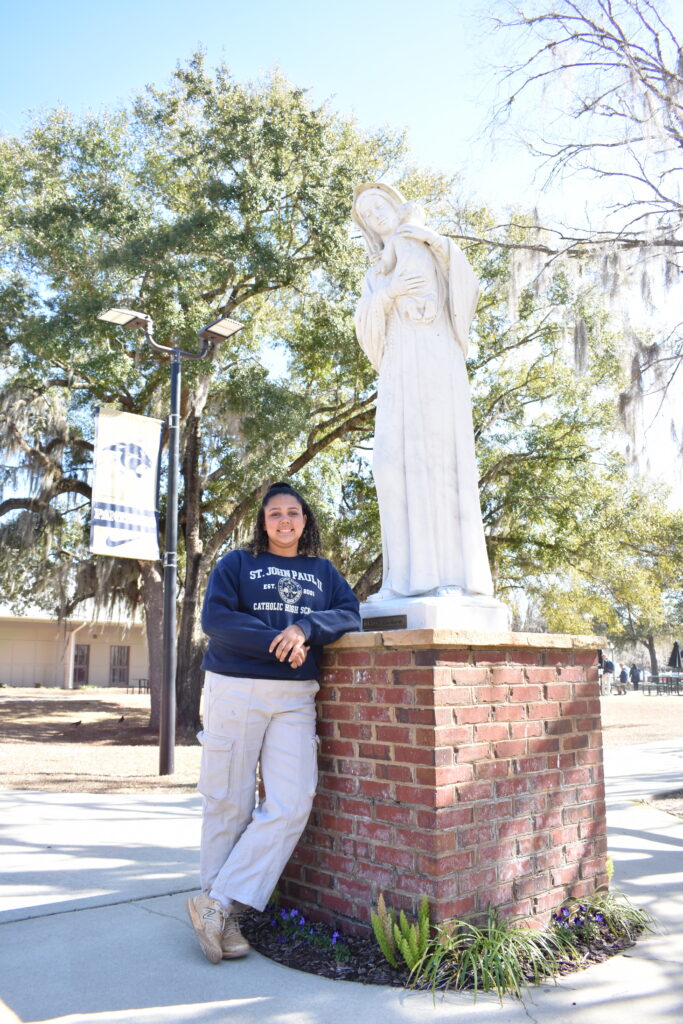
If you had approached her in August 2022 as she took the initial steps of her high school journey and told her she would graduate first in her class and be a member of Harvard Class of 2030, she would have been stunned.
“I would have said, ‘You got the wrong person.’ The difference between me then and me now is astronomical, and I think it’s because I attended this school,” she said. “It has to be.”
Amanda was a star as she rose through the ranks of the Tallahassee youth softball programs. Her parents, Ashley and James Thompson, envisioned their daughter earning an athletic scholarship to college. They were thinking of a high-end academic university like Duke or Notre Dame. That’s how Amanda, who attended her district schools until eighth grade, landed at JPII.
“We wanted a high school that was college-focused,” Ashley said. “Education is what we were looking for, and we could not have done it without Step Up For Students. No way could we afford to put her in that situation.”
There were “little things,” Amanda said, that shaped her academic future.
Her freshman English teacher encouraged her to write outside the margins during tests and essays.
“He said, ‘You don’t have to stay within this box. If you know more, write more on the paper.’ That stuck with me,” Amanda said.
Her freshman world history teacher announced to the class that Amanda scored the highest on the first test of the year.
“He congratulated me,” she said. “I thought that was insane.”
Midway through that semester, Amanda realized she had A’s in all her classes. That’s when she began to believe in herself as a student. Future valedictorian?
“Why not?” she said.
Amanda took AP World History as a sophomore and aced the AP test.
“That’s the class where I learned to learn,” she said.
Also, her love of history and government was born in that class, Amanda said. She can name all the countries of the world, tell you where they are located, and identify the flags.
“I’m working on my capitols,” she said. “It’s my hobby.”
Amanda took Spanish I and II in middle school and passed each, but not with grades that would stand out on a high school transcript. Sara Bayliss, JPII’s college advisor, suggested that Amanda retake those courses.
“She said the grades weren't good enough, that I could do better,” Amanda said.
Amanda retook both classes. She asked Principal Zalzman, a native of Venezuela, for tutoring help. The result was a pair of grades that fit proudly on the transcript Amanda sent to Duke. Duke was her dream school for education and softball.
And then Harvard called.
At midnight on Sept. 1 of her junior year – the first day college coaches can contact 11th graders – Amanda received a phone call from the Harvard softball coach.
“I didn’t even know they had a softball program,” Amanda said.
Intrigued, Amanda accepted a recruiting visit to the university located just outside of Boston. That trip marked the end of her Duke dreams.
“I want to make a difference in this world, and I think Harvard is the perfect school for me,” she said.
Terrence Brown, JPII’s softball coach, has watched Amanda emerge as an Ivy League student and a Division I softball player good enough to attend Team USA tryouts and earn a spot on the national team of a small territory with Olympic ambitions.
“She’s goal-oriented, and she doesn’t let anything get in the way of achieving those goals,” he said. “She’s worked very hard to get to where she’s going.”
Ashley and James are proud parents, but Ashley said they won’t take too much credit for Amanda’s success.
“We have nothing but pride,” Ashley said. “She is self-driven, self-motivated. We try to provide motivation. She’s missed proms and dances because of softball travel and schoolwork, and that was all her decision.
“There are a lot of sacrifices made to go along with this. She’s not afraid of hard work. She says she’s going to do something, and she goes out and does it.”
VENICE – He is not afraid.
Lyra Kerr wants to make that clear.
He is not afraid to climb a ladder that rises 29 feet above ground. He’s not afraid to stand on the small platform near the top of that ladder and reach for the bar that will swing him over the safety net.
Lyra is not afraid to hook his knees on the bar and dangle as he swings.
And he’s certainly not afraid to release his grip and spin once, twice, three times before bouncing to a stop in the net.
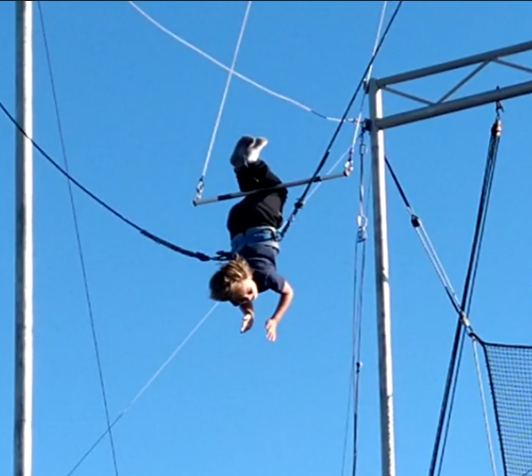
Yes, Lyra wears a harness and is assisted by two trained trapeze artists, but he’s 6, and the climb and the swinging and the spinning could be unnerving for a beginner, let alone one his age.
But, said his mom, McKenna Rodgers, “He’s fearless.”
“It’s not scary,” Lyra said. “It’s super fun.”
In fact, he added, it’s “the most super fun” thing he does.
For 90 minutes two days a week, Lyra is the daring young man on the flying trapeze.
He trains under world-renowned trapeze artist Tito Gaona at Gaona’s trapeze academy in Venice. The fee is reimbursed through his Florida education choice scholarship, managed by Step Up For Students.
Lyra, his stepsister and stepbrother each receive the Personalized Education Program (PEP) scholarship available through the Florida Tax Credit Scholarship Program. PEP provides parents with flexibility in how they spend their scholarship funds.
The scholarship enables McKenna to home-educate all three, who are enrolled in Florida Virtual School. She said her stepchildren, both teenagers, have improved scholastically since receiving the scholarship, especially in reading.
Lyra is just beginning his academic journey. McKenna is curious about where it will lead him and how, with PEP, she can tailor his academic needs and interests.
“I’m really happy to have access to it,” she said.
Lyra makes it look easy. (Video courtesy of McKenna Rodgers.)
The scholarship has paid for extracurricular activities for all three, including circus camp in the summer. Lyra is the only one who returned for training classes.
Tito Gaona said that Lyra can go as far as he wants to in the sport.
“Trapeze is a lot of fun, addicting. Once you get on a piece and you really like it, there's no end, because you fall in love with it because it's fun,” he said.
Venice, known as the “Shark's Tooth Capital of the World” for the tiny finds buried in the sand along its beaches, was once known as the “Winter Home of the Greatest Show on Earth.”
From 1960 to 1992, Ringling Bros. and Barnum & Bailey Circus brought circus performers, workers, and animals to Venice during the offseason.
McKenna, born and raised in Venice, has fond childhood memories of seeing the performers train during the winter, especially the trapeze artists.
Tito Gaona’s Trapeze Academy is located near the municipal airport. When McKenna drove by with Lyra, she would point at the students swinging through the air and tell him she always wanted to do that when she was his age.
One day, Lyra said he wanted to be a trapeze artist, and McKenna decided she was going to make it happen.
“It wasn't a vicarious thing,” she said. “It was just something we had around here that is not common and is unique to the area. The circus had its winter headquarters here, and should keep it alive in a way. Performance art is important.”
And Lyra did have some practice flying. Sort of. They lived for a time on a houseboat, and Lyra often dived into the water.
“I jumped off the boat,” he said. “Off the roof, really.”
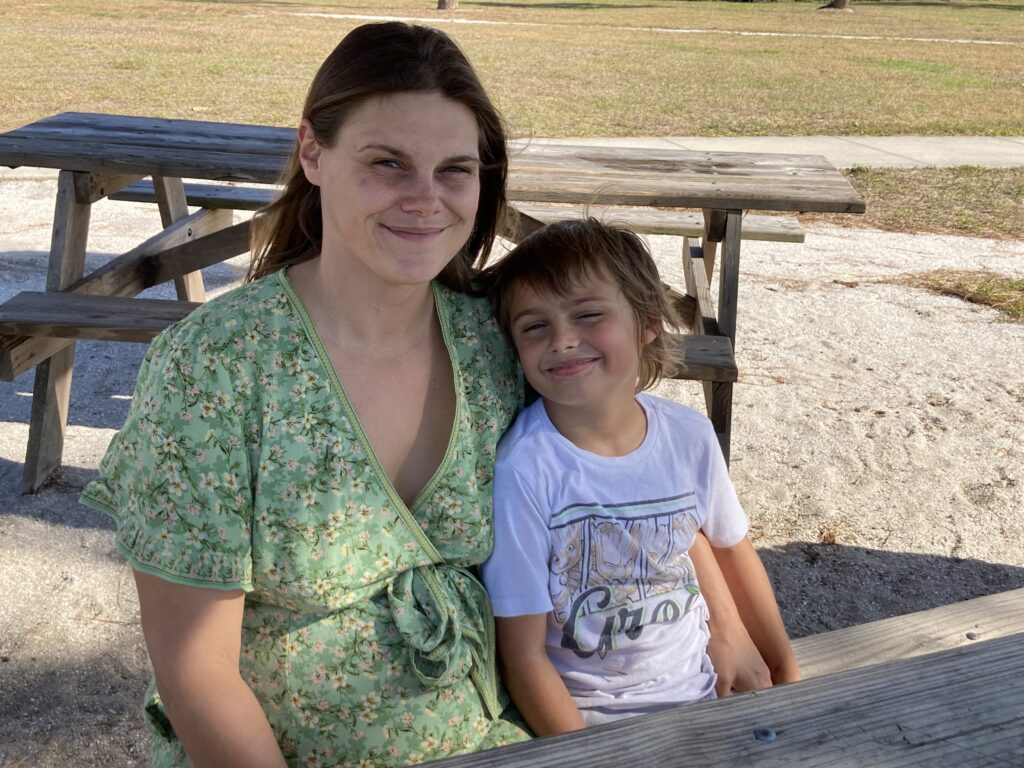
Looking for ways to harness Lyra’s energy, McKenna had already enrolled him in gymnastic classes. Tumbling through the air was a logical next step for a boy who loves to climb trees and dangle from bars in the playground near their Venice home.
Among the many perks of home education is that parents can set the daily schedule. This allows McKenna to keep some mornings free to take Lyra to the beach.
“No one’s there,” she said. “It’s my favorite time.”
Like a typical 6-year-old with boundless energy, Lyra’s interests are all over the place. He loves to swim, fish, play video games, and play with LEGOs. Right now, he is constructing “The Lord of the Rings: Barad-dûr,” the dark tower found in Middle-earth.
He even tried his hand at racquetball.
Nothing, though, beats the thrill of learning the trapeze.
The climbing, dangling, dropping, spinning.
To Lyra, none of it is scary.
It’s the most super fun.
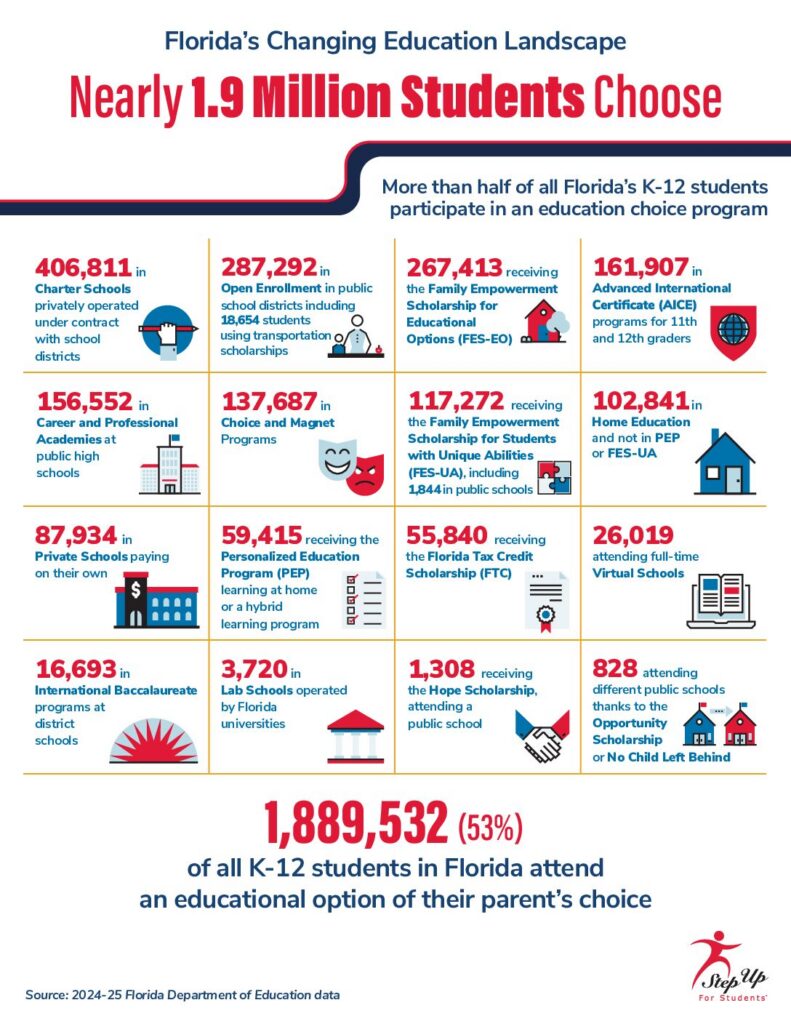
Florida’s K–12 education landscape continues to shift toward choice. During the 2024–25 school year, 53% of all K–12 students — 1,889,532 children — attended a public, private, or home education option of their parents’ or guardians’ choice. Just one year after crossing the 50% threshold for the first time, Florida’s school choice participation grew by nearly 100,000 additional students.
“Each year, Florida families have made it clear that they want more options for their children’s education,” said Gretchen Schoenhaar, CEO of Step Up For Students, the Florida non-profit that administers the state’s education choice scholarship programs.
“Increasingly, parents and guardians are willing to mix and match private and public resources to choose the ones that work best for their family.”
Since the 2008–09 school year, Step Up For Students, in collaboration with the Florida Department of Education, has tracked enrollment across a variety of choice programs. The 2023–24 school year represented a historic milestone: the first time more than half of all K–12 students in the state attended a school of choice. The 2024–25 school year continued that upward trend.
The Changing Landscapes report draws from Florida Department of Education data and removes, where possible, duplicate counts to provide a clearer picture of school choice participation. For example, it adjusts for home education students supported by the Family Empowerment Scholarship for Students with Unique Abilities (FES-UA) and eliminates double-counted students in career and professional programs. It also excludes prekindergarten students in FES-UA and programs such as Voluntary Pre-Kindergarten (VPK), as the report focuses solely on K–12 education.
While many families still choose their neighborhood public schools, Florida’s education system now offers a broad range of options to meet diverse student needs. As in past years, public school choice remains dominant, occupying four of the top five spots in overall enrollment. Charter schools are the most popular single option, followed by district open enrollment programs, the Family Empowerment Scholarship for Educational Options (FES-EO), career and professional academies, and Advanced International Certificate of Education (AICE) programs for upperclassmen.
The largest increases in enrollment occurred in the FES-EO program, which has merged with the Florida Tax Credit Scholarship program, and the Personalized Education Program (PEP), a scholarship that helps fund education at home.
Among public school options, AICE enrollment grew nearly 17%, career and professional academies grew 6.2%, and open enrollment grew 4.6%. While overall district enrollment appeared to decline slightly, these public school choice options still grew more than charter schools (independent public schools), which grew just 2.3%. This may suggest that school districts could benefit from expanding their own menu of diverse school options to better retain families.
Choice remains strong within Florida’s public school system. More than 1.2 million of the state’s 2.9 million public school students attended a school of choice, while another 688,000 students outside the public system enrolled in private schools or home education programs.
A newer option to keep an eye on is district schools offering classes and services to students on an education choice scholarship, paid for with their scholarship funds. Currently 37 of Florida’s 67 districts have been approved as providers with Step Up For Students, and another 11 are in the process of being approved. These arrangements further blur the line between public and private and emphasize that the focus remains on the individual needs of students.
With so many options available, Florida’s education system has entered a new phase. Choice is no longer an alternative; it is the norm. Families routinely evaluate multiple pathways, and whether they select a different option or remain in their assigned public school, they are making an active choice. The result is an education landscape in which public, private, and home education options coexist and evolve together, reflecting the reality that students and families have different needs, and that those differences matter.
A Tampa Bay area morning TV show kicked off National School Choice Week by highlighting a family who benefits from a state K-12 scholarship.

Arielle Frett appeared on Fox 13’s “Good Day Tampa Bay” program on Monday with her son, AnyJah, a ninth grader at The Way Christian Academy in Tampa. She said she moved to Florida from St. Thomas, Virgin Islands, in 2017 to find better educational opportunities for AnyJah, who has severe autism.
“No teachers were able to work with him on his level,” Frett told Fox 13 reporter Heather Healy. “Most of his learning in English and math are on fifth and sixth grade levels now.”
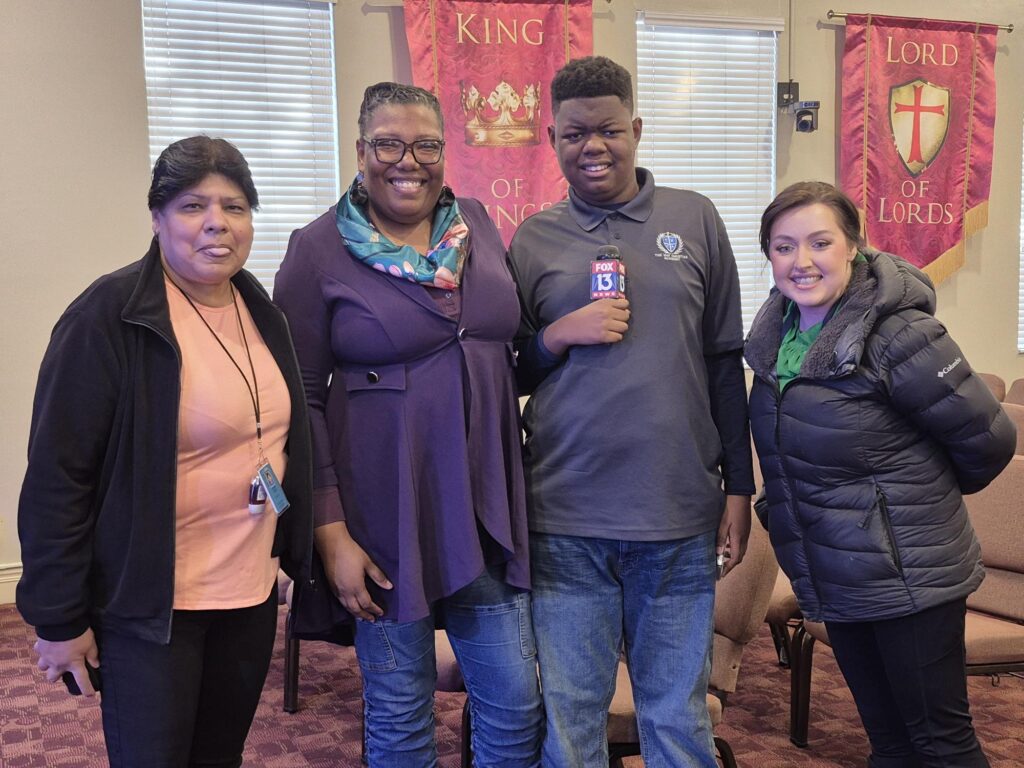
A U.S. military veteran and single mother of two, Frett said she would not have been able to afford a private school for her son without the scholarship.
She said AnyJah, who receives the Family Empowerment Scholarship for students with Unique Abilities, is “loved, protected, and thriving” at his school, where class sizes of 10 to 12 students allow for more individual attention. He can also receive his therapies during school.
The segment also featured information about Florida’s robust education choice options. Those include traditional public schools, district magnet schools, charter schools, private schools, microschools, homeschools, virtual schools, and customized education programs that allow parents to mix and match.
“We’ve gone from education and funding through the system to now empowering families by putting the money in their hands and allowing them to make the most appropriate educational decisions for families,” said Keith Jacobs, director of provider development at Step Up For Students, which administers most of the state’s education choice scholarships.
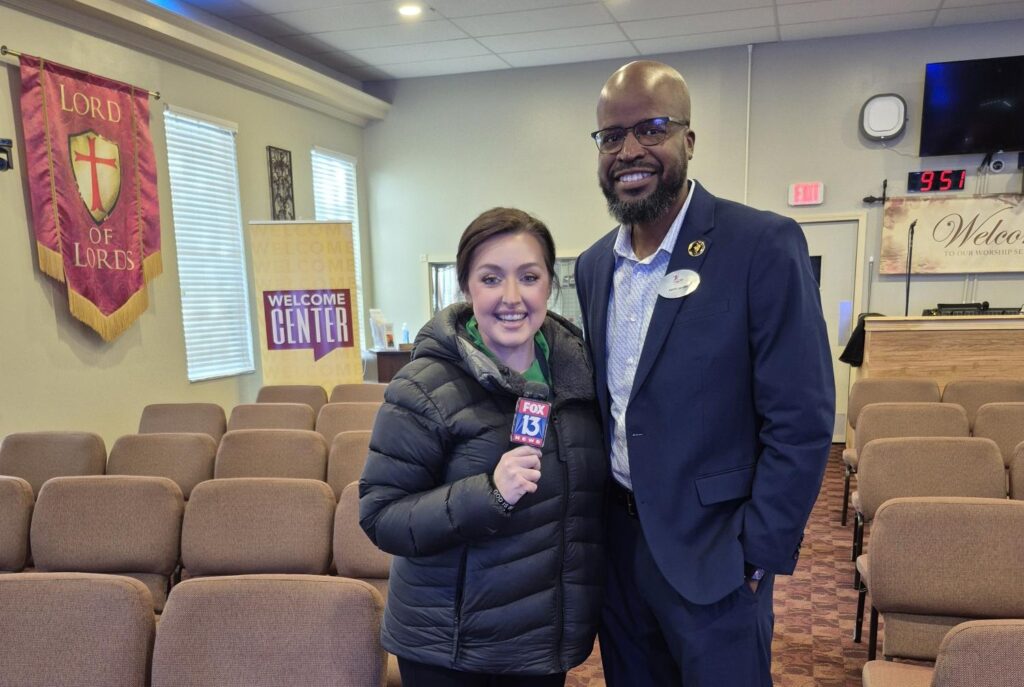
Jacobs has spent the past year working with school districts to provide individual courses to scholarship families whose students do not attend public or private school full time, paid for with scholarship funds. About 70% of Florida school districts are participating.
The scholarship application season for the 2026-27 school year begins Feb. 1. Visit Step Up For Students to learn more and apply.

