 Editor’s note: This commentary from former Florida Gov. Jeb Bush appeared Friday on wsj.com.
It shouldn’t surprise anyone: I’m a proud Floridian.
It’s the state I’ve long called home, where I raised my family and gratefully served two terms as governor. It’s also why I’m proud to boast about a new bill introduced by the Florida legislature to scale and improve school choice in the Sunshine State.
Last month, Speaker Paul Renner introduced House Bill 1, which will make Florida’s school choice program the most expansive, inclusive and dynamic in the country and will accelerate Florida’s leadership in reimagining education.
Since I signed Florida’s first statewide school choice bill into law 25 years ago, we’ve largely led the nation in education freedom. Since then, 31 states, as well as Washington and Puerto Rico, have enacted school choice policies, dramatically expanding the power of parents to exercise control over how their child’s education is provided.
Yet despite having the nation’s largest school choice program, we are beginning to trail other states in offering the most innovative solutions to students.
First, Arizona and West Virginia started nipping at Florida’s heels. Even as Florida made important improvements and expansions to its programs, both of these states enacted universal education savings account programs, or ESAs, surpassing Florida’s reach by delivering educational freedom to all families.
ESAs are a game changer. They empower families to personalize their children’s education. Want to purchase an online math course? ESAs cover that. Extra books? ESAs allow for that. Tutoring to close learning gaps? That’s an allowable ESA expense. Maybe your student needs a blended approach that includes private school tuition and educational therapies. An ESA has your back.
With these flexible and powerful accounts, education dollars are no longer exclusively used to fund systems. Instead, ESAs enable education funding to focus on helping to individualize each student’s learning experience, giving every child his best shot at a great education and lifelong success.
There’s a bona fide movement for educational choice and flexibility sweeping the nation. On Jan. 24, Iowa Gov. Kim Reynolds signed the Students First Act into law, making Iowa the first state this year to enact a school choice bill and becoming the third state in the nation to provide universal ESAs to families.
And only a few days later, on Jan. 28, Utah Gov. Spencer Cox signed school choice legislation into law. All told, bills to establish universal choice are moving in more than a dozen states, including Indiana, Ohio, New Hampshire, Texas and Virginia.
In Arkansas and Nevada, newly elected governors Sarah Sanders and Joe Lombardo have spoken boldly about ensuring their respective states will soon offer or expand school choice.
Oklahoma Gov. Kevin Stitt and newly elected State Superintendent Ryan Walters are committed to creating a universal ESA program for Sooner State families. In South Carolina, Gov. Henry McMaster and newly elected State Superintendent Ellen Weaver have committed to fighting to expand educational opportunity.
With the right leadership, a 21st-century vision and the resolve to put families first, these states in all parts of the nation are moving this student-centered movement into high gear. Even before the pandemic, parents were demanding more autonomy and greater control over their children’s education.
The pandemic accelerated that by shining a light on deficiencies in our education systems. A February 2022 Real Clear Opinion Research poll found that more than 72% of parents supported school choice, including 68% of Democrats, 82% of Republicans and 67% of independents.
Educational choice is popular and empowering parents is the right thing to do. Pennsylvania’s newly elected Democratic Gov. Josh Shapiro has said that traditional public schools can be funded alongside school choice. And he’s right.
Nearly 200 years ago, when the industrialized school system we know today first emerged, it made sense to build massive schools that focused more on “averages” than individuals. For its time, assembly-line education mirrored the successful assembly lines of the unfolding industrial age. And aside from a few private schools, there weren’t many available alternatives.
Today, the U.S. economy is far more advanced, and new options for education abound. So rather than accepting an education system designed to teach to the average, parents are rightfully demanding a system that is individualized and empowers each student to achieve his full potential.
For too long, public-education funding has worked primarily for the special interests that run school systems for their own benefit. Florida’s HB1 is a game changer. Not only will it create the nation’s largest ESA program, it will supercharge flexibility.
Best of all, this student-centered movement is the product of competition among states, free from the grips of special interests, bureaucrats and top-down federal mandates.
This benefits everyone by finally making public education work for the students and families it exists to serve.
 Editor’s note: This interview, conducted by Robert Pondiscio, a senior visiting fellow at the Thomas B. Fordham Institute, with Ashley Berner, director of the Johns Hopkins Institute for Education Policy, appeared last week on the institute’s website.
Last week, two more states—Iowa and Utah—joined Arizona and West Virginia in adopting universal education savings accounts. Several more states, including Florida, Indiana, Ohio, Arkansas, Oklahoma, and Texas, might soon follow suit.
The disruptive power of putting parents in control of the lion’s share of state education dollars brought to mind the work of Ashley Berner, who is the director of the Johns Hopkins Institute for Education Policy.
Her eye-opening 2016 book, Pluralism and American Public Education: No One Way to School, debunked several arguments frequently made by traditional, district-school-only advocates: that only state-run schools can create good citizens or offer equal opportunities to all children, and that exceptions to the American model of government-funded and government-run schools are constitutionally suspect.
“Our imaginations and our public debates remain captive to the existing paradigm in which only district schools are considered truly public,” she has observed. But while universal ESA legislation expands the number of service providers paid for with public dollars, Berner warns that it doesn’t necessarily bring us closer to the plural education systems that are common to most other democracies, or their more capacious ideas about what is – and what is not – “public education.”
Here are highlights of our conversation, edited for length and clarity.
You’ve written that, in more plural systems, “many types of schools are considered to be part of the public education system.” How likely is it that Americans can adopt that vision of public education?
The honest answer is, I don’t know. Changing cultural expectations—the taken-for-granted backdrop of a given society—takes time and concerted effort. Social movements, to succeed, require a clear idea that’s adopted and shared by people with different types of capital—financial capital, political capital, moral capital—who can articulate the new idea and translate it into new institutions.
For instance, when William Wilberforce argued in Parliament that slavery was an abomination to the British Empire, he had zero support. Slavery was embedded in the British mercantile system, in their wealth system. But Wilberforce didn’t act alone. He held prestige as a member of Parliament; he recruited merchants to his cause; he worked alongside a network of religious abolitionists.
It took decades, but by the time he died, the slave trade was abolished in the British Empire. It became unthinkable to own another human being. Our country took much longer, sadly, to get there.
I’m embarrassed to admit how little I knew about the education systems of other countries. Until I read No One Way to School, I assumed other countries were just like the U.S., with public schools funded and run by the government.
Me too! I didn’t know this until I lived in England with children and realized that they could attend very different school types that were funded as part of the government’s commitment to the next generation. I had had no idea. I started researching other democracies and realized, my gosh, the U.S. has been stuck in this very narrow, very belligerent paradigm of public versus private, where only one type of school is considered legitimately public education.
I’m not saying that every kind of school is considered a “public school” in plural systems. I am saying that “public education” is, for them, a broad term for the government’s funded commitment to educate the next generation. That commitment holds, no matter how education is actually delivered.
As but one example, the Netherlands funds thirty-six different kinds of schools on equal footing—Montessori, Catholic, Islamic, secular, among others. And yet 30 percent of students still attend what we would consider “district schools.” It’s all part of the public education system.
But even if we are the outlier, I’m not sure Americans are persuaded by international examples.
That’s an astute comment, and I’m sure you’re right in general. However, highlighting the international experience may prove persuasive to progressives who perhaps agree with Democrats for Education Reform but are uncomfortable with the libertarianism of the school choice movement.
If they knew that traditionally left-of-center countries like the Netherlands and Sweden and Denmark take educational pluralism for granted, they might find it more persuasive. The broader school choice movement, with which I largely affiliate, tends to be less interested in international examples, except insofar as they bolster the case for school choice.
Is the argument for ESAs the same as the argument for pluralism?
Not necessarily. It depends on which assurances of quality are written into the laws. Educational pluralism doesn’t just support diverse school types—it also requires all of them to reach a specific academic quality. As such, tax credits and vouchers that are tied to, for instance, nationally normed assessments or site visits by school inspectors fit more readily into pluralistic models. If ESAs jettison all public assurance of quality, I would be pessimistic about their long-term success.
I think the best path is a posture of school-sector agnosticism that asks, “How can we help all schools or programs improve?” That’s what public policymakers in pluralistic countries tend to ask. They don’t compare entire sectors and pit them against each other.
Legitimacy should not reside in one model; we should care about all the models. The best thing that people in public policy can do is put our weapons down and quit demeaning entire sectors.
Bottom line: Do ESA’s move us closer to educational pluralism?
Again, it depends on how they are designed. Educational pluralism rests on civil society, which is distinct from the individual family and from the state. These systems strike a balance between the wishes of parents and the civic imperatives of the state.
Putting all the eggs in either basket can be democratically justified, don’t get me wrong. But I find pluralism arresting because it generates this middle path between the individual and the state. It doesn’t valorize parents, and it doesn’t valorize the state. It creates space for both. I’m interested in creative ways to get us there in a system like ours that’s not used to those concepts.
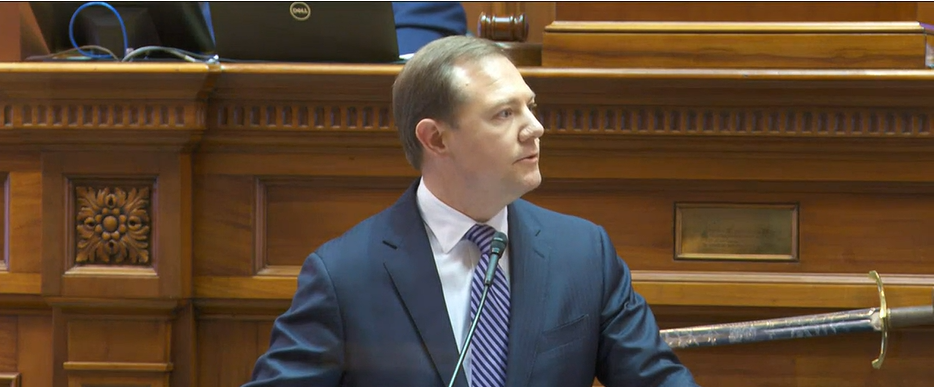
South Carolina Sen. Wes Climber, speaking in favor of the bill, pointed out: “This is the core of the middle class in South Carolina. These are folks who ought to have the opportunity to send their children to a school of their choice by way of the program we are discussing here today.”
Editor’s note: This article appeared Thursday on redlion.com.
The South Carolina Senate approved a bill this week granting 15,000 students access to education savings accounts.
“There will be children whose lives will be changed for the better because of this bill,” Sen. Greg Hembree, R-District 28, chair of the Senate Education Committee, told reporters after the debate.
“This is the core of the middle class in South Carolina. These are folks who ought to have the opportunity to send their children to the school of their choice by way of the program we are discussing here today,” Rep. Wes Climer, R-York, said during debate.
The bill passed 28-15 and has been sent to the state’s House of Representatives.
ESA programs typically put a state’s share of per-pupil education funding into individual student accounts. Parents can then use the funds for approved education expenses, such as private school tuition, tutoring, homeschooling and technology.
In South Carolina, the accounts would be funded with up to $6,000 by the state for students whose families fall below 400% of the federal poverty level, an expansion of its current program. If passed in the House, the law could still be struck down by the state’s Supreme Court.
South Carolina is one of 37 states that have Blaine Amendments in their constitutions which prohibit public funds from going to religious or private education establishments.
In 2020, South Carolina Supreme Court struck down a voucher program funded with federal COVID-19 money by Republican Gov. Henry McMaster as a violation of the Blaine Amendment.
To continue reading, click here.
 Education choice advocate Cory DeAngelis, a senior fellow at the American Federation for Children, recently visited Mike Ferguson at NewsTalkSTL, broadcasting from St. Louis, Missouri, to provide an update on the push for school choice in the state and around the nation.
Key points:
“This is monumental,” DeAngelis remarked. “It looks like 2023 will outdo 2022 as the year of education freedom … We’re seeing the government school monopoly dominoes starting to fall. We’re witnessing a universal school choice revolution.
You can listen to the interview here.
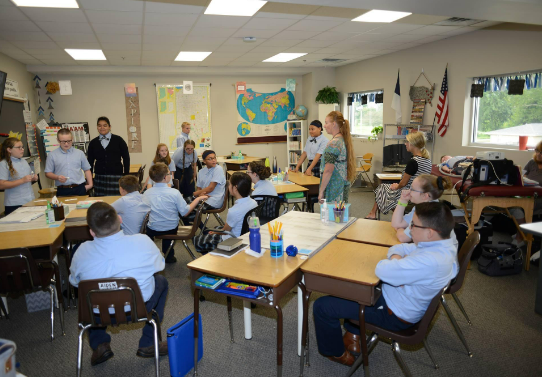
Sandy Creek Christian Academy in Seymour, Indiana, is one of 636 private schools in the state serving more than 115,000 students. The academy’s mission is to prepare students to excel through outstanding academics and Christian principles which are grounded upon the word of God.
Editor's note: This article appeared last week on in.chalkbeat.org.
A bill that would expand school choice in Indiana has advanced with major changes. Senate lawmakers enlarged the pool of students who could receive state money to attend private schools, but backed away from an initial proposal that would have opened the state’s Education Scholarship Accounts to all students regardless of family income or education needs.
Sen. Brian Buchanan amended his bill on Wednesday to limit the accounts to families meeting the program’s current income requirements. His changes also would reserve half of the total appropriation for students who receive special education services — the group the accounts currently serve.
The amended legislation passed the Senate Committee on Education and Career Development by a vote of 8-5, with GOP Sen. Jean Leising joining the four Democrats on the committee in opposition. It now heads to the appropriations committee.
The bill could become one of the more notable education policy legacies of Indiana’s 2023 legislative session. Proponents say it puts more control in parents’ hands over their children’s education.
“Any time you can give more choice and more options for parents, I believe it’s better,” said the bill’s author, Buchanan, in committee hearings last week.
To continue reading, click here.
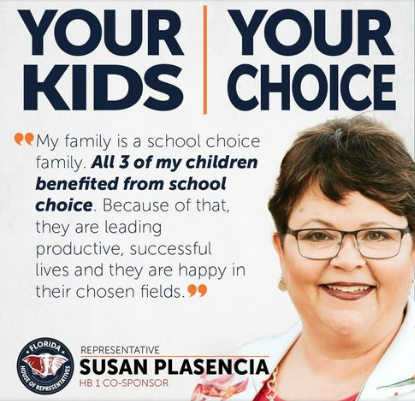 Editor’s note: In addition to being a co-sponsor of HB 1, which would offer all Florida families access to education savings accounts, state Rep. Susan Plasencia is also an education choice scholarship mom. On Jan. 26, the freshman Republican from Orlando shared her story at the House Choice and Innovation Subcommittee, which voted 14-3 to support the bill. Plasencia is not a subcommittee member and so did not vote. However, as a co-sponsor, she was allowed to give the closing speech on the bill. You can watch the entire subcommittee hearing here.
“I’m here today to speak with you about my family and my experience. I’m the mother of three grown children. In the early 2000s is when they attended the public school system; they were in the elementary school, and I was supportive; I was a classroom mom, and I helped the teachers and the administrators, and there were lots of well-intended, great teachers that helped.
But somewhere along the line, it was decided that my middle son would attend special education classes. And I didn’t like this path for my son. This is not what I knew. I knew that he could achieve so much more; I just knew it. So, I pulled my children out of school — all three of them.
Thanks to the (Florida Tax Credit Scholarship) program, I was able to put my children into a great private school, one that I could otherwise not afford. So, this was a complete game changer for my family. And it was wonderful for my children.
At some point in that process, as the time that went on, we did transfer schools; I homeschooled as well.
Now fast forward to when they’re in high school. My daughter wanted to experience traditional high school, and I knew that she would excel in the public school system. So, my daughter is a graduate of Colonial High School, and she later went on to (the University of Central Florida).
My youngest son, well, he remained in the private school system, and he graduated via the GED program. And he studied diesel mechanics. Today, he’s 25 years old, and he wakes up every single day loving what he does for a living.
And that middle son, my boy, the one who took me on this journey that we all went on together, well, the child that was, or should have been in special education courses, and given the way things go, probably would have had a certificate of completion, that child graduated near top of his class at his private school. And he went on to UCF to study computer engineering.
And the reason I tell you my story today is because every child learns differently, and parents understand the needs of their children. Members, with this I close, and I ask for your support on this bill.”
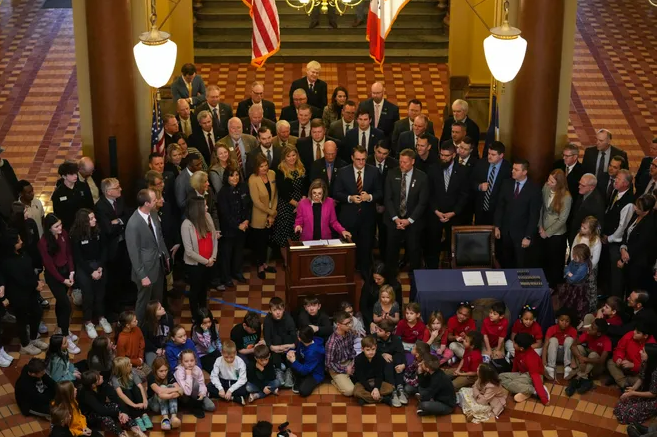
Iowa Gov. Kim Reynolds addresses supporters before signing HB 68, her private school scholarship bill, in the Capitol rotunda. PHOTO: Margaret Kispert/The Register
Editor’s note: This commentary from Jordan Zakery, legislative director for ExcelinEd In Action, appeared last week on the ExcelinED website.
Education savings accounts offer important support for families in finding the right educational fit for their child. And this week, Iowa became the tenth state in the nation to adopt an education savings account program.
While state legislators came very close to expanding education choice in 2022, it was the strong leadership of Gov. Kim Reynolds — plus the commitment of Iowa’s presiding officers and legislative champions along with a fresh crop of legislators — that took an ambitious education agenda over the finish line this year and onto the governor’s desk.
Reynolds made empowering families with education opportunity her priority, and she built a strong coalition of lawmakers and advocates to help pass the state’s first ESA program. The Students First Act also had overwhelming support from Iowans. According to a Morning Consult poll, 67% of Iowans — and 76% of Iowan parents with school-aged children — support education savings accounts.
The newly signed legislation allows eligible Iowa families to apply for an education savings account. For approved applicants, the state will then deposit nearly $7,600 (equal to the state’s annual per-pupil funding) into the account to help parents send their kids to a school of their choice and cover other educational expenses.
The ESA program will phase in over several years, initially targeting underserved families and extending eligibility to all Iowa families after three years. According to the Iowa Department of Education, a massive 485,000 public school students will be eligible for an ESA in the program’s first year alone.
Each and every child deserves access to a quality education. Iowa’s Students First Act gives parents the freedom and flexibility to customize their children’s education. As the governor said, “Every child is an individual who deserves an education tailored to their unique needs, and parents are in the best position to identify the right environment [for that education].”
Reynolds meant business as she fought to give parents more learning options to help students succeed. This week, she delivered on her promise of education reform and, especially, empowering families with school choice.
Because of this significant legislation, every Iowa student is on a path to reach their full potential.
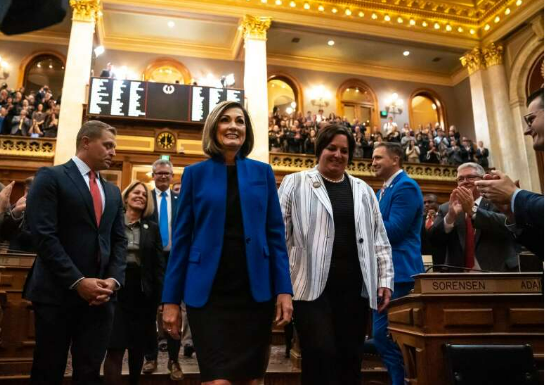
Iowa Gov. Kim Reynolds used her sixth Condition of the State address and larger Republican majorities in the Iowa Legislature to double down on — and expand — her push for school choice legislation.
Editor’s note: This commentary from Mike McShane, director of national research at EdChoice, appeared Tuesday on forbes.com.
With the start of the new year, state legislatures across the country are beginning their work. Most will run through the spring and wrap up just before summertime.
School choice has been high on the priority list in several different states. Iowa has already passed and signed into law one of the most expansive school choice programs in American history and Utah followed in quick succession. In Arkansas, Indiana, Ohio, Oklahoma, Pennsylvania, Wyoming and numerous other states, new programs or program expansions are on the table with serious chances to become law this year.
The reasons for supporting school choice are as diverse as the 72% of Americans who support it. For some, it is about fairness. They believe it is wrong that some families get to choose where their children go to school because they have the money to pay for a house zoned for a good school or private school tuition. Others recognize that relying on residential assignment for schools will only serve to reinforce the racial and economic segregation that exists in American housing patterns.
Others believe that the public school system needs some competition to spur improvement. Still others are pluralists who believe in supporting a wide range of school types to reflect the diverse needs and desires of a diverse country. Still others are themselves trapped in schools that are not meeting their children’s needs and want a way out. The list goes on and on.
But whenever school choice starts to get discussed, opponents take to social media, op-ed pages, or in Iowa’s case the balcony of the Capitol Rotunda, to voice their opposition. In their minds (or at least in their words), public schools are the bedrock of American society and democracy and supporting people when they opt out of them constitutes an assault on a key American institution.
This position is a luxury belief. Cambridge University’s Rob Henderson coined that term to describe “ideas and opinions that confer status on the rich at very little cost, while taking a toll on the lower class.” Opposing families having the ability to exit public schools that you would never send your own children to is about as perfect of a luxury belief as you can imagine.
To continue reading, click here.
 Editor’s note: This commentary from Ben DeGrow, a policy director for education choice at ExcelinEd, appeared last week on the organization’s website.
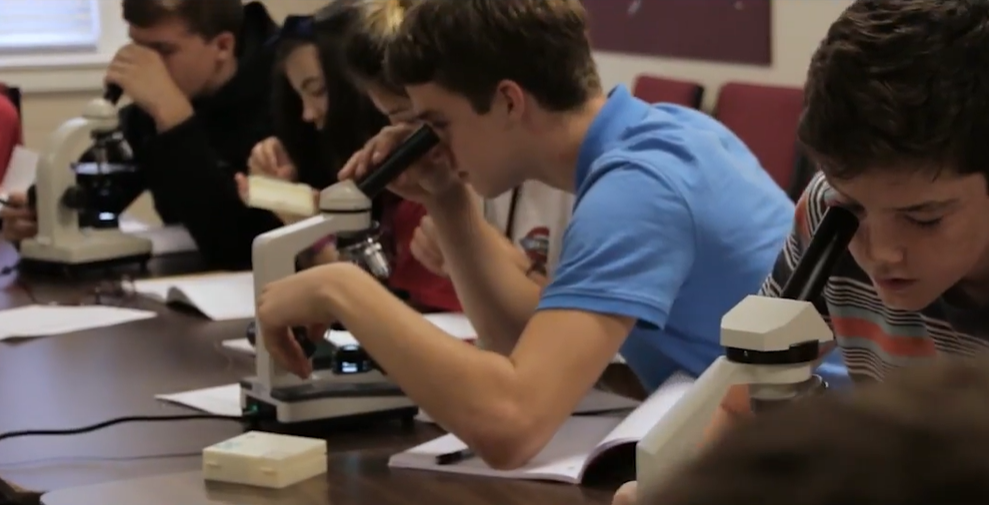
In recent years, 10 states have introduced education microgrant programs, providing small sums of money to parents to spend on supplemental educational services like educational therapies or tutoring to support their child’s learning.
The concept blossomed as a creative way for states to use a portion of their vast federal COVID aid. In some cases, these programs were so successful and popular with parents that states allocated their own money to keep them going.
Microgrant programs operate like education scholarship accounts, in that they give parents access to flexible education spending. Yet they differ in providing families with comparatively smaller sums of money, intended to supplement formal schooling. And in many states, the funds are available only for students enrolled in a public school.
Microgrants in Texas
Texas has a noteworthy program that’s worth highlighting. The Lone Star State offers parents of children with disabilities a Supplemental Special Education Services (SSES) microgrant, which is a $1,500 stipend to spend on approved goods and services of their choice. To date, the program has funded 75,000 students who have special needs, most of whom come from low-income families.
Texas launched the program two years ago, in early 2021, to help many of the students most deeply affected by disruptions to regular school services during the early phase of the pandemic. Texas Gov. Greg Abbott touted SSES as an option to provide “crucial academic resources to students with cognitive disabilities [that] will help close the educational gap caused by the COVID-19 pandemic.”
Of the first $66 million spent by parents across the state, 97% was used to pay for tangible items like digital tablets and curricular materials. Parents largely chose these rather than tutoring or therapeutic services from any of more than a thousand approved providers, possibly perceiving greater value in purchasing discrete goods with the limited amount of funds provided.
For rural families especially, their choice may also indicate a lack of access to qualified service providers in the vicinity.
While there are real limitations to connecting SSES microgrants directly with improvements in student achievement, parents report being overwhelmingly satisfied with the program. After a family has spent $1,000 from their account, the Texas Education Agency sends out a survey to each family. All but 2% of respondents agree that the items they spent money on “helped their children progress toward learning goals.”
To support the program, local private groups like Families Empowered help parents figure out if they qualify, how to apply and what options might be available to them. SSES funds enable real families like this one to purchase curriculum, supplies and services help their children overcome special learning challenges.
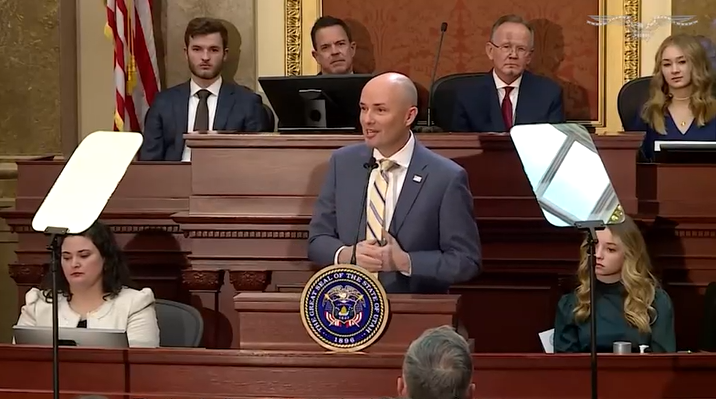
Utah Gov. Spencer Cox signed a sweeping education choice bill into law, which will provide students with state funds for private school tuition and other education-related expenses, joining Arizona and Iowa in enacting universal school choice legislation.
Editor’s note: This article appeared Monday on foxnews.com.
Utah Gov. Spencer Cox, R., on Saturday signed a major school choice bill, giving parents more options for their child’s education.
H.B. 215 provides established the "Utah Fits All Scholarship Program" and provided funding for the program as well as boosted teacher pay.
Scholarship accounts were established on behalf of all Utah K-12 students to pay for "approved education goods and services" starting in the 2024-2025 school year.
"School choice works best when we adequately fund public education, and we remove unnecessary regulations that burden our public schools and make it difficult for them to succeed. We are especially appreciative of our teachers and education leaders who helped push for more accountability measures which were not included in the original bill," Cox said in a press release.
Utah became the second state to sign a major school choice bill this year, trailing shortly behind Iowa Gov. Kim Reynolds who signed a similar bill last week.
As Utah is keeping up with the major school choice legislation being pushed in red states, American Federation For Children Corey DeAngelis said to look out for "Arkansas, Florida, Nebraska, Oklahoma, South Carolina, and Texas."
"A universal school choice revolution has ignited. Utah is the second state this year to go all-in on empowering families with education freedom, and it's only January. Red states are now engaging in friendly competition to fund students, not systems. Iowa already passed universal school choice this year," DeAngelis said.
To continue reading, click here.

