
Editor’s note: Seven years ago this week, 10,000 supporters marched on Tallahassee to fight for the Florida Tax Credit Scholarship program, which was the target of a lawsuit backed the state’s largest teachers union and others who opposed the income-based K-12 scholarships. Headlining the parade of civil rights leaders who spoke that day was Martin Luther King III. The younger King has supported education choice, described recently as the civil rights issue of our time, as an extension of his father’s legacy. He has said he sees no reason for it to put public and private school supporters at odds. As for the lawsuit, the Florida Supreme Court rejected it a year later, though efforts to expand opportunities for parents to choose the best educational fit for their children continue. In honor of Martin Luther King Jr. Day, here are excerpts from his remarks. You can watch a video of all the speeches here.
My dad, I don’t really know if I can actually speak to what he would speak today, but I can say is that he would always stand up for justice. This is about justice; this is about righteousness. This is about freedom — the freedom to choose for your family and your child.
My dad told us a lot of things. He used to say that the ultimate measure of the human being is not where one stands in times of comfort and convenience. But where one stands in times of challenge and controversy.
He went on to say that on some questions, cowardice asks: Is the position safe? He said expediency asks: Is the position politic? He said vanity asks: Is the position popular? But that something deep inside called conscience asks: Is the position right?
He went on to say that sometimes we must stand up for positions that are neither safe nor popular nor politic. But we must stand up because our consciences tell us they’re right.
That’s what we are here for today. Because we’re standing on the right side of what’s right for our children …

SailFuture, a private high school, started as a mentoring program for at-risk youth by teaching them maritime skills through sailing adventures. It recently was named as one of 32 semifinalists for the $1 million Yass Prize to be awarded in December.
Consulting firm Tyton Partners, in collaboration with the Walton Family Foundation and Stand Together Trust, today released a new report, Choose to Learn 2022, that looks at data collected from more than 3,000 K-12 parents and more than 150 K-12 suppliers across all 50 states in the United States.
The report finds that 52% of parents now prefer to direct and curate their child’s education rather than rely on their local school system, and 79% of parents believe learning can and should happen everywhere as opposed to in school alone. Data shows that parents want experiences that make their child happy, above all else, by reflecting their child’s interests and providing individual academic support. However, despite all parents reporting similar goals for their children, regardless of demographics, the study reveals gaps in program participation across income and race. For example, children from underserved backgrounds are nearly two times less likely to participate in learning outside of school than their peers.
Choose to Learn 2022 explores the variety of K-12 options now available to families – inclusive of both in- and out-of-school educational offerings – and how this ecosystem can better reflect families’ broader aspirations for their children. The publication follows recent findings from Tyton Partners’ School Disrupted 2022 series, which highlighted the near 10-percent decline in district public school enrollment due to the lasting impact of the COVID-19 pandemic.
“In viewing K-12 through a broad lens, we set out to better understand the issues impacting every family, including more than forty million parents who send their children to public school,” according to Christian Lehr, Senior Principal at Tyton Partners and the lead author of Choose to Learn 2022. “Relative to issues of equity and access, our local public districts play a crucial role for K-12 families. At the same time, families crave a wide variety of learning experiences. It is in this spirit that we examined parents’ aspirations at the intersection of in- and out-of-school learning, and ask: How can the K-12 sector deliver a stronger union of academic, extracurricular, and personal outcomes for all families, regardless of life or economic circumstances?”
Based on these findings and more identified in this study, it is clear now more than ever that parents want an education centered on the needs of their child, yet there is continued work that needs to be done to bridge the gap between aspiration and reality. It is incumbent upon the K-12 system of policymakers, system leaders, and suppliers to introduce new experiences, choices, and outcomes into local school districts and catalyze the growth of programs outside of school and across all demographics.
Choose to Learn 2022 underscores the need for the K-12 system to move towards a more student-centric future and helps readers understand how to:
“We are honored to have the opportunity to drive this pivotal conversation forward, alongside our partners, the Walton Family Foundation and Stand Together Trust,” according to Adam Newman, Founder and Managing Partner at Tyton Partners. “There is a clear call for us to collectively build towards a more student-centered future in K-12 education.”
To view the findings and learn more about this study, download Choose to Learn 2022 on the Tyton Partners website.
 For the last month, the North Carolina legislature has been debating whether to create a scholarship program to help low-income families pay the tuition and fees at qualified K-12 private schools. Since this proposal closely parallels Florida’s tax credit scholarship program, I’ve traveled to Raleigh three times in recent weeks to discuss what we’ve learned in Florida about school choice over the last 10 years and how these lessons might apply to the North Carolina program.
Below are the lessons learned I’ve shared with supporters and opponents:
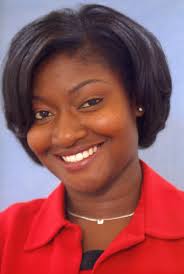
Rep. Morgan
Say school choice and some Democrats say profits, privatization, Republican plot.
Democrat Alisha Thomas Morgan says equal opportunity.
“We’ve got to put policies in place to ensure that how much my parents make or the neighborhood I live in does not determine the quality of education,” Morgan, a state representative in Georgia, says in the redefinED podcast attached below. “And so I think in terms of leveling the playing field, in terms of equal access, in terms of equality. To me, these are very much Democratic values and why I support school choice.”
Morgan is among a new breed of Democrats, many of them younger, many of them minority, who are embracing school choice despite the strains it can put on their relationships with fellow Dems and longtime allies. First elected in 2002 – at the age of 23 – Morgan, a Miami native, said she underwent her own evolution on school choice in part because conversations with parents led her to recognize “a lot of my opposition was really political.”
Now she’s a rising national star in school choice and ed reform circles, a Democrat who hasn’t been afraid to step out front on charter schools and tax credit scholarships in her home state and politely encourage other Democrats to live up to their core principles. “Education is not a Democrat or Republican issue; it’s a kids’ issue,” she said. “But I do think that Democrats should provide leadership here, and not be sort of dragged along as these reforms happen across the country.”
That’s not to say Morgan doesn’t empathize. It can be lonely as a pro-school-choice Democrat, she said. And it can be tough convincing other Democrats when their positions are at odds with Republicans on so many other issues. “What I’ve learned to do is to separate that we agree on this set of issues and these things we can work together; the other things, I’m going to fight you, just like the other Democrats do,” she said. “But I don’t think some of my friends on the Democratic side have been able to make that separation.”
In the interview, Morgan also said:
The privatization argument doesn’t make a lot of sense. (more…)
The dilemma Natalie Hopkinson faces in finding the right school for her 11-year-old son is not limited to the African-American neighborhoods of the District of Columbia, and the winners and losers she decries as part of new education reforms have a much longer history in the field of public education.
Ms. Hopkinson, writing Monday in The New York Times, looked across Rock Creek Park in D.C. to see a mostly white, affluent community with a new middle school that includes rugby, fencing and an International Baccalaureate program and concludes: “Such inequities are the perverse result of a ‘reform’ process intended to bring choice and accountability to the school system.”
Unfortunately, such inequities are a powerful reminder of history. They bring us back to the end of the 19th century, when a U.S. Supreme Court pretended that separate was equal, and to a young black girl in Topeka, Kansas, nearly a half-century later who refused to pass by higher-quality white schools on her way to one whose students matched the color of her skin.
Ms. Hopkinson’s anguish is genuine, even if her analysis is askew. Yes, educational choice can produce what amounts to winners and losers, as some schools tangle with waiting lists and others battle to keep open their doors. But the historic winners and losers fell almost exclusively along lines of race and class in an assignment system defined principally by geography. Live in the right neighborhoods and you had access to the best schools.
One of the ugly realities of our half-century struggle to break apart legally sanctioned racial segregation in public education was that schools in black neighborhoods were often bulldozed or converted to magnets that primarily served white students from other areas. As such, black students tended to be bused away from home, and their neighborhood options, as Ms. Hopkinson still finds to this day, were limited or nonexistent.
The educational options that are proliferating in D.C. around the nation, though, have the effect of breaking down the geographical divide by enticing parents to look beyond their assigned school for learning options that match the learning styles of their own children. That, indeed, could involve charter schools or magnet programs or career academies or online courses or scholarship schools where the parental demand exceeds the educational supply. But the answer to that dilemma is not fewer, but more, options.

