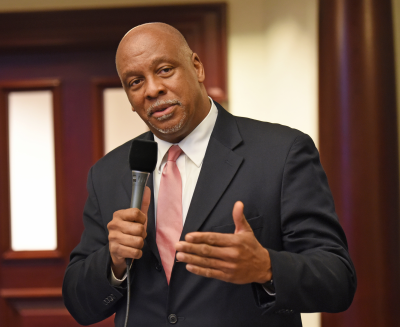
Antone
The Florida House Education Committee unanimously passed HB 1109, allowing students at private schools to participate in sports at a public school of their choice based on their school district’s open enrollment policy.
The bill would expand extracurricular options for private school students. It's now ready for a vote on the House floor.
Existing laws allow students attending private middle or high schools that are not members of the Florida High School Athletics Association, and that have fewer than 125 students, to participate in interscholastic sports at their zoned public schools.
Bill sponsor Rep. Bruce Antone, D-Orlando, added an amendment that specifies a private school student can participate in sports at a school if the capacity for that school has not be reached as determined by the district school board.
Florida already has a “Tim Tebow” law that allows homeschool students — as well as students enrolled in charters or other schools of choice — to sign up for teams at their zoned public school, or other public schools they would otherwise attend. The goal of the law is to give students in educational choice programs access to extracurriculars that might not otherwise be available.
This year’s legislation is the latest in a series of efforts to adapt high school athletics and extracurricular activities to the growth of school choice programs.
Donalds
A bill filed this week would allow Florida's charter school students to play sports, or take part in other extracurricular activities, at private schools.
The state already has a "Tim Tebow" law that allows homeschool students — as well as students enrolled in charters or other schools of choice — to sign up for teams at their zoned public school, or other public schools they would otherwise attend.
The goal of the law is to give students in educational choice programs access to extracurriculars that might not otherwise be available.
HB 119 would give private schools the ability to expand those options for charter school students who "develop an agreement" to participate. It would apply to "interscholastic extracurricular activities," which would include chess clubs or debate teams. (more…)
Two years ago, Jordan Hamilton was looking for an artistic outlet.
She'd been taking classes at Florida Virtual School's Escambia County franchise for two years, and after some searching, she found her way to Virge, the virtual school's student-run literary magazine. She said that at the time, she thought it might offer a forum for her artwork and digital photography, and a way to connect with fellow students. Before long, though, she began submitting her writing, too, and became one of its most prolific contributors. Now in her senior year of high school, she's among the de facto leaders of a group of students — including some from other states and countries — who assemble the biannual digital publication each semester.

"Spring Cleaning," one of Hamilton's contributions to the latest issue of Florida Virtual school's student-created literary magazine, which centered on the theme "Two Cups of Tea."
"It's all coordinated online," Hamilton said, though "there are opportunities where we can all meet in person."
Clubs are part of the experience at most schools. They're where a lot of learning goes on, and they give students places to tap their creativity in ways that aren't always available during a normal school day.
As it grew to become the largest public virtual school in the country, Florida Virtual School started trying to replicate those experiences for thousands of students online. Its clubs are open to all students who take FLVS classes, including those enrolled in its district franchises and FLVS Global, which caters to students outside Florida.
Each issue of Virge features student artwork, photography and creative writing, organized around a theme. To solicit submissions, plan each issue, and lay out pages, Hamilton works with students in different parts of the state — and in places like California, Kentucky and Malaysia.
Distance has kept her from meeting her collaborators face-to-face, though others have gathered in Central Florida for FLVS's annual club days. It also means she and her fellow students have to coordinate online conferences across multiple time zones. In between virtual meetings, they share ideas and edits in online wikis.
The credits on the latest issue show the breadth of Hamilton's contributions, from editing and graphics to a host of submissions.
"If we had an editor-in-chief, it would be her this year," said Cindy Knoblauch, Virge's faculty sponsor, who also helped launch some FLVS clubs. (more…)
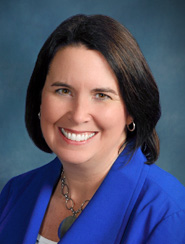
Sen. Stargel
A bill that would overhaul Florida's system governing high school athletics for an "era of school choice" remains alive after passing its first state Senate panel Wednesday.
The proposal by Sen. Kelli Stargel, R-Lakeland, would place new limits on the operations and recruiting investigations of the Florida High School Athletic Association.
It would also require proportional representation of parents from schools of choice on its governing board, and stipulate that a student's choice of educational options cannot be a barrier to participation in extracurricular activities.
One of the main concerns - though others were raised by members of the Senate Education Committee in at times sharp rhetoric - was that under existing rules, student athletes can face recruiting allegations, and be barred from taking the field, if they move from one high school to another.
The recurring controversies around sports and extracurricular activities may seem trivial, but Stargel said, "those things make for a well-rounded child."
"I would say a lot of what the Florida High School Athletic Association does is good," she said. "There's a few areas where they just seem to not be understanding that we do have an era of school choice in the state of Florida. We do have many opportunities for our children to have many places they can go to school."
High school parents, coaches and administrators spoke in support of the FHSAA. They warned student athletes can be exploited by unscrupulous coaches who recruit student athletes to their teams. (more…)
A Florida House panel is weighing legislation aimed at opening high school sports and other extracurricular activities to more students enrolled in school choice programs.
State law already allows home education, virtual school and private school students to participate in high school sports. But some lawmakers have said the state's laws governing issues like eligibility for athletics may not have kept up with the proliferation of school choice.
At the same time, they have said school choice students sometimes have less flexibility to participate in other extracurricular activities, like clubs and chess teams.
Last year, the House passed a bill by Rep. Manny Diaz, R-Hialeah, to allow students in school choice programs to participate in clubs offered at local public schools, if the school they attended didn't offer them. The bill did not pass the Senate.
Draft House legislation discussed Thursday would revive that concept, while also wading into thornier issues like high school sports eligibility.
"This really clarifies and brings up to date the eligibility requirements that go hand-in-hand with the educational programs that exist today," Diaz told the House Education Committee.
 Charter schools. A school district mistakenly and unlawfully tries to exclude a charter school student from middle school sports. Sarasota Herald-Tribune. The State Board of Education approves a charter school appeal from Polk County. Lakeland Ledger.
School choice. A debate over whether to draw school boundaries or stick with a controlled-choice system divides Coral Gables residents. Miami Herald.
Testing. Proposed testing legislation would reduce the impact of test scores on teacher evaluations. Tampa Tribune. Palm Beach officials test their district's bandwidth to make sure computer networks can handle the testing load. Palm Beach Post.
Budgets. Increasing property tax collections to fund schools create new scrutiny for Gov. Rick Scott's spending plans. Tampa Bay Times.
School grades. Recognition funds on are on the way for the state's top-performing schools. Gradebook.
Superintendents. Hillsborough negotiates with an internal candidate to be its next district leader. Tampa Bay Times. Treasure Coast newspapers have updates on superintendent hiring in St. Lucie and Indian River Counties. Consultants pitch plans to lead Volusia's superintendent search. Daytona Beach News-Journal. Alachua's superintendent is named to a state panel on testing and education reform. Gainesville Sun.
 When it comes to school choice legislation, lawmakers will have some differences to resolve when they return from their week-long break for Easter and Passover.
Here's a look at where things stand on some of the issues we highlighted going into the legislative session, plus a few new ones that have emerged.
Charter schools: The House and Senate remain divided on what has become a contentious piece of legislation intended to make contract negotiations easier for charter schools. Democrats have tried, so far unsuccessfully, to add provisions restricting the growth of charter schools. The Senate has stripped the controversial provisions from its charter school bill, and its measure would simply ensure military commanders can have a role in establishing charter schools on their bases. Gov. Rick Scott has already signed separate legislation that endorses the creation of charter schools aimed at military families.
Dual enrollment: Changes to the way the state funds dual enrollment courses created a dilemma for some private schools. They could either limit student participation or be required to reimburse colleges for their tuition. The House's education funding bill could address that issue by clarifying that private schools do not have to reimburse colleges for dual enrollment costs.
Collegiate high schools: The Senate last week approved legislation by Sen. John Legg, R-Trinity, that would require community colleges to make collegiate high schools available in every school district in the state. The House has drawn up a companion measure which has passed three committees but not yet come to the floor.
Tax credit scholarships: The House last week passed a bill allowing families whose incomes are too high to qualify for the current program to receive partial scholarships. Other provisions that could have sped up the growth of the program have been removed. Whether, when and in what form the Senate will hear the bill all remain unclear, but testing for scholarship students remains a point of contention. (The scholarship program is administered by Step Up For Students, which co-hosts this blog.)
Education savings accounts: The House and Senate have moved further apart on their plans to create personalized accounts for students with disabilities. But the bills are making progress. The House has passed a plan, combined with its tax credit scholarship legislation, that would be managed by scholarship funding organizations like Step Up for Students, while the Senate has proposed creating a program run by the Agency for Persons with Disabilities. (more…)
Tax credit scholarships. Revived legislation expanding the program clears a House-panel on a party-line vote. Florida Times-Union. Capitol News Service. News Service of Florida. Times/Herald. Palm Beach Post. Associated Press. WFSU. The legislation could extend scholarships to middle-class families. Sun-Sentinel. A Washington Post blogger seizes on inconsistent uses of the term "waiting list." Answer Sheet. A Palm Beach Post columnist likens the bill to a "zombie that won't die." The program is administered by Step Up for Students, which co-hosts this blog.
Charter schools. Hillsborough schools officials raise questions about the non-profit organizations that hired Charter Schools USA to run three charter schools in the county. Tampa Bay Times. Charter schools compete with school districts for limited construction funds in the state budget. Times/Herald.
Extracurricular activities. The Florida Times-Union writes up a bill that would expand access for students in school choice programs.
Testing. School administrators say they need more time before the state switches standardized tests. Tampa Tribune. Duval's superintendent pledges to pare back the number of tests given in the district next year. Florida Times-Union.
Teachers. A Lee County Schools program aims to bring new teachers into high-need areas. Naples Daily News. Collier schools turn to recent retirees to make up for a substitute shortage. Naples Daily News. A recent statewide teacher of the year criticizes the use value-added scores to judge teachers, among other state education policies. Tampa Bay Times. (more…)
The full Florida House is set to vote on a bill that would give private-school, virtual-school and charter-school students more access to extra-curricular activities at nearby public schools.
The bipartisan legislation has passed unanimously through three committees, and it seemed to be cruising toward a final vote without controversy. That changed on Wednesday, as the bill's supporters faced a series of tough questions from Democrats when it was introduced on the House floor.
HB 533 would broaden Florida's so-called "Tebow Law" that allows students in home education and other choice programs to compete on sports teams at nearby public schools. It would clarify that the rule also applies to other extracurricular activities, like drama or debate clubs.
It would also allow students – including those who attend traditional public schools – to participate in those activities at other schools in their district if their zoned school does not offer them.
Bill sponsor Rep. Manny Diaz, R-Hialeah, said the bill would ensure students have access to extracurricular activities as growing numbers of them choose options beyond their zoned schools.
"Students and parents have a lot of choices to make, and those schools are not bound by attendance zones, so why are we being hypocritical, and trying to keep these students out, from participating in athletics and activities?" he asked his colleagues, responding to a litany of questions from Democrats on the House floor.
"This concept bothers me a great deal," said Rep. Elaine Schwartz, D-Hollywood. Rep. Alan Williams, D-Tallahassee, asked if the bill would allow schools to "quote-unquote recruit" students to build powerhouse programs in sports or other competitions.
Rep. Dwight Dudley, D-St. Petersburg, warned about a potential "chaos factor." (more…)

