It’s been a month since classes started, and Matthew Ottenwess is settled into his freshman year at Tampa Catholic High School.
He’s made friends and likes his teachers.
His high score on the school’s entrance exam gained him admission to three honors classes and one AP course. He plays linebacker on the junior varsity football team.
This was the educational landing his mother, Maggie, was looking for when she learned the family would move from New Mexico to Florida after her husband Chris, a Chief Master Sergeant in the United States Air Force, received a transfer to MacDill Air Force Base in Tampa.
The Ottenwesses have a Florida education choice scholarship to thank for that.
“It’s a game-changer,” Maggie said.

Maggie, Chris and Matthew visit Yellowstone National Park. (Photos courtesy of Maggie Ottenwess)
While the family was still stationed at Kirtland Air Force Base in Alburquerque, Maggie was able to apply for a Family Empowerment Scholarship for Educational Options (FES-EO), managed by Step Up For Students.
“The scholarship made the (moving) process easier, gave us more choice, allowed us to take a breath and not have to worry about additional stresses, both monetary and interpersonal,” Maggie said. “It eased the PCS (Permanent Change of Station) experience. There are countless other things that change – doctors, dentists, specialists, church, youth group, scouts. This took one of the larger chunks off the list.
“Box checked.”
Matthew had been homeschooled during the past five years. Chris and Maggie decided he would return to a brick-and-mortar school setting for high school. They also wanted that setting to be at a faith-based school, preferably a Catholic school.
They understood that would burden the family’s finances, but it was a sacrifice they would accept.
Chris received his Permanent Change of Station order on Dec. 23, 2024. Soon, Maggie was told of Florida’s private school scholarship program from other moms within the military community.
“I couldn’t believe what I was hearing,” Maggie said. “It was too good to be true.”

Maggie set her alarm for 7 a.m. local time on the first Saturday in February. Families could apply for FES-EO scholarships that day at 9 a.m. EST. Since Albuquerque is two hours behind, Maggie wanted to apply as soon as the session opened.
“In the military, on-time is late,” she joked.
Maggie found the “Scholarships for Military Families” page on the Step Up website and entered her family’s information. The process went smoothly until Maggie came to the screen that required her to enter her Florida address. Since the move wouldn’t happen until June, and since the family would live on the Air Force Base, they had yet to be assigned housing, so no Florida address.
“I was in panic mode,” she said.
Her fear was quickly defused during a live chat with customer service.
“You’re not the first,” Maggie was told. “We get this a lot.”
She just needed to upload Chris’s Permanent Change of Station order in the proof of residency screen on the application.
Once Maggie learned that Matthew was awarded a scholarship, she started researching private faith-based schools in the Tampa area and settled on Tampa Catholic because of its challenging history and science curriculums. He was accepted Feb. 28.
“Our Christian faith is important to our family,” Maggie said. “It is the foundation that makes all the complications, moves, hardships, financial struggles, stress, and the like possible. We incorporated religion into Matt's homeschool curriculum and wanted to keep that moving forward. We were open to both Christian and specifically Catholic options. We believed a faith-centered school would continue to support his character and moral compass.”
The FES-EO scholarship covers more than half of the yearly tuition at Tampa Catholic. Maggie said they can afford to cover the rest without her getting a job, something that is not easy for military spouses. Local businesses are not quick to hire someone who could be moving in two or three years.
This allows Maggie to continue her work as an advocate for younger enlisted Airmen, military families and dependents. She works on various committees, task forces, and councils that deal with medical, special needs, and religious issues.
“So, the scholarship is not only helping my son get a quality education, it's helping the mission of the military by me having the breadth and space and time to do those things,” Maggie said. “The scholarship is allowing a difference to happen.”
Chris, who is the Command Chief of the 6th Air Refueling Wing at MacDill, has been in the Air Force for 28 years. He and Maggie have been married for 18 years. They’ve lived on five bases in four different states.
Matthew, who was born when his parents were stationed in New Jersey, his mom’s home state, has lived in Mississippi, Illinois, New Mexico and now Florida.
When asked about the latest move, he said, “I was super excited, a little nervous for all the changes, but definitely excited to get a whole different experience of school.”
The experience was somewhat of a jolt at first. He said it took him a few weeks to become comfortable with the return to the classroom setting. He had attended Catholic school before being homeschooled.
He said he likes living in Tampa, and being on the football team allowed him to make friends quickly, since fall practice began before the first day of classes.
“It's really good,” he said. “(Tampa Catholic) has a really good curriculum. I like the teachers, and it's fun to hang out with my friends all day.”
Markala was Marlena and John Roland’s first child, and there were more on the way – four more, in all. And Markala was 5, so the Roland children were going to reach school age in quick succession.
This presented a dilemma.
“We wanted our kids in private school, but we didn’t have the money,” Marlena said.
But there was hope.
The year was 2005, and Marlena, a teacher at a private school near their Coral Springs home at the time, learned about a private school scholarship that had been established a few years earlier and was managed by Step Up For Students.

For nearly 20 years, a member of the Roland family attended a private school with the help of a scholarship managed by Step Up For Students.
She applied and was accepted, and for nearly all of the next 20 years, at least one of the Roland children attended a private school with the help of a Step Up scholarship. The exception was the two years the family lived in Georgia.
“It was a blessing for us,” John said. “The best thing we did was give them that education foundation.”
“None of that would have been possible without the scholarship,” Markala said.
Marlena was a teacher at ALCA when the kids began school. Even with the employee discount, she said the cost of tuition would strain the family’s finances. Still, she wanted her children to benefit from ALCA’s educational setting just like the students she was teaching.
“We wanted to set the bar high, to create good study skills and habits. We wanted them to be well-rounded,” said Marlena, who also taught at The Randazzo School for nearly 10 years, including the time Marcia attended.

Marcia, who graduated last May from The Randazzo School, was the last of the Roland children to use a scholarship managed by Step Up For Students.
It was by design that the Roland children split their education between private and district schools. Some were sports-related, but mostly, John wanted their children to experience both educational settings.
“John said, ‘Let’s put them in public school for a little bit and see how it goes,’” Marlena said. “He said they need to have both, and that will build character and build them as individuals.”
And it worked.
The private school experience helped the children excel at their district schools.
“It laid a really good foundation for us,” Markala said. “Just getting us excited to be in the classroom, to learn new things, to collaborate with others.
“I had friends (in high school) ask me, ‘Where did you learn this? Why are you thinking that way?’ All I could say was, ‘Thanks to my teachers at ALCA and Westminster.’ They really set us apart and prepared us for what was coming next. We were leaps and bounds ahead of our peers.”
John credited the private school education his children received but also gave credit to the emphasis he and Marlena placed on education at home.
“When I dropped them off at school, I told them we’ll add to it when you get home,” he said.
“They didn’t play with that,” Markala said. “That was non-negotiable in our house.”
She remembers a time when John sold the family pickup truck to help meet the expenses of her attending Westminster that the scholarship didn’t cover.
“As a kid, you see them doing that, and I'm like, ‘Don't we need that car to get places?’ They really valued education. That was what was important,” she said. “I see that now as an adult, the things that they're willing to do to make sure that we had a good education, putting us into spaces where we could learn and grow have been tremendous to me, even now that I’m in the workforce.”
Editor's Note: This story originally ran on Florida Politics.
 The dream, the goal, the answer to many prayers is a three-story building that houses seven classrooms, a chemistry lab, a library – and since school resumed after the Christmas break, 54 students in grades nine through 11.
Welcome to Basilica High School, which sits on the campus of The Basilica School of Saint Mary Star of the Sea, Key West’s lone Catholic school and the only Catholic high school in Monroe County.
The school, which for decades served only PK3-8 students, will be PK3-12 when the first senior class is added during the 2025-26 school year.
“It’s been three years of fear, hope, prayers, and a lot of hard work to get here, and it's amazing now to have the students in the classrooms in the building. It feels like we have a home,” said Angela Wallace, the school’s Advancement Director.
Florida’s education choice scholarship programs were instrumental in making it possible, an achievement worth celebrating during National School Choice Week and Catholic Schools Week, which run concurrently Jan. 26 to Feb. 1.
Key West had a Catholic secondary school for 100 years until Mary Immaculate High School closed in 1986 because of declining enrollment. That meant the nearest Catholic high schools were in Dade County, with the closest being Archbishop Coleman Carroll High School, a mere 145 miles from Key West.
That left few options for parents whose children graduated The Basilica School of Saint Mary Star of the Sea after the eighth grade: send them to Key West High School or one of Key West’s two charter schools or move closer to a Catholic school.
The hope of another Catholic high school always lived among school administrators and parents, and beginning last decade, several factors combined to turn that hope into reality.
First, Catholic school enrollment in Florida continued its steady incline with a 4.4% growth of preK-12 students between 2013-2023. After a COVID-related drop to 77,689 students in 2021, enrollment rebounded to 89,267 students in 2023. Enrollment has continued to rise, from 90,870 in the 2023-24 school year to 93,455 this academic year – a healthy 2.8% year-over-year increase.
Enrollment doubled at The Basilica School of Saint Mary Star of the Sea between 2013 and 2019.
Second, HB1 became law in 2023, which expanded the state’s education choice scholarship programs, making them available to all K-12 students in Florida.
“(HB1 has) been an incredible blessing,” Wallace said. “So much of our operational and economic vitality is because of the scholarship program.”
There are 524 students enrolled at The Basilica School of Saint Mary Star of the Sea during this school year, 450 attending with the help of a scholarship managed by Step Up For Students: the Florida Tax Credit Scholarship, the Family Empowerment Scholarship for Educational Options, which average $8,000 per student, or the Family Empowerment Scholarship for Students with Unique Abilities, which averages $10,000 per student.
The programs have been a boon to families seeking more options in their children’s education, with participation this year passing the 500,000 students milestone for the first time. They also have helped Catholic schools in Florida grow, bucking the national trend of declining enrollments. Last year, 56,192 students used scholarships to attend Catholic schools. This year, that number has jumped to 72,851.
Three years ago, The Basilica School of Saint Mary Star of the Sea conducted a feasibility study to see if adding a high school would work. The results led to a pilot program during the 2021-22 school year when 13 students enrolled in the ninth grade.

Miami Archbishop Thomas Wenski blessed the new high school building during a dedication mass in December. (Photo courtesy of Studio Julie Photography)
“Those students took an enormous risk,” Wallace said. “We basically said we have been approved to offer high school classes for this year, and possibly this year only if we can’t get all the numbers to work. You may be transferring elsewhere for your sophomore year.
“They took the leap, and we have been able to continue.”
A 10th grade was added the following year, which increased the high school’s enrollment to 33. That increased to 54 this year with the three grades. The hope is to have 80 students enrolled in the four grades during the 2025-26 school year.
Until January, those students were “nomads,” according to The Basilica School of Saint Mary Star of the Sea President Robert Wright, as they used classrooms on the elementary school campus. Now they have a home, and Wright said the excitement permeates the entire campus.
“It is one of the greatest blessings in my life to witness the seeds of faith and virtue that have been planted and nurtured in our students during the elementary and middle school years come to fruition as they transition to adulthood,” he said.
The new school building had been an auditorium that was used as a gymnastics studio. It is called The Howley Family Building after Nick and Lorie Howley, who helped fund its transformation.
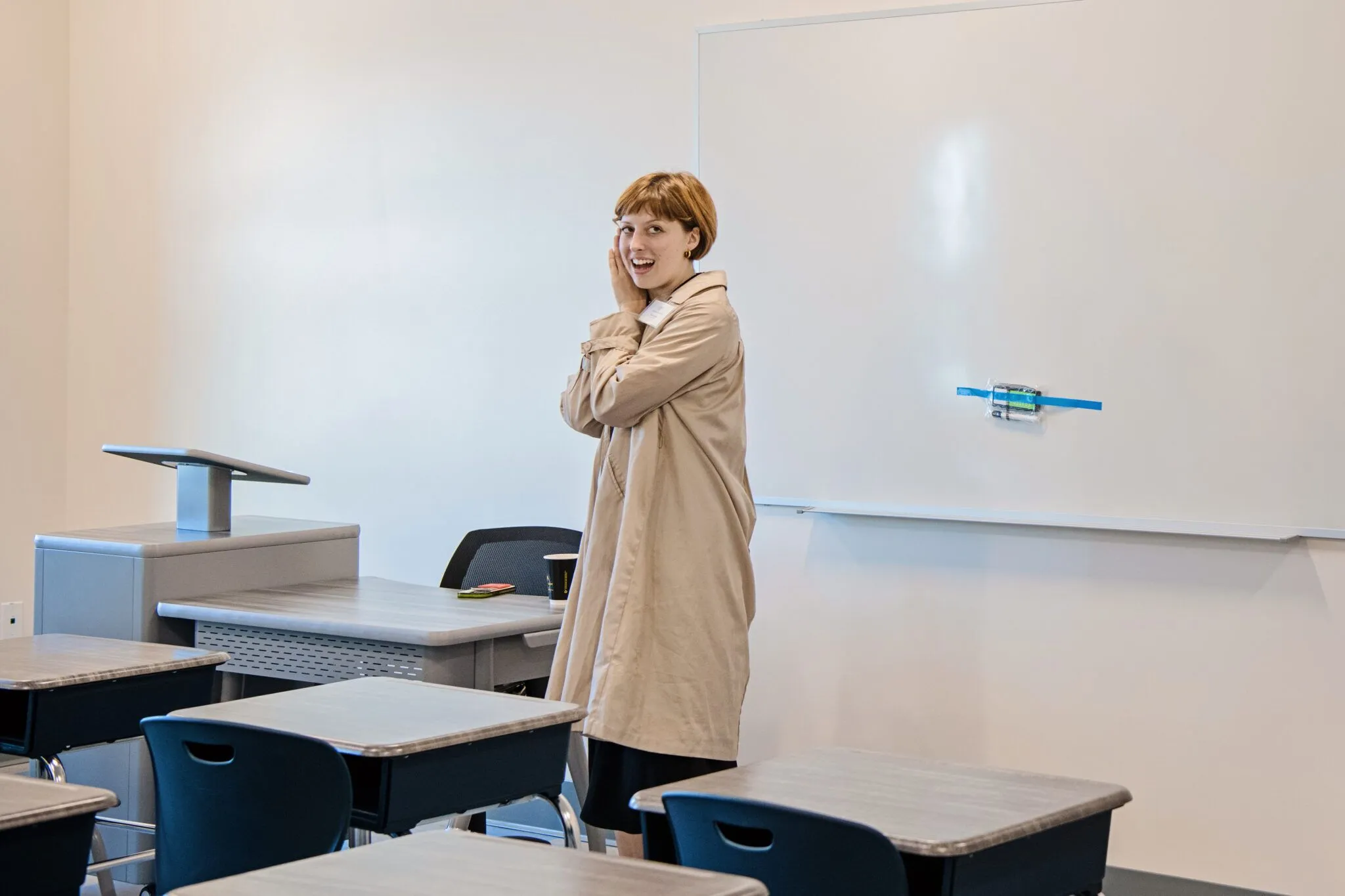
English teacher Anna Coppa reacts after entering her classroom in the new high school building for the first time. (Photo courtesy of Studio Julie Photography)
Riella Sims, whose daughter Kallisto is one of the original 13 ninth-graders, was among the parents lobbying for a high school as their children ascended elementary and middle school.
“I felt it was in Kallisto’s best interest for her to continue on in the Basilica High School, as I believe The Basilica provides a more well-rounded education for the well-being of all the children attending,” she said. “They become more responsive to their community’s needs and others around them.”
Kallisto said she is “proud” to be a member of the first graduating class. She said their legacy will be built on “faith, understanding, a sense of adventure, and the courage to take on challenges,” all the qualities needed to enroll in a high school that might not exist after one year.
“We all feel an immense sense of pride not just in ourselves, but also in our extraordinary teachers, who have worked tirelessly to provide us with an excellent education, from late nights to helping us around the clock with any questions we have,” she said. “This moment is as much a celebration of their dedication as it is of our achievements.”
Hadley Bardoni, a 10th-grader, enrolled at Basilica High School in the ninth grade after visiting all four secondary school options for Key West students.
“Basilica just clicked with us and our daughter, and it's been the best choice that we could have made for her,” said Jennifer Bardoni, Hadley’s mom.
Though not Catholic, Jennifer and her husband Damian wanted a faith-based education for Hadley and her sister Ansley, who is in the eighth grade. It’s a small school with a favorable teacher-to-student ratio and a curriculum based on moral values.
“The students are treated as young adults,” Jennifer said. “It’s a very welcoming, loving community that nurtures education and gives our kids the right values.”
That was the motivation for the push to add a high school. The values taught in grades one through eight will continue through grade 12.
“It’s such a crucial time in their development, that transition from adolescence to being young adults,” Wallace said. “They're able to continue that in an environment where they feel very safe. They know the teachers and they're with the friends and families that they've grown up with.”
MIAMI BEACH, Fla. – Thirteen years ago, Katy Horowitz and her family moved from London to Miami, where she promptly secured a job at a charter school. But when the charter school abruptly decided to move an hour away, Horowitz decided to give her own school a shot: An unassuming little day care.
Horowitz said she never had plans for anything big. But “it snowballed.”
The day care began with five students in her home. Soon, it became a day care in a synagogue. The day care grew into a pre-school, Gan Katan Miami. Then the pre-school pulsed into Pardes Day School.
Nudged by parental demand, Horowitz and co-owner Sharon Eichberg have been adding a grade a year, and in August they welcomed their inaugural seventh-grade class.
 Together, the two schools now serve 220 students. And Horowitz said she and Eichberg could serve twice as many if they could only find a suitable building in Miami Beach, where 90 percent of the students live.
“We’re always looking to see what’s out there,” she said. “But it’s either totally unaffordable. Or it’s not big enough. Or we can’t zone it.”
Gan Katan and Pardes Day School are typical examples of what’s happening with Jewish schools in Florida.
On the one hand: Accelerating growth.
On the other: Speed bumps, just ahead.
A new report from Teach Coalition and Step Up For Students sets the scene well.
Over the past 15 years, the report shows, the number of Jewish schools in Florida has nearly doubled, boosted by growing numbers of parents using state school choice scholarships, and bolstered by the migration of families from other states, particularly New York.
Between 2007-08 and 2022-23:
 All of this was before 2023-24, the year every student in Florida became eligible for choice scholarships.
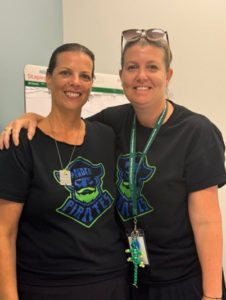
Sharon Eichberg, left, and Katy Horowitz, right, founders of Gan Katan schools.
Horowitz said she’s really never had time to stop and think about her school’s growth. “But every once in a while,” she said, “I get this moment of whoooosh, I can’t believe this is a thing.”
“Every year this school has evolved,” she continued. “It’s beautiful, but tiring. It’s this shapeshifting, ever-evolving craziness. I can’t explain. But somehow it always comes out right.”
The same could be said for the growth of Florida’s Jewish schools overall.
At the same time, though, the Teach Coalition and Step Up report makes clear that limits on growth are looming, due to restrictive zoning codes, rising real estate values, and increased competition with other private schools.
The vast majority of newer Jewish schools in Florida are on the smaller side, with fewer than 250 students. That’s not a function of parental preference, the report suggests, pointing to data showing robust growth in larger Jewish schools. Instead, the limitation seems to lie with restrictive local zoning laws.
“With Florida’s existing Jewish schools at or near full capacity, more effort is needed to source suitably sized school buildings,” said Danny Aqua, director of special projects at Teach Coalition, which advocates for Jewish schools. “Without legislative and regulatory action to reduce the hurdles to opening new schools, the lack of school building space may throttle growth in Florida’s Jewish day schools.”
Gan Katan and Pardes Day School were able to expand in 2021, when Horowitz and Eichberg lucked into two, long buildings that once housed a charter school. Prior to that, the buildings had been an apartment complex in a snug neighborhood graced by oaks and figs and bright splashes of hibiscus.
“It was like finding a needle in a haystack,” Horowitz said. “We called it our unicorn.”
The unicorn worked for a while, but it’s not ideal. The buildings now house the pre-school and elementary school, while the synagogue, less than a mile away, houses the sixth- and seventh-graders. Meanwhile, Horowitz and Eichberg can’t grow more space, but they have installed walls to create more rooms. Stacks of books and school supplies, including in Horowitz and Eichberg’s office, hammer home the reality that the school is maxing out.
“We thought the school was going to be small,” Eichberg said. “This,” she said, gesturing around the office, “was not the plan.”
Horowitz estimates 10 percent of the families they serve are recent transplants from out of state. Some from New York and California. Some from Israel and France. The biggest cluster came from Montreal.
Dayna Westreich and her family moved from Manhattan to Miami Beach in 2021. All four of her children attend Jewish schools using choice scholarships, two of them at Pardes Day School.
Florida just had more going for it, Westreich said – better cost of living, better quality of life, fewer headaches in the wake of the pandemic, and more economic opportunity. Choice scholarships were “an added bonus,” she said, and she was “over the moon” with Pardes.
“My daughter was instantly happy there, and it made the transition easier,” she said. “The school’s like a big hug.”
Florida was already hard to beat with good weather and a reputation as a safe haven, Horowitz said. Now that the scholarships are universal, it’s even more so.
Before last year, 25 to 50% of the students at Gan Katan and Pardes Day School were using the scholarships, she said. Now all of them are – and word is definitely getting around.
“When a group from a certain place finds a new place, they bring all their friends with them,” Horowitz said. “They send the carrier pigeons back home and say, ‘Come to Florida!’ “
As our country was being formed, states such as Connecticut, Georgia, Maryland, Massachusetts, New Hampshire, South Carolina, and Virginia adopted state religions that citizens were taxed to fund and expected to follow. In response to this infringement on personal freedom, the U.S. Constitution was amended to include language, called the Establishment and Free Exercise Clauses, forbidding the establishment of a government religion and guaranteeing individuals the freedom to practice or not practice religion. These clauses read: "Congress shall make no law respecting an establishment of religion, or prohibiting the free exercise thereof.”
Opponents of education choice programs that allow students to voluntarily use publicly funded education choice scholarships to pay for tuition at religious schools assert that these choice programs are unconstitutional primarily because they violate the Establishment Clause. In essence, legally equating families who freely choose to send their child to a religious school using a publicly funded scholarship with a government coercing people to support a state religion. The courts have made clear this argument has no merit and is dead on arrival. But opponents keep trying.
Teachers unions are the most aggressive opponents of education choice programs. The National Education Association (NEA), the nation’s largest teachers union, says, “Voucher programs drain resources from public schools and funnel those resources to private and religious schools, violating the Establishment Clause.” The second largest union, the American Federation of Teachers (AFT), agrees.
Other prominent opponents concur with the teachers unions’ reasoning. People for the American Way believes that "By using taxpayer money to fund private religious education, voucher programs violate the Establishment Clause.” The Freedom From Religion Foundation (FRF) writes that, "School voucher schemes unconstitutionally entangle government with religion by directing public funds to parochial schools, thereby violating the Establishment Clause."
Americans United for the Separation of Church and State (Americans United) asserts that education choice programs violate both the Establishment and Free Exercise Clauses. "School vouchers funnel taxpayer money to private religious schools…This violates the Establishment Clause and the religious freedom of taxpayers."
The Southern Poverty Law Center (SPLC) makes a similar argument. "School voucher programs that funnel taxpayer dollars to private, religious schools violate the Establishment Clause of the First Amendment by compelling taxpayers to support religious instruction and activities. Such programs erode the separation of church and state, a foundational principle of our democracy."
Suggesting that the Establishment and Free Exercise Clauses give individual taxpayers the right to circumvent elected representatives and decide for themselves how government spends their taxes is a rejection of democratic governance. Expecting a fire department to check with its local taxpayers to determine whose taxes may be used to fund putting out fires at churches is impractical.
The American Civil Liberties Union (ACLU) invents a “constitutional principle” when it claims, "Voucher programs, which divert taxpayer dollars to private, often religious schools, undermine the fundamental constitutional principle of separation of church and state.”
The phrase “separation of church and state” is not a constitutional principle. It does not appear in the U.S. Constitution. Thomas Jefferson used this phrase in an 1802 letter to the Danbury Baptist Association in Connecticut to reinforce the intent of the Establishment and Free Exercise Clauses, which is that government should not interfere with citizens’ right to practice or not practice religion unless this practice violates public laws. The state will not allow a religion to construct a building without a government permit or abuse children. The U.S. Constitution requires the relationship between religion and government to be appropriate but not nonexistent.
Beginning with the Zelman v. Simmons-Harris ruling in 2002 and continuing with the 2020 Espinoza v. Montana Department Revenue case and the Carson v. Makin decision in 2022, the U.S. Supreme Court has consistently ruled over the past two and a half decades that programs providing public funds to help families pay for educational services offered by religious organizations are constitutional, provided families make these choices freely. These court rulings suggest an Establishment Clause violation occurs only when a family’s decision to use public funds to pay a religious organization for educational services is influenced by government coercion.
Despite the weakness of their legal arguments, the ACLU, AFT, Americans United, FRF, NEA, and SPLC have supported lawsuits in Arizona, Florida, Indiana, Maine, Montana, Nevada, New Hampshire, North Carolina, Ohio, West Virgina, and Wisconsin challenging the constitutionality of K-12 programs that allowed families to purchase education services from religious organizations using public funds. But these groups have never legally challenged the constitutionality of prekindergarten and higher education students using public funds to attend religious schools.
Why do they support legally forbidding a high school senior from using public funds to pay tuition at a Catholic high school but look the other way two months later when this same student uses public funds to pay for tuition at the University of Notre Dame? The answer is tribal politics.
Humans are tribal. We are all members of multiple tribes, including tribes organized around political beliefs. To remain a tribal member, we must conform to that tribe’s beliefs, no matter how irrational they may appear to those outside the tribe.
Most of the AFT’s and NEA’s dues-paying union members work in K-12 school districts. Consequently, the AFT and NEA are highly motivated to protect the jobs and compensation of these members by opposing students using public funds to attend private schools that employ non-union teachers. Since most private schools are faith-based, these unions use the Establishment Clause violation argument as a legal and political weapon despite its ineffectiveness.
The NEA and AFT have far fewer members working in prekindergarten and higher education institutions. Consequently, they are less willing to spend money and political capital opposing students using public funds to attend religious schools in these two sectors.
Education choice opponents such as the ACLU, Americans United, SPLC, and most Democratic Party elected officials, are in the same political tribe as the NEA and AFT, and these two unions provide much of the money and grassroots activists that give this political tribe its power and influence. Therefore, these groups conform with the AFT's and NEA’s legal reasoning for opposing publicly funded education choice programs and will continue to do so until the unions change their positions.
At a mid-1980s NEA convention, the delegates overwhelmingly rejected a resolution supporting magnet schools. As the floor manager for this resolution, I remember this defeat well. Opponents claimed magnet schools undermine neighborhood public schools and correctly argued that magnet schools are a manifestation of Milton Friedman’s initial school voucher proposal. A few years later, after thousands of NEA members began working in magnet schools, the union reversed its position and embraced magnet schools.
Today the NEA and AFT’s tribal partners all support magnet schools despite their school voucher lineage suggesting tribal loyalty is stronger than ideological consistency, and tribes will rationalize changing core positions to enhance their economic and political strength.
In Florida, teachers unions are slowly bleeding to death as thousands of unionized teachers leave to teach in a rapidly expanding array of new, non-unionized education settings such as homeschool co-ops, hybrid schools, and microschools. To survive, Florida teachers unions need to begin serving these teachers, including those working for religious organizations.
For more than 40 years, I have argued that teachers need to replace their old-school industrial unionism with a model that can serve teachers in diverse and decentralized settings. If they do not evolve, they will not survive. Nor will some of their tribal colleagues.
The number of Jewish schools in Florida nearly doubled over the past 15 years, boosted by parents using state school choice scholarships and the migration of families from New York, according to a new report from Teach Coalition and Step Up For Students.
Student enrollment between 2007-08 and 2022-23 rose 58 percent, from 8,492 to 13,379, while the number of Jewish day schools and yeshivas grew from 40 to 74, the report shows.
Over the same span, the percentage of Jewish school students using choice scholarships increased from 10 to 60 percent.
 The growth of Jewish schools in Florida is historic and unmatched anywhere else in America. The analysis is also likely to understate the trend lines, given it does not cover the 2023-24 school year, the first year every student in Florida became eligible for a choice scholarship. (The data for 2023-24 is not yet available.)
On a cautionary note, the report also points to increasingly pressing issues that could limit future growth – and not just for Jewish schools.
The vast majority of newer Jewish schools are on the smaller side, with fewer than 175 students. That’s not a function of parental preference, the report suggests, but the result of challenges schools face in navigating restrictive local zoning laws to find adequate and affordable facilities.
“With Florida’s existing Jewish schools at or near full capacity, more effort is needed to source suitably sized school buildings,” said Danny Aqua, director of special projects at Teach Coalition. “Without legislative and regulatory action to reduce the hurdles to opening new schools, the lack of school building space may throttle growth in Florida’s Jewish day schools.”
Full report here.
TAMPA – Be a doctor, some say.
Be a lawyer, others suggest.
You’re so smart, you should do something big, they tell her.
Mikaela Powell politely listens to those who see her top-of-the-class grades and encourage her to pursue a lofty education and a lucrative career.
What they don’t know is the high school senior from Odessa wants to follow in the footsteps of her parents and pursue a career in education.
“I want to be a teacher,” Mikaela said. “Probably the second grade.”
Mikaela is only months away from graduating from Tampa Bay Christian Academy (TBCA), a K-12 private school in Tampa that she attends with the help of a Florida Tax Credit Scholarship. The scholarship is made possible by corporate donations to Step Up For Students.
“The scholarship being available to Mikaela has just been a blessing,” Mikaela’s mom, Joyann Powell said.
Joyann and her husband, Mike, are both in education. Joyann has been a teacher in district schools for the last 18 years. She and Mike both wanted a private school, faith-based education for their children (their son Justin graduated TCBA in 2022). They wanted a safe environment and a small setting.
They found that at TCBA, where Mikaela has excelled since entering the fifth grade.
“She’s a solid, solid student,” Head of School Matt Peavyhouse said.
Mikaela is on the short list of candidates to be valedictorian and has been accepted to the University of South Florida, Trinity College of Florida, Florida Southern College, and the University of North Florida. She is waiting to hear if she has been accepted to the University of Florida and plans to apply to the University of Central Florida.
Mikaela will major in education because she places teaching on par with the medical and legal professions. She wants to be that teacher who has a lasting impact on a student’s life. The one who often hears from former students.
She wants to be like her first-grade teacher, Miss Toussaint.
“The way she made people feel was wonderful,” Mikaela said.
“She put Mikaela on that path to do well in school,” Joyann said.
With their careers in education, Joyann and Mike instilled the value of education in their children.
Mikaela’s thirst for learning increased when she enrolled in TBCA in the fifth grade. There, she formed a small circle of close friends that includes Kendall and Gaby. Mikaela, Kendall, and Gaby are the finalists for valedictorian, their grades separated by mere decimal points. They rush to compare test scores to see who’s in the lead.
“They lift each other up, so that’s cool,” Joyann said. “I have no problem with that.”
There are others in the circle – Yara, Bitia, Mark, and Jon. They’ve formed a bond that Mikaela expects to last a lifetime. When asked about the impact TBCA has made on her life, Mikaela is quick to mention her friends.
“And then the school in general,” she added. “I like the size for me because the teachers all know you and care for you. And then it's easier to learn since the teachers all can adapt to your style, and you can adapt to their style.”

A talented artist, Mikaela is proud of this painting.
Mikaela has been in every class play since she began attending the school, playing such roles as a lost boy in “Peter Pan,” a librarian in “Matilda,” and an apple tree in “The Wizard of Oz.”
An above-average volleyball player who excels on her club team, Mikaela joined TCBA’s winless girls basketball team last year at midseason because, as she told her mom, they really needed the help. She helped lead the Rams to their lone victory, which came in the last game – a one-point win over a team that routed them earlier in the season.
Mikaela tutors younger students. She sings in her church choir. She is comfortable working with the younger children at her church. Joyann and Mike have been long-time foster parents, so Mikaela has been around young children for years. That experience, she said, gives her confidence that she will thrive as a teacher.
“She’s thoroughly driven to reach her goals,” Peavyhouse said. “She’ll be great at it.
“She’ll be the teacher who will be in their life because she’ll be their volleyball coach in middle school, their basketball coach in high school. She’ll be involved in the school play, choir, whatever they’re doing. She’ll be with them outside the classroom in other activities.
“I told her we’ll have a position for her here when she’s ready.”
Mikaela thinks the best teacher she can be is one who has rules but is not considered strict, one who helps create a foundation for learning, and one whom the students are happy to be around both in and out of the classroom. An avid baker and talented artist, she plans to incorporate both into her teaching.
“Maybe it’s a pipedream,” she said.
Or maybe it’s a wonderful career.

Last week we discussed the Oklahoma attorney general’s advisory opinion against enforcement of the state’s prohibition on religious charter schools. After reading up on the subject, I declared myself president of the “Religious Charter Schools are Permissible, Mandatory and a Bad Idea” Club. My view on this is not motivated by apocalyptic opposition (Europe has the equivalent of religious charters) but on practicality. The path to religious charter schools goes through years of litigation which, even if successful, will find itself (all too easily) thwarted by the Baptist/Bootlegger coalition.
Before proceeding let me again repeat it is a travesty that school finance systems discriminate against families desiring a religious education, and we need to end that discrimination. Moreover, what I am about to describe below is not how I want the charter world to operate. Far from it. Also, again, I am open to challenge on all of this. It should be debated vigorously. Okay, let’s go.
Russ Roberts often references the “Baptists and the Bootleggers” problem during interviews on his invaluable EconTalk podcast. It is an idea from the economic study of regulation that is easy to grasp: both Baptists and bootleggers support the prohibition on the sale of alcohol, but for very different reasons. Baptists oppose the sale of alcohol for religious reasons, whereas bootleggers, those who create/import/sell alcohol illegally, support prohibition as a means of limiting their competition. Bootleggers are going to sell alcohol regardless, but they make bigger profits by restricting others from competing with them.
Charter school authorization in most states around the country, including Oklahoma, obviously suffers from a Baptist and the bootlegger malady. The “Baptists” in this case are teachers’ unions and the rogue’s gallery of fellow travelers who don’t want any charter schools at all. They have a great deal of political power. The bootleggers are at least as much if not a greater problem. With regards to charters, bootleggers make claims of being greatly concerned with “quality authorizing” but one need only be realistic rather than cynical in noting that “quality authorizing” has much more to do with limiting competition for incumbent charters than it does “quality.”
Quality of course is in the eye of the beholder, and our means for assessing it in the context of schooling has been quite primitive. Also, the self-serving “quality” rules can look awfully arbitrary and stupid with the slightest bit of examination. For example, Arizona has a charter school with a rate of academic growth rate 98.6% above the national average, which would have been in danger of closure if Arizona lawmakers had been gullible enough to adopt a default five-year closure law (a favorite of charter bootleggers).
As Lisa Graham Keegan explained:
Moreover, Arizona’s “wild” charter journey led to many low-income, highly performing charter management organizations that can only be found in the Grand Canyon State. Many are community-focused and community-developed, which we all say that we want, but their first priority was on stabilizing the communities they grew from. In other words, they weren't very good academically to start—but they did transform their neighborhoods, and parents trusted these new schools with their precious children over many other options that went out of business due to lack of enrollment. Years later, many of them, like Academies of Math and Science, Mexicayotl Academy, and Espiritu Schools, are now among the top performing schools in not just the state, but in the country, and were highlighted in last week’s Education Equality Index. The thing is it took a decade to do that. And we Arizonans let it happen.
The Baptist/Bootlegger Charter Alliance has been, alas, devastatingly effective around the country. A whole string of states has passed charter school statutes in recent years — states like Washington, Alabama, Kentucky, and Mississippi. National charter school groups have sung the praises of these laws, but then, they produce few actual charter schools. In Kentucky’s case, no charter schools. The “Baptists” don’t want any charter schools, and the “Bootleggers” only want charters from their own organizations to operate, and the compromise lands on few charters opening.
Oklahoma, for instance, passed its charter law in 1999, and the Oklahoma Charter Schools Association lists 30 or so charters operating in the state, which looks to be a net gain of 1.5 schools per year. The Baptist/Bootlegger coalition effectively wants few if any charter schools to open, and it won’t be overly difficult for coalition members to agree on a dislike of charter schools teaching religion as truth.
Years of litigation awaits the would-be religious charter school operator, the result of which may vary across jurisdictions. Regardless of how that plays out, the Baptist/Bootlegger coalition will be waiting. They’ve had to be barely creative (900-page applications, etc.) to throttle charter school growth, and motivated by a shared distaste for religious charter schools, I’m guessing they will get insidious if necessary.
Nonetheless, there will be those who make the attempt. My advice to you dear reader: Don’t be one of them. Your energies will be better rewarded elsewhere. As Sun Tzu wrote: “A victorious general wins and then seeks battle, a defeated army seeks battle and then seeks victory.” Even if you survive the courts, the B/B Alliance will be there to finish you off.
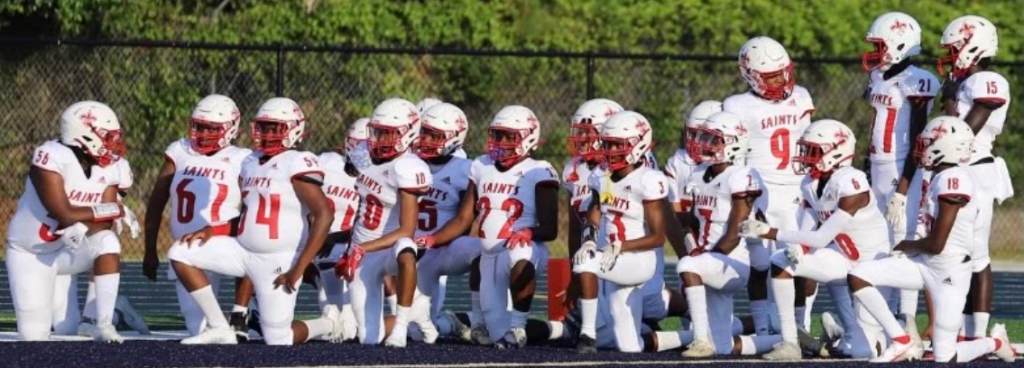
Palm Beach Christian Preparatory School’s mission is to guide and support students to become men who are proficient both academically and extracurricularly, open to growth, intellectually competent, religious, loving, and committed to doing justice so they can work as leaders for the promotion of justice in a multicultural society.
Just now, the news Palm Beach Christian Preparatory School is making belongs on the sports pages — which is what you would expect when a bunch of coaches launches a private school.
Not that there’s anything wrong with that.
To its enormous credit, PBCPS embraces vigorous competition as one of its ideals, and for all the right reasons. Pursued appropriately, high school sports teach responsibility, reliability, the value of doing your job, time management, homework, sacrifice, and teamwork.
There’s also this, which must not be underestimated: The Saints of PBCPS learn about the joy of rewards earned, not given. Because of this, expect the news made by Palm Beach Christian Prep graduates to be splendid and widely worthy of note.
“Our principles,” says PBCPS founder Willie Snead III, “are built around biblical principles that tie into athletics, academics, and just being responsible — being a servant to your community, being a light in your own family.”
An ordained minister, Snead carries the titles of senior pastor of Palm Beach Christian Ministries and headmaster of PBCPS. But athletics is in his blood: All-Palm Beach County and All-Academic wide receiver for Glades Central High School; four-year letterman in college (two each at the universities of Virginia and Florida); pro football stops with the New York Jets, Toronto Argonauts, and Saskatchewan Roughriders; and successful high school football coach (state championships in Florida and Michigan).
Everywhere, he saw youngsters who were just one wrong turn, one instant from being in the wrong place at the wrong time, from seeing their promise vanish in a heartbeat.
Snead saw and he knew, because he remembered being 8 years old, home in bed from trick-or-treating on Halloween night, and hearing that pop-pop-pop out on the street. Firecrackers, he thought, drifting off.
The news, engraved in his memory, came on the morning of All Saints Day: There had been a shooting in the neighborhood, and his dad, Willie Snead Jr., a bystander, was in the wrong place at the wrong time.
A tragedy like that changes a person. Makes them or breaks them.
Willie Snead III went to work, pushed by his widowed mom, who finished school at night, became a bookkeeper, and for the next 34 years never was without a paycheck.
Snead chased rabbits and raccoons through the muck around Lake Okeechobee, getting stronger and faster, because that’s what kids did if they wanted out of Belle Glade. But all through the years and long into adulthood, he never forgot those friends and teammates who couldn’t keep pace.

Willie and Sofia Snead
About four years ago, while waiting for a plane to take him home from a coaching clinic in Muskegon, Mich., and wondering what would come next, Snead experienced an epiphany. Flanked by wife Sofia, a regional sales manager for cosmetics-packaging giant SeaCliff, and son Willie Snead IV, then and now an NFL wide receiver, he leaned into a story on an overhead television about the education initiative in Akron, Ohio, being driven by NBA star LeBron James.
James’ efforts had culminated in the I Promise School, a public school that does revolutionary things for students in difficult circumstances. And there it was, the answer to a prayer the Sneads scarcely knew they’d whispered, as though the Almighty himself was reaching through the screen.
“We could do that,” Willie III said. “We have to do that,” Willie IV replied. Sofia hugged them both.
Set back a year by the COVID-19 pandemic, Palm Beach Christian Preparatory School opened in August 2021 in a modest block building in Greenacres, Fla., practically in the shadow of John Leonard High, the largest public school in Palm Beach County.
Fifteen months later, this little David of an educational miracle continues to gather its flock, paying scant attention to the Goliath up the street.
Most of the original Saints had run into trouble typical of their neighborhoods. Substance abuse, getting high, drinking, ditching school. The difference, Snead says: “They said that they wanted help. We offered them that help. And a lot of them gave up those other devices. They stopped smoking and they found that someone truly cared about them.”
Consider the encouraging parallel experiences of Jadarius Patterson and Grant Turner, both 16 and both from tough neighborhoods in beach towns south of Lake Worth. Adults in their lives had reason to fret over the youngsters’ futures if their courses remained unaltered.
Now, delivered daily into the care of Pastor Snead and his team by the school’s small fleet of buses, hope burns brightly for both.
Some aspects of PBCPS borrow from learning centers and microschools such as KaiPod, Outschool, and My Tech High, each of which blends the flexibility of online study with immediate access to learning coaches in the room.
Having unearthed an affinity for algebra and hands-on chemistry, Turner ponders life as a veterinarian, never mind how much school is involved. You’d never know he arrived at Palm Beach Christian Prep as a 10th-grader groaning under road-to-nowhere baggage: a hyperactivity discipline problem with truancy issues.
Now he’s an honor roll student.
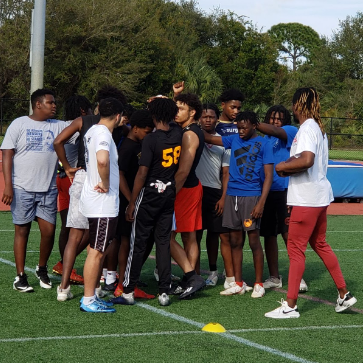
PBCP operates on the belief that learning extends beyond the classroom, to the chapel and the athletic field.
“It's actually better than if we were at a public [school] environment,” Turner says, “because [at PBCPS], they’re always on top of you. They're always going to make sure that you're doing the right thing. And they're going to keep you around more good things so you won't do bad.
“When you're in a public environment … nobody cares what you do. … It’s more structured when you're around people who care.”
That caring involves the sorts of adult intervention that teens often describe as meddling. Be on time. Do your homework. Are you studying? Pay attention. Who are you hanging out with? Rather than bristle, successful Saints regard all this as love expressed.
"To me,” Patterson says, “them being in our business is like them being a father figure toward us. Of course, they're going to be on us because they are our coaches and stuff, but it's more like a father figure.
“You're doing stuff you don't have any business doing. They're going to make you own up. … You're going to have to take accountability for your actions.”
Being a Saint doesn’t necessarily mean being saintly. But it does mean striving for goals revered by — among others — St. Basil the Great, the master of self-discipline.
Patterson is on the path.
“Being here … taught me how to think things through,” Patterson says, “not, you know, do things before I think. It taught me how to calm down.”

Willie Snead IV
Hearing this self-report brings glad tidings to Willie IV, who personally recruited Patterson for PBCPA. Not solely because, as the scouts say, he could play, but because, for all his athletic skills, his path out of the neighborhood was not certain.
“JD is the kind of kid we built our school up for,” Willie IV says. Minus support from the Saints network, “Jadarius probably would have gone in a whole different direction.
“The environment that he lives in, it's so easy for him to be on the corner or to be in a park smoking or whatever. … It's so easy for them to do that because that's all they have around them.”
Instead, the men of Palm Beach Christian Prep are constant mentors to provide nurture and encouragement. Not just during school hours or at practice, but all the time. Every student has phone numbers for their coaches, Pastor Snead, and their favorite 49er.
And call they do.
They pick up the phone, Willie IV says, “when they might be struggling with something, or they might need direction about something and don’t want to make that decision on their own.
“I know kids look up to me,” he says. “And I just tell them, like, look, regardless of what your situation is, man, you are always in control.”
Jonathan King, Pastor Snead’s longtime colleague and friend, serves the school as head football coach and athletic director and also teaches daily Bible classes. Attend PBCPS and you’ll pray at least three times a day, he says. Go to practice, and it’ll be six, minimum.
“It's not easy, because you're trying to change mindsets of young men who have never seen this side of individuals talking to them about Christianity on an everyday basis,” King says. “But the overall is how to become one closer with God and closer to God.”
Palm Beach Christian Ministries, the organizing group headed by Pastor Snead that founded and guides the school, was PBCPS’s principal source of financial support in its first year. Fortunately for the backers’ bank accounts, there were just 12 students. Not that 12 is to be dismissed as insignificant, especially for a school rooted in the Bible’s New Testament.
Disciples in their own right, the original dozen helped grow the student population to 25 in Year 2. Also on the bright side, because of PBCPS’s partnership with Step Up For Students, Snead and his team are having to leverage far less of the funding.
But the needs and the opportunities are equally great, Snead says. Because more must be done, more is being done.
Nearby, a 5-acre piece of land is being developed into a campus with state-of-the-art classrooms, a 6,000-square-foot training facility, a chapel, and a hybrid student union and community center, a place, Snead says, “where the boys can congregate and read or study, and just kind of relax. We want it to be an environment where they're protected, where they can be true to who they are, and let the true nature of their personalities come out.”
Ultimately, Pastor Snead imagines a place effervescing with the honest ambitions of 500 student Saints, each one eager to deliver good news.
And leading them as headmaster will be Willie IV, who won’t have to look for a job when he finishes with the NFL, where he’s been a gritty, move-the-chains journeyman pass catcher for eight seasons (Saints, Ravens, Raiders, Panthers, 49ers).
An undrafted free agent from Ball State, Headmaster Willie IV will present walking-around proof there’s more to success than off-the-charts talent. There’s all that stuff team sports can teach, plus faith in something larger than yourself.
Living examples make compelling guides. With Team Snead on the job, Palm Beach Christian Prep surely will deliver its message of rewards earned, not given.
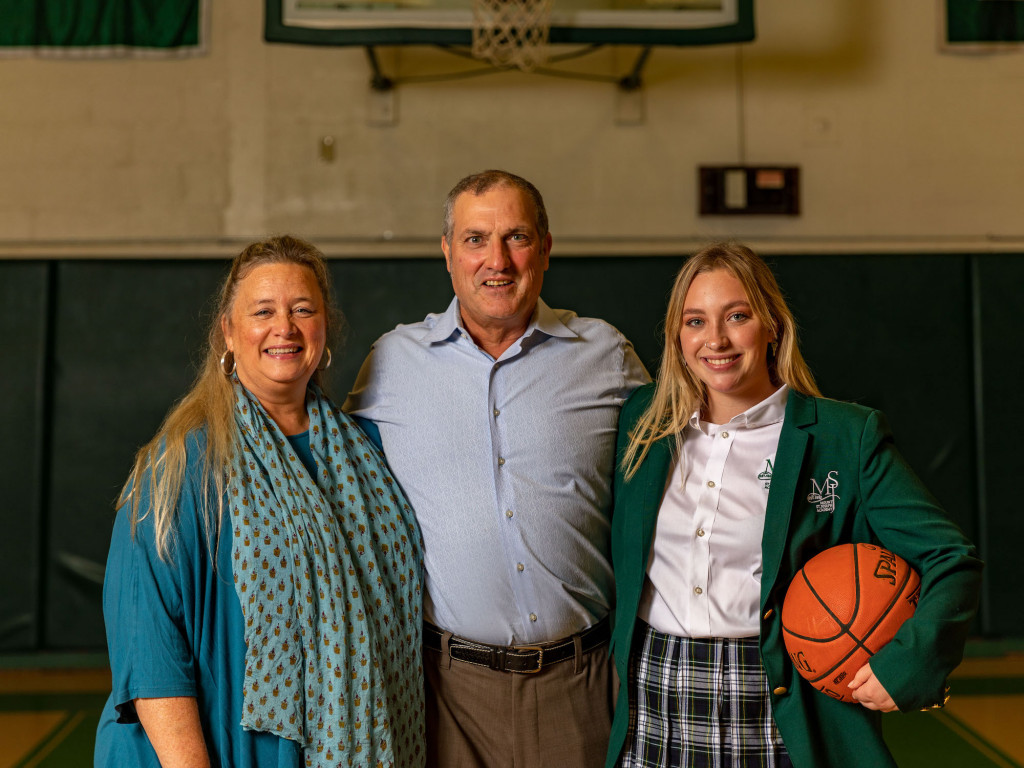
The Gallos were one of several Vermont families who sued the state over its policy banning religious private schools from participating in town tuitioning programs offered in areas without public high schools. Photo courtesy of the Institute for Justice
Vermont residents who live in towns too small to operate district high schools may now use public funds to send their children to faith-based private schools.
The Education Agency of Vermont recently told school administrators that they must comply with a 2022 U.S. Supreme Court decision that struck down a Maine law banning religious schools from participating in town tuitioning programs.
“Requests for tuition payments for resident students to approved independent religious schools or religious independent schools that meet educational quality standards must be treated the same as requests for tuition payments to secular approved independent schools or secular independent schools that meet educational quality standards,” the agency’s Sept. 13 letter said. A list of approved independent schools on the website showed 15 religious schools.
Rural and sparsely populated, Vermont and Maine have programs that offer scholarships to families in areas that don’t operate public high schools so they can send their kids to public or private schools elsewhere.
However, both states prohibited the money from being spent on religious schools, so parents who wanted a faith-based education for their kids were forced to pay out of pocket.
In 2018, a group of parents challenged the Maine program.
Several Vermont parents also filed similar lawsuits. In June 2021, the U.S. Court of Appeals for the Second Circuit struck down the prohibition against religious schools in the case A.H. v. French, brought by four Catholic high school students, their parents, and the Diocese of Burlington.
However, the Maine lawsuit, Carson v. Makin, was the one that made it to the U.S. Supreme Court and settled the issue nationally.
In that case, the high court ruled that education choice programs could not exclude schools based on religious instruction or activities, calling it “discrimination against religion.” A landmark U.S. Supreme Court ruling in 2020, Espinoza v. Montana Department of Revenue, struck down bans on education choice scholarships based on a school’s religious status but stopped short of addressing the issue of religious use.
The Supreme Court ruling in the Maine case reverberated across Vermont, and was cited as the reason for the policy change there.
The decision also drew praise from the American Federation for Children, a national education choice advocacy group.
“Every family deserves the right to choose the best K-12 education for their children, and we are encouraged to see the Vermont Agency of Education stipulate that families in tuitioning programs can choose religious schools,” said Shaka Mitchell, the federation’s director of state strategy and advocacy. “After a hard-fought battle in Maine, the Supreme Court has resoundingly confirmed this right, and we are thrilled that Vermont families will be able to access a fuller range of options as well. We hope other states will join Vermont and follow the ruling of the Supreme Court by ensuring all students can learn in the educational setting that best meets their needs.”
Maine Attorney General Aaron Frey responded to the Carson v. Makin ruling with a statement that schools must comply with the Maine Human Rights Act to receive funds. That law bans discrimination based on race, gender, sexual orientation, ethnicity, or disability, which contradicts some schools’ religious beliefs. As a result, the two schools that were part of that case have refused to participate in the tuitioning program.
However, Cheverus High School, a Jesuit college preparatory school in Portland, this week became Maine’s first religious school approved for funding. Though a Catholic school, Cheverus is not governed by the Diocese of Portland.

