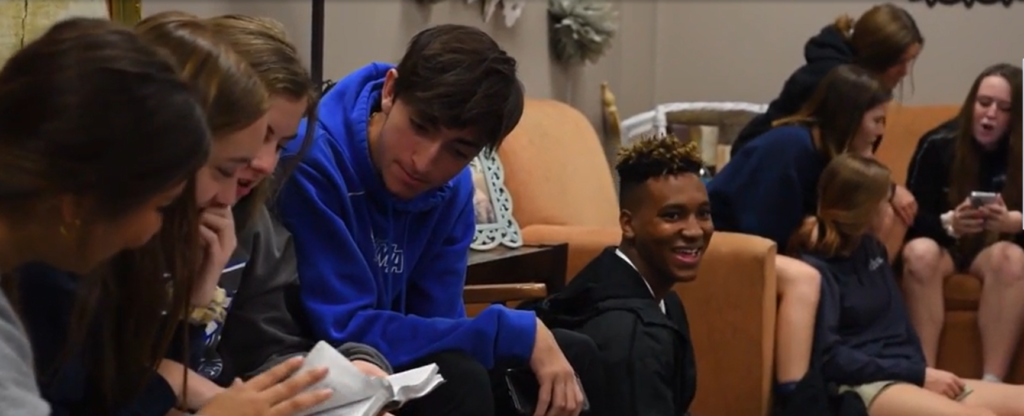
The Master’s Academy in Oviedo, Florida, is a Christian School that opened to 230 students in 1968. It now serves more than 1,000 students enrolled in K2 through 12th grade, and provided a lifeline for Debra Manning’s daughter, Rayonna.
Editor’s note: This first-person essay from Florida mother Debra Manning debuted on the American Federation for Children’s Voices for Choice website.
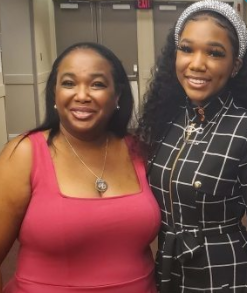
Debra Manning, left, and her daughter, Rayonna
Rayonna faced some challenges in school with somebody that was once her friend.
This girl started to bully my daughter because she did not want Rayonna to talk to a girl she didn’t like. My daughter was uncomfortable in this situation, and I started getting calls from her while I was at work. She explained the situation to me, and she kept telling me, “Mommy, I don’t want to get into a fight, but this person keeps coming at me. I know I’m going to end up fighting her.”
My daughter was never someone who concerned herself with violence, but now she was telling me this. I was really concerned, but I worked on the other side of town, and I knew I wouldn’t be able to get to Rayonna in time. So, I called my mother, and she went to pick my daughter up from school. When she got there and discussed this with the administrators, they just kind of brushed her off. I told her I would deal with it the next day.
That night, my daughter came into my room, and she told me to look at her phone. The young lady that was bullying her had sent her a text that pictured both fists and gun emojis with the words, “I am going to get you.” I took that very seriously and I went to the school the next day to discuss the situation.
The school really didn’t do much to solve this situation. They told the resource officer and called the girl and her mom up to the office, but their only solution was to make the girl stay home from school for the remainder of the year, which was about a month. That was not good enough for me. The girl could be sent home, but there was nothing stopping her from leaving the house and going to the school of her own volition.
As a parent, I knew that I would be constantly paranoid if I left my daughter in school while I was at work. Instead of leaving her at school, I told the school that I was going to bring her in every morning for her attendance and schoolwork, but that I would be taking her home after to do it. They didn’t really want me to do that, so I called the regional office and let them know the situation. They approved of it and for the remainder of the school year that is what we did.
This was only a temporary solution, and I knew that I had to find my daughter a new school before the new school year began.
I started looking for schools, and a friend of mine told me about Master’s Academy. I went to tour the school and from the moment I stepped into the school, I felt so much better. Everything was just so much better, from the way they greeted me to the smaller class sizes. The school asked me if I had ever heard of Step Up for Students and to apply for financial assistance through them. I honestly did not know if I would get it, but I tried.
When we got the notification that we had been approved, I was so happy. My daughter felt so comfortable at Master’s Academy, and I was at ease.
Being able to send your child to a school that where you feel comfortable that they are getting what they need is a must. I am a product of public schools and I have nothing against them. However, they are crowded with almost 30 students in one classroom. Kids cannot learn like that. It is also hard to notice bullying when you have to pay attention to so many kids. On top of that, my daughter was just so much more comfortable. She no longer had to worry about bullying and the smile on her face at that school was so worth it.
I think that every parent should have the ability to choose the right school for their child. Every child learns at different paces and in different ways. In a smaller classroom setting, teachers are able to accommodate every child. No one child is sacrificed because the teacher cannot spare the extra time for them. On top of that, there is a more comfortable environment between the parents and the school.
If my daughter is struggling, I know the school will work with me on what she needs. I am not saying a public school will not do that, because sometimes they do. What I am saying that it is more plausible in a smaller school environment. Every child and parent should be able to expect that from their school, but unfortunately, they cannot. That is why having the ability to choose your school matters so much.
Without the Family Empowerment Scholarship, I’m not sure where my daughter would have ended up. I could not have kept her in her zoned school with a threat to her life. But, as a single mom, I could not have paid for private school out of pocket.
I have a good and stable career, but I live paycheck to paycheck. I am already worrying about how to keep a roof over our heads and clothes on my child’s back. I should not have to also worry about paying for her to receive a safe and quality education, but I did.
Our representatives have the ability to send their kids to private schools if their zoned schools are not good enough, because they have the money to do so. Why shouldn’t I get that option when my daughter’s zoned school was failing her?
 On this episode, reimaginED senior writer Lisa Buie talks with Juliette Harrell, an Orlando, Florida, mother of three children, two of whom attend private school thanks to the Family Empowerment Scholarship Economic Options program.
Lacking education in financial literacy, Harrell and her husband, Allen, experienced homelessness as teenage parents. Their bills piled up, and Harrell and Aiden, now 10, and Amar'e, now 6, had to relocate to a local shelter while her husband moved in with his mother until they could get back on their feet. They heard about Florida’s state scholarship programs for lower-income families and applied.
The couple was able to settle Aiden and Amar’e into a private school that also helped them learn how to manage their finances. They became fiscally stable and eventually bought their first home.
EPISODE DETAILS:
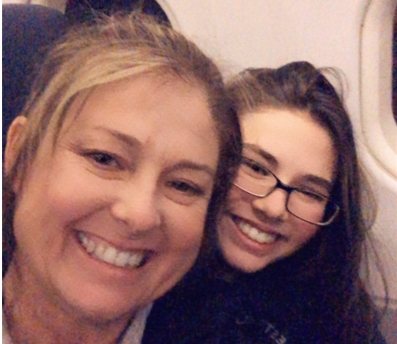 Editor’s note: This Palm Coast, Florida, mom was happy with the school her daughter, Abby, attended with assistance from a Florida Tax Credit Scholarship. Then Abby, who had been diagnosed with a special need at age 3, became a teenager and started to struggle. Demain once again found herself seeking an educational setting where Abby could continue to learn and thrive.
Relief came in the form of a Family Empowerment Scholarship for students with unique abilities. The education savings account that Demain was able to use allowed Abby to be homeschooled, which has proved to be an environment that suits Abby perfectly.
Here is an excerpt from a podcast reimaginED senior writer Lisa Buie recently conducted with Demain, in which Demain talks about the benefits of her education savings account.
It’s a complete 100 percent turnaround. This is a child who absolutely could not leave the house to go to school, to sit with other children. She’s agoraphobic. It became so much more when she hit puberty. Kids can be cruel. They really can. A few bad experiences with her classmates, and that was it. She was done. Where she was afraid to raise her hand or be called out if she didn’t understand something in class, we can go over it 10 times at home until she understands, and there’s no judgment. She’s not going to get called out on it.
Without having this ability to homeschool, I don’t know what she would have done. This would have been detrimental to her for the rest of her life. Having this opportunity really kept her involved, kept her interested, and it continued her education in the best way for her to learn.
To hear the full podcast, click here.
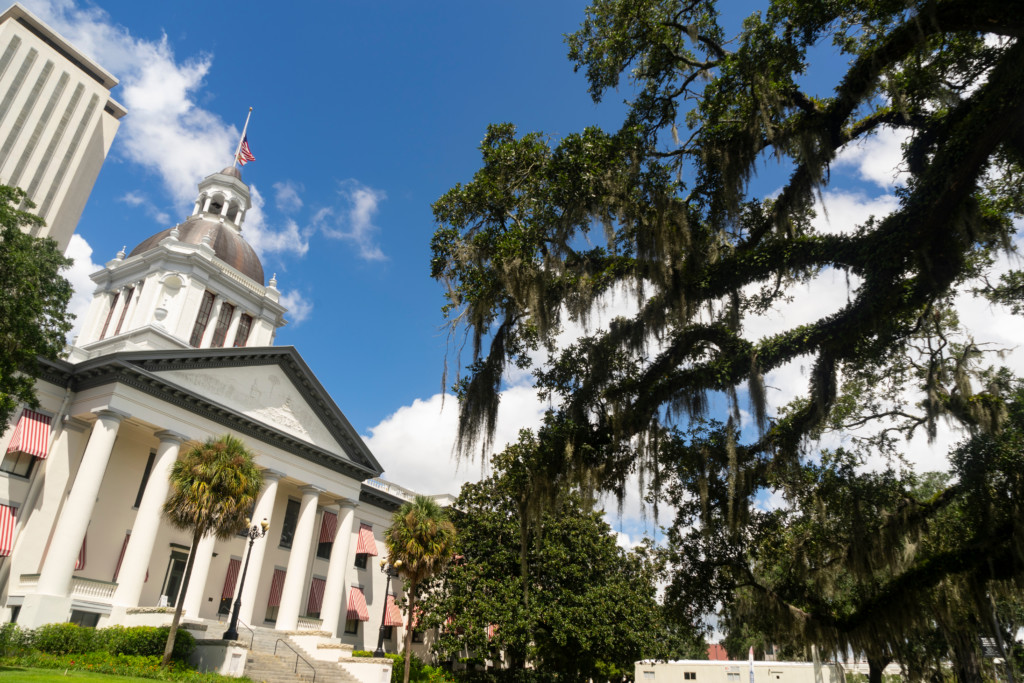
An education choice bill that would streamline options for families who receive state scholarships won approval today from the House Appropriations Committee and is headed for a floor vote.
HB 7045 passed with Democratic Reps. James Bush III of Opa-Locka, Anika Omphroy of Sunrise, Nicholas Duran of Miami, and Patricia H. Williams of Fort Lauderdale joining the Republicans in supporting the bill.
The bill would simplify navigation of the programs for families by merging the state’s two scholarship programs for students with unique abilities, McKay and Gardiner, and combining them with the Family Empowerment Scholarship program approved in 2019. One category of the Family Empowerment Scholarship would serve students with unique abilities and special needs while the other would continue to serve lower-income families.
The bill would leave intact the Florida Tax Credit Scholarship program, which is funded by corporate tax donations, and the Hope Scholarship program for students who have experienced bullying at their district schools. The bill would simplify eligibility requirements by aligning qualifying income levels of the Florida Tax Credit Scholarship with the Family Empowerment Scholarship. Each program currently has different income requirements.
The bill also would provide one-stop shopping for families by placing management of the Family Empowerment program under nonprofit scholarship organizations, which include Step Up For Students, host of this blog.
Under the bill, families currently receiving flexible spending dollars under the Gardiner program would continue to receive their scholarships as education savings accounts; McKay’s traditional scholarships would be converted to education savings accounts starting in the 2022-23 school year. Families currently participating in each program would receive whichever dollar amounts were higher, whether that was in current law or in HB 7045.
“Current McKay or Gardiner students will never receive one dollar less than they do today,” said the bill’s sponsor, Rep. Randy Fine, R-Palm Bay.
The bill also would make it easier for lower-income families to qualify for their category of the Family Empowerment Scholarship program by eliminating a requirement that students attend a district school the previous year to qualify for the scholarship. That requirement resulted in some families whose incomes took a hit due to a tragedy or during the pandemic from being turned down for scholarships that would have helped them keep their children in their private schools.
Fine said the bill “reduces complexity without consequences.”
He said in approving the patchwork of programs, legislators “created needless complexity by having four different scholarship programs that try to solve two different problems. We want to address the complexity without taking away any choice.”
The bill was filed as a companion to SB 48, which cleared its last committee in March. It now heads to the House floor for approval.

