Teach for America. It's looking at Tampa Bay for expansion. Gradebook.
 Charter schools. The Orange school board renews four charters and accepts the voluntary closure of another, reports SchoolZone. A charter school's plans to move in Miami-Dade don't make its parents or potential new neighbors happy, reports the Miami Herald. A judge rules the principal of an Imagine charter in Sarasota - seeking a split with its parent company - won't be banned from campus, reports the Sarasota Herald Tribune.
FCAT season. Underway, notes SchoolZone. But some schools in some districts put off the writing test because of bad weather, reports Gradebook. Some worry that tougher writing standards could result in lower school grades, reports the Naples Daily News.
Literacy. A third-grade retention policy like Florida's would help students in New Mexico. EdFly Blog.
Settlement. The U.S. Justice Department settles with the Palm Beach school district in a case involving complaints of discrimination against immigrant children in enrollment and discipline cases, reports the South Florida Sun Sentinel. More from the Palm Beach Post.
Sequestration. Would hurt low-income and special needs children the most, Palm Beach district officials tell the Palm Beach Post. More from the Florida Times Union. (more…)
School recognition funds. About 1,700 schools will get about $134 million, reports Gradebook. More from SchoolZone, Miami Herald, South Florida Sun Sentinel, TCPalm.com, Florida Times Union, Naples Daily News.
Charter schools. Palm Beach Post: "Palm Beach County has pledged to help a nonprofit charter school sell $10.5 million in mostly tax-exempt bonds so it can open a new campus in Juno Beach — a move that has upset County Commissioner Paulette Burdick, who questions whether the county should aid privately run charters that pull students away from the public school district." More on Cape Coral charter schools asking the Lee County school district for facilities funding from NBC2.
Pre-K. Florida's pre-K isn't the reason its students are surging ahead of Nevada's. Heartland Institute.
Parent trigger. Lakeland Ledger weighs in.
Zero tolerance. Despite changes in the law, thousands of students are still arrested in Florida schools every year for minor infractions. StateImpact Florida.
FCAT. Time again for students to "brace" for the "dreaded" test, reports the South Florida Sun Sentinel. This year, teachers and students better prepared for tougher writing standards, reports the Orlando Sentinel.
Grad rates. Another report notes Florida's rate is low but improving. SchoolZone. (more…)
Tax credit scholarships. Tampa Bay Times columnist Robyn Blumner doesn't like U.S. Sen. Marco Rubio's proposal for federal scholarships.
Charter schools. Tampa Bay Times columnist John Romano bemoans the number of charter schools that close because of low enrollment (but curiously doesn't mention traditional public schools that don't get closed despite the same problem). The Cape Coral City Council will consider a resolution asking the Lee County School Board to share capital funding with the city's charter schools, reports the Cape Coral Daily Breeze. More from the Fort Myers News Press.
Virtual schools. Expanding digital education is a top issue in the coming legislative session. The Florida Current.
Jeb Bush. In education, "he has a record of making messes," the Palm Beach Post editorializes (just days after two more credible, independent reports find Florida students leading the country in progress).
Parental engagement. Duval Superintendent Nikolai Vitti wants to import a Parents Academy program similar to one he worked with in Miami-Dade. Florida Times Union.
Education leadership. The Sarasota Herald-Tribune profiles Sen. Bill Galvano, R-Bradenton, the chair of the Senate Education Appropriations Subcommittee.
Teacher evaluations. The first year of statewide teacher evaluation data using the complicated the VAM formula shows the big difference in progress for students with the highest-rated teachers versus the lowest-rated teachers. StateImpact Florida.
Teacher testimony. Megan Allen, Florida's 2010 Teacher of the Year, testifies movingly before Congress about the impact that budget cuts will have on high-needs students. Answer Sheet. (more…)
It's National School Choice Week. SchoolZone and StateImpact Florida.
 Grade inflation? The Palm Beach Post writes there is less to Florida's No. 6 ranking in the latest Education Week Quality Counts report than education reform supporters suggest, and encourages teachers and politicians "to dig into the details."
Teacher evals. Despite concerns raised by Senate President Don Gaetz, the Shanker Blog says it wouldn't make sense if school grades and the new teacher ratings were too closely associated. The Tampa Bay Times interviews David Steele, who's in charge of the Gates-funded teacher evaluation project in Hillsborough.
Teacher pay. More on Democratic bills to raise teacher pay to the national average. Palm Beach Post.
School security. Bills are filed to use taxes from gun sales for guidance services, and to expand gun-free zones around schools, reports SchoolZone. The superintendents association releases a district-by-district SRO survey, reports the Northwest Florida Daily News.
Technology. StateImpact Florida writes up what to expect at the Florida Educational Technology Conference, where 10,000 educators will gather. Senate Education Committee Chairman John Legg says he's putting together a proposal that aggressively invests in new technology, reports Gradebook.
$10,000 degrees. All 23 state colleges accept Gov. Scott's challenge, reports the Associated Press. More from Miami Herald, Lakeland Ledger, Pensacola News Journal, Bradenton Herald, Sarasota Herald Tribune, Gradebook. (more…)
No honeymoon for Bennett. Especially from the teachers union, reports WCTV. The new commissioner should resolve the bureaucratic limbo over concordant test scores needed for graduation, editorializes the Tampa Bay Times.
Pensions. It’s a political issue for 2014 now that the Florida Supreme Court has ruled against the teachers unions, writes the Sarasota Herald Tribune.
 Writing. After last year’s reality check with FCAT writing, many schools changed their approach. Tampa Bay Times.
Teaching. Tampa Tribune columnist Steve Otto says the system is driving out good teachers like his wife.
Testing. Wendy Howard with the Florida Alliance for Choices in Education offers a defense of it in this Orlando Sentinel op-ed.
Scare tactics? How bleak is the budget situation in St. Lucie really? TCPalm.com
What really happened? A forensic audit of Manatee’s fiscal problems leaves unanswered questions. Bradenton Herald.
Perfect storm. A combination of factors led to Brevard’s budget crisis. Florida Today. (more…)
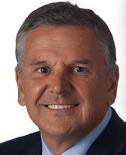
Chartrand
Florida is a national leader in expanding school choice. And the state's new top education official doesn’t see the momentum slowing, especially with low-income children.
“The train has left the station on school choice,” Gary Chartrand, 58, told redefinED by phone this week - his first media interview since being elected chair of the Florida Board of Education on Friday.
“I often say that freedom is abundant in America but it’s not universal. When you’re stuck in a broken system, and you’re poor, and you’re full of despair, and you only have one choice, and that choice happens to be an F school, that’s not freedom. And so I think the school choice movement is bringing more freedom, especially to the most under served children in the state of Florida.”
Chartrand, a Jacksonville businessman, takes a leadership role at an especially sensitive time. Funding, already low compared to other states, has been stagnant. Common Core standards are around the corner. Teacher evaluations are in flux. Criticism of the state’s accountability system is as loud as it’s ever been (which, after the Jeb Bush years, is saying a lot.) And now the board is looking for its fifth education commissioner in eight years.
At the same time, Florida has been a pace setter in academic gains for most of the past decade. Those shaping state ed policy have no plans to ease up on the gas.
Chartrand touched on a number of issues in the interview, which is attached below. Some highlights:
On his priorities as chair: “I am not proud of the fact that America is 17th in reading, 25th in math and 30th in science in the world. We used to be No. 1. And I believe that if this continues, we’ll undoubtedly lower our standard of living … And so I just have one goal: and that’s a quality education for all. We can do better. We must do better. We got to prepare our kids for a very rapidly changing world.”
On the best way to raise standards: “We’ve got to raise standards incrementally. I get a little concerned at times, and I always use the analogy of, if you can jump on a high bar six feet, you don’t raise it to seven feet and try to get over it. Because you’re not going to get over it. You raise it from 6 to 6-1, to 6-2, 6-3, and that’s how you incrementally improve, to continue to excel. And I think that’s what we need to do at the Department of Education.” (more…)
 Education reform, for some of us, is full of tough calls. And for some of us, there can be particular agony in the gray area where race, poverty and both types of accountability – parental choice and regulatory – intersect.
Last week, the school board in Pinellas County, Fla., voted 4-3 against their superintendent’s recommendation to begin the process of closing a charter school in the city of St. Petersburg. The Imagine elementary school, serving predominantly low-income, African-American kids, had just earned its third F grade in four years of operation because of painfully low standardized test scores. Only 29 percent of its students were reading at grade level, according to the state test; only 13 percent were reaching the bar in math. Only one school in the district had performed worse – another charter – and the board had already voted to shutter it.
In the case of Imagine, the board was knotted by a a number of entangling factors, including a vote two months ago – before the release of school grades – to renew the school’s contract. Before the second vote, nearly 20 parents, teachers, administrators and company officials pleaded with the board to keep the school open. They were passionate, thoughtful, respectful – and collectively powerful. We thought their comments were worth sharing, and we excerpted a number of them below. (You can see the speakers on this video here; their presentations begin just before the 41 minute mark. The board debate begins at 3:18:39).
As you weigh the pros and cons, a few points to keep to mind: Black students in Pinellas perform worse than black students in every other urban district in Florida. The number of charter schools has grown rapidly in Pinellas, but not in neighborhoods with large numbers of low-income families of color. The district still isn’t home to a known quantity like KIPP or YES Prep with a record of success with minority kids. And the school board, like many of its counterparts across Florida, recently passed a resolution critical of standardized testing.
Here are the excerpts, edited for length:
Qiana Scott, parent: “You can’t make a decision to close down an institution that is there for the kids based on a standardized test. Because all of our kids are not standard. Kids learn differently. They are taught differently. And at Imagine, that is something that is definitely recognized. So the teachers take that extra time and the extra care to say, “You learn this way, I will teach you the way that you learn best.” So therefore, our kids are learning. It definitely hurts a lot of the parents and a lot of the staff because everybody has worked so hard all year, and to hear that Imagine could possibly be closed down – that’s like splitting up a family. And that’s what we are at Imagine. We are family.“ (more…)
Florida education officials recently posted a frank internal report about what led to the standardized testing flop that has consumed the ed reform debate for the past two months and sparked the biggest backlash yet against the state’s accountability system. Unfortunately, it received virtually no media coverage (one exception here), which is a bit head-scratching considering both the context and contents.
It essentially says, “We messed up.”
“The decision to make a significant change in scoring FCAT Writing in one year was flawed,” the report says. “Throughout the lifetime of the FCAT, there has never been such a dramatic change in scoring criteria in such a short time.”
Led by former Education Commissioner John Winn (pictured here), the just-the-facts review contrasts sharply with the bomb throwing from critics who fought change every step of the way and now deny progress, particularly for low-income and minority students. It is also, in a way, a good sign for the future – a reflection of leadership that is willing to admit mistakes and find remedies.
The report is humbling. It says the state moved too far, too fast in ramping up scoring criteria. External communication with school districts wasn’t strong enough. Internal communication with new Education Commissioner Gerard Robinson was lacking. Also, department staff didn’t move soon enough to determine potential impact of raising the bar: “Had this been done, perhaps the committee members and the Department would have changed the decision to move forward in less than a year.”
Robinson and other education officials have acknowledged some of these mistakes in general terms. But the report goes into more detail. It references confusion in a key July 5, 2011 memo to superintendents, and a year-long span in which the state Board of Education did not receive briefings about the changes. It points out that budget cuts forced the state to whittle away at a more optimal test design, and says transition at the top may have contributed to the communication problems. (After Gov. Rick Scott forced out former Commissioner Eric J. Smith, Winn stepped in as interim until the board hired Robinson.)
There’s no doubt the mistakes have undermined confidence in the state’s education system. It will require time and care to repair that. But it’s also true that many critics have gone beyond the kind of legitimate beefs soberly recounted in the report to flirt with demagoguery. (more…)
 Florida public schools got another clear sign of progress today from a highly regarded, independent source.
Between 1999 and 2009, Florida’s graduation rate climbed from 52.5 percent to 70.4 percent, a 17.9 percentage point gain that puts the Sunshine State third among all 50 states in rate of progress, according to the latest "Diplomas Count" report released by Education Week.
Florida ranked No. 37 among states in 2009, up from No. 47 a decade prior.
The report also shows black and Hispanic students in Florida are graduating at higher rates than like students in other states. The rate for Hispanic students in Florida reached 72.6 percent in 2009, 9.6 percentage points higher than the national average. Black students in Florida came in at 62.0 percent, 3.3 percentage points higher than the average.
The latest numbers are more validation for education reformers in Florida, who have pushed the envelope on standards, accountability and expanded school choice since former Gov. Jeb Bush was elected in 1998. For them, the report’s timing couldn’t have been better. (more…)

