Common Core: There is general acceptance among teachers, teachers unions and politicians in Florida that Common Core is a good thing, but questions remain about testing and funding, the Associated Press reports.
Next big step. President Obama can build on Common Core by creating another Race to the Top competition, inviting teachers to create top-notch, MOOC-like courses that can be viewed by students anywhere, write David Colburn and Brian Dassler in this op-ed for the Tampa Bay Times.
 Ed reform Christmas Carol. Have we forgotten the Ghost of Education Past? From EdFly Blog: “For some, this brings nostalgia for the days when teachers and schools set their own standards. Forgotten is that while this system worked well for the children of affluent parents who lived near the best schools, it failed a growing number of kids not born into such fortunate circumstances.”
Private school security. The Palm Beach Post looks at the response from private schools in the wake of Newtown. The Post also looked at how charter schools in Palm Beach County responded.
Rookies. A year in the life of a first-year teacher. Second in a series. Fort Myers News Press.
Transfers. A Collier County teacher fights an involuntary transfer. Naples Daily News.
More school grades. The grading formula is in flux. School Zone.
Is the FCAT required or not? StateImpact Florida.
Florida Catholic schools are embracing Common Core academic standards and seriously considering whether to take the coming state tests aligned to them. In the meantime, their leaders say, 30 to 40 Catholic schools want to administer the FCAT in 2014, in what would be a trial run for potential transition to Common Core testing.
“Our mission is the same, public or Catholic school, to create productive citizens in our world that actually have the skills in life they need,” Alberto Vazquez-Matos, schools superintendent for the Diocese of St. Petersburg, told redefinED. “We’ll all be raising the standards and talking the same academic language.”
The push by Catholic schools towards common standards - and perhaps common tests - is an interesting counterpoint to the debate that followed last week’s comments by Gov. Rick Scott. Scott re-opened the door to a long-running conversation about voucher and tax-credit scholarship programs by saying he wants to see students in those programs take the same tests as their public school peers.
Right now, the state does not require tax credit scholarship students to take the FCAT, but they are mandated to take another comparable, state-approved test such as the Stanford Achievement Test or Iowa Tests of Basic Skills. Disabled students who use McKay vouchers to attend private schools are not required by the state to take any such tests.
This year, Catholic schools in Florida enroll 7,673 tax credit scholarship students. (The scholarship program is administered by Step Up for Students, which co-hosts this blog.)
Scott’s comments sparked suggestions from some school choice critics that private schools were dodging comparisons to public schools. But Florida’s Catholic schools have been quietly moving towards Common Core for more than year. In fact, all 237 Catholic schools in Florida will be rolling out a “blended’’ version of the language arts standards, right along with public schools, in 2014. (more…)
In an interview published this morning, incoming Florida education commissioner Tony Bennett tells Rick Hess that Gov. Rick Scott gave him two priorities: implementation of Common Core and Senate Bill 736.
The latter is the law, signed by Scott last year, that makes sweeping changes to how Florida teachers are evaluated and paid. As he did when speaking with reporters Wednesday, Bennett threw out the possibility of changes to SB 736, which has sparked widespread frustration because of new evals that even some reformers like Hess find problematic.
"Senate Bill 736 has created some challenges, but also some opportunities. It has and will continue to bring into focus how we think about the obstacles, the capacity challenges at the district level, and whether we need to make tweaks to the legislation," Bennett said. "When I met with administrators and teachers the other day, I said nothing is off the table in terms of 736. We want to make sure this is an effective, efficient, fair, measure of teacher effectiveness." Full interview here.
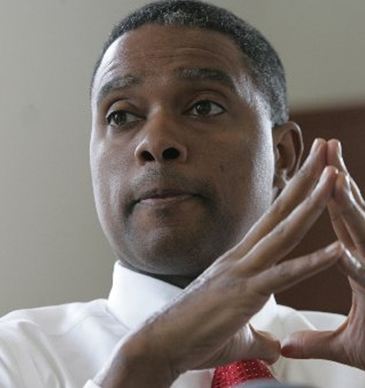 Gerard Robinson. The former Florida education commissioner, who stepped down three months ago, will be among the panelists next week responding to a new Brookings report on standardized testing and the Common Core. More here.
DOE responds to Tampa Bay Times contracting story. I can't remember the last time DOE did a point-by-point, line-by-line rebuttal to a story. Press release here.
Career academies. Get a nice write-up in the Gainesville Business Report.
Testing. New Duval Superintendent Nikolai Vitti removes some internal standardized tests from the district schedule, prompting praise from teachers union president Terrie Brady, reports the Florida Times Union.
FCAT. Will any private schools that accept tax credit scholarships give it? Asks Gradebook.
Contract talks. Continue next week in Palm Beach County after nearly falling apart last week, reports the Palm Beach Post’s Extra Credit blog.
Schools put kids in reach of convicts. Tampa Bay Times columnist Sue Carlton.
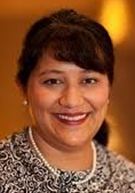
Levesque
Tony Bennett’s shocking loss in Indiana has highlighted a deep and long-festering rift among some ed reformers over adoption of Common Core academic standards. Some observers pinned the loss on Republicans who see Common Core as federal intrusion tied to President Obama rather than a voluntary, state-led effort – and who saw Bennett as too cozy with it.
From Florida, one prominent Common Core advocate is pushing back.
In a letter last week to the American Legislative Exchange Council board of directors, Patricia Levesque, executive director of Jeb Bush’s Foundation for Excellence in Education, politely takes issue with a draft resolution that would revoke a state’s adoption of Common Core. She calls the standards a “crucial foundation” for reform and says while they’ll better prepare students for a global economy, they “do not dictate what textbooks must be used or how a district’s curriculum should be set up.”
“Resolutions like this one,” concludes the letter, dated a day after the election, “draw attention and resources away from what’s important – properly implementing the improved standards and working together to provide a high quality education to all students.”
In a blog post two days later, Levesque is far more edgy. (more…)

