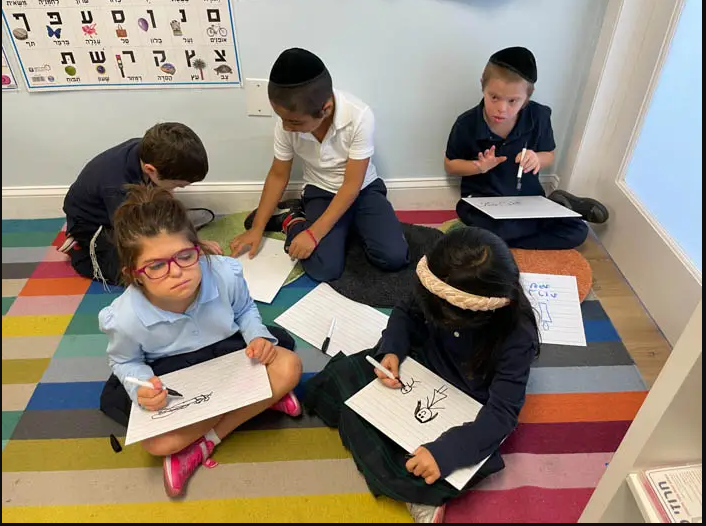
The hard work and determination of two South Florida mothers, along with support from Teach Florida, led to the launch of JEMS Academy in North Miami Beach. The school serves children with special needs, many of whom attend using Florida’s Family Empowerment Scholarship for Students with Unique Abilities.
Like many worthy endeavors, it started with two determined moms.
Both Avigayil Shaffren and Shoshana Jablon had children with unique abilities. Shaffren’s son was born with cerebral palsy, which affected his left side. Jablon’s son was born with Down Syndrome and later was diagnosed with attention deficit hyperactivity disorder.
Shaffren’s son attended a charter school for the first four years of his life. The program had its benefits, such as therapies and personal attention that she says he wouldn’t have received anywhere else. But when it came time to start kindergarten, she said, “it was awful.”
Despite her son being assigned a “shadow,” he made little progress. An evaluation turned up other diagnoses, which further complicated things. School officials gave Shaffren a choice: she could have her son repeat kindergarten or place him in a specialized school that would meet his educational needs.
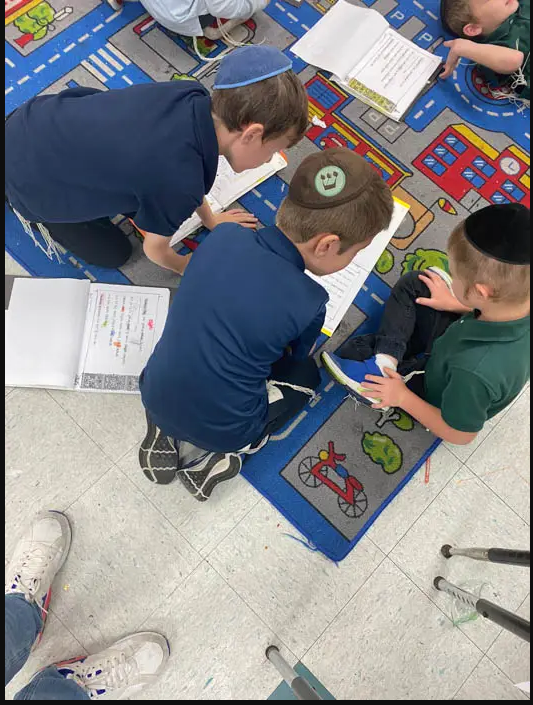
JEMS students, whose unique abilities vary widely, frequently help each other with assignments.
The Shaffrens chose to have him repeat kindergarten, but Shaffren, who is Orthodox Jewish, was concerned about her son’s religious educational needs, especially as he got older. Shortly thereafter, she was laid off her job. Though three months of unemployment brought hardship, it also offered an opportunity.
Shaffren turned to her friend, Jablon, who is also Orthodox Jewish, and said, “That’s it; we’re done. We need to create this school, and we’re not done until we create it.”
Shaffren spent the time she would have devoted to a paying job researching Jewish special education programs, such as OROT, which is the Hebrew word for light. Based in the Philadelphia suburb of Melrose Park, OROT (pronounced OR-oh) partners with four Jewish day schools to provide an integrated education for diverse learners.
Another was SINAI Schools in New York, which is based on a similar model as well as JEWELS, or Jewish Education Where Every Learner Succeeds, a Baltimore program that incorporates therapies into the school day.
Shaffren and Jablon developed a business plan, which Shaffren felt at the time was “a house of cards that was falling apart.”
But, through hard work, determination and support from Teach Florida, they opened JEMS Academy in a building across the street from its umbrella school, Toras Chaim Toras Emes in North Miami Beach.
“It was a miracle,” Shaffren said about the process, which the women said they completed right before the new school year was about to begin.
Though Shaffren’s son was able to start first grade and continue in the umbrella school, she continued to support JEMS, which stands for Jewish Education Made Special. This past year, JEMS opened its doors with five students.
Of those, four received the Florida Family Empowerment Scholarship for students with Unique Abilities. The fifth student had applied but was on the waitlist. The founders say they expect that student to be awarded due to the additional funding and higher growth rates that state lawmakers allowed this year in HB 1.
According to Jablon and Shaffren, the students’ unique abilities vary widely. Staff members, who have advanced degrees in special education, personalize education to best fit each students’ needs. JEMS also provides onsite therapies. Jablon’s 10-year-old son, Nesanel, receives occupational and speech therapies there. The founders are seeking to add a Hebrew reading specialist and build a sensory room.
You can see a video of a typical day at JEMS here.
“It’s mushrooming, really growing,” Jablon said. “We just keep adding things as we see what the needs are.”
The program also includes a music program, which Jablon said serves as a type of therapy for students, some of whom experience anxiety or have autism. A staff member also brings a therapy dog.
“They really act as a cheering squad for one another,” she said. “If someone does something inappropriate, the whole class stops.”
She said it’s a real opportunity to develop social skills because they see how to act with one another.
But one of the biggest benefits to the arrangement has been the opportunity for students at both schools to interact and bond. On Fridays, JEMS students join the Toras Chaim Toras Emes students at an assembly to end the week.
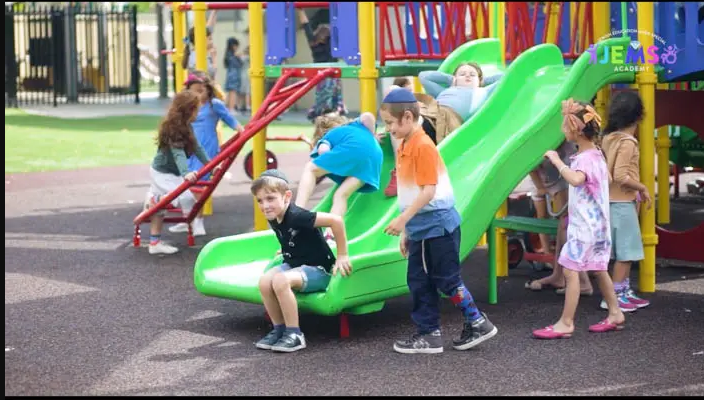
JEMS students join their umbrella school classmates from Toras Chaim Toras Emes, located across the street, for recess.
Girls from the umbrella school also visit and engage the JEMS girls in educational games and performances. Boys from Toras Chaim Toras Emes help put on Bible studies and play games and sports with the JEMS boys. JEMS students also participate in recess at the umbrella school’s playground.
Those interactions have enriched both groups, the JEMS founders say.
Jablon said she hopes getting the word out about what JEMS offers will encourage more parents to consider enrolling their children.
“In general, with parents of students of special needs, moving kids from one school to another creates a lot of instability. So, parents keep their children in programs even if they’re not that great.”
Jablon said the Miami-Dade County School District has been helpful by issuing timely individual education plans for students seeking to go JEMS so they can qualify for the Florida Family Empowerment Scholarship for students with Unique Abilities.
JEMS already has opened a second classroom. The founders hope to expand the program at other Jewish day schools as the original students get older and need to attend single-gender classes as Orthodox Judaism requires. The founders also hope to be able to teach general life skills so the students can be as independent as possible as adults.
Says Jablon: “We want our kids to exist in the larger scheme of people and activities and potential jobs in any capacity they can muster.”
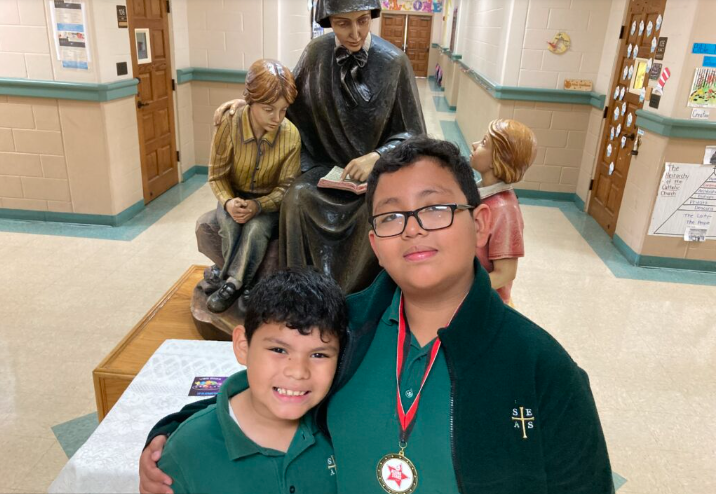
Jesus Martinez-Cruz, right, and his brother, Christian, receive the Family Empowerment Scholarship for Educational Options to attend Saint Elizabeth Ann Seton Catholic School in Palm Coast, Florida.
PALM COAST – Every school day at 7 a.m., a small bus rolls to a stop in front of the rectory of the Catholic church in Crescent City. Waiting to board are a handful of students, including Jesus Martinez-Cruz and his little brother, Christian.
They are headed on a 50-minute ride to Saint Elizabeth Ann Seaton Catholic School in Palm Coast.
Jesus and his schoolmates are part of the Rural Education Initiative, a program started during the 2020-21 school year by the Diocese of St. Augustine as a means of creating opportunities for a Catholic education to students who live in sparsely populated areas that cannot support a Catholic school.
Crescent City’s population is under 1,700, and St. John the Baptist Catholic Church, where Jesus and his friends catch the bus, does not have a Catholic school.
If not for the REI, these children would not receive a Catholic education. And if not for the scholarships managed by Step Up For Students, many of those families would not be able to attend a Catholic school.
Jesus, a sixth-grader, and Christian, a second-grader, receive the Family Empowerment Scholarship for Educational Options.
“To have the (Rural Education Initiative), for his parents to be able to choose a Catholic school that they want so much for their children and Jesus wants for himself, they would never have that opportunity without Step Up,” said Saint Elizabeth Ann Seaton Catholic School principal Barbara Kavanagh.
There have been days when the bus broke down and the boys’ parents had to drive them back and forth to school. That’s more than 90 minutes round trip, twice a day. As it is, the bus returns the students to Crescent City at 4 p.m.
But Elvira Cruz and her husband, Jesus Martinez-Puente, are not deterred by the distance and the drive from their home to their children’s school.
To continue reading, click here.

A new offering from Florida Virtual School, Artificial Intelligence in the World, will guide students through the concepts, tools, and building blocks of artificial intelligence and provide them with a broad overview of how AI is used in decision-making and problem-solving worldwide.
On this episode, reimaginED senior writer Lisa Buie talks with Amy Heflin, senior manager for STEM curriculum at Florida Virtual School. Heflin discusses a new high school course program in artificial intelligence and how it will offer students a foundational knowledge of AI and its applications.
Her interview comes a day after FLVS, the nation’s first statewide internet-based virtual school, unveiled its first course, AI in the World, which is part of a progression of industry-focused classes that also include courses in hospitality and entrepreneurship.
Amy Heflin
“We try to impress upon students that studying AI requires analytical, critical thinking skills, things that we use on a daily basis, and that can be useful in any field. Learning about AI will help students develop their problem-solving abilities. They'll become better equipped to handle complex issues.”
EPIDOSE DETAILS:
Topics and hands-on activities covered in the course
The types of students for whom the course is designed
The role that University of Florida faculty members played in developing the curriculum
How the course fits into FLVS’s overall computer science program, which includes a new AP computer science principles course
Heflin’s desire to help students embrace AI rather than fear it
A sneak peek at the next AI course, Applications for Artificial Intelligence
RELEVANT LINKS:
Florida Department of Education among first to adopt K-12 AI education program
 Editor’s note: This commentary from Daniel Martnez, director of external affairs for Americans for Prosperity – Florida and a reimaginED guest blogger, is an exclusive to reimaginED.
The 2023 legislative session was truly historic, marking the beginning of truly meaningful education choice for parents across the state. This will result in even brighter futures for Florida's children. By enacting HB 1 into law, state leaders have dramatically boosted the opportunity for every child in the state to receive an education carefully tailored to their individual needs.
Major school choice reform was the number one legislative priority of Americans for Prosperity-Florida, and we couldn’t have achieved this success without a supportive Legislature – and, equally important, the overwhelming support of our members across the state.
So, when the new law takes effect July 1, what will it mean for you and your family? The biggest change is that it allows all Florida children to have Education Savings Accounts (ESAs), which will provide families with the freedom and flexibility to use state education funds to open up a wide range of education options – including public, private, magnet, or charter schools or home education, whether online or in person.
This legislation guarantees that the state money allocated for each student follows them, even if they leave the one-size-fits-all monolith of traditional public schools. Students and their parents will now be able to make the choice that’s best suited for each child’s unique abilities – opening access and opportunity by removing the barriers that ZIP codes or financial status currently pose for students hoping to receive a different form of education.
How can your family take advantage of this new educational opportunity? We expect school choice to be in full effect quite soon, so to begin your application, you’ll need to provide:
Once approved, you’ll be able to access a portal where you can view your funds and apply the money toward tuition and other pe-approved expenses.
To learn more about the scholarship programs, visit the Florida Department of Education.
As Florida continues to be a trendsetter in education, showing other states the path to true educational excellence, we look forward to seeing the far-reaching positive impacts of this education reform. We’re confident that it will continuously transform education in our state for the better, changing the lives of young Floridians and their families.
None of this would have been possible without Florida’s dedicated leaders, especially House Speaker Paul Renner and bill sponsors Rep. Kaylee Tuck, Rep. Rene Plasencia, Sen. Corey Simon. We thank them for their dedication to ensuring brighter futures for all of Florida’s children. With leadership like this, Florida will continue to lead the way for years to come.
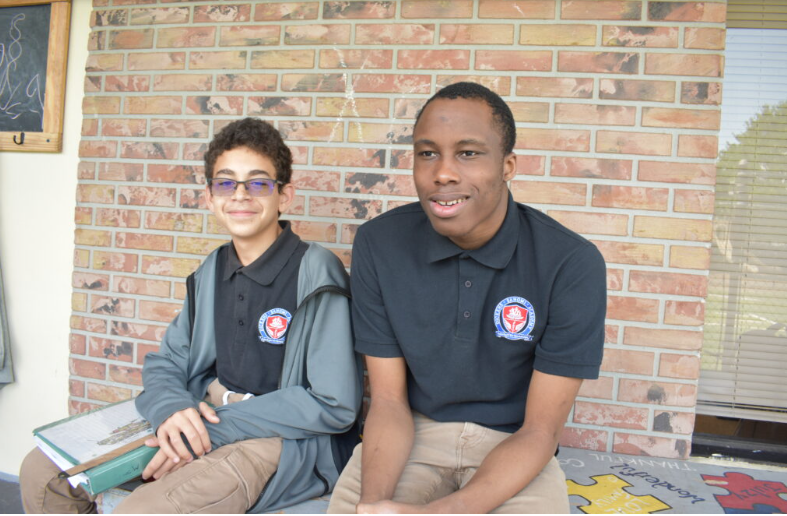
Isaac Wilbanks, left, and Joshua Akabosu are two of the original seven students who still attend Dickens Sanomi Academy in Plantation, Florida.
Joshua Akabosu was nearly hit by a truck when he was 10. He had run from school that day, as he often did. Announced to the class he was going home, then bolted through a door and into the neighboring streets.
School officials told Joshua’s mom, Juliet Sanomi, what she already knew: that they could no longer accommodate her son. He was a flight risk and posed a danger to himself and others.
Joshua, now 20, is on the autism spectrum. He has attention-deficit/hyperactivity disorder. At the time of his accident, he was just learning to speak in complete sentences.
“I took him to (his district) school, they couldn’t handle him. I took him to private schools, same thing,” Juliet said. “And no fault to the schools. These children don’t come with manuals.”
But where does a single mother turn when she has nowhere else to go? When homeschooling is not an option because she is pregnant, and because she wants her son to interact with other children?
In Juliet’s case, she turned to herself. She started her own school.
Dickens Sanomi Academy in Plantation is celebrating its 10th year. It has 170 students, most of whom receive the Family Empowerment Scholarship for Students with Unique Abilities (FES-UA), which is managed by Step Up For Students.
Joshua graduates this spring. He was one of the original seven students during the school’s first year.
“I am very grateful for the (FES-UA) because it was difficult. He wasn’t asked to be born with autism and it’s been a difficult road,” Juliet said. “I thank God for the scholarship because he’s done very well, the best he’s able to do, and that’s because we had the funds to do that.”
Joshua was the school’s first student. The second student came through a chance meeting with the mother of an autistic child. The mother was standing in the parking lot outside of a school. She was crying because school officials just told her the same thing Juliet had recently been told about Joshua.
To continue reading, click here.
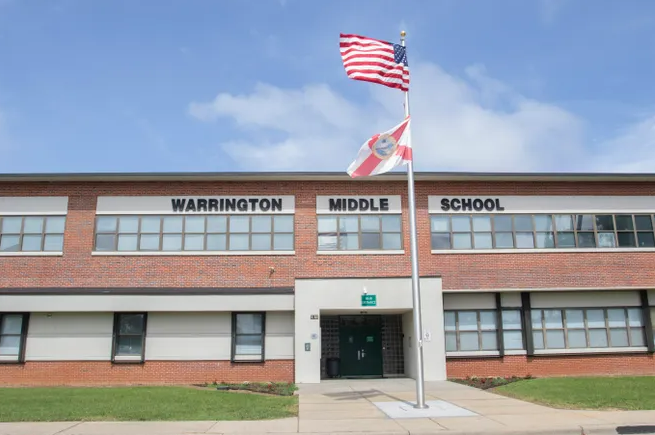 With the clock ticking on a state-imposed 48-hour deadline and the threat of withheld salaries hanging over their heads, Escambia County School Board members on Tuesday approved a contract with a charter school operator to take over a struggling middle school.
Board members voted 4 to 1 in favor of the contract, which allows Charter Schools USA to assume operations in the upcoming school year at Warrington Middle School, which has never received a state grade higher than a D for the past decade.
Board members who voted in favor of the measure were clear they did so reluctantly.
“I really hurt today,” board member Patty Hightower said. “We have never equivocated on the fact that we have never been successful at Warrington Middle School. But it’s not because of the people who work there. The people have given their blood, sweat and tears to work with these students. It’s not because they didn’t try. It’s not because they are incompetent.”
However, she added, “Charter schools are public schools. Some of the things they are asking for in this agreement are normal charter school requests. I’m willing to give Charter Schools USA a chance, and so I will be voting to support the agreement.”
The other three board members who voted with her said they thought they had no choice given the state’s ultimatum and that it was better than closing the school and busing all the students to other middle schools.
“This is the best thing at the moment for the students in the Warrington zone,” board member Bill Slayton said. “We’ve been given 48 hours; that’s why I’m saying let’s give it to them. We have tried for 10 years or longer.”
The Escambia County School Board vote followed a contentious conference call earlier in the day of the state Board of Education, in which members leveled harsh criticism at the Escambia County district leadership. State board members voted unanimously in favor of Florida Commissioner of Education Manny Diaz Jr.’s recommendations, which were the following if the district failed to sign an agreement with Charter Schools USA within 48 hours.
Report the school district to the Florida Legislature for failing to comply with state law.
Withhold funding to the district equal to the salaries of the superintendent and school board members.
Require the district to provide the state Department of Education with daily progress reports on its negotiations with Charter Schools USA.
“You’ve been failing the children of Warrington Middle School for the past decade,” Diaz told Escambia School Superintendent Tim Smith and School Board Chairman Paul Fetsko, who represented the district on the call.
Diaz said he found the district’s recalcitrance in correcting the situation “shocking” that district had yet to reach an agreement with Charter Schools USA, which it chose last year to take over Warrington Middle School. “This is not a new issue.”
State board Vice Chairman Ryan Petty accused the school district leaders of being “incompetent and completely disingenuous” in their handling of the matter.
“It’s been well over a year, and while I understand there were critical issues during the negotiations, you have had over a year to get these things resolved, and you come in here telling us just now that in the last couple of days you’ve been unable to resolve this,” Petty said.
Smith said the district board held an emergency meeting Friday but did not receive any response from Charter Schools USA about its counteroffer until later in the day. He said there had been some confusion as to whether Warrington students would be guaranteed seats at the charter school. Charter Schools USA said in its counteroffer on May 5 that 200 students from the Warrington zone in sixth through eighth grades would be guaranteed seats when the charter opened this year.
School officials had said throughout the negotiation process that their biggest concern was that students living in the Warrington zone would have a neighborhood middle school.
Warrington Middle first entered the state’s turnaround process in 2012 under a district-managed plan. However, when test scores did not improve, the state gave the district until 2020-21 for Warrington to reach a state grade of at least a C. During that year, the state allowed schools to forgo reporting test scores because of the COVID-19 pandemic.
When the district did report scores in 2021-22, Warrington Middle remained at a D. The state board then ordered the district turn it over to a charter company by May 1. You can see a complete history and update of its turnaround plan here.
District officials began negotiating in November with Charter Schools USA, which serves 75,000 students in five states. The 26-year-old charter school operator was the only organization to express interest in taking over the Title 1 school, where 80% to 90% of its approximately 600 students live below the federal poverty line.
The parties appeared to be headed toward a May 1 deadline to forge an agreement. However, negotiations hit a snag when district leaders said at an April 13 school board meeting that Charter Schools USA had sent a list of conditions for it to make a long-term commitment to the school. Those included the charter company becoming a K-12 charter with open enrollment by 2026-27.
Other points of conflict had been the charter company’s request for 100% of the district’s 1.5 mil local taxes for capital projects and the district’s request that the charter school pay the district a 5% administrative fee; the charter company said they should not have to pay the fee.
On Tuesday night, Fetsko expressed his feelings about Diaz, the state Board of Education and Charter School USA.
“I have great disdain for the business practices of Charter Schools USA,” he said. “The commissioner showed himself to be a very unreasonable man. State board members showed themselves to be nothing but a bunch of magpies reporting what they’ve been told to say. At one time I had great respect for the Department of Education. That has changed.”
Though Fetsko said he would vote for the contract, he said the district should find a way to way to “make sure this never happens again.”
“Build a system of K-8 or something to cause our students to stay with us, to not choice into a charter and not leave what’s going on and show we can educate our own and we don’t need somebody being pushed upon us.”
Shortly after the vote to approve the contract with Charter Schools USA, the school board voted 3-2 to fire the superintendent, citing resignations, staff shortages, and a lack of communication regarding the contract with Charter Schools USA. Smith’s contract ends May 31. The board appointed an assistant superintendent as interim.
 The recently passed New York budget included a deal for 14 new charter schools, certainly a welcome development. With an estimated charter school waitlist of 163,000 students, that’s about one new school for every 11,600 or so waitlisted students.
New York seems unwilling to have the supply of schooling alternatives match demand. Where will they turn for schooling options? Florida seems like the most promising answer.
During the same session, Florida lawmakers embraced universal private school choice and passed a law to phase in facility funding for charter schools. Florida has taken crucial steps towards a demand driven system of schooling, while New York lawmakers can’t quite seem to embrace the concept.
This leaves Florida’s system not only more pluralistic, diverse and efficient than the New York system, it also performs the task of teaching the basics at a much higher level.
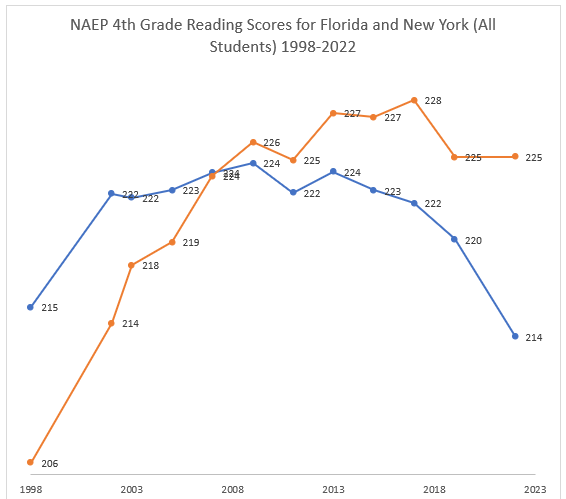
New York fourth graders in 1998 scored approximately a year’s worth of learning higher than their peers in New York. In the most recent NAEP, it was New York who were a grade level behind Florida despite a much higher level of spending per pupil.
It’s worth mentioning that Florida pulled off this higher level of performance with a much lower state and local tax burden.

Target the moving van companies! We need these serfs to pay their taxes and like it!

New Yorkers have been fleeing to Florida in record numbers, but the question seems to be not why so many have made the change, but rather: Why are so many still there?

YAHOOO! You’re all clear, Florida! Let’s rescue New York families and go home!
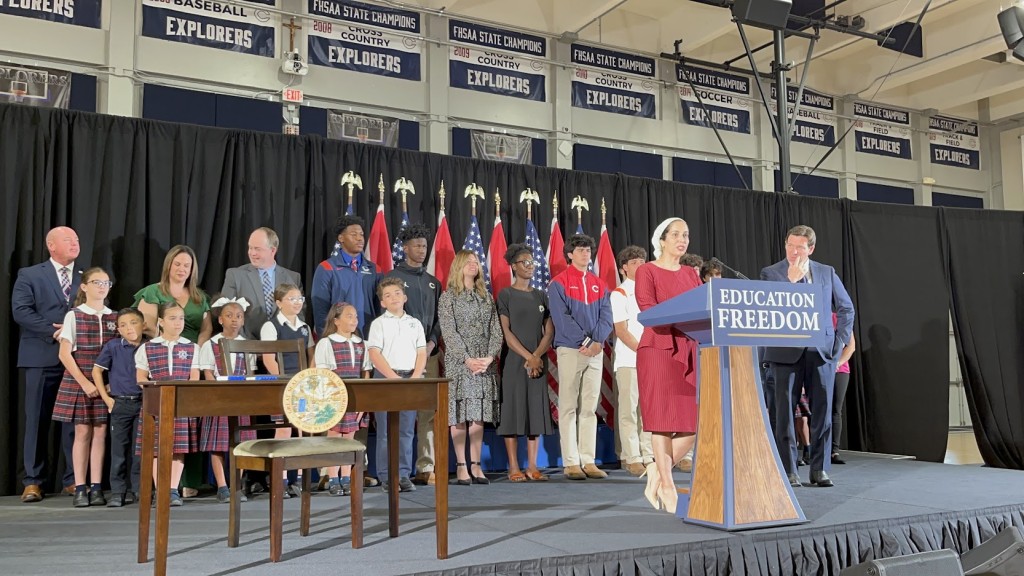
Rachel Hayon Sabbah, at the lectern, was among advocates who spoke in favor of HB1 in March, when Florida Gov. Ron DeSantis, far right, signed the historic legislation into law.
On this episode, reimaginED senior writer Lisa Buie talks with Rachel Hayon Sabbah, a nurse and mother of four daughters, including two who receive the Florida Family Empowerment Scholarship for students with Unique Abilities. Her eldest daughter, Elisheva, 8, has attention deficit hyperactivity disorder, and younger daughter Ahavah, 4, has experienced speech delays.
Hayon Sabbah, who lives in Ft. Lauderdale, spoke at Gov. Ron DeSantis’ signing of HB 1, which expanded scholarship eligibility to all Florida students and converted all traditional scholarships to education savings accounts. The legislation also allowed the Family Empowerment Scholarship for students with Unique Abilities to expand its annual growth rate from 1% to 3% of the state’s total exceptional student education population, excluding gifted students, to eliminate the need for waitlists.
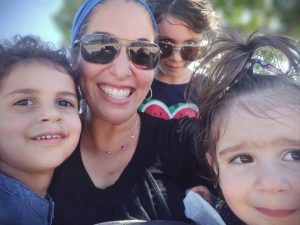
Rachel Hayon Sabbah and three of her four daughters
Ahavah, who was on the waitlist, recently was awarded a scholarship and will start voluntary pre-kindergarten next year.
“(The scholarship program) has been really, really helpful in terms of just allowing us at this time to pay for private school tuition. Both of our girls are in Jewish private schools here in South Florida, and it's made it a much easier decision to homeschool our daughter next year because the funding can be used toward educational expenses.”
Episode Details:
Relevant Links:
U.S. Centers for Disease Control and Prevention ADHD page
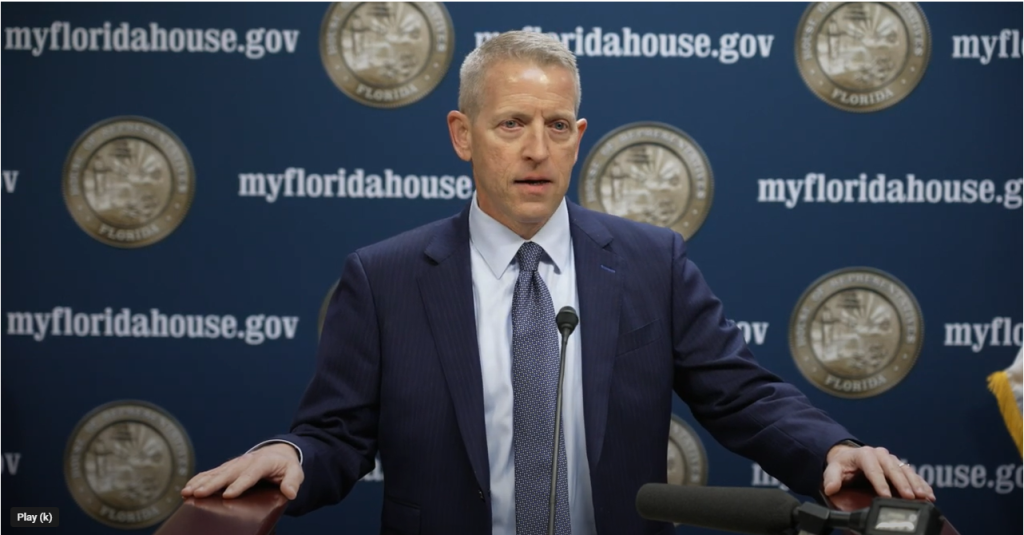
HB1 was a top legislative priority of House Speaker Paul Renner, who has called it “a transformational opportunity,” that allows parents to guide their child’s education regardless of ZIP code or income level.
The 2023 Florida legislative session ended Friday with lawmakers passing a record $117 billion budget for the fiscal year that will start July 1.
Many education-related items were included in bills tied to the budget, including $2.2 billion for a major expansion of education choice that will extend eligibility to all K-12 students in the state, regardless of income, though low-income families will receive priority.
The new law also converts all traditional scholarship programs into education savings accounts, giving parents the flexibility to customize their child’s education. Authorized uses for funds include private school tuition and fees, personal tutors and digital learning materials. The law also raises the growth rate of scholarships for students with unique abilities from 1% to 3% annually to help avoid waitlists.
A top legislative priority of House Speaker Paul Renner, and sponsored by Rep. Kaylee Tuck, R-Lake Placid and Sen. Corey Simon, R-Tallahassee, HB 1 also requires officials to seek reductions in regulations that public school leaders have criticized as obsolete and onerous so that school districts can better compete in the new world of education choice.
“This legislation is a transformational opportunity to make it clear that the money follows the child, and parents have a right to guide their child’s education as they see fit,” Simon said as the session ended.
“We recognize that parents are a child’s first and best teachers. A street address or level of income should never replace the vital and irreplaceable role of a parent to decide what academic experience best fits the needs of their child.”
Other education highlights include the following:
HB 443, which focuses on many policies related to charter schools, including eligibility. It also further defines a “private tutoring program,” which is an authorized use of funds for scholarship students, and allows the programs to provide tutoring for to up to 25 students in any commercial building with a valid certificate of occupancy, library, community center, museum, performing arts, theatre, cinema, or church facility.
Other allowances include any facility or land owned by a Florida College System institution or university; in any similar public institution facility; and in any facility recently used to house a school or licensed child care facility within the preexisting zoning and land use designations of the facility without obtaining a special exception, rezoning, or a land use change so long as the provision of such tutoring meets all applicable state and local health, safety, and welfare laws, codes, and rules, including fire safety and building safety.
HB 7039, which renames the New Worlds Reading Scholarship Accounts to the New Worlds Scholarship Accounts and expands the program to students in kindergarten through grade five who show symptoms of dyscalculia or dyslexia or who score below a Level 3 on the statewide standardized math assessment.
The bill also expands authorized expenses to include fees for summer education and after-school programs designed to improve math skills. The bill also adds pre-kindergarten students to the list of those eligible to receive free book delivery under the state’s New Worlds Reading book distribution program.
SB 190, which would allow charter school students to play on private school sports teams and participate in private school extra-curricular activities if a private school agrees. Current law already allows homeschooled students to do this, and this bill would extend the same provisions to those who attend charter schools and Florida Virtual School.
HB 1259, which would require school districts to share capital funds raised from local taxes with charter schools. Charter schools now get money for capital improvements from a fund derived from a tax collected on gross receipts from the sale of utility services.
The total amount that districts across the state would have to share would be phased in over five years, with the first year totaling $55.9 million. That would rise to $490 million by 2028, when the requirement is fully phased in. Currently, school districts don’t have to share money raised from a discretionary 1.5 millage rate for capital costs, though the law suggests they do so.
The 2024 legislative session is set to begin Jan. 9.
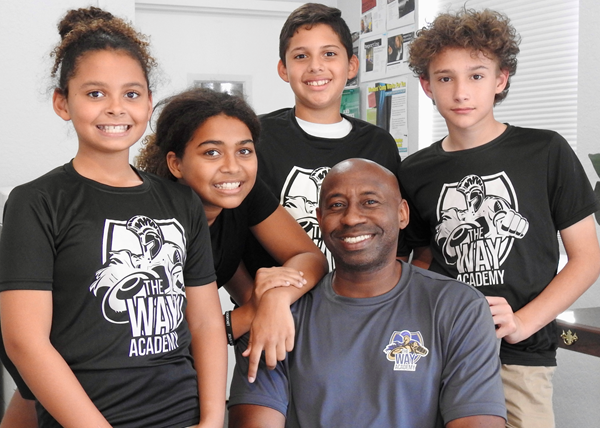
Charles Williams, founder of The Way Academy, surrounded by his daughters, Emma Williams and Elyn Williams, and students Christiaan Ruiz and Ezra Bartoli.
MINNEOLA, Fla. — The way Charles Williams sees it, if the human vessel comes to the conversation with humility, faith and willingness, the Almighty can communicate a message of divine purpose without resorting to special effects.
Sometimes — because God often whispers, Williams notes — all that is required is some contemplative quiet, especially if it can be managed during a season in which miracles are acknowledged and anticipated.
So it was, five winters ago, having listened carefully in the silent space between the hurly burly of Christmas events, an idea manifested itself. Too unpresuming to imagine he’d conjured it on his own, Williams is certain beyond debate divine intervention was afoot.
He brought the news to the extended family’s Christmas table and broke it gently, as you sometimes do when you’re about to ask your family to act boldly on God’s will. “What if we started a school?” he said. “How would it be?”
There are plenty of teachers in the Williams family, wife Betsy among them. As she recalls, “We all laughed. ‘We can’t start a school! How do you even do that?”
Now they know.
As the freshly minted principal of Real Life Christian Academy in nearby Clermont (after 17 years working up the public school ladder), he found himself in the right place to grasp the operations of a Christian school.
Also, he studied. It turns out there’s plenty of how-to information about school startups. The Florida Department of Education even has a webpage entitled Opening a Private School. Eventually, Williams found his way to the Drexel Fund, a Seattle-based nonprofit venture philanthropy that (from its website) “seeds new school models, scales networks of existing schools with a track record of academic and operational excellence, and strengthens the educational ecosystems needed to create the market conditions necessary for new private schools serving low-income students to thrive.”
When Drexel came on board, solving the puzzle of startup financing, things began to happen fast. Now, here we are, at an open house on an April Monday, and Williams is expounding on His vision — the capitalization intentional.
“The math, the science, the [English language arts], history … all will be coming from the Bible and being taught by Christian teachers and Christian leaders.”
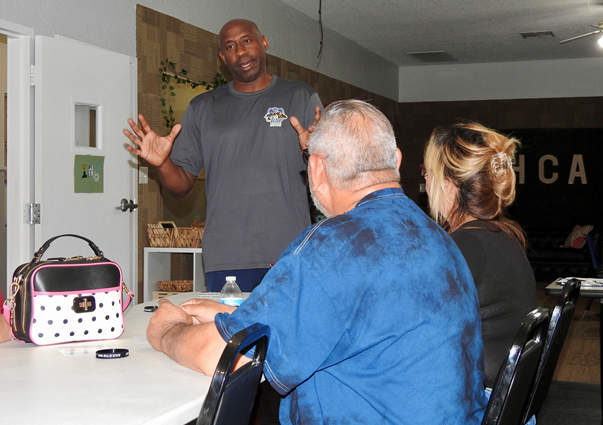
Williams, pictured here with parents Rigaberto Valle and Linette Bolanos, forges close relationships with The Way families.
Come August in Minneola, a small town northwest of Disney World, the vision planted in Williams’ obedient head is scheduled to become manifest when The Way Academy reopens the doors of the former New Hope Christian Academy.
The location, near the highlands of the Lake Wales Ridge, is appropriate. Williams and his board members mean to reach for heights of biblical proportions.
One would expect nothing less from a school designed to live out John 14:6, in which Jesus tells the disciples, “I am the way and the truth and the life. No one comes to the Father but through me.”
“Everywhere we turned, John 14:6 kept coming back,” Williams says. “We go to church and the preacher’s preaching on it. And we say, ‘This is it. The Way Academy. Showing kids, showing parents, showing the community, showing teachers, The Way. … And we’re going to be warriors about it. That’s who we are, the Warriors.”
Appropriately, Williams shares his name with the British poet, novelist, theologian and Inkling, a member of the Oxford Christian literary society that included C.S. Lewis (Chronicles of Narnia) and J.R.R. Tolkien (The Lord of the Rings). Appropriate because, like the Williams of Lake County, England’s Charles Williams was an out-of-the-box risk-taker.
The founder and first TWA headmaster, Williams didn’t need a new job. The Orange County School District had recruited him out of Real Life Academy to become its dean of students for the Orange County School District, meaning his professional future and, not insignificantly, retirement pension, were utterly tidy.
Now, brandishing a rich and varied academic background — from band director to teacher to coach to principal — to the task at hand, he’s left the secure nest and climbed out on that proverbial limb.
Parents who came to know him during two years he served in the administration of nearby Real Life Christian Academy are eager to join him on the bough.
“We called him ‘The Ghost,’” says Rosa Albalate, whose son Christian Ruiz, 11, is a prospective TWA student. “You could never find him in his office. He was always out with the kids. On the playground, in the cafeteria, in the hallways, in the classrooms. And the students loved it.”
Williams means to infuse the new school with a similar peripatetic spirit. A typical TWA day will include the usual middle-school shuffling among classrooms for various subjects, but also morning stretching and afternoons devoted to interscholastic sports.
And they’ll travel around Minneola’s cozy confines to use athletic and other extracurricular facilities offered up by the city, the YMCA, and a charter school.
Not that anyone involved doubts the difficulty of climbing their personal Mt. Ararat.
“Nobody wants to be in middle school these days,” Betsy Williams says. “Nobody wants to teach there, nobody wants to head it up. It’s hard to be a middle school parent. We know that middle schoolers go through a lot, even in general, now adding what they're going through” — here she punctuates with air quotes — “these days.”
“So, we're excited to be a school that commits to those kids.”
The excitement isn’t just infectious. It’s kinetic. Parents at the open house positively vibrated with enthusiasm.
“We’re looking for something a little smaller,” says Linette Bolanos, whose 11-year-old son, Aleksei, is set to transfer from Real Life Christian and its nearly 500-student K-12 campus. “Something family oriented that’s focused on Jesus.”
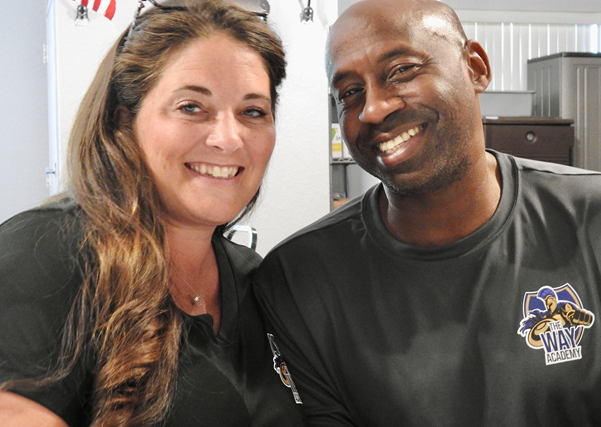
Williams and his wife, Betsy, who serves as the school’s admissions officer.
TWA ticks every box. TWA plans to limit first-year enrollment to 65 students across three middle-school grades. Parents and siblings will be invited to participate in a variety of TWA activities. And the Bible-based curriculum, stressing critical thinking and practical learning, comes straight from Bob Jones University Press — the same BJU that counts evangelist Billy Graham and former Arkansas Gov. Asa Hutchinson among its alumni.
“We’re interested in a school that has a background in faith, a school that provides spiritual guidance,” Albalate says. “Dr. Charles promised he will keep on it.”
Williams is big on standing by vows, including the one, shared with the Drexel Fund, about making the school affordable for low-income families. Excitement attends Florida’s massive expansion of school-choice opportunities through legislation signed by Gov. Ron DeSantis March 27. Moreover, through its close alignment with Step Up for Students, the school is acting to bridge the gap for families who may need a boost beyond the state’s per-student stipend.
That worry largely settled, TWA organizers can concentrate on what they’ve taken on.
Asked to enumerate TWA’s biggest challenges, Betsy Williams pulls a face. Several seconds pass. More air quotes. “These days,” she repeats. She’d rather talk about TWA’s opportunities, which come rapid-fire.
“To spread the Gospel is the biggest opportunity we have, and that’s what we’re called to do,” she says. “The next is to inspire kids in a way of healthy choices and getting moving in a world where all they want to do is look at a screen.
“The third opportunity is … to be a light in the community. We’re excited about all that.”
This is The Way, then. The Warrior way.

