 Having spent the better part of a quarter-century writing editorials and commentaries for a major metropolitan newspaper, I have wagged my finger with the best of them and spied more than my share of blood on the hands of shameless lawmakers. So I read New York Times columnist David Brooks routinely not only as a form of therapy but inspiration. His column on Tuesday, “Engaged or Detached,” is a wonderfully calibrated look at why the finger pointers teach us far too little.
“The detached writer wants to be a few steps away from the partisans,” Brooks writes. “She is progressive but not Democratic, conservative but not Republican. She fears the team mentality will blinker her views. She wants to remain mentally independent because she sees politics as a competition between partial truths, and she wants the liberty to find the proper balance between them, issue by issue. The detached writer believes that writing is more like teaching than activism. ... She sometimes gets passionate about her views, but she distrusts her passions. She takes notes with emotion, but aims to write with a regulated sobriety.”
There is a role for “engaged” writers who fire up the troops, but Brooks’ “detached” writer is the model that should motivate those of us who want to make a difference in the educational arena. Neither I nor this blog, redefinED, always measure up to that intellectual test. But it is something to which we aspire, and I can only hope that my former colleagues in journalism would as well.
Common Core. More signs that an implementation delay is in the works. StateImpact Florida. Orlando Sentinel. Associated Press.
 School spending. South Florida Sun Sentinel: "The Broward school district overpaid a security firm by $129,000, according an internal audit that found the district grossly mismanaged the contract, paid unnecessary overtime and late fees, and even paid guards after the contract expired." Brevard Superintendent Brian Binggeli hears from upset parents and teachers objecting to budget cuts, reports Florida Today.
Special needs students. Parents say they'll fight district plans to shutter two schools for special needs students in Broward. South Florida Sun Sentinel.
Gays and lesbians. More than 100 supporters of a proposed Gay-Straight Alliance at a Lake County middle school turn out for a school board meeting. Orlando Sentinel.
Teacher evals. Mismatch between eval results and school grades concerns state education officials, reports Orlando Sentinel and Gradebook.
Teacher pay. Is Scott's proposal a raise or a bonus? Lakeland Ledger.
Educator conduct: The Sarasota Herald Tribune reports Manatee district officials did not follow up on tips about an assistant football coach's possible misconduct involving a student and decided to close an inquiry in time for the playoffs.
Diane Ravitch. Weighs in on school closings in Brevard. (Hat tip: Florida Today).
More conspiracy! The editorial board of the The Oklahoman takes a rational look at the Jeb-Bush-corporate-conspiracy theory being promoted by a group called In the Public Interest and advanced by mainstream media.
School boards. Manatee board member Julie Aranabar won't face charges for a potential public records violation. Sarasota Herald Tribune.
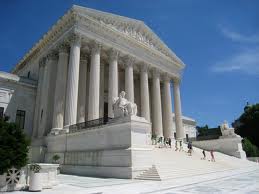 The Orlando Sentinel recently published a blog entry about a new website that opposes students using publicly-funded vouchers to attend private schools that teach creationism. The site asserts, “Teaching creationism with public money is unconstitutional. It violates the First Amendment of the U.S. Constitution which lays out a clear separation of church and state.”
I’m fine with citizens opposing the teaching of creationism. I would not send my child to a school that taught creationism in lieu of evolution, but the assertion that it’s unconstitutional is false.
In the 1925 Pierce v. Society of Sisters decision, the U.S. Supreme Court ruled parents are responsible for determining how and what their children are taught. And in the 2002 Zelman v. Simmons-Harris decision, the court ruled parents may use public money to pay for tuition at faith-based schools provided their choice is genuinely independent, and the funds go first to the parents and then to the school.
Florida’s school voucher programs all adhere to the Zelman requirement that funds go first to the parent and then the school, which is why using publicly-funded vouchers to attend faith-based schools is an exercise of the First Amendment’s freedom of religion clause, and not a violation of the Establishment Clause. (By the way, the term “separation of church and state” does not appear in the U.S. Constitution. That phrase was used by President Thomas Jefferson in a January 1, 1802 letter he wrote to the Danbury Baptist Association of Connecticut, reassuring them that he opposed the government interfering with their religious practices.)
The Sentinel wrote that some state officials think tax credit scholarships are more constitutional than vouchers because tax credit funds never touch the state treasury, but, again, the key to the Zelman decision is the path the funds travel to arrive at a faith-based school. Once public funds are given to the parents, they become less public and more private, which is why their expenditure is an exercise of religious freedom and not government-supported religion. (more…)
Florida's status. Matt Reed, Florida Today's editorial page editor, takes a look at NAEP data and the most recent Education Week Quality Counts report and concludes: "We obviously have room to improve. But our system is neither starving, as educators always say. Nor is it “broken” or “failing,” as reformers keep telling us."
Florida's status, Part II. Diane Ravitch's latest take, after quoting a Florida teacher at length: "There is no Florida miracle. Education has only gotten worse over the past few years, no matter how schools, districts and the state itself game the system. And, contrary to what the media will tell you, it is NOT teachers’ fault, unions’ fault, and I won’t even blame it on the kids or their parents this time. It is the fault of education “reform” led by Jeb Bush et al."
Charter schools. The South Florida Sun Sentinel writes up the bill that would require school districts to share unused or underused facilities with charter schools. Bad idea, editorializes the Palm Beach Post.
Gays and lesbians. The Lake County School Board considers rules that would keep a Gay-Straight Alliance from forming at a middle school. Orlando Sentinel.
Teacher evaluations. Tampa Bay Times on one impact (or not) of the new system in Hillsborough: "After years of planning and training, observation and deliberation, the first wave of firings has begun under a teaching-improvement project funded by the Bill & Melinda Gates Foundation. The tally: Three teachers." (more…)
Rick Scott's proposed budget. Includes $1.2 billion more for public schools. Coverage from South Florida Sun Sentinel, Gainesville Sun, Fort Myers News Press, TCPalm.com, Associated Press, Pensacola News Journal. "A relief to educators," reports the Lakeland Ledger.
Digital education. Jeb Bush on CNN's Schools of Thought Blog: "Digital learning is just one important element of the overall school choice movement being celebrated during National School Choice week – and rightfully so. There is no silver bullet. There is no one-size-fits-all option. There can and must be only a proliferation of ever-growing options so that students and parents can embrace whatever educational scenario is best for them."
Exposed, day two! The Tampa Bay Times plugs the Jeb-Bush-corporate-connections-conspiracy "story" by offering a link from the front of its web site to The Buzz, which channels the "news" from, of all places, The Answer Sheet blog, which The Buzz curiously describes as merely "the Washington Post's education blog."
PTA activism award. The Florida chapter is honored for successfully defeating parent trigger legislation last year. Gradebook.
School spending. The Brevard school board considers a bus fee for students in choice programs. Florida Today.
Teacher pay raises. A constitutional amendment for that is a bad idea. Palm Beach Post.
ESE changes in Hillsborough. Latest from Tampa Bay Times and Tampa Tribune.
Concordant scores. They're out now. Tampa Bay Times.
PARCC. StateImpact Florida relays a DOE overview of the coming tests.
Superintendents. Manatee adds a sixth candidate, reports the Bradenton Herald and Sarasota Herald Tribune. Whoever he or she ultimately is "must have the skill set, character and strength to bring this district back from disaster," editorializes the Bradenton Herald.
Race to the Top. Florida is back on track a year after federal education officials warned it for falling behind on grant-funded projects. Associated Press.
 Tony Bennett has a tough, tough job ahead, and the way education in Florida is covered is not going to make it any easier. The big news last week is a case in point.
Besides Bennett’s selection as the state’s new education commissioner, the top story was how Florida fourth-graders scored on a respected international test called PIRLS , which stands for the Progress in International Reading Literacy Study. In case you missed it, Florida students ranked second in reading, behind only their peers in Hong Kong. Virtually none of the state’s major daily newspapers (the Orlando Sentinel being a notable exception) covered this development, but CNN did. It interviewed interim Education Commissioner Pam Stewart live, next to an all-caps headline that read, “FLORIDA STUDENTS SCORE BIG.”
This wasn’t a one-time oversight. Over the past 10 to 15 years, Florida students and teachers – its public school students and teachers - have made impressive academic gains, whether it’s on national math and reading tests, or on college-caliber Advanced Placement tests, or in graduation rates as determined by credible, independent experts. For four years running, Education Week, looking at both performance and progress, has ranked Florida among the leading states in K-12 achievement (to be specific, at No. 7, No. 7, No. 6 and No. 12 over that span). And yet, flattering reports about Florida’s progress rarely get more than passing mention, while those who oppose the state’s accountability and school choice initiatives are often allowed to deny that such progress even exists. Even stranger, the more outrageous their statements get, the more often they seem to get quoted. (more…)
Newtown school shooting resonates. In added security and what to say.Tampa Tribune. Palm Beach Post. Tampa Bay Times.
 $1 million for cell phones. The Education Action Group looks at credit card statements in the Palm Beach County school district and finds “enough questionable spending to make an average millionaire blush.”
Trojan horse? Another conspiracy theory about vouchers. StateImpact Florida.
Tony Bennett. His selection is more “same old, same old” and reflective of “institutional arrogance,” editorializes the Ocala Star Banner. Advice from the South Florida Sun Sentinel editorial board and Tampa Tribune columnist Steve Otto. Tampa Bay Times political editor Adam Smith names Bennett "winner of the week."
More PIRLS. The Tampa Bay Times editorial board says good job, I think.
Close it. An administrative law judge recommends shutting down a struggling charter in Volusia County. Daytona Beach News Press.
Book club. Miami-Dade teachers discuss ed reform in their living rooms. One conclusion: “Change must be local.” Miami Herald.
The help he needed. A reading specialist at Northeast High in Pinellas County helps a talented athlete find success. Tampa Bay Times.
Media coverage of education reform in Florida never ceases to amaze. What you should be hearing today are the sputtering responses of critics who have drawn widespread media attention in recent weeks with reckless claims that Florida’s ed reforms are an “unmitigated disaster.” Instead ...
The easy prompt for fair and obvious questions was yesterday’s release of the annual “Diplomas Count” report from Education Week. The independent analysis found that between 1999 and 2009, Florida’s graduation rate climbed 18 percentage points – more than all but two states. It also found that Florida’s black and Hispanic students are graduating at rates higher than the national average for like students, which is of no small import for a majority-minority state like Florida. The 2009 rate for Florida’s Hispanic students, in fact, put them at No. 2 among Hispanic students in all 50 states.
So how did the Florida media cover this compelling news? For the most part, it didn’t. (more…)

