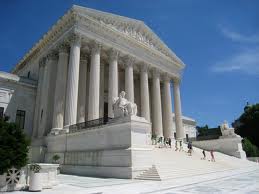
 The Orlando Sentinel recently published a blog entry about a new website that opposes students using publicly-funded vouchers to attend private schools that teach creationism. The site asserts, “Teaching creationism with public money is unconstitutional. It violates the First Amendment of the U.S. Constitution which lays out a clear separation of church and state.”
I’m fine with citizens opposing the teaching of creationism. I would not send my child to a school that taught creationism in lieu of evolution, but the assertion that it’s unconstitutional is false.
In the 1925 Pierce v. Society of Sisters decision, the U.S. Supreme Court ruled parents are responsible for determining how and what their children are taught. And in the 2002 Zelman v. Simmons-Harris decision, the court ruled parents may use public money to pay for tuition at faith-based schools provided their choice is genuinely independent, and the funds go first to the parents and then to the school.
Florida’s school voucher programs all adhere to the Zelman requirement that funds go first to the parent and then the school, which is why using publicly-funded vouchers to attend faith-based schools is an exercise of the First Amendment’s freedom of religion clause, and not a violation of the Establishment Clause. (By the way, the term “separation of church and state” does not appear in the U.S. Constitution. That phrase was used by President Thomas Jefferson in a January 1, 1802 letter he wrote to the Danbury Baptist Association of Connecticut, reassuring them that he opposed the government interfering with their religious practices.)
The Sentinel wrote that some state officials think tax credit scholarships are more constitutional than vouchers because tax credit funds never touch the state treasury, but, again, the key to the Zelman decision is the path the funds travel to arrive at a faith-based school. Once public funds are given to the parents, they become less public and more private, which is why their expenditure is an exercise of religious freedom and not government-supported religion. (more…)
Editor's note: This op-ed ran in today's Orlando Sentinel.

This photo is from the St. Andrew Catholic School website.
Florida allocates five different scholarships from prekindergarten to college that allow students to attend faith-based schools. They don't violate the U.S. Constitution because students choose, and government doesn't coerce.
Both factors were why, in 2002, the U.S. Supreme Court ruled that a Cleveland school voucher did not violate the Establishment Clause, even as 96 percent of the students chose faith-based schools. To the court, in the landmark Zelman v. Simmons-Harris case, the program met three critical standards that also apply to Florida: The primary objective is education; students can choose among secular and sectarian schools; and parents exercise an independent choice that is not steered by government.
The article "Many church schools get tax cash" in Sunday's Orlando Sentinel did not mention the Zelman case or that the Florida Supreme Court specifically avoided religion in 2006, when it overturned the private-school portion of the Opportunity Scholarship program. Consequently, readers might have thought that these programs are constitutionally suspect, when they are not.
The tax-credit scholarship is one of Florida's five scholarships. It strives to give low-income students access to the same learning options now available to more affluent families, via a $4,335 scholarship. This program complements other choice programs, such as magnet and charter schools, and is built on the truism that students learn in different ways. Last year, parents placed more than 1.2 million public-education students in schools other than their assigned district school.
In this new world of customized learning, encouraging differentiated instruction while maintaining quality control is a challenge. The tax-credit scholarship does this, in part, by requiring nationally norm-referenced tests that show these students are achieving the same gains in reading and math as students of all income levels. (more…)

