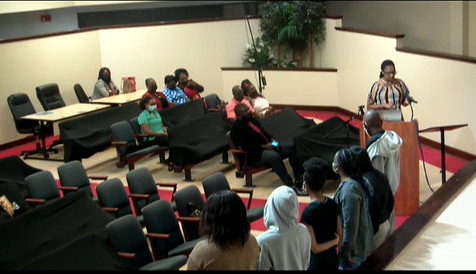
Althea Graham, whose son attends Piney Grove Academy in Lauderdale Lakes with assistance from a state scholarship, thanked the commission for its support of school choice.
National School Choice Week, which this year runs Jan. 23 through 29, shines a spotlight on effective education options for children in grades K-12.
Be it public, charter, private, magnet, virtual, home school, learning pod or micro-school, all are celebrated, as the focus is on choice and parents’ right to determine the best educational fit for their children.
Every January, participants plan tens of thousands of events and activities – such as school fairs, open houses, and student showcases – to raise awareness about school choice across all 50 states.
Many state and local governments also recognize National School Choice Week by approving resolutions or issuing proclamations. Among them was the Lauderdale Lakes City Commission, which approved a proclamation and recognized several school choice families during its Dec. 28 meeting.
The proclamation, signed by Mayor Hazelle P. Rogers, reads that “all children in Lauderdale Lakes should have access to the highest-quality possible education; and recognized that “Lauderdale Lakes is home to a multitude of high quality public and non-public schools from which parents can choose for their children, in addition to families who educate their children in the home.”
The document also urges all residents to join the commission to “raise awareness of the importance of opportunity in education.”
Parent Althea Graham thanked the commission for its support of school choice and said her decision to send her fifth-grade son to Piney Grove Academy in Lauderdale Lakes was one of the best she’s ever made.
“I see him asserting himself as a leader, and I feel such pride in seeing his growth,” she said.
You can watch a video of the presentation here. To learn more about National School Choice Week, click here.
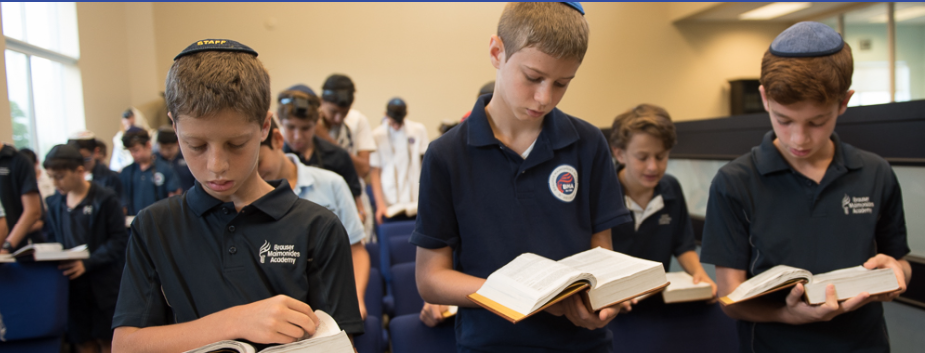
About 28% of students at Brauser Maimonides Academy, a Fort Lauderdale Modern Orthodox school, attend on state scholarships.
Editor’s note: This commentary from William Mattox, director of the Marshall Center for Educational Options at The James Madison Institute in Tallahassee and a reimaginED guest blogger, appeared Tuesday on Florida Politics. It was excerpted from a new JMI report presented this week at an international conference in Ireland.
You can read more on this subject here. from reimaginED senior writer Lisa Buie.
An exodus is underway from New York City and its surrounding environs. Many Jews are leaving the Big Apple and moving to the Sunshine State.
And their migration to Florida — America’s Promised Land — is being fueled in part by a very interesting factor: school choice.
“Many young families up north are enticed by Florida’s robust menu of state-supported private-school scholarships,” writes Allan Jacob in the Wall Street Journal. “These programs make private school tuition far more affordable in Florida than in New York and New Jersey.”
Now, at first blush, this “education migration” might seem like a peculiar phenomenon without any relevance beyond a relatively small subpopulation. But there is reason to believe that something much more significant is happening here.
There is reason to believe we are witnessing the beginning of a “new normal” in which many education-minded families move to freedom-loving states that facilitate parents’ efforts to direct the education of their children.
In this new normal, Florida could easily become America’s unrivaled “education destination,” and enjoy the short- and long-term benefits of attracting education-minded parents (and their talented offspring) to the Sunshine State.
To continue reading, click here.
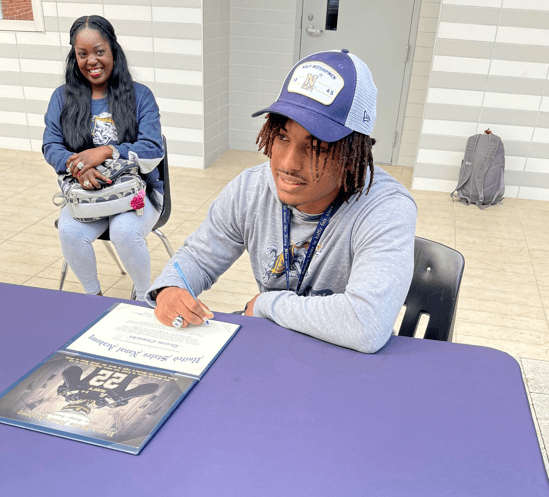
Denim Edwards, pictured here as he signs a national letter of intent to attend the U.S. Naval Academy as mom Michelle Witherspoon watches, is one of thousands of Florida students who attends a private school with assistance from a scholarship managed by Step Up For Students.
For the seventh year in a row, the Florida Auditor General reported no major findings in its annual operational audit of Step Up For Students, the nonprofit scholarship funding organization that administers scholarships for low-income students, bullied students, and those with special needs.
The 2020-21 operational audit examined the period between March 2020 and February 2021, which covers both the 2019-20 and 2020-21 school years.
During this period, Step Up For Students paid $610.1 million in Florida Tax Credit Scholarships (FTC); $338.9 million for the Family Empowerment Scholarship (FES); $134 million for the Gardiner Scholarship; $2.5 million for the Hope Scholarship; and $2.1 million for the Reading Scholarship.
Funds for the FTC and Hope Scholarship were raised through private contributions, while funds for the FES, Gardiner and Reading programs were funded through state appropriations.
As with past audits, student accounts were randomly selected to determine if Step Up For Students followed administrative rules regarding student eligibility. Payments from the Reading Scholarship and Gardiner Scholarship also were examined to determine if reimbursements were eligible under the law. Auditors did not report any errors regarding student or reimbursement eligibility.
Auditors questioned staff access to sensitive personal information that Step Up For Students collects to determine student eligibility, but the report did not note any instances of unauthorized disclosure of this information.
In its reply to the auditor general’s office, the organization replied that students often return to the program, and staff members who review scholarship applications for student eligibility must have access to historical data. Step Up For Students stated that it is working on an upgrade to the application database that will limit the number of staff members who can review historical data.
Prior to the audit, Step Up for Students had implemented a new policy to reduce sensitive historical data. Auditors verified that the organization had deleted all documents submitted during the scholarship application process through the 2014-15 school year.
 Editor's note: reimaginED is proud to reintroduce to our readers our best content of 2021 such as this commentary from our Step Up For Students policy and public affairs colleague Patrick Gibbons.
 What’s faster than a speeding bullet, more powerful than a locomotive and able to leap tall buildings at a single bound?
Is it a bird? Is it a plane?
No, it’s public education!
Since the time of Horace Mann’s common school in the 19th century, American educators, politicians and commentators have been asking public education to take on multiple heroic tasks.
Mann not only wanted to educate the population, he wanted to assimilate and integrate immigrants. Some political commentators still share a similar view, though the idea of using public education to make America a melting pot has largely fallen out of favor.
A popular opinion today places the foundation of American democracy, as well as its very survival, in the hands of public education. These latter claims are growing louder as school choice gathers steam and the country fractures further into polarization.
But the public education system as we know it today was not instrumental in establishing the United States. In fact, diversifying and later desegregating education came about during Reconstruction, and after Brown v. Board of Education, neither of which occurred democratically; one came about via the U.S. military and the other by the court system.
America’s polarization can’t be blamed on school choice either. About 10% of the student population in the U.S. attends private K-12 schools today, a little less than was recorded way back in 1889, when 11.2% attended private schools, and lower still than the 14% peak in 1959. (You can see a chart of public and private school enrollment from 1869-70 to 2009 here.)
Compare this to less polarized countries like the United Kingdom, where 7% of students attend private schools; Germany, where 9% attend private schools; or even France, where 14% attend private schools. Each of those countries allows students to attend private schools at public expense.
Public education’s ability to heal political fracturing, if it is even possible, won’t come about because we mandate that schools teach the “right things.” In fact, fighting over what our schools should teach is part of the problem.
Across the country, including here in Florida, Republican-controlled legislatures have tried to ban incorporating lessons from the controversial New York Times “1619 Project,” or even elements of critical race theory. Some states already have banned these lessons.
It’s not hard to see why. Those on the political right and left in America don’t see the country, or its history, the same way. In fact, we seem to view opposing views as insulting to our very being.
The Pew Research Center found that those who identify as left-of-center in the U.S. and UK share more similar views about their respective countries and histories than people on the right. According to Pew, people who identify as left-of-center view their countries with shame while people on the right view their countries with pride.
 Focus groups in U.S., UK find Left and Right see the same aspects of history through a very different lens.
Who decides what version of America should be taught in public education? The authoritarian impulse is to have whoever holds the reins of power decide, rather than allow ideas to compete on their merits alone.
Politics is a zero-sum game. If you want to learn critical race theory in Idaho, too bad – it’s already been banned.
The nature of these zero-sum fights between the Right and Left is why the Cato Institute’s Public Schooling Battle Map has documented nearly 100 politicized cultural fights over education in 2021 already.
It’s only going to get worse as more of our personal preferences, morals and viewpoints are politicized in an increasingly pluralistic nation.
Polarization may be impossible for education to fix. In fact, we may be setting public education up for failure if we try.
Private schools in Florida’s education choice programs operate largely outside of that political zero-sum game. Private schools are routinely bashed by critics over their freedom to teach from textbooks and curriculums they choose rather than what politicians have chosen. The same critics who bash a Christian school for teaching Creationism need to take a step back and realize that same freedom grants another school the right to teach critical race theory or the 1619 Project.
Public education can’t do everything, especially when we disagree so strongly about any goal beyond education’s most basic mission. Perhaps instead of trying to make private schools function like public ones we should be doing the opposite: allowing public schools the freedom to teach like private ones, with parents free to choose among the schools that best match their needs and values.
Forcing people into schools, certain ways of teaching or thinking, or banning competing ideas isn’t going to create unity. It’s going to do the opposite.
Getting back to basics – teaching students how to think rather than what to think – would be a great start as far as education missions go. That task alone is heroic enough without asking teachers to also be the saviors of American industry or democracy.
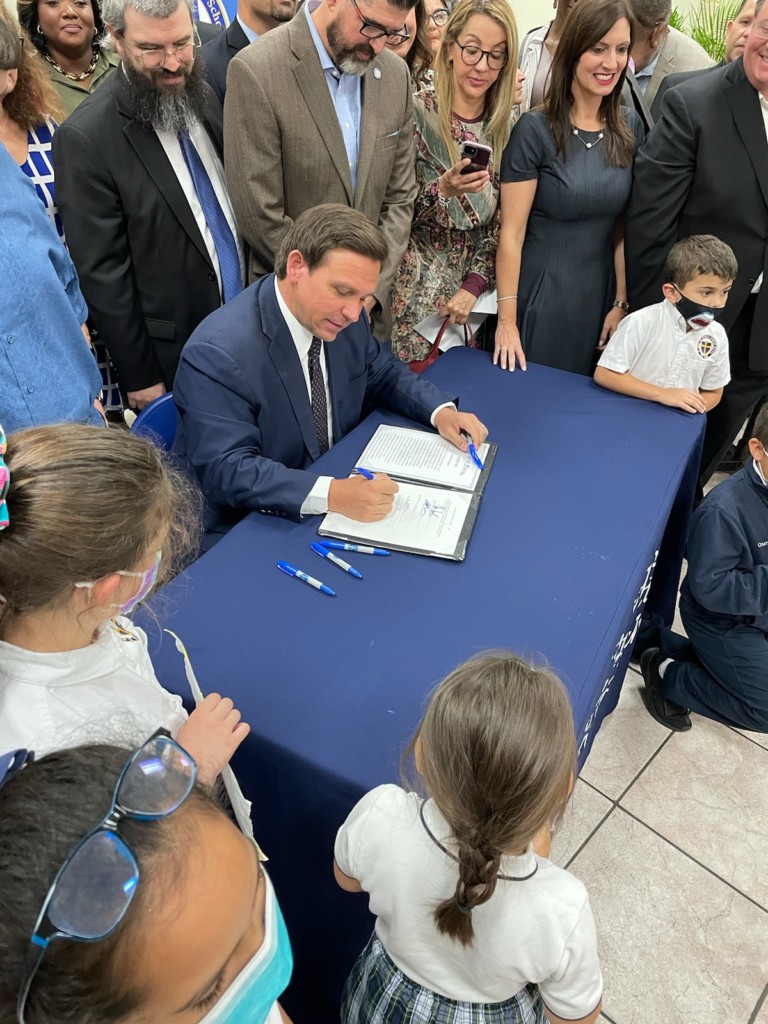
Editor's note: reimaginED is proud to reintroduce to our readers our best content of 2021 such as this post from senior writer Lisa Buie.
Tens of thousands of new Florida families gained access to education choice Tuesday after Gov. Ron DeSantis signed into law a $200 million expansion of the state’s K-12 scholarship program.
Surrounded by a crowd of supporters including sponsoring lawmakers, state Education Commissioner Richard Corcoran, Lt. Gov. Jeanette Nunez, faith leaders, school leaders and students, DeSantis signed HB 7045 at St. John the Apostle Catholic School in Hialeah, where 162 of 190 students receive school choice scholarships.
“We are proud to be able to give those families and those students who otherwise would not be able to afford a Catholic education that opportunity,” principal Robert Hernandez said as he welcomed the group to the 72-year-old school, located in the parish of state Sen. Manny Diaz Jr., R-Hialeah.
Diaz sponsored the bill along with Rep. Randy Fine, R-Palm Bay, who also attended the ceremony.
“Thank you for always supporting education choice and for supporting students and families and not institutions,” Diaz told the governor during prepared remarks.
DeSantis called support for parental choice in education “a recipe for success.”
“When you talk about low-income families, working-class families may not have the luxury of being able to get their kid in the school of their choice without the program,” he said.
DeSantis said that over the years, the state has seen many families in need, and the recent education choice expansions have had “life-changing” impact that will continue as leaders seek to add more opportunities.
“We will be doubling down on our commitment to further supporting working families,” he said.
DeSantis also pointed out his support for all forms of education and cited the 2020 allocation of $500 million to raise starting teachers’ salaries to fifth in the nation, as well as his dedication of a part of federal pandemic relief funds toward $1,000 bonuses for public school teachers.
The expansion of options “shows we’re not standing pat. We’re going on offense,” he said as the audience burst into applause.
Billed as the largest expansion of education choice in Florida history, the new law merges the state’s two scholarship programs for students with unique abilities, McKay and Gardiner, and combines them with the Family Empowerment Scholarship program approved in 2019.
One category of the Family Empowerment Scholarship will serve students with unique abilities and special needs while the other will continue to serve lower-income families.
The law leaves intact the Florida Tax Credit Scholarship program, which is funded by corporate tax donations, and the Hope Scholarship program for students who have experienced bullying at their district schools. More than 160,000 students across Florida participate in K-12 scholarship programs. The law is expected to add as many as 61,000 new students and cost about $200 million, according to a legislative analysis.
The law simplifies eligibility requirements by aligning qualifying income levels of the Florida Tax Credit Scholarship with the Family Empowerment Scholarship. The two programs previously had different income requirements.
The legislation also provides greater convenience for families by placing management of the Family Empowerment program under nonprofit scholarship organizations, which include Step Up For Students, which hosts this blog.
Under the legislation, families currently receiving flexible spending dollars under the Gardiner program will continue to receive their scholarships as education savings accounts, with McKay’s traditional scholarships converting to education savings accounts starting in 2022-23. Families currently participating in each program will receive whichever dollar amounts were higher, whether that was in the previous law or in HB 7045.
During his remarks, DeSantis addressed concerns that some families had expressed about the legislation and said the effects would be closely monitored.
“If it turns out there any hiccups in this, we will not hesitate to propose reform,” he said.
One aspect of HB 7045 that drew enthusiastic support was its elimination of a requirement that students attend a district school the previous year to qualify for the scholarship. That rule resulted in some families whose incomes took a hit during the pandemic or other tragedies from being turned down for scholarships that would have helped them keep their children in their private schools.
“If the need is there, the need is there,” DeSantis said. “You shouldn’t have to jump through three hoops.”
The change is a godsend for Lina Zelcer, a widow who was denied a Family Empowerment Scholarship for her daughter, Chana Sofia, to attend her local Jewish school because she had not attended a district school the prior year.
“I was surprised how in the middle of a global pandemic, a single mom like me wasn’t able to have the chance to receive a little support for my daughter’s education,” she said.
Zelcer said the new law will help her fulfill a promise to her husband, who died of a brain tumor at age 39, to provide Chana with an education that reflected their faith.
“Thank you, Governor DeSantis and lawmakers, for giving more Orthodox Jewish families like mine the opportunity to educate their children as they see best,” she said.
Barbara Rodriguez also praised the expansion of education choice. Her son, Angel, who has special needs, struggled in his district school, and was bullied so severely that he contemplated suicide, she said. Thanks to a Gardiner Scholarship, she was able to send Angel to a private school with smaller class sizes and an environment that allowed Angel to thrive. Today, he is a successful eighth grader who loves reading.
“The Gardiner Scholarship gave him a second chance at education — and at life,” said Rodriguez, whose two other children have benefited from the Florida Tax Credit Scholarship.
In addition to offering more convenience, the law expands scholarships to more families by raising household income limits to 375% of the federal poverty level for both the FTC and FES. That means a family of four with an income of just under $100,000 can qualify, though families earning 185% of the federal poverty level, or slightly more than $49,000 per year for a family of four, still get priority.
The law also makes siblings of students currently receiving scholarships and children of military members eligible for the program.
“They’re serving us, so we’re serving them,” said DeSantis, also a veteran.
Though the ceremony attracted a crowd, it also caught the attention of an education choice pioneer not in the room but whose influence continues to weigh heavily.
“This is truly a historic and sweeping action to empower more families and ensure more of Florida’s students can succeed,” former Gov. Jeb Bush, founder and chairman of the Foundation for Florida’s Future said in a statement issued Tuesday.
“Florida has long been a leader in school choice. This bold and massive expansion builds upon proven success, providing hundreds of thousands of students most in need with access to educational opportunities that would otherwise be out of reach.”
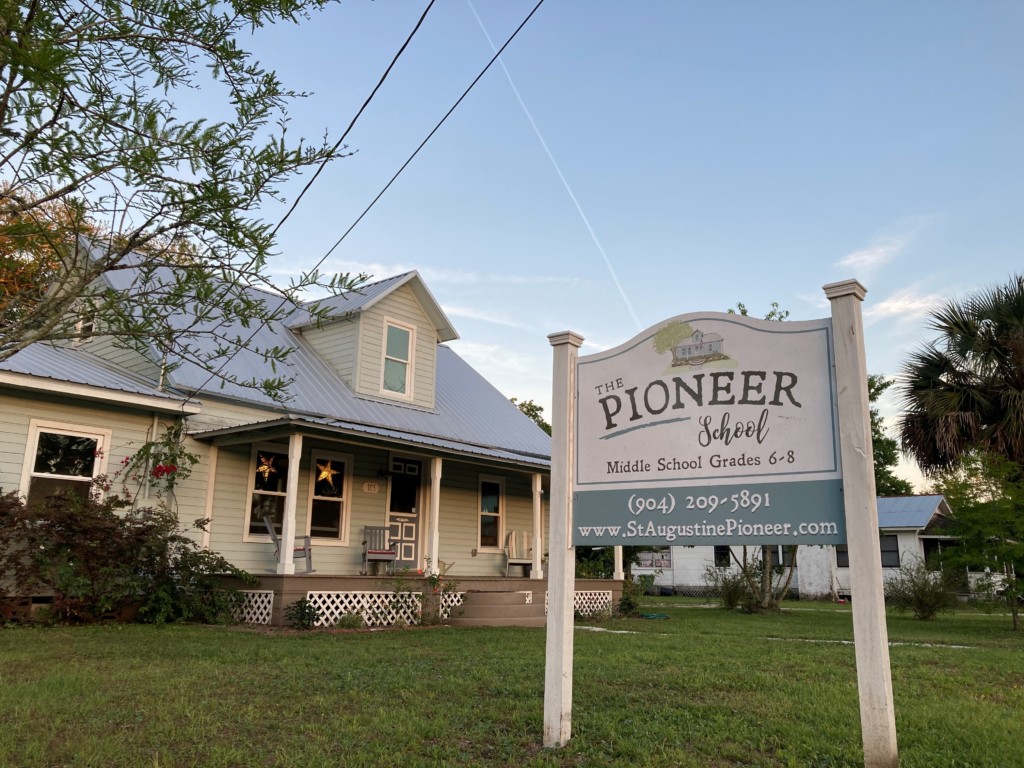
The Pioneer School aims to fully prepare its students for the next level – which, for nearly all of them, is a public high school in one of the state’s most affluent and high performing districts.
Editor's note: reimaginED is proud to reintroduce to our readers our best content of 2021. This post from Step Up For Students director of policy and public affairs Ron Matus originally published on May 12.
 ST. AUGUSTINE, Fla. – As the sun rises and smoke wisps from a diffuser, 16 students sit cross-legged in a century-old house with a tin roof and a yard sign that reads, “HATE HAS NO HOME HERE.” Their principal with the British accent, Cristina Pope, greets each one with an exchange in Spanish, then eventually settles them into a meditation session.
This isn’t how most middle schools in America start their day.
But at The Pioneer School, it’s routine. And far from the only thing about this micro-school that sweetly clashes with “school” as we know it.
The rest of the morning, these students (and, on this day, 11 more tuning in from home) will take core classes through Florida Virtual School. Then they’ll immerse themselves in enrichment offerings as eclectic as it gets:
Coding, gardening, public speaking, civil rights history, an award-winning drama program …
Along the way, they’ll learn how to make fire, use a knife, change a flat …
In the fall, they’ll add small engine repair.
The Pioneer curriculum is a blend of Waldorf, Montessori and other learning models Pope fused and honed. It’s aimed at developing skills in “leadership, citizenship, entrepreneurship … and practical life responsibilities” that will help Pioneer students excel at the next level, in whatever they pursue.
Incredibly, it’s all there for $8,000 a year.
For context, $8,000 a year is about 70 percent of per-pupil spending in Florida public schools.
The Pioneer curriculum is a blend of Waldorf, Montessori and other learning models that co-founder Cristina Pope fused and honed.
Even better, 14 Pioneer students use state choice scholarships, including 10 for families of modest means. As a result, the sons and daughters of accountants, housekeepers, boutique owners and firefighters learn side by side, in an environment that considers them all “gifted.”
“Where’s your child going to learn bread making, archery, boat building, drama, STEM … all in one year’s time?” said Serena Baar, a pre-school teacher whose 14-year-old, Trinity, attends using a Florida Tax Credit Scholarship. “It’s just a well-rounded, well-thought-out school.”
It’s also a model of possibility – another example of the diversity of learning options that can bloom when educators have real power to create their own systems, and parents have real power to access the ones that work best for their children.
With traditional schooling, “We’re trying to shove square pegs into round holes,” said Teri Aboulafia, who co-founded the school with Pope. But with education choice, “You can make it whatever you want.”
***
Pope is a University of Oxford graduate who homeschooled her son 14 years and runs a small permaculture homestead.
Aboulafia is a 20-year veteran of the restaurant business who helped push for a public Montessori school.
At Pioneer, Pope leads the teaching. Aboulafia handles operations.
They’re “like peanut butter and jelly,” said Baar. “The perfect combination.”
The idea for the school took root when Aboulafia’s kids took a class at Pope’s place. They learned to bake bread, build shelters, identify plants. Aboulafia thought, “I want this woman to educate my children.”
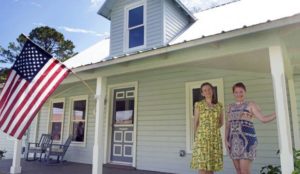
Pioneer co-founder Cristina Pope, left, pictured here with co-founder Teri Aboulafia, graduated from Oxford, lectured at Oxford, and did doctoral work in Latin American studies at King’s College London.
The Pioneer School started five years ago with 10 students. It now has three full-time employees and nine part-time tutors and teachers. With interest growing, it will move this fall into two modular buildings on five acres next to a creek.
The singular focus on middle school will continue.
“This is the crucial development age,” Pope said. “This is the chrysalis.”
“We knew it was important,” Aboulafia said, “to give these kids a safe, loving home where they can express themselves.”
Morning assembly is one place that happens. Among other discussion prompts, The Pioneer School has “Worried Wednesday” and “Thankful Thursday.”
On a recent Wednesday, students channeled good vibes to a horse that ate too many Sour Patch candies, a cat with shaking spells, a bearded dragon with tail issues. One student worried about a friend’s mom with Covid. Another, about her sister’s bullying friends. Another said his dad was stressed about work and upset he was going to miss his son’s birthday.
“Reassure him,” Pope told the student. “Let him know how much you love him.”
“Feels like a family” is a common refrain here.
Two years ago, Heather Garris applied to be a math tutor, but had to cancel the interview when she couldn’t find a babysitter. No problem, Pope and Aboulafia told her. We’ll reschedule. And this time, bring your little one.
Pope took Garris’s child out back to pick grapes while Aboulafia did the interview.
The Pioneer tutor is now a Pioneer parent. Last year, Garris used a choice scholarship to enroll her oldest, Eric, after bullying at his former school took a toll on his behavior and academics. Eric found peace at Pioneer, she said. The tension he used to bring home is gone.
The school “changed the whole dynamic of our household,” Garris said. “It’s been a life changer.”
***
Pope was the first in her family to graduate from high school. At Oxford, her friends included the children of corporate titans and factory workers alike.
“The ones from humble backgrounds,” she said, were “especially hungry to learn.”
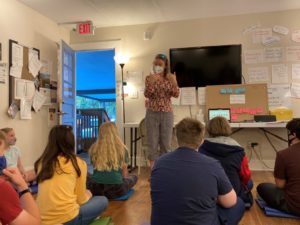
Dynamic learning experiences tie students’ core studies to relevant life applications and develop their skills in leadership, citizenship, entrepreneurship and practical life responsibilities.
There are no haves and have-nots at Pioneer. Every student helps clean the school, from scrubbing toilets to taking out the recycling. All take turns being mentors, role models and team leaders.
Responsibility, ownership, common decency – all are woven into the school’s fabric.
The school is non-sectarian, yet draws families who are Christian, Jewish, Muslim, agnostic and atheist. A wide range of political views can be found here, too.
“Everybody has the freedom to be themselves, and they’re accepted,” said Baar, whose daughter had only attended Christian schools before enrolling in Pioneer two years ago. “It’s a melting pot that works.”
Baar said she and her husband, a termite tech, wanted their daughter to be “gently exposed” to other worldviews, in an atmosphere that was warm and respectful.
Along the way, Trinity found her wings.
A few weeks ago, Baar heard her daughter talking excitedly in the bathroom for 20 minutes – and assumed she was gabbing with a friend. “I was yelling at her, ‘Get off the phone.’”
But Trinity, who’ll be in a top drama program at a public high school next year, wasn’t on the phone.
She was reciting Shakespeare.
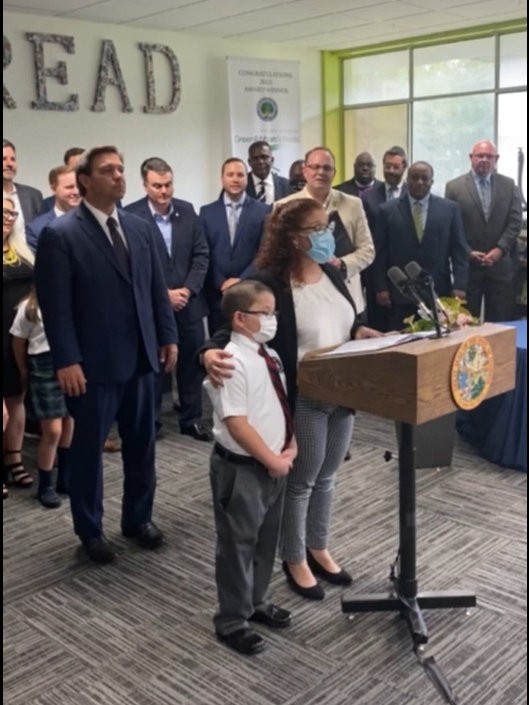 Editor's note: reimaginED is proud to reintroduce to our readers our best content of 2021. This podcast from senior writer Lisa Buie originally published on July 27.
 On this episode, redefinED senior writer Lisa Buie speaks with the single mother of a 9-year-old and teacher of English language learners at an Orlando district high school. Echevarria, who cares for her parents in her home, earns a salary that, though modest, put her just over the income threshold for eligibility for an income-based school choice scholarship.
Echevarria talks about the reasons for sending her son, Eddie Joe, to a Catholic school, about her employer’s response to that decision, and the financial sacrifices she’s had to make to afford her son’s education without a scholarship. She also shares Eddie Joe’s reaction when he learned of the passage of HB 7045, which expanded eligibility to families at higher income levels.
Echevarria and Eddie Joe were invited to speak at one of two bill signing ceremonies where they met Gov. Ron DeSantis as well as the lawmakers who supported the bill. You can watch a video of Echevarria expressing her gratitude here.
“He started crying for joy, he started jumping. He said, ‘Mama, you can buy me ice cream with sprinkles!’ He was ecstatic.”
EPISODE DETAILS:
The following bill has been filed for the 2022 Florida legislative session, which begins Jan. 11 and runs through March 11.
BILL NO: SB 1348
TITLE: Educational Choice Scholarships
SPONSOR: Sen. Manny Diaz – Hialeah Gardens
WHAT IT WOULD DO:
For more information, click here.
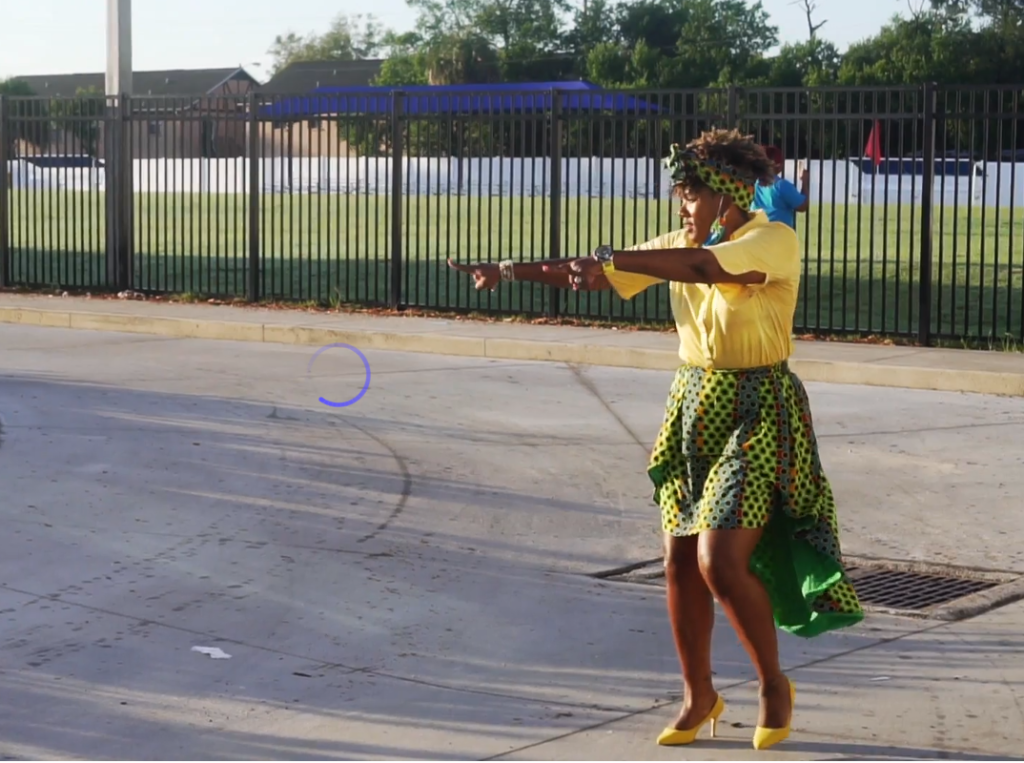
Kendrah Underwood, founding principal at IDEA Victory Vinik Campus, embraces a simple but profound philosophy: The proof of an individual’s success is the positive impact he or she can have on the lives of others.
Editor's note: reimaginED is proud to reintroduce to our readers our best content of 2021. This post from senior writer Lisa Buie originally published on Sept. 9.
In 2019, when she was teaching at Butler College Prep, a public four-year charter high school in Chicago, Kendrah Underwood earned the reputation as the world’s coolest teacher for filming a video of her students rapping about what they were willing to do to earn a good grade.
The video, which attracted 5 million views in less than a week, looks like a well-rehearsed routine. But Underwood says the idea for it came to her a couple of days before filming.
“I’m a creative, think-outside-of-the box educator,” she told the Daily Mail after the video went viral. “I wanted to change the narrative of what the world continues to hear about Black students when it comes to education and positivity.”
Now, the former forensic science teacher has brought her philosophy to IDEA Public Schools, a network of public charter schools that serve more than 75,000 students at 137 locations. One of the newest is IDEA Victory College Prep in Tampa, Florida, where she is founding principal.
Underwood already is doing things in her own inimitable style.
Always looking for ways to inspire her students, Underwood organized a drum line to greet everyone on her school’s opening day.
She filmed a school tour this past summer in which she and her lower-school counterpart danced in their offices. On the first day of the new school year, she arranged for a drum line to welcome students as they stepped out of their cars and onto the new campus. (You can watch the video here.)
Underwood, an Atlanta native, is one of six sisters. She learned from her mother, who was a teacher, that “education was the one thing that can never be taken away from you.” Her mother’s “each one, teach one” approach to child rearing taught her “if one of us knew something or learned something, we had to teach our siblings.”
Though Underwood respected her mother’s profession, she did not want to follow in her footsteps.
“I saw how she worked so hard. Education shifted, and it changed. Before it had a lot more respect and prestige, but then it kind of went away from that. So, I had no aspirations of teaching.”
Growing up, Underwood wanted success, which she defined as a certain amount of money, a big, corner office and “just living the dream.” She considered several careers, among them becoming a lawyer.
She attended public district schools before heading to Agnes Scott College, a private, all-female college in metro-Atlanta. She earned a bachelor’s degree in sociology and anthropology and minored in Africana studies. After graduation, she earned a master’s degree in business administration and another in accounting and finance from American Intercontinental University.
Underwood’s first career job was as a sales manager for Cox Communications. She was a huge success and managed 250 auto dealer accounts in 72 cities. But it didn’t feed her soul.
“I found myself spinning my wheels and not living and working in my passion,” she said.
The experience she considers transformative was a church mission trip to Liberia and Ghana, where her group provided health care and helped train educators. She shared what happened on the trip in a presentation for Toastmasters International at Turner Broadcasting, where she worked as an employment paralegal.
It was during that trip that she found her calling to be a teacher.
“I was able to quiet my mind and listen to the purpose God had for my life,” she said.
In 2014, she joined Teach For America, a national nonprofit organization that works in partnership with 350 urban and rural communities across the country to expand educational opportunity for children. As a corps member, Underwood taught STEM to seventh- and eighth graders in Clayton County, Georgia, a southern metro Atlanta suburb.
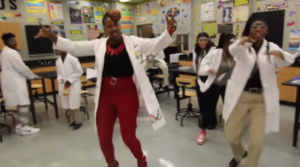
In a series of videos for her forensic science students at her former school, Underwood encourages them to “follow the DNA” in a parody of a popular song by rapper Cardi B.
ADD PHOTO
Two years later, she headed for Chicago and Butler College Prep, where students are called leaders and a rigorous curriculum is offered that includes martial arts in addition to academics. She established a forensic science program and started creating motivational videos, including a parody of the Cardi B song “Bodak Yellow,” in which she and her students rapped and danced in white lab coats.
After working in traditional district public schools, Underwood says she prefers the freedom of charters, which are publicly funded but privately managed. Like district schools, they are tuition-free.
“I have worked in both, and (traditional district) schools are just different, and that’s all I’m going to say,” she said.
Two years after joining Butler, she was tapped to become an assistant principal at Success Academy, part of a charter school system that serves 23,000 mostly minority students in New York City who are outperforming students from the most affluent schools in the city and the state. She continued making headlines and using her famous videos as a teaching tool there.
Last year, when IDEA Public Schools announced plans to build two new campuses in Tampa, Underwood was tapped as principal in residence for Victory College Prep a full year before the campus opened in August.
She and Latoya McGhee, principal of IDEA’s Victory Academy, which serves elementary students, worked together to oversee the opening of the new school, one of Florida’s Schools of Hope, incentivized to locate near persistently low-performing district schools as an alternative for families seeking options. The schools promote a culture of “rigor and joy” and cite a 100% college acceptance rate in making their case to parents.
That same year, Underwood turned 40 and received her doctorate in education from Grand Canyon University in Arizona. The degree earned Underwood the nickname her colleagues and students use: “Dr. K.”
Underwood, who is mother to a middle school-aged son, says her experience as a parent has helped her be successful as an administrator because she can relate to families. The fact that she is doing what she feels she was called to do equips her to work long hours and deal with challenges that come up each day.
“If you are in your passion, it’s not work,” said Underwood, who credits her ability to do it all to “Black Woman Magic.”
Underwood might not have the corporate corner office or the big salary that comes with it, but she’s living the dream as Dr. K.
Florida Tax Credit Scholarship and Family Empowerment Scholarship for Educational Options (income-based scholarships):
Family Empowerment Scholarship for Students with Unique Abilities:
Hope Scholarship:
Reading Scholarship:

