
A recently updated report of a 2020 study that concluded public school student performance improved along with the growth of state scholarship programs for lower-income students in private schools has reaffirmed those results, going beyond the original findings.
Additional research from David Figlio, Cassandra M.D. Hart and Kryzstof Karbownik answers the question: At which level does competition matter most, district or local?
The researchers found that competition faced by the district could be even more important than the marginal degree of competition faced by the individual school, citing as an example the fact that public education choice options, such as magnet and charter schools, may have expanded more rapidly in districts that faced greater private school competition.
The original report showed that in addition to achieving better test scores, the absentee rates and number of suspensions for public school students declined. Students showing the most dramatic effects were from lower socioeconomic backgrounds. The findings ran contrary to longstanding claims from school choice opponents who claimed private school scholarship programs divert the best students from public schools and harm those left behind.
Figlio, Hart and Karbownik plan to continue exploring the subject in future versions of the study.
Their research is among many studies that demonstrate the benefits of school choice in Florida. In 2019, the left-of-center Urban Institute found that scholarship students were more likely to attend and graduate from college.
Additionally, more than a decade’s worth of evaluations, including the most recent from the Florida Learning Systems Institute, reveal that Florida’s most disadvantaged students have the same annual learning gains as all students of all income levels nationally.
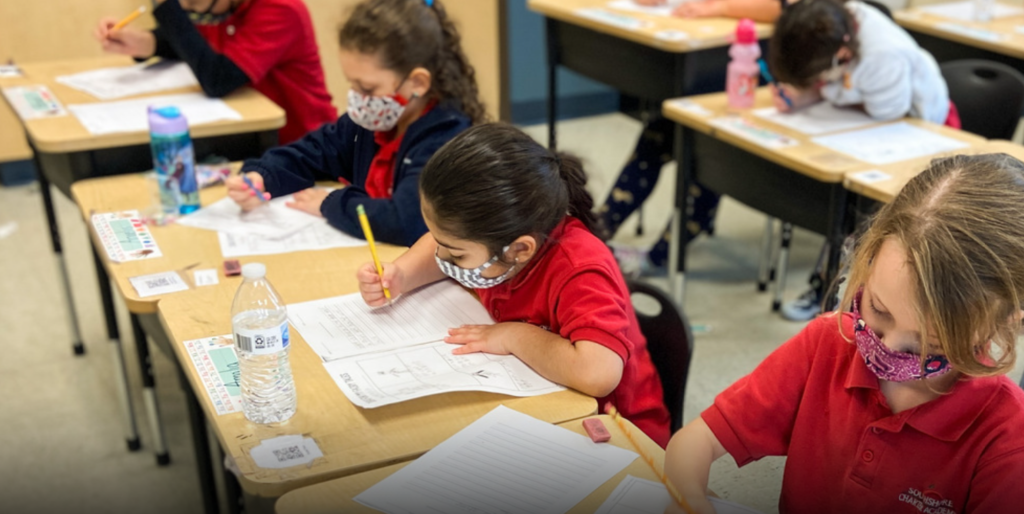
Southshore Charter Academy in Riverview is one of four charter schools whose renewals were denied by the Hillsborough County School Board.
After compelling testimony and much debate, the Hillsborough County School Board voted 6-1 in a special session this morning to reverse its previous decision and approve charter school renewals for Kid’s Community College Charter High School, Pivot Charter School, Southshore Charter Academy and Woodmont Charter School.
Among those who spoke in favor of the reversal were parents, teachers and students, several of whom called the board’s refusal disruptive and politically motivated.
Florida education officials on July 14 ordered the board to reverse its rejection of renewal applications for the four charter schools. State board members unanimously approved an order drafted by Education Commissioner Richard Corcoran giving the Hillsborough County School District until July 26 to “document compliance with the law” regarding their renewal requests.
Like all charter schools in the state, these schools are public schools that operate with taxpayer funds but are privately managed.
Dre Graham, executive director of independent education and parental choice at the Florida Department of Education, commented at that meeting that any decision ultimately must be based on what’s best for students.
“Our responsibility is to provide an equitable educational experience for students in order for them to become the best versions of themselves,” Graham said.
All four schools serve high percentages of minority students. Woodmont is classified as a Title I school because 100% of its students are economically disadvantaged. Two of the schools had been operating for 10 years, and the other two had been operating for five years. Southshore and Woodmont earned B grades from the state, while the other two earned C’s.
District staff, after conducting a comprehensive review of the charter schools and finding no grounds for rejecting the applications, had recommended all four contracts be renewed for another five years.
Southshore Charter Academy principal Amy Sams and Woodmont Charter School principal Cuwana Lawson, in a commentary published on tampabay.com, questioned the motives of the board in denying the charter applications.
“This group, which has nothing visible to gain or lose by having charter schools that outperform similar district schools in their neighborhoods, claims to be in support of all public school students,” they wrote. “Here’s a fact that they’ve overlooked. Charter school students are public school students too.”
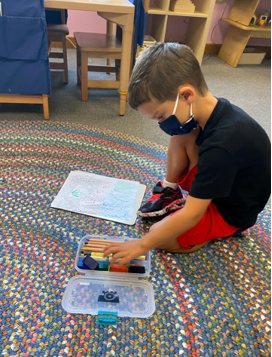 My son, Logan, turned 5 just a few months before he started kindergarten in 2020. With two full-time working parents, he needed to be learning in person despite the rise in COVID-19 cases.
Thankfully in Florida, schools opened for in-person instruction (with most using safety protocols such as masks) for the 2020-21 school year, and we signed Logan up to return to the classroom that August.
As a former kindergarten teacher, one of my favorite books is “All I Really Need to Know I Learned in Kindergarten.” True to the book’s title, author Robert Fulghum begins by letting readers know that all he really needed to know about how to live and what to do and how to be, he learned in kindergarten.
“Wisdom was not at the top of the graduate-school mountain,” Fulghum writes, “but there in the sandpile at Sunday School.”
The things Fulghum highlights in his book replayed in my mind throughout this year of pandemic kindergarten for our son. I know how vital the kindergarten year is for a child’s growth and development. I also know how important it is for parents to be involved, so they can see how much their child grows each week.
However, this year was unlike any other.
We took some “first day” photos at his school the weekend before the first day, because parents were forbidden to leave their vehicles due to pandemic protocols. We drove up on the first day and dropped him off, with his mask covering his face and a few tears in his eyes.
A stranger to him (with a mask on herself), checked his temperature, pulled him out of the car and ushered him to his kindergarten classroom. His teacher greeted him wearing a mask and an air high-five. Hugs are not safe during a pandemic.
The first thing that Fulghum says he learned in kindergarten was to share everything. Logan was not able to share things in his classroom this year. COVID-19 protocols meant every child had to have individual items.
 Sharing is an important skill learned in kindergarten, and this made me consider giving Logan the gift of another year in much the same way other parents chose academic redshirting for their young children last year. The Florida Legislature approved a law earlier this year that allows parents to determine whether their elementary school children will be retained during the 2021-22 school year.
This year, many schools are preparing for a kindergarten boom as families who sat out 2020-21 due to COVID-19 concerns send their children to kindergarten.
Another thing Fulghum says he learned in kindergarten was, “Say you’re sorry when you hurt somebody.” Children in kindergarten need to see facial expressions so they can learn how to interpret social interactions. With masks on almost all day, Logan did not have this opportunity.
Since we could not be in the classroom, and got very few photos from his school, we had no idea how he was doing socially. Logan told us he made friends, but without having any social gatherings and being able to see him with kids his age, I wasn’t sure that he would be socially ready for first grade.
Logan learned letter sounds without seeing his teacher make the sounds with her lips, as is recommended. Many kindergarten teachers use mirrors, and have their students model their lip movements to make the correct letter sounds. This wasn’t possible during the pandemic.
Fulghum mentions this in his book when he tells readers to always remember the most important word you learn to read in kindergarten – “look.” I know how important strong phonics skills are for students before they enter first grade, and I just wasn’t convinced that Logan was ready to make the jump after a year of kindergarten in which he (and everyone at his school) wore masks nearly all day.
As one of the youngest students in his class, I always knew that retaining him in kindergarten was a possibility. Research shows that giving students, especially boys, the gift of a year can be very effective.
Logan has a lovely and fun personality, but he is a typical boy. He loves to play and is easily distracted. Logan is also very social. He enjoys playing with other kids his age and focuses more on movement, music, and sports than academics.
Fulghum references this too, saying, “Live a balanced life—learn some and think some and draw and paint and sing and dance and play and work every day some.”
I wanted to be sure Logan truly understood this before entering first grade, because it is vital that he know that academics and fun are critical in your daily life.
After much discussion with our family and dear friends, we decided that Logan would benefit from another year in kindergarten. He did not get the full kindergarten experience, and as Fulghum writes, “And it is still true, no matter how old you are—when you go out into the world, it is best to hold hands and stick together.”
We are excited for our son to learn and grow for another year in kindergarten, and to be able to hold his friends’ hands and hug his teacher.
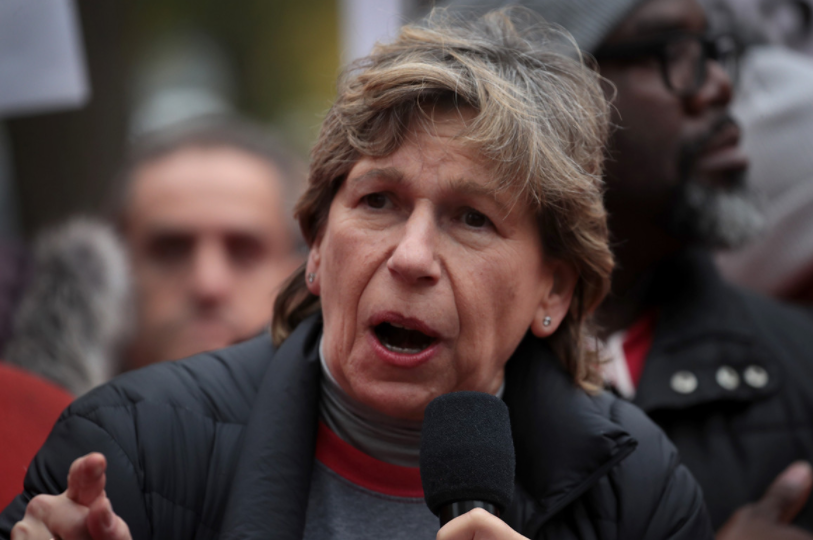
Randi Weingarten is president of the 1.7 million-member American Federation of Teachers, AFL-CIO, which represents teachers, paraprofessionals and school-related personnel.
Editor’s note: Nathan Cunneen, author of this commentary, is a communications associate at the American Federation for Children. You can read a redefinED profile of Cunneen here.
On Saturday night, American Federation of Teachers President Randi Weingarten published a tweet that sounded suspiciously like an endorsement of school choice.
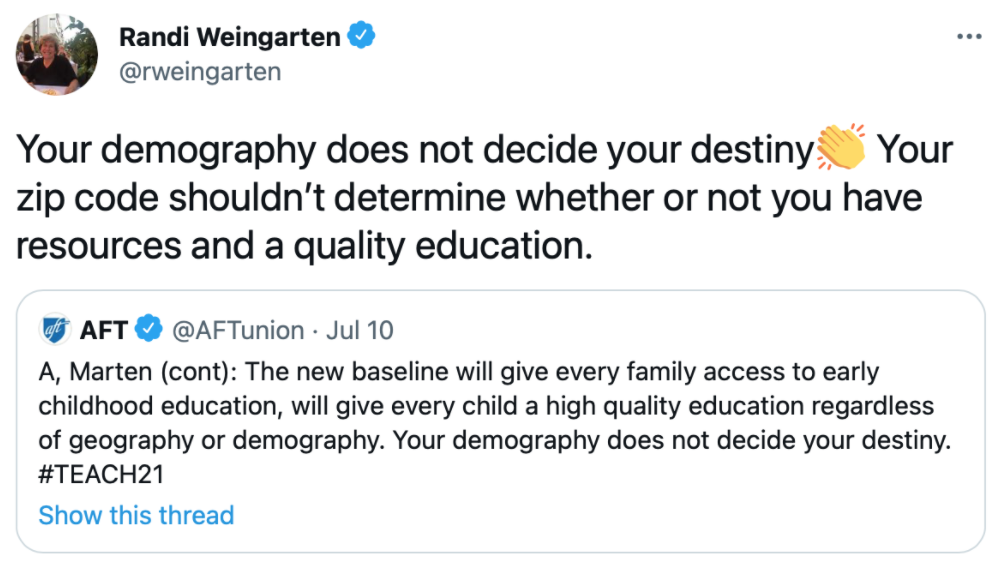
While Twitter (quite hilariously) went wild with quote tweets and comments mock celebrating this “endorsement,” anyone paying attention to the school choice wave knows that Randi Weingarten does not practice what she preaches, and that will unlikely change.
Teachers’ unions, with their vice-grip power over the Democratic Party, remain one of the largest obstacles to education freedom in the United States. Randi Weingarten, like her predecessors, has made her priorities crystal clear, stating that “the job of a union is to protect its members rights, and that’s exactly what @AFTunion will always do.”
Fair enough, but what about when protecting union members’ directly conflicts with what’s best for students? Too often that’s what happens when students remain locked into the public education system that the union controls.
Instead, school choice seeks to liberate students by granting them access to the funds meant to educate them, so that their families can make education decisions that match their needs, and because “ZIP code shouldn’t determine whether or not you have resources and a quality education.”
The reason why a teachers union president would abandon her usual buzz phrases in favor of language consistently used by the school choice movement is clear: teachers union reputation is at an all-time low after a year of terrible decisions, and the entire country wants choice right now.
In the last year and a half, teachers unions have fought to keep schools closed, even when private schools all over the country opened safely. They have induced the CDC to maintain those school closures, often against medical evidence. And they have spent seven-figure sums running ads in an attempt to save their slipping reputation.
Meanwhile, the educational quality of millions of kids is still determined geographic or financial realities.
As a result, just as teacher union support reaches all-time lows, support for school choice has reached all-time highs. June polling shows that overall support for school choice has reached 74%, with 83% of Republicans and 70% of Democrats. But these monstrous numbers aren’t purely the result of teachers’ unions failings, they’re driven by the growing awareness that school choice is what’s right for families, and the key to success for many students.
I was one of them.
For 10 years, I was blessed to receive an amazing education through the help of the Florida Tax Credit Scholarship. Through my experiences in both public and private schools, it became clear that students do not all learn the same, and a public school environment is not what’s best for every kid.
Thankfully, the lawmakers of Florida gave me and my family an opportunity to choose where I went to school, an opportunity that changed my life and would not have been possible without the assistance of a scholarship. Now I am the first in my family to graduate from college.
I’m not the only one.
Consider, also, the story of Peter Orlowski, who credits a scholarship with making a new school possible, a school where he wasn’t constantly bullied. Consider Damyah Joyner, whose high school Tax Credit Scholarship led to an academic and athletic scholarship for college. Ours are among the countless stories of how educational freedom changes lives for the better. All across America, millions are benefitting because bold lawmakers put children before adult-centric special interests.
According to numerous studies, school choice leads to improved graduation rates and test scores among students. In an Urban Institute analysis of the Florida Tax Credit Scholarship, recipients were shown to be up to 99% more likely to attend four-year colleges and 45% more likely to earn bachelor’s degrees.
This evidence shows that while poking fun on Twitter is sometimes entertaining, and this was certainly a blunder for Ms. Weingarten, we must remember that this is serious, especially for families facing financial hardship this year. More choice means more opportunities for the families who truly need it.
Following the most tumultuous school year in modern history, and considering the teachers union’s actions amidst it, two conclusions must be reached. First, America’s education system must change, and second, school choice is the best way to change it.
Putting families and students in control of their educational future is not only the right thing to do; it will correct the institutional focus of supporting a worsening education system to supporting students.
Given her twitter account, maybe Randi Weingarten is realizing this. If not, she should.
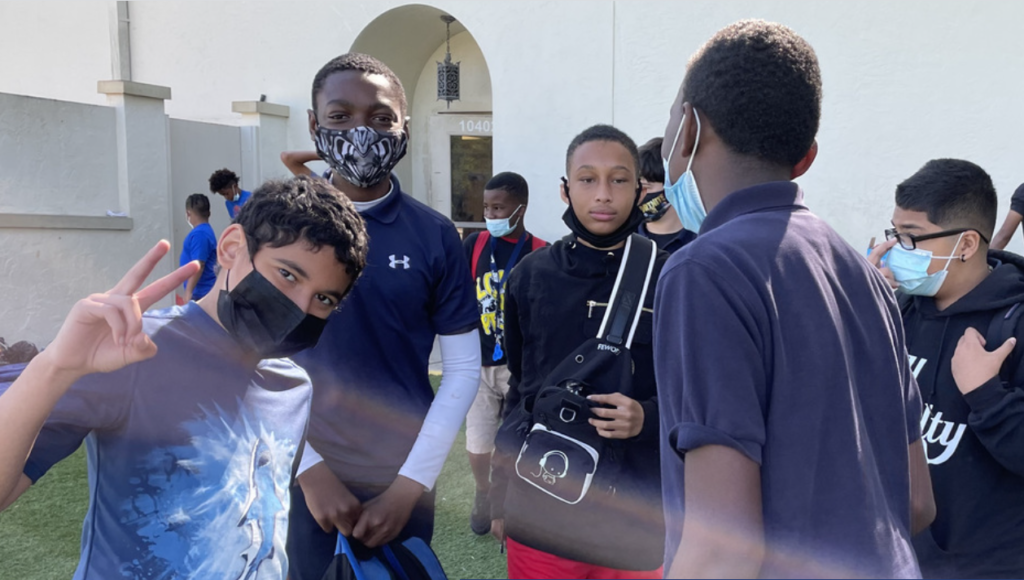
Woodmont Charter School is one of four schools whose renewal applications were denied by the Hillsborough County School Board.
Editor’s note: This opinion piece from Amy Sams, principal of Southshore Charter Academy, and Cuwana Lawson, principal of Woodmont Charter School, appeared Friday on tampabay.com.
As the principals of two high-achieving charter schools in Hillsborough County, we along with thousands of students and their families, are appalled at the Hillsborough County School Board’s disregard for parental choice when they voted to deny renewal of our charters.
While we are confident in our legal ability to continue to serve some of our county’s most vulnerable students and are grateful to Florida Education Commissioner Richard Corcoran for his support of all public school students, we must address some of the misinformation that an organized group of anti-charter school activists continue to spread at Hillsborough School Board meetings.
This group, which has nothing visible to gain or lose by having charter schools that outperform similar district schools in their neighborhoods, claims to be in support of all public school students. Here’s a fact that they’ve overlooked.
Charter school students are public school students too. They cite incorrect information to further their cause. What is their motive?
We would like to defend our schools based on true information that we can back up with facts and documentation.
Woodmont Charter School is the highest-graded school in Temple Terrace with a “B” rating. It serves 90% minority students with 97.6% being economically disadvantaged. It is the highest-performing local school in 2019 on the Federal Accountability Index for all students, white, Black, Hispanic, Asian, multi-racial, economically disadvantaged and English Learner students.
To continue reading, click here.

The IDEA Victory campus is one of two state-sanctioned “schools of hope” slated to open this fall in Hillsborough County.
As school board members in one Florida county face state consequences for pushing back on charter school contract renewals, two of the state-sanctioned “schools of hope” are joyously preparing for openings next month in the same region.
IDEA Public Schools is opening its Hope and Victory campuses on Aug. 10 to students in grades K-2 and 6. The schools plan to add grades each year, eventually providing a K-12 education.
“We’re getting ready to welcome our teachers in a couple of weeks,” said Emily Carlisle, one of two founding principals of IDEA Hope, which is opening in a new building at 5050 E. 10th Ave. near Ybor City. “It really feels like school is about to start.”
Carlisle, who heads the Hope college preparatory school, and Latoya McGhee, founding principal of the academy for the lower grades at IDEA Victory-Vinik campus near the intersection of Nebraska and Fowler avenues, have spent months with their respective teams sharing the story and philosophy of IDEA with their communities, where assigned district schools are among 39 countywide the state has classified as “persistently low performing.”
Both principals have partnered with businesses such as ZooTampa at Lowry Park and University Mall as well as the Hilton Embassy Suites to host informational meetings. They also have hosted online giveaways to generate excitement about the school openings.
Carlisle said being the new kid on the block can be challenging, but the IDEA team is willing to do whatever it takes.
“We’ve been organizing and working hard, canvassing door to door,” she said.
Their efforts have paid off, with kindergarten slots filled at the Hope campus. A handful of slots remain for first, second and sixth grades.
“If anyone is looking for an option for their children, we encourage them to check us out,” Carlisle said.
This year marks IDEA’s first foray into Florida. The Texas-based charter network is best known for a program that has resulted in 100% of its students accepted into college. The latest rankings of the most challenging high schools in the nation by the Jay Mathews Challenge Index published in the Washington Post placed all 15 eligible IDEA college preparatory schools in the top 1%.
The company plans to open a school in Jacksonville in 2022 as well as a third campus in Tampa.
Schools of Hope are charter schools that are designated by the state as “high performing schools.” They serve students from “persistently low-performing schools” or within a 5-mile radius of such a school, and students residing in impoverished communities. In addition to IDEA Public Schools, others with the designation include Mater Academy, Democracy Prep Public Schools, Inc., KIPP New Jersey, and Somerset Academy, Inc.
On the Hope campus, homerooms are named after colleges and universities, from Ivy Leagues to historically black colleges and universities and regional colleges to keep the goal front and center for students.
Carlisle describes the experience as full of “rigor and joy” with high expectations set for students from mainly low-income households.
That joy was on full display in a recent Facebook Live “table talk” video done from the Victory-Vinik campus with McGhee, who heads the academy or lower school, and Kendrah Underwood, principal of the college preparatory school.
“I can’t wait til my babies get here!” McGhee said.
The pair shared information on everything from uniforms to after school programs to transportation, which they described as being “like a limo ride to your school.” During a tour of the building, their excitement had them dancing in their offices.
“This building is coming alive,” Underwood said. “Look at the lights, look at the paint, look at the floor. It is smelling and looking and feeling like a brand new, state-of-the-art school.”
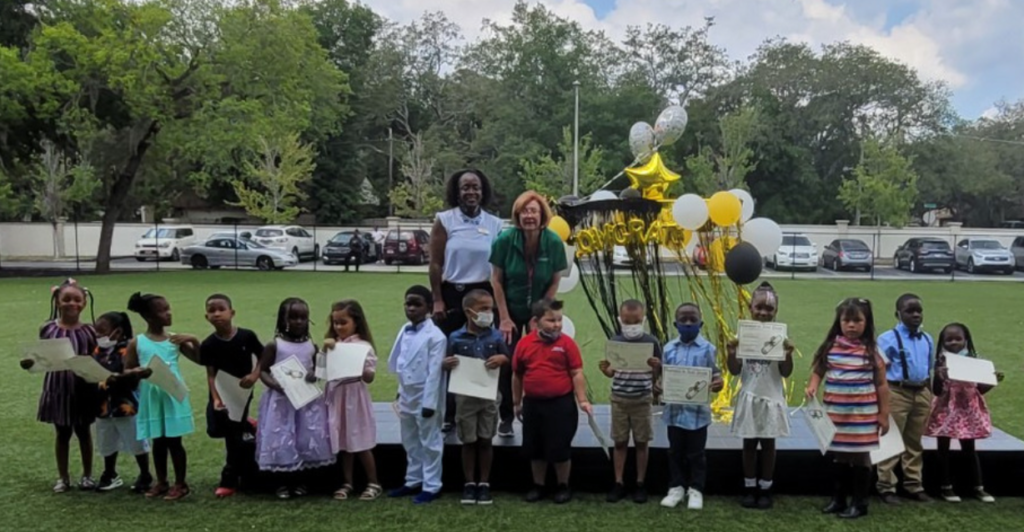
All students at Woodmont Charter School, one of four schools whose renewal application was denied by the Hillsborough County School Board, are considered economically disadvantaged. The school is managed by Charter Schools USA, based in Fort Lauderdale.
Florida education officials today ordered a Tampa Bay area school board to reverse its rejection of renewal applications from four charter schools, an action that it took just two months before the expected return of 2,200 students.
State board members unanimously approved an order drafted by Education Commissioner Richard Corcoran giving the Hillsborough County School District until July 26 to “document compliance with the law” regarding renewal requests from Kid’s Community College Charter High School, Pivot Charter School, Southshore Charter Academy and Woodmont Charter School.
Like all charter schools in the state, these schools are public schools that operate with taxpayer funds but are privately managed. Over the past quarter century, Florida lawmakers have supported legislation making it easier for charter schools to open, particularly in areas close to district schools that have been identified as “low performing.”
“Ultimately the decision has to be based on what’s best for students,” said Dre Graham, executive director of independent education and parental choice at the Florida Department of Education.
A former state teacher of the year, Graham began this morning’s discussion by saying he views the situation through the lens of students who would be disrupted if the schools were forced to close.
“Our responsibility is to provide an equitable educational experience for students in order for them to become the best versions of themselves,” Graham said.
The board vote followed a report from Hillsborough school district leaders about their ongoing efforts to address budget problems that left the district with a $100 million deficit. When local board chairwoman Lynn Gray said she would not approve any spending that did not benefit students, state board member Tom Grady fired back, asking Gray if she were prepared to commit to not spending money on legal fees to defend the district if the charter schools sue the board.
“If we had equal oversight and accountability with our charters, I think a lot of this would go away,” Gray said. She added that school board lawyers had advised her not to go into too much detail on the matter.
Grady was not satisfied. “It is your job to perform under the statute and under the laws and not according to your personal beliefs,” he said.
According to state education officials, the four schools serve high percentages of minority students. Woodmont is classified as a Title I school because 100% of its students are economically disadvantaged. Woodmont and Southshore are managed by Charter Schools USA, a Fort Lauderdale education management company that has a partnership with Step Up For Students, which hosts this blog.
Two of the schools had been operating for 10 years, and the other two had been operating for five years. Southshore and Woodmont earned B grades from the state, while the other two earned C’s.
District staff had conducted a comprehensive review of the charter schools and found no grounds for rejecting the applications, according to a memo from Florida Department of Education attorney Matthew Mears. When the Hillsborough County School Board met June 15, district staff recommended all four contracts be renewed for another five years.
But in what the Tampa Bay Times described as “a stunning departure from past practice,” board members voted to deny the renewal applications. The move meant four schools faced a possible shutdown, potentially leaving families to find mid-year alternatives for their children.
The charter schools received written notice informing them of the decision on June 29, one day before their contracts were to expire. Board members alleged problems with services to students who are gifted or have learning disabilities at Southshore and Woodmont as reasons for the denials. They cited concerns at Pivot and KCC High School about financial stability and academic performance.
On June 23, eight days after the School Board vote, state Education Commission Richard Corcoran sent a letter giving the district until June 29 to renew the contracts or show how the denials were legally justified, threatening to withhold state funding if the district failed to comply.
Gray, the school board chair, responded with a letter stating that board members complied with state law. She also wrote that the schools could appeal the decisions to an administrative law judge.
DOE attorney Mears’ memo says the law requires written notice to be sent at least 90 days before contracts expire. The Hillsborough School District said in its letter that the contracts would expire on Sept. 27, a move that state officials said did not fix the legal violation.
“This action did not cure the violation; there is no provision for unilateral extension of the contracts, and a nonrenewal after the school year begins would result in harm to the educational system, students and their families,” Mears wrote.
The memo also noted that the school board lacked sufficient legal grounds for an emergency contract termination and failed to prioritize student academic achievement in making its decision to reject the renewals.
Mears concluded that the Hillsborough County School Board’s actions gave the state probable cause to take up the matter and that the law gives the Florida Board of Education the authority to order school districts to comply with the law and “ultimately, initiate actions against the school boards for failing to comply.”
The issue drew interest from advocates on both sides, with 50 people filling out requests to speak. To accommodate everyone, state board chairman Andy Tuck had to cut each speaker’s time at the lectern from two minutes to one.
Choice advocates included staff, parents and students at the affected schools. Students praised their teachers. Several parents begged state board members not to take away their choice. Pivot principal Steve Schindler said he has received countless calls from district school leaders over the years to help with students who were having issues in a traditional environment.
“We have always gone out of our way to work with these schools to help those students succeed,” he said. “As long as we have space, we get them in.”
Hillsborough County School Board members have called a special meeting Tuesday to discuss the state board order and determine next steps.
Hillsborough County Public Schools is the nation’s seventh-largest school district with nearly 224,000 students. The district’s vision, as described in its strategic plan, is “Preparing Students for Life.”
Editor’s note: This commentary from state Rep. Chris Latvala, R-Clearwater, appeared today on the Tampa Bay Times.
There can be no argument that the Hillsborough County School Board is struggling to find its footing.
The members seem to be flailing about looking for answers to the very real problems they are facing. Serious financial mismanagement led to a near state takeover earlier this year. Fortunately for the school board, the federal government bailed them out just in time with a huge influx of federal stimulus dollars. While the financial mismanagement is serious, it pales in comparison to tragically low levels of academic achievement across the district.
With 39 chronically low-performing public schools, Hillsborough County School Board owns the distinction of having more persistently failing schools than any other district in the state. And it’s not even close. Their school board has almost twice as many chronically low performing schools as Miami-Dade, Broward and Palm Beach combined.
Most of these schools serve predominately economically disadvantaged, minority students. Two out of every three Black students in Hillsborough County are reading below grade level. The high school graduation rate for Black students is 10 points lower than for white students in Hillsborough. There is a 35-percentage point gap in math performance between Black and white students in the district.
How does the school board deal with this unconscionable inequity?
To continue reading, click here.
 Help is on the way for struggling young readers in the Pelican State, thanks to some inspiration from the Sunshine State.
Lawmakers in Louisiana recently approved HB 85, which established a statewide reading scholarship program named for the late state Rep. Steve Carter, a former Louisiana House education chairman who died in January from COVID-19 complications. Carter was known for his support of statewide school choice scholarships.
The program, approved on a unanimous bipartisan vote, was modeled after a similar one in Florida, which was the first of its kind in the nation when lawmakers approved it in 2018. The program served 5,375 Florida students in its inaugural year and 6,285 students during 2019-20. Figures released last week show that 3,496 students were found eligible in 2020-21, although the actual number may be higher; standardized tests, which are used to determine eligibility, were not given in 2020 due to the pandemic.
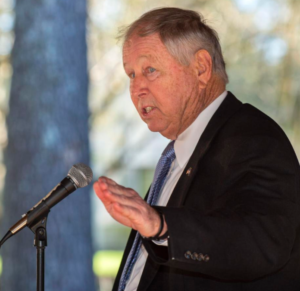
Louisiana State Rep. Steve Carter
“This literacy program was the final legislative initiative championed by Rep. Steve Carter before leaving the legislature in 2020,” said Kelli Bottger, American Federation for Children’s Regional Government Affairs Director. “Rep. Carter worked tirelessly throughout his career to ensure Louisiana’s children, regardless of their ZIP code or income level, had access to a quality education through school choice. His idea couldn’t come at a better time when far too many Louisiana children are dealing with significant learning loss due to the COVID-19 pandemic.”
The Louisiana program offers parents of struggling readers access to an annual $1,000 reading scholarship account, a type of education savings account that can be used for tuition and fees related to part-time tutoring, summer and after-school literacy programs, instructional materials and more.
Scholarship accounts will be available to public school students in grades K-5 who have reading difficulties which, according to the legislature, is about 160,000 students, and students in kindergarten through third grade who either read below grade level or are deemed “at risk” for reading difficulties.
The program also is designed to help fourth and fifth graders “who scored below mastery in English language arts on the state assessment in the prior school year” or were “recommended by an English teacher.”
“Louisiana students have struggled with literacy for decades,” Rep. Scott McKnight (R-Baton Rouge) said in April when he introduced the bill to the House Education Committee. “It’s time for literacy to become a priority in our state.”
Modeled after the Florida program, the Louisiana program includes some key differences. It doubles the scholarship amount and covers three additional grades, though the state is still searching for a way to pay for the program’s projected $159 million cost.
Florida’s program offers $500 per student in grades 3 through 5 who scored a performance level of 1 or 2 on the English Language test, with priority given to students who are classified as English Language Learners. The program pays for tuition and fees related to part-time tutoring, summer and after-school literacy programs, instructional materials and curricula related to reading or literacy.
Step Up For Students, which hosts this blog, administrates Florida’s Reading Scholarship Program.
Florida lawmakers expanded the state’s literacy improvement efforts when they approved HB 7011, which identifies and helps students who have deficiencies in reading by implementing voluntary pre-K through eighth grade screening and progress monitoring. HB 3, championed by House Speaker Chris Sprowls, R-Palm Harbor, gives free books for academically struggling K-5 students, with the goal of helping them overcome literacy challenges.
Sprowls, in promoting the new reading initiatives, said that while Florida has made amazing strides in reading in recent years, “it would take 230 years for every child in the state to read at grade level” at current progress levels.
Recent results from the Florida Department of Education show the average drop in third grade reading scores was 4 percentage points statewide. Overall, 54% of third graders passed the spring exams compared to 58% in 2019 when the tests were given before testing was canceled due to the pandemic.
About half of the 67 districts in 2021 had larger drops then the 4-point figure, the state data show.
According to information for parents prepared by the Department, third grade is when students who are behind in reading have more difficulty. Florida law says third graders who do not score at least a Level 2 on the state reading test will not be promoted to fourth grade.
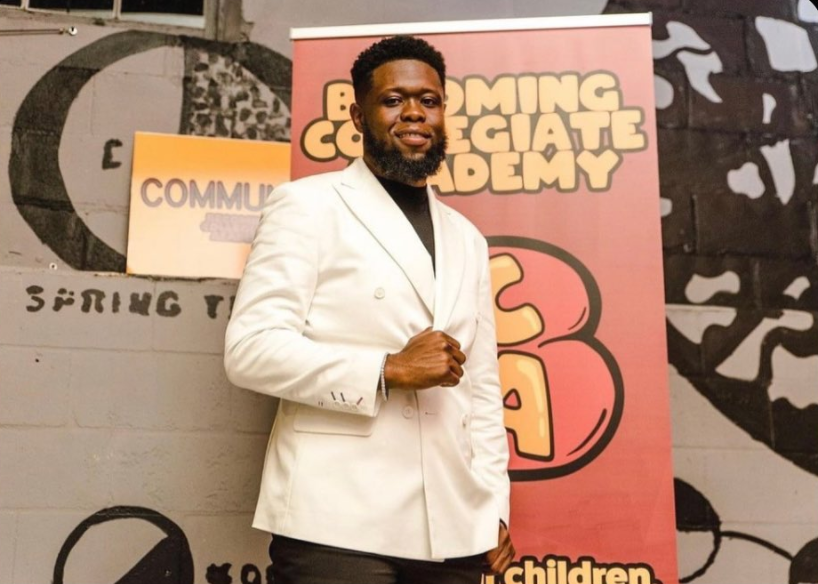
Cameron Frazier will bring his charter school experience to Becoming Academy, scheduled to open this fall in North Florida, which he modeled on the historically Black colleges and universities concept.
Cameron Frazier didn’t attend a historically Black college or university, but the veteran educator recognizes their power, thanks to one of his former bosses.
“During my work in Nashville, my principal was an HBCU graduate, and she was the poster child for HBCUs,” said Frazier a first-generation college graduate who earned his bachelor’s degree from the University of North Florida and a master’s in educational leadership and administration from Lehigh University. “She said they produce the most Black doctors, Black lawyers and the most Black professionals.”
That’s why Frazier is using the HBCU model to prepare the youngest learners in his north Jacksonville, Florida, community for admission to these high-profile colleges, whose graduates include Martin Luther King Jr. and Vice President Kamala Harris.
Becoming Collegiate Academy, which is slated to open this fall, is among the growing number of Black-owned schools opening across the nation as more states adopt education policies that allow greater parental choice.
“My inspiration kept coming back to HBCUs. I knew that was where excellence lies,” he said.
Frazier, 31 joined the Teach for America Corps in 2012 and spent three years teaching English at a district middle school before moving from Jacksonville to Nashville to teach third grade at Rocketship Elementary School, a charter school whose stated vision is to “eliminate the achievement gap in our lifetime.”
From there, he served on the team that brought KIPP charter schools to Nashville and was a founding assistant principal. Those experiences made him want to launch a school of his own aimed at helping to close the achievement gap for students of color. What prompted him to act sooner rather than later was a newspaper story he read about 34 children who had been shot or killed in his Jacksonville community in that one year alone.
“That broke my heart. That brought tears to my eyes,” he said. “That’s when I decided it was time to come home.”
Frazier, who also will serve as the school’s principal, worked with Duval County School District officials to get approval for Becoming Collegiate Academy. He said the authorizers strictly enforced all application rules but were fair as he sought to make his dream a reality.
“They were always very cordial and nice, but they always held the expectations high for me, and they made sure our charter application was exactly what it needed to be,” he said. “They were not going to cut corners, and they shouldn’t. They had high expectations and it was on us to reach them, and ultimately we did, because at the end of the day, we want to make sure we open up great schools for kids.”
Like many other charters, Becoming Collegiate Academy is using a slow-growth model, opening only to kindergarteners this fall, then adding a grade each year until it serves students in kindergarten through fifth grade. Frazier, who expects to start with 54 students, is leasing space at a church in north Jacksonville’s Norwood neighborhood but likely will look for a dedicated building as Becoming Academy expands. He hopes to serve 600 students once all grades are included.
A typical day will start with a personal greeting from staff as students arrive at school. After a schoolwide opening assembly, students will separate into their cohorts, each named in honor of an HBCU, where learning will begin. At both breakfast and lunch, Becoming Academy will participate in the federal school breakfast and lunch program.
Frazier, who is especially concerned with raising state reading scores, will devote twice the amount of time that school districts do, which is usually 90 minutes, to literacy instruction.
A study by 904orward.org, a nonprofit group that promotes diversity in Jacksonville, cited Florida Department of Education figures from the 2018-19 school year showing only 37% of Duval County third-graders passed Florida’s standardized English and language arts test compared with 45% of Hispanic students, 66% of white students and 74% of Asian students.
“An overwhelming number of Black kids are not reading on grade level,” Frazier said, describing the situation as “atrocious.”
Becoming Academy is an independent charter school as opposed to being part of a national network such as IDEA Public Schools or KIPP. Its board of directors include Audrieanna Burgin, a research scientist at Zearn, a nonprofit publisher of math curriculum, as well as an attorney, architect, engineer, and staffer for U.S. Rep. Al Lawson Jr., whose district covers a large swath of north Florida.
Frazier plans to draw on his experience KIPP and other schools to create the best environment to educate and empower children. The key to closing the achievement gap, he said, is to start as early as pre-school and kindergarten, which frequently is overlooked in many schools, where minority children are not expected to perform well – and are not celebrated when they do.
“They think, ‘I don’t feel like I’m smart. I don’t feel like I’m learning. I don’t get the things I need to be successful,’” he said. “I need to immerse them in the experience that is the HBCU culture so our kids can experience that as early as kindergarten and not have to wait until college. Education is the ultimate civil right of our generation.”

