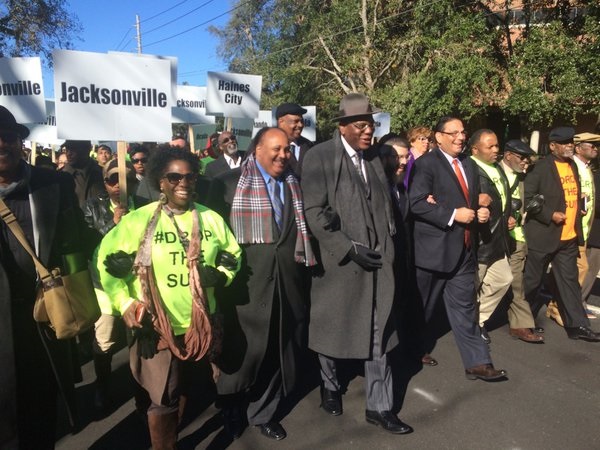
Martin Luther King III led a rally in January 2016 that drew more than 10,000 people to Tallahassee in support of education choice in response to a lawsuit brought by the Florida Education Association demanding that the courts shut down scholarship programs in the state.
Editor’s note: During the holiday season, redefinED is reprising the "best of the best" from our 2020 archives. This post originally published Oct. 14.
 Nearly two decades after Step Up For Students began awarding tax credit scholarships for lower-income students to fulfill their school choice dreams, the organization is marking another milestone: the funding of its 1-millionth scholarship.
Over the years, as the concept of education choice has evolved, the scholarship offerings managed by Step Up For Students have changed to fit families’ needs. Today, students can choose from a variety of offerings ranging from the original tax credit scholarship to a flexible spending account for students with special needs to scholarships for victims of bullying. There’s even a scholarship for public school students who need help with reading skills.
“I’ve said from the very beginning my goal was that someday every low-income and working-class family could choose the learning environment that is best for their children just like families with money already do,” said John F. Kirtley, founder of Step Up for Students, the state’s largest K-12 scholarship funding organization and host of this blog.
Kirtley started a private, nonprofit forerunner to Step Up For Students in 1998 and since then has experienced all the milestones and challenges leading up to the millionth scholarship.
At the beginning, “It was just me, and I had enough money to fund 350 scholarships,” recalled Kirtley, who can recite statistics about the scholarship program the way a baseball fan quotes facts and figures about a favorite player.
Soon after, he learned of a new national non-profit, the Children’s Scholarship Fund, started by John Walton of the famous retail family and Ted Forstmann, chairman and CEO of a Wall Street firm. Kirtley connected with that group, which was seeking to match funds raised by partners in different states for economically disadvantaged families to send their children to private schools of their choice.
“We hardly did any advertising at all,” Kirtley said. “It was just me walking around to churches and housing projects talking about the program.”
Truth be told, he didn’t need glitzy marketing. The program drew 12,000 applications in just four months, confirming what Kirtley already suspected: Parents of modest means wanted the best education for their children just as much as people who could afford to pay private school tuition or buy homes in desirable neighborhoods.
In 2001, Kirtley took his pitch to Gov. Jeb Bush, House Speaker Tom Feeney and Senate President John McKay, all of whom strongly supported the creation of the Florida Corporate Tax Credit Scholarship program. When the program, capped at $50 million, began awarding scholarships worth $3,500 in 2002, there were just 15,000 scholarship students. Joe Negron, who sponsored the bill while serving as a state representative and later supported scholarship expansion as a state senator, recalled the strategy he employed to get the bill passed.
“My best argument was that the liberal establishment also supported school choice – for their children, but not for families with modest means,” said Negron, who is now a business executive. “In addition, the personal stories from parents whose students were benefitting from the privately funded program were very powerful.”
High demand created wait lists, prompting lawmakers to raise the cap to $88 million in 2005. The next year, the award increased from $3,500 to $3,750. The state required students to take a nationally norm-referenced test to ensure accountability.
Families kept coming. By 2009, the cap stood at $118 million, with awards at $3,950. Despite the increases, the state’s Office of Program Policy Analysis and Government Accountability reported that the program had saved taxpayers $38.9 million in 2007-08.
Shortly after the program was renamed the Florida Tax Credit Scholarship, the first state-commissioned evaluation report showed students on the program in 2007-08 experienced learning gains at the same pace as all students nationally. Then in 2010, with bipartisan support, the Legislature approved a major expansion of the program. The bill allowed tax credits for alcoholic beverage excise, direct pay sales and use, and oil and gas severance taxes. The program also could grow with demand.
The Legislature returned again in 2014 to provide another significant boost in response to growing demand, prompting the Florida Education Association, the state’s largest teachers’ union, to bring a lawsuit demanding that the courts shut down the program. Education choice supporters responded with a rally that drew more than 10,000 people to the steps of the state Capitol, including Martin Luther King III, son of civil rights icon Rev. Martin Luther King Jr.
King told the crowd, more than 1,000 of whom had ridden buses all night from Miami to attend: “Ultimately, if the courts have to decide, the courts will be on the side of justice. Because this is about justice, this is about freedom—the freedom to choose what’s best for your family, and your child.”
The lawsuit failed in two lower courts and ultimately was rejected by the Florida Supreme Court in 2017.
The Tax Credit Scholarship was joined in 2014 by an attempt to give educational flexibility to students with severe special needs. Florida became the second state in the nation after Arizona to offer educational savings accounts to such students. Named the Gardiner Scholarship program in 2016 in honor of state Sen. Andy Gardiner, a strong supporter who shepherded the bill through the legislative process, the accounts could be used to reimburse parents for therapies or other educational needs for their children.
The state set aside $18.4 million for the program, enough for an estimated 1,800 students. A scant three months later, 1,000 scholarships had been awarded, and parents had started another nearly 3,700 applications. By 2019, the program was serving more than 10,000 students, making it the largest program of its kind in the nation.
Understanding the need for expanding the program so more families could participate, Gov. Ron DeSantis in 2020 approved a $42 million increase to the program, bringing the total allocation to nearly $190 million. The program which served 14,000 students during the 2019-20 school year, expects to serve approximately 17,000 students during the 2020-21 school year.
Choice programs also expanded in 2018 to help two groups of students dealing with challenges. The Hope Scholarship program became the first of its kind in the nation to offer relief to victims of bullying by allowing them to leave their public school for a participating private school. Reading Scholarship Accounts were aimed at helping public elementary school students who were struggling with reading.
Meanwhile, growing demand among lower-income families for Florida Tax Credit Scholarships prompted the Legislature to create the Family Empowerment Scholarship program in 2019. The program operates similarly to the tax credit scholarship program but is funded through the state budget.
Today, the five scholarships serve approximately 150,000 Florida students. As the number of students in the programs has grown, so have educational options available to them.
Charter schools, magnet schools, homeschools and co-ops, learning pods and micro-schools all address different needs. About 40% of students in Florida now choose an option other than their traditional zoned schools. In the Miami Dade district, the state’s largest, that figure is more than 70%.
Step Up For Students founder Kirtley sees a vital need to keep pace with that evolution and to eliminate the inequities these new programs can create for those of modest means.
“I have changed my stated goal to ‘Every lower-income and working-class family can customize their children’s education so they reach their full potential,’ ” Kirtley said, “just like families with more money do.”
 Editor’s note: Our critics often assert that giving lower-income families access to more learning options hurts district schools. Below we have assembled evidence showing that these claims are false. Empowering Florida’s lower-income families to access the best education options for their children does no harm.
COURT CASES
June 2015 Second Circuit Court decision in McCall v. Scott (Florida Education Association lawsuit against Florida Tax Credit Scholarship (FTC) program for low-income students)
Conclusion: Court determines that FEA’s allegations of FTC program causing harm to traditional district schools were insufficient to establish standing. Court offers an opportunity to amend complaint to include additional factional allegations to support their claim of harm. FEA declined the offer. Circuit Judge George Reynolds dismisses case with prejudice.
“… Whether any diminution of public school resources resulting from the Tax Credit program will actually take place is speculative, as is any claim that any such diminution would result in reduced per-pupil spending or in any adverse impact on the quality of education. The purported injury asserted here – the loss of money to local school districts – is necessarily speculative…(and) requires speculation about whether a decrease in students will reduce public school costs and about how the legislature will respond to the decrease in students attending public schools… Hence, any claim of special injury to any Plaintiff is speculative and conclusory.”
Link to decision: Second Circuit Court - McCall v. Scott
August 2016 Appellate Court decision in McCall v. Scott
Conclusion: The First District Court of Appeal upholds the lower court decision ruling that the Appellant’s claim that the FTC program creates “special injury” or harm to district schools is without merit.
“… The trial court correctly determined that Appellants lacked special injury standing because they failed to allege that they suffered a harm distinct from that suffered by the general public. Indeed, Appellants failed to allege any concrete harm whatsoever.”
“Appellants’ diversion theory is incorrect as a matter of law. A close examination of the statutory provisions authorizing the (FTC program) exposes the flaws under Appellants’ argument.”
“Further, even assuming that Appellants’ diversion theory was legally sufficient, Appellants’ allegations that the (FTC program) has harmed them are conclusory and speculative.”
Link to decision: First District Court of Appeal - McCall v. Scott
January 2017 Florida Supreme Court decision in McCall v. Scott
Conclusion: Court declines to hear the case, reaffirming First District Court of Appeal that there is no evidence showing that the FTC program harms district schools.
Link to decision: Florida Supreme Court - McCall v. Scott
FISCAL STUDIES
Collins Center for Public Policy 2007 Fiscal Analysis
Conclusion: The FTC program did not have a negative impact upon K-12 General Fund Revenues for public education for the three years studied (2002-2004).
“In fact, K-12 General Fund revenues increased over $2 billion during a three-year period while the state accrued $139.8 million in actual revenues by saving the difference between the value of the $3,500 scholarship and the value of K-12 per pupil revenue. These savings would allow the state to increase per pupil spending by an average of $17.92 per year for the 2.6 million children in the public schools during this period.”
Link: Collins Center for Public Policy Updated Fiscal Analysis
OPPAGA December 2008 and March 2010 studies examined the fiscal impact of FTC scholarships
Conclusion: No evidence that the FTC program adversely impacts the state budget or school district budgets.
From December 2008 report: – “…in Fiscal Year 2007-08, taxpayers saved $1.49 in state education funding or every dollar loss in corporate tax revenue due to credits for scholarship contributions. Expanding the cap on tax credit would produce additional savings if there is sufficient demand for the scholarship.”
From March 2010 report: “For Fiscal Year 2008-2009, OPPAGA estimates that the scholarship program saved (a net of) $36.2 million.”
Links: OPPAGA December 2008 Report; OPPAGA March 2010 Report.
Florida Revenue Estimating Conference 2012 Analysis of FTC scholarship tax credit cap increase
Conclusion: Fiscal impact created by increasing scholarship cap is offset by the savings of the cost of the scholarship vs. per-pupil FEFP dollar amount.
Line 55 of the analysis shows net FEFP savings for 2012-13 as $57.9 million, $57 million for 2013-14, $48.8 million for ’14-15, and $36.1 million for ’15-16.
Link: 2012 Florida Revenue Estimating Conference Analysis
EdChoice 2016 Tax-Credit Scholarship Audit (Martin Lueken)
Conclusion: FTC program saved taxpayers between $372 million and $550 million since its inception in 2003 (as of 2014), or $1,100 to $1,700 per scholarship recipient.
Link: 2016 EdChoice Tax-Credit Scholarship Audit (Florida pg. 39)
ACADEMIC OUTCOMES
Urban Institute 2019 report by Matt Chingos on effects of private school choice on college enrollment and graduation.
Conclusion: Several findings in the study. Chingos compared college enrollment and graduation outcomes of scholarship students with a group of similarly disadvantaged students in public schools.
Scholarship students up to 45 percent more likely to get college degree.
FTC students were 11-20 percent more likely than similarly disadvantaged students in public schools to earn a bachelor’s degree. Those who were on the scholarship for at least four years were 45 percent more likely to earn a degree.
FTC students were 16 to 43 percent more likely than similarly disadvantaged students in public schools to attend a four-year college. Those who were on the scholarship for at least four years were 99 percent more likely to attend college.
FTC students were 12 to 19 percent more likely than similarly disadvantaged students in public schools to attend either a two OR four-year college. Those who were on the scholarship for at least four years were 38 percent more likely.
“The available evidence indicates that FTC enrolls students who are triply disadvantaged. They have low family incomes, they are enrolled at low-performing public schools (as measured by test scores), and they have poorer initial test performance compared with their peers.”
Link to study: The Effects of the FTC program on College Enrollment and Graduation - An Update
Original 2017 study: The Effects of Statewide Private School Choice on College Enrollment and Graduation
David Figlio (Northwestern) and Cassandra Hart (UC-Davis) June 2010 academic study examined the competitive impact of FTC on district school achievement.
Conclusion: Found that the academic achievement in district schools most impacted by tax credit scholarships increased.
“Our results indicate that the increased competitive pressure faced by public schools associated with the introduction if Florida’s FTC Scholarship Program led to general improvements in public school performance.”
Link to study: Competitive Effects of Means-Tested School Vouchers
In 2006, the Florida Legislature required that every scholarship student in grades 3-10 take a nationally norm-referenced test approved by the Department of Education every year. Those test scores are reported to a research team under contract with DOE to write an annual evaluation. Evaluations are currently done by researchers at the Learning Systems Institute at Florida State University.
Conclusion: FTC students make roughly the same annual learning gains as students from all income levels nationally. This is despite the reality that the FTC students are typically the lowest-performing students from the lowest-performing public schools in their area, with an annual household income of $26,578 for a family of four. Fifty-three percent of all scholarship students are from single-parent households. (NOTE: Cassandra Hart October 2011 study examining characteristics of scholarship participating students can be found HERE.)
From the 2011-12 report: “There exists compelling causal evidence indicating that the FTC Scholarship Program has led to modest and statistically significant improvements in public school performance across the state. Therefore, a cautious read of the weight of the available evidence suggests that the FTC Scholarship Program has boosted student performance in public schools statewide, that the program draws disproportionately low-income, poorly-performing students from the public schools into the private schools, and that the students who moved perform as well or better once they move to the private schools.”
Links to Learning Systems Institute’s annual assessments: 2008 (baseline report), 2009, 2010, 2011, 2012, 2013, 2014, 2015, 2016, 2017, 2018, 2019.
ADDITIONAL INFORMATION
In May 2014, former state Senator Nan Rich claimed $3 billion over the subsequent five years “…will be taken out of our public schools and be put into vouchers.”
Conclusion: The statement was analyzed by Politfact in June 2014. They rated the claim Mostly False.
“Based on the program’s size, it’s possible that it could fund a voucher program in the ballpark of $3 billion over the next five years. But there’s no guarantee that money would otherwise have gone to public schools. And, private school vouchers tend to cost less than what it costs to educate a child in public schools, which complicates how much money taxpayers would pay if the children in private schools instead went to public schools.”
Link to Politifact analysis: Politifact on Sen. Rich's voucher claim
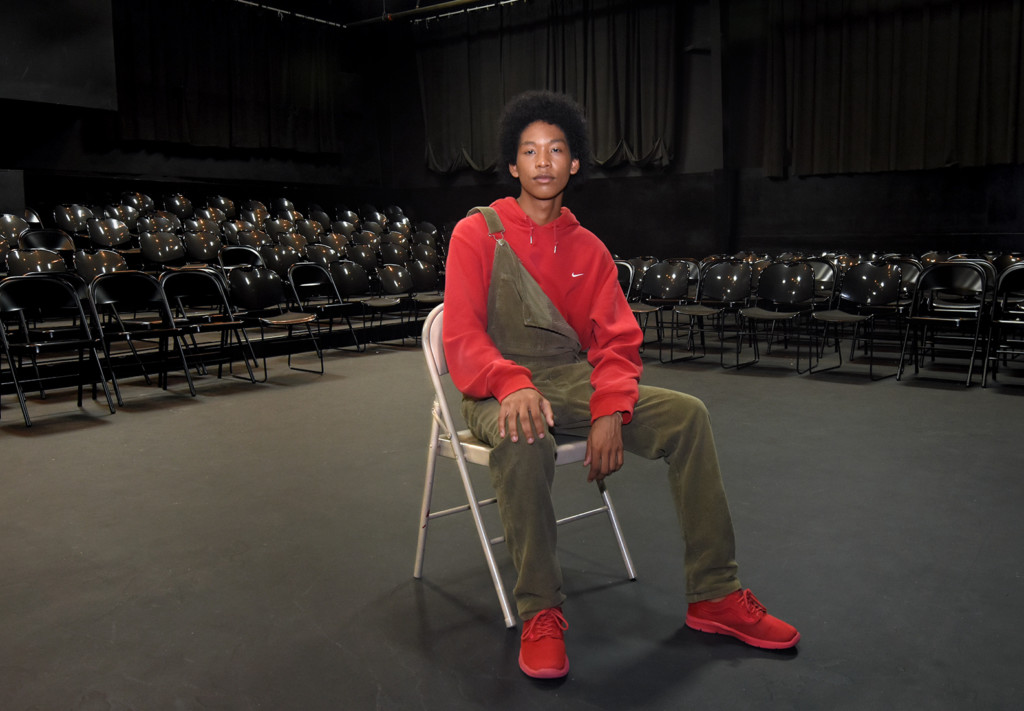
Elijah Robinson was relentlessly bullied in his district school because of his sexual identity but got back on track academically and emotionally thanks to a Florida Tax Credit Scholarship and a Jacksonville private school where he found a safe haven. PHOTO: Lance Rothstein
Editor’s note: This commentary by Brad Polumbo appeared Sunday in the Washington Examiner. You can learn more about Elijah Robinson, the student referenced in the commentary, here.
Elijah Robinson attempted suicide as a teenager. Why? Well, as a queer and mixed-race student, he faced vicious bullying in his public school.
Thanks to a Florida program, he was able to switch schools and attend a private Christian school where he did not face bullying or discrimination. Students at private schools are statistically less likely to have bullying problems. Robinson later concluded, “If I had stayed at my previous school … I honestly think I would have lost my life.”
A new study confirms that Robinson’s experience is not an outlier. It shows that alongside reopening schools, which science shows are not sources of significant coronavirus transmission, school choice policies can help heal the mental health crisis plaguing youth.
This is of crucial importance because adolescent suicide and mental health problems were already major issues before the coronavirus pandemic. Suicides among those aged 10 to 24 spiked 56% from 2007 to 2017, becoming the second-highest cause of death among teenagers and young adults.
Now, with lockdowns and school closures sapping away their social bonds and quality of life, we have witnessed a disturbing rise in suicide and mental health issues among young people. The Centers for Disease Control and Prevention reported that 1 in 4 young people contemplated suicide during a one-month period over the summer amid the first pandemic peak and harsh lockdowns.
School choice programs can help alleviate this pain and suffering by allowing more young people the educational opportunities that best fit their needs. These policies include the expansion of charter schools and tuition voucher programs that provide low-income families with money to attend private schools.
With those options, families don't have to remain trapped into sending their child to the local public school by default. So, for students who face bullying or are not at schools that suit their needs, they can go elsewhere. Families who like their public schools and students who are succeeding there are, of course, free to choose to stay put.
The new study shows the benefit that choice brings to those who need it. Authored by the Reason Foundation’s Corey DeAngelis and economist Angela Dills, it provides empirical backing to the intuitive conclusion that school choice can reduce suicide among teenagers.
It concludes that “the estimated effect of a charter school law translates to about a 10% decrease in the suicide rate among 15 to 19-year-olds.” It also finds that 30-year-old adults who had attended private school were 2% less likely to report having a mental health condition.
Why?
“It’s likely that private schools face stronger competitive pressures to provide a safer school environment and improve mental health if they want to remain open,” Dills explained. “Public schools, on the other hand, are more likely to be burdened with government regulations that make it difficult for them to control discipline policy and create strong school cultures.”
These results only supplement the evidence showing that school choice improves test scores and family satisfaction.
The lesson here goes beyond how school choice improves youth mental health, as important as that may be. This study offers yet another demonstration that public policies that embrace competition and choice will always outperform those that force one-size-fits-all solutions.
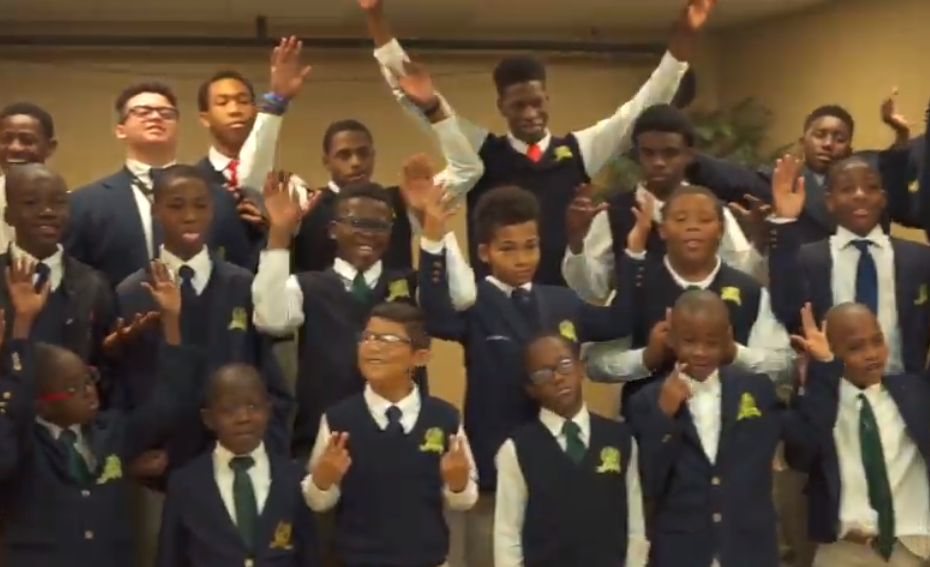
Launched in 2013, Piney Grove Boys Academy in Fort Lauderdale is one of roughly 2,000 private schools that participate in Florida’s array of choice scholarship programs, including the Florida Tax Credit Scholarship.
The enrollment of more than 100,000 participants in the Florida Tax Credit Scholarship program for the 2020-21 academic year garnered the No. 2 spot on the Heritage Foundation’s list of this year’s most important education choice stories.
The year-in-review piece points out that 100,008 Florida students were enrolled in the tax credit scholarship program according to the Florida Department of Education, making it the first school choice program to move beyond the 100,000 mark.
Even as the coronavirus pandemic presented new challenges for students and families, the foundation praised policymakers and families for responding quickly with innovative solutions that helped advance education choice.
You can view other stories on the foundation’s “best of” list at https://www.heritage.org/education/commentary/8-education-choice-wins-2020.
 Editor’s note: Isabella Garcia, a senior at La Progresiva Presbyterian School in South Florida, wrote this essay as part of her college application. Located in a working-class section of Miami, La Progresiva serves 622 students who qualify for Florida Tax Credit Scholarships. Isabella’s essay came to redefinED unsolicited and is being published with her permission. You can hear more from La Progresiva students here.
The most valuable lesson I have learned while in high school is to be charitable. I have attended La Progresiva Presbyterian School (LPPS) for nearly thirteen years. Yes, this is a private school, and no— my single mother is not rich. I have been fortunate enough to attend this school because of charity – the kindness of others.
I, along with many others, attend this school on the Step Up For Students low–income scholarship. Were it not for this act of charity, I might not have the aspirations I do now. Being the child of immigrants heavily affected my academics; my mother pushed me to do my best in school because she wanted me to have the future that was out of reach for her.
This scholarship that I was awarded and was able to use at LPPS was a ray of hope for my family. Although I may have been too young to realize the opportunity I was provided, it has propelled me to never take anything for granted. This form of charity has given my family and me this educational opportunity, opening the possibilities of a better life.
These multi-million dollar companies, through a charitable tax credit, may have provided what seemed to them an insignificant donation, but through their charity have provided me with opportunities that otherwise would not have been available. Throughout my thirteen years at LPPS, I realized that it was imperative for me to be a part of the ripple effect.
Different missions projects and community service opportunities at LPPS opened my eyes to the impact that charity has on a community. When one of the students was diagnosed with cancer, the entire school came together to fundraise and assist her family, even after her passing. I have learned that being part of something bigger than myself will produce an impact that will resonate.
In every aspect of my life, I have gained the understanding that you must love your fellow man as yourself. Through the giving of my time, just like the giving of the donations to produce these scholarships, I have learned how essential charity is to produce a society, in which kindness can abound.
The charity I have received has inspired me to participate in acts of goodwill, such as the Susan G. Komen ``More than Pink Walk”, which cemented my desire to dedicate my life to paying it forward. Personally, escorting the last participant in the walk - who was currently battling cancer herself and required a walker - was one of the greatest honors of my life.
This event played a pivotal role in my choice of career; seeing the impact doctors have on the lives of these women has motivated me to pursue a career as a doctor. Science has always been an interest of mine and a career in which it can be used to help others will fulfill the thirteen-year lesson of charity I have been given.
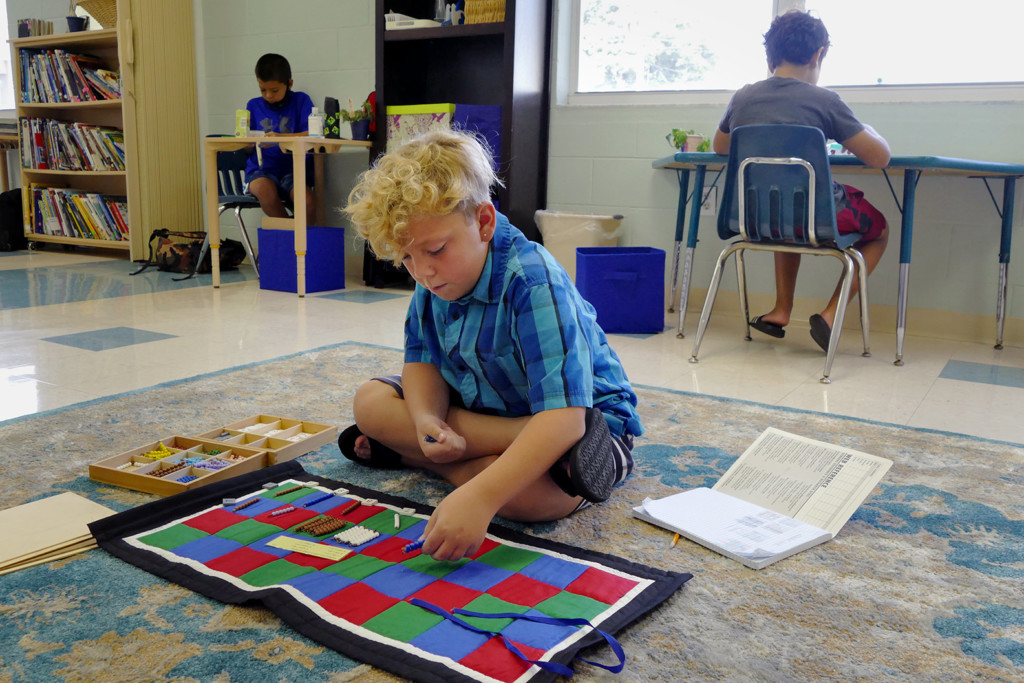
Parker Hyndman, who attends Montessori by the Sea in St. Pete Beach, Florida, is described by the assistant to the head of school as “an old soul” with “a big heart” who clicked immediately with teachers and classmates at the private school he attends on a Hope Scholarship. PHOTO: Lance Rothstein
Editor’s note: To hear Tamara Arrington and her son, Parker, tell the story in their own words, watch the video at the end of this post.
The other student was older and bigger. But Parker, a 35-pound “runt” of a first grader, as his mom described him, didn’t hesitate. When the other student called his friend a racial slur on the bus, Parker piped up: “Don’t call her that.”
Parker felt proud for sticking up for his friend. But daring to do so tripped off a chain of events that would plunge him and his mom, Tamara Arrington, into a year-long nightmare. Some of the other kids put Parker in their sights. When Arrington asked them to stop, one of their parents called police. Eventually, Arrington sought relief in court.
“It was a very dark tunnel for us,” said Arrington, a personal chef and published author. “I had no way to protect my son. I had no way to make sure that my son was getting the education that he needed.”
Hope arrived unexpectedly when Arrington stumbled on to the existence of the Hope Scholarship, an education choice scholarship that Florida lawmakers created in 2018 for students like Parker. Having that option, she said, changed everything.
“Our light came in the form of a Hope Scholarship,” she said.
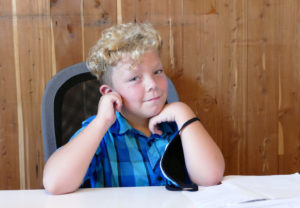
Parker Hyndman. PHOTO: Lance Rothstein
Arrington and her son moved to the Suncoast six years ago. For more than a year, the school she handpicked, an A-rated elementary near some of America’s sweetest beaches, couldn’t have been more perfect. Parker excelled socially and academically. Arrington joined the PTA.
When Parker got to first grade, he wanted to ride the bus. Arrington said okay, thinking it would boost his independence. But after Parker stood up to the other kid, things went south.
A group of students on the bus started making fun of his name. (Parker’s last name is Hyndman, so they called him variations on “Hiney.”) They made of fun of his teeth. (Some of his baby teeth were discolored after a tumble down some stairs.) They threw paper balls and candy wrappers at him.
Nearly every day, it was something. Arrington said she went to school officials repeatedly, and was assured repeatedly things would get better. But they didn’t get better – and Parker went from loving school to “despising it.”
“I no longer had that smiling little kid that got off the bus and was happy to see me,” Arrington said. “I had a child in tears, in a rage, just so upset that sometimes he … couldn’t even form words to tell me or any of the other mothers at the bus stop what had happened.”
Arrington felt she had no choice but to take matters into her own hands, but the conflict escalated in ways she never would have imagined. One time, she told one of the students, while at the bus stop with other parents, to please stop picking on her son. That night she got a call from police, who said they got a call from the student’s parent. Another time, she did the same thing – only to have police show up at the bus stop. Arrington now had to respond to allegations that she was the bully.
Meanwhile, Parker started getting frequent headaches and stomach aches. At one point, Arrington took him to the emergency room. The doctors couldn’t find anything physically wrong. They asked, “Is Parker under a lot of stress?”
In late 2018, the stress boiled over. At a community event, there was an incident involving Parker and one of his friends and one of the same students on the bus. Afterwards, Arrington went to court and was granted a temporary restraining order. Two weeks later, a judge extended it three months, and urged the other parent to “get professional help” for the other child.
At school, things still weren’t right. Arrington said the school was upset because now it had to make special accommodations to keep the students separated. There was still too much tension.
She started thinking more about a potential solution she learned about a few months prior. She said she was Googling bullying prevention when an article about the Hope Scholarship popped up. Arrington thought it was too good to be true. But in the spring of 2019, she applied.
She and Parker were at the beach at sunset when she saw the email from Step Up For Students saying he had been awarded. Moments later, Parker said, a pod of dolphins started leaping out of the water.
“Definitely a sign,” he said.
“I just felt this wave of relief coming off of me,” Arrington said.
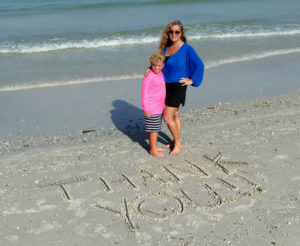
Parker Hyndman and his mother, Tamara Arrington. PHOTO: Lance Rothstein
Arrington began checking out other schools. She wanted a place where Parker could find peace. A friend suggested Montessori by the Sea, overlooking the sand dunes and sea oats in St. Pete Beach. Parker sat in on classes for two days – including yoga on the beach – and loved it.
“When I was at the other school, I felt like okay, I’m going into the worst day in my life repeatedly,” said Parker, now a fourth grader. “But here, I’m excited to get out of bed to come to the beach at my own school. And I’m excited to learn about fun stuff. Definitely.”
Christina Warnstedt, the assistant to the head of school, said Arrington told them about the trauma Parker had endured. But there was never any trepidation about enrolling him. “It was more like, ‘This could be the answer for him,’ ” she said.
And it was. Warnstedt described Parker as “an old soul” with “a big heart” who clicked immediately with teachers and classmates. He became a comforter to another student who was experiencing emotional challenges. “He’s just a light,” she said.
Arrington called the school a hidden gem “tucked away in this little bubble of happiness.”
“I have no doubt that every morning when I drop off my son at school,” she said, “he’s going to come home a better human being.”
Arrington said she’s not sure what would have happened had the scholarship not made that possible.
“There’s no better word than to say that it gave Parker hope for his future. And it gave me hope,” she said. “Making sure that as a mother, that I was making the right decisions for my son. And that he would thrive. Thrive in school. Thrive in life. Thrive. That’s what I wanted. So, the Hope Scholarship truly gave us hope.”
[penci_video url="https://www.youtube.com/watch?v=m9H1PWT7Vew" align="center" width="750" /]
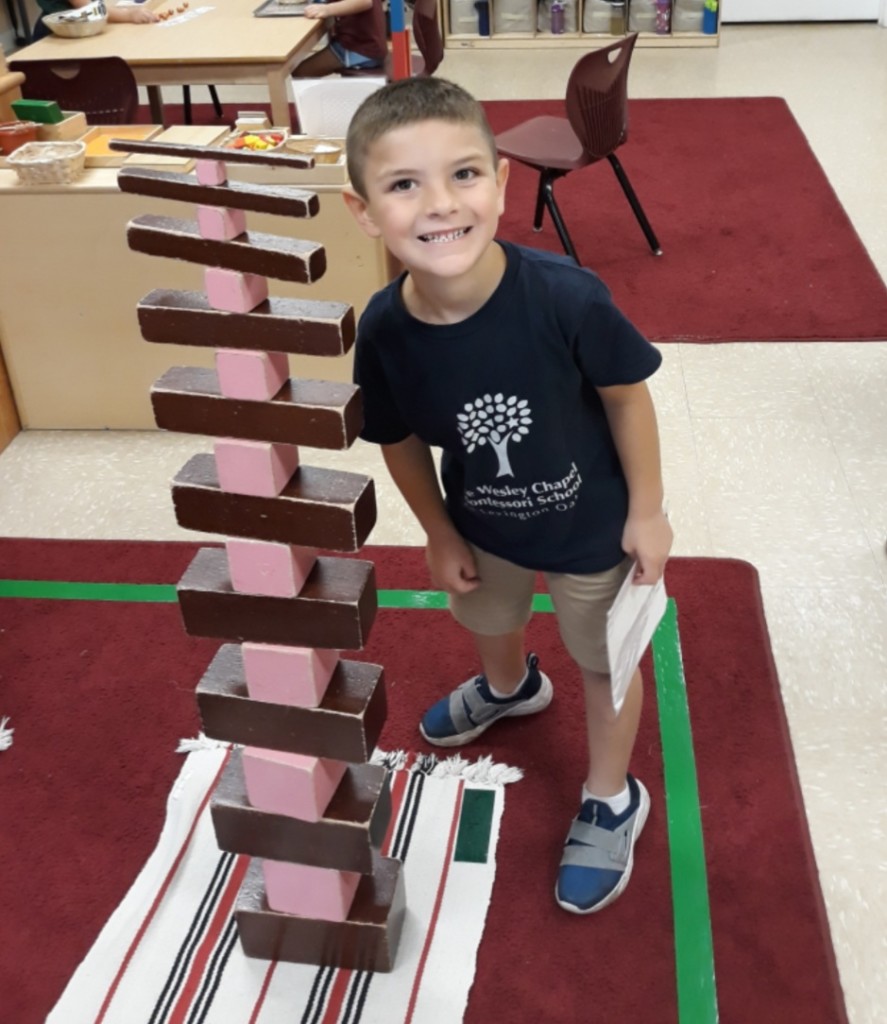
Brody Cholnik's mother, Nicole, chose to send the 5-year-old to a private school so she could retain control of her choice to decide if he should repeat kindergarten. New legislation could put that choice in the hands of public school families.
When Nicole Cholnik learned earlier this year that her 5-year-old son’s district school principal would get the final say in whether he would be allowed to repeat kindergarten, she took matters into their own hands and enrolled him in a private Montessori kindergarten program.
“We thought out of the box,” said Cholnik, who was dismayed to learn that she and her husband would have no say next year in what would happen to Brody, who had struggled during online pre-kindergarten when the coronavirus pandemic began in the spring.
But a bill filed by state Sen. Lori Berman, D-Boynton Beach, would prevent other parents from having to pay out of pocket for private school if they disagreed with a principal’s decision. SB 200 would let parents decide whether their children need to repeat a grade next year.
The bill follows through on an announcement that Gov. Ron DeSantis made last spring that parents would be allowed to hold their children back a grade in the fall if they had concerns about learning losses from online instruction.
DeSantis did not issue an executive order, and later guidance from Florida Department of Education Commissioner Richard Corcoran softened the governor’s stance by recognizing that while parents have a right to provide input, the final decision regarding student retention rests with school officials.
Berman’s bill would secure that authority for parents, which came as welcome news to Cholnik.
Private kindergarten has alleviated stress for the family and has allowed Brody’s teachers to pursue different approaches to find out the best method of education for him, she said. Most important, it ensures that she and her husband will be the ones to decide whether he begins the 2021-22 school year at his district school as a first-grader or a kindergartener.
“We know our kids best,” she said. “We should have a say in our kids’ future.”
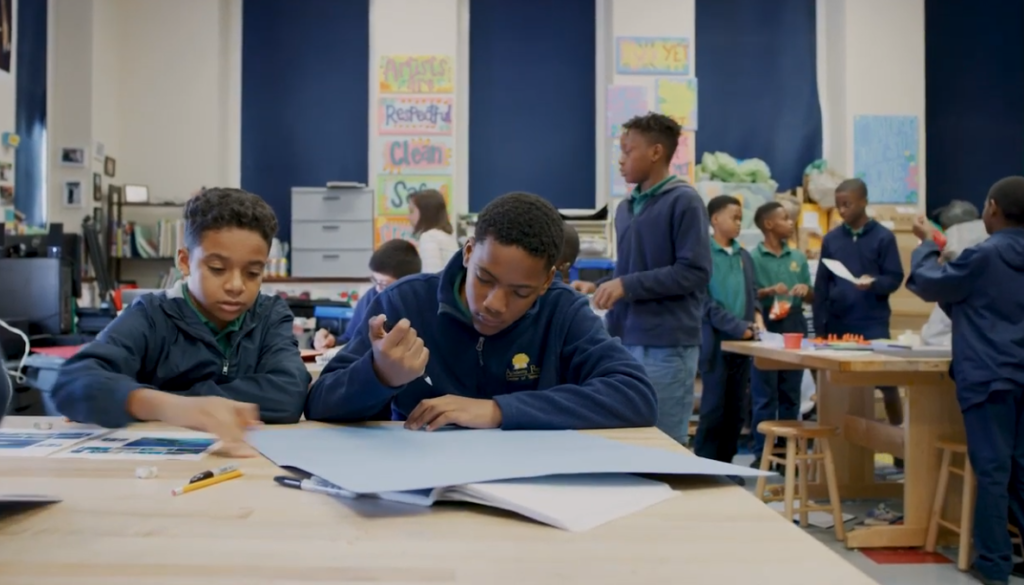
All students at each of three Academy Prep campuses -- St. Petersburg, Tampa and Lakeland, Florida -- attend on state scholarships administered by Step Up For Students.
Americans donated more than $450 billion to charities last year. Of that amount, $49.5 billion went to the top 100 charities, according to Forbes Magazine’s America’s Top Charities rankings.
Step Up for Students, a scholarship granting nonprofit that administers five school choice scholarship programs in Florida, ranked as the 21st largest nonprofit in America. Step Up, which raised $618 million in private donations last year and hosts this blog.
Step Up’s scholarship programs include the Florida Tax Credit Scholarship for lower-income and working-class students, the Gardiner Scholarship for students with unique abilities, the Hope Scholarship for victims of bullying and harassment, the Reading Scholarship for public school students struggling with reading and literacy, and the Family Empowerment Scholarship for lower- and middle-class students.
Step Up’s goal for the fiscal year 2021 is to raise $700 million to fund the Florida Tax Credit and Hope Scholarship programs. The Gardiner Scholarship, Reading Scholarship and Family Empowerment Scholarship programs are funded by the Florida legislature, though Step Up advertises these scholarships, processes applications and helps manage accounts for Gardiner and Reading scholarship families.
Since offering the first scholarships during the 2002-03 school year, Step Up has awarded scholarships to more than 1 million students. The organization served more than 150,000 students during the 2020-21 school year.
 On this episode, Tuthill talks with the principal of Wellmont Academy, a faith-based private school in St. Petersburg, Florida, that serves traditional grade levels – with a twist. While some students participate in in-person instruction two or three days a week, others attend in person five days a week, depending on the needs and preferences of each family.
Marolf discusses how her experience with her son’s dyslexia led her to start an untraditional school of the type now growing in popularity in Florida and nationwide. She and Tuthill also discuss the day-to-day management of a hybrid school like Wellmont, how longtime homeschool families have adjusted to a different schedule, and policy changes that are needed to give families more flexibility in spending their education dollars.
"As many negative things have come from the pandemic, I think this has definitely been a positive. It is blowing wide open the concept of how we educate our children best. Not everybody fits the same mold."
EPISODE DETAILS:
· How a small homeschooling group grew into a popular hybrid school
· How scheduling and curriculum work for students at the same grade level but on different schedules
· The concept of “assisted learning rooms” where students operate in small groups with teachers present to guide them
· How Florida’s education policy needs to change to accommodate expansion of innovative school models like Wellmont Academy
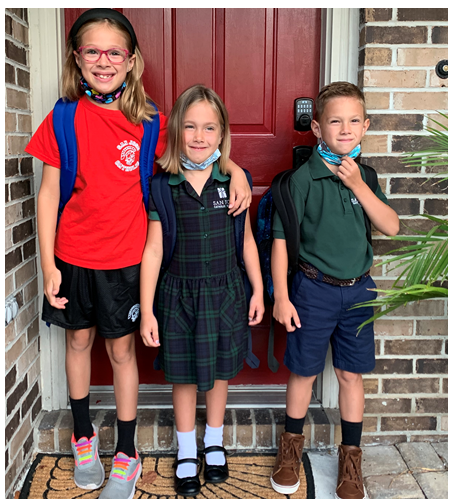
Eight-year-old Grace Peters, her sister, Stella, 5, and her brother, Colton, 6, attend San Jose Catholic School in Jacksonville on state scholarships.
While Catholic school enrollment in Florida declined for the second straight year, newly released figures showing an increase in the number of families using state scholarships to send their children to these schools may be the reason the schools escaped the precipitous declines plaguing Catholic schools nationwide.
Overall, scholarship use among Catholic school families increased by 2.1%. Preliminary figures on Catholic school enrollment released by the Florida Conference of Catholic Bishops shows the number of students receiving the Family Empowerment Scholarship soaring from 1,787 in 2019 to 5,040 in 2020.
 Florida Catholic school enrollment yearly comparison and growth over time
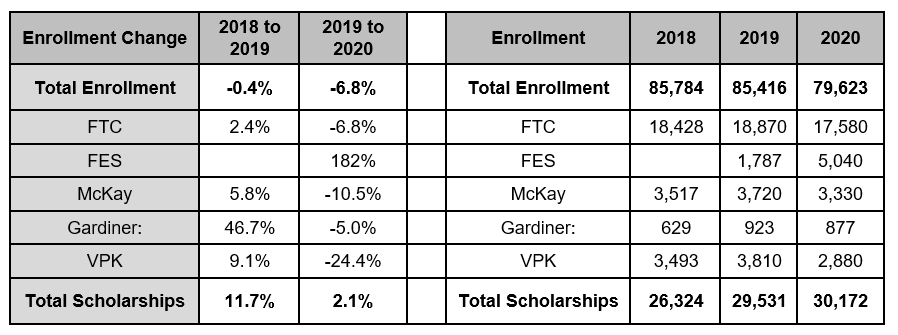 Florida Catholic school state scholarship figures 2018-2020
“Families are looking for more flexibility and access to diverse schooling options to keep their children safe and well educated during this pandemic,” said Doug Tuthill, president of Step Up For Students, Florida’s largest K-12 scholarship organization and host of this blog. “That’s why we are seeing a surge in demand for scholarships, such as the Family Empowerment Scholarship.”
Tuthill added: “Education choice programs will continue to grow for the foreseeable future. Families like having access to more learning options for their children.”
A significant amount of the growth in scholarships, Tuthill speculated, is due to parents of kindergarteners seeking a safer environment for their children during the pandemic while trying to maintain a high-quality education. The pandemic’s impact on family finances also may have played a role in scholarship growth, he said.
“I suspect there has been a lot of pressure on families who were private pay,” he said.
Count Joe Peters and his wife, Sarah, among those who felt that pressure. Peters, a 36-year-old father of four children ranging in age from 8 years to 18 months, lost his income when the pandemic wiped out the event planning and management business he co-owns. Though the family was able to make ends meet for a few months with income from events held before pandemic-forced cancellations, the threat of having to take their children out of San Jose Catholic School in Jacksonville, which they knew and loved, caused many sleepless nights.
“That was a trying time,” said Peters, who attended San Jose and graduated from Bishop Kenney Catholic High School in Jacksonville. The situation became so dire that the family considered moving to his father-in-law’s Alabama hometown so the kids could attend district schools there and still be near relatives.
“Just the thought of telling our kids they wouldn’t be able to return to a place they loved so much was heartbreaking,” Sarah Peters said. The idea of her young children having to move to a new town, adjust to new teachers and make new friends while everyone’s faces were covered with masks was “frightening to me,” she said.
Then a family member told the family about the Family Empowerment Scholarship program. They applied, and their children were awarded full scholarships for the 2020-21 school year.
“It brought tears to our eyes,” Joe Peters recalled. “That was such a relief knowing that our kids would not be put through any kind of drastic change during this global pandemic.”
Catholic school leaders such as Michael Barrett, associate for education for the Florida Conference of Catholic Bishops, credit state scholarship programs for allowing Catholic schools to remain open, providing a high-quality, faith-based education for families dealing with pandemic-induced anxiety.
“The Family Empowerment Scholarship is a program true to its name,” Barrett said. “Even pre-pandemic, the rising costs of private school tuition coupled with increased costs of living often made it difficult for middle-income families to provide a Catholic education for multiple children.”
Barrett said his organization hopes state lawmakers will expand the Family Empowerment Scholarship to more students by eliminating the requirement that students in first through 12th grades first attend a district school to qualify for the program. (Because the Peters' youngest child was entering kindergarten, the two older children were also eligible for Family Empowerment Scholarships, according to state rules.)
“Parents are the primary educators of their children and should have the opportunity to educate their children as they see fit,” he said.
Joe and Sarah Peters’ said they are relieved that at their three children to continue attending the school the family has always known and loved.
“We like the values that are being taught here,” Joe Peters said. “We know the community, and the community knows us.”
Peters also found his own lifeline at San Jose as a long-term substitute Spanish teacher and cross country/track coach.
“I am talking to you from my desk at school,” he said. “I am beyond grateful.”

