
Miami-Dade Superintendent Alberto Carvalho reacts to the award announcement.
More Broad Prize coverage. As we noted yesterday, the Miami-Dade school district won this year’s Broad Prize, which goes to the urban district with the most academic progress. More from the Orlando Sentinel, Christian Science Monitor, Associated Press, Education Week. The Palm Beach school district was a finalist, which is also impressive. All this is more reason to routinely compare achievement data district by district in Florida. Also worth noting: Miami-Dade is a poster child for the new definition of public education, with a broad menu of learning options and huge numbers of parents embracing them.
Charter school issues in Volusia. The Volusia school board approves improvement plans for two F-rated charter schools, reports the Daytona Beach News Journal.
PTA doesn’t like it. The Florida PTA pans the Board of Education’s decision to set steeper improvement goals for low-income and minority students, reports the Gradebook blog.
More on Amendment 8. The Tampa Bay Times gets credit for going into detail about the legal case that’s at issue here – a case that has nothing to do with vouchers. ICYMI, our take on Amendment 8 here and here.
So the Democrat supports vouchers? In this state senate race in Central Florida, yes, notes the Orlando Sentinel.
Florida Gov. Rick Scott wants a summit to "discuss ways to remove barriers to choice options in low performing areas," according to a draft of his education plans for the next legislative session. Posted on the Gradebook blog this morning, the draft offers a few more details about the governor's proposals than today's story did, but not much. Page 5 deals with school choice, and includes these pieces:
Incentives for educational choice options
Choices in education are critical to ensuring that every student has access to high quality learning opportunities that will prepare them for college and careers. Florida has partnered with the Charter School Growth Fund to develop and support high quality operators that can open new charter schools and establish turnaround options for chronically failing schools in high need areas. To ensure all parents and students have the ability to choose what is right to them, Florida should also remove any enrollment caps on existing charter schools, so that results and capacity can determine enrollment. This flexibility also comes with a responsibility for Florida to work to make sure that all charter schools participate in the school grading system that has made Florida a leader in educational opportunity. To further the state's investment in choice, Governor Scott will be asking stakeholders to come together for a Choice and Competition Summit to discuss ways to remove barriers to choice options in low performing areas. (more…)
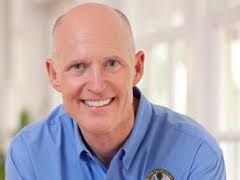 Rick Scott’s ed plans. Charter school expansion is a plank in Gov. Scott’s education plan for the next legislative session, but this exclusive Tampa Bay Times story on it doesn’t offer much detail. Here’s the main part that touches on school choice: The plan includes “lifting enrollment caps on charter schools, removing barriers to choice options in low-performing areas and letting school districts operate their own "charter innovation schools. ‘Our local school districts are going to keep getting better if we give them the authority to do it,’ Scott said.”
School grades work. In this op-ed for The Oklahoman, former Florida education commissioner Eric J. Smith gives Oklahoma kudos for adopting a school grading system. It worked in the Sunshine State, he said, particularly for the kids who needed the most help: “The biggest winners in Florida have been low-income, minority students. Schools that had long failed these students were exposed. Parents were given options to move their children to other schools. And when that happened, poorly performing schools could no longer be ignored or tolerated.”
Op-ed got it wrong on vouchers. Lincoln Tamayo, who heads the highly regarded Academy Prep private schools in Tampa and St. Petersburg, writes in response to a recent op-ed in the Tampa Bay Times that suggested vouchers don’t come with enough accountability.
Florida Virtual School in Education Week. In a story about blended learning. You’ll need a subscription to see the whole thing, but here’s a taste: “Forty-four districts in Florida have now put in place FLVS hybrid or blended learning models, called Virtual Learning Labs, said Tania Clow, a spokeswoman for the FLVS. The virtual school launched the blended programs during the 2010-11 school year, with 152 Virtual Learning Labs across the state. The number has grown this school year to 314, Ms. Clow said. Face-to-face interaction includes the weekly teacher visits, the facilitator, and frequent visits from an FLVS specialist in blended learning who troubleshoots school issues.”
 Jeb Bush's Foundation for Excellence in Education now has a blog.
The EdFly Blog. launched last week, is written by Mike Thomas, a former Orlando Sentinel columnist. For years, Thomas was one of the few journalists in Florida to report the positive impact of the big ed changes here. Here's an excerpt from his introductory post today:
The more I learned, the more I understood that reform was not a plot to destroy public schools.
It was a plot to ensure that children who had long been neglected by education bureaucracies finally got a fair shake.
I saw schools I never knew existed on the front page because they received F’s from the state. And then I saw district officials react accordingly, pouring resources into them. A few years later the same schools appeared on the front page again, this time with beaming teachers and students celebrating A’s.
I saw the reading scores of low-income kids trending up and the achievement gap trending down.
From that point on, I could not write enough about the reform movement.
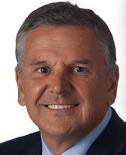
Chartrand
Florida is a national leader in expanding school choice. And the state's new top education official doesn’t see the momentum slowing, especially with low-income children.
“The train has left the station on school choice,” Gary Chartrand, 58, told redefinED by phone this week - his first media interview since being elected chair of the Florida Board of Education on Friday.
“I often say that freedom is abundant in America but it’s not universal. When you’re stuck in a broken system, and you’re poor, and you’re full of despair, and you only have one choice, and that choice happens to be an F school, that’s not freedom. And so I think the school choice movement is bringing more freedom, especially to the most under served children in the state of Florida.”
Chartrand, a Jacksonville businessman, takes a leadership role at an especially sensitive time. Funding, already low compared to other states, has been stagnant. Common Core standards are around the corner. Teacher evaluations are in flux. Criticism of the state’s accountability system is as loud as it’s ever been (which, after the Jeb Bush years, is saying a lot.) And now the board is looking for its fifth education commissioner in eight years.
At the same time, Florida has been a pace setter in academic gains for most of the past decade. Those shaping state ed policy have no plans to ease up on the gas.
Chartrand touched on a number of issues in the interview, which is attached below. Some highlights:
On his priorities as chair: “I am not proud of the fact that America is 17th in reading, 25th in math and 30th in science in the world. We used to be No. 1. And I believe that if this continues, we’ll undoubtedly lower our standard of living … And so I just have one goal: and that’s a quality education for all. We can do better. We must do better. We got to prepare our kids for a very rapidly changing world.”
On the best way to raise standards: “We’ve got to raise standards incrementally. I get a little concerned at times, and I always use the analogy of, if you can jump on a high bar six feet, you don’t raise it to seven feet and try to get over it. Because you’re not going to get over it. You raise it from 6 to 6-1, to 6-2, 6-3, and that’s how you incrementally improve, to continue to excel. And I think that’s what we need to do at the Department of Education.” (more…)
 Education reform, for some of us, is full of tough calls. And for some of us, there can be particular agony in the gray area where race, poverty and both types of accountability – parental choice and regulatory – intersect.
Last week, the school board in Pinellas County, Fla., voted 4-3 against their superintendent’s recommendation to begin the process of closing a charter school in the city of St. Petersburg. The Imagine elementary school, serving predominantly low-income, African-American kids, had just earned its third F grade in four years of operation because of painfully low standardized test scores. Only 29 percent of its students were reading at grade level, according to the state test; only 13 percent were reaching the bar in math. Only one school in the district had performed worse – another charter – and the board had already voted to shutter it.
In the case of Imagine, the board was knotted by a a number of entangling factors, including a vote two months ago – before the release of school grades – to renew the school’s contract. Before the second vote, nearly 20 parents, teachers, administrators and company officials pleaded with the board to keep the school open. They were passionate, thoughtful, respectful – and collectively powerful. We thought their comments were worth sharing, and we excerpted a number of them below. (You can see the speakers on this video here; their presentations begin just before the 41 minute mark. The board debate begins at 3:18:39).
As you weigh the pros and cons, a few points to keep to mind: Black students in Pinellas perform worse than black students in every other urban district in Florida. The number of charter schools has grown rapidly in Pinellas, but not in neighborhoods with large numbers of low-income families of color. The district still isn’t home to a known quantity like KIPP or YES Prep with a record of success with minority kids. And the school board, like many of its counterparts across Florida, recently passed a resolution critical of standardized testing.
Here are the excerpts, edited for length:
Qiana Scott, parent: “You can’t make a decision to close down an institution that is there for the kids based on a standardized test. Because all of our kids are not standard. Kids learn differently. They are taught differently. And at Imagine, that is something that is definitely recognized. So the teachers take that extra time and the extra care to say, “You learn this way, I will teach you the way that you learn best.” So therefore, our kids are learning. It definitely hurts a lot of the parents and a lot of the staff because everybody has worked so hard all year, and to hear that Imagine could possibly be closed down – that’s like splitting up a family. And that’s what we are at Imagine. We are family.“ (more…)
Some charter schools aim to save kids. Some aim to save cultures – and the kids along with it.
A new report from Harvard education researchers highlights three charter schools that offer cultural immersion for Native American students, including a K-8 charter on a Seminole Indian reservation in Glades County, Fla. The school’s name, Pamayetv Emahakv, means “our way,” which sums up the school’s goal: Preparing more than 200 students for the higher education they’ll need to succeed anywhere in the 21st century while at the same time holding on to Seminole culture and values.
“We turned our back on our way to go and learn the other way,” Michele Thomas, a school administrator and parent, told the researchers when they visited earlier this year. “So, now with this school we have to look back this way now. We have the education down, we have lots of college education in this community, but our language has suffered, our young people are not fluent speakers.”
Some education researchers think the approach of the Seminole charter and the two others in the report could help Native American students elsewhere who are not faring well in traditional public schools. According to the report, which was prepared for the National Indian Education Association, American Indian students have the highest absentee rate among minority students and the second-highest suspension and dropout rates.
“These three schools … all share a broader vision of transformative community change,” wrote the Harvard researchers, Eve L. Ewing and Meaghan E. Ferrick. “The establishment of a school serves as a means for mobilizing and empowering the local communities to assess their own needs and determine their own solutions. By doing so, community members not only improve educational outcomes for their children – they are also making a profound expression of self-determination and tribal sovereignty.”
The motto of the Seminole school boldly echoes that: “Successful learners today, unconquered leaders tomorrow.” (The Seminoles call themselves “the unconquered” because even after three wars with the federal government, over half a century, they never surrendered.)
The charters in the Harvard report are part of a national movement by Indian and other native communities to use charter schools to help resurrect and maintain their indigenous cultures. (more…)
If Florida deserves applause for its recent academic progress, the Miami-Dade school district deserves a standing ovation. The five-time finalist for the prestigious Broad Prize is a standout district in a standout state. Between 2000 and 2010, no big district in Florida made more progress in reading and math, even though Miami-Dade has a greater rate of low-income (70 percent) and minority kids (91 percent) than any of them. Over roughly the same period, no big district in Florida made a bigger jump in graduation rates, going from far below the state average to slightly above it.
Against that hopeful backdrop, U.S. Rep. Frederica Wilson, D-Miami, (pictured here) offered some particularly biting assessments of Florida’s education reforms last week. In an op-ed for the Miami Herald, the former principal and state lawmaker said school grades were “madness” and “ridiculous” and “nothing but hoodwinking parents and the community.” Then she added:
“Every time a young black male commits murder in Miami, or even at times a lesser crime, I check their school records to see if they have a diploma. Most of them are casualties of the FCAT. I call them the FCAT kids.”
It’s fair to say Florida’s public education system has far to go, even after 14 years of heady change, even after being a national leader in academic gains for much of that time. There are still far too many kids not being educated to their potential, in an evolving system that is still searching – and sometimes fumbling - for the best ways to maximize its potential.
It’s also reasonable to debate how much the FCAT and school grades have contributed to the progress. Miami-Dade has had two hard-charging, highly acclaimed superintendents in a row. It probably benefitted more from the class-size reduction amendment than many districts in Florida. Compared to the other big districts, it has among the highest percentages of students enrolled in charter schools and in private schools via tax credit scholarships. I think – and these are just the hunches of a layman -- that those factors and many others made a difference.
But I don’t think it can be credibly denied that the FCAT and school grades were essential parts of the mix. (more…)
There is no defense for the latest blemish on Florida’s school accountability system. And it’s incumbent upon those who have built and supported that system to quickly acknowledge oversight and management issues within the state Department of Education and ensure the proper steps are taken for a fix.
After the problems with the state writing test in May, it’s hard to believe what has now been widely reported: The state got more than 200 school grades wrong, evidently because it forgot to calculate one of the new elements in its revised grading formula. With all due respect to the hard-working, well-intentioned people in DOE, that’s a bit maddening. To make matters worse, the state announced the grade changes in a press release, emailed after 10 p.m. Friday, that didn’t own up to errors but instead referred to “preliminary revisions” discovered during a “continuous review process.”
A state that has rightly set a high bar for its schools, its students and its teachers obviously has to set a high bar for its own piece of the education bureaucracy. Florida’s education leaders have given more than lip service to terms like “data driven” and “evidence based” and “no excuses.” But in this case, the data isn’t right. And the evidence suggests that honest mistake is no longer a credible excuse.
Critics are using this mishap to shore up their call for a roll-back of Florida’s ed reforms. What a shame for Florida’s kids if they succeed. Standardized tests and school grades are imperfect tools. But in Florida, they’ve been used effectively to put a bigger spotlight and more focus on student achievement, particularly for low-income and minority kids. For years now, one credible, independent analysis after another has found Florida students in the national vanguard in terms of academic progress. Three positive reports have surfaced in the past six weeks alone (see here, here and here).
It’s not fair that DOE’s successes are overlooked and its mistakes amplified. It’s not fair that its critics are held to a lower standard. But this is the environment that Florida’s ed reformers live in, and it’s not likely to change any time soon. At the end of the day, they should continue to be guided by the evidence, no matter how much it is ignored by critics. Or, in this case, how much it points to their own shortcomings.
 Florida charter schools were more likely than traditional public schools to earn A and F grades under this year’s tougher new standards and tests, state data shows.
Some 48.7 percent of elementary, middle and “combination” charter schools earned A grades, compared to 42.7 percent of traditional public schools, according to Florida Department of Education data.
Meanwhile, 19 charters were stung with F’s (6.1 percent), compared to 28 traditional public schools (1.2 percent).
It appears traditional public schools were harder hit by the higher bar than charters.
Last year, 15 elementary, middle and combination charters were awarded F’s, compared to 17 traditional public schools - a comparison oft-noted by school boards and other critics. At the same time, according to last year's data, traditional public schools earned A grades at a slightly higher rate than charters, 58 percent to 57 percent.
To see the most recent charter school grades data, check out this this spreadsheet.

