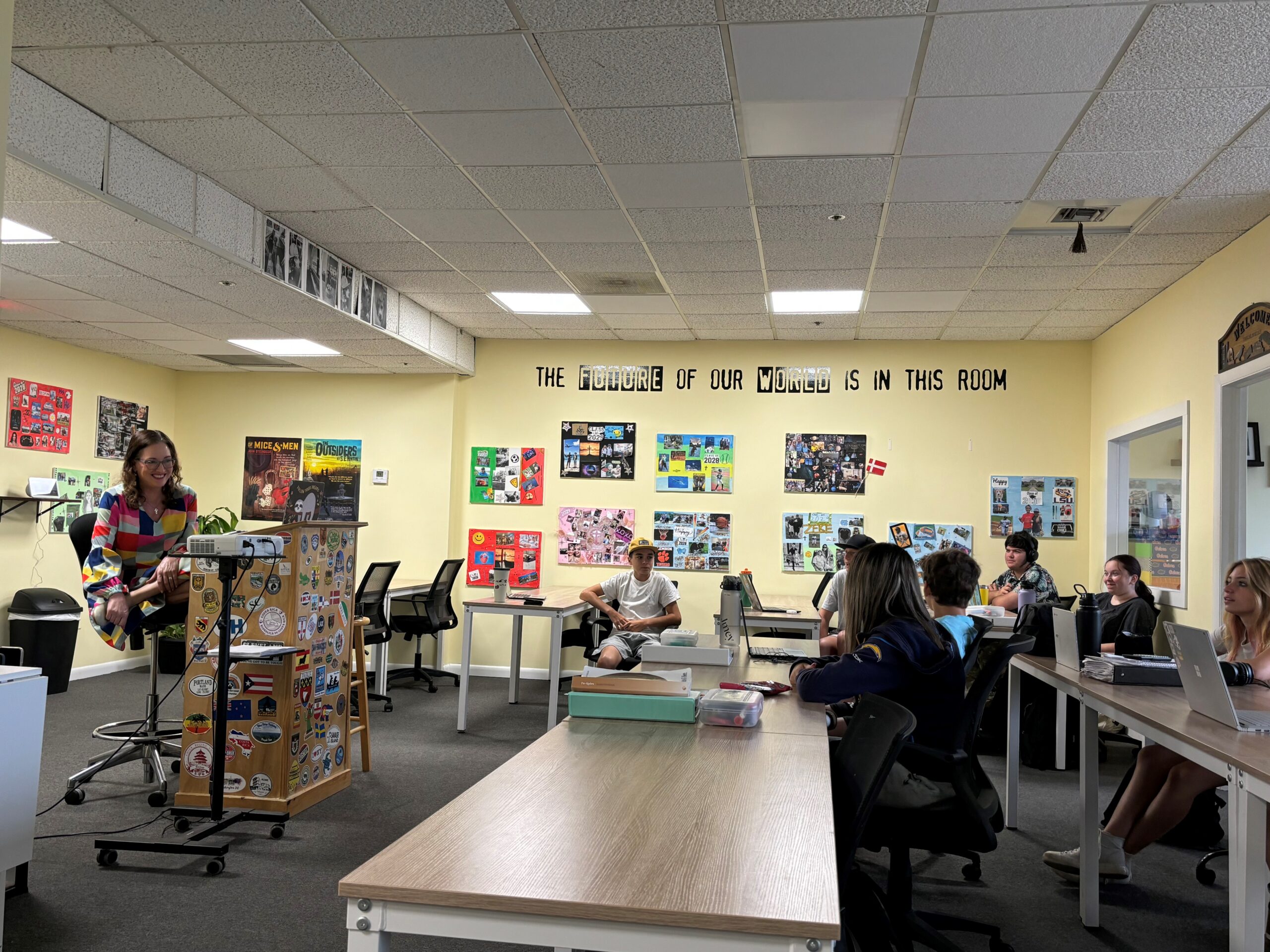
JUPITER, Fla. — When you start your own school, you make the rules. You can even bring your dog.
The Andersen Academy serves 16 middle school students, nearly all of whom use state-supported education choice scholarships. Founder Carrie Andersen calls it a “concierge homeschool,” for parents who homeschool but want customized support.
She started it three years ago, after 22 years as an accomplished English teacher in one of the nation’s biggest school districts. She said she was tired of a system that smothered her knowledge and creativity and nearly extinguished the love of learning in her daughter, Brooke.
In second grade, Brooke wanted to be the female Albert Einstein. But a few years later, some students and teachers were badgering her for taking extra time with standardized tests, as allowed by her individual education plan. Meanwhile, repeated practice tests, which Brooke had to take despite scoring at the highest levels, aggravated her ADHD and made her physically ill.
“It all became recipe for disaster,” Andersen said. “She began to doubt herself and her abilities.”
At mom’s school, Brooke has rolled through four years of math in two years. Now she’s ready to take AP precalculus, a class usually reserved for advanced 11th- and 12th-graders, as a ninth grader this fall.
What that before-and-after shows, Andersen said, is “the system failed us.”
Thankfully, the system is changing.
As a teacher who founded her own school, Andersen is helping to lead that change.
The Anderson Academy is housed in a few rooms on the second floor of a nondescript office building. There are classic movie posters on the wall, a cutout of Daryl Dixon from “The Walking Dead,” and free-roaming Maggie, a Catahoula leopard dog whom Andersen rescued three years ago.
For Andersen, it adds up to freedom.
“I get to be the best teacher here,” she said. “There is nobody in my way. There’s nobody telling you what to do who has never spent a minute in your shoes.
“I am 100 percent free. And I love it.”
In choice-rich Florida, it’s easy to find former public school teachers who have leveraged choice programs to create their own schools and other learning options. And it’s noteworthy how many went their own way in part because of frustration with the education of their own children. (See here, here, and here.)
Andersen left the district in 2020. She had medical conditions that made her more susceptible to catching COVID-19, and more likely to suffer serious complications.
That fall, she started a learning pod to tutor a handful of students in her home. It worked out so well that Andersen told her husband, also a public school teacher, “I can do this.”
Six months later, The Andersen Academy was born.
The difference between working in the system and working for herself was stark.
Andersen recalled one year when administrators told her and other teachers that they’d be teaching state standards using a packet of reading content they were given. “The most boring material you’ve ever seen,” she said. Andersen thought her students would learn more if they dove deep into “To Kill a Mockingbird.” So, she ignored the directives, followed her gut, and endured charges of insubordination.
Once state test scores were released, one of the administrators rushed to tell her that her students had knocked it out of the park. “How did you do it?” the administrator asked.
“I thought I was being punked,” Andersen said.
“I had to fight every day to do what was best for my kids,” she continued. Leaving her students and colleagues was heart-wrenching, she said. “But I was tired of fighting.”
Nearly all of Andersen’s students are also from public schools. They couldn’t be happier.
Many are strong students who nonetheless struggled in some subjects. Many experienced bullying.
The Andersen Academy does not give standardized tests. Progress monitoring is done with portfolios.
(Andersen’s students are registered homeschoolers, and nearly all of them use Florida’s Family Empowerment Scholarship for Students with Unique Abilities. That scholarship is an education savings account administered by nonprofits like Step Up For Students. Unlike the state’s other choice scholarships, it doesn’t require that students take a norm-referenced test. The parents pay Andersen out of pocket, then get reimbursed through the scholarship for home education and evaluation services.)
Every Andersen Academy student has a personalized learning plan made in tandem with them and their parents. The approach to teaching and learning depends on the student and subject.
About half the students come every day for a full day. The others come for a half day or less, and a couple, including one who lives in New Mexico (and does not have a Florida scholarship), join online.
The students do a lot of project-based collaborations with peers. They do community service and field trips on Fridays. They also enjoy a “Zen Den” for mental breaks, an art room for creativity, and the protective company of sweet Maggie.
Hyka McDowell, a seventh grader, attended public and private schools before enrolling in The Andersen Academy two years ago. At the time, Andersen said, she was a grade level or two behind in core subjects. Now she’s on grade level or ahead.
Hyka said the other students are friendly and supportive, and the school’s size is a plus. In a typical school, “you can get overwhelmed,” she said. “But in this school, you don’t have that problem. I love it.”
Andersen said most of her students will probably go to private schools for high school, but some will return to public schools. Her daughter is one of them, though she’ll be going back with her confidence restored.
“She’s walking proof,” Andersen said, “that I made the right decision.”
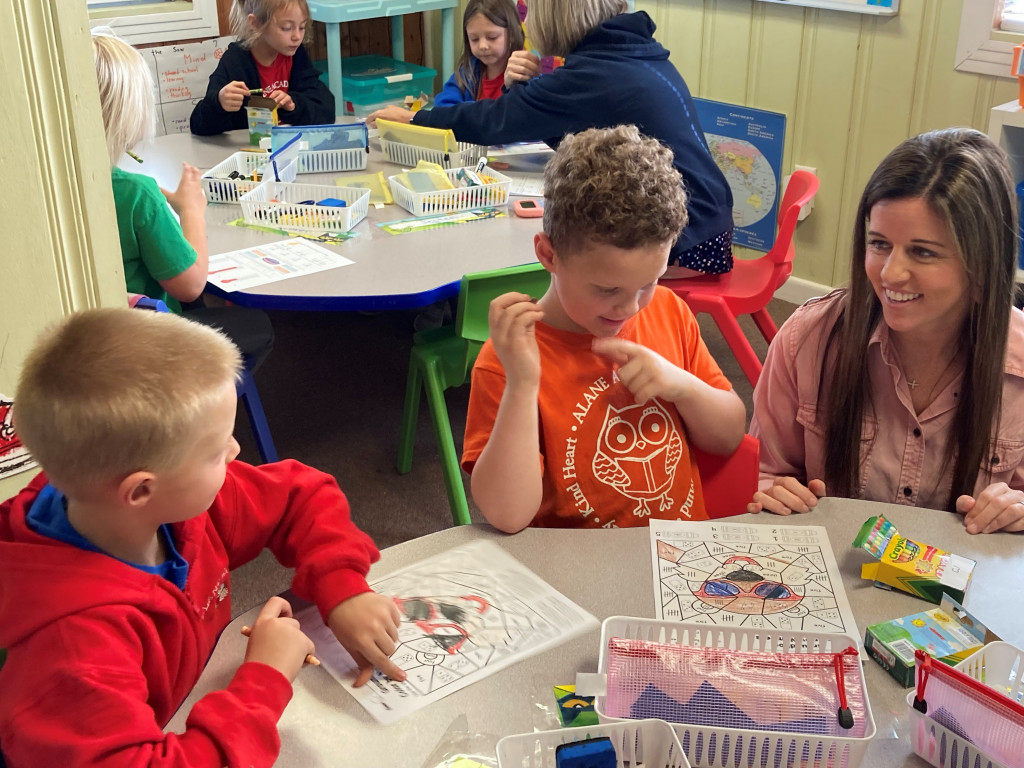
After being named her district’s Teacher of the Year, Julie Taylor left the public school system to launch her own private school, Alane Academy, in Wauchula, Florida. Among the reasons Taylor cites for the move: too much of a focus on standardized testing, not enough character education and social and emotional learning, and a lack of educator flexibility.
Editor’s note: The Step Up For Students team of Ron Matus, Amy Stringer and Ronda Dry, as part of an ongoing effort to document the positive effects of education choice on educators as well as families, provide an overview in this post of their recent survey with 177 teachers who moved from public to private schools. You can view the full report here.
These are not joy-filled times for America’s public school teachers. A Merrimack College teacher survey last spring found only 12% were “very satisfied” with their jobs, down from 62% in 2018 and the previous low of 33% in 1986.
More education choice might help.
We surveyed former public school teachers in Florida who switched from public schools to private schools, a transition enabled in part by Florida’s steady expansion of private school choice. And guess what? They’re far happier in their new digs.
In fact, 92% of the switchers said they were more satisfied or far more satisfied.
Our survey also found:
The survey findings synch with insights shared with us by another group of educators – a group who left public schools to start their own private schools. Our special report on that can be found here.
In both cases, teachers appear to be signaling their preference for work environments that maximize their autonomy. Policymakers across America who are wrestling with challenges in teacher recruitment, retention, and satisfaction should take note.
Beyond all the benefits to students and families, more choice might mean happier teachers, too.
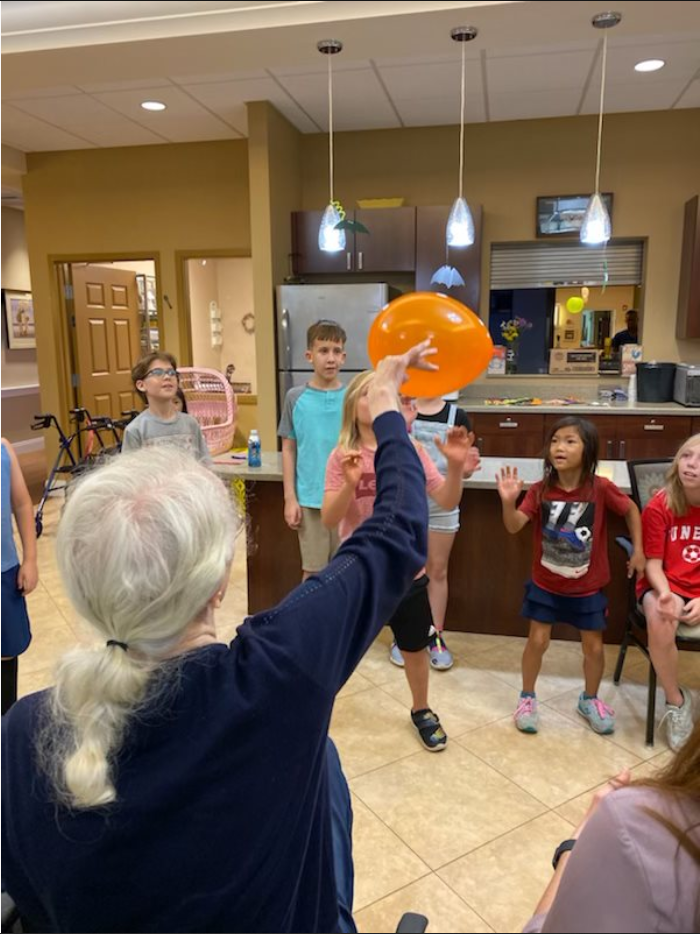
Educator-entrepreneurs at schools such as Service Learning Microschool in Clearwater, Florida, are establishing networks of trailblazers with similar backgrounds and goals who can provide members with emotional and practical support, yield mentors, and inspire the next wave of entrepreneurs.
Editor’s note: James Shuls, an EdChoice fellow, distinguished fellow in education policy at the Show-Me Institute, and former dean of the College of Education at Southeastern University in Lakeland, Florida, recently worked with Michael Q. McShane, director of national research for EdChoice, as an adviser on research conducted by Step Up For Students that culminated in a new report titled “How Can I Stay In It But Not Stay In It?” Shuls provides additional commentary here on the report, first published on the Show-Me Institute’s website. You can read the full report here.
Being an entrepreneur is hard work. Or so I’m told.
I’ve never actually been an entrepreneur. From what I gather, to become one you must have an idea of a product or service that other people want. And you must be able to produce that good or service for a price that other people are willing to pay.
Those two things are key. Without an idea, you’ve got nothing. Without customers, your business will flop.
We rarely use this sort of entrepreneurial thinking in education. For one, the vast majority of students—roughly 90%—attend a public school. Charter public schools are growing in this sector, but traditional public schools still enroll, by far, the most students of any school type.
Of the roughly 10% of students who attend private schools, most attend some sort of religious school. Catholics have historically served the lion’s share of private school students.
With public and church-sponsored schools dominating the landscape, there has never been much room for entrepreneurs. Even if someone had a great idea, they would struggle to compete with free public schools or church-supported private schools.
That is beginning to change.
In places such as Florida, where school choice programs allow students to attend private or microschools with publicly supported scholarships, we are seeing the start of something interesting—teachers becoming entrepreneurs.
I recently had the pleasure to serve as an advisor on a report conducted by Step Up For Students, a “state-approved nonprofit scholarship funding organization that helps administer four scholarships for Florida schoolchildren.”
Step Up conducted focus groups with former public school educators who left the public school system to start their own schools. These teachers thought they had a great idea to serve students, and thanks to the scholarship program, families had the means to pay tuition at the schools.
Check out the terrific slide deck or the video below to learn more about these teachers turned entrepreneurs.
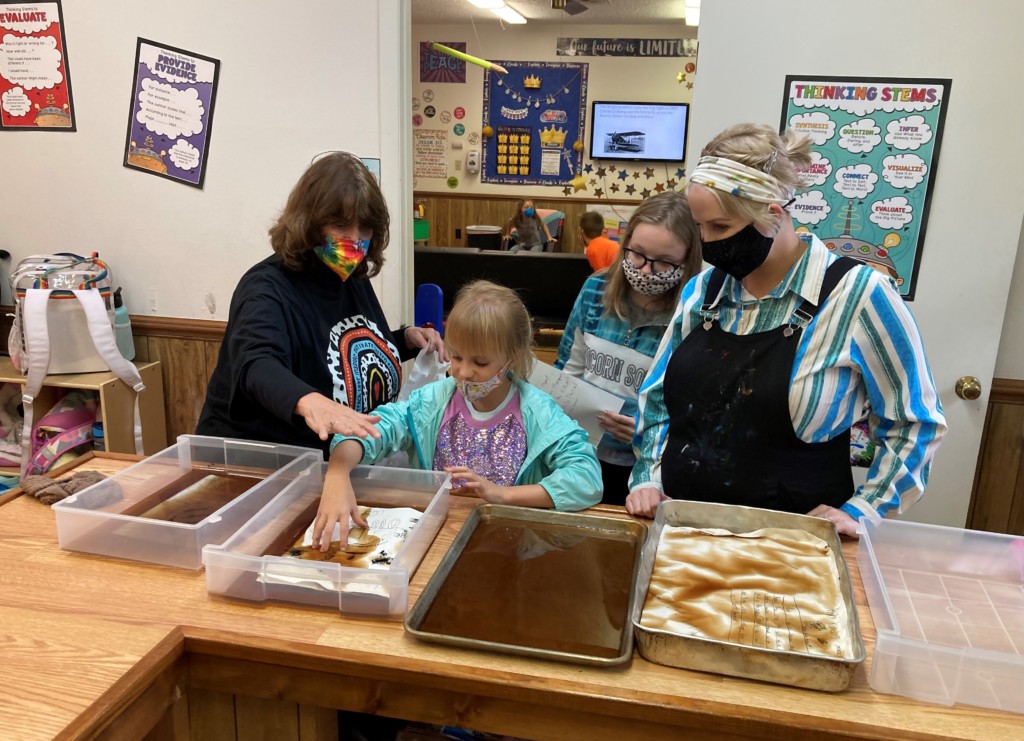
CREATE Conservatory celebrated the 101st day of school with a “101 Dalmatians” theme featuring lesson plans that tied the arts to historical happenings 101 years ago. Students made their own newspapers to show what they learned, soaking the papers in pans of tea to give them the look and feel of old newsprint.
LEESBURG, Fla. – When the time came to begin sketching out plans for her own little school, Nikki Duslak sat in her breakfast nook at 2 a.m. with a notepad, a glass of pinot noir, and a book, “Nonprofit Kit for Dummies.”
Duslak has two master’s degrees in education. She’s steeped in curriculum development and instructional design. She was as motivated as anyone on the planet. Her frustration with conventional schools, building for years, was now boiling over as she saw the toll it was taking on her son.
But sitting there in the middle of the night, Duslak was overcome.
She knew tons about teaching.
She knew zilch about running a school.
“I just sat there and sobbed,” Duslak said.
Duslak is not a crier.
When she was a freshman in high school, her hair fell out due to a rare autoimmune disorder. When other students stared, she told them, “This is what happens when you don’t eat your vegetables.” For a year and a half, she was a stage actor in a comedy that was heavy on improv, and an attorney described her as “the kind of woman who’d charge Hell with a water pistol.”
As a teacher, Duslak exhibited that same fearless streak, ignoring traditional approaches, and, in the process, turbo-charging her students’ learning gains so much she became her district’s Teacher of the Year.
“I don’t know how to do this,” she told herself that first dark night, “but I’m going to do this.”
***
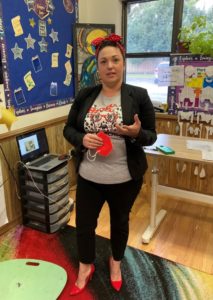
Nikki Duslak spent eight years in public schools but chafed at the restrictive atmosphere. She launched her own school, CREATE Conservatory, in fall 2020. Half of the school’s 14 students attend using school choice scholarships.
Duslak was supposed to use the district-mandated materials to teach writing to eighth graders in her high-poverty school. But she never took them out of the box.
Instead, Duslak used a cross-curricular approach called arts integration. It ties visual and performing arts to math, science, history and other “core” academic subjects, so facts and concepts are more joyfully imprinted, and creativity and confidence get a boost.
The result: On the state’s writing test, her eighth graders came out of nowhere to top the kids at the affluent, A-rated charter school that had long set the bar.
Unfortunately, sweet victories like that weren’t enough to stem the feeling of being stifled. Duslak spent eight years in public schools. She chafed at the atmosphere.
“It’s industrial, it’s cold, the lights are too bright,” Duslak said. “And then, ‘Here’s your lesson plan, you have to do it this way.’ ‘But can I change it here, like this, because it works for me?’ ‘No. This is the way you do it.’ “
At one point, Duslak said, a principal knocked points off her evaluation because she put a poster on the back wall that he wanted on the front wall. Rules like that were “banana pants crazy,” she said – and in her experience, not uncommon.
Four years in, Duslak became an administrator and moved to a charter school. She became an assistant principal at one charter school and then, thanks to her success, was recruited to lead another. But she still couldn’t shape things like she wanted. She ordered bean bags and couches, only to have the management company say no, they’re a liability.
“I ended up having that same claustrophobic feeling,” Duslak said. “I thought, ‘Please trust me to do my job.’ “
Duslak ended up leaving public schools for family reasons. Visions of starting a school danced in her head, but she never made the leap.
Then, in the middle of soccer practice, her 5-year-old broke down and said, “I don’t want to die.”
Avery was in a private school, in a multi-age classroom with students as old as 13. Some of them may have been ready for history lessons about the Holocaust, but Avery was not. After a similar incident earlier, Duslak talked with the staff about age-appropriate content, but clearly, it hadn’t sunk in.
“That’s when I said, ‘I’m doing it. I’m doing it now.’ “
***
CREATE Conservatory opened in fall 2020. It’s half-hidden in a church on the edge of metro Orlando, in what used to be the heart of citrus country.
The K-5 school has two teachers (counting Duslak), two aides, and a handful of volunteers, including Duslak’s mom, a retired public school teacher. This year, CREATE has 14 students, up from seven last year, and it’s already done multiple tours for next year. Half of its students use school choice scholarships, and tuition is $7,000, or roughly 60% of the average per-pupil cost in Florida district schools.
The classroom for the older students feels like a kids’ clubhouse. There’s a hamster cage; a giant stuffed spider; plants on a windowsill that glow from the sunlight streaming through. There are no desks. There are couches and bean bags.
“I try to create environments where children feel comfortable,” Duslak said. “Because when we are comfortable, we are more open to learning and growing.”
CREATE was more than a year in the making.
Duslak had never crafted a business plan before, so she ran the draft by friends with business experience. To spread the word, she did presentations at the library and the arts center, even during breaks in trivia night at local restaurants.
For the facility, she set her sights on a two-story house, and, in anticipation of a zoning change that zoning officials suggested was a gimme, spent $3,000 on surveys and assessments. Two months before school started, the zoning board voted no.
The church turned out to be a good Plan B. But the zoning snafu is a good reminder. Sometimes, for the pioneers, the education frontier ain’t no picnic.
Duslak and her husband (a former public school guidance counselor) sank $50,000 into start-up money for CREATE. At present, she’s not making what she did as a public school teacher, and she’s not saving for retirement.
The paperwork is a bear: payroll, taxes, health insurance, worker’s comp, compliance forms for safety and security – all if it falls on Duslak.
The unexpected challenges don’t stop, either.
Two weeks ago, Duslak was helping a student who appeared to be having an asthma attack when a toilet began overflowing into the hallway. Duslak made sure the student was okay, then, in skirt and heels and looking like a “librarian Rambo,” went to work with a plunger. The water wouldn’t stop.
A plumber told Duslak he was going to have to remove the toilet, which might cause it to break, which would cost the school $400 it didn’t really have. If the problem turned out to be in the septic system – and if it turned out to be the school’s responsibility, like, say, if a student flushed something they shouldn’t have – well, in that case, it could cost thousands.
Thankfully, the toilet didn’t break, and the culprit turned out to be a tree root. Duslak felt “just massive relief.”
Then again, she joked, it was only Tuesday.
***
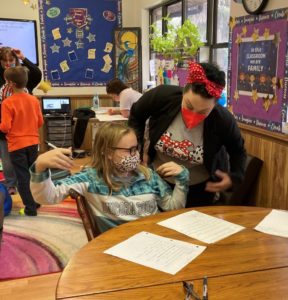
Duslak, who has two master’s degrees in education, turned to the book, “Nonprofit Kit for Dummies” when she began sketching out plans for her own school.
On the 101st day of school, CREATE Conservatory celebrated with a “101 Dalmatians” theme. The school put a whimsical “Happy 101 Days” sign out front. The K-1 teacher, Ms. Shelby, dressed up like Cruella de Vil. Duslak whipped up lesson plans that tied the arts to historical happenings 101 years ago.
After the students in grades 2-5 watched a slide presentation about the year 1921, they made their own newspapers to show what they learned. They came up with their own newspaper names (“Yesterday’s News!”) and wrote stories about Babe Ruth and Charlie Chaplin and the latest in women’s fashion.
As a final step, they crumpled and uncrumpled the papers and soaked them in pans of tea. Once dry, their creations had the stained look and brittle feel of old newspapers.
Duslak pegs every lesson to Florida state standards in multiple grades and subjects. “Everything we do with the arts is tied into standards,” she said. “It’s not fluffy.”
Does it work?
CREATE uses the Iowa Test of Basic Skills to satisfy state requirements for standardized testing. The first year’s results showed CREATE students on average gained three grade levels in math and reading.
Amber Baraso’s two kids, Hailey and Tyler, were among those making strides.
Now in fifth grade, Hailey struggled in her prior school, especially early in the pandemic, when her teacher never appeared during distance learning. At CREATE, Hailey moved from two grades behind in reading and math to a grade ahead. Tyler, now in third grade, struggled in his prior school because he couldn’t stay seated. At CREATE, students are free to move.
“If we would have stayed in public school, he would not be succeeding. He would have No. 1, been bored out of his skull,” said Baraso, an office manager at a family medical practice.
The arts emphasis is doing wonders, she said. Tyler and Hailey are always working on art projects – there are papier-mâché globes in her closet right now – and gushing about school. “Before it was, ‘How was school today?’ ‘Good,’ “ Baraso monotoned. “Now it’s, ‘We did this! And this! And this!’ ”
CREATE has been perfect for Candice DeMers’s son, too. Gabriel, a first grader, felt lost at his prior school, DeMers said. His self-esteem plummeted. He began to act out.
When the school suggested medication – Gabriel was showing signs of ADHD – DeMers pulled him. Duslak worked with DeMers on a game plan. The results came “almost instantaneously.”
“He’s back to being the loving child he’s always been,” DeMers said. “This is the school I wished I could have gone to when I was a child. It’s just a completely different light.”
***
For a unit on the Earth and sun, Duslak’s students write narratives that explain the interplay of the two to create days and years and seasons. Then they create skits where other students play the Earth and sun and dance out their roles.
After particularly trying days, Duslak has wondered how long she can keep at it. But then, she said, she thinks about her son, safe and thriving, and the other kids who’ve popped out of their shells. Like this one kid, shy but brilliant, who arrived with his confidence shot, but now, during the Earth-and-sun bit, was all smiles and happy feet.
“To see him have a moment of what I like to call flow was just a great gift,” Duslak said. “I see him, getting up and dancing, being the Earth circling the sun, and I’m like, ‘I’m good.’ ”
 A Florida Board of Education member proposed today that the state end its textbook adoption process, saying teachers and principals are best equipped to decide which materials are needed to help students.
Roberto Martinez of Miami said the time is right for that step, given Florida’s education reforms - tough standards, a tough accountability system and big changes to the teaching profession – as well as digital learning advances that are easing access to high-quality instructional materials.
“It seems we’re now at the stage - and certainly will be at the stage in the next couple of years - where the teachers and principals working with the districts should then be able to have the freedom to do as they deem appropriate, based upon the exercise of their professional judgment, to use whatever materials they want,” Martinez said at a board meeting this morning. “If they want to use textbooks, let them use textbooks. If they want to use primary source material, fine. Digital? Fine. Whatever it is. But I think we’re at that stage where we can give them that kind of freedom to accomplish the outcomes that we want.”
Martinez said he wanted the board to add elimination of textbook adoption to its legislative priorities for next year. He did not offer a timeline for ending the process, but in a letter to board members Monday he wrote that the Department of Education needed to work with school districts to develop “an effective transition plan.”
“These changes would get rid of the expensive and unnecessary burdens that impede the ability of our teachers and students from accessing the latest, most advanced, and best educational materials, many of which are, or will become, available through digital learning,” he wrote.
Martinez’s proposal isn’t entirely new; last year, the board discussed a plan to make Florida classrooms all digital within five years. Nevertheless, Tuesday’s comments drew an enthusiastic response from fellow board members and two superintendents in attendance. (more…)

