If you think the school choice debate in Florida is all us vs. them, maybe you’re not listening carefully enough. Here are three examples just from the past few days.
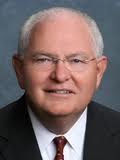
Sen. Montford: "We know that the vast majority of charter schools in the state have done a good job."
At Monday’s Senate Education Committee meeting, Sen. Bill Montford, a Democrat who heads the state superintendents association, introduced a bill that would give school districts the freedom and flexibility to create charter-school-like “innovation schools.” Along the way, he said this:
“We know that the vast majority of our charter schools in the state have done a good job. Usually what you hear of is those who don’t. But that’s like any – in public school, you hear about the bad stories. But we’ve learned a lot over 15 years. The charter schools have set the pace, if you will, for a lot of innovations and creative efforts. And they’ve been able to do that because they’ve been allowed to be creative. They haven’t been burdened quite frankly with some of the state rules and statutes.”
The only member of the public to comment at the hearing was Jim Horne, a former education commissioner under Jeb Bush who now heads the Florida Charter School Alliance. Both the alliance and Associated Industries of Florida, for whom he lobbies, support the bill, he told the committee. Then he said this:
“This is sort of a great partnership where we can benefit from what we’ve learned. We know charters started 15 years ago to be innovative, free from some of the bureaucracy. And we think districts ought to have that same opportunity, to be able to innovate and be able to be creative outside of the bureaucracy and some of the regulations that we hear choke innovation.”
The bill passed unanimously. But neither Montford nor Horne’s comments made the papers, which is too bad. Their positions not only made sense, but cut against the stereotypes that dog both the “education establishment” and the “school choice crowd.” Beyond the political theater, there’s a lot of that going on.
Here’s another example. The Ledger reported Tuesday that the Polk County School District may convert an elementary school and a middle school in Lake Wales into a K-12 arts magnet. The two schools are the only ones in Lake Wales that are not part of that community’s charter school system. So how did the charter system respond? (more…)
 In 2010, Doug Tuthill took a look around and realized he was living in a new era.
“Florida had this rapidly expanding portfolio of school choice options,” said Tuthill, the president of Step Up For Students, which administers the state’s tax credit scholarship program. “Yet there was little dialogue among the groups representing those choices. We weren’t talking to each other about what was working, what wasn’t, and why.”
Several important players in this bourgeoning movement recognized the need for more collaboration. Florida Virtual School and Step Up For Students, among others, wanted to see the school choice movement united, so they could learn from each other and talk through any differences.
Thus, FACE was born.
Florida Alliance for Choices in Education, or FACE, is comprised of more than 50 members, representing a diverse coalition of organizations dedicated to providing Florida school children with more educational options. Such organizations include National Coalition of Public School Options, Florida Charter School Alliance, Foundation for Florida’s Future, and StudentsFirst - all coming together with the belief that, as the FACE website says, “State policy should enable all parents to be fully engaged in their children’s education and to access those learning options that best meet their children’s needs.”
Step Up For Students (which co-hosts this blog) staffed the initial effort. Three individuals - Wendy Howard, a parent advocate from Tampa; Jim Horne, a former legislator and state education commissioner; and Julie Young, president and CEO of Florida Virtual School - spent a year facilitating outreach and diplomacy, eventually bringing all components of choice together in one organization.
Florida is the first state to do this. (more…)

Cheri Shannon
The head of one of Florida’s two statewide charter school support groups is stepping down to lead a more targeted effort. Cheri Shannon, president and CEO of the Florida Charter School Alliance, is leaving at the end of the month to lead University Prep, a new charter network she says will focus exclusively on low-income students. To some extent, she’ll be coming full circle, having once run a charter school in Kansas City, Mo., that served students who were predominantly black and high poverty.
“This is my passion, my mission. ... I felt called, for lack of a better word, to come back in and do that work,” Shannon told redefinED. “This is where I want to end my career, making a difference in the lives of kids who deserve a difference.”
Shannon joined the alliance in April 2011 as its founding CEO. A former associate superintendent in the Kansas City school district, she has years of experience in both traditional school districts and the charter sector.
Her new venture already has four charter school proposals in the pipeline, including one scheduled to go before the Pinellas County School Board on Tuesday. The school boards in Broward and Palm Beach counties have already signed off on the University Prep applications in their districts. The application in Hillsborough is scheduled to go before that district’s board next month, Shannon said.
The Pinellas proposal is for a K-8 school in St. Petersburg with a projected, first-year enrollment of 694 students. The plan is to open next fall. (To read more about the application, go to page 318 of the school board agenda packet.)
The proposal stands before an interesting legal backdrop - a 2010 settlement from a class-action lawsuit that accused the Pinellas district of failing to educate black students in violation of the state constitution. Under its terms, the Pinellas school board set an aspirational goal of having at least 500 spaces in charter schools available for black students. (more…)
When Florida Gov. Rick Scott unveiled his education agenda last week, he threw out a potentially far-reaching idea: Allowing districts to open their own charter schools.
The proposal could address a common complaint among traditional school districts - that federal and state bureaucracies prevent their schools from being as innovative as charter schools. But how would these District Charter Innovation Schools, as Scott called them, actually work? Would they truly be as flexible as independent charter schools?

Gov. Scott
We’re waiting to hear more. Scott didn’t spell out specifics, beyond saying the schools would operate with the same funding levels as other charter schools. His press secretary, Jackie Schutz, told redefinED she couldn’t provide any more details.
In the meantime, there may be clues in the handful of district-run charter schools that already have been approved by the state Department of Education. They don’t look like typical charter schools. But in some respects, they do veer from the framework of more traditional public schools.
The Academy for International Education Charter School in Miami Springs is a year-old “hybrid’’ school that offers a curriculum based on magnet and charter school programs, with students learning second and third languages.
The principal is a 30-year district employee who left the traditional public realm for the charter. The academy has a nonprofit board that is technically independent from the district, but has contracted with the Miami-Dade district for services, including custodial and cafeteria workers. The school also leases space from the district, significantly reducing facility expenses. Miami-Dade district and school officials did not return calls for comment.
In Polk County, DOE approved another district-run, charter endeavor, Step Up Academy, in August. (more…)

Shannon
School district officials and state lawmakers aren’t the only ones outraged by a failing Orlando charter school that cut its principal a check, as it was closing its doors, for half a million dollars.
“This is totally unacceptable,’’ Cheri Shannon, president and chief executive officer of the Florida Charter School Alliance, told redefinED Friday.
Added Lynn Norman-Teck of the Florida Consortium of Public Charter Schools, in a prepared release: “The alleged behavior of NorthStar is the exception, not the rule. There are many examples of public charter schools, their governing boards, and administrators, with exemplary records.’’
The Orlando Sentinel reported Thursday that NorthStar High School’s board of directors paid Principal Kelly Young $519,453.36 in taxpayer dollars. The lump-sum payment occurred two days after the Orange County School Board accepted the school’s plan to close instead of being shut down by the district for poor performance.
The principal’s payout was based on a contract that paid her $305,000 a year through 2014, even though the school’s contract with the district was up for renewal in 2012, the Sentinel reported. In addition, the charter school is still paying Young $8,700 bi-monthly to oversee the school’s shutdown, the newspaper wrote.
The story has stoked criticism of charter schools, which receive public money but are run by private boards. And it comes at a sensitive time. Charter schools in Florida served 180,000 students last year and are expected to enroll twice that many by fall 2017. Proponents, including Gov. Rick Scott, are pushing for even greater expansion. (more…)
Shannon
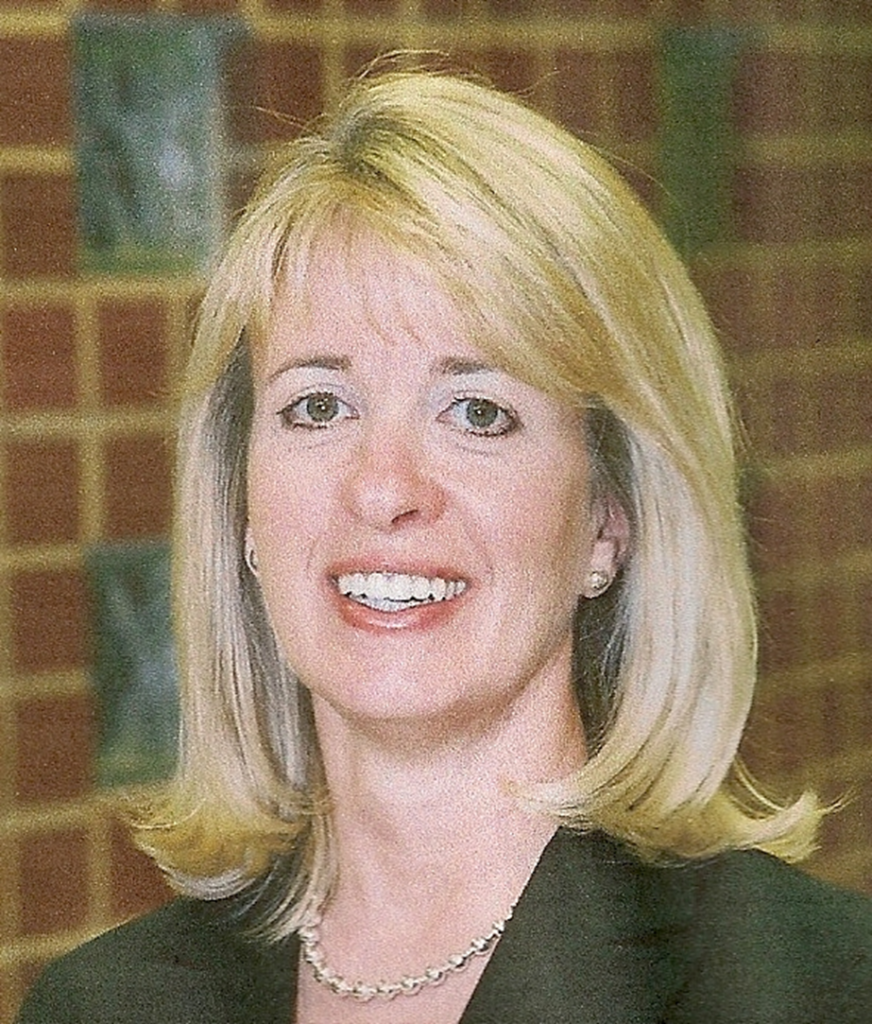
by Cheri Shannon
In an effort to transform our public school system, charter schools have provided a breath of fresh air. Free, open-enrollment public schools, charters were established in Florida in 1996 to provide more high-quality educational options for families. With the flexibility to innovate with curriculum, classroom time, technology and much more, charter schools are held to greater standards of accountability for student achievement. This means that charter schools that are effectively improving learning, as most in Florida are, should be celebrated as well as replicated so more students benefit.
However, if a charter school is not living up to its mission of providing a high-quality education for its students, then it should no longer be in operation. All public schools, whether a charter, magnet or district school, must ensure that every child has access to a strong educational program that meets his or her needs.
Since the first charter school opened 20 years ago in Minneapolis, we have learned that, occasionally, opening the door to let in fresh air brings with it some flies. Despite the strong performance of charter schools, there are a few underperformers that fall short of their mission to provide a high-quality education for all students. That is why local school boards and the Department of Education have moved to close at least three charter schools this year – actions we in the larger charter school movement support. The most recent action includes the decision to close Life Force Arts and Technology charter in Pinellas County, which had questionable curriculum and management, and to no one’s surprise, low student achievement. When charter schools like these do not meet their goals, they should no longer have the privilege of serving students and should close.
As we continue to hold charter schools accountable, as we should all public schools, we must not lose sight of the fact that parents of nearly 180,000 students actively chose to send their children there.
In the case of some poor performers, it’s perhaps because parents feel their child is safer in a small environment the school may provide, or because the nearby district schools are worse off. But those factors alone are not enough. Charter schools must be able to demonstrate the ability to improve learning, and when bad ones close, we should respect parents’ choices and work to ensure good schools will take their place. Parents will ultimately make good choices – they simply need access to more of them. (more…)

