 Mental health services: The mental health provider that determined accused Parkland school shooter Nikolas Cruz shouldn't be Baker Acted in 2016 has been hired by the Florida Consortium of Public Charter Schools to provide mental health services for students at their schools. Henderson Behavioral Health will provide assessments, diagnoses, interventions, treatment and recovery services for students in the 500 state charter schools that belong to the consortium. Henderson has been criticized for recommendation to not hospitalize Cruz after a suicide assessment, and is being sued for wrongful death by the parent of a student who was killed at Marjory Stoneman Douglas High School on Feb. 14. Miami Herald.
Private school safety: Private schools are safer for students than public schools, according to a report published recently in the Journal of School Choice. Researchers Danish Shakeel and Corey DeAngelis say students at private schools were 8 percent more likely to have never experienced physical conflicts, 28 percent more likely to have never experienced another student possessing a weapon on campus, and 13 percent more likely to have never experienced racial tension between students. redefinED.
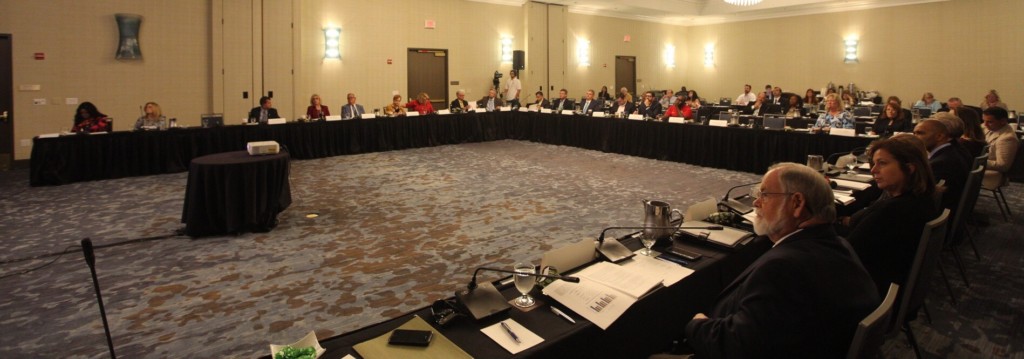
The Florida Consortium of Public Charter Schools hosted a forum Friday at a Fort Lauderdale hotel. Photo courtesy of the consortium.
FORT LAUDERDALE - Some of the charter school leaders gathered last week in South Florida reported tensions run high.
Districts are in court to fighting a new law intended to make charter school funding fairer. Many have cranked up the rhetoric or found ways to slight charter schools they authorize.
A delegation from Sarasota County highlighted a different approach. Led by new Superintendent Todd Bowden, they described how districts and charter schools can get along.
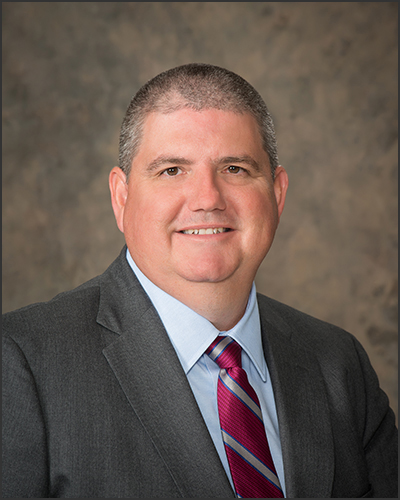
Bowden
Their school board declined to join the lawsuit over House bill 7069. It shared facilities funding with charters before the legislation passed. It also allowed charter schools to participate fully in Title I — a longstanding charter school complaint the legislation tried to address.
But the key might be the district's overall attitude toward the charter schools it sponsors.
"They're a part of our district," Bowden said. This is reinforced by a state law that includes charters in district-wide letter grades. He said that when he addresses community groups, he likes to tout the achievements of Sarasota charters alongside the schools the district runs itself. (more…)
FORT LAUDERDALE - Chances are, the annual battle over charter school facilities funding will be back again next year in the Florida Legislature, as will the search for a long-term fix.
That much was clear during a gathering of district and charter school leaders, hosted by the Florida Consortium of Public Charter Schools. What's less clear is how it will be resolved.
Bill Jones, a member of the consortium's board and principal of Manatee School For the Arts, said before lawmakers and education officials attempt to solve issues like giving charter schools access to district-owned buildings, or funding charter school construction, they need to grapple with a philosophical question raised by a new definition of public education that doesn't revolve solely around district-run schools.
"When we look at the local property tax, do you believe that is public tax money that is given to the school district, or is it intended to work for the best interest of every public-school student in the district?" he asked. "Right now, what happens is, there are people who get to decide which students get the benefit of that money."
Florida, he said, has to answer the question: "Do we want that local property tax money to benefit every public-school student?" (more…)
Not surprisingly, leaders from some of Florida’s largest school districts lined up last week against a proposed state House bill that would make it easier for charter schools to open. What was unexpected, though, was one superintendent breaking from the herd.
Superintendent Robert Runcie
Broward County’s Robert Runcie not only supported the measure, he made a plea for everyone to work together.
“We need to move to an era where there is true collaboration going on between school districts and charter schools,’’ Runcie told the Florida House Choice & Innovation Subcommittee. “It’s the only way that we’re ever really going to fulfill the promise of providing every student and providing every school with the type of quality education that they need.’’
Runcie’s comments are noteworthy for all kinds of reasons. The 260,000-student Broward County school district is the second biggest in Florida and the sixth biggest in the nation. Florida, a leading charter state, is experiencing great tension – even animosity – between school districts and charters. And this particular legislative meeting was yet another example, with one lawmaker, Rep. Kionne McGhee, D-Miami, describing the charter school bill as the “wrecking ball of traditional public education.’’
For Runcie, the comments are also part of an emerging pattern.
Last summer, the Harvard graduate and former Chicago Public Schools administrator helped lead a statewide task force of district and charter school administrators. Their objective: to help the Florida Department of Education develop language that both sides can agree upon for the state’s new standard charter school contracts.
While that’s still a work in progress, Runcie most recently stepped up to show equal support for charter school teachers in Broward by agreeing not to withhold an administrative fee from their pay raises.
The money is part of a statewide $480 million allotment for teacher pay hailed by Gov. Rick Scott and approved last session. By law, districts can charge charter schools a 5 percent fee for processing funds that come from the Florida Education Finance Program. In Broward, that fee on the dollars earmarked for charter school teacher raises added up to about $11,000, said Robert Haag, president of the Florida Consortium of Public Charter Schools, which made the request.
Runcie not only complied, Haag said, but approved back pay for charter school teachers from July 1, when the raises went into effect.
“That was incredible,’’ Haag told redefinED, adding that he believes Runcie’s gesture will serve as a catalyst for other district leaders. “Listen, we don’t care if they keep 5 percent from our schools. But withholding 5 percent from our teachers? We can’t do that!’’
An advocacy group for charter school parents in Florida is warning its parents about widely circulating myths regarding Common Core State Standards. While the recent newsletter from Parents for Charter Schools doesn’t endorse Common Core, it does attempt to dispel what it says are a few misleading statements – and in tone, its language echoes that of Common Core supporters.
 “There is so much misinformation out there and we all know that knowledge is power,” says the newsletter, which is posted on the group’s facebook page. “Some of the more common myths are that we will bring the standards down to the lowest common denominator. This (is) just not true. The standards will be brought up (to) the higher standards.”
The charter school parent group’s statements are another intriguing tidbit in the battle over Common Core, which has fuzzed up traditional lines between education factions. It also further complicates, at least in Florida, a side skirmish over whether the standards will help or hurt school choice.
As we’ve reported before, many private schools in Florida are embracing Common Core as part of a parental engagement effort led by Step Up For Students, which co-hosts this blog. Many Catholic schools in Florida and beyond have also warmed to the standards, though with a faith-based twist and with more reticence recently as political heat over the standards has risen. (more…)
After years of wrangling with charter school operators over questionable fees, one of Florida’s biggest school districts recently developed new contracts that spell out what is - and isn’t - allowed. But now that a new state law requires uniform contracts across the state, can the district enforce those rules in future contracts?
That’s one of many questions facing the Florida Department of Education as it works with school boards and charter operators to develop a model charter school contract for 2014.
The idea is to level the playing field for smaller charter school operators trying to negotiate with the districts, said state Rep. George Moraitis, R-Fort Lauderdale, who sponsored legislation last session calling for the contracts.
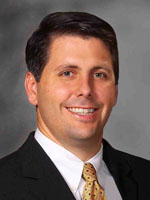
Rep. George Moraitis
“We’re just trying to make it easier for those who don’t have the resources to hire lawyers or don’t understand their rights,’’ he said. “And, hopefully, make [the process] more efficient for everyone.’’
The goal isn’t to limit district authority, Moraitis said. In Florida, local school boards serve as charter school authorizers, approving applications and contracts, and overseeing operations. And Moraitis believes it should stay that way.
“We want the school board to be responsible for charters,’’ he said. “But we don’t want them to be unnecessarily regulating them.’’
Critics, though, suggest unnecessary regulation can be in the eye of the beholder.
“We’re not in support of having a standard contract because it’s going to be so generic,’’ said Jenna Hodgens, president of the Florida Association of Charter School Authorizers. “You know how different school districts are. We want to be positive and we understand [the charters’] side, but this really takes negotiation out of the process.’’ (more…)
Can charter schools and districts really work together?
Squabbles about funding and facilities might make one wonder. But the Florida Consortium of Public Charter Schools believes charters and districts can get along – and must.
That’s why the Fort Lauderdale-based consortium, which represents more than 400 charter schools across the state, has organized the first statewide task force of charter school and district leaders. The group meets Monday.
The idea is to get the two sides talking less about competing against one another and more about their common ground for kids. The consortium also hopes to identify school districts where charter school operators enjoy “productive, cooperative relationships,’’ and figure out how they got there.
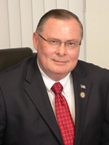
Robert Haag
“We wanted to create an opportunity for districts and charter schools to begin having an honest and respectful dialog, and a place where we could exchange constructive ideas and provide direction as to how to improve relationships between an authorizer and a charter school,’’ the consortium’s president, Robert Haag, said in a prepared statement.
“Districts and charter schools are often perceived as enemies but nothing could be further from the truth,’’ said Haag, who also serves as superintendent of Charter Schools of Excellence in Broward County. “We are allies in the pursuit of educational excellence.’’
In Florida, school districts serve as charter school authorizers – another source of tension between the two sectors. Last school year, 578 charter schools served more than 203,000 students in Florida, up from 516 during the prior year.
State Rep. Janet Adkins, R-Fernandina Beach, and the Broward Superintendent Robert Runcie are co-chairing the new group. For more information, call (954) 463-9595.
Charter schools are among those supporting a tense Board of Education decision this week that prevents state grades for public schools from dropping more than one letter.
But some of them worry the move might add to the confusion parents and others already have about Florida’s A through F grading system – and erode public confidence in it.
“I think it becomes confusing to parents when the state says it wants to move forward with higher standards and wants them to be more rigorous, and then makes a safety net’’ when those standards aren’t met, said Cynthia Adversa, principal of Indian River Charter High School in Vero Beach, which is a member of the Florida Consortium of Public Charter Schools.
Teachers and students worked hard to meet those expectations, said Daviem Dina Miller, who heads Somerset Academy in Davie. So when some schools that didn’t hit the mark still benefit from a higher grade, “I think a lot of parents would question that.’’
At the same time, both women say giving schools more time to adjust to changes in the grading system is the right thing to do – especially when so much rides on the grades. Both of their schools are A-rated.
“It’s hard to be under that microscope,’’ said Miller, noting grades are tied to financial incentives for schools and teachers as well as public perception. “The grades affect your reputation.’’ (more…)
It’s not everything they asked for, but charter school advocates anticipate getting $91 million in state funding next fiscal year for construction and maintenance projects.
House and Senate leaders agreed to the one-time allocation earlier this week and are expected to pass the measure before they vote on the new state budget by Friday – the final day of the legislative session.
The move marks a $36 million increase in funding for charter schools and comes close to the $100 million proposed earlier this year by the Florida House and Gov. Rick Scott, who still has to sign off on the budget.
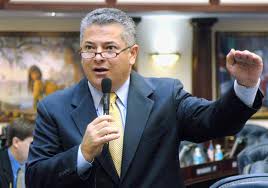
Ralph Arza
“This funding is driven by the demand of the consumer,” said Ralph Arza, a former state legislator who lobbies for the Florida Charter School Alliance.
With more than 203,000 students enrolled in 579 Florida charter schools, parents are making their choice – and that’s creating a need for more charter funding, Arza said. But it’s not a one-time need.
“It’s an every-year need,’’ said Arza, who, along with other charter advocates in Florida, will continue to push for recurring funding in the state budget to help charters with capital outlay projects.
Charter schools are public schools that receive state money, but they operate independently from the districts. That means charters have separate school boards, and can pick their curriculum and teachers. But they can’t levy taxes, like their traditional counterparts, to pay for buildings and facility needs.
Arza called lawmakers “bold and courageous’’ for recognizing the need for more charter school dollars.
Robert Haag, president of the Florida Consortium of Public Charter Schools, also praised the move. “We are proud of our Legislators believing in us,’’ he said.
The construction funding follows more good news: charter school teachers, guidance counselors, social workers, principals and other administrators are among the Florida public school workers eligible for the $480 million in raises called for in the 2013-14 budget.
The extra dollars mean at least $2,000 for teachers and other school personnel and as much as $3,500 for instructors rated “highly-effective.’’
For their project, Gussie Lorenzo-Luaces and three classmates at Deer Park Elementary in Tampa, Fla., wanted to find out what kind of paper allows a paper airplane to fly the farthest. After five trial runs, they determined copy paper, with its smooth surface and stable weight, worked best.

Gussie Lorenzo-Luaces, a third-grader at Deer Park Elementary School in Tampa, was one of more than 2,000 students participating in the 33rd annual Hillsborough Regional STEM Fair last week.
The boys’ exhibit was among more than 1,800 presented at last week’s 33rd annual Hillsborough Regional STEM Fair, which featured 2,000 students from district schools, charter and private schools, and home schools.
That diversity was a big plus for Gussie’s mom, Susie, who was curious where other students in the county registered on the science track.
“I just feel they don’t need separation,’’ she said. “I like seeing them all together.’’
Increasingly, though, Hillsborough students are not all together in academic competitions.
In the past year, district officials have begun excluding charter schools from some districtwide contests, including Battle of the Books, a reading competition, and the Math Bowl and Math League for elementary and middle school students.
The reasons for the splintering are not clear. But everything from cost, to fear of competition, to a desire for charter schools to be more independent, has been suggested. At the least, the move points to potential pitfalls as school choice options mushroom across the landscape – even in a district with a choice-friendly reputation like Hillsborough.
“They’re all our children,” said Lillia Stroud of King’s Kids Academy of Health Science, a new charter in Tampa. Stroud said she can relate to the district’s concerns, but “separation at any level is disheartening.” (more…)

