With 43 schools and seven more expected to open in the fall, the charter school community in Hillsborough County, Fla. has grown to the size of a small school district.
Which is why members of Charter School Leaders of Florida say having a local group to represent them is so important.
“We do feel as an organization … that now more than ever, we need to work as a group,’’ said the group’s treasurer, Mark Haggett, who also directs Academies of RCMA, elementary and middle school charters in Wimauma.
The group’s name suggests it might serve the whole state, but for now it’s limited to Hillsborough. It began informally, nearly a decade ago, as a way for charter school principals to regularly meet – like traditional public school principals – and talk about best practices, training, assessments and funding. It also was a safe place for members to vent frustrations about the district and the Florida Department of Education.
In 2007, the principals formed a nonprofit and shifted focus.
“Our main goal was to work with the superintendent and really forge a true partnership between the schools and the district,’’ said Gary Hocevar, former principal of the charter, Terrace Community Middle School, and the leadership group’s past president.
The group also organized to help lobby on behalf of charter schools for more funding – “not just for charter schools, but funding for all education,’’ Hocevar said.
The group, now headed by Cametra Edwards, principal of Village of Excellence Academy in east Tampa, represents about 35 charters. It’s among a handful of such groups in the state.
“Such organizations are definitely something we want to encourage as a state and we have already discussed some ways in which we could help that along,’’ said Mike Kooi, who oversees the office of school choice for the Florida Department of Education. (more…)
A Florida House subcommittee devoted to school choice has drafted a bill that, if approved, could make life a little easier for the state’s charter school operators - especially when it comes to facilities.
The bill, proposed by the the Choice & Innovation Subcommittee, would give charters free use of certain unused district facilities - and require the district to pay for upkeep.
If a district-owned facility that previously has been used for K-12 educational purposes is no longer being used, the bill says, “it shall be made available for a charter school at no cost.’’
The district may give academically successful charters priority for such facilities, and may require charters to enroll students previously assigned to the school if it was open the year before as a public school.
The district would have to maintain the charter school facility “at the same standard and level it would maintain any other district-operated school similar in age and condition.’’
That suggestion might prove popular among charter advocates, including the Florida Consortium of Public Charter Schools, which represents more than 400 charter schools.
Access to unused district facilities is No. 2 on the consortium’s list of legislative priorities this year. No. 1 is creating a charter school facilities assistance fund to help with new construction, maintenance and furniture and equipment purchases.
“Charter schools are public schools and deserve the same level of financial support and opportunities afforded to district public schools,’’ said Robert Haag, the consortium’s president. “Charter schools should have … equal access to school buildings that are sitting empty and are not being used for their original educational purpose.’’ (more…)
Charter schools. The Tampa Tribune writes up the latest report on charter laws from the National Association of Public Charter Schools and quotes Robert Haag, president and CEO of the Florida Consortium of Public Charter Schools: "You want choices for your child's education, just like anything else in life. You don't want to be stuck just going to Publix. You want to be able to go to Winn-Dixie or Whole Foods or any of those places."
The Pembroke Pines charter school system is battling the Broward school district for funding, reports the South Florida Sun Sentinel. An F-rated charter middle school in Orlando plans to ask the Orange County school district for designation as an alternative school, which wouldn't be graded, reports SchoolZone. The Orlando Sentinel editorial board doesn't like the idea of more construction money for charter schools - or the possibility of a parent trigger.
School spending. The Manatee school district's Fitch bond rating is downgraded from stable to negative, reports the Bradenton Herald. The district posts thousands of documents from the forensic audit into a $3.4 million deficit, the Herald also reports. The documents show a school board member forced former superintendent Tim McGonegal to resign after he learned of the deficit, reports the Sarasota Herald Tribune.
Following Florida: Nevada should adopt Florida's ed reforms, particularly its expansion of school choice options, says this op-ed in Nevada Business Magazine.
Rick Scott. As the governor woos teachers, the Tea Party scratches its head. Tampa Bay Times.
Exposed, again! Another news outlet gives space to the Jeb Bush corporate-connections-conspiracy story.
Teacher evaluations. The Tampa Bay Times offers an update on the Gates-funded effort in Hillsborough. A Flagler teacher will focus on teacher evaluations as a fellow with the Hope Street Group, a national public policy outfit, reports the Daytona Beach News Journal. (more…)
The headline said it with absolute authority: “Parents, teachers say 'no' to Tony Bennett.” The story relayed criticism from the usual quarters about Florida’s new education commissioner. It quoted a local parents group that’s stomping mad about standardized testing . It quoted a teachers union president who doesn’t like vouchers and charter schools.
 More open-minded folks were quoted too. But the headline still reflected a widespread perception - that the masses of Florida parents and teachers don’t like where Florida schools are headed. It’s a conclusion drilled in deep by media coverage even as test scores and grad rates improve and growing numbers of parents embrace new learning options. And it’s why my holiday wish is for those parents, in whatever choice sector they’re in, to become better organized.
I won’t dispute that teachers unions and the usual parent groups represent a lot of people, or that in some cases they have legitimate concerns. But they don’t speak for all, and their views aren’t shared by all. The number of charter school students now tops 200,000 and there are more than 50,000 in private schools via tax credit scholarships – just to name two of Florida’s many alternatives. (The scholarship program is administered by Step Up For Students, which co-hosts this blog.) Those numbers are rising by double-digit percentages every year. They’re also contributing to a bigger picture in which 1.3 million students in Florida, about 40 percent of the total, are now enrolled in schools other than their assigned neighborhood school.
I‘m sure those parents have diverse views about education reform and school choice. And I suspect those views are often not in synch with those who get all the ink. Becoming better organized is the best way to get ink, too. Along the way, it will nudge news coverage into better reflecting the more complex – and frankly, from a news perspective – more fascinating realities on the ground.
That’s starting to happen. Parents for Charter Schools, for example, a group with roots in the Florida Consortium of Public Charter Schools, is becoming more visible. But there’s so far to go. I’d like to see parents who benefit from school choice options quickly respond to negative stories, whether it’s to dispel misinformation or to admit something’s amiss. I’d love it if reporters felt compelled to call them for a quote about say, the new ed commissioner, or that new bill that could impact their kids.
I know that’s easier said than done. Low-income parents, in particular, don’t have the time or resources or political connections to mobilize like their more affluent counterparts across town. But the reality is this: if choice parents don’t find ways to speak up, parent groups with conflicting agendas will speak for them. Just like they’ve done for years.
Arza
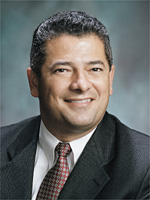
If the chatter among Florida charter school supporters is any indication, expect to see proposed legislation next spring that calls for equitable funding for charter schools and the return of charter authorizers who are independent from public school districts.
“This is a forced marriage that needs counseling,’’ joked Ralph Arza, a former Florida legislator who now serves as the governmental affairs director for the Florida Consortium on Public Charter Schools.
More than 100 charter school operators and advocates, who met Wednesday during the 16th Annual Florida Charter School Conference in Orlando, also want more streamlined applications and sanctions against districts that drag out the appeals process.
The way it works now, some applications call for thousands of pages of documentation, said Collette Papa of Academica, a charter school management company with about 100 schools in Florida. If a district denies the application, the appeals process can take anywhere from three to six months, Papa said. If the charter school wins approval, often it’s too late to hire teachers, secure a site and recruit students in time to open the same year, she said.
Papa was part of a 7-member panel that included Mike Kooi from the Florida Department of Education’s Office of Independent Education and Parental Choice, Pamela Owens of Charter Schools of Boynton Beach, Marvin Pitts of Mavericks in Education in south Florida, Gene Waddell of Indian River Charter High School in Vero Beach and Tim Kitts, who operates five Bay Haven Charter Academy schools in Panama City.
The panel discussion anchored a town hall meeting that kicked off the two-day conference. It was sponsored by the consortium and led by Arza, who served in the Legislature between 2000 and 2006 and helped pass education laws including former Gov. Jeb Bush’s A++ plan.
Since that time, Arza said, the state has slowly chipped away at the heart of school choice reforms. (more…)
When Florida Gov. Rick Scott unveiled his education agenda last week, he threw out a potentially far-reaching idea: Allowing districts to open their own charter schools.
The proposal could address a common complaint among traditional school districts - that federal and state bureaucracies prevent their schools from being as innovative as charter schools. But how would these District Charter Innovation Schools, as Scott called them, actually work? Would they truly be as flexible as independent charter schools?

Gov. Scott
We’re waiting to hear more. Scott didn’t spell out specifics, beyond saying the schools would operate with the same funding levels as other charter schools. His press secretary, Jackie Schutz, told redefinED she couldn’t provide any more details.
In the meantime, there may be clues in the handful of district-run charter schools that already have been approved by the state Department of Education. They don’t look like typical charter schools. But in some respects, they do veer from the framework of more traditional public schools.
The Academy for International Education Charter School in Miami Springs is a year-old “hybrid’’ school that offers a curriculum based on magnet and charter school programs, with students learning second and third languages.
The principal is a 30-year district employee who left the traditional public realm for the charter. The academy has a nonprofit board that is technically independent from the district, but has contracted with the Miami-Dade district for services, including custodial and cafeteria workers. The school also leases space from the district, significantly reducing facility expenses. Miami-Dade district and school officials did not return calls for comment.
In Polk County, DOE approved another district-run, charter endeavor, Step Up Academy, in August. (more…)
Florida charter schools, management companies and leaders are represented by at least two statewide organizations. But for years, charter school parents “were the lost group,’’ said Henry A. Rose, a longtime charter school advocate.
Rose decided to do something about it.
With help from the Florida Consortium of Public Charter Schools, the Fort Lauderdale-based nonprofit that counts about 400 charters as members, he and other parents formed Parents For Charter Schools in 2009.
Many charter school parents were involved with their local schools, but few knew the impact they could have in Tallahassee. The group, an arm of the consortium, now represents 4,000 to 5,000 members.
“I think a lot of them were surprised to learn, ‘Wow! We can make a difference,’ ’’ said Lynn Norman-Teck, the consortium’s spokeswoman.
Parents For Charters serves as a resource on schools, rules and legislation, and school choice issues. Kind of like a PTA, said Rose, a marketing and media consultant in Pembroke Pines.
Rose serves as co-chairman of Parents For Charter Schools and once led the Broward County public school district’s 250-school Parent Advisory Council. Though his children are grown now, his daughter taught in a Washington, D.C. charter school and his wife teaches at Franklin Academy Charter School in Pembroke Pines.
Like his family, Parents For Charter Schools members tend to be independent thinkers, Rose said. His job is to unite them for causes, such as proposed legislation, polls and conferences.
The latest example: Costco, the national grocery warehouse, sent a mass survey in its August magazine asking readers if charter schools were a good idea or a bad one. (more…)

Shannon
School district officials and state lawmakers aren’t the only ones outraged by a failing Orlando charter school that cut its principal a check, as it was closing its doors, for half a million dollars.
“This is totally unacceptable,’’ Cheri Shannon, president and chief executive officer of the Florida Charter School Alliance, told redefinED Friday.
Added Lynn Norman-Teck of the Florida Consortium of Public Charter Schools, in a prepared release: “The alleged behavior of NorthStar is the exception, not the rule. There are many examples of public charter schools, their governing boards, and administrators, with exemplary records.’’
The Orlando Sentinel reported Thursday that NorthStar High School’s board of directors paid Principal Kelly Young $519,453.36 in taxpayer dollars. The lump-sum payment occurred two days after the Orange County School Board accepted the school’s plan to close instead of being shut down by the district for poor performance.
The principal’s payout was based on a contract that paid her $305,000 a year through 2014, even though the school’s contract with the district was up for renewal in 2012, the Sentinel reported. In addition, the charter school is still paying Young $8,700 bi-monthly to oversee the school’s shutdown, the newspaper wrote.
The story has stoked criticism of charter schools, which receive public money but are run by private boards. And it comes at a sensitive time. Charter schools in Florida served 180,000 students last year and are expected to enroll twice that many by fall 2017. Proponents, including Gov. Rick Scott, are pushing for even greater expansion. (more…)
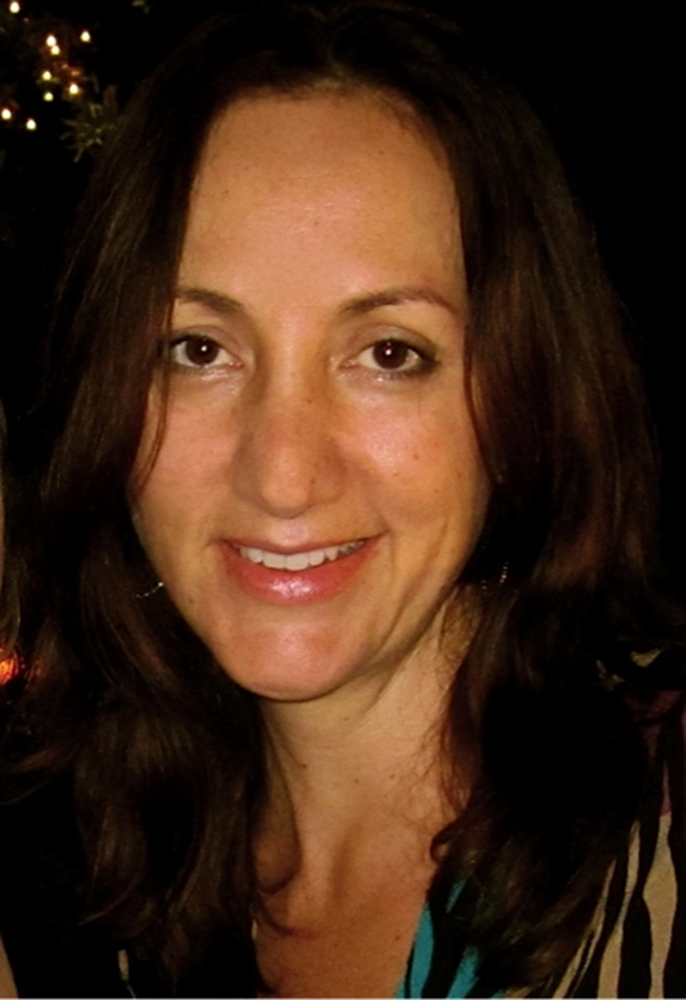
by Lynn Norman-Teck
Norman-Teck
Many factors have helped nourish and grow the charter school movement. There are forward-thinking legislators, both Democrats and Republicans, who worked together to approve legislation that supported parental choice. There are governors who made quality education a priority of their administrations. There are thousands of teachers and principals who used tried and tested curriculum, and also developed innovative educational programs to meet the specific needs of their students. There are charter school founders who collaborated with mayors, teachers, parents and community leaders to implement educational programs to reach communities and students most in need. And of course, there are school district leaders and board members who provided the necessary feedback and support to create quality choice programs.
However, when you put all these components together, and look at the trajectory of growth and incredible successes charter schools have experienced, there is no denying that parents are the movement’s most powerful, driving force.
Absolutely nothing has impacted charter schools more than parents. Without their buy-in and continued support, charter schools simply would not exist. The early charter school adopters were living in suburban areas where districts hadn’t built schools to meet residential sprawl. These parents sought schools close to home and helped forge the way for some of the state’s first and most accomplished charter schools. Urban families unable to afford private schools, yet searching for quality options, also jumped on board. Soon, charter schools were the hot topic of conversation at playgrounds and on the sidelines of little league games. This quiet, thoughtful revolution happened in every corner of the state. Parents shared information about their experiences, and their testaments fueled others to give charter schools a try.
Ileana Melian helped start Doral Academy, a charter elementary school in Miami, in 1998. She recalls with great affection the overwhelming support parents gave her school. “Our opening was a collaborative effort,” she said. “Parents rallied behind us at community meetings and were there the first day we opened to help in the cafeteria, direct traffic and support staff in a thousand ways. They were very much a part of our birth and our continued success.” Those parents later demanded, and got, a charter middle and high school.
Empowered by choice and the desire to find the best education option for their child, in little over a decade parental support grew charter schools from five in 1997 to more than 500 today. In 2010, parents took a bold step forward in their support of charter schools. (more…)

