by Doug Tuthill and Travis Pillow
The recent Florida adequacy lawsuit decision by Leon County Circuit Judge George Reynolds provides a window into the power struggles within public education and the constitutional contradictions that need to be resolved if public education is to achieve excellence and equity.
The lawsuit, which Reynolds dismissed, was originally designed to force state government to provide more funding to school districts. It was expanded last year to curtail school choice programs such as charter schools, tax credit scholarships for low-income children and vouchers for special needs students – an action that would reduce parents’ influence on how funds are spent on behalf of their children. What these choice programs have in common is that they provide students access to schools that are not owned and managed by school districts and controlled by teacher union collective bargaining agreements.
While the case was spearheaded by a public-interest law firm on behalf of a few parents and activists, the alliances that emerged in the witness lists and courtroom testimony of this Florida case are being replicated in political and legal battles across the country. State governments and low-income parents on one side. School boards, district administrators and teacher unions on the other. Their disagreements revolve around the distribution of power.
Most parents want to have more control over how their children are educated, while school districts and teacher unions oppose this decentralization, fearing it will diminish their power.
This raises fundamental questions, both for advocates who argued Florida’s educational system is constitutionally inadequate, and for those who felt vindicated by Reynolds’ findings that the situation is getting better.
If improving educational outcomes is the goal, should the state constitution empower the system, by giving more money and power to districts and their administrators, or should it empower parents and students directly? Should our constitution define a high-quality education solely as the government’s obligation, or should it be defined, first and foremost, as a right of every parent and child?
Florida’s constitution distributes power over public education in contradictory ways. Article IX, Section 1 states that public education is the “paramount duty of the state” and that “Adequate provision shall be made by law for a uniform, efficient, safe, secure, and high quality system of free public schools that allows students to obtain a high quality education.” Article IX, Section 4 requires counties to have local school boards, and that these boards “operate, control and supervise all free public schools within the school district.” (more…)
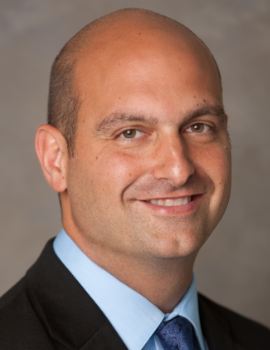
Vitti
To appreciate the significance of what Nikolai Vitti is saying about parental choice, one must first read his resume. He’s a 36-year-old with a Harvard education doctorate who served as chief academic officer to nationally recognized Miami-Dade school superintendent Alberto Carvalho before being chosen in the fall to run the Duval County school district, the 22nd largest in the nation.
So Vitti is, by anyone’s definition, a comer on the national public education scene.
And he says this: “I support choice because I think parents need options, especially those that do not have the financial means to go to a private school.”
And this: “I just don’t believe that anyone should tell a parent where they should send their child to school. I’m vehemently opposed to limiting options, especially to parents whose children are in lower performing schools or parents who don’t have the financial means to have the same flexibility that a parent would have of means. And that’s historically what’s happened with our public education system.”
These statements, in an enlightening podcast posted to this blog on Monday, are all the more impressive given that the school district he now commands has an uneasy history with private school choice. The pressure on him to continue to wage high-profile war is certainly great. But Vitti comes from a place, and perhaps a generation, where choice is not a dirty word. He openly praises charter operators such as KIPP, even borrowing from some of their practices while in Miami, and asserts that competition is making school districts up their game. In one of his first meetings on the new job, he recommended, and the school board approved, 12 new charter schools.
Vitti, then, is owed more than a pat on the back. He is also trying to break through the political divide to encourage open-minded debate on how to make choice actually work. Toward that end, he brings legitimate concerns to the table and needs to be heard. (more…)
 Our preoccupation these days with a Florida amendment removing the state’s no-aid-to-religion clause may strike some redefinED readers as a touch obsessive, and we won’t argue the point. But the truth is that we agonize over whether to write at all, and we want to explain why.
At the end of the day, we are confident that Amendment 8, whether it passes or fails, will have no legal effect on school vouchers. And yet opponents so far have invested $1 million in a campaign that argues otherwise. They not only contend the amendment will open the door to new vouchers, but that those programs will be, to borrow the words of one elected Alachua County school board member, “the very death of public schools.”
So the quandary is obvious. We’re a blog built around the new definition of public education, run by an organization that administers private options to low-income students, and we think we can bring clarity to the issue. But how do we complain about a debate that we say is falsely about vouchers without being viewed as though we doth protest too much? How do we enter the volatile, polarizing world of political campaigns and not be viewed as an angry combatant?
This is shaping up as a most peculiar campaign. The pro- and anti-amendment forces are on two entirely different planets, one fighting against the scourge of vouchers and the other extolling the virtues of faith-based community services. And yet the legal landscape is unmistakable: The state Supreme Court overturned Opportunity Scholarship vouchers in 2006 through a public education uniformity clause that would be untouched by this amendment. In other words, the principle barrier to any new vouchers is not on the ballot. That’s one of the reasons, and this is important to note again, that no groups supporting parental choice are spending a penny on this campaign. They see it as legally irrelevant.
We admit taking offense at some of the liberties that have been taken so far with the legal truth. And we’re left only to speculate on why the opponents would spend so much on an amendment that means so little in the education world. (more…)
 To allegedly help parents understand Amendment 8, one of Florida's biggest school districts has distributed 69,000 fliers, punctuated by scary claims, in all of its school lobbies and reception areas. "VOTE ON NOVEMBER 6," they say. "Amendment 8 could impact your public school."
The Orange County school district tells redefinED the fliers don't cross the line into advocacy because they're for informational purposes and state, at the top, "IT'S YOUR DECISION." But the fliers are filled with the same misinformation being spread far and wide by the Florida Education Association, Florida School Boards Association and Fund Education Now - and left unchallenged by Florida journalists.
"If Amendment 8 passes, potentially billions of state dollars could be diverted from public schools," the flier says. "If Amendment 8 passes, public funds could be redirected into private hands by funding the education of hundreds of thousands of students in private and religious schools."
Not true. We've detailed why here and here. Amendment 8 would remove the no-aid to religion language in the Florida Constitution, which is a proposition that deserves debate. But to suggest it opens the door to private school vouchers is more than a stretch; it's wrong. Like the same claims made at school board meetings and in press releases, the ones on the district fliers don't offer any supporting evidence - and, as far as we can tell, no reporters have asked for any. In Florida, truth continues to go off the rails.
 Add Fund Education Now to the list of influential groups who are distorting what Amendment 8 is about. Like the Florida Education Association, the Florida School Boards Association and the Florida PTA, Fund Education Now claims the ballot initiative is really all about vouchers.
The amendment would remove the “no aid” to religion language in the Florida Constitution. That language, Fund Education Now says in its just-released 2012 legislative report card, “has prevented voucher proponents from enacting law to provide state vouchers directly to private religious schools.”
This is false. As we’ve noted before, Florida’s first voucher program wasn’t declared unconstitutional in 2006 because of the no-aid clause; the Florida Supreme Court shot it down because of another constitutional provision that mandates a “uniform” public school system. The court conspicuously avoided the no-aid language, even though a lower court used it, after the U.S. Supreme Court ruled in 2002, in Zelman v. Simmons-Harris, that parents could use public funds to pay for religious schools as long as they were making an independent decision.
On a related note, the Bradenton Herald weighed in today with, as far as we can tell, the first newspaper editorial on Amendment 8. It urges a no vote because “the real goal is future school voucher programs,” but provides no supporting evidence to show why that’s the case.
There’s a legitimate debate to be had over Amendment 8, but it’s not happening. Ironically, it’s educators, public school "defenders" and journalists who are clouding what should be a vigorous exercise in civics.
 There are times when it’s appropriate for a journalist to boil down a story into a he-said, she-said. And there are times when it’s just lackluster reporting.
As Jon East has noted in this blog post and this op-ed, Florida’s Amendment 8 – the “religious freedom amendment” – is not about private school vouchers. It’s clear if you look at the legal history for private education options in Florida. It’s clear if you look to see who is and isn’t bankrolling the campaign.
And yet, one news story after another has allowed the Florida Education Association, the Florida School Boards Association and other school choice critics to posit that it is about vouchers – and to let those assertions go unchallenged. Often it’s in terms so deep into an alternate reality, they beg for a little scrutiny. According to the Gainesville Sun, for example, an Alachua County School Board member described Amendment 8 as “the very death of public schools.”
With six weeks left before the vote, statements like these are surfacing in major newspapers nearly every day. Here are a few examples, along with how the story captures the legislative intent of the amendment, the constitutional underpinnings of school vouchers, the lack of a campaign or financial support by school voucher advocates, the factual history of private options in a state that now provides them to more than 200,000 students, or just some form of a statement from those with an opposing view:
From the South Florida Sun Sentinel (Aug. 21):
“Amendment 8 would remove the long-standing restriction in the Florida Constitution that prohibits the expenditure of public funds to support religious programs," the resolution (from the Broward County School Board) reads. "Passage of Amendment 8 could result in state funds being awarded to non-public schools, instead of allocated to support public and charter schools.”
The resolution stops short of saying whether those would be good or bad outcomes, but it was obvious where board members stood.
"We have a limited amount of resources, and you would continue to strain the resources for public and charter schools," board member Robin Bartleman said.
Response from other side: None
Supporting evidence: None
***
From the Daytona Beach News Journal (Sept. 15):
The title and wording of the amendment were the subject of a lawsuit in which Ormond Beach school principal Susan Persis and Palm Coast rabbi Merrill Shapiro were plaintiffs.
They and other representatives of school-related organizations and clergy tried to get the amendment thrown off the ballot, but a judge allowed it to go before voters after Florida Attorney General Pam Bondi rewrote the proposal.
Persis said she fears passage of Amendment 8 would divert money from public schools to religious ones. "This would further reduce funding for public education," said Persis, who's principal of Pine Trail Elementary. "Any further reduction will be devastating to our schools." (more…)
 The battle over an amendment to Florida’s no-aid-to-religion clause has taken another intriguing turn. In campaign contribution reports released today, the money war pits the Florida Education Association against Catholic groups. FEA is winning 6-to-1.
Through the Public Education Defense Fund, the FEA contributed $1 million through Sept. 14 to defeat the amendment, according to the reports. On the flip side, a long list of Catholic groups has contributed the bulk of the $158,500 raised through the same time frame to support the effort. The pro-Amendment 8 group, Citizens for Religious Freedom & Non-Discrimination, has spent about $43,221. Vote No on 8, meanwhile, has spent $759,003, mostly on media buys.
The amendment removes a clause in the State Constitution that has historical origins in anti-Catholic church bias, which hits home with church members to this day. A New York-based group, the Council for Secular Humanism, has sued to stop a prison ministries program to help inmates get off drugs, and religious providers fear the suit could lead to challenges involving other faith-based community services, such as Catholic Charities and the YMCA.
Meanwhile, FEA is waging its own campaign – against school vouchers – even though this amendment does not change the one constitutional provision that was cited by the Florida Supreme Court when in 2006 it outlawed a voucher that was the signature effort of former Gov. Jeb Bush. Voucher advocates are no longer interested in the no-aid amendment because they think two U.S. Supreme Court opinions provide ample protection.
So this showdown is looking stranger by the minute. One side fights against vouchers, the other for soup kitchens.
(Image from political-reform.net)

