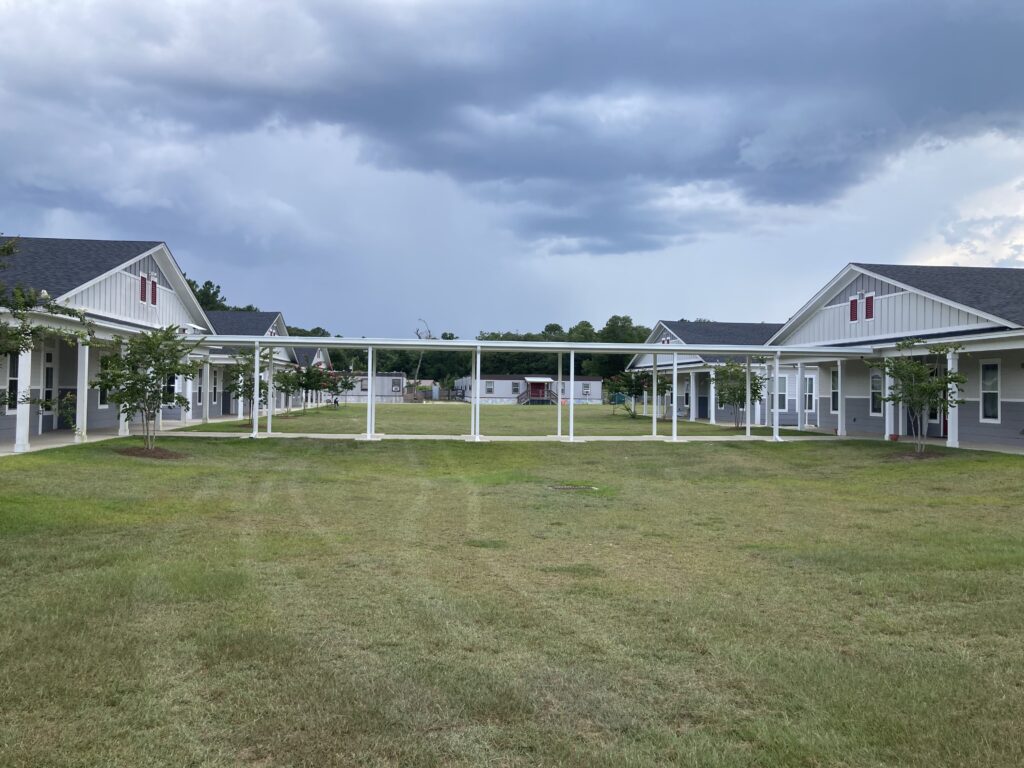
HAVANA, Fla. – It was a typical July afternoon in Florida’s Panhandle. The air was hot and sticky, and the sun hid behind the dark gray thunder clouds building to the north of Robert F. Munroe Day School in Havana.
A warm breeze kicked up, signaling the approaching late-day storm.
The students who darted about earlier during summer camp, and the staff and teachers who spent their day on campus preparing for the upcoming school year, were mostly gone.
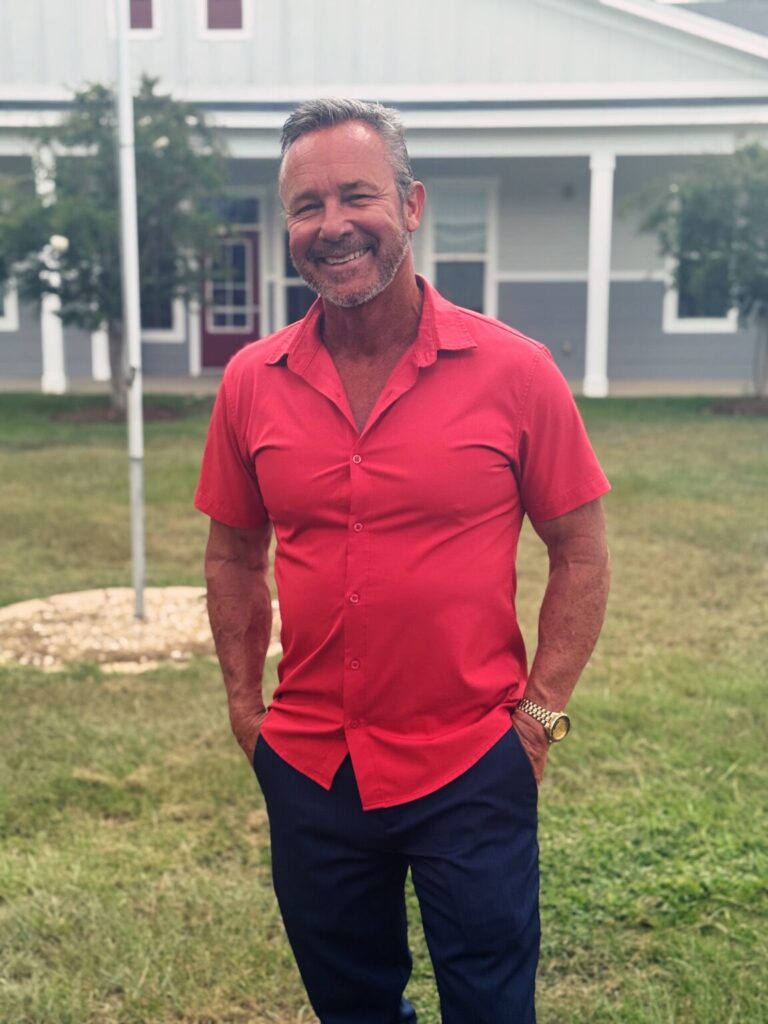
Andy Gay, head of school, remained. So did Shanna Halsell, director of advancement and marketing. They spent the better part of the day with a visitor, explaining the efforts necessary to keep Robert F. Munroe Day School (RFM) open, despite financial shortcomings, an exodus of teachers, and declining enrollment that not too long ago threatened to close the private pre-K-12 school.
But that gloomy forecast never happened.
In Gay’s first three years on the job, enrollment has increased, and test scores are on the rise.
Several factors came into play for the turnaround, including the expansion of Florida’s education choice scholarship programs managed by Step Up For Students.
“The Step Up scholarship saved this school,” Gay said. “This school has always been on the verge of shutting down, and we’d have closed without it.”
But RFM’s story is more than just the creation in 2022 of the Family Empowerment Scholarship for Educational Options, which increased the income requirements for eligible families, making a private school education more affordable to families.
Parents need more than money to send their children to a private school. They need a reason to send them there.
And that’s where Gay comes in. He is a graduate of RFM. So is his wife, and so are his two sons and his daughter.
“We’re a Munroe family,” Gay said. “I love this place. It has a soft spot in my heart.”
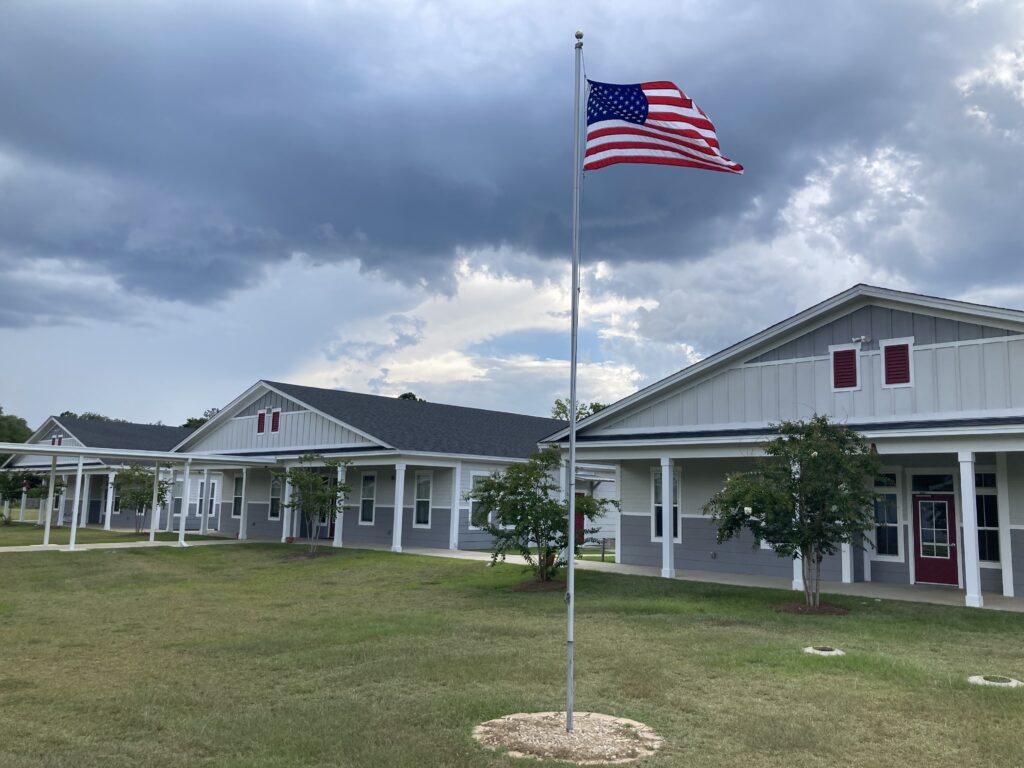
That’s the reason RFM’s board of trustees sent an SOS to Gay before the start of the 2022-23 school year.
“We needed him,” Libby Henderson, the immediate past president of the school’s board of trustees, said.
A native of Gadsden County, Gay has deep roots in the community. And, as a former teacher, coach, and administrator in the county school district, Gay is well-versed in how to run a school.
Also, he was available.
Sort of.
Gay had just retired after 32 years in education. He was ready to spend his days fishing and playing with his grandchildren.
That lasted two weeks.
“He indicated he was interested and could be talked out of retirement,” Henderson said.
Gay, who always wanted to run a school, accepted the offer, telling the trustees that he would work for two years. This year is his fourth as head of school.
“I don’t know,” he said, “I fell in love with the job.”
Eventually.
Gay admitted that what he found when he took over was not what he expected. The test scores for reading and math were below grade level.
“I saw a lot of disturbing data, and I knew that there had to be some drastic reform,” he said.
Where to start? The faculty.
Gay filled the vacancies with a mix of seasoned teachers and college graduates.
“It's always been my philosophy that there's no one more important than the teacher in the classroom,” Gay said. “So, I got busy trying to hire people that I knew would get the job done, that I could trust, that I knew.
“With the young teachers, I felt that we could give them the support they needed and turn them into good teachers.”
Gay has coached football and track. He won back-to-back state track titles and came within three points of winning a third straight. He knows how to build a staff of assistant coaches. You hire coaches for their expertise and let them coach.
It’s the same with the teachers.
“The cool thing about Andy that I love is he’ll help you if you need help,” said Anthony Piragnoli, who is in his sixth year at RFM and teaches high school English and coaches the middle school football team. “Now, if you're a new teacher and you kind of need some help, he'll definitely help you out and give you all the resources and all the tools you need. But if you're more experienced, he kind of lets you, I don't want to say do your own thing, but he gives you the freedom to teach the way you want to teach.”
Of course, nothing is more important to a school than the students themselves. To raise the academic bar, Gay and his staff created a welcoming, yet demanding culture.
“It’s all about the expectations you put on the kids,” he said.
And the expectation was that they would become better readers.
Gay instituted DEAR Time, which stands for “Drop Everything And Read.”
A first-grade teacher came up with the idea for the Bobcat Buddy Program, which pairs upper school students with lower school students for mentorships and companionship.
That led to Bobcat Buddy Book Day, where upper school students bring a book or check one out from the library to read to their lower school buddy.
“You go out on campus, and you see kids lining the sidewalk or on the playground, and the big buddy is reading to the little buddy, and I think that is wonderful,” said Dawn Burch, director of education.
The programs work. Two years ago, only 48% of RFM students were reading at grade level. That has increased to 73%.
Halsell’s data shows the school experienced 93.8% growth across the board in reading, math, and science since Gay took over. Last year, 13 of 30 seniors graduated with associate's degrees through the school’s newly implemented dual enrollment program.
But it takes more than just the teachers to get students to work harder. The parents have to buy in, too.
“I want partnerships between parents and teachers,” Gay said. “It can’t be adversarial. I found it makes a huge difference in the overall academic growth of the child when there is a partnership.”
Toward that end, parents are always welcome on campus. Teachers are encouraged to call parents when their child does something positive in class.
“We can call about good stuff, too,” he said.
There is an excitement around RFM that hadn’t been there in years, Henderson said. Last year’s alumni golf tournament raised $25,000, which went toward the school’s curriculum. Halsell works tirelessly to reconnect with alumni and build a network of donors. She recently announced that the school secured a $500,000 grant for its STEM program.
The school sits on 44 acres with plenty of room to expand. A new gymnasium would be nice.
Those rain clouds that appeared over the school on that July afternoon did little more than threaten. Much like the metaphorical storm clouds that were forming when Gay took the job.
“He’s done a phenomenal job,” Henderson said.
Two years turned into four for Gay, and four can turn into who knows how long.
“I feel like I will stay here as long as I continue to see progress and I continue to feel good about this place,” Gay said. “Right now, I feel like we're on the verge of some greatness.”

By David Heroux and Ron Matus
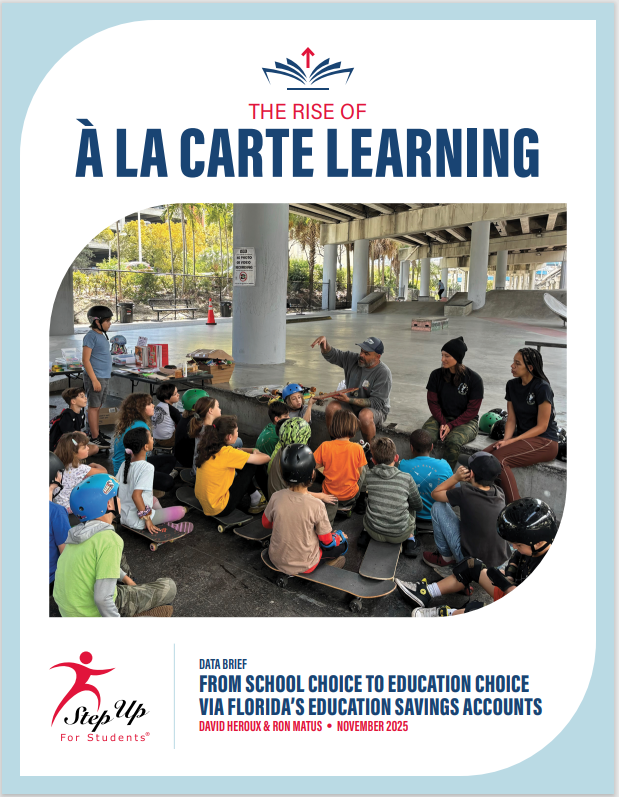
In the blink of an eye, à la carte learning in Florida has become one of the fastest-growing education choice options in America.
This school year, 140,000 Florida students will participate in à la carte learning via state-supported education savings accounts, up from 8,465 five years ago. Their parents will spend more than $1 billion in ESA funds.
These families are at the forefront of epic change in public education. Completely outside of full-time schools, they’re assembling their own educational programming, mixing and matching from an ever-expanding menu of providers.
Nothing on this scale is happening anywhere else in America.
To give policymakers, philanthropists, and choice advocates a snapshot, we produced this new data brief. In broad strokes, it shows a more diverse and dynamic system where true customization is within reach for any family who wants it.
ESAs shift what’s possible from school choice to education choice. They give more families access not only to private schools, but tutors, therapists, curriculum, and other goods and services.
Adoption of these more flexible choice scholarships has been booming nationwide; 18 states now have them. But nowhere is their full potential more fully on display than in Florida.
Last year, 4,318 à la carte providers in Florida received ESA funding, more than double the year prior. Many of them are tutors and therapists, but a growing number offer more specialized and innovative services, as we highlighted in our first report on à la carte learning. Former public school teachers are also a driving force in creating them, just as they’ve been with microschools.
How far and fast à la carte learning will grow remains to be seen. For now, check out our brief to get a glimpse of what’s ahead.
The future of education is happening now. In Florida. And public school districts are pushing into new frontiers by making it possible for all students, including those on education choice scholarships, to access the best they have to offer on a part-time basis.
That was the message Keith Jacobs, director of provider development at Step Up For Students, delivered on Excel in Education’s “Policy Changes Lives” podcast A former public school teacher and administrator, Jacobs has spent the past year helping school districts expand learning options for students who receive funding through education savings accounts. These accounts allow parents to use funds for tuition, curriculum, therapies, and other pre-approved educational expenses. That includes services by approved district and charter schools.
“So, what makes Florida so unique is that we have done something that five, 10, even, you know, further down the line, 20 years ago, you would have never thought would have happened,” Jacobs said during a discussion with podcast host Ben DeGrow.
Jacobs explained how the process works:
“I’m a home education student and I want to be an engineer, and the high school up the street has a remarkable engineering professor. I can contract with the school district and pay out of my education savings account for that engineering course at that school.
“It’s something that was in theory for so long, but now it’s in practice here in Florida.”
It is also becoming more widespread in an environment supercharged by the passage of House Bill 1 in 2023, which made all K-12 students in Florida eligible for education choice scholarships regardless of family income. According to Jacobs, more than 50% of the state’s 67 school districts, including Miami-Dade, Orange, Hillsborough and Duval, are either already approved or have applied to be contracted providers.
That’s a welcome addition in Florida, where more than 500,000 students are using state K-12 scholarship programs and 51% of all students are using some form of choice.
Jacobs said district leaders’ questions have centered on the logistics of participating, such as how the funding process works, how to document attendance and handle grades.
Once the basics are established, Jacobs wants to help districts find ways to remove barriers to part-time students’ participation. Those could include offering courses outside of the traditional school day or setting up classes that serve only those students.
Jacobs said he expects demand for public school services to grow as Florida families look for more ways to customize their children’s education. That will lead to more opportunities for public schools to benefit and change the narrative that education is an adversarial, zero-sum game to one where everyone wins.
“So, basically, the money is following the child and not funding a specific system. So, when you shift that narrative from ‘you're losing public school kids’ to ‘families are empowered to use their money for public school services,’ it really shifts that narrative on what's happening here, specifically in Florida.”
Jacobs expects other states to emulate Florida as their own programs and the newly passed federal tax credit program give families more money to spend on customized learning. He foresees greater freedom for teachers to become entrepreneurs and districts to become even more innovative.
“There is a nationwide appetite for education choice and families right now…We have over 18 states who have adopted some form of education savings accounts in their state. So, the message to states outside of Florida is to listen to what the demands of families are.”
When I think about the state of public education in Florida, I recall a song from “The Wiz,” the 1978 film reimagining of “The Wizard of Oz,” where Diana Ross sang, “Can’t you feel a brand new day?”
It’s a brand new day in our state’s educational history. Parents are in the driver’s seat deciding where and how their children are educated, and because the money follows the student, every school and educational institution must compete for the opportunity to serve them.
Public schools are rising to meet that challenge.
For the past year, helping them has been my full-time job.
Today, 27 of Florida’s 67 school districts have contracted with Step Up For Students to provide classes and services to scholarship students, and another 10 have applied to do so.
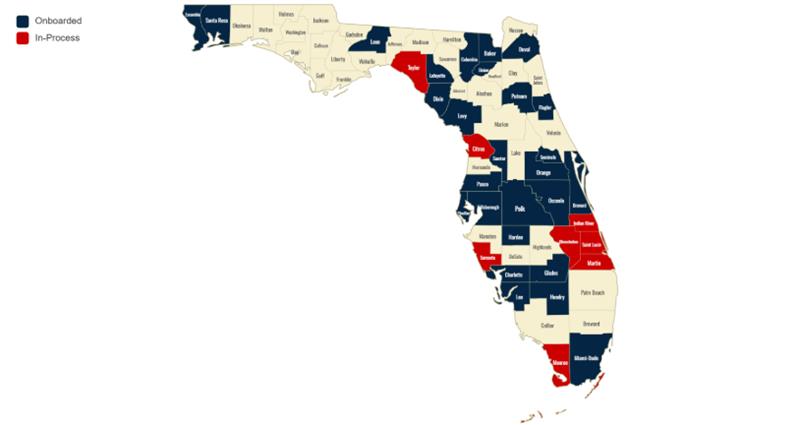
That’s up from a single school district and one lone charter school this time a year ago.
This represents a seismic shift in public education.
For decades, a student’s ZIP code determined which district school he or she attended, limiting options for most families. For decades, Florida slowly chipped away at those boundaries, giving families options beyond their assigned schools.
Then, in 2023, House Bill 1 supercharged the transformation. That legislation made every K-12 student in Florida eligible for a scholarship. It gave parents more flexibility in how they can use their child’s scholarship. It also created the Personalized Education Program (PEP), designed specifically for students not enrolled in school full time.
This year, more than 80,000 PEP students are joining approximately 39,000 Unique Abilities students who are registered homeschoolers. That means nearly 120,000 scholarship students whose families are fully mixing and matching their education.
Families are sending the clear message that they want choices, flexibility, and an education that reflects the unique needs and interests of their children.
Districts have heard that message.
Parents may not want a full-time program at their neighborhood school, but they still want access to the districts’ diverse menu of resources, including AP classes, robotics labs, career education courses, and state assessments. Families can pay for those services directly with their scholarship funds, giving districts a new revenue stream while ensuring students get exactly what they need.
In my conversations with district leaders across the state, they see demand for more flexible options in their communities, and they’re figuring out how to meet it.
For instance, take a family whose child is enthusiastic about robotics. In the past, their choices would have been all-or-nothing. If they chose to use a scholarship, they would gain the ability to customize their child’s education but lose access to the popular robotics course at their local public school. Now, that family can enroll their child in a district robotics course, pay for it with their scholarship, and give their child firsthand technology experience to round out the tutoring, curriculum, online courses and other educational services the family uses their scholarship to access.
Families can log in to their account in Step Up’s EMA system, find providers under marketplace and select their local school district offerings under “contracted public school services.” School districts will get a notification when a scholarship student signs up for one of their classes. From large, urban districts like Miami-Dade to small, rural ones like Lafayette, superintendents are excited to see scholarship students walk through their doors to engage in the “cool stuff” public schools can offer. Whether it’s dual enrollment, performing arts, or career and technical education, districts are learning that when they open their arms to families with choice, those families respond with enthusiasm.
Parents are no longer passive consumers of whatever system they happen to live in. They are empowered, informed, and determined to customize their child’s learning journey.
This is the promise of a brand new day in Florida education. For too long, choice has been framed as a zero-sum game where if a student left the public system, or never even attended in the first place, the district lost. That us-versus-them mentality is quickly going the way of the Wicked Witch of the West. What we are witnessing now is something far more hopeful: a recognition that districts and families can be partners, not adversaries, in building customized learning pathways.
The future of education in Florida is not about one system defeating another. It is about ensuring families have access to as many options as needed, regardless of who delivers them.
As Diana Ross once sang, “Hello world! It’s like a different way of living now.” It has my heart singing so joyfully.
MELBOURNE, Fla. – When it comes to her son’s education, Denice Santos always thinks about the big picture.
“What can we do to merge his goals?” she said. “Education, and then, of course, becoming a pilot.”
Her son, William, 12, has wanted to fly airplanes for half his life. He took control of a plane for the first time when he was 8. He’s nearly halfway to the required 51 hours of flight time needed to earn a pilot’s license.
A Florida education choice scholarship is helping him reach that goal.
William receives a Personalized Education Program (PEP) scholarship available through the Florida Tax Credit Scholarship Program managed by Step Up For Students. PEP provides parents with flexibility in how they spend their scholarship funds, allowing them to tailor their children’s learning to meet their needs and interests.

William Santos stands in front of a two-engine airplane that he has flown during his training flights.
For his needs, William attends Florida Virtual School, where he is a straight-A student.
For his interests, William heads to Melbourne Flight Training twice a month for flight lessons. Both are paid for with his PEP scholarship, with the flight lessons covered under enrichment courses.
“I’m not just thinking about right now, his education experience right now. I’m thinking long term,” Denice said. “What’s after school? What’s school building to?”
William said he is thinking about attending the United States Air Force Academy. Or maybe a career in law enforcement where he could put his flying skills to use. Border patrol? Possibly.
He’s recently developed an interest in flying helicopters, which could open another career avenue. The family lives in Melbourne Beach, located in Brevard County, and the Brevard County Sheriff's Office has an aviation unit with four helicopters.
He could also become a commercial pilot and fly for an airline or fly charters for a private company.
“The sky is the limit,” said Denice, who chuckled at her choice of words.
***
William was 6 when he attended the Cocoa Beach Air Show with his mother and father, Kevin. There were flying machines everywhere – F-22s and F-35s, F-16s and B-52s. They screamed overhead and rested majestically on the ground.
He was hooked.
When they were leaving, William said, “Mom, when I grow up, I’m going to be a pilot.”
“He’s always been super decisive,” Denice said. “I knew he wasn’t kidding.”
Denice checked for the minimum age requirement needed to begin flying lessons. Turns out, there is none. You do have to be between 8 and 17 to participate in the nationwide Young Eagles program, which offers free introductory rides for youngsters interested in flying. William was in the air as soon as he turned 8.
“They take kids up for 30 minutes with the pilot, and they get a little taste of it to see if they like it. Is this something? Are they afraid, or does it spark something? William did 10 of those, and we said, ‘OK, this is a thing.’”
Soon, Denice and Kevin were searching for a flight school. They settled on Melbourne Flight Training, which is 20 minutes from home.

William poses in front of the wall containing pictures of all the pilots who earned their license after training at Melbourne Flight Training.
“When I was a kid, I always liked planes,” William said. “Even when I would go on flights as a baby, I would never cry. I would love it, every minute. It was the best thing ever. And I was never really afraid of heights. It didn't bother me much.”
That’s good, because his first flight with Young Eagles was in a BushCat Light Sport Aircraft, a small plane that has non-traditional doors – they are clear plastic and can be removed. You can fly with or without them.
“It was kind of ever so slightly scary,” William said. “Since I was young, I was like, ‘Uh, am I sure about this?’ And many, many flights later, I'm here.”
He has flown 25 times with an instructor and has nearly 20 hours of flight time. He will need to turn 17 and have a minimum of 51 hours before he’s licensed. He will also need to be medically certified to fly and pass a written exam that covers weather, navigation, flight regulations, and aerodynamics.
Dr. Tracey Thompson, the student advisor at Melbourne Flight Training, said it’s not uncommon for someone as young as William to take lessons.
“But,” she added, “he’s been up 25 times, and for someone his age to be up that many times, that’s phenomenal. His consistency, his passion, he wants to do this all the time.”
Jonathan Gaume is William’s instructor. He said he’s never worked with a student this young and is impressed by William’s interest and enthusiasm.
While he’s on pace to reach his 51 hours when he’s 17, William would like to accelerate his training and reach those hours when he’s 16.
Why?
“Because I find this fun,” he said.
As for being one of the youngest pilots training at Melbourne Flight Training, “You know, it's been really the only thing I’ve done since I was 8. It’s been the thing I've always looked forward to.”
***
William has trained several times in a four-seat plane, and Denice has accompanied him during those flights. She said she’s noticed a level of peace when William is flying.
Gaume noticed it, too. He said William’s confidence spikes as they climb into the aircraft.
“He has key elements to being a good pilot: calm, confident and in control,” Gaume said.
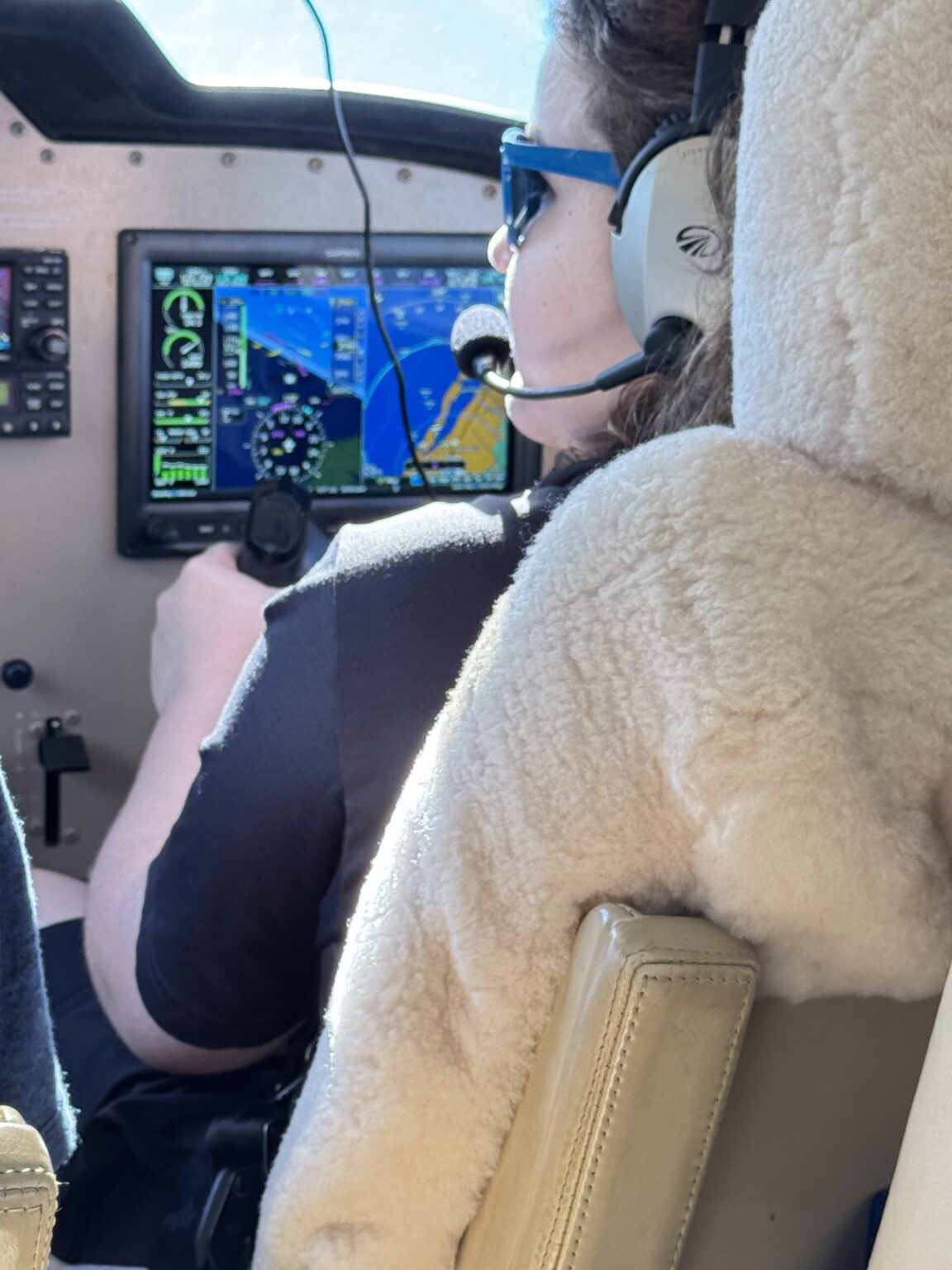
William at the controls. (Photo courtesy of Denice Santos)
The flight path takes William over the Atlantic Ocean, where they sometimes fly around thunderstorms. A recent lesson took place in a twin-engine plane. Gaume killed one of the engines, and William had to keep the plane flying. Confident and in control, William did just that.
“We’re just so thrilled, just so happy to plug him into his dream,” Danica said. “To be in the plane with him, seeing him flying, just seeing him totally locked in, that's all a parent can wish for.”
Flying lessons cost between $300 and $500 depending on airtime, and William averages about two lessons a month. That can strain the family budget for Denice, a teacher at Florida Virtual School, and Kevin, who is retired after 22 years in the U.S. Army.
“It’s not like we’re rolling in the dough,” Denice said. “The scholarship makes this possible. If we didn't have that scholarship, how many flights would he get? Probably not as many as he's getting now.
“I'm thrilled to be in Florida, because there's so much parental choice here. Not only do parents have choices, but then they can branch out and get some financial support from the state for those choices. Amazing. It's awesome.”
Every family in Florida that receives an education choice scholarship uses it in their own, unique way. Denice encourages parents to be as forward-thinking as possible, to merge education and interests and work toward a goal.
“I would like more people to think beyond where their kid is right now, but what are they good at. Really invest in that and tune in and give them the most experience as you can,” she said. “To me, that's what the scholarship money is for, branching out, tap into your kids’ interests because you never know what can happen.”
As Denice said, the sky is the limit.
Florida gives parents the ability to direct the education of their children. Today about half of all K-12 students in the state attend a school of choice, and 500,000 students participate in state educational choice scholarship programs.
Gov. Ron DeSantis accelerated these trends in 2023, when he signed HB 1 and made every student eligible for a scholarship. No school can take any student for granted, and state funding follows students to the learning options they choose.
Unfortunately, misleading claims amplified in the media have blamed this expansion of parental choice for school districts’ budget challenges.
Sarasota County Schools, for example, recently estimated that scholarships “siphoned” $45 million from its budget, a figure cited in a WUSF article. In reality, most of the $45 million represents funding for students that Sarasota was never responsible for educating, such as those already in private schools, homeschooling or charter schools. It also does not account for students who return to district schools after using a scholarship. Once those factors are considered, the actual impact is considerably smaller than the headline number suggests.
For the 2024-25 school year, Sarasota County lost just 330 public school students to scholarship programs, but only 245 of those students came from district-run public schools. If those students had stayed, they would have brought the district about $2 million, not $45 million. That figure still does not account for the students who returned to district schools after using a scholarship the prior year, so the real impact would be smaller.
Other districts have been vocal about their budget difficulties, often attributing them solely to growing scholarship demand, such as Leon County Public Schools, which in 2024-25 lost 240 students from district-run schools (0.8% of enrollment), and Duval County Public Schools, which lost 1,237 students (1.2% of enrollment).
Statewide, 32,284 students left public schools in 2024-25 to use a scholarship. That is only 1.1% of all public-school students in Florida, and even that total includes those who previously attended charter schools, university-affiliated lab schools, virtual schools, and other public-school options.
Looking at district-run schools alone, just 24,874 new scholarship students left for scholarship programs in 2024-25. Another 5,507 came from charters, and 1,897 came from virtual schools. In fact, as a percentage of their total enrollment, charter schools lost more students to scholarship programs (1.4%) than district-run schools did (1%).
This means that the expanded scholarship program may be having a bigger impact on charter schools than districts. Charter schools, however, haven’t been as vocal about vouchers, and that is likely because charters continue to grow enrollment while district schools have started to shrink.
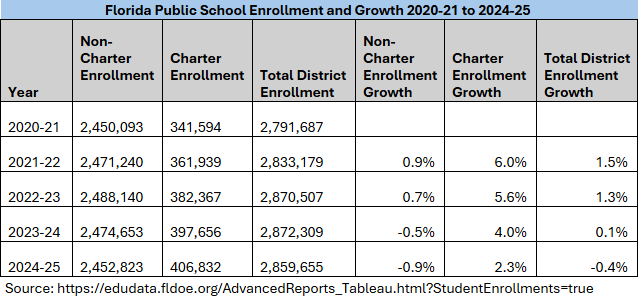
Enrollment declines in some districts have been real, even if the blame on scholarships is misplaced.
Declining enrollment is being driven by parent preferences – but also by shifting demographics and the ebb of the post-Covid population boom. Florida is one of the few states where overall K-12 population is expected to continue growing, but the growth will be uneven, and every school will have to compete for students.
Even as they face intense competition and demographic headwinds, Florida’s charter schools have kept growing. Some innovative district leaders have signaled a willingness to hear the demand signals from parents and create new solutions to meet their needs.
Understanding what parents seek in private and charter schools, and how new public-school models can better meet those demands, would be a good place for districts to start.
Pre-K and Voluntary Pre-Kindergarten (VPK) have also been major feeders for Florida’s scholarship programs. In 2024-25, 53,825 new scholarship students came from pre-K — somewhere between one-third and nearly half of all VPK students statewide.
Public schools have limited Pre-K offerings. Statewide, there are less than one-third as many Pre-K students as kindergartners enrolled in public schools. Private schools, by contrast, have used it as a key pipeline to recruit future students.
Districts have other avenues to respond to changing parent demands. Since 2014, when the Family Empowerment Scholarship for Students with Unique Abilities (FES-UA) was introduced as the Personal Learning Scholarship Accounts, districts have been allowed to offer classes and services to scholarship students.
The passage of HB1 in 2023 transformed every state scholarship into an education savings account. K-12 families now have more flexibility to use scholarships for “a la carte learning,” in which they pick and choose from a variety of educational options. By offering part-time instruction, tutoring, therapy, and other services, districts can win back students and the associated funding. So far, 21 of Florida’s 67 districts have taken advantage of this opportunity, with 10 more in the pipeline.
Florida’s enrollment shifts are real, but data shows the “voucher drain” narrative overstates the impact. The real challenge for districts is not money being “siphoned;” it is families choosing other options. Districts that adapt and compete for students will keep both enrollment and funding – leaving students, families and taxpayers better off.
TAMPA, Fla. – It was July 2024, and Jack Canterbury celebrated a birthday. His 14th. That led to a question he had been waiting a while to ask his mother.
“Can I get a job?”
Maria Canterbury had promised her son he could start working when he reached that age, and Jack had some employment opportunities in mind. Making subs at a sandwich shop. Busing tables at a restaurant. Playing in the NBA, but he knew he was too young for that.
Well …, said Maria.
Jack, who has Down syndrome, was about to enter the seventh grade at Morning Star School. He attended the K-8 Catholic school in Tampa for students with learning disabilities on a Family Empowerment Scholarship for Students with Unique Abilities (FES-UA), managed by Step Up For Students.

Jack stands next to SNacks by jACK 321, his legacy at Morning Star School in Tampa.
Morning Star does not have a cafeteria, so the only food available to students and staff during the day is whatever they bring for lunch.
After some thought, mom and son had what Maria described as a “bright idea.”
How about a vending machine at the school that sells healthy snacks and drinks? They have a close family friend who is in the vending machine business. Surely, he could help them out.
“Jack loved it,” Maria said.
But would anyone else? Would Morning Star Principal Eileen Odom go for the idea? Would parents, ever mindful of what their children eat, allow them to buy a snack out of a machine?
The answer to both questions was a resounding yes.
Odom knew of an empty space in a mid-campus hallway that was just the right size for a vending machine. Her maintenance staff agreed, saying they would do whatever it took to make it work.
“The spot couldn’t have been more perfect,” Maria said. “It was just waiting for a vending machine. It was meant to be.”

The family friend gave them a deal on a used vending machine, and SNacks by jACK 321 opened for business early in the 2024-25 school year.
“It’s been a nice treat for our students,” Odom said. “We started small, because we didn’t know how parents would react to snacks at school, but it just took off.”
Maria said the whole family came up with the name of Jack’s business – She and her husband Jason, Jack and his sister, Kate.
The capital letters spell “snack,” and 321 is for Trisomy 21, which is the medical term for Down syndrome. Also, March 21 (3/21) is World Down Syndrome Day.
SNacks by jACK 321 is stocked with Funyuns and Sun Chips. Skinny Pop and Barnum’s Animal Crackers. Gatorade, iced tea, sparkling water, and lemonade. And Diet Coke, but that’s only for the teachers.
The snacks and drinks cost between 50 cents and $1.25, and customers can pay with coins, credit cards, and Apple Pay. Jack donated 10% of the proceeds to Morning Star.
Jack is learning about running a business one box of animal crackers at a time. He has to track inventory and handle money. On weekends, he and his parents head to Sam’s Club for supplies. Jack and Maria restock the machine at least once a week.
“I think this is an amazing thing for Jack,” Odom said. “He has a real entrepreneurial spirit.”

Vanessa Florance, who taught Jack last year at Morning Star, said Jack’s side hustle turned into a learning experience for his schoolmates. She watched students learn to count change before making a selection and learn which number on the number pad corresponds with which snack. There was also a writing pad on the wall opposite the machine where students could leave suggestions for additional snacks, which they did.
“It was all these little lessons for everybody,” Florance said.
Jack said his first year as an entrepreneur was fun.
“And I like spending time with my mother,” he added.
Jack is one of the more personable students at the school. Also, one with deep faith. He carries a copy of the Ten Commandments in the small satchel he wears at all times, and while not Catholic, he participates in school-wide mass and is very inquisitive about the Bible verses he learned in religion class.
“He always made sure to greet me in the hallway, saying ‘Good morning,’ or ‘Good afternoon,’” said Morning Star teacher Jennifer Almedia. “And if I didn’t see him for some reason, he would make it a point to come and find me and make sure I saw him. He never misses an opportunity to greet his teachers.”
Maria and Jason have not treated Jack differently because he has Down syndrome. He’s expected to do his share of chores around the house and is allowed to dream as big as he wants. One of Jack’s dreams is to be an NBA superstar.
“We anticipate him going through high school, going to college of his choice, with specific programs,” Maria said.
They have already looked into ClemsonLIFE, a program at Clemson University for students with intellectual disabilities.
“He knows expectations are for him to further his education outside of high school,” Maria said. “Now, if you ask him, he wants to drive, join the military, get married, and have kids. Not sure he'll be able to do all of those things in that order, but that's what he envisions himself doing, and we don't tell him any differently.”
One thing Jack won’t do, though, is graduate from Morning Star, the school he attended in the sixth and seventh grades.
Because the school only goes through grade eight, Maria and Jason would have to look for a high school that can accommodate Jack’s needs. In the spring, they entered a lottery for a charter school near their Wesley Chapel home, and, to their surprise, Jack was accepted. The school is grades 3-12 and has a post-high school transition program.
“We absolutely love Morning Star,” Maria said. “We wish they went through high school, but unfortunately, they do not at this moment in time.”
Jack will remain on the FES-UA scholarship, using the education savings account to pay for his therapies.
While Jack will no longer attend Morning Star, his vending machine will remain. Jack and his mom will stop by every week to check the inventory, keep it stocked, and check the notepad for any suggestions.
“Jack’s not technically leaving,” Odom said.
“SNacks by jACK lives on.”
ORLANDO, Fla. — The whiplash of uncertainty has buffeted the nation’s charter school movement during the past five years. First, COVID-19 disrupted learning for millions of students . That was, followed by restrictions on federal grant money. Then came a lawsuit challenging the public status of charter schools.
The leader of the National Alliance of Public Charter Schools empathized as the movement’s annual conference kicked off on Monday.
“Starting, running and teaching at a charter school has never been easy,” the alliance’s CEO Starlee Coleman said during her keynote speech to more than 4,000 charter school representatives. She said plenty of changes lie ahead.
“Some of the changes you’re going to like, and some will be hard.”
But charter school supporters also had plenty to celebrate, including the sector’s growth alongside private school choice, students who outperformed district peers on national tests, and state laws that require charters to receive a share of capital funding. The U.S. Department of Education also infused an additional $60 million into the fund for charter schools, bringing the total to $500 million to support charter school expansion.
Leaders also hailed the opportunities created by the rise of private school education savings accounts, or ESAs, which have skyrocketed in popularity in states that have passed them.
“Choice is working. Choice is here to stay,” said Hanna Skandera, CEO of the Daniels Fund and a former secretary of education in New Mexico. Skandera was one of a four-member panel that discussed the future of charter schools.
Leaders in Texas and Florida discussed how to seize those opportunities by offering a la carte courses to students with ESAs. Florida, where in 2023 lawmakers made all K-12 scholarship programs into ESAs that are universally available and created the Personal Education Program for students not enrolled full-time in a public or private school, has already recruited school districts and charter schools to provide access to part-time classes. The latest to sign on is Charter Schools USA, which announced a collaboration with Step Up For Students earlier this week to expand options for students.
"This is the future, and it's great to see,” said Derrell Bradford, president of 50CAN and who serves on several charter school boards. “These sorts of collaborations are what happen when families are in the driver's seat, and they have real resources to direct the education of their children. I hope more states and providers follow them on the path to educational pluralism."
Texas won’t start offering its ESA program until 2026, but in preparation a coalition of charter school leaders has already started a pilot program for private-pay students at four schools. They offer a la carte classes online and in person, including some after school.
“We think this is an opportunity, not as a threat,” said Raphael Gang, K-12 education director at Stand Together Trust.
The panel advised those considering offering part-time services to capitalize on their strengths when deciding what to offer, start small and educate parents on how to access the programs.
In Florida, where education choice scholarship programs have been in place since 1999, representatives shared the history leading up to the state’s 2023 passage of House Bill 1, which converted all choice scholarships into ESAs and made them available to all K-12 students. That law also established a new ESA, the Personalized Education Program, for students who are not enrolled full-time in a public or private school. PEP allows parents to use $8,000 per student to create a customized education for their children.
“It has been a game-changer,” said Keith Jacobs, assistant director of provider development at Step Up For Students. Jacobs, a former charter school leader, works to recruit and onboard charter schools and school districts as providers of part-time services for ESA students.
Jacobs said school choice used to exist only for families who could afford private school tuition or buy a home in a certain ZIP code, but ESAs have taken choice to a new level.
“We have placed the funds in the hands of the parents,” he said.
What does that look like?
It might be a virtual class in the morning, band at a public school in the afternoon, and a session with a private tutor.
“Or it might be ‘My child needs an AP bio class and the charter school down the street has a good bio teacher,’” he said.
Charter Schools USA Florida Superintendent Dr. Eddie Ruiz said the decision to offer courses to part-time students was easy given the demand for flexibility.
“Charter Schools USA believes in innovation,” Ruiz said. “It’s given parents the flexibility to really design their student’s education.”
He said when he approached his principals about the idea, they wondered how it could be done. Ruiz compared it to Amazon.
“Parents can just pick and choose,” he said. “Whatever it may be, they design their educational experience.”
The implementation will look different for each state based on the laws, but in Florida, approved providers can list their offerings and prices on an online platform, where parents can purchase the services with their ESA funds.
Charter schools set their prices based on local costs, said Adam Emerson, executive director of the Office of School Choice for the Florida Department of Education. In calculating those, leaders should not overlook operational costs, such as putting the students in the school information system.
Emerson said serving ESA families is a financial win for charters, but also the chance to make a positive difference for students in their communities.
“Yes, it’s a revenue stream, but it’s also a calling,” he said.
Two of the leading organizations in Florida’s united education choice movement are joining forces to expand access to learning opportunities at charter schools across the state.
The collaboration between Charter Schools USA and Step Up For Students will give Florida’s education choice scholarship students access to individual classes at 62 charter school campuses.
 “By opening its campuses across the state for scholarship students, Charter Schools USA is helping set the pace for education innovation,” said Gretchen Schoenhaar, CEO of Step Up For Students. “Working with charter schools in a united movement expands access to flexible, quality learning options for Florida families.”
Florida’s 500,000 K-12 scholarship students are allowed to use their scholarships to purchase individual classes and other services from charter schools and school districts. More than 100,000 of those students use scholarships that allow them to fully customize their child’s education without attending a private school full time.
By the time school starts in August, one in three of the state’s 67 school districts and five charter school networks will offer flexible learning opportunities to scholarship students.
“We are thrilled to work with Step Up on this groundbreaking opportunity to further expand school choice,” said Dr. Eddie Ruiz, the Florida State Superintendent of Charter Schools USA. “By giving parents, especially those who teach their children at home, easy opportunities to access higher level educational opportunities while maintaining their customized scholarship option, we are providing ultimate flexibility. Schooling in the future will be all about flexible options, and this allows us to be on the forefront of this exciting endeavor.”
 Keith Jacobs, Step Up’s assistant director of provider development, is a former charter school leader. He has made it his mission to collaborate with school districts and public charter schools to find creative ways to serve scholarship students.
“Charter schools began more than 30 years ago with a mission to bring much-needed innovations to education,” Jacobs said. “At Step Up, we are committed to supporting public schools across the state as they explore new opportunities to reach scholarship families. Charter Schools USA, with its proven ability to serve students across Florida, will supercharge these efforts.”
Education choice is the norm in Florida, where 3.5 million K-12 students attended schools or learning environments chosen by their families, a testament to decades of efforts by the state’s leaders to support a united movement to increase opportunities for students.
Seppie Furlano gets dirty at school. It happens. He’s 8, he’s a boy, and one day a week, his classroom is a mixture of trees, shrubs, dirt, and mud.
And there’s a creek.
Seppie and his classmates, who include his 10-year-old sister, Luciana, climb trees, discover tadpoles, and build small boats out of twigs and leaves to float down the creek.
Luciana’s mom reports that her daughter doesn’t get quite as dirty as her brother, but she has just as much fun. Together, they explore and learn about the great outdoors and all it has to offer at Curious and Kind, a nature-based, hybrid school located near their Sarasota home.
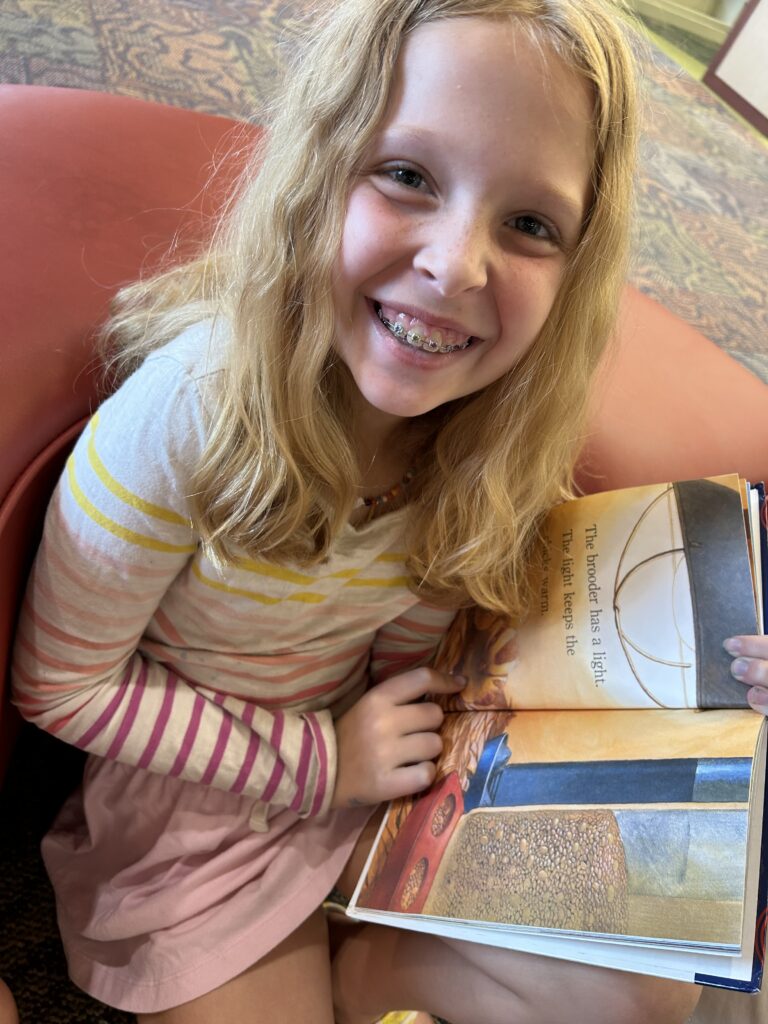
Luciana is dyslexic, but with the help of an online reading tutor available with her ESA, she is now able to read books.
The school, started two years ago by Justine Wilson and her husband, Chris Trammel, is now part of the hybrid learning, homeschool experience that Kristina and Dominic Furlano designed for their children with the help of education choice scholarships managed by Step Up For Students.
“I absolutely love the scholarship,” Kristina said. “The scholarship has made our homeschooling journey what it is today. My kids are absolutely thriving.”
Actually, Kristina balks a little at the word homeschooling, because Luciana and Seppie learn both inside and outside the home.
“I feel like that is the complete opposite of homeschooling,” she said.
The scholarships are education savings accounts (ESA) that allow the Furlano’s flexibility to tailor the homeschool curriculum toward each child’s needs and interests. They have joined the growing number of parents in Florida who are taking the hybrid route, finding educational environments outside the home to give their children something they can’t experience inside the home.
Parents are supplementing in-home learning by sending their children to educational environments that specialize in such activities as music, fashion, cooking, robotics, athletics, and nature. Call it “à la carte learning.”

Curious and Kind offers four different programs for different age groups, from “walking ages” to teenagers. Depending on the program, families can enroll what the school calls their “explorers” one, two, or three days a week. (Read more about the school here.)
“We are part of a homeschool family's menu that they designed specifically for their child,” Justine Wilson said.
Luciana takes sewing and musical theater classes, while Seppie attends a local STEM program that offers classes in Lego robotics. On Tuesdays, the two can be found at a local skate park with other homeschooled children. Some parents use skateboarding as a physical education requirement. Afternoons are often blocked out for reading tutors.
This summer, the two will participate in several camps, more outdoor fun at Curious and Kind, and a baking camp. If all goes well, baking camp will turn into baking classes during the 2025-26 school year. Kristina has already expanded her children’s outdoor learning for next year by enrolling them at Curious and Kind for two days a week.
“I like my kids to be out of the house, but only for a couple of days a week. I don't want them gone five days a week,” Kristina said. “If they are gone two or three times out of the week, it gives them some structure, and they get to make friends, and I get to do what I need to do while they're gone.”
Luciana originally attended a local private school. She is dyslexic, though, and that hindered her learning. She had to repeat the first grade. She also suffered from anxiety at school. So, Kristina and Dominic decided homeschooling was the best option.
 Because she is dyslexic, Luciana qualified for the Family Empowerment Scholarship for Students with Unique Abilities.
Because Seppie is homeschooled, he qualified for the Personalized Education Program (PEP) scholarship.
The flexibility of homeschooling allows Kristina to schedule online reading tutors for the afternoon, when she feels Luciana and Seppie are more receptive to video lessons. It works.
“My daughter read her very first book two weeks ago, so that was amazing,” Kristina said. “We were all so worried about this child, and then she read this book. She’s on her sixth book now. I mean, they're all the very beginner books, but she's got it, and she's putting it together, and it's just been really helpful to have the tutor.”
The ESAs pay for homeschool curriculum, reading tutors, a ton of art and sewing supplies, sewing and outdoor classes, musical theater, and summer camps.
Luciana has learned to sew by taking classes from a mother who also homeschools her children.
“Luciana is using a real sewing machine. She designs. She cuts the fabric out, picks her fabric, picks her string, and sews the entire thing,” Kristina said.
Luciana has made pajama pants, a skirt, a hat, bags, and sleeping masks.
“They do fashion shows,” Kristina said. “She has a little portfolio.”
Because of Luciana’s dyslexia, Kristina said a brick-and-mortar school will never be a good fit for her daughter. She has no intention of sending Seppie to one, either.
“The beauty of homeschooling is to not make your child have this cookie-cutter education that society wants your children to have,” Kristina said. “Now we have this generation of home-schooled children who are going to take over the world with their creativity. They're not going to work 9-to-5. They’re going to be entrepreneurs.”

