Editor’s note: Hillsborough Superintendent MaryEllen Elia was also part of the National School Choice Week event in Tampa yesterday that featured Florida Superintendent Tony Bennett, and her remarks at the all-boys magnet school may have been even more noteworthy. Hillsborough is the eighth biggest school district in the nation. Here is the heart of Elia's comments, edited slightly for length and clarity.

Elia
The parents of the young men choose to send their sons here. They want their sons to be here. And I know I’m preaching to the choir when I talk about choice, but I think choice is one of the best things about education and should be embraced by all. Woe to all of us if we have to face a world where everyone is the same. …
So one of the things that I think that’s really important, that most of you probably don’t know, is that Hillsborough County has almost 50,000 students that are in some school by choice. So think about that. We’re about 200,000, so 25 percent of our students have chose another school than what would normally be their assigned school. We think that’s important. Obviously you do, right? And I think one of the things we have to do, in generally in reform in education – and again, I’m probably speaking to the choir here – but I think the concept of choice needs to be an integral part of the reform movements we have. So not only students, but also teachers, have choice in the kinds of approaches they take in the classroom.
I want to give you an example. You might not know this, but I started magnet schools, which were really our first choices in Hillsborough County, in 1989. And I was trying to convince parents that a computer was something their child probably would want to learn how to use. … We did a presentation in Hillsborough High School’s auditorium (about a new magnet school) … and a parent said to me, ‘My child will never have to use a computer. Never. So why would I send them to this little elementary school that is down close to downtown when I don’t live there? ’ And I said, ‘Well, what does your child like?’ And she said, ‘They like dinosaurs.’ I said, ‘If every book your child read for the next three months was about dinosaurs, would he be a better reader?’ And she said, ‘Yeah, he eats and sleeps and talks dinosaurs all the time.’ And I said, ‘You want him to really be a good student, you give them the things that they like. Believe me, kids like technology.’ We filled the school that year, and we have since gone on to have … over 35 magnet schools.
The big issue is, no child’s the same. And we’ve got to make sure that we can meet those needs of children and teachers, and teaching the things and learning the things the way they are going to be most successful. So in my world, interest is a huge, huge push for kids. … (more…)
Testing for “voucher” kids. The Orlando Sentinel editorial board concludes tax credit scholarship students should take the same standardized tests as their public school peers: “Comparing apples to apples, scholastically speaking, will enhance transparency and accountability.”
 From Florida with love: A Florida education advocate named Lowell Levine gets extended mention in the latest Rick Hess column, a follow-up to a piece about the unfortunate politicization of Newtown. Levine tells Hess, in part: You just do not want to hear the truth ---it is writers like you who are in denial and contribute to violence in schools. You are a shame to your profession. Good by and have a great life------A$$@#%&!!!!!... I’m not sure if it’s the same guy, but a Lowell Levine in South Florida applied to be Florida ed commish and, according to the Palm Beach Post, founded an anti-bullying foundation.
Education funding. From a Miami Herald year-end-wrap-up editorial: “Investments in education pay off. That’s a lesson Gov. Rick Scott seems to be learning as he pushed to restore some of the K-12 funding that he previously cut.”
“Lower ed.” Former Florida Education Commissioner Gerard Robinson makes the year-in-review from Tampa Bay Times columnist John Romano.
Class size. Do districts need more flexibility? asks Gradebook. SchoolZone looks at compliance in Central Florida districts.
The year’s biggest education stories. According to StateImpact Florida. Amendment 8 is in there.
End of course exams. DOE will study the possibility of concordant scores for the Algebra I test, reports SchoolZone.
More Newtown repercussions. Armed deputies may be patrolling Alachua County elementary schools when students return Jan. 3, reports the Gainesville Sun.
Vouchers and accountability. Gov. Rick Scott’s call for “voucher” students to take the same standardized tests as public school students is long overdue, editorializes the Tampa Bay Times: “Voucher proponents can't have it both ways,” it concludes. “They can't claim they are a good bargain for taxpayers but then be unwilling to prove it.”
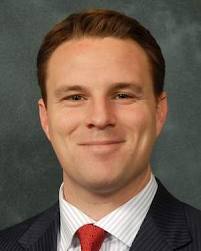
Weatherford
“Yes we are!” House Speaker Will Weatherford gives Tony Bennett a thumbs up on Twitter after a critical Tampa Bay Times column says the selection shows the state is doubling down on Jeb Bush ed reforms. Gradebook. A look at Bennett’s re-election upset in Indiana. Tampa Bay Times.
Home-schooled or truant? A Flagler County dad faces a criminal charge after not following requirements for home-schooling, reports the Daytona Beach News Herald.
Sex abuse lawsuits. Involving a former middle school teacher. Miami Herald.
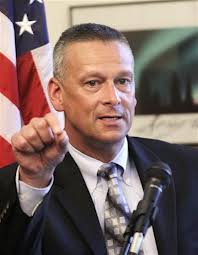
Indiana State Superintendent Tony Bennett
Indiana: The race for state superintendent is a referendum on the direction of education reform, including expanded school choice (Associated Press).
Florida: The state's teachers unions are among the weakest in the nation, according to a new Fordham Institute report (Orlando Sentinel). The Duval County school district agrees to settle with a proposed virtual charter school, run by online provider K12, that it had initially opposed (State Impact Florida).
Washington: Education leaders from around the state sign a letter saying they oppose the charter school initiative on Tuesday's ballot (Seattle Times).
Tennessee: Education Commissioner Kevin Huffman, also a member of Jeb Bush's Chiefs For Change, urges parents to use his state's latest education report card to ask questions and consider options (The Tennessean). Groups pushing for education reform and school choice spend heavily in campaign contributions (The Tennessean).
Michigan: Critics question the state's decision to okay new charters from companies whose existing schools are not performing well (Detroit News).
Wisconsin: One school district hopes to stem declining enrollment by expanding online offerings (Oshkosh Northwestern).
Maine: Five proposed charter schools apply to open next year (Kennebec Journal).
Georgia: A lawsuit claims language in the proposed charter school amendment is purposely misleading (Athens Banner Herald). Students from historically black colleges in Atlanta rally for the amendment (Atlanta Journal Constitution.)
There is no defense for the latest blemish on Florida’s school accountability system. And it’s incumbent upon those who have built and supported that system to quickly acknowledge oversight and management issues within the state Department of Education and ensure the proper steps are taken for a fix.
After the problems with the state writing test in May, it’s hard to believe what has now been widely reported: The state got more than 200 school grades wrong, evidently because it forgot to calculate one of the new elements in its revised grading formula. With all due respect to the hard-working, well-intentioned people in DOE, that’s a bit maddening. To make matters worse, the state announced the grade changes in a press release, emailed after 10 p.m. Friday, that didn’t own up to errors but instead referred to “preliminary revisions” discovered during a “continuous review process.”
A state that has rightly set a high bar for its schools, its students and its teachers obviously has to set a high bar for its own piece of the education bureaucracy. Florida’s education leaders have given more than lip service to terms like “data driven” and “evidence based” and “no excuses.” But in this case, the data isn’t right. And the evidence suggests that honest mistake is no longer a credible excuse.
Critics are using this mishap to shore up their call for a roll-back of Florida’s ed reforms. What a shame for Florida’s kids if they succeed. Standardized tests and school grades are imperfect tools. But in Florida, they’ve been used effectively to put a bigger spotlight and more focus on student achievement, particularly for low-income and minority kids. For years now, one credible, independent analysis after another has found Florida students in the national vanguard in terms of academic progress. Three positive reports have surfaced in the past six weeks alone (see here, here and here).
It’s not fair that DOE’s successes are overlooked and its mistakes amplified. It’s not fair that its critics are held to a lower standard. But this is the environment that Florida’s ed reformers live in, and it’s not likely to change any time soon. At the end of the day, they should continue to be guided by the evidence, no matter how much it is ignored by critics. Or, in this case, how much it points to their own shortcomings.
When Michelle Rhee visited a Miami charter school on Thursday to announce that Florida would be the first state to partner with her Students First initiative, it may have been easy for most observers to focus on the star power of the event and not the venue. But the reason that Rhee and newly elected Florida Gov. Rick Scott chose the Florida International Academy for their joint announcement is the same reason why the school’s waiting list for seats has more than 200 names.
The school reaches out to an impoverished community, where all students are children of color and nearly all qualify for free or reduced-price lunch, and it delivers on results. In 2002, the state of Florida gave the school a failing grade, based on its dismal core performance in reading and writing. Today, that school has an A grade with a nearly identical demographic, and the majority of its students are now meeting high standards in those subjects.
How it got there exemplifies what Rhee and Scott and President Obama and Arne Duncan have been insisting on: Customizing a public education that best meets a child’s needs, and giving disadvantaged children more educational alternatives than they might otherwise have.
For Florida International, that means following the state’s curriculum standards but constantly redesigning the instruction based on its students’ needs, targeting teaching strategies to the individual student, if necessary, and revisiting those strategies every week, according to Principal Sonia Mitchell, who spoke with redefinED Friday. (more…)

