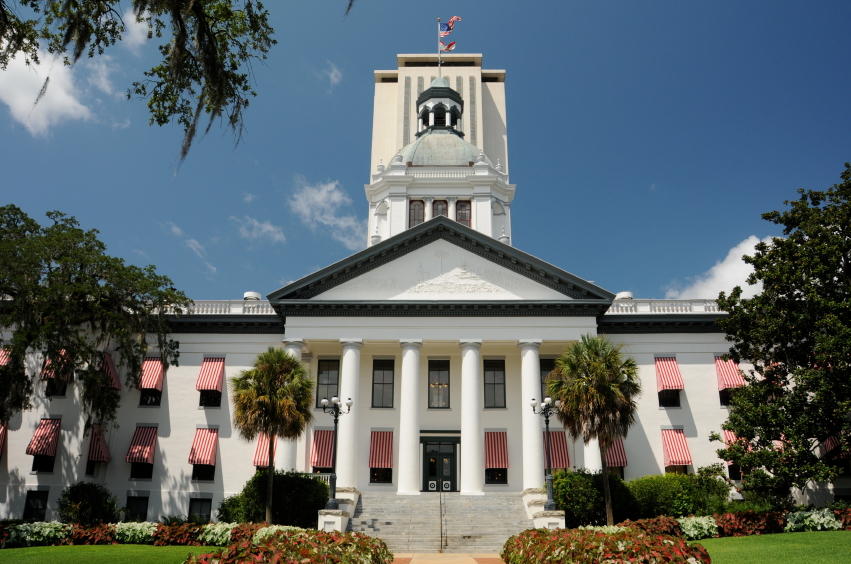
 The fifth week of the legislative session may have been most notable for what didn’t happen, as a House floor hearing on a bill that would eliminate a waiting list for the Florida Tax Credit Scholarship was postponed.
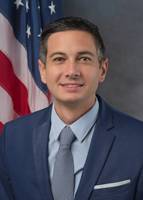
Rep. Vance Aloupis (R-Miami)
Rep. Vance Aloupis, R-Miami, narrowly beat his Democratic opponent in 2018 to represent Florida’s 115th District, a seat held by former Education Committee Chair Michael Bileca. One of many freshman members serving this year on House education committees, Aloupis wants to become a legislative leader in early childhood development. (more…)
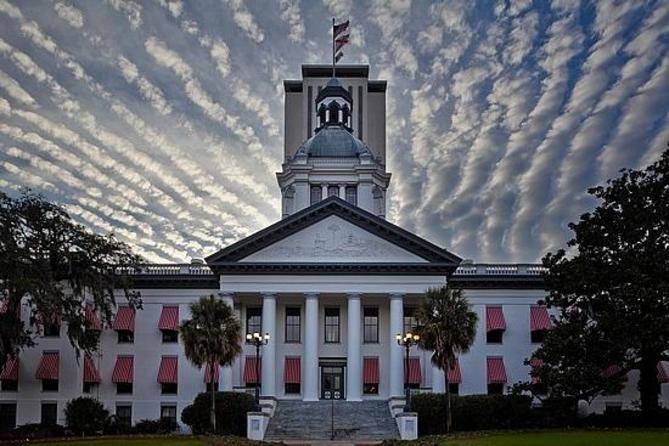 The House Committee on Appropriations moved forward with a bill that would end the waiting list for families seeking the Florida Tax Credit Scholarship. Here’s a brief recap of that bill and the week’s other education choice news from Tallahassee.
Despite objections from Democratic lawmakers who deemed it unconstitutional, HB 7075 passed in a party-line vote, 16-9. The legislation would create a state-funded program to eliminate a waiting list for families who applied for the Florida Tax Credit Scholarship for lower-income families. (The program is administered by non-profits such as Step Up For Students, which hosts this blog.)
The “Family Empowerment Scholarship” would accommodate about 28,000 students in 2019-20, including some 13,000 students currently on a waiting list for the tax credit scholarship. Read more here.
Florida Education Commissioner Richard Corcoran trumpeted information in an annual charter school performance report that shows charter school students are outperforming students in traditional public schools. Read more about the report here.
The Senate unanimously passed a bill that establishes a competency requirement for charter school educators and operators. SB 1224 requires charter school principals, board members, chief financial officers and others to hold a credential stating they are competent to run a charter school.
The credential would pertain to accountability of student performance, developing and adjusting business plans, accurate financial planning and “good business practices,” among other things.
There was a flurry of education related activity in both chambers of the Florida legislature this week
Both chambers of the Legislature considered several bills related to education choice during the third week of the session. Here’s a brief recap of the week’s news from Tallahassee.
The Senate Appropriations Subcommittee on Education voted to advance a bill that would eliminate the waiting list for the Florida Tax Credit Scholarship for lower-income families. The bill, SB7070, creates the Family Empowerment Scholarship program, which would allow about 15,000 low-income students to attend the private school of their choice in 2019-20. Nearly 13,000 students are on the waiting list for Florida Tax Credit scholarships.
Senate education leaders released a plan to increase education spending by $1.1 billion in 2019-20, boosting the total to $22.2 billion. The additional funding would raise per-pupil spending to $7,779, a $350 increase per student. The House released a spending plan that would provide more than $500 million less than the Senate with a $167.79 increase in per-pupil funding.
The House PreK-12 Innovation Subcommittee passed two substantial bills impacting Florida charter schools. HB 1197 would allow state universities and Florida College System institutions to fully sponsor charter schools serving all grade levels, repealing current limitations capping such schools at Grade 8. The bill would require the Department of Education to collaborate with charter school sponsors and operators to develop an evaluation framework and report results annually in their application report.
Another bill, PCB PKI 19-02 ,expands the Schools of Hope program to allow charters to open in “Florida Opportunity Zones”, which were created in 2017 by the federal tax bill revision. The bill would increase the traditional public schools’ Schools of Hope grant program and would allow Schools of Hope funds to be used for capital outlay costs and cover executive and regional director salaries until a school is at full enrollment. The bill also revises the definition of “persistently low-performing schools” to include schools that have a grade below a C for three of five years.
The Senate Education Committee cleared SB 1444, which creates a state “disqualification list.” The list, which would be maintained by the Department of Education, would include individuals whose educator certificates have been permanently revoked by the Education Practices Commission as well as private school owners or operators who have been permanently disqualified from participation in a state scholarship program by the Department.
The House moved forward on HB 1127, a similar but separate bill that would require the Department of Education to create and maintain an electronic employment disqualification list. The list, which would be required of all public schools including charters and those that accept students who participate in a state scholarship program, would expose individuals who may not be subject to extensive criminal background checks. Among those screened for previous misconduct would be potential employees, contract employees, school board members or school owners.
The House Education Committee passed PCB EDC 19-02, a bill that would expand access to school guardians by allowing private schools and charter schools to employ school guardians – directly or by contract – and would allow law enforcement academies and school districts that employ school resource officers, in addition to sheriffs, to offer guardian training adopted by the Criminal Justice Standards Training Commission.
Jim Saunders / News Service of Florida
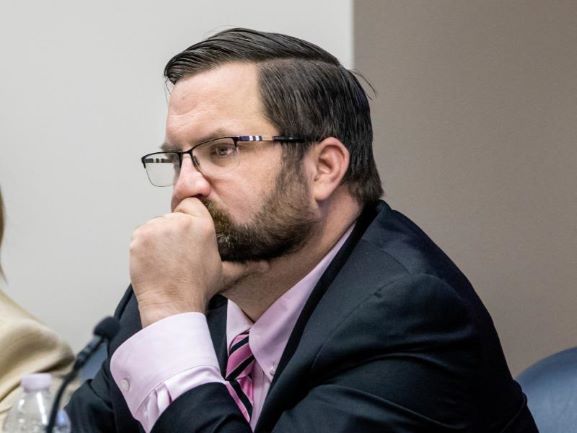
PreK-12 Appropriations Subcommittee Chair Chris Latvala (R-Clearwater)
TALLAHASSEE --- Florida House and Senate leaders will go into budget negotiations hundreds of millions of dollars apart on spending for the state’s public schools.
House Republicans on Wednesday released an initial proposal that calls for a $579.3 million increase next year in the key part of the budget for public schools, a 2.75 percent bump per student. That came a day after Senate leaders proposed a $1.1 billion increase, or 4.71 percent per student.
Funding for what is known as the Florida Education Finance Program, or FEFP, is always one of the most closely watched issues during budget negotiations. After the full House and Senate pass their budget proposals in the coming weeks, negotiations will begin on a final spending plan for the fiscal year that starts July 1.
While the bottom-line numbers are far apart, the House, Senate and Gov. Ron DeSantis are moving in the same direction on some issues that play into the education budget. For example, all three want to revamp the “Best and Brightest” teacher-bonus program. That includes doing away with a controversial part of the program that has factored in teachers’ scores on SAT and ACT college-entrance exams in determining whether they will get extra money.
Nevertheless, public-school teachers are lobbying lawmakers to move away from using bonuses and to shift more money into salary increases.
Carol Cleaver, a science teacher from Escambia County, told the House PreK-12 Appropriations Subcommittee on Wednesday that her school started this year with 10 teacher vacancies and lost two teachers last week. She said “teachers are leaving left and right” and salary increases are needed.
“These new teachers have no room for hope,” Cleaver said. “There’s nothing for us to count on when the new education funding that’s coming is tied strictly to a one-time bonus.”
The House proposal would make available Best and Brightest bonuses of $2,000 for each classroom teacher rated “highly effective” and up to $1,100 for each teacher rated “effective.” PreK-12 Appropriations Chairman Chris Latvala, R-Clearwater, said he has heard estimates that 92 percent or 93 percent of teachers are rated highly effective or effective.
“In a perfect world, we would be able to give teachers raises. It’s something that I absolutely would love to do,” said Latvala, whose mother is a retired public-school teacher. “This is the just the starting point not only with our conforming bill (a bill linked to the budget) but also with the budget. As you know, we are going to be conferencing with our Senate partners who have a different budget and philosophy than we do, so a lot of things can change.”
Along with needing to agree on issues such as the overall budget numbers, House and Senate negotiators also will have to resolve a difference about an arcane --- but sometimes controversial --- issue about a price-level index used in divvying up money to school districts.
The issue generally is known as the “district cost differential,” which is part of the overall school-funding formula. Tweaking the district cost differential can mean some districts will get more money, while others will get less.
The House is proposing to move from a price-level index to an index that compares wages in different areas of the state. The Senate, meanwhile, does not favor such a change.
The Senate Appropriations Subcommittee on Education continued to advance a bill for a new state-funded scholarship program Tuesday
TALLAHASSEE -- In a 5-3 party-line vote, the Senate Appropriations Subcommittee on Education voted Tuesday to advance a bill that would eliminate the waiting list for the Florida Tax Credit Scholarship for lower-income families.
The bill, SB7070, creates the Family Empowerment Scholarship program, which would allow about 15,000 low-income students to attend the private school of their choice in 2019-20. Nearly 13,000 students are on the waiting list for Florida Tax Credit scholarships.
The legislation, which previously passed the Senate Education Committee on an identical party-line vote, includes other provisions related to a teacher bonus program and funding for social services at public schools. The bill's next stop is the full Appropriations Committee.
Sen. Dennis Baxley (R-Ocala) characterized the bill as “American” and “about freedom.”
“The empowerment of people making choices about their own life is tremendous,” Baxley said. “Most folks choose a traditional community school. This bill gives a tremendous push to traditional schools in addition to allowing choices for students who it’s not working for. If they’re not swimming, at least throw them the inner tube.”
Unlike the Florida Tax Credit Scholarship, which is funded with private donations from corporations that receive tax credits, the proposed Family Empowerment Scholarship program would be funded with tax dollars through the Florida Education Finance Program (FEFP).
Sen. Bill Montford (D-Tallahassee) cited that provision in opposing the bill.
“This is a fundamental change in public education in the state of Florida,” Montford said. “We have all kinds of choice programs, but when we tinker with FEFP, we’re going down the wrong path. I believe in choice, but we have to make decisions on when we stop paying for other peoples’ choices.”
Under the bill, the value of Florida Tax Credit scholarships would be 95 percent of the district average per-student funding in the FEFP. Like the Florida Tax Credit Scholarship, eligibility would be limited to students whose household income levels do not exceed 260 percent of the federal poverty level ($62,650 for a family of four). The program would be capped at 15,000 students its first year. That cap would increase with the annual growth of public school students in the state.
In a bipartisan vote last week, the House Education Committee passed its version of a bill that would eliminate the Florida Tax Credit waiting list. House PCB EDC 19-01, known as the Family Empowerment Scholarship, would help about 28,000 students in 2019-20. It sets a higher income limit for eligibility, opening it up to middle-class families.
Enrollment in the Florida Tax Credit Scholarship program dropped for the first time in 14 years in 2018-19, the result of slower growth in corporate contributions, according to the state Department of Revenue. (The program is administered by non-profits such as Step Up For Students, which hosts this blog.)
Demand for the scholarship remains strong. Parents of more than 170,000 students had started applications by the time Step Up For Students halted the application process in June because of the funding shortfall. Step Up already has awarded more than 88,000 scholarships for 2019-20, approximately 20,000 students ahead of last year.
Several parents spoke in support of the bill. Among them was Pierline Batiste of Miami, who implored lawmakers to end the waiting list, which her family has been on for about a year. She said her 13-year-old daughter Jeffryka has been bullied at her neighborhood school and she doesn’t want her son, Tyler, 6, to endure the same treatment.
“They bully her over everything. They don’t like her hair. They don’t like the way she dresses,” Batiste said. “When I drop her off at school, she gets stressed out, because all of these kids bother her for no reason. My son will go into first grade next year, and I don’t want him to deal with all that.”
Justice Frazier, a longtime former public school teacher now operating a private school with his wife, said the Florida Tax Credit Scholarship has provided peace of mind to frustrated parents and struggling students.
“Many students, when they get to my school, can’t face you, they won’t lift their eyes up,” he said. “They’re usually behind in math basics, they’re in seventh and eighth grade and they can’t tell you what 2 times 8 is. Parents are so grateful for the scholarship and they’re at their wits’ end.
“We have to do it right, make it safe and make a difference for the kids, emotionally, academically and socially.”
Pamela Schwartz, president of the Florida Retired Educators Association, was one of several speakers who opposed the bill. She said private schools don’t adhere to the same accountability and fiscal oversight standards as public schools, which she said lack funding and resources.
“You’re diverting funding from state public schools,” Schwartz said. “It’s a shame to give taxpayers’ money to schools that say they do a better job.”
Earlier Tuesday, Senate education leaders released a plan to increase education spending in 2019-20 by $1.1 billion, to $22.2 billion. That includes a $350 hike in per-pupil funding, to $7,779.
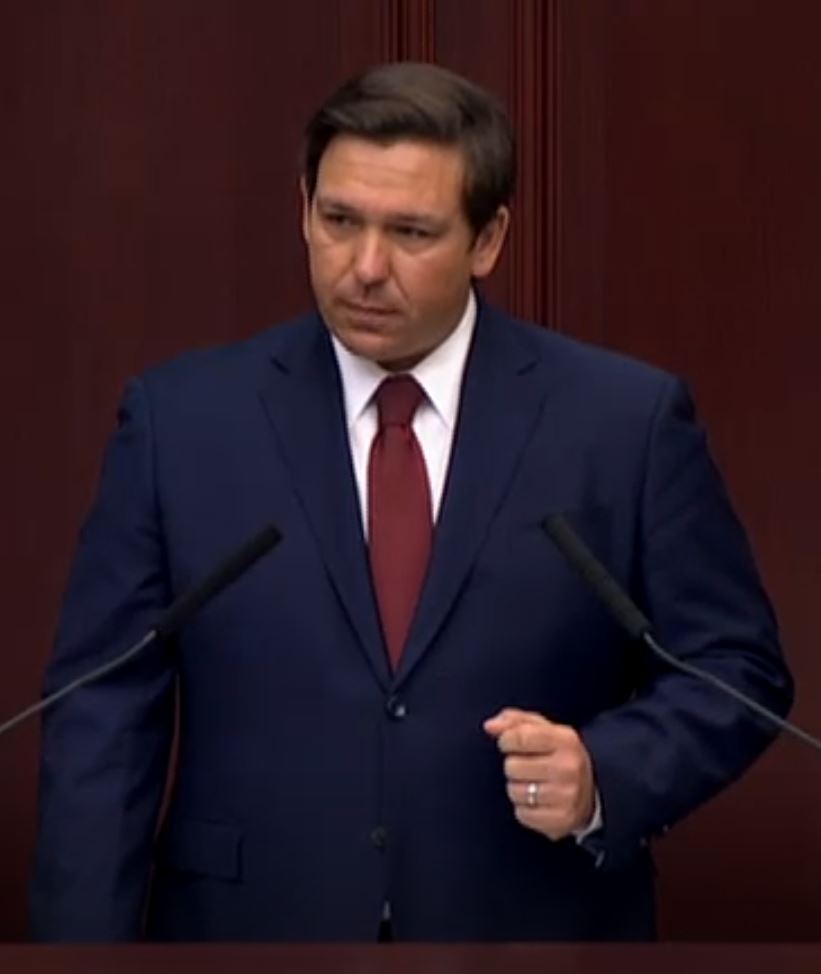
Gov. Ron DeSantis pledged to end the waiting lists for the Florida Tax Credit Scholarship and Gardiner Scholarship in his first State of the State address
TALLAHASSEE – In his first State of the State address Tuesday, Florida Gov. Ron DeSantis reiterated his pledge to end the waiting lists for parents seeking the Florida Tax Credit Scholarship (FTC) for lower-income families and the Gardiner Scholarship for students with certain special needs.
About 13,000 families are on a waitlist for the FTC Scholarship, and over 1,900 are on the Gardiner waitlist. (The scholarships are managed by non-profits like Step Up For Students, which hosts this blog.)
“Education opportunity shouldn’t be limited by parental income or ZIP code,”
DeSantis told a joint session of the Legislature. “One way Florida has expanded opportunity has been through the Tax Credit Scholarship program for students from low-income families. More than 100,000 students – nearly 70 percent of whom are African-American or Hispanic, with an average family income of roughly $26,000 per year – are utilizing the scholarship.”
DeSantis stressed that the results have been positive, citing a recent Urban Institute study that found tax credit scholarship students are 43 percent more likely to attend a four-year college and up to 20 percent more likely to obtain a bachelor’s degree. Students who use the scholarship more than four years are up to 99 percent more likely to attend college and up to 45 percent more likely to earn a bachelor’s degree.
During a trip to Orlando last month, DeSantis was moved by testimony from Shareka Wright, a single mother of three who drives a garbage truck for the city. Two of her sons are on the FTC waiting list.
One of Wright’s sons is doing well in an Orange County district school, but she said her younger sons need a different educational environment -- one son is struggling academically and the other has been bullied. Wright works about 60 hours a week to be able to afford private school tuition for them.
“Shareka is doing her best to give her boys a better future,” DeSantis said. “I’m not satisfied to see hard-working parents like Shareka mired on a waitlist, and so I’m proposing to eliminate the waitlist by creating a new Equal Opportunity Scholarship that is similar to the tax credit scholarship.
“We are a big, diverse state and one size doesn’t fit all when it comes to education. Let’s stand with working moms like Shareka and empower them to choose the best learning environment for their kids.”
Enrollment in the FTC program dropped for the first time in 14 years in 2018-19. In the preceding 13 years, the average annual enrollment increase was 20 percent. The dip was due to slower growth in corporate contributions, according to the state Department of Revenue.
Demand for the program remains strong. Parents for more than 170,000 students had started applications by the time Step Up For Students halted the application process in June. Step Up already has awarded more than 84,000 scholarships for 2019-20, approximately 20,000 students ahead of last year. New students are starting applications at a rate of more than 1,000 a day.
DeSantis last month proposed a state-funded “Equal Opportunity Scholarship” to eliminate the FTC waiting list.
Under the governor’s plan, funding for the scholarship program would come from the Florida Education Finance Program (FEFP). The scholarship award amount would be a slight discount of the district average per-student funding in the FEFP, allowing funding to follow the student. The maximum number of students eligible to receive a scholarship would be equivalent to 0.5 percent of statewide public school enrollment for the first year, providing opportunities for approximately 14,000 students. Each year thereafter, the number of eligible students would increase by an additional 1 percent of statewide public school enrollment.
On Feb. 21, state Sen. Manny Diaz (R-Hialeah), who chairs that chamber’s Committee on Education, proposed a “Family Empowerment Scholarship” to eliminate the FTC waitlist. Details of the plan are in Senate Bill 7070.
DeSantis declared last month that parents of special needs students will not have to worry about the Gardiner Scholarship as long as he is governor. Tuesday, he repeated his promise to eliminate the Gardiner waiting list, highlighting one family waiting for relief.
“Donna and Michael Holt are here with their son Levi, who has Down syndrome,” DeSantis said. “Levi is on the waiting list for a Gardiner scholarship. Students like Levi have unique abilities that require a customized learning environment that the Gardiner (Education Savings Account) can provide.”
Step Up funded 11,276 students with Gardiner scholarships averaging $10,389 during the 2018-19 school year.
Step Up currently is accepting new and renewal applications for the Gardiner Scholarship and already has awarded more than 6,000 scholarships for 2019-20.
Bills to enhance the Gardiner Scholarship program were filed in the House and Senate this week. HB 1051 and its companion SB 1380 were filed by Rep. Elizabeth Fetterhoff (R-DeLand) and Sen. Keith Perry (R-Gainesville), respectively.
If passed by both chambers and signed by the governor, the changes in the bill would allow parents to apply for the scholarship the day their child turns 3, and would permit parents to use the scholarship to pay for tuition and fees associated with art, music or theater programs.
The bills also would make it easier for parents to renew their scholarship. Renewing parents no longer would be required to get a notarized “sworn compliance statement,” which is required to notify the Department of Education (DOE) of the parent’s intent to accept the scholarship and not enroll in other publicly funded educational options.
The bills also would require the DOE to create a secure website that allows parents to submit all required information in order to maintain program eligibility.
“The Gardiner scholarship is our way of saying that everyone counts and that these are lives worth living,” DeSantis said. “We stand with you, and we want to get rid of that waiting list.”
The Florida Legislature kicks off its annual 60-day session Tuesday with a host of education issues at the top of lawmakers’ agendas, including expansion of educational choice options. Here are some issues and bills to watch.
Education choice
Gov. Ron DeSantis has pledged to expand educational options and has vowed to end the waiting lists for the Florida Tax Credit Scholarship and the Gardiner Scholarship, proposing creation of a new state-funded scholarship. Senate leaders have put forth their own plan to end the waitlists. Bill language was filed in the Senate late Friday afternoon with SB 7070 creating a new state-funded scholarship program. The bill is scheduled to be heard in committee on Wednesday during the second day of session.
The first major educational choice bill filed this session, SB 1410, revises the application process for the Hope Scholarship for bullied students.
Two identical bills, HB 1051 and SB 1380, slightly revise student application and eligibility criteria for the Gardiner Scholarship. The biggest change allows for scholarship funds to be used for tuition and fees associated with art, music or theatre programs. The bill also requires the Department of Education to create a system allowing scholarship parents to submit information to maintain Gardiner eligibility electronically.
HB 189 and SB 1342 make instructional materials assigned for dual enrollment courses free of charge for students in private schools and home education programs. The legislation also allows for private and home school students in grades 11 and 12 to enroll in early college programs in their districts.
Accountability
SB 1444 and HB1127 require the Department of Education to create and maintain a “state disqualification list” that prohibits employment for “bad actors” at district, public and charter schools, as well as on charter governing boards. The legislation also allows the DOE to deny the authority of an owner or operator to establish a private school participating in scholarships programs in Florida if the owner has operated an institution “contrary to the health, safety, or welfare of the public.” Anyone employed by or applying for employment in a district or private school on the disqualification list would be committing a third-degree felony.
SB 1470 would tweak charter school operations, allowing the Charter School Appeal Commission to recommend denial of a charter application if the application does not propose a reading curriculum consistent with effective teaching strategies grounded in scientifically based reading research. The bill also has more broadly clarifying language for the commission in considering charter applications.
SB 1576 provides charter schools access to district teacher preparation programs and allows publication of state, district and school level results of anonymous every-other-year surveys of school personnel to identify best practices for student learning and teacher retention. It also creates alternative pathways for teacher support while reducing teacher costs for examination fees for teachers who have to retake parts of the exams.
School safety
SB 7030 would expand the Aaron Feis Guardian Program created after the Parkland school shooting in February 2018. It would allow school staff to volunteer to carry guns on campus and to be screened and trained by local law enforcement, removing the ban on teacher participation. Charter schools are included in the bill language, but private schools are not.
SB 1238 and HB 403 authorize religious and other private schools to designate a person to carry a firearm on school property. If the school chooses to do so, the legislation would require its governing board to create appropriate policies and procedures the designee must meet.
HB 2105 is an appropriations bill filed for the third consecutive year by Rep. Randy Fine (R-Palm Bay) allocating $4 million for security funding for Jewish Day Schools. Last year’s appropriation was $2 million.
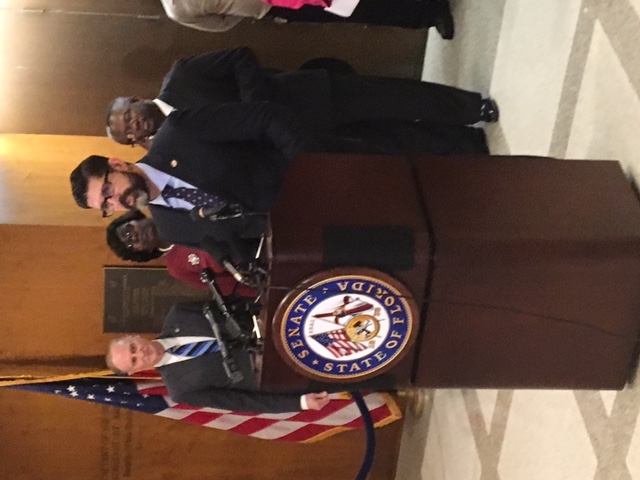
Sen. Manny Diaz (R-Hialeah) unveiled the Senate education leadership's priorities for the 2019 legislative session today in Tallahassee.
TALLAHASSEE – Florida state Sen. Manny Diaz Jr. on Thursday said Senate leaders hope to implement a “Family Empowerment Scholarship” to eliminate a waiting list for the Florida Tax Credit Scholarship for lower-income families.
Gov. Ron DeSantis made a similar pledge last week, saying he wanted to create an “Equal Opportunity Scholarship” to eliminate the FTC waitlist of about 13,000 families.
Diaz (R-Hialeah), who chairs the Senate Committee on Education, said there were “some similarities” in the two plans.
“We will continue to support families’ decisions to choose what’s best for their children’s education – whether it’s public or private school,” Diaz said, adding that over 100,000 students are currently on the FTC scholarship. (The scholarship is administered by nonprofits such as Step Up For Students, which hosts this blog.)
The new scholarship would be funded through the Florida Education Finance Program (FEFP) and would be capped at 15,000 students in its first year.
Flanked by lawmakers, parents on the FTC waiting list and faith leaders, Diaz said the “Family Empowerment Scholarship” is separate from DeSantis’ proposed plan. He said eligibility requirements of the two proposed scholarships are “very similar,” but did not offer specifics.
Under DeSantis’s plan, funding for the scholarship program would come from the FEFP. The scholarship award amount would be a slight discount of the district average per-student funding in the FEFP, allowing funding to follow the student. The maximum number of students eligible to receive a scholarship would be equivalent to 0.5 percent of statewide public school enrollment for the first year, providing opportunities for approximately 14,000 students. Each year thereafter, the number of eligible students would increase by an additional 1 percent of statewide public school enrollment.
Asked by media if the separate scholarships would confuse parents, Diaz said the proposed scholarship simply gives parents even more choices.
“I think we’ve done a good job of educating parents in Florida” about school choice, he said. “They’re interested in finding the best educational settings for their children. Every child is different. What works for one, may not work for another.”
The FTC program helps lower-income families pay for private school tuition or transportation costs to an out-of-district public school. A recent study by the Urban Institute showed students on the program are enrolling and completing college at higher rates than their public school peers.
In 2018-19, enrollment in the FTC program dropped for the first time in 14 years. In the preceding 13 years, the average annual enrollment increase was 20 percent. The enrollment dip was due to slower growth in corporate contributions, according to the state Department of Revenue.
Demand for the program remains strong. Parents for more than 170,000 students had started applications by the time Step Up For Students halted the application process in June. Step Up has already awarded more than 79,000 scholarships for 2019-20, approximately 20,000 students ahead of last year. New students are starting applications at a rate of more than 1,000 a day.
The proposed “Family Empowerment Scholarship” put a smile on the face of Giselle Gomez, who was among the parents who stood behind Diaz at Thursday’s event. Gomez is the mother of Arturo Gomez III, 6, who is on the waiting list for the FTC scholarship. A Realtor, Gomez currently pays out-of-pocket for Arturo to attend Redeemer Christian Academy in Ocala, which costs about $7,250 per year.
She did not want her son in a public school because of her own negative experiences attending public schools in Miami and Ocala. Gomez said she applied for an FTC scholarship this year for Arturo, but by the time Arturo’s application was approved, money to fund the program had run out.
While Arturo has thrived at Redeemer Academy – his behavior has improved and teachers often work with him one on one – she has been behind in payments.
Gomez said she is going through a divorce, making the situation even more tense.
“(Arturo’s) going through a lot of changes right now,” she said. “I want him to have stability and stay in the same school. His behavior used to be erratic, but the teachers have worked with him so much. His focus is better and his grades are amazing. I don’t want to take that away from him.”
Diaz was joined at Thursday’s press conference by Sen. Kelli Stargel (R-Lakeland), chair of the Senate Appropriations Subcommittee on Education, and Senate President Pro Tempore David Simmons (R-Altamonte Springs), each of whom unveiled other Senate K-12 education initiatives.
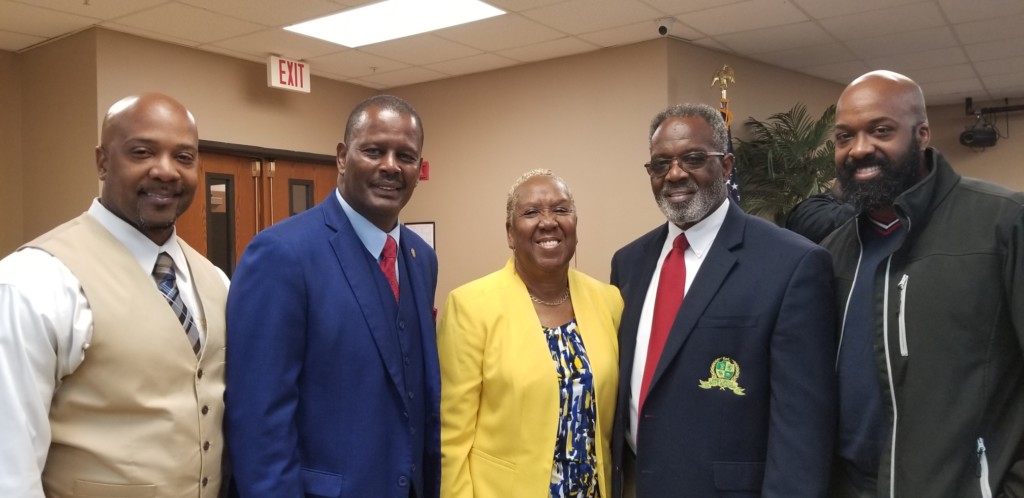
On MLK Day, Rep. Bush attended a special event with Gov. Ron DeSantis at Piney Grove Boys Academy, an all-male, predominantly black private school in Lauderdale Lakes where all 85 students are recipients of state-supported educational choice scholarships. From left is Piney Grove Principal Alton Bolden, Rep. Bush, Frances Bolden, Bobby Bolden, and Tellis Bolden
OPA-LOCKA, Fla. – If you want to know why Florida state Rep. James Bush III supports educational choice, take a ride with him.
Just a few blocks from his legislative office, District 109 – which Bush called “one of the largest and poorest and most violent and neglected districts in the state” – is more Mad Max than Miami, a hodge-podge of industrial zoning and bars-over-windows residential. On a recent Sunday, Bush bumped a rented Mustang down a moonscape of graded road, lined with teetering chain-link fence and littered with cast-offs: a flat-screen TV, a jet ski, a crushed camper top. Around the corner, a line of salvage yards emerged like fortresses, stacks of crunched cars rising over walls topped with barbed wire.
 Then, right next to them, a public housing complex …
Bush braked. The contrast panned into view. Satellite dishes poking out of lavender stucco … a woman pushing a stroller … kids riding bikes …
“Now what is right five steps from this (junk yard)?” Bush said. “Look at all this stuff the kids are breathing. I don’t want it to sound like I’m painting a real negative picture of our city but … this should be our focus.”
“Those are the kinds of concerns I have when it comes down to doing what I’m supposed to be doing as a rep in Tallahassee,” he said minutes later. “Not getting caught up in who can control who, and doing the most politically correct things, and not putting the children of this state first ... ”
Say hi to Florida’s newest school choice Democrat.
Bush, 63, served four terms as state representative in the 1990s. He was elected for a term in 2008. He was elected again in August.
His Democratic roots run deep. Bush retired after 30 years as a public school teacher (and teachers union member). He served as acting president of the Southern Christian Leadership Conference. He earned his bachelor’s from Bethune-Cookman, the private-school-turned-college founded by Mary McLeod Bethune. Bush doesn’t just know the history of black churches, education and liberation. He’s lived it.

Listen on iTunes (or below)
His support for choice is, on the one hand, practical. His district includes thriving faith-based schools. His district has far more pressing needs than what schools parents choose. As a lawmaker, he said he’s going to fight for more funding for the Miami-Dade school district (and everything else his district desperately needs) at the same time he supports the options his constituents desperately want.
On the other hand, Bush’s support is grounded in a belief. When parents are empowered to determine the educational destinies of their children, he said, that confidence in the power to make change spills over into the rest of their lives.
“Because the parent now would say, ‘Well I feel now better because I got my child where I think it’s best for them,’ as opposed to going through just a normal traditional way of educating,” Bush said. “It gives them a sense of belonging and a sense of ownership and a sense of having some input.”
“It propels them to another level of getting involved in other things that affect their child,” he continued. “It’s a plus in the long run.”
HD 109 is 20 minutes, but a world away, from the condo towers gleaming along Biscayne Bay. It’s split between blacks and Hispanics. It’s shaped like a gun.
Liberty City sits where the grip is. The neighborhood of Brownsville, once dubbed Miami’s most blighted, is where the barrel begins. The city of Opa-Locka is where the sight would be. By some measures, it’s one of the most dangerous cities in America.
As night fell, Bush turned towards Ali Baba Avenue, once a notorious drug hole. He stopped between a zippy mart with a Lotto sign and a tiny apartment complex with plywood-covered windows. A woman emerged from the shadows, a man on a plastic sheet – asleep? – on the ground behind her.
“My friend,” Bush said through the car window. “This Bush.”
“Hey!” the woman chirped. “How are you sweetie?”
The two clasped hands. Turns out, the woman worked on Bush’s campaign. He thanked her for the help, then asked about the man on the ground. She assured him the man was okay.
HD 109 is full of good people doing good things, Bush said over and over. But that guy on the ground?
“I got spots,” he said, “where a lot of that takes place.”
Bush riffed on his district’s challenges. Better roads, better jobs, better housing … safer, cleaner neighborhoods “so our children can have a different perspective on life.” He kept repeating: The people in HD 109 “have a lot of needs … need assistance … just need our share … ”
Same with schools. The Miami-Dade district is on the rise, arguably one of the best urban districts in America. At the same time, half its low-income students aren’t reading at grade level.
Given its depth of poverty, Bush said it’s no surprise HD 109 has among the highest concentrations of school choice scholarship students in the state. Some 2,330 use the Florida Tax Credit Scholarship, for lower-income students, to attend 28 private schools. Bush said the students in his district “benefit immensely from … not only the public schools but schools of choice.”
He said he supports them. All of them.
It remains to be seen how many other elected Democrats do.
Democrats in the Florida Legislature strongly back the Gardiner Scholarship, an education savings account for students with special needs. But Democratic support has waxed and waned for the FTC scholarship, where 75 percent of the roughly 100,000 recipients are non-white and average family income is $25,756 a year. Both programs have waiting lists.
Bush said he had a choice about choice. Take the “politically correct position (and) do what others want me to do.” Or take a stand for his constituents.
With HD 109 rolling past, he made it sound like an easy call.
Listen below:

