ORLANDO, Fla. — As public education has evolved from a one-size-fits-all system to one where families are empowered to choose the environment that best fits their child, everyone has been a winner: Students, parents, educators, entrepreneurs, and even public school districts.
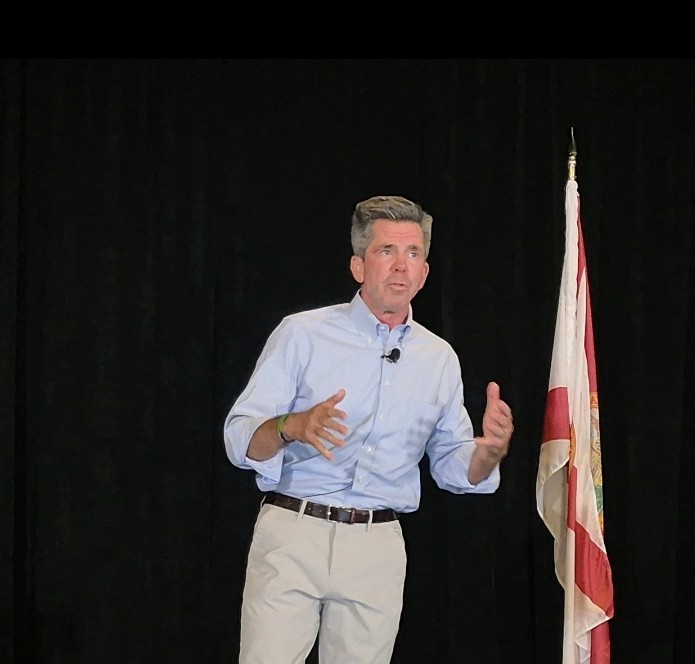
That was the message of John F. Kirtley, founder and chairman of Step Up For Students, to the roughly 1,000 people who attended the non-profit’s Navigating New Horizons conference this week.
In a closing speech that at the end brought the audience to its feet, Kirtley began by describing the state of education before the 1990s. Everyone paid taxes, and students were assigned to schools by their ZIP codes.
“It was, it could be said, a definition that emphasized ‘uniformity,’” he said, referencing but not naming the state teachers union’s recent lawsuit to eliminate Florida’s robust education choice programs, including all scholarship programs and charter schools.
Kirtley said he didn’t realize it at the time, but since overall graduation rates in Florida were, until the mid-1990’s, around 60% overall and less than 40% for black males, it’s likely that many of his friends on the football team who crossed the stage did not get real diplomas. They likely received certificates of completion. The second group probably included a classmate who regularly got in trouble for dozing during early morning courses and was uninspired by classic literature. Yet he could take apart an entire car and rebuild it by himself, when Kirtley couldn’t change his car’s oil.
“But there was no specialized program for him…No, uniformity didn’t serve him well.”
Today, Kirtley said, his classmate could sleep in, take core classes online in his pajamas, then head over to the district automotive technology program in the afternoon, where he would be the star student.
“When he graduated, he’d be hired by the local Mercedes dealer and make over $100,000 two years out of school,” Kirtley said. “So, yeah, he’d be better off.”
Not only are students better off, but so are educators who can start their own schools, including microschools, and even school districts, including many that now offer specialized magnet schools and individual courses to education choice scholarship students who attend school part time.
“I close by saying don’t fear the New Definition. Embrace it. Thrive in it. You can thrive in it whether you are a microschool, an à la carte provider, or one of nation’s largest school districts,” he said. “And when you thrive in the New Definition, all students will thrive along with you. And shouldn’t that really be the ultimate goal?”
His remarks echoed the message given the day before by Gretchen Schoenhaar, Step Up’s chief executive officer, who gave the conference’s opening speech.
“Families today seek learning environments that reflect their children's unique strengths, needs and goals,” Schoenhaar said. “What's really inspiring is how this demand has sparked innovation across the education landscape.”
Schoenhaar said she hoped the two-day event would offer attendees a chance to be “inspired by the conversations you have, encouraged by the stories you hear, and energized by the collective passion in this room.”
Schoenhaar said Florida is home to the nation's largest parent-directed education marketplace today, with more than half of all K-12 students participating in some form of education choice, including many district schools, private schools, charter schools, homeschools, online schooling, or some combination of those.
“The spirit of innovation and possibility is exactly what this conference is all about,” she said.
The event, whose theme is Facing the Future Together, featured nearly 100 session speakers and 100 exhibitors displaying everything from a la carte learning to transportation options, tutoring, and curriculum.
Organizers said this year’s goal was to provide educators with information and resources based on best practices that also reflect the bigger picture. That included information about the rise of microschools and how to use AI efficiently and responsibly.
“Over the next two days, we hope you'll be inspired by new ideas, meaningful connections and innovative strategies that will help shape the future of education,” Paula Nelson, Step Up’s vice president of school and provider services, told the audience during her welcome.
Breakout session topics included school safety, a la carte education, navigating AI, the future of public education, the benefits of applying for the Yass Prize, how public schools are offering individual courses to scholarship students and how to create and sustain microschools. Four sessions on the upcoming federal Education Freedom Tax Credit program drew standing-room-only crowds.
The federal program, which launches in January 2027, allows individual donors to divert up to $1,700 of federal tax liability to support scholarships for students in public and private schools. The federal government is expected to announce rules that cover program specifics soon. Florida Gov. Ron DeSantis is among the governors who have opted their states into the program.
At the end of the conference, Schoenhaar broke some news: The conference will return June 14 and 15 of 2027.
A new state law has replaced Florida’s patchwork of local zoning rules that had prevented some small private schools from opening, paving the way for robust school choice options to expand.
Gov. Ron DeSantis signed Senate Bill 182 on April 20. In addition to a broad swath of education changes, from a cursive writing mandate to a teacher mentoring program, it includes a provision that exempts private schools with 150 or fewer students from applying for costly rezoning and land use changes when operating in commercial or mixed-use zones and in nontraditional buildings, provided they meet fire safety standards or similar checks.
The new law takes effect on July 1. It benefits private schools of all sizes by expanding legislation passed in 2024 that allowed them to operate in houses of worship, museums, theaters, colleges, and former schools or day care centers without needing these changes.
SB 182 also lets them build new facilities on these properties or on land owned by Florida College System schools and state universities without zoning changes.
The new law covers faith-based and secular schools, with Jewish education leaders leading the push for its passage. According to the Florida Department of Education, 15,679 students are enrolled in 85 Jewish schools across the state.
Demand for Jewish day schools has soared as families primarily from the Northeast move to Florida because of its robust education choice scholarship programs. The migration has meant fewer available seats for those seeking schools that provide academic and Judaic instruction.
Teach Florida, a division of the Teach Coalition, which advocates for Jewish nonpublic schools and parents, praised the law as “a transformational moment” for all Florida families.
“Today, Florida confirmed its commitment to students by removing one of the biggest barriers standing between Florida families and the education they want for their children,” said Melissa Glaser, executive director of Teach Florida. “For too long, local zoning restrictions have prevented schools from opening where demand is greatest. This law will help more schools grow, create more classroom seats, and ensure that more students can access the education they deserve.”
Last year, the group published a report on regulations governing the opening of private schools across South Florida. It concluded that local zoning restrictions were a major barrier to opening a new school, due to a patchwork of local laws that limit where schools can open, allow public schools to open in the same areas where private schools are prohibited, impose extra requirements on new private schools such as costly traffic studies regardless of school size, nebulous standards for “compatibility” and “scale,” and arbitrary requirements for lot size, fence height, building sharing and more.
As a result, the typical time to obtain zoning approval for a new school in South Florida was 12 to 18 months, and the process cost more than $150,000 in legal, architectural, and study fees.
“All nonpublic schools should receive the same protections and flexibilities as public schools,” the report said.
For microschools that register as private schools, the law exempts them from fire code complications that limit them to a maximum of five students.

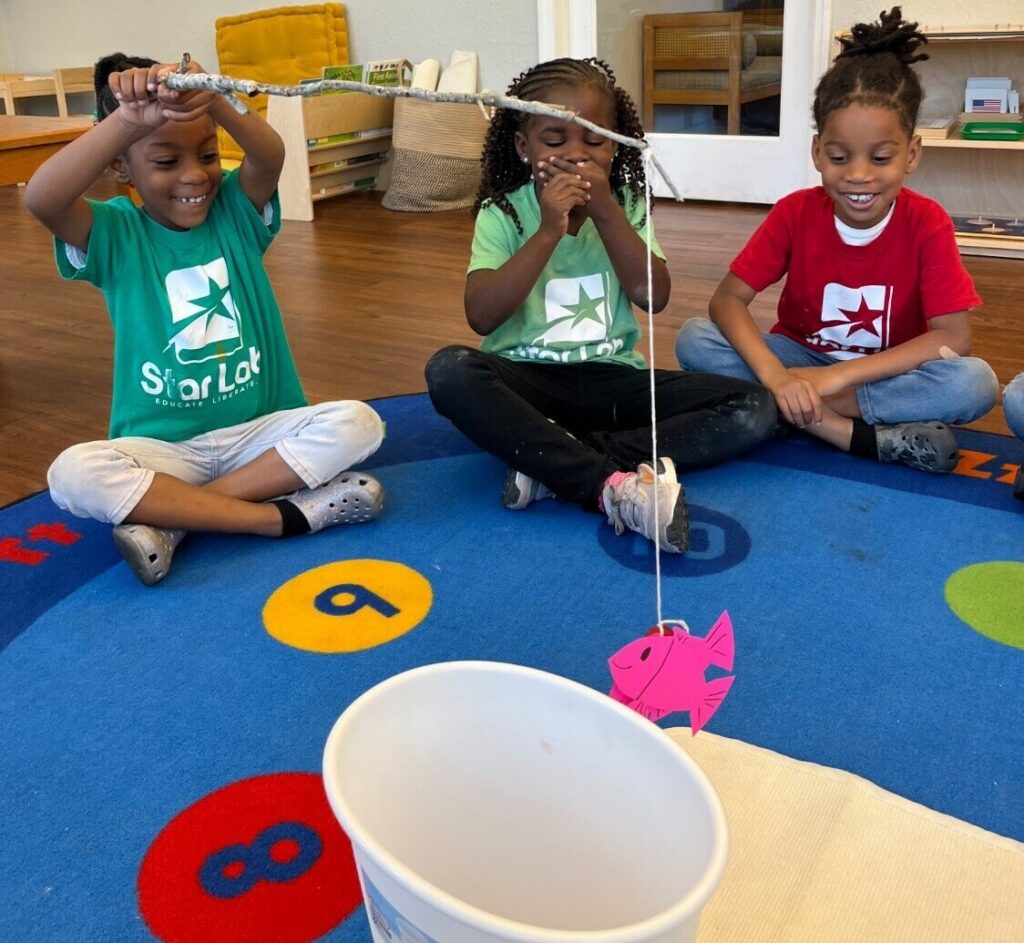
Alison Rini, the founder of Star Lab in Sarasota, could serve only five students during her first year due to fire codes that would require her to spend $97,000 on a sprinkler system for the rec center of a public housing complex where Star Lab operated. A local philanthropy stepped forward to help the housing authority pay for the system, but many founders are not as fortunate.
“The new law is a major win for diverse educational options,” Rini said. “The zoning process is incredibly burdensome.” In addition to the sprinkler system, Rini said she spent $10,000 to apply for a minor conditional use permit to use a one-story building less than 3,000 square feet that had previously housed a day center. The whole process took nearly two years and cost a total of $130,000.
“All of that time and money could have gone into our students and our curriculum; it was so frustrating,” Rini said.
Rini said she had to invest all the time and money with no guarantee of success. However, she said the planning commission easily approved her proposal when she was finally able to present it after 22 months of preparation.
After the vote, Rini said the chairperson commented, “I don’t know why this had to be so hard for her. I’m from Europe, and we have schools in apartment complexes all the time. This is a very compatible use.”
Danny Aqua, projects director for Teach Florida, recently told EdChoice the law adopts common sense fire code reform by 1) requiring fire officials to recognize alternative fire safety methods that are already in the code, and 2) treating similar facilities like day cares and churches as existing schools when applying the fire code.
“The goal is not to reduce safety, but to ensure that regulations designed for large, traditional schools are applied more appropriately to smaller educational environments,” he said.
Editor's note: This post is shared by our sister organization, Step Up, Step Further Scholarship Fund, a new federal scholarship program launching in 2027 to support students in public and private schools.
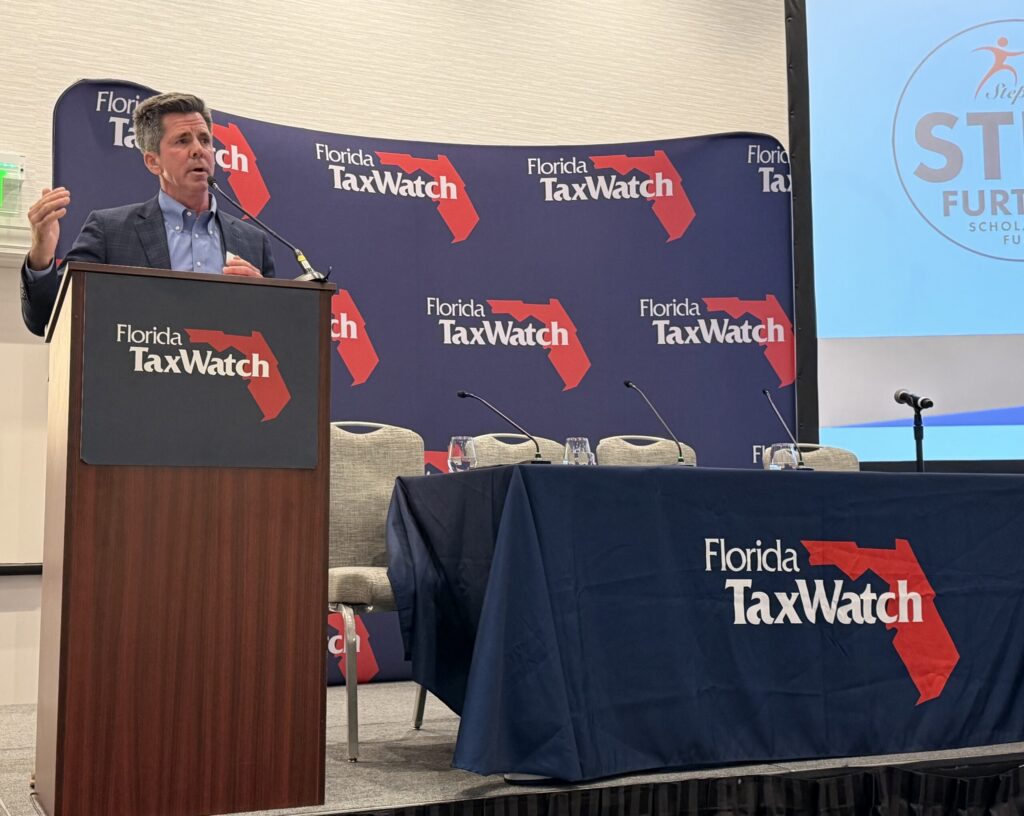
At Florida TaxWatch’s policy forum, Step Up For Students Founder and Chairman John Kirtley shared how the new federal Education Freedom Tax Credit will help expand opportunity for K-12 low income district school students. “The income levels that the federal law allows are, in my opinion, pretty generous,” Kirtley said. “They’re 300% of the area’s median income, which in Florida will be anywhere up to probably $250,000. However, a scholarship organization can set its own income limits.”
The new tax credit will continue to allow Step Up, Step Further, sister organization of Step Up For Students, to focus on serving the lowest-income students in Florida.
Kirtley went on to illustrate how Florida school districts have seen a dramatic increase in graduation rates since 1981, when the graduation rate hovered under 50%. He noted that a statewide push for greater accountability in schools and grading them has resulted in a graduation rate of over 90%.
“That’s an incredible improvement, and we should all be very proud of that. A great example of how the districts have responded is very close to home for me. My high school, Fort Lauderdale High School, when schools were first graded back in 1999, my high school was an ‘F.’ And it was an ‘F’ for several years,” Kirtley said.
Read the full article at Florida Politics > https://floridapolitics.com/archives/791109-john-kirtley-makes-case-for-choice-encouraging-use-of-education-savings-accounts/
PALATKA, Fla. — All Risa Byrd wanted to do was start a little preschool. That’s it. But then the former public school teacher got swept up in one of the most epic education stories in American history. Now her fast-growing school is the latest example of what’s possible when school choice is the new normal.
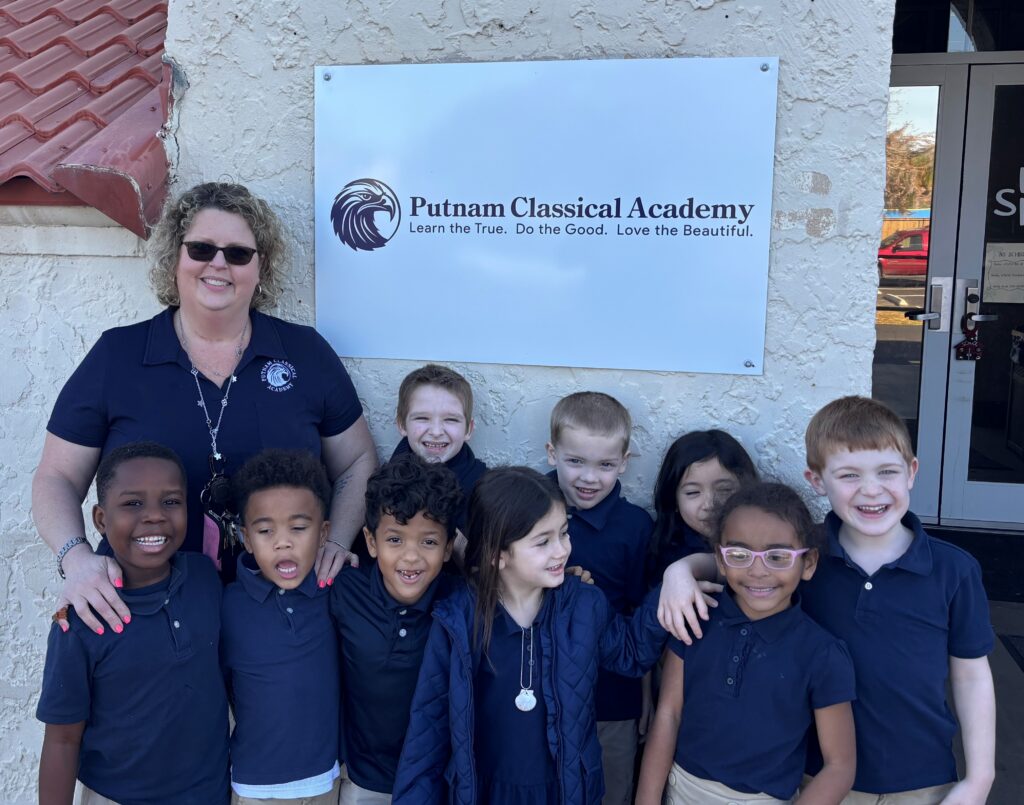
In 2022, Byrd retired from a 26-year teaching career to start Little Sprouts Learning Center. The goal was modest: Get her granddaughter’s academic journey off on the right foot.
A few months later, though, Florida lawmakers passed, and Gov. Ron DeSantis signed, one of the most sweeping school choice bills of any state, ever. Suddenly, every student in Florida was eligible for a state-supported choice scholarship.
Byrd didn’t realize it at first. But her school had caught a wave.
In the fall of 2023, Byrd added kindergarten and first grade, starting with eight students in those grades. She called the school for the higher grades Putnam Classical Academy.
By the fall of 2024, Putnam Classical had 50 students in grades K-5.
By the fall of 2025, it had 234 students in grades K-6, in addition to 60 in preschool.
Now Byrd’s looking for a whole other building to house a separate middle school. When she announced plans via Facebook, 111 students signed up in three days.
“Parents are desperate for their kids to be well educated,” Byrd said, particularly those from underserved communities. “They’ve been written off.”
Byrd is one of hundreds of former public school teachers who have leveraged Florida’s choice scholarships to create their own learning options. They can be found in every corner of the state, even in rural and semi-rural counties like Putnam, where a paper mill is the biggest private employer, the biggest town has 10,000 people, and the best-known landmark may be a blast-from-the-past diner.
The parents driving demand aren’t looking for anything exotic, Byrd said. They just want safe schools with top-quality academics, high expectations, and no drama.
“Parents got the word that we don’t play. That’s the biggest draw,” Byrd said. “They’re fed up. They know kids can’t learn, and teachers can’t teach, if there’s sheer chaos in the classroom.”
Byrd’s story may be a particularly dramatic example of what’s happening in Florida, and particularly symbolic.
More than half of Florida’s 3.4 million students are now enrolled in something other than their zoned neighborhood schools, and more than 1 million are enrolled outside of district schools entirely. Perhaps it’s fitting, then, that Putnam Classical leases a century-old building that once served as the local school district’s headquarters.
Despite the name, Putnam Classical isn’t truly classical yet. Byrd said she and her staff, which includes 20 teachers, will transition to a more recognizable “great books” curriculum within two years.
The first order of business is to establish a higher rate of basic literacy.
A self-described “data nerd,” Byrd is a “science of reading” adherent and a huge fan of Natalie Wexler, author of “The Knowledge Gap” and a leading proponent of using a content-rich curriculum to boost vocabulary and comprehension.
For the early grades, Putnam Classical uses an explicit, evidence-based phonics curriculum developed by the University of Florida. For the higher grades, it uses the highly regarded Core Knowledge curriculum for language arts, science, and social studies.
“If you teach these kids to read, you will change the trajectory of their lives,” Byrd said. “Then they can be an astronaut, a chef, anything they want to be.”
Byrd said as a public school teacher, she earned a reputation for working well with struggling readers, so more and more were sent her way. It became obvious, she said, that many students acted out because they couldn’t read well.
One time, she said, she stopped a 10th grader from disrupting her classroom, then took her out to the hallway to talk. The girl broke down and told her, in between sobs, “I’d rather everyone in that room think I’m a b---- than think I’m stupid.”
In three years, Byrd said she’s expelled two students. The school isn’t orderly because it’s draconian about discipline, she said. It’s orderly because kids are achieving academically and are proud of themselves. “When you learn to read,” Byrd said, “school becomes a lot more fun.”
About half of the students at Putnam Classical are Black or Hispanic; about 75% would be eligible for free- or reduced-price lunch in public school. The school does not charge tuition beyond the amount of the choice scholarship, which averages about $8,000 statewide and is far less than what districts spend.
Most of the students who switched to Putnam Classical were not reading at grade level when they arrived, Byrd said. Some incoming second graders didn’t know their letter sounds.
But now?
Now more than 60% are showing average or better growth compared to their peers nationwide, according to the STAR reading assessment Putnam Classical uses. In other words, students who were previously losing ground in their prior schools are now catching up and starting to get ahead.
Dalton Crews chose Putnam Classical for his 5-year-old, Delilah. He said he attended a private elementary school before moving on to public school and thought it built a good foundation for academics and character. He wanted the same for his daughter, and thankfully, he said, choice made it possible.
“I love the teachers. They communicate really well. They always tell me what’s going on,” said Crews, who installs fire sprinklers for a living. “They tear up when the kids leave. That’s love. They’re good people.”
Shentae Roberts said her 10-year-old granddaughter, Ja’Zyiah, was receiving good grades in her prior school, even though it was obvious to her family that she was struggling with basic material.
Her daughter tried contacting the school to get more information, she said, but never got a response. That’s why, in 2024, her daughter switched Ja’Zyiah and younger brother, Hakiem, to Putnam Classical.
“Best thing she did,” Roberts said.
Roberts said her granddaughter initially struggled at Putnam Classical, too. But the teachers gave her the attention and instruction she needed, she said.
The result: Ja’Zyiah “came back 10 times stronger,” Roberts said. “All the staff get to know the children, and they’re responding to them. They’re pulling the children to the next level.”
Byrd said more good things are ahead, not just for her school.
Even though Florida has been a national leader in private school choice for a quarter century, Byrd said she didn’t know much about it until HB 1, the landmark legislation Gov. DeSantis signed in 2023. Now, though, she realizes the game-changing potential not just for families but for teachers.
“Every public school teacher says, ‘If I were the boss, I would do it this way,’ “ Byrd said.
Well, now’s their chance.
The category is “Lifelong dreams.”
These are the clues.
Many find this experience fun, exciting, and a little scary.
What is being on “Jeopardy!”?
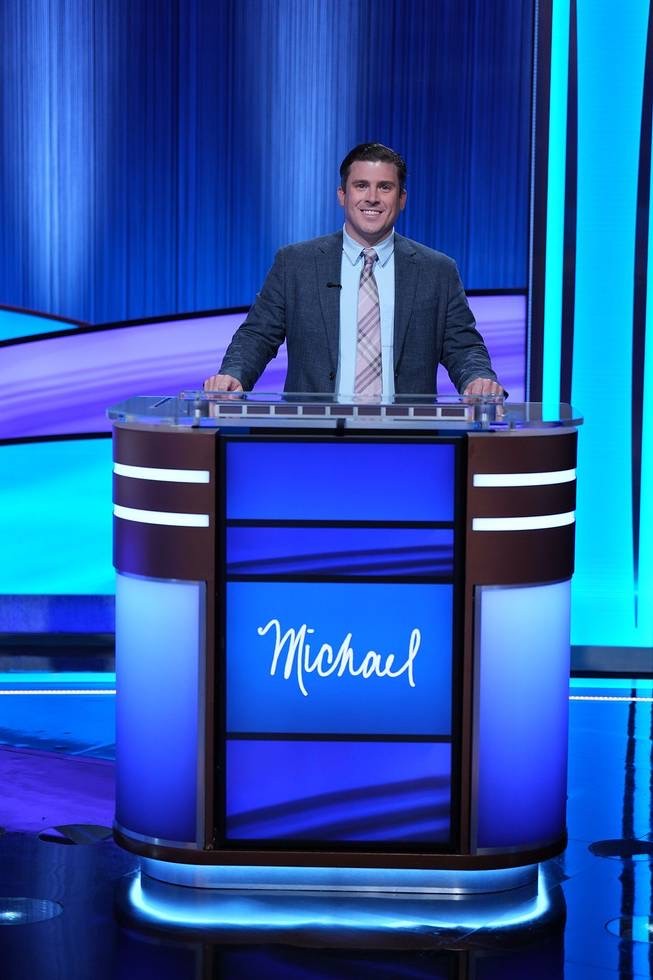
The answer is correct if you’re Michael Kavanagh, principal at Holy Family Catholic School, a K-8 parochial school in Jacksonville.
For as long as Michael can remember, he wanted to appear on “Jeopardy!,” the game show where the answers are given, and the contestants guess the questions. A dream that became a goal when Michael reached high school became a reality when he appeared on the show that aired on Nov. 24.
Michael placed second among the three contestants. He was a perfect 12-for-12 in his answers, including “Final Jeopardy!,” when he was the only one to successfully answer the question. He earned $12,600.
“To be able to say that I accomplished something that I've wanted to do since I was a kid, to be able to actually pull it off and get on the show, that was really just a dream for me,” Michael said.
All but a handful of Holy Family’s students attend the school with the help of a Florida education choice scholarship managed by Step Up For Students. Many watched their principal live out his dream, which made Michael the big man on campus when school resumed after the Thanksgiving break.
And maybe a role model.
“Step Up exists to give children opportunities, to give children a chance to go to a great school and get a great education,” Michael said.
And with that education, well, they too can someday be on “Jeopardy!,” if that’s a goal they want to chase.
“That's what I hope our students see the value in,” Michael said. “I didn't use my athletic abilities. I didn't use my strength or anything like that. I was fortunate enough to go to great schools and learn from great teachers, and I used that knowledge to pursue something that I really loved.
“I think it just shows you that when you have an opportunity, and when you have a dream, and you want to follow it, all these things are possible. So, I do hope that maybe being a role model for someone as a ‘Jeopardy!’ contestant, that's maybe a little bit of a nerdy thing to do, but I do hope it shows the kids that there's value in learning and there’s value in pursuing your dreams.
“It's good to be smart.”
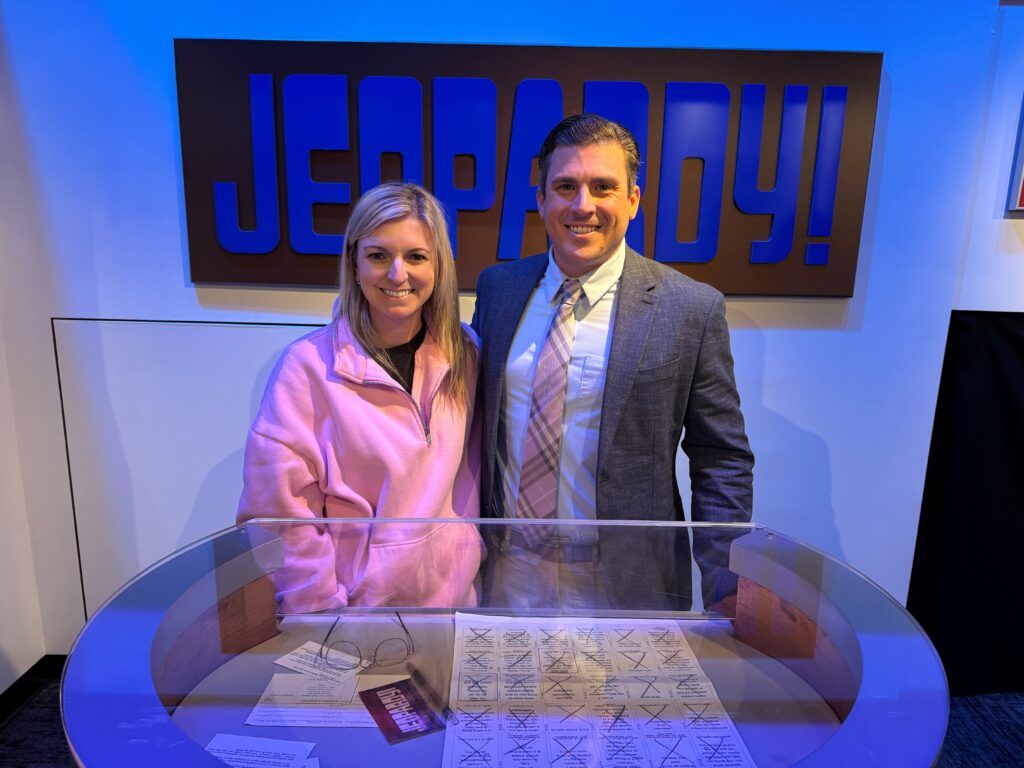
To be selected for “Jeopardy!,” Michael had to pass an online test, then an interview. He had taken the test several times, but this was the first time he was interviewed. In September, he received the call. He would be on the show that was taped Oct. 21.
What is ecstatic?
Michael was told by the show’s producers that 70,000 people take the test each year, but only 450 make it to the show.
“Just being there, you’re in pretty elite territory,” he said.
Michael and his wife, Allison, flew to Los Angeles for a three-day trip. They had to keep the results to themselves until after the show aired.
While Michael didn’t win -- Harrison Whittaker from Terre Haute, Indiana, extended his winning streak to 10 games that day – he was the only one who answered every question correctly.
Other than reviewing the names of Shakespeare characters, U.S. vice presidents, and capitals of foreign countries, Michael said he didn’t study for his big moment. It’s nearly impossible when the show’s producers can pick from a nearly endless list of categories, or, as they did that day, create one where the contestants were given two words and had to change the last letters to form another word.
Michael entered with the random facts accrued over a lifetime of being curious.
“It was just stuff that I've picked up over 40 years of listening, and reading, and studying,” he said. “I'm very blessed with a mind that is always curious and remembers facts that I find interesting. For me, I think everything is interesting.”
It was a combination of facts that led him to the correct answer to “Final Jeopardy!,” the last question of the show and the one that often determines the winner.
The clues:
He wasn't yet a U.S. citizen when he was named an All-American and won two Olympic gold medals for the country.
Michael had 30 seconds to answer.
“I didn’t actually know the answer,” Michael said.
But he knew Jim Thorpe was a Native American, and he knew Thorpe was an Olympic champion, and knowing what he does about American history, he figured Native Americans were probably not considered American citizens at that time.
Who is Jim Thorpe?
“I was able to piece together all of those little bits of information to come up with a really confident guess as to what the answer was,” Michael said. “So, it was a lot of problem-solving, too. A lot of ‘Jeopardy!’ is not, ‘Do you know facts?’ It's, ‘Do you know this fact, and can you use it to lead you to something else?’ ”

“Jeopardy!” tapes a week's worth of shows on Mondays. Michael’s show was the first one that was taped. Afterward, he sat in the audience with Allison and watched two more shows.
Each show is 30 minutes, but because of commercials, contestants are on air for only 22 minutes. Add a few practice questions before taping began, the excitement of being on the iconic “Jeopardy!” set, and the mental energy needed to come up with answers in a split second, and Michael was a little worn out when it was over.
“It’s a competition,” he said. “It's not athletic, but you definitely feel like your body has gone through something. Your brain was spinning, and your heart was racing, and then it's over, and you take a deep breath, and you realize that's it. I'm done. And that was incredible.
“Honestly, it's more like riding a roller coaster, and you get off, and you think, ‘Well, that was fun and exciting and a little scary.’”
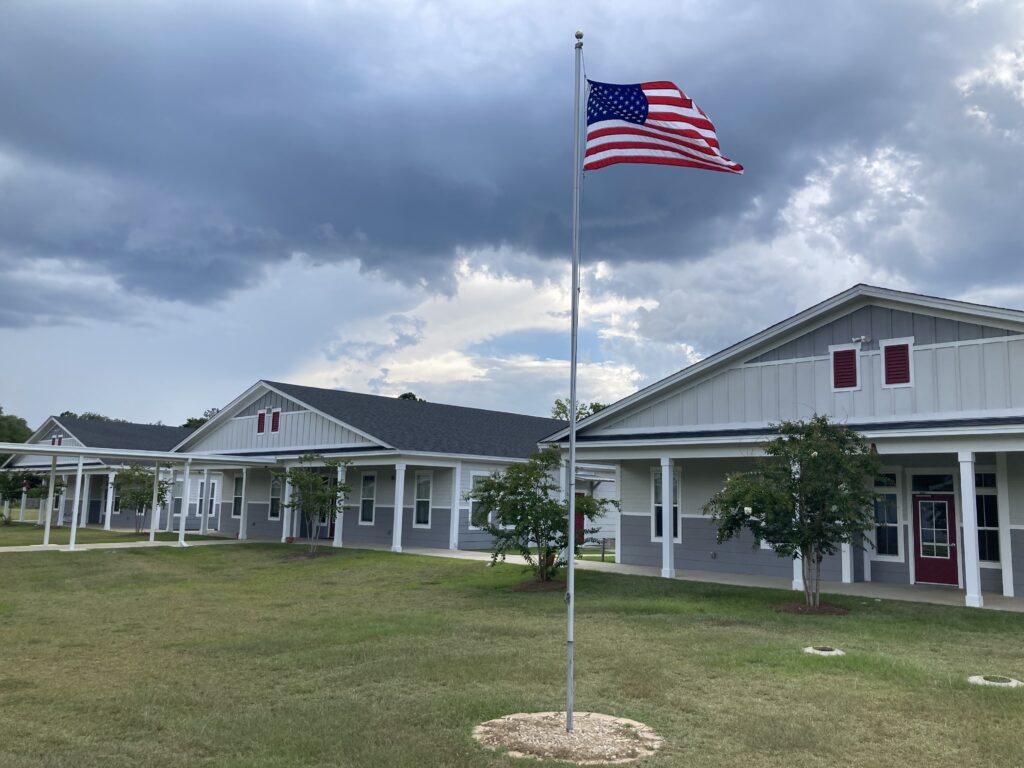
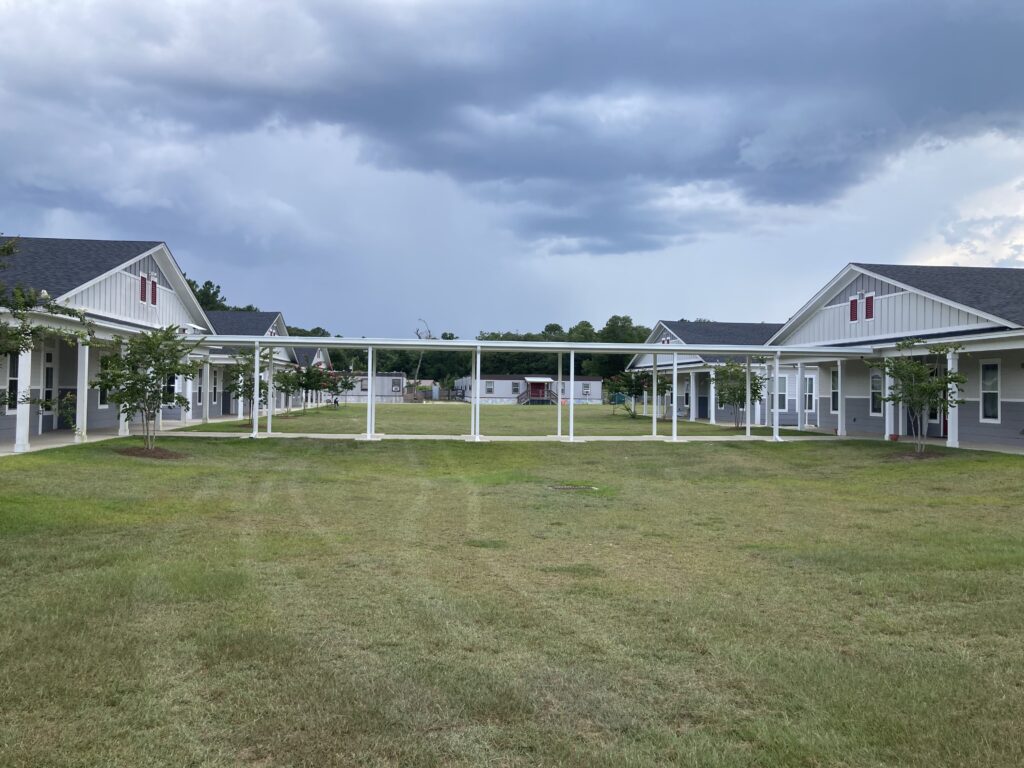
HAVANA, Fla. – It was a typical July afternoon in Florida’s Panhandle. The air was hot and sticky, and the sun hid behind the dark gray thunder clouds building to the north of Robert F. Munroe Day School in Havana.
A warm breeze kicked up, signaling the approaching late-day storm.
The students who darted about earlier during summer camp, and the staff and teachers who spent their day on campus preparing for the upcoming school year, were mostly gone.
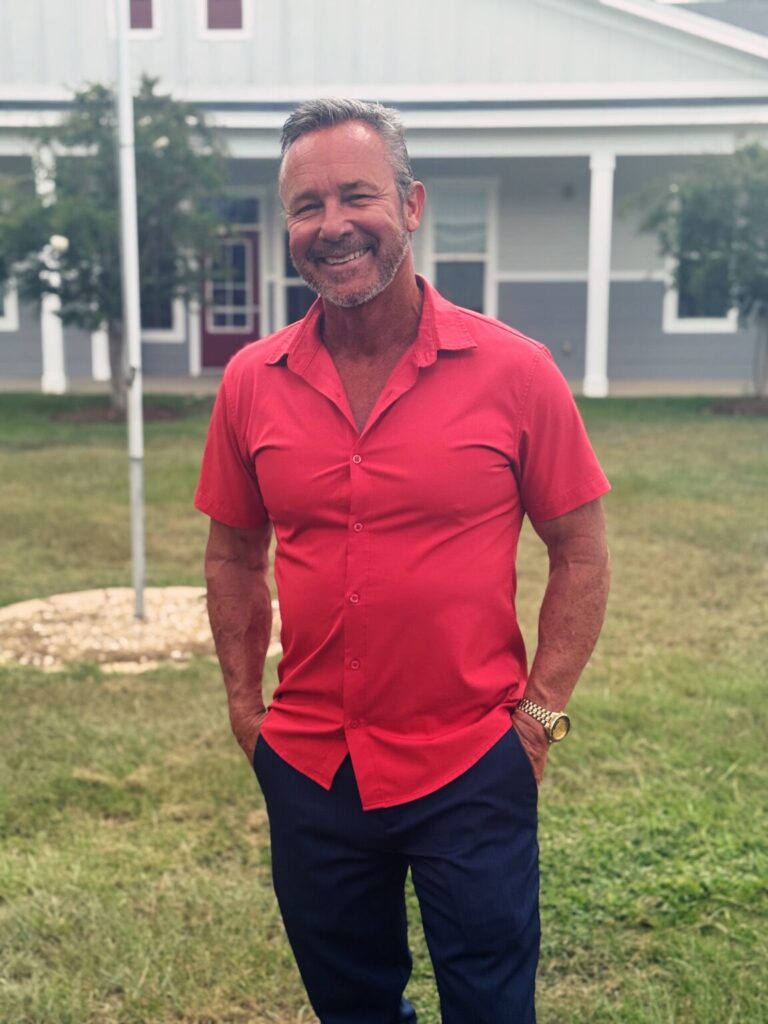
Andy Gay, head of school, remained. So did Shanna Halsell, director of advancement and marketing. They spent the better part of the day with a visitor, explaining the efforts necessary to keep Robert F. Munroe Day School (RFM) open, despite financial shortcomings, an exodus of teachers, and declining enrollment that not too long ago threatened to close the private pre-K-12 school.
But that gloomy forecast never happened.
In Gay’s first three years on the job, enrollment has increased, and test scores are on the rise.
Several factors came into play for the turnaround, including the expansion of Florida’s education choice scholarship programs managed by Step Up For Students.
“The Step Up scholarship saved this school,” Gay said. “This school has always been on the verge of shutting down, and we’d have closed without it.”
But RFM’s story is more than just the creation in 2022 of the Family Empowerment Scholarship for Educational Options, which increased the income requirements for eligible families, making a private school education more affordable to families.
Parents need more than money to send their children to a private school. They need a reason to send them there.
And that’s where Gay comes in. He is a graduate of RFM. So is his wife, and so are his two sons and his daughter.
“We’re a Munroe family,” Gay said. “I love this place. It has a soft spot in my heart.”
That’s the reason RFM’s board of trustees sent an SOS to Gay before the start of the 2022-23 school year.
“We needed him,” Libby Henderson, the immediate past president of the school’s board of trustees, said.
A native of Gadsden County, Gay has deep roots in the community. And, as a former teacher, coach, and administrator in the county school district, Gay is well-versed in how to run a school.
Also, he was available.
Sort of.
Gay had just retired after 32 years in education. He was ready to spend his days fishing and playing with his grandchildren.
That lasted two weeks.
“He indicated he was interested and could be talked out of retirement,” Henderson said.
Gay, who always wanted to run a school, accepted the offer, telling the trustees that he would work for two years. This year is his fourth as head of school.
“I don’t know,” he said, “I fell in love with the job.”
Eventually.
Gay admitted that what he found when he took over was not what he expected. The test scores for reading and math were below grade level.
“I saw a lot of disturbing data, and I knew that there had to be some drastic reform,” he said.
Where to start? The faculty.
Gay filled the vacancies with a mix of seasoned teachers and college graduates.
“It's always been my philosophy that there's no one more important than the teacher in the classroom,” Gay said. “So, I got busy trying to hire people that I knew would get the job done, that I could trust, that I knew.
“With the young teachers, I felt that we could give them the support they needed and turn them into good teachers.”
Gay has coached football and track. He won back-to-back state track titles and came within three points of winning a third straight. He knows how to build a staff of assistant coaches. You hire coaches for their expertise and let them coach.
It’s the same with the teachers.
“The cool thing about Andy that I love is he’ll help you if you need help,” said Anthony Piragnoli, who is in his sixth year at RFM and teaches high school English and coaches the middle school football team. “Now, if you're a new teacher and you kind of need some help, he'll definitely help you out and give you all the resources and all the tools you need. But if you're more experienced, he kind of lets you, I don't want to say do your own thing, but he gives you the freedom to teach the way you want to teach.”
Of course, nothing is more important to a school than the students themselves. To raise the academic bar, Gay and his staff created a welcoming, yet demanding culture.
“It’s all about the expectations you put on the kids,” he said.
And the expectation was that they would become better readers.
Gay instituted DEAR Time, which stands for “Drop Everything And Read.”
A first-grade teacher came up with the idea for the Bobcat Buddy Program, which pairs upper school students with lower school students for mentorships and companionship.
That led to Bobcat Buddy Book Day, where upper school students bring a book or check one out from the library to read to their lower school buddy.
“You go out on campus, and you see kids lining the sidewalk or on the playground, and the big buddy is reading to the little buddy, and I think that is wonderful,” said Dawn Burch, director of education.
The programs work. Two years ago, only 48% of RFM students were reading at grade level. That has increased to 73%.
Halsell’s data shows the school experienced 93.8% growth across the board in reading, math, and science since Gay took over. Last year, 13 of 30 seniors graduated with associate's degrees through the school’s newly implemented dual enrollment program.
But it takes more than just the teachers to get students to work harder. The parents have to buy in, too.
“I want partnerships between parents and teachers,” Gay said. “It can’t be adversarial. I found it makes a huge difference in the overall academic growth of the child when there is a partnership.”
Toward that end, parents are always welcome on campus. Teachers are encouraged to call parents when their child does something positive in class.
“We can call about good stuff, too,” he said.
There is an excitement around RFM that hadn’t been there in years, Henderson said. Last year’s alumni golf tournament raised $25,000, which went toward the school’s curriculum. Halsell works tirelessly to reconnect with alumni and build a network of donors. She recently announced that the school secured a $500,000 grant for its STEM program.
The school sits on 44 acres with plenty of room to expand. A new gymnasium would be nice.
Those rain clouds that appeared over the school on that July afternoon did little more than threaten. Much like the metaphorical storm clouds that were forming when Gay took the job.
“He’s done a phenomenal job,” Henderson said.
Two years turned into four for Gay, and four can turn into who knows how long.
“I feel like I will stay here as long as I continue to see progress and I continue to feel good about this place,” Gay said. “Right now, I feel like we're on the verge of some greatness.”
JACKSONVILLE, Fla. – Four years ago, Phil and Cathy Watson were distressed and desperate. Their daughter Mikayla, then 12, was born with a rare genetic condition that led to physical and cognitive delays. With her school situation getting worse by the day, they needed options, now.
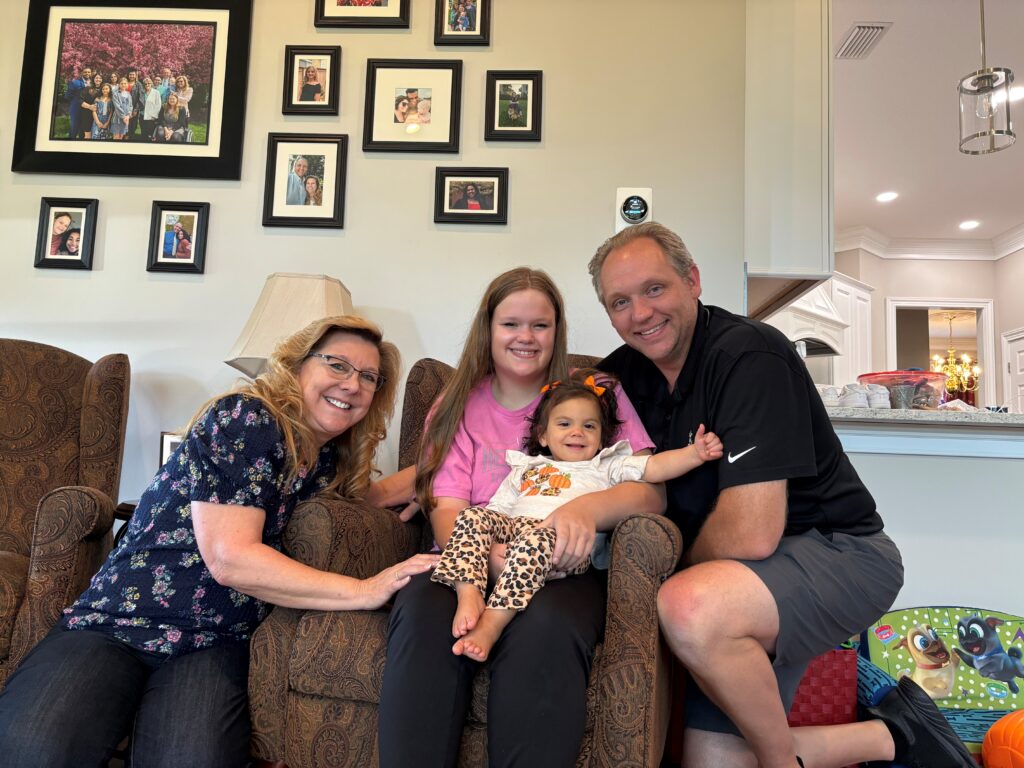
The Watsons were open to private schools. But they couldn’t find a single one near their home in metro D.C. that met Mikayla’s needs. They even looked in neighboring states. Nothing.
One day, though, Phil varied his keyword search slightly, and something new popped up:
A school for students with special needs that had low student-to-staff ratios, transition programs to help students live independently, even an equine therapy program.
The Watsons feared it was too good to be true. Even if it wasn’t, it was 700 miles away.
A destination for education
Florida has always been a magnet for transplants. It’s tough to beat sunshine, low taxes, and hundreds of miles of beach. But as Florida has cemented its reputation as the national leader in school choice, the ability to have exactly the school you want for your kids is making Florida a destination, too.
In South Florida, Jewish families are flocking from states like New York to a Jewish schools sector that has nearly doubled in 15 years. But they’re not alone. Families of students with special needs are making a beeline for specialized schools, too. The one the Watsons stumbled on has 24 students whose families moved from other states – about 10% of total enrollment.
The common denominator is the most diverse and dynamic private school sector in America, energized by 500,000 students using education choice scholarships.
According to the most recent federal data, the number of private schools in Maryland shrank by 7% between 2011-12 and 2021-22. In Florida, it grew by 40%.
“What Florida is offering is just mind blowing compared to Maryland,” Phil said. “If a story like this ran on the national news, people would be beating the door down.”
‘The kid who never spoke’
Phil and Cathy Watson have six children, all adopted. They range in age from 1 to 39. All have special challenges.
“God picked out the six kids we have,” said Cathy, who, like Phil, is the child of a pastor. “We feel very strongly that we were called to do what we do. Our heart says we have love to give and knowledge to share. These kids need that, so it’s a match.”
Mikayla is their fourth child. She was born with hereditary spastic paraplegia, a condition that causes progressive damage to the nervous system.
She didn’t begin walking until she was 18 months old. Even then, her gait continued to be heavy-footed, and she was prone to falling. Her speech was also, in Phil’s description, “mushy,” and until she was 12, she didn’t talk much.
In many ways, Mikayla is a typical teen. She loves steak and sushi and Fuego Takis. Her favorite books are “The Baby-Sitters Club” series, and her favorite movies include “Beauty and the Beast” and “Beverly Hills Chihuahua.” Many of her former classmates, though, probably had no idea.
In school, Mikayla was “the kid who never spoke.”
Checking a box
As Mikayla got older, she and her parents grew increasingly frustrated with what was happening in the classroom. “She was being pushed aside,” Phil said.
Teachers would tell her to read in a corner. Between the physical pain from her condition and the emotional turmoil of being isolated, she was crushed. Sometimes, Phil said, she’d come home and “unleash this fury on my wife and I.”
The pandemic made things worse. In sixth grade, Mikayla was online with 65 other students. Then, three days before the start of seventh grade, the district said it no longer had the resources to support her with extra staff. Instead, she could be mainstreamed without the supports; enroll in a private school; or do a “hospital homebound” program.
The Watsons chose the latter. Three days a week, a district employee sat with Mikayla, going over worksheets that Phil said were “way over her head.”
“All it was,” he said, “was checking a box.”
Just in the nick of time, the school search turned up a hit.
Florida, the land of sunshine and learning options
What surfaced was the North Florida School of Special Education.
“From just the pictures, I’m thinking, ‘This looks legit,’ “ Phil said. “Both of us are like, ‘Wow.’ “
When the Watsons called NFSSE, as it’s called for short, an administrator answered every question in detail. This was not the experience they had with some of the other private schools they called.
At the time, Phil owned a home building company, and Cathy worked for a counseling ministry. They lived comfortably. But they were also paying tuition for another daughter in college.
Thankfully, the administrator told them Florida had school choice scholarships. For students with special needs, they provided $10,000 or more a year.
The Watsons couldn’t believe it. They were familiar with the concept of school choice but didn’t know the details. Maryland does not have a comparable program.
The administrator also told them NFSSE had a wait list. But the Watsons had heard enough.
A fortuitous phone call
A few weeks later, they were touring the school.
The facilities were stellar. Even better, the administrator leading their tour knew the name of every student they passed in the hallways. “We were blown away,” Phil said. “They truly care. “
At some point, the staff ushered Mikayla into a classroom. As her parents watched from behind one-way glass, another student greeted Mikayla with a flower made of LEGO bricks.
For years, Mikayla had been withdrawn around other students. Not here. The shift was immediate. She and the other students were using tablets to play an interactive academic game, and “you could see her turn and laugh with the kids next to her,” Phil said.
Minutes later, he and Cathy were in the administrator’s office, “bawling our eyes out.”
“We said, ‘We’re all in. We have to be here. We’ll be here next week if that’s what we have to do.’”
Days later, the Watsons were at Disney World when NFSSE called. Unexpectedly, the family of a longtime student was moving. The school had an opening.
New friends, improved skills and boosted confidence
Even without the choice scholarship, the Watsons would have moved. At the same time, the scholarship was invaluable. The cost was not sustainable in the long run, Phil said, especially because he had to re-start his business.
The Watsons rented a long-term Airbnb and then an apartment before buying a house in Jacksonville. They uprooted themselves completely from Maryland, including selling their dream home.
“That was hard,” Cathy said. “You’re leaving everything you love.”
Mikayla’s turnaround, though, has made it all worthwhile.
Mikayla was reading at a first-grade level when she arrived at NFSSE; now she’s at a seventh-grade level. She loves the new graphic design class. She won an award for completing 1,000 math problems. “When she got here, she couldn’t add two plus two,” Phil said.
Her verbal skills have blossomed. She eventually told her parents something she didn’t have the ability to tell them before: In her prior school, she didn’t talk because other students laughed at her.
At NFSSE, the “kid who never spoke” speaks quite a bit.
One day, she served as “teacher for the day” in her personal economics class, delivering a lesson on how to make change.
Mikayla is kind and quick to smile. She is surrounded by friends and admirers. “Mikayla is my best friend,” said a chatty girl with pigtails who waited by her side in the hallway.

One boy held the door for Mikayla as she headed to her next class. A second hung her backpack on the back of her wheelchair. A third walked her to P.E.
Mikayla’s confidence is growing outside of school, too.
In the past, she wouldn’t say hi or order in a restaurant. But at Walmart the other day, Phil needed a card for a friend’s retirement, so Mikayla went to find a clerk. She came back and told him, “Aisle 9.”
Mikayla has a bank account and a debit card. She tracks the money she earns from chores. She routinely uses the notes app on her phone to mitigate challenges with short-term memory.
NFSSE, Cathy said, is constantly reinforcing skills and strategies to foster independence. It “pushes for potential,” just like the families do.
Mikayla “sees that potential now; she’s excited now,” she said.
Before NFSSE, the Watsons didn’t think Mikayla could live independently. Now they do.
The school and the scholarship, Phil said, have “given Mikayla an opportunity for her life that we didn’t know existed.”
He credited the state of Florida, too, for creating an education system where more schools like NFSSE can thrive.
If only every state did that.
TAMPA, Fla. — Amelia Ramos recalls her oldest child’s first school experience after moving to the Grant Park neighborhood in 2018.
“It was not a good fit,” she said. “She lasted about four months.”
In addition to academics, Ramos cited safety as a big concern.
“You couldn’t even ride a bicycle down the street,” she said.
Ramos found hope after learning about Grant Park Christian Academy, a private school affiliated with the Faith Action Ministry Alliance. The nonprofit organization’s stated mission is “to strengthen neighborhoods through meaningful engagement, collaboration, and strategic partnerships.”

Grant Park Christian Academy prides itself on its record of providing strong academics and spiritually based character development. Ramos learned from the school’s principal about a state education choice K-12 scholarship program administered by Step Up For Students that would help cover the tuition.
With that, Ramos was sold.
Her daughter thrived at Grant Park and now attends a district high school. Her son and twin daughters now attend the private school, which serves 70 students in grades K-8.
“We love the school and the staff,” she said, adding that she appreciates the assurance of knowing that her children are safe when she leaves them at Grant Park Christian Academy.
“If only they had a high school,” she said.
Although there are no plans to add a high school, an expansion will soon more than double the school's capacity, located inside a gated property owned by a non-denominational church.
The project is just one example of a broader statewide trend resulting from the Florida Legislature’s passage of HB 1 in 2023. The landmark legislation made all K-12 students eligible for education choice scholarships regardless of their household income and gave families more flexibility in how they spend their students’ funds.
Putting parents in the driver’s seat supercharged the demand for more learning options.
In the 2023-24 school year, after Gov. Ron DeSantis signed HB 1, Florida saw the largest single-year expansion of education choice scholarships in U.S. history. That growth continued in 2024-25. Recent figures from the Florida Department of Education show that more than 500,000 Florida students were using some type of education savings account.
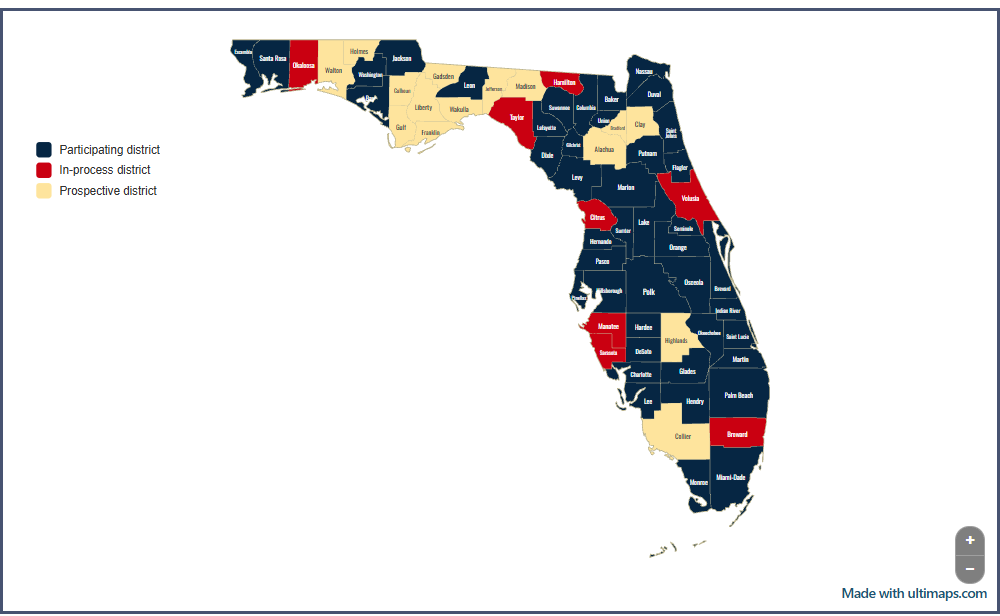
The expansions at Grant Park Christian Academy and other schools across the state, such as Jupiter Christian School in Palm Beach County, couldn’t come at a better time. The latest figures from Step Up For Students show that the number of approved private schools has surpassed 2,500. That figure doesn’t include a la carte options, including those now being offered by public schools. State figures show 41,000 parents received scholarships in 2024-25 but never used them. According to a survey by Step Up For Students, a third of the 2,739 parents who responded said there were no available seats at the schools they wanted.
The Rev. Alfred Johnson, who founded the ministry alliance and Grant Park Christian Academy in 2014, said the school is just one of the ways the ministry works to support and improve the neighborhood. A look outside the window once a month will show teams of alliance volunteers in neon yellow vests cleaning up roadside trash. Johnson estimates that over the past three years, the group has cleared 70 tons of garbage, including old mattresses, furniture, and household appliances.
Johnson and his volunteers regularly knock on doors and survey residents and business owners about community needs. They also host events; the annual Fall Fest offers families a safe and fun alternative to Halloween trick-or-treating.
“I know what they do to really make a change in this community,” said Hillsborough County Commissioner Donna Cameron Cepeda, a Republican who represents District 5 and the county at large. She said she had known Johnson for years before she ran for office. “You can see the lives, how they have been changed because of the environment they are able to be in now.”
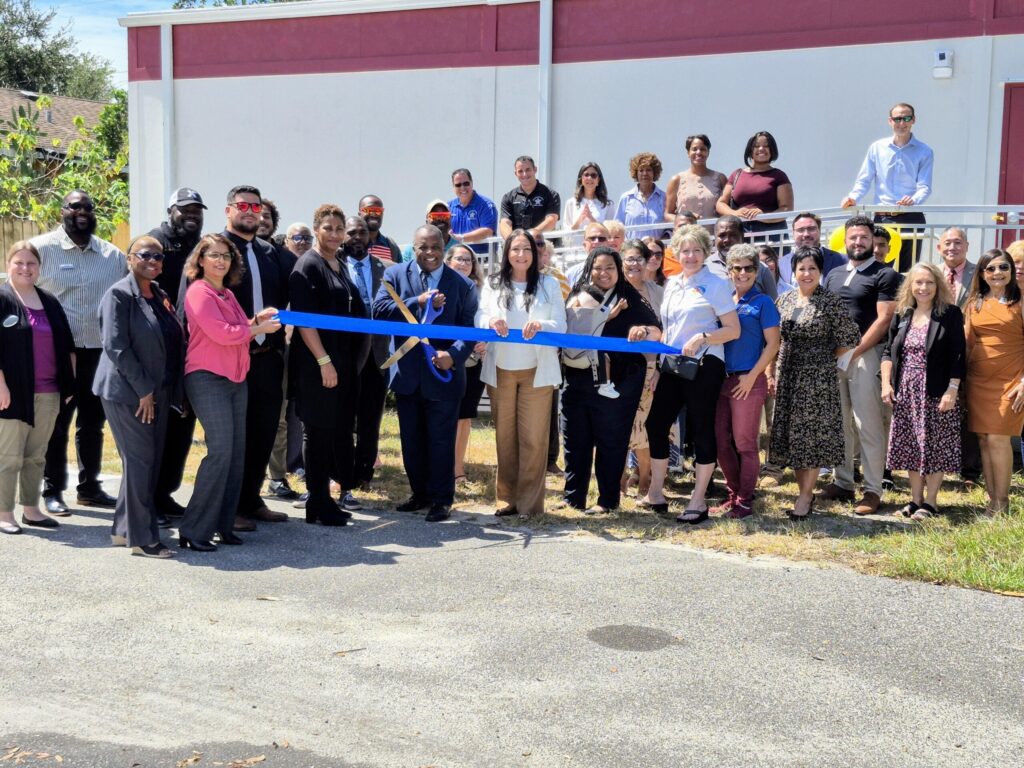
She was among a group of 50 community members at a recent ribbon-cutting ceremony for a new 2,660-square-foot modular building that will open after crews add the finishing touches.
Those attending the event represented a broad swath of community leaders, from local law enforcement officers to staffers at the Temple Terrace Uptown Chamber of Commerce, who brought the ceremonial oversized scissors. A representative of the Hillsborough County Clerk’s Office also attended. So did a group of leaders and students from Cristo Rey Tampa Salesian High School, which has some Grant Park Christian Academy alums.
Hillsborough County Commissioner Gwen Myers, a Democrat whose district includes Grant Park, joined her Republican colleague in praising the alliance and the school. The two commissioners also presented Johnson with a commendation honoring his contributions to the community.
“Our children are our future leaders, and when we can give them the basic foundation of education, they are going somewhere,” Myers said. “Just remember where they got their start, right here in Grant Park. What you’re doing is being a true public servant. Thank you for your vision.”

A husband, father of six, and grandfather of 12, Johnson refers to the students at Grant Park as “our babies” and describes the school as a haven of safety and peace.
“We hardly ever have any fights here,” he said. The school day starts at 7:30 a.m. After-school care is available until 5 p.m. Grant Park also offers summer camp, tutoring, mentoring and career preparation programs for the community, where the median household income stands at $32,216, and 72% of households make less than $50,000 per year. About 20% of the population did not graduate from high school. Although the area still has crime, Johnson said it has decreased over the past five years. Educational opportunities such as Grant Park Christian Academy and adult education and training play a role in improving the area’s quality of life, he said.
Johnson said he has seen many students turn their lives around. He told guests about a boy who was put outside the room for disrupting class on his first day.
“I don’t like this school,” he snarled.
“Give us a chance,” Johnson replied. He encouraged the boy to focus on his studies and respect his teachers. “You’re going to be a great leader and a great man.”
By the second year, the boy’s attitude completely changed. Test results that year showed he had the highest reading score in the school.
“That’s just one of the stories,” he said. “We have a plethora of them.”
Caleb Prewitt continued to shatter the perception of what someone with Down syndrome can’t do when he conquered the 26.2-mile course at the Bank of America Chicago Marathon on Oct. 12.
Caleb, 18, became the youngest person with Down syndrome to earn an Abbott Star for running one of the original six World Major Marathons.
The Jacksonville native, who receives a Florida education choice scholarship for students with unique abilities managed by Step Up For Students, is also recognized by the Guinness Book of World Records as the youngest person with II2 (Intellectual Impairment, including those with Down syndrome) to run a half-marathon (13.1 miles). He did that when he was 16.

David, Caleb, and Karen pose near the finish line of the Bank of America Chicago Marathon. Photo courtesy of the Prewitt family
Since 2020, when he began running as a means of getting exercise during the COVID-19 pandemic, Caleb has completed 47 triathlons (swim, bike, run), five half-marathons, and now one full marathon.
(Read about Caleb’s story here.)
The marathon was his most daunting endeavor, requiring months of training. The race took its toll – he experienced leg cramps after 20 miles. Undeterred, he pressed on and continued to cheer those who lined the course and were cheering for him.
“That went on for miles and miles, and I couldn't stop him,” Karen said. “I wanted to save his energy, and he just wanted to do it. I said, ‘You know what? This is his race. He can do what he wants.’”
Those in the Florida running community who have come to know Caleb during the last five years, and the faculty and staff at the North Florida School of Special Education, which he has attended since he was 5 with the help of his scholarship, wouldn’t have expected anything less.
He is known around school as “Mr. Mayor” for his always sunny disposition, and he is a star on social media with more than 31,000 followers on Facebook and more than 45,000 on Instagram to his Caleb’s Crew pages.
Running the marathon for the National Down Syndrome Society, Caleb raised more than $2,000 for the charity. There were 40 teammates from the National Down Syndrome Society team cheering him on at various points along the course.
Caleb’s dad, David, greeted him at the finish line with a long hug and a kiss.
“So proud of you,” David told his son.
Caleb was one of 17 charity runners in the event, which meant he was featured around Chicago in ads for the marathon, and his story appeared on the race’s website.
The 17 and their families met at a reception the day before the race.
“Their stories were all great. You know, everybody's story is great,” Karen said. “It's just that I think ours is great, too.”
That prerace publicity and the fact that he and Karen wore blue shirts with “Caleb’s Crew” on the front made him stand out somewhat in the field of 54,000 competitors.
“The crowd was amazing,” Karen said. “The whole way there was support and people cheering for Caleb. Everywhere we went, they knew his name, so that was a thrill.
“It was an awesome experience. What a wonderful day.”

Jordan Glen School started in 1974 on 20 acres of woods in the small town of Archer near Gainesville. Owner Jeff Davis, a former public school teacher, moved to Florida from Michigan to start a school that allowed students more freedom. Today it continues to thrive, thanks in part to education choice scholarships. Photo by Ron Matus
ARCHER, Fla. – Archer is a crossroads community of 1,100 people 15 minutes from the college town of Gainesville, but far enough away to have its own quirky identity. It’s surrounded by live oak-studded ranch land but calling it a “farm town” doesn’t ring right. When railroads ruled the Earth, Archer was a whistle stop on the first line connecting the Atlantic to the Gulf. In the late 1800s, T. Gilbert Pearson, co-founder of the National Audubon Society, roamed the woods here as a kid, skipping school to hunt for bird eggs. A century later, rock ‘n roll icon Bo Diddley spent his golden years on the outskirts.
So, let’s just say Archer is a neat little town. And maybe it’s fitting that for half a century, it has been home to a neat little private school that doesn’t fit into any boxes, either.
Jordan Glen School got its start in 1974, when former public school teacher Jeff Davis moved down from Michigan. In the late 1960s, Davis became disillusioned with teaching in traditional schools. In his view, students were respected too little and labeled too much.
“Back in the day, I would have been labeled ADHD. I hated school,” he said. “I never met a teacher that took a personal interest in me.”
As a teacher, he saw a system that was “too constricting.”
“There was just a general distrust of children, like they were going to do something bad,” he said. Education “doesn’t have to be rammed down your throat.”
Davis migrated to what was, more or less, a “free school,” with 50 students on a farm near Detroit. Today we’d call it a microschool.
In the 1960s, hundreds of these DIY schools emerged across America, propelled by an upbeat vision of education freedom inspired by the counterculture. Davis said the Upland Hills Farm School was a free school, more or less, because while its teachers were “long-haired” and “hippie-ish,” the school had more structure and rigor than free school stereotypes would suggest.
Davis thought the Gainesville area would be a good place to start a similar school. It had a critical mass of like-minded folks. So, in 1973, he and his family bought 20 acres of woods off a dirt road in Archer. Not long afterward, they invited a little school called Lotus Land School, then operating out of a community center in Gainesville, to move to their patch in the country. Today we’d call Lotus Land a microschool, too.
It was also, more or less, a free school. Davis described the teachers and families as “love children” and “free spirits,” but in many ways, their approach to teaching and learning was mainstream. A decade later, he changed the name. “I thought people would think it was a hippie dippy school, and I knew it was more than that,” he said.
Lotus Land became Jordan Glen. The school was named after the River Jordan, after some parents and teachers suggested it, and after basketball legend Michael Jordan, because Davis was a fan.
Fast forward a few more decades, and Jordan Glen School is thriving more than ever.
It now serves more than 100 students in grades PreK-8, some of whom are the second generation to attend. Nearly all use Florida’s education choice scholarships. Actor Joaquin Phoenix is among Jordan Glen’s alums. So is CNN reporter and anchor Sara Sidner.
Jordan Glen is yet more proof that education freedom offers something for everyone and that its roots are deep and diverse. Ultimately, the expansion of learning options gives more people from all walks of life more opportunity to educate their children in line with their visions and values.
“There is something about joy and happiness that makes people uneasy and a bit insecure,” Davis wrote in a 2005 column for the local newspaper, entitled “Joyful Learning is the Most Valuable Kind.” “If children are enjoying school so much, they must not be doing enough ‘work’ there.”
“Children at our school,” he wrote, “love life.”

A peacock, one of two dozen that roam the Jordan Glen School campus, watches students at play. Photo by Ron Matus
The Jordan Glen campus includes a handful of modest buildings. It’s still graced by a dirt road and towering trees. It’s also home to two dozen, free-roaming peacocks. They’re the descendants of a pair Davis bought in 1975 because they were beautiful and would eat a lot of bugs.
Given that backdrop, it’s not surprising that many families describe Jordan Glen as “magical.”
Alexis Hamlin-Vogler prefers “whimsical.” She and her husband decided to enroll their children, Atticus, 14, and Ellie, 8, in the wake of the pandemic.
“They’re definitely outside a lot,” she said of the students. “They’re climbing trees. They’re picking oranges.” When it rained the other day, her daughter and some of the other students, already outside for a sports class, got a green light to play in it and get muddy.
Another parent, Ilia Morrows, called Jordan Glen a “little unicorn of a school.”
Like Hamlin-Vogler, Morrows enrolled her kids, 11-year-old twins Breck and Lucas, following the Covid-connected school closures. She thought they’d stay a year, then return to public school. But after a year, they didn’t want to go back. “They had a taste of freedom,” she said.
For many parents, Jordan Glen hits a sweet spot between traditional and alternative.
On the traditional side, Jordan Glen students are immersed in core academics. They take tests, including standardized tests. They get grades and report cards. They play sports like soccer and tennis, and they’re good enough at the latter to win the county’s middle school championship. Many of them move on to the area’s top academic high schools.
But Jordan Glen also does a lot differently.

Students spend a lot of time outdoors at Jordan Glen School. Activities include archery, gardening and sports. Photo by Ron Matus
The students are grouped into multi-age and multi-grade classrooms. They choose from an ever-changing menu of electives. Many of those classes are taught by teachers, but some are taught by parents (like archery, gardening, and fishing), and some by the students themselves (like soccer, dance, and book club). The youngest students also do a “forest school” class once a week.
The school also emphasizes character education.
The older students serve as mentors for the younger students. They’re taught peer mediation so they can settle disputes. Every afternoon, they clean the school, working as crew leaders with teams of younger students. Their “Senior Class Guide” stresses nothing is more important than “caring about others.”
“The way the older kids take care of the younger kids, it’s very noticeable. They are genuinely caring,” Morrows said. At Jordan Glen, “they teach community. They teach being a good human.”
“My favorite thing is that most kids really get a good sense of self and self-confidence at this school,” Hamlin-Vogler said. “Some people say, ‘Oh, that’s the hippie school.’ But the students have a lot of expectations and personal accountability put on them.”
Hamlin-Vogler said without the education choice scholarships, she and her husband wouldn’t be able to afford the school. Hamlin-Vogler is a hairdresser. Her husband is a music producer. Before Florida made every student eligible for scholarships in 2023, they missed the income eligibility threshold by $1,000. Her parents were able to assist with tuition in the short term, but that would not have been sustainable.
Her family harbors no animus toward public schools. Atticus attended them prior to Jordan Glen, and he’s likely to be at a public high school next fall. Ellie, meanwhile, thinks she might want to try the neighborhood school even though she loves Jordan Glen in every way, and Hamlin-Vogler said that would be fine.
After Ellie described how much fun she had playing in the rain, though, Hamlin-Vogler had to remind her, “You might not get to do that at another school.”

