Florida gives parents the ability to direct the education of their children. Today about half of all K-12 students in the state attend a school of choice, and 500,000 students participate in state educational choice scholarship programs.
Gov. Ron DeSantis accelerated these trends in 2023, when he signed HB 1 and made every student eligible for a scholarship. No school can take any student for granted, and state funding follows students to the learning options they choose.
Unfortunately, misleading claims amplified in the media have blamed this expansion of parental choice for school districts’ budget challenges.
Sarasota County Schools, for example, recently estimated that scholarships “siphoned” $45 million from its budget, a figure cited in a WUSF article. In reality, most of the $45 million represents funding for students that Sarasota was never responsible for educating, such as those already in private schools, homeschooling or charter schools. It also does not account for students who return to district schools after using a scholarship. Once those factors are considered, the actual impact is considerably smaller than the headline number suggests.
For the 2024-25 school year, Sarasota County lost just 330 public school students to scholarship programs, but only 245 of those students came from district-run public schools. If those students had stayed, they would have brought the district about $2 million, not $45 million. That figure still does not account for the students who returned to district schools after using a scholarship the prior year, so the real impact would be smaller.
Other districts have been vocal about their budget difficulties, often attributing them solely to growing scholarship demand, such as Leon County Public Schools, which in 2024-25 lost 240 students from district-run schools (0.8% of enrollment), and Duval County Public Schools, which lost 1,237 students (1.2% of enrollment).
Statewide, 32,284 students left public schools in 2024-25 to use a scholarship. That is only 1.1% of all public-school students in Florida, and even that total includes those who previously attended charter schools, university-affiliated lab schools, virtual schools, and other public-school options.
Looking at district-run schools alone, just 24,874 new scholarship students left for scholarship programs in 2024-25. Another 5,507 came from charters, and 1,897 came from virtual schools. In fact, as a percentage of their total enrollment, charter schools lost more students to scholarship programs (1.4%) than district-run schools did (1%).
This means that the expanded scholarship program may be having a bigger impact on charter schools than districts. Charter schools, however, haven’t been as vocal about vouchers, and that is likely because charters continue to grow enrollment while district schools have started to shrink.
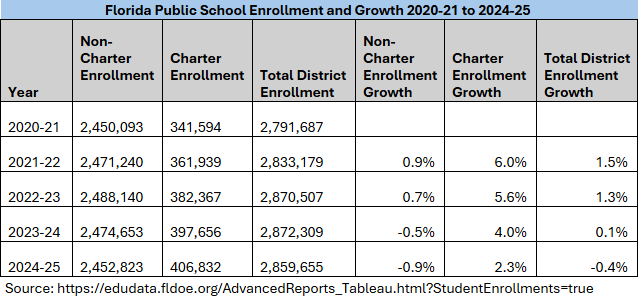
Enrollment declines in some districts have been real, even if the blame on scholarships is misplaced.
Declining enrollment is being driven by parent preferences – but also by shifting demographics and the ebb of the post-Covid population boom. Florida is one of the few states where overall K-12 population is expected to continue growing, but the growth will be uneven, and every school will have to compete for students.
Even as they face intense competition and demographic headwinds, Florida’s charter schools have kept growing. Some innovative district leaders have signaled a willingness to hear the demand signals from parents and create new solutions to meet their needs.
Understanding what parents seek in private and charter schools, and how new public-school models can better meet those demands, would be a good place for districts to start.
Pre-K and Voluntary Pre-Kindergarten (VPK) have also been major feeders for Florida’s scholarship programs. In 2024-25, 53,825 new scholarship students came from pre-K — somewhere between one-third and nearly half of all VPK students statewide.
Public schools have limited Pre-K offerings. Statewide, there are less than one-third as many Pre-K students as kindergartners enrolled in public schools. Private schools, by contrast, have used it as a key pipeline to recruit future students.
Districts have other avenues to respond to changing parent demands. Since 2014, when the Family Empowerment Scholarship for Students with Unique Abilities (FES-UA) was introduced as the Personal Learning Scholarship Accounts, districts have been allowed to offer classes and services to scholarship students.
The passage of HB1 in 2023 transformed every state scholarship into an education savings account. K-12 families now have more flexibility to use scholarships for “a la carte learning,” in which they pick and choose from a variety of educational options. By offering part-time instruction, tutoring, therapy, and other services, districts can win back students and the associated funding. So far, 21 of Florida’s 67 districts have taken advantage of this opportunity, with 10 more in the pipeline.
Florida’s enrollment shifts are real, but data shows the “voucher drain” narrative overstates the impact. The real challenge for districts is not money being “siphoned;” it is families choosing other options. Districts that adapt and compete for students will keep both enrollment and funding – leaving students, families and taxpayers better off.
Markala was Marlena and John Roland’s first child, and there were more on the way – four more, in all. And Markala was 5, so the Roland children were going to reach school age in quick succession.
This presented a dilemma.
“We wanted our kids in private school, but we didn’t have the money,” Marlena said.
But there was hope.
The year was 2005, and Marlena, a teacher at a private school near their Coral Springs home at the time, learned about a private school scholarship that had been established a few years earlier and was managed by Step Up For Students.

For nearly 20 years, a member of the Roland family attended a private school with the help of a scholarship managed by Step Up For Students.
She applied and was accepted, and for nearly all of the next 20 years, at least one of the Roland children attended a private school with the help of a Step Up scholarship. The exception was the two years the family lived in Georgia.
“It was a blessing for us,” John said. “The best thing we did was give them that education foundation.”
“None of that would have been possible without the scholarship,” Markala said.
Marlena was a teacher at ALCA when the kids began school. Even with the employee discount, she said the cost of tuition would strain the family’s finances. Still, she wanted her children to benefit from ALCA’s educational setting just like the students she was teaching.
“We wanted to set the bar high, to create good study skills and habits. We wanted them to be well-rounded,” said Marlena, who also taught at The Randazzo School for nearly 10 years, including the time Marcia attended.

Marcia, who graduated last May from The Randazzo School, was the last of the Roland children to use a scholarship managed by Step Up For Students.
It was by design that the Roland children split their education between private and district schools. Some were sports-related, but mostly, John wanted their children to experience both educational settings.
“John said, ‘Let’s put them in public school for a little bit and see how it goes,’” Marlena said. “He said they need to have both, and that will build character and build them as individuals.”
And it worked.
The private school experience helped the children excel at their district schools.
“It laid a really good foundation for us,” Markala said. “Just getting us excited to be in the classroom, to learn new things, to collaborate with others.
“I had friends (in high school) ask me, ‘Where did you learn this? Why are you thinking that way?’ All I could say was, ‘Thanks to my teachers at ALCA and Westminster.’ They really set us apart and prepared us for what was coming next. We were leaps and bounds ahead of our peers.”
John credited the private school education his children received but also gave credit to the emphasis he and Marlena placed on education at home.
“When I dropped them off at school, I told them we’ll add to it when you get home,” he said.
“They didn’t play with that,” Markala said. “That was non-negotiable in our house.”
She remembers a time when John sold the family pickup truck to help meet the expenses of her attending Westminster that the scholarship didn’t cover.
“As a kid, you see them doing that, and I'm like, ‘Don't we need that car to get places?’ They really valued education. That was what was important,” she said. “I see that now as an adult, the things that they're willing to do to make sure that we had a good education, putting us into spaces where we could learn and grow have been tremendous to me, even now that I’m in the workforce.”
Last week, I had the opportunity to make a presentation about how lawmakers can support teachers who want to start their own schools. The four key features:
2. Formula funding/demand-driven funding: Whoever applies for a choice program should receive funding if eligible.
3. Avoidance of anti-competitive accreditation requirements: Don’t ask your startup schools to operate without funding from the choice program while incumbent/accredited schools receive choice funding.
4. Exempt private schools from municipal zoning: Old hat for charter schools, needed for private schools as well.
Florida is the only state your humble author is aware of that has taken all four of these steps. This makes Ron Matus’ new study "Going With Plan B” all the more important. Despite a statewide increase of 705 private schools, 41,000 Florida families applied for, received, and ultimately did not use an ESA. Matus surveyed thousands of these parents to learn why.

The lack of school space was the No. 1 reason Florida families found themselves as non-participants. Reasons two and three were related to costs, which can also be thought of as a supply issue.
The “Going with Plan B” study is very interesting and should be studied carefully by Florida policymakers. For now, however, let us focus on the other states with choice programs that lack the four critical elements listed above. If FLORIDA has a supply issue, your state, sitting at one out of four, or two out of four, should take note: It is likely to be even worse in a state near you.

It's hard to find an athlete as exuberant as Caleb, who celebrates at the finish line of each of his races with a choreographed dance and high-fives for everyone. (Photo provided by the Prewitt family)
JACKSONVILLE, Fla. – David Prewitt was worried.
His wife, Karen, wasn’t.
“He can do it,” she said.
Their son Caleb, 13 at the time, was participating in his first open-water swim, something he needed to conquer if he was going to complete his first triathlon.
One thing you need to know about Caleb: He has Down syndrome.
Another thing you need to know about Caleb: It has never held him back.
“When we came home (from the hospital) with Caleb, we said he’s not going to be your typical young man with Down syndrome. We’re going to push him, and so we've always tried to raise him as a typical child,” Karen said.
That meant chores around the house, being active in sports, attending school, and making friends inside and outside of the Down syndrome community.
“We kind of upped the ante when we got into sports,” Karen said.
She coaxed Caleb into running a 5K on Thanksgiving of 2020 by using the Couch to 5K app that gradually built up his endurance. Now, Caleb was training for a triathlon – a 300-meter open-water swim, a 12-mile bike ride, and a 5K race.
He had learned to ride a bike. He had swum in a pool plenty of times. But what concerned David was that Caleb, with assistance from a volunteer partner, was now swimming in a lake to see if he had the strength and stamina to finish that leg of the race.
Turns out, he did.
“He comes out of that water, and he's just laughing,” David said. “And I thought to myself, ‘You’ve got to change your attitude,’ because this kid can do things.”
***
Caleb is now 18. He has completed 119 races in the past five years. Included are 44 triathlons of various distances, five half-marathons, and two Spartan Races.
The Guinness Book of World Records recognizes Caleb, 16 at the time, as the youngest person with II2 (Intellectual Impairment, including those with Down syndrome) to run a half marathon (13.1 miles). Caleb’s goal is to add his name to that book again in October by becoming the youngest person with II2 to run a marathon (26.2 miles) when he and his mom run the Chicago Marathon.
Stephen Wright was Caleb’s partner during the early part of Caleb’s running career. He’s amazed at all Caleb has accomplished.
“I don't think people realize, most 14- 15-, 16-year-old kids aren't doing that,” he said. “So not only does he have things he's trying to overcome and prove he can do things, but most kids his age aren't doing the things he's doing. It’s incredible, because I wasn't doing that stuff at his age.”
***
Deb Rains is the assistant head of school at the North Florida School of Special Education (NFSSE) in Jacksonville, where Caleb attends on a Unique Abilities Scholarship managed by Step Up For Students.
Rains called Caleb the school’s “Mr. Mayor.”
“He’s so outgoing,” she said. “He’s friends with everybody.”

Caleb will enter the North Florida School of Special Education's transition program this year.
Rains said Caleb’s always-in-a-good-mood personality and can-do spirit come from the support he receives from Karen and David. More than a decade later, she vividly recalls her first meeting with them when they visited NFSSE to see about enrolling Caleb.
“I will never forget this. They came in and they had his mission statement,” Rains said.
It read:
“We built everything around that,” Karen said.
It is important to the Prewitts that Caleb has friends outside of school because, as is often the case when students graduate, friends from school scatter to live their own lives.
Caleb has friends from school. Luke, a classmate, is his best buddy. But Caleb has friends outside of school, too. He belongs to four running clubs. He has friends from Planet Fitness, where he works out, and friends from Happy Brew, a Jacksonville coffee house that sells Caleb’s homemade cookies. (More on that shortly.)
They want Caleb to have a job and be self-sufficient. He graduated in May from NFSSE and will enter the school’s transition program, where he will learn employment skills.
“We're very thankful for that,” David said. “He's got a lot of things that he can look forward to, because he's pretty well known in the community.”
Caleb is eager to hit the job market. He’d like to work at Happy Brew, Planet Fitness, or Publix. David, now retired, worked as a store manager for Publix. Caleb’s sister, Courtney Tyler, works in a Publix bakery.
He’s getting a jump this summer on a possible job at Happy Brew by attending NFSSE’s barista camp.
“As an organization, you have a mission statement and a vision statement, but to take that and place that intentionality on their son's life just showed me that they were not limiting him because of his disability,” Rains said.
“I was very impressed by that. There was a statement to not just me, the school, but to the community, that they expected nothing less from their son than they would their daughter, who's neurotypical.
“That just created the path for him. Since they didn't put any boundaries or limitations on Caleb, there was none for him to be impacted by.”
***
The mood surrounding a child born with Down syndrome isn’t positive, David said. Parents are informed of all the things their child won’t be able to do – ride a bike, run, swim, get a job.
“We were on a mission to prove them all wrong,” Karen said.
Along the way, Caleb has become a role model for the Down syndrome community. He has advocated at the state capital in Tallahassee for the expansion of what is now the Family Empowerment Scholarship for Students with Unique Abilities, which he receives. Karen has written newspaper op-ed columns and spoken to legislative committees in Tallahassee in support of the scholarship.
“If we didn’t have the scholarship, we would have had a tougher journey,” she said.

Caleb has more than 26,000 followers on Facebook and more than 44,000 followers on Instagram. Karen said parents comment on the posts, saying they have more confidence in their child’s abilities after seeing what Caleb has achieved.
Caleb has appeared on NBC’s “Today” show during a segment featuring children with unique abilities who cook or bake. Caleb bakes. Currently, he’s baking the cookies sold at Happy Brew.
It started during the COVID-19 pandemic when Caleb began helping his dad in the kitchen. That led to their cooking show, “Fridays at Four,” that were posted to Facebook. They were hugely popular.

Caleb and Stephen Wright stand on the podium after finishing the triathlon at the Special Olympics.
Now, Caleb bakes 20 dozen chocolate chip and sugar cookies a month and delivers them to Happy Brew. The sugar cookies are a hit.
“We can’t keep them on the shelf,” owner Amy Franks said.
Caleb’s “Mr. Mayor” personality is in full force when he visits the coffee shop, Franks said.
“He'll walk in, he'll immediately step behind the counter and start making a smoothie, or he'll hop on the point of sale, like he owns the place, and we just let him do his thing, like go for it,” Franks said. “His work ethic is incredible. He never stops.”
Caleb often wears a T-shirt bearing the slogan, “No Limits.” He wrote that on top of his mortarboard at graduation.
Running, cooking, working out at the gym, Caleb has yet to encounter a limit.
And he does it all with a smile.
“The joy inside of him is so meaningful for us,” Franks said.
***
In 2021, Stephen Wright volunteered to be a partner for a special needs athlete and was paired with Caleb for a triathlon in Sebring.
He remembers how excited Caleb was before the race, and how concerned he was about how Caleb would react to the competition, the crowd, the long swim, which is the first leg.
“There was one point (during the swim) where I turned around and he wasn't there, and I started panicking,” Wright said. “He was actually underwater, trying to tickle my feet. And I was like, ‘All right, man, I can see how the rest of this day is going to go.’ We got out of the water, and everyone cheered for him.”
The two were dead last when they transitioned from the bike ride to the run. At one point, Wright couldn’t see any other runners. He wondered if the race was over.
What he didn’t know was that at the finish line, the race director was rounding up the younger runners who were waiting for the awards presentation and told them to go to the finish line and cheer on this young man who was running his first triathlon.
David and Karen were among those waiting for Caleb.
“That finish line,” Karen said, “was one of the best experiences of my life.”
By Ron Matus and Dava Cherry
Florida’s choice-driven education system is the most dynamic and diverse in America, but it’s facing new tests. This year, 41,000 Florida students were awarded school choice scholarships but never used them.
We wanted to know why, so we surveyed their parents.
The 2,739 who responded had a lot to tell us. Not only about supply-side challenges, but about the extent to which families are migrating between different types of schools, and their expectations for finding just the right ones.
As education choice takes root across America, we thought other states could learn from these parents, which is why we boiled their responses down into a new report, “Going With Plan B.”
We saw three main takeaways:
A third of the respondents (34.7%) said there were no available seats at the school they wanted. This, even though the number of Florida private schools has grown 31% over the past 10 years. Meanwhile, a fifth of the respondents (19.7%) said the scholarship amount wasn’t enough to cover tuition and fees.
Even without scholarships, a third of the respondents (36.5%) switched school types (like going from a traditional public school to a charter school). And between their child’s prior school and the school they ended up in, more experienced a positive rather negative shift in satisfaction (20.4% to 10.5%). We didn’t see that coming.
Two thirds of the respondents said they’d apply for the scholarships again, including 63% of those who switched school types, and 55.5% of those who were satisfied after doing so.
Things got better, it seems, but not better enough.
Perhaps as choice has grown, so too have parents’ expectations.
See the full report here.
Dava Cherry is the former director of enterprise data and research at Step Up For Students, and a former public school teacher.
TITUSVILLE, Florida – Coach Mustard did it.
Not the deed that formed the plot of the Temple Christian School’s production of “Get a Clue.” That might have been Scarlett Starr. Or not. The play is a mystery.
On the surface, Coach Mustard helped solve the mystery. But there was something else going on with Coach, and it wasn’t revealed in any of his 181 lines. It went unnoticed by those who attended one of the ensemble’s two performances in the winter of 2023.
Coach Mustard was played by Joseph Garvin, a 10th grader at the time, and what portraying the well-liked but stern physical education teacher did to Joseph was turn the shy sophomore into an outgoing, confident young man who’s no longer afraid to challenge himself for fear of failure.
Joseph, 19, a straight-A student throughout high school, recently graduated from Temple Christian as the school’s valedictorian. He attended the K-12 private, faith-based school in Titusville with the help of a Florida Tax Credit Scholarship, supported by corporate donations to Step Up For Students.

Joseph Garvin maintained a 4.0 GPA during his four years at Temple Christian School in Titusville.
He plans to attend Liberty University in Lynchburg, Virginia, and study nutrition with an eye toward a career as a health coach or a nutritionist.
“I have thanked God many, many times for allowing my children the means to attend this school,” Joseph’s mom, Leanna Garvin, said. “Joseph’s life would be so very, very, different without it. It has allowed him to really flourish, as evidenced by the many awards and glowing accolades given by his administrators, teachers, pastor, and even the City of Titusville.”
Joseph wrote about his journey to and through Temple Christian in his college admission essay, “From Snowed in to Sunny Side.”
“Snowed in” refers to his childhood in Larimore, North Dakota, a no-McDonald's, dot-on-the-map town of a little more than 1,200 located less than 100 miles from the Canadian border. Joseph said it was big news when the Dollar General opened.
He spent his winters building snowmen, having snowball fights, and sledding down the hill of the local park.
“Snow was a huge aspect of my life,” he said. “We even made this snow cream, we called it. We took fresh snow and put vanilla, milk, and sugar in it.”
Joseph attended school at his local church, where, depending on the year, the number of students in his grade fluctuated between four and six. The school closed during the COVID-19 pandemic.
Without a school to attend, Joseph and his sister Rebekah, now a rising senior at Temple Christian, were homeschooled.
But Leanna suffers from myalgic encephalomyelitis/chronic fatigue syndrome (ME/CFS), Fibromyalgia and Raynaud's Disease. Fibromyalgia causes pain and tenderness throughout the body, while ME/CFS causes chronic fatigue. Raynaud's reduces the blood flow to her extremities, a condition worsened by the bitter North Dakota winters.
“She has a very low energy threshold, so she runs out of energy very fast, and then she can, we call it, ‘crash,’” Joseph said.
That made homeschooling a struggle for Leanna, forcing her to look for another educational option.
So, Leanna moved the family south to Titusville to be close to her parents and enrolled her children at Temple Christian. Joseph entered as a ninth grader.
“Temple Christian was the perfect school for my kids,” Leanna said. “They needed the structure of being back in school after struggling through a year of homeschooling, and Temple Christian is a place where structure, standards, and expectations are blended with just the right amount of mercy and grace.
“That is the importance of sending our kids to a Christian school, being able to send them to a place where we know our core values will not only be accepted, but taught, encouraged, and enforced. What we teach at home will be upheld and reinforced by the school, like an extension of us.”
Joseph described the move to Florida as a “culture shock.” In addition to sand replacing snow and humidity replacing wind chill factors, Joseph’s new school was bigger than the one he attended in Larimore.
“It was just like, ‘Whoa, there are so many people.’ It felt so weird to not know everybody,” Joseph said.
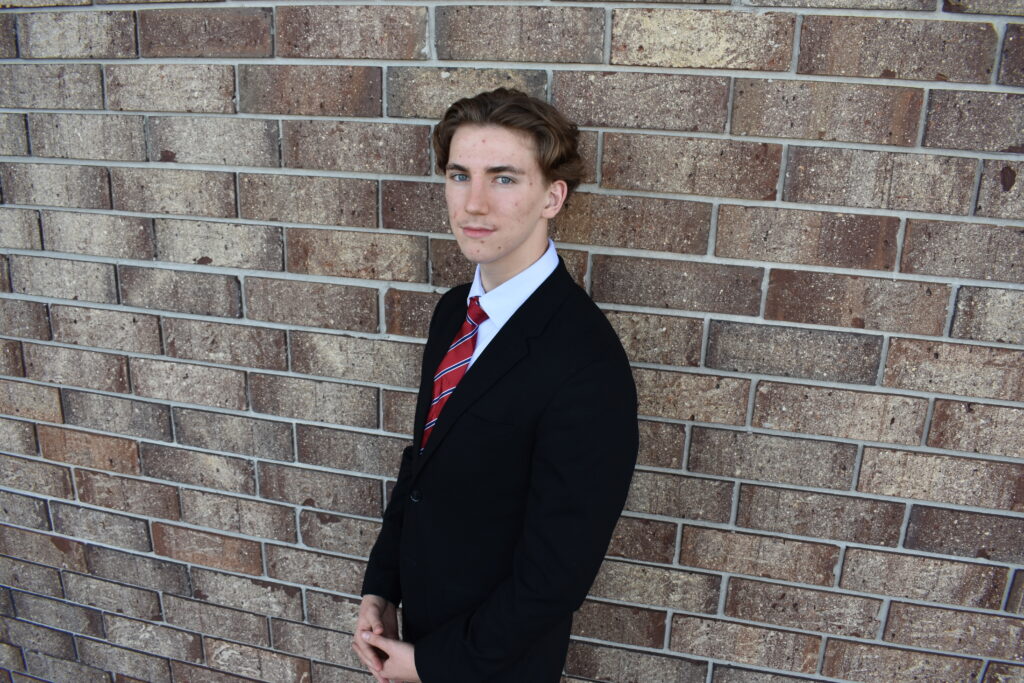
Moving from North Dakota to Titusville was a shock for Joseph, but he adjusted well.
His metamorphosis began then. He started eating healthier and lost 45 pounds. He learned about the direct correlation between a person’s diet and their physical and mental well-being. It’s the reason why he wants a career based on nutrition.
He joined the basketball team and played for two seasons, leaving the squad after taking a part-time job.
In the 10th grade, he tried out for the school’s production of “Get a Clue!” Written by Megan Orr, the play mirrors the popular board game and 1985 movie, “Clue.”
There are differences. For one, the dignified and dangerous character with a military background, known as Colonel Mustard, is now a popular gym teacher.
“I pushed myself to try out for that play,” he said. “I was constantly on stage, practicing, talking. It taught me how to memorize, and it taught me how to articulate words better, so that people can understand me better. It taught me not to be afraid, to have confidence.”
Joseph was at times required to run across the stage and do push-ups. Some of his lines were a few words. Some were longer.
He loved every minute of it.
“I definitely think that was a turning point for him,” Temple Christian Administrator Andrea Stoner said. “He gained confidence. He realized he could accomplish things.”
Joseph said that until then, his lack of self-confidence had always held him back.
“I kind of had this mental block in my childhood, thinking that I just couldn't do things. ‘Oh, I can't do that. I'm not capable of doing something like that. I can't improve.’ For some reason, I had the belief that if I wasn't good at something, I would never improve,” he said.
Pushing himself beyond his comfort zone for the play was a pivotal moment during Joseph’s high school years. But there were others.
Joseph said that by “truly placing his faith in God” as a 10th grader played a big role, as did the teachers and administrators at Temple Christian.
He developed time-management skills by working two jobs – at an ice cream shop near his home and doing yard work and odd jobs on weekends.
Working at the ice cream shop injected Joseph with the self-confidence that comes from working with others and serving customers.
He challenged himself academically by enrolling in a college-level anatomy course at Temple Christian during the 12th grade. He aced it while maintaining a 4.0 GPA in a course load that included several honors courses. It’s no surprise that Joseph graduated first in his class.
“I reach into my memory and think about who all influenced me to become the better version of me,” Joseph said. “I just think about how so many things went together, and it was a culmination of all those things that happened that brought me to where I am now.”
Coach Mustard did it, sure.
But in the story “From Snowed in to Sunny Side,” it’s Joseph who found the answers.
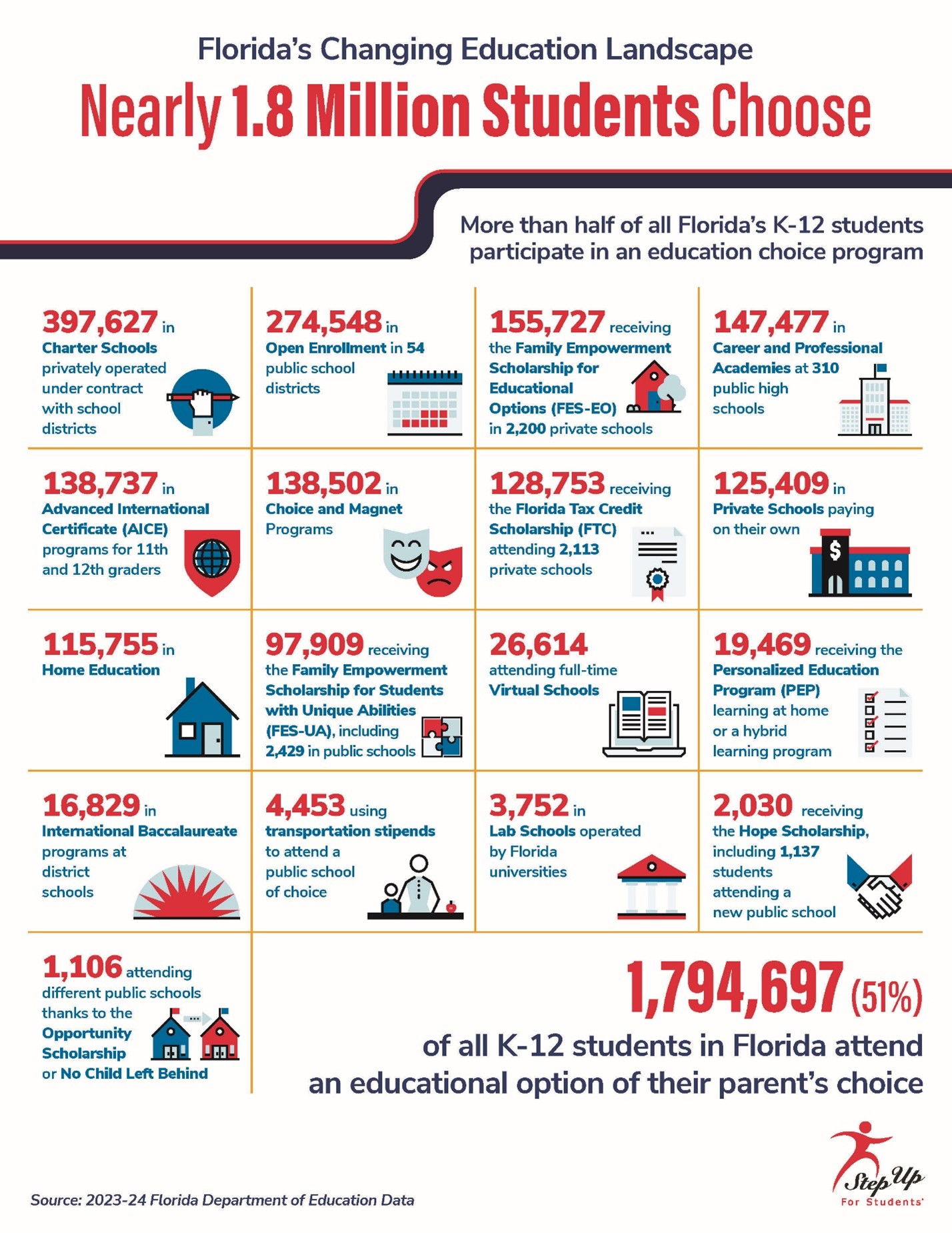 For the first time in Florida’s history, more than half of all K-12 students are enrolled in an educational option of choice. During the 2023–24 school year, 1,794,697 students, out of the state’s approximately 3.5 million K-12 population, attended schools outside their zoned neighborhood assignment.
Since the 2008–09 school year, Step Up For Students, in collaboration with the Florida Department of Education, has tracked enrollment across a variety of choice programs. While methods and program structures have evolved, 2023–24 marks a milestone: more than 50% of Florida’s students are now learning in environments selected by their families.
The Changing Landscapes report draws from Florida Department of Education data and removes, where possible, duplicate counts to provide a clearer picture of school choice participation. For example, it adjusts for home education students supported by the Family Empowerment Scholarship for Students with Unique Abilities (FES-UA) and eliminates double-counted students in career and professional programs. It also excludes prekindergarten students in FES-UA and programs like Voluntary Pre-Kindergarten (VPK), as the report focuses solely on K–12 education.
While many families still choose their neighborhood public schools, Florida’s education system now offers a broad range of options to meet diverse student needs. Public school choice remains dominant, occupying four of the top five spots in overall enrollment. Charter schools are the most popular option, followed by district open enrollment programs, career and professional academies, and Advanced International Certificate of Education (AICE) programs for upperclassmen.
On the private side, the 2023–24 school year marked a historic shift: For the first time, a single scholarship program now serves more students than all private school families who pay tuition out of pocket.
In total, over 116,000 additional students enrolled in choice programs compared to the prior year. The Family Empowerment Scholarship for Educational Options (FES-EO) and the Florida Tax Credit Scholarship (FTC) saw the greatest growth, along with AICE and FES-UA. Altogether, scholarships for private and home education increased by approximately 142,000 students, while private-pay and non-scholarship home education enrollment declined, likely due to the expanded availability of financial aid.
Among public-school options, magnet and district choice programs saw slight declines, with 28,000 and 8,447 fewer students, respectively. Still, public-school choice remains strong: 1.1 million of Florida’s 2.9 million public school students (40%) are enrolled in a choice-based public option.
Altogether, nearly 1.8 million students attend a school chosen by their parents or guardians. This shift reflects a fundamental transformation in Florida’s educational landscape—one where families are increasingly empowered to find the best fit for their children.
But with so many students opting for alternatives to their zoned public schools, it raises an interesting question: What about those who stay? If families are surrounded by options and still choose their assigned public school, isn’t that a choice, too? In that light, Florida may already have a 100% choice system, because staying is just as much a decision as leaving.
Rather than a battle between public and private education, Florida is showing how both sectors can coexist and thrive, working together to provide high quality learning opportunities for all students. The future of education isn’t one-size-fits-all; it’s about ensuring every family has access to an option that fits their child’s unique needs. In Florida, that future is already here.

Blossom Montessori School for the Deaf has served students for more than two decades. Photo courtesy of Blossom Montessori School for the Deaf
CLEARWATER, Fla. – More than 20 years ago, Julie Rutenberg and Colette Derks harnessed some of the first private school choice programs in America to create a bespoke little school they knew their community needed. All these years later, Blossom Montessori School for the Deaf continues to show what kind of diverse, ever-expanding options are possible when education choice is in the mix.
Rutenberg founded Blossom in 2003. Derks, now the associate director, helped stand it up. As the name suggests, the PreK-6 school serves students who are deaf or hard of hearing (along with their siblings) and the children of deaf adults. Occasionally, Blossom also serves students who do not have any hearing loss because their parents want them to have more one-on-one attention. Over the years, nearly every one of its 250-plus students used a state-funded choice scholarship.
Rutenberg and Derks were working at a community center for deaf people when they got the idea for the school. They thought the hands-on, self-directed, mastery-based approach of Montessori offered a good alternative to the students they saw having a tough time in traditional schools.
“They’re able to move around the manipulatives when they’re working out their (math) problems, when they’re building words for reading, working with writing skills,” Derks said. “We really love how Montessori just kind of gets the whole body involved when learning.
“You’re not just sitting at a table looking at a paper or a book all day, (where) everybody’s on the same level,” she continued. “It really helps the student to be able to kind of grow and develop at their own pace.”
Rutenberg and Derks praised the public-school programs in their area that are serving similar students. Offering an option, they said, is not a knock on them.
“We’re just a different way of learning,” said Rutenberg, who attended Montessori schools as a child. “We’re not always going to be the right fit, either. Our goal is just to make sure the child comes first.”
Blossom got its start using three rooms inside another Montessori school. But for most of its existence, it’s been housed in a trim, beige building in an eclectic office park, right next to an ice-skating rink.
Most of the families it serves are working class. Most live in the immediate area. Some, though, drive an hour or more each way so their kids can attend. Others have moved from as far as Daytona Beach – on the other coast of Florida – because they wanted the school that much.

Quinten Caroline, 7, in costume as Leonardo DaVinci as part of a school project on Italy. Photo courtesy of Blossom Montessori School for the Deaf
“It’s nothing but positive with everything they do. They see the kids as perfect the way they are,” said Anastasia Caroline, whose son Quinten, 7, attends Blossom. “In a normal school, you’re not always going to get that love, that acceptance.”
Blossom represents so many choice-fueled trend lines. It’s a microschool. It’s a Montessori school. It’s a school for students with special needs. In Florida, where choice is the new normal, all those options are growing.
Microschools are so much of a thing now, they’re routinely showing up in local news stories (like this one and this one). I don’t know if anybody has a good handle on the total number, in part because there isn’t an official definition. But Microschool Florida, an excellent resource, puts the number at 156 and counting.
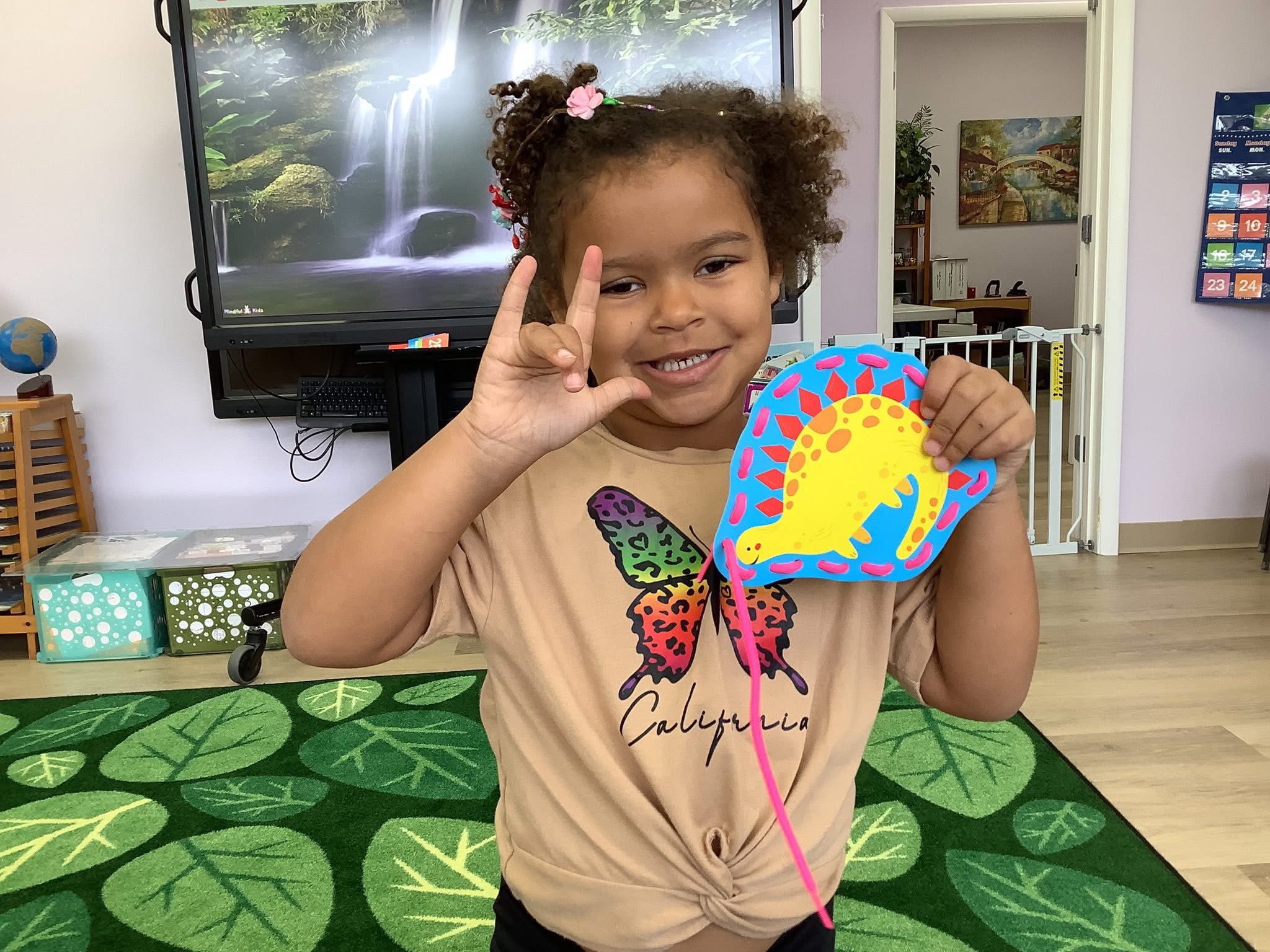
A student says "I love you" in American Sign Language. Photo courtesy of Blossom Montessori School for the Deaf
Meanwhile, there are at least 150 private Montessori schools participating in Florida’s choice programs. I say at least because that’s how many are listed in the state’s private school directory with Montessori in their name.
To be sure, there are plenty of Montessori-influenced private schools that don’t have Montessori in their names (like this one, this one, and this one). There are also plenty of school-like entities, like this hybrid operation in Tampa, and this homeschool co-op in South Florida, that are Montessori influenced, but aren’t official private schools, and aren’t tracked in any kind of official way, yet are funded in part by parents using flexible, state-funded education savings accounts.
Finally, there are more options for students with special needs. There’s more inclusion because more families can now afford schools that were once out of reach. (Check out, for example, the trend lines for scholarships for students with unique abilities in our white paper on Catholic schools.)
At the same time, there are more specialized schools, because, with choice, education entrepreneurs can more easily create them. Not far from Blossom, schools like this one, this one, this one, and this one, are all thriving.
“We would not be here today if we didn’t have the opportunity to use the choice scholarships,” Derks said. “It really is so important because the world today tries to fit everybody into the same box. (But) we’re all individuals, and we’re all our own person, and we learn differently, and we grow differently.”
Caroline, who works as an office manager at a medical practice, secured choice scholarships for both her sons, Quinten, and Silas, 10. She said private school would not have been possible otherwise.
Both use the Family Empowerment Scholarship for Students with Unique Abilities, an ESA Florida created in 2014. Once called the Gardiner Scholarship, it now serves 122,000 students. (Prior to the FES-UA Scholarship, Florida had a scholarship for students with special needs called the McKay Scholarship. It was merged with the FES-UA Scholarship in 2022.)
Caroline said she chose Blossom because she wanted Quinten immersed both in a sign language program and in the tight-knit deaf community. The school provides the warmth, structure, and positive reinforcement he needs, she said.
“They don’t allow bullying. They don’t put kids down. They just celebrate their growth and watch them blossom,” Caroline said. “It’s completely an amazing school for my child.”
DeLAND, Fla.– A black sweater, white shirt, and a red tie lay on Aaliyah Tape’s bed when she returned home from a summer vacation spent with family. She knew what they were: a private school uniform.
“Oh, Lord,” she thought.
It was a message from Aaliyah’s grandmother, Cat Gracia, that would drastically change Aaliyah’s life.
The 2023-24 school year began in two weeks, and Aaliyah would no longer attend her district-assigned high school. For her junior year, she was headed to DeLand Preparatory Academy, a grades 6-12 school, where Cat hoped Aaliyah would get her grades back on track.
The ensuing conversation between grandmother and granddaughter can be politely described as tense. Both sides dug in.
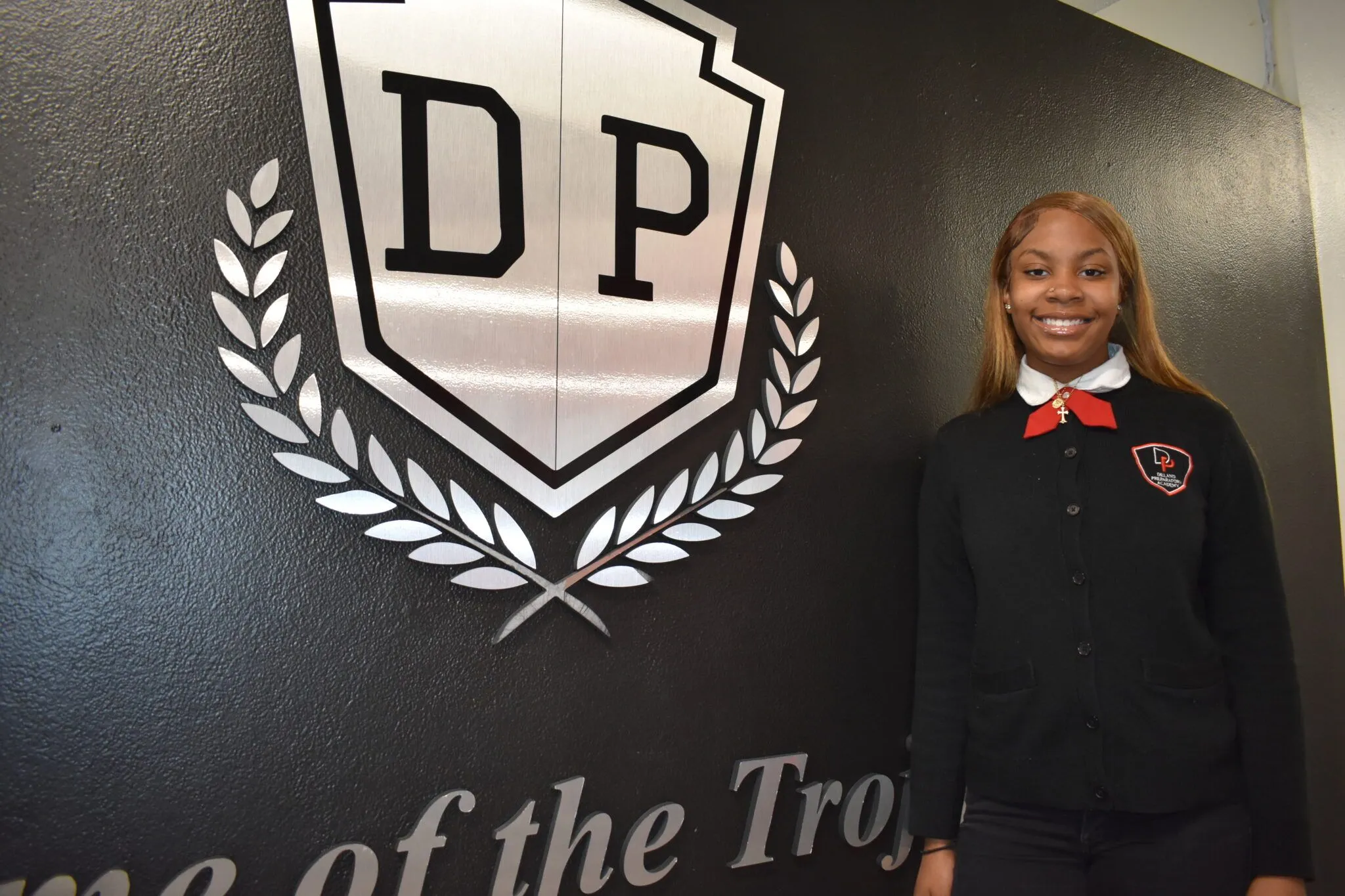
Attending college was something Aaliyah never thought about until she enrolled at DeLand Prep. Now she plans on going to Florida State University.
Aaliyah said she wasn’t going.
Cat said she was, that it was too late to turn back. Cat had applied for and received a Florida education choice scholarship for Aaliyah, and she was already enrolled.
Reluctantly, Aaliyah made the switch.
“I thought, ‘OK, let me give it a chance,’” she said.
And?
“I never thought I’d wear a red tie to school,” she said, “but here I am.”
Now a senior, Aaliyah never thought she’d be a straight-A student or headed to college, either, yet here she is, weeks from graduating with a future that is, well, a future.
Her goal is to attend Florida State University. She’s thinking of a career as a neonatal nurse or as a psychologist who works with children.
“She turned her life around,” Cat said. “We are so proud of her.”
It was a somewhat rocky journey to DeLand Prep, which Aaliyah attends on a Florida Tax Credit Scholarship, funded by corporate donations to Step Up For Students.
“The scholarship changed her,” Cat said. “It literally changed her academic journey. She’s refocused. It’s been night and day. It’s just incredible.”
Aaliyah had been an above-average student until middle school, Cat said. A lot of students encounter turbulent waters during those years, but Aaliyah was dealing with something more. Her mom, Shantrese Gracia, passed away when Aaliyah was 10.
The anger from losing her mom, mixed with the angst of a young girl moving from adolescence to a teenager, had Cat concerned.
“We’ve been through so much with her,” Cat said. “She has all this potential. She’s super smart, but she was making poor decisions, and there was absolutely no way we were going down that path with her. We had to do everything we could to get her refocused and understand what her purpose is in this life. But where do you start? And how do you get there?”
The answer was DeLand Prep.
“We had identified her strengths, areas for growth, and opportunities, and so we had a proactive approach to finding the best resources we possibly could to ensure she has an opportunity to succeed and have a bright future,” Cat said.
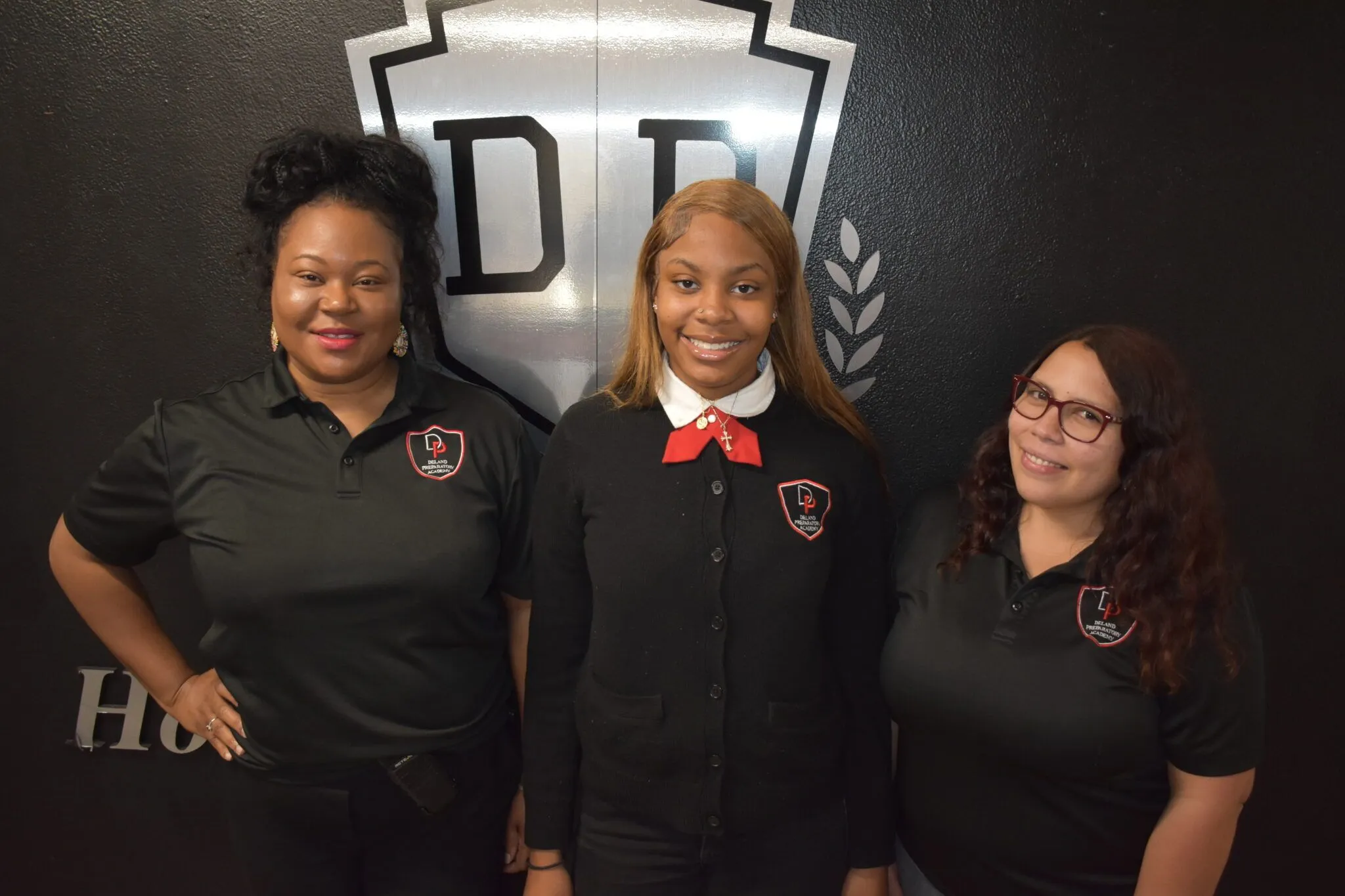
Donita Gordon, DeLand Prep's superintendent (left) and Melissa Castillo, the school’s director (right) helped to bring out the A-student in Aaliyah.
Dr. Donita Gordon, the school’s superintendent, said Aaliyah was the type of student who needed to be “repotted.” Her new “soil” had smaller class sizes with favorable teacher-to-student ratios and a college-like class structure – four courses a semester with classes running 90 minutes.
Located on the outskirts of DeLand’s quaint, award-winning downtown, the school has a motto: “Small School … Big Opportunities.”
That’s what Cat wanted. She knows her granddaughter can achieve so much. She just needed a setting that would allow Aaliyah to realize that, as well.
“I always tell her the sky’s the limit,” Cat said.
Aaliyah said her previous academic problems were the result of cutting classes, not doing her schoolwork, not pushing herself. She was hanging out with unmotivated students, and they were pulling her down.
At that time, Aaliyah wanted to be an ultrasound technician. She felt a college education was not in her future. Neither was attending a private school.

Aaliyah was honored as a Super Senior during Step Up For Students' annual Rising Stars Award event.
“Private school just didn’t sound pleasing to my ears, but it's actually not bad,” she said. “I actually like it better. It's just a small group of people. There’s not much going on, and there's a lot of time to just focus on the work. There’s less distractions. Everything is straight to the point. Our classes are longer, so we have more time to understand what we’re learning.
“It works in my favor.”
Cat met with Melissa Castillo, the school’s director, the summer before Aaliyah enrolled and said her granddaughter was a straight-A student who wasn’t getting straight-A’s. Castillo met Aaliyah on the first day of school and agreed with Cat.
“Aaliyah is a very unique student,” Castillo said. “She thrives in getting all her schoolwork done. When I first met her, she didn't have enough credits to graduate. Every meeting that I have with Aaliyah, she's always striving to complete her work and go to college. She is very aware of what she wants to do. I feel like out of all the students that I met in this school, she's one of the ones that stuck with me because of how driven she is.”
Aaliyah said she is motivated by the supportive teachers and administrators. She said she likes to study and do her homework and has surrounded herself with like-minded classmates.
“I got a lot of help that I needed, and not just on my assignments and tests, but college and school and advice, too,” she said. “I've got to experience a lot of things. I met a lot of people that I became friends with. I'm setting myself up for college.”
In February, Aaliyah was honored by the city of DeLand for being a Superstar Student and by Step Up For Students at its annual Rising Stars Awards event for being a Super Senior.
“All these awards she received, we’ve been in awe. It inspires her to strive for excellence,” Cat said. “We’re so proud of her growth. Here she is, ready to graduate.
“It’s been a journey beyond measure.”
NAPLES, Fla. – Owen Phypers’ commute from his new home to his new high school took about 15 minutes. Meanwhile, his parents were driving 90 minutes one way to their old jobs near their old home so their son could have the opportunity to attend a private high school with high academic standards and a top-flight baseball program. Their sacrifice did not go unnoticed.
“It made me realize I can't mess around,” Owen said. “I have to make this worth it.”
Not that Owen messed around at his district school in his hometown of Lake Placid. He was a top student, a member of the National Honor Society, and captain of the baseball team. Yet, he felt he wasn’t reaching his potential in the classroom and on the diamond.
Neither did his parents, Brittany and Drew.

So, last year, the Phypers moved to Bonita Springs, and with the help of a Family Empowerment Scholarship for Educational Options (FES-EO), administered by Step Up For Students, Owen enrolled at St. John Neumann Catholic School in Naples as a junior.
Was it worth it?
Well, as graduation nears, Owen is ranked fourth in the senior class. He is captain of his house (one of four that form Neumann’s student government) and captain of the baseball team. In June, he begins Plebe Summer at the United States Naval Academy, where he will major in engineering and continue his baseball career.
“This school has brought me to where I am now,” Owen said. “I honestly think so.”
Neumann’s baseball program was a big attraction for Owen. Its state-of-the-art facilities, respected coaching staff, and on-field success against some of the top programs in the state draw the attention of Division I-A coaches and Major League Baseball scouts. The Celtics fit what Owen was looking for as a means towards earning a Division I-A scholarship.
A right-handed pitcher, Owen noticed an improvement in every aspect of his game within a month of joining the program.
“I got better at everything,” he said.
His motivation to continue improving increased when a teammate committed to Division I-A power Florida State shortly after Owen enrolled.
“I saw that and said, ‘I want to be that guy,’” he said.
But, as his mom, Brittany said, “Owen loves baseball. But he’s not all baseball.”
Owen grew up on the family farm in Lake Placid, amid cattle pastures, citrus orchards, and caladiums. Lots of caladiums. Lake Placid bills itself as the caladium capital of the world.
But after 52 years, the farm was dissolving, and Drew needed a new line of work. He helped shut down the farm last year before landing a job as a project manager for a construction company in Collier County. Brittany, a teacher, finished the year at the district high school in Lake Placid before taking a teaching position at Neumann this school year.
Hence, the long commutes.
“Owen knew it was a sacrifice for us, both time-consuming and financially, but we were ready to make that sacrifice for him,” Brittany said.
The FES-EO scholarship, managed by Step Up For Students, helped ease some of the financial burden.
“Without a scholarship, we wouldn't have been able to afford to come here,” Brittany said. “It's just been life-changing for us. For everyone to be able to apply for it and have that opportunity is wonderful. It gives you an opportunity, and then it's up to you.”
It wasn’t long after Owen enrolled at Neumann when Brittany knew he would make the best of his opportunity.
“Coming here has just opened his eyes to the fact that there are students that are like him,” Brittany said. “They want to do well in class and have the same moral code and Christian values.
Owen found the academics at his new school just as challenging as the athletics and that inspired him.
“There’s a lot more homework, and classes are a lot harder, and that pushed me,” Owen said. “It really caused me to grow.
“It’s an environment where all the kids want to be here. People want to become better. People grow in their faith, in every aspect of life.”

Neumann is designed to prepare high school students for college.
“It's not if you go to college, it's where you're going to college,” said Neumann Principal Sister Patricia Roche. “That's the attitude of everyone. This is not the end but the beginning.”
Owen knew he would attend college. The question was, where?
Two years ago, he wasn’t sure if he would garner the attention or develop the skills necessary to play NCAA Division I baseball. Whatever future he had in the game, he certainly didn’t think it would be at the Naval Academy. But the Navy coaches showed an interest in him, and once Owen gave it serious thought, it began to make sense.
He enjoys math, so a career in engineering was always attractive. He considers himself a leader, and the Naval Academy is filled with leaders.
“The main focus of Neumann is getting involved, helping others, which in turn, helps yourself,” Owen said. “I like to lead others, I feel confident leading others, and I saw at the Naval Academy the opportunity to grow as a leader and to support my country in any way.”
Also, Owen added, “I have a couple buddies who are playing baseball in college, and they play baseball, and that's kind of the only reason they’re there.”
He decided he wasn’t going to be just a baseball player. If he was going to major in engineering, he was going to do it at one of the top engineering colleges in the country.
“For my husband and I, this seems like the natural fit for him,” Brittany said. “He wanted to go somewhere where he was going to play and not sit on the bench, but he also felt like he had worked so hard his whole academic career to make really good grades and test scores, so he wanted to go somewhere that was going to be challenging as well. The value of that education has to be a payoff.”
The Celtic Ball, Neumann’s annual fundraiser, was held in January. Owen was one of the seniors picked to speak in front of the school’s alumni and donors.
“He represents the school well,” Sister Patricia said. “He's very articulate, and he's a role model among his peers. He's a leader, which is good. It's nice to have athletes who are on the right track.”
Owen spoke about his journey to Neumann and how it led to his journey to the Naval Academy.
And, with a nod toward the tradition that awaits him, he closed the speech with this:
“Go Navy!
Beat Army!”

