Tiovanni Johnson squirms in his chair and lowers his head. His grandmother is telling a story about his kindness toward strangers, and he wishes she would stop. In fact, he asked her to stop.
“This is embarrassing,” he said.
She continued.
The previous day, Angela brought two Slim Jims with her when she picked up Tiovanni from school.
“I love Slim Jims,” he said.

Tiovanni enjoys the academic challenges of Academy Prep Center of St. Petersburg.
They stopped at a light on the ride home. Tiovanni noticed a man panhandling at the intersection. He appeared hungry, so Tiovanni leaned out the window and gave the man his favorite snack.
“He does this all the time no matter where he is,” Angela said. “He’s so thoughtful.”
At a skatepark a few days earlier, Tiovanni spent most of his time helping younger kids who had trouble staying on their skateboards.
Tiovanni appeared as if he would rather be anywhere else than in the conference room at his school, Academy Prep Center of St. Petersburg, listening to his grandmother brag about him.
But there are some things a boy can’t stop.
And when asked about the praise, Tiovanni reluctantly admitted, “It makes me feel good.”
Tiovanni, 12, is in the seventh grade at Academy Prep. This is his second year attending the grades 5-8 private school located three miles from the Gulfport home he shares with his aunt and uncle, Tricia and Ralph Huckeba. They became Tiovanni’s legal guardians after his mom, Deborah, died unexpectedly when he was 6.
Tiovanni attends Academy Prep on a Florida Tax Credit Scholarship, made possible by corporate donations to Step Up For Students.
Year 1 was a feel-good story for Tiovanni. He made the honor roll, joined Academy Prep’s swim team and began the 2024-25 school year with a 4.0 GPA for his work over the summer.
Tricia and Ralph, along with Angela, wanted Tiovanni to attend a school that would challenge him academically and help guide him through the tricky middle school years.
“Everybody here is so caring, truly caring,” Tricia said. “This school is very accommodating for the students, very loving, God-fearing people.”
Tiovanni tells his teachers that when he grows up, he wants to do something “magnificent.” He’s not quite sure what that means other than it will include a college education.
“I’m going to make sure I get straight A’s so I can go to college,” he said.
He’d like to study music, he said. He’d also like to learn to play the drums.
“They speak to me,” he said.
He wants to fly in a plane.
And learn to do an “ollie” with his skateboard. That’s the move where the rider jumps in the air with his feet still on the board but without using his hands. Tiovanni is working on it.
And he wants to travel.
Tiovanni wants to take Angela back to her birthplace, Cairano, a dot-on-the-map city in the mountains of Italy.
His life will be epic. Tiovanni is sure of that.
“I want to do something wonderful so my aunt and uncle don't have to work, so they can go on vacation somewhere,” he said.
He writes poetry.
I'm cool, but sometimes I act like a fool.
He described himself as “short” and “fast” and “energetic.”
“I can be a little annoying sometimes,” he added.
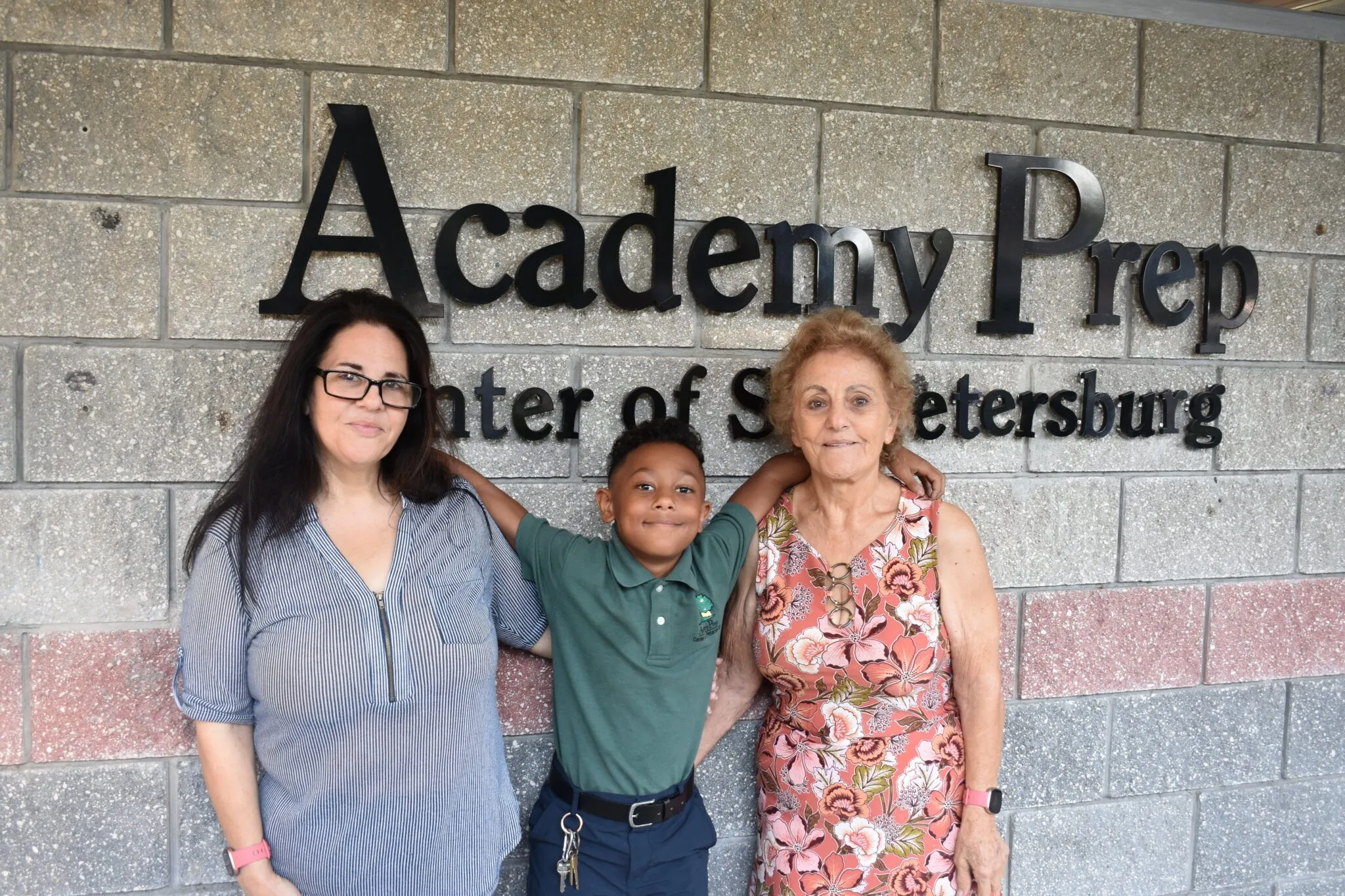
Tiovanni with his aunt Tricia, and grandmother Angela.
Tiovanni likes to be challenged academically, as evident by this year’s class schedule filled with honors courses. He’s in the right academic setting for that since Academy Prep is designed so students get the most of their educational opportunity.
He can also be more of a deep thinker than someone his age.
The family attends BridgePoint Church in St. Petersburg. Tiovanni often takes notes during the service and shares them with everyone at lunch afterwards. Tiovanni said he’s writing down “wisdom.”
“It’s just amazing some of the things that he thought about, because it would be his interpretation of what the pastor said,” Tricia said.
Tiovanni is reluctant to talk about his mom.
“That’s a sensitive topic,” he said.
It’s a sensitive topic for Angela, as well. She gets emotional when talking about her youngest daughter, who passed in 2019.
“She’s gone, but she left a special gift,” Angela said, nodding toward Tiovanni.
Brittany Dillard, Academy Prep’s Assistant Head of School, has known Tiovanni and his family since her son and Tiovanni were first-grade classmates. That was the year Tiovanni’s mom died and Tiovanni, whose father is not in his life, went to live with Angela. Dillard had the first-graders make cards for Tiovanni.
“Tiovanni has always just been spontaneous and optimistic and just a joy to be around,” Dillard said. “He's inquisitive. He asks a lot of questions, and he is just, honestly, a person that you want to have around if you're having a bad day, because he's going to find some way to cheer you up and just bring some sort of joy into your life.”
Like handing his afterschool snack to someone who looked hungry.
“I felt in my heart that that's what I needed to do,” Tiovanni said, “and that’s what I did.”
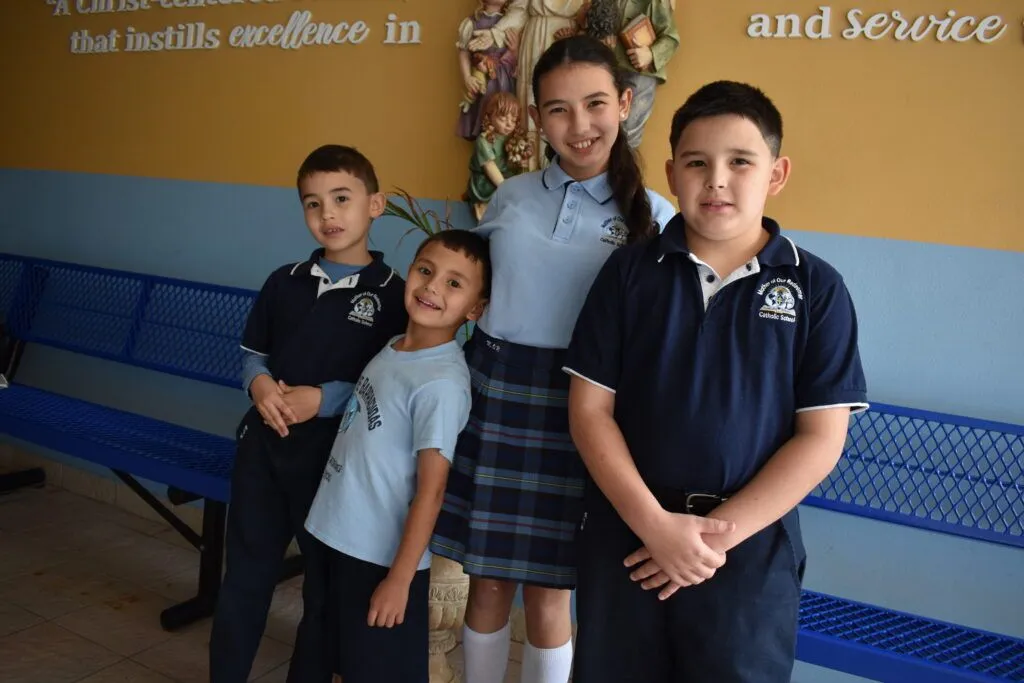
The Ivins children, (from left) Lucas, Nicholas, Rebekah and Joseph, are flourishing academically.
MIRAMAR, Fla. – William Ivins moved his family to South Florida ahead of his retirement from the United States Marine Corps and enrolled his children at Mother of Our Redeemer Catholic School, hoping they would reap the same rewards as he did from a faith-based education.
But, as William and his wife, Claudia, would soon learn, that was easier said than done.
A lawyer for much of his 20-year career in the Marines, William needed to pass the Florida Bar Exam before he could enter the private sector. It was a long process that left him unemployed for 19 months.
“It was a struggle,” he said. “My retirement income was not enough to pay for the cost of living and tuition for my children.”
William and his wife Claudia faced a few choices: continue with the financial struggle, homeschool their children, send them to their district school, or move out of state. None were appealing to the Ivins, and fortunately, they didn’t have to act on any.
The Florida Tax Credit Scholarship made possible by corporate donations to Step Up For Students allows his four children to attend Mother of Our Redeemer, a private K-8 Catholic school near the family’s Miramar home.
“It was a perfect storm of having to retire from the Marines and not really having a job lined up,” William said. “The transition was more difficult than I thought it would be. The income just was not available for us to continue our kids’ education in the way we wanted. Had the scholarship not been there, we would have been forced to move out of state or homeschool them or move them to (their district) school.”
In July 2020, the Ivins moved to South Florida from Jacksonville, N.C., where William had been stationed at Camp Lejeune. William contacted Denise Torres, the registrar and ESE coordinator at Mother of Redeemer, before making the move. She told William the school would hold spaces for his children. She later told him about the education choice scholarships managed by Step Up For Students.
“That was a big relief for him,” Torres said.
At his mother’s urging, William began attending Catholic school in high school.
“That was a life-changer for me,” he said.
He converted to Catholicism and vowed if he ever had children, he would send them to Catholic school for the religious and academic benefits.
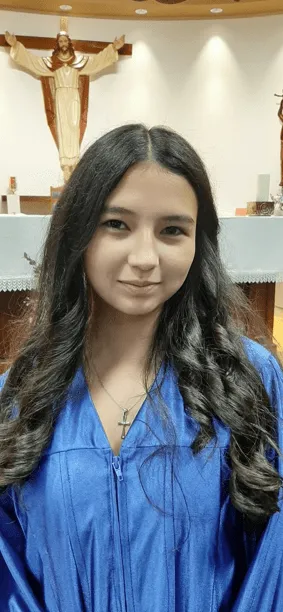 Rebekah graduated in May from Mother of Our Redeemer. She had been an honor roll student since she stepped on campus three years ago.
“Rebekah likes to be challenged in school, and she was challenged here,” Claudia said.
Rebekah, who received the High Achieving Student Award in April 2022 at Step Up’s annual Rising Stars Awards event, is in the excelsior honors program as a freshman at Archbishop McCarthy High School.
“She's an amazing, amazing student,” Torres said. “It’s incredible the way she takes care of her brothers. She's very nurturing. Every single teacher has something positive to say about her.”
Rebekah’s brothers, Joseph (sixth grade) and Lucas (third grade), do well academically and are active in Mother of Redeemer’s sports scene, running cross-country and track. Nicholas, the youngest of the Ivins children, is in first grade. He was allowed to run with the cross-country team while in kindergarten, which helped build his confidence.
William had been in the Marines for 20 years, eight months. He served as a judge advocate and was deployed to Kuwait in 2003 for Operation Iraqi Freedom, to Japan in 2004, and then to Afghanistan in 2012 for Operation Enduring Freedom.
He retired in May 2021 but didn’t find employment until December 2022. The Florida Bar Exam is considered one of the more challenging bar exams in the United States. He took the exam in July 2021 and didn’t learn he passed until September. It took William more than a year before he landed a position with a small law firm in Pembrook Pines.
Claudia, who has a background in finance, works in that department at Mother of Our Redeemer Catholic Church, located next to the school.
“They have really become part of our community,” principal Ana Casariego said. “The parents are very involved and are big supporters of our school and church.”
In Mother of Our Redeemer Catholic School and Church, Willian and Claudia found the educational and faith setting they wanted for their children.
“It is a small community environment where you know all the teachers and staff by first name,” William said. “My kids have received a wonderful education in an environment where they don’t have to worry about bullying, and they can really strive to grow and do their best academically.
“The scholarship kept us in the state and kept our kids in the school system that we wanted them to be in. It’s been a great blessing to us.”
LEESBURG, Fla. – The first tangible evidence of a new private school opening in town were the 1,500 fliers printed at Staples and handed to parents as they left a Publix supermarket.
That’s how Darryl Reaves and his wife, Anette During, hoped to attract students to the K-8 school in Leesburg they planned to open for the 2022-23 school year. They canvassed strip mall parking lots.
“We lived outside the stores the whole summer,” Reaves said.
The couple watched a mother exit a store, a child or two in tow, and ask if she was interested in sending her kids to a school with small class sizes that was committed to helping children who didn’t have the means to a quality education receive one and reap its benefits.
Enough of them said yes to put Reaves’ plan in motion.
“We had 12 students and no building,” he said.
That problem was solved when Mt. Calvary Baptist Church offered rooms that could be used for classrooms, and in August 2022, First Trinity Academy opened its doors. There were 22 students, most in the lower grades.
Enrollment doubled in 2023-24 and is up to 76 this year, marking a remarkable growth that has Reaves already searching for a larger building.
Each student receives either the Florida Tax Credit Scholarship or the Family Empowerment Scholarship for Educational Options. Both are managed by Step Up For Students.
“The students who come here are from families that could never afford a private school without those scholarships,” said Reaves.
Tuition is $8,000 for grades K-3 and $7,500 for grades 4-8. There is also a $150 registration fee per family.
Students are required to take the Stanford 10, a Nationally Standardized Achievement Test. New students take the Let's Go Learn Diagnostic Test to evaluate their skill set so teachers have a baseline to measure the student’s progress.
Beacons of hope
There are eight teachers on staff at First Trinity Academy. During is the chief administrative officer. Reaves is headmaster, though he joked to a recent visitor that he’s also the janitor and dishwasher.
He wasn’t kidding. Before each lunch period, Reaves swept the dining room floor, cleaned the tables, and placed the students’ lunchboxes on the tables. He heated whatever lunches they brought that needed heating and cleaned whatever bowls needed cleaning.
“You have to be everything here,” he said. “We’re a small school, so we can’t offer the thrills.”
Reaves was raised in Miami by parents who were teachers. His dad served in the Florida Legislature. Reaves, who has a journalism degree from Florida A&M and a Doctor of Jurisprudence from the University of Florida, served in the Florida House of Representatives.
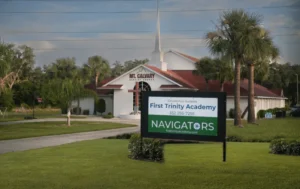
A Democrat, Reaves served in the Florida House alongside Tom Feeney. Feeney was Speaker of the House from 2000 to 2001 and shepherded the creation of Florida’s first tax credit scholarship bill. Though Reaves had left the legislature before the law’s passage, students at First Trinity Academy now benefit from it.
He said he thought of running a private school as far back as when he was in middle school. And, after spending several years as a teacher in the public school system, he decided to do just that.
“I learned from my parents that all children want to learn,” he said. “It's just a matter of giving them the opportunity. I have this philosophy that once you make children believe they can do the work, they will do the work.”
Reaves sees education as the means for families to break the cycle of poverty. He called it “the Civil Rights movement of our times.”
“It’s repetitive,” he said. “The parent doesn't graduate. The child is a parent. The daddy goes to jail. The son goes to jail. The grandsons go to jail. Drugs. Jail. Drugs. The community goes down, down, down.
“And somewhere along the line, there have to be beacons of hope that say, ‘Oh, you can be smart.’ We’re treading upstream, but that's our purpose.”
‘Be better than us’
Le’Shaun Gray considers himself one of those beacons.
A product of Florida State University, where he majored in interdisciplinary studies, Gray teaches science, social studies, and reading at First Trinity Academy.
“I wake up in the morning with a fire within me, because what an opportunity not only we have as educators, but our students have,” he said.
Gray was raised in Brooksville and attended district schools. He knows how easily a student can become overwhelmed at a big school. Some won’t ask questions because they are intimidated, and what was unclear to them remains unclear. First Trinity Academy’s classes are capped at 12 students; most are smaller. Gray can interact with every student every day.
“I can literally stop at each one of their desks and say, ‘Hey, how are you doing?’ We can slow down. We can speed up however we need to,” Gray said.
His goal is to teach his students how to think and understand a topic, not just memorize material to pass a test. That’s how teachers can make a difference in a student’s life, Gray said.
“I feel it's our responsibility to pass on a knowledge of legacy to the generation behind us,” he said. “The goal is for them to be better than us.”
Going in the right direction
Alejandra Ortiz had been scouting private schools in Orlando for her daughter London during the summer of 2022. That would make for a long roundtrip commute from Leesburg every day, but Ortiz was committed to finding a better education setting for her only daughter.
Then one evening, while shopping for dinner at Publix, she was approached by Reaves in the parking lot. Ortiz was interested in what Reaves had to offer, and London became one of the original 22 students.
“We were thinking the same way,” Ortiz said.
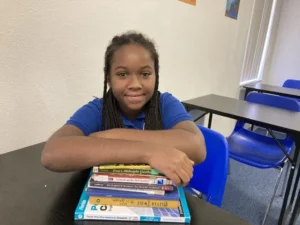
London arrived as a first-grader, two grades behind her class. In nine weeks, she was promoted to the second grade, and by the start of the 2023-24 school year, she had advanced to her grade level.
“I saw a 180-degree turnaround halfway through that first year,” Ortiz said. “Things that she was struggling with before, she was no longer struggling with. The discipline, the communication, and the academics are definitely there in the school. She's definitely going in the right direction.”
London said she loves going to First Trinity Academy. She likes her classmates and the teachers. She likes how math teacher Jodi Porter compared fractions to slices of a cake.
Even with all the fliers and the canvassing of parking lots, word-of-mouth is still the best recruiter for Reaves. Parents talk to parents, and the students talk to their friends. When asked what she would say to a friend whose mother was thinking of sending her to First Trinity Academy, London said, “I would say you should definitely come because it's a good school and the teachers will understand you and you will have a lot of fun understanding and learning about new things.”
The vision
Three years in and Reaves is already scouting for a bigger location for his school. There is an empty former CVS nearby. In another part of town sits a building that used to house a furniture store. Both offer enough space for First Trinity Academy to continue its growth.
“We've proven that we can expand at a rapid pace, and I'm looking forward to expanding, perhaps even to 400 [or] 500 students,” During said.
That’s ambitious, yet Ortiz thinks it’s realistic.
“I feel like they're progressing nicely, honestly, especially in such a short amount of time,” she said. “My experience has been really good as a parent because I have that safety net where I know I could drop my daughter off and I'm going to pick her back up. I've been very happy with the results because they take that time out to get to know the child.”
Ortiz’s feelings sync with the vision Reaves and During had when they began distributing fliers outside Leesburg-area supermarkets.
“That’s our vision.” During said. “Helping students that wouldn't otherwise have the opportunity to or would not be given the opportunity to succeed academically.”
SARASOTA, Fla. — It was time for the valedictorian to address the assembly, so Emma Howey rose from her seat in the front row of the auditorium, left her walker behind, and, with the help of her favorite teacher, made her way to the edge of the stage.
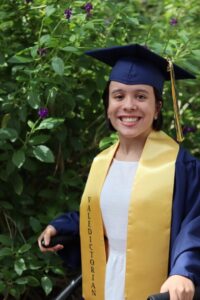 “I can’t believe I’m doing this,” she remembered thinking last May as she graduated from CES Academy of Bradenton.
Emma was born with cerebral palsy and has used a walker since she was 3. But, two years earlier, at the end of her sophomore year, Emma set a goal of walking across the stage at graduation.
Emma’s only concession was that CES Academy teacher Charlie Stephenson would walk beside her holding her hand to help her balance. The rest would be all Emma, the result of 24 months of carefully planned occupational and physical therapy.
Also, determination.
And grit.
Emma’s walk of a lifetime required her to climb the six steps to the stage, turn left, and then walk 25 steps to the podium.
“I gotta do this,” she remembered thinking when she reached the foot of the staircase.
And she did.
The audience clapped, and someone shouted, “EMMA!” as she marched before them. She smiled as her goal became reality.
Emma’s voice grew with confidence as she read her speech that ended with this message:
“Graduates, always remember to keep focused, don’t lose hope, and never give up.”
A few minutes later, Emma made the trip again, this time to receive her diploma.
“It was,” she would tell her family afterward, “the best night of my life.”
A big idea
Emma, now 19, attended CES Academy with the help of the Family Empowerment Scholarship for Students with Unique Abilities. Managed by Step Up For Students, the scholarship functions as an education savings account (ESA), which gives families more flexibility in how they spend their students’ funds. Over the years, Emma has used the ESA to purchase a therapy swing, an exercise trampoline, and an iPad. It paid for her hippotherapy, a type of equine-assisted therapy. The ESA also covered tuition at her private K-12 school that serves children with educational exceptionalities.
“I really learned to be on my own there,” she said.
Emma, who lives in Sarasota with her mom, Jennifer, attended her district school through the fifth grade but struggled with the large class sizes. Navigating hallways was difficult given the number of students trying to get to classes. Opening doors can be a chore for Emma, and her schoolmates weren’t always eager to lend a hand.
CES Academy could better accommodate her needs, especially when she met Charlie Stephenson.
“He always focused on what I could do, instead of what I couldn't. That was something different,” Emma said.
Emma thrived in CES Academy’s academic setting. She was an honor student who tutored other students and was a star in the school’s Mighty Knights program, where juniors and seniors were paired with K-3 students.
“Emma was awesome working with those little kids,” said Mike Van Hoven, who was CES’s principal last year and now teaches science at the school.
Emma was born prematurely and suffered a brain injury at birth, that led to cerebral palsy which affects most of her muscles. She also has neuromuscular scoliosis. She’s had surgeries to lengthen her legs and to correct fatigue in her eye muscles. She wears braces on her legs while using her walker or crutches.
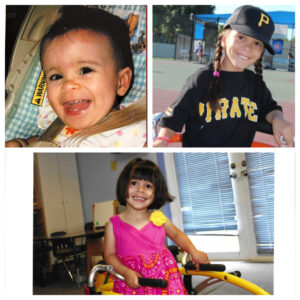 She also plays the piano and can speak Spanish, Italian, and sign language. Among the items on her bucket list are trips to Paris and Italy.
She loves to swim.
“I can walk in the pool. I still don't understand that,"” she said. “How can I get on land and not do it? It's like the reverse Ariel, like the Little Mermaid.”
Emma is currently in vocational rehab as she looks for a job. She’s applied for positions to work the front desk at a hotel, the reception desk at a nursing home, and for a position at a library.
“I’m a people person,” she said.
Emma refers to herself as disabled but won’t let that define her.
“I don't let that limit me (trying) to be the best of my ability,” she said. “There’s stuff I can't do, but I try not to let that get in the way.”
One thing that does get in the way is her walker when it comes to climbing stairs. She always stood in front of the stage when she received awards at school while her classmates walked across the stage.
In 2019, Emma’s brother Jonathan graduated from high school. She watched him walk with his class and had an idea.
‘This is going to happen’
Ouida Wellenberger was a physical therapist and Sharon Yadven was an occupational therapist at Kidspot in Palmetto. They worked with Emma for years.
Emma told them about watching Jonathan walk with his class.
I want to do that,” Emma said.
“Let’s go for it,” Wellenberger said.
“This is going to happen,” Yadven said.
In 2022, the three began working toward that goal.
Emma’s mom, Jennifer, knew it was an ambitious quest. Could her daughter physically reach such a demanding goal? Possibly. After all, this is the same girl who spent one summer learning to hit a pitched baseball from Jonathan after she learned she was the only player in her age group in the Miracle League of Manasota still hitting off a batting tee.
“She's always been very strong-willed and determined,” Jennifer said. “She’s done a lot of things in therapy that she did not like, but she knew she had to do it, so she did it.”
“No matter what we threw at her, she accepted it, worked on it, and did it,” Wellenberger said. “The neat thing was that it was her goal, and it wasn't someone else’s.”
Team Emma immediately went to work on increasing Emma’s strength and stamina with incredible attention to detail. They walked the city block from Kidspot to the old Palmetto library to build Emma’s tolerance. They used the stairs in front of the building to strengthen Emma’s legs so she could lift them high enough to clear a step.
Once Emma decided Stephenson would walk with her, Yadven walked alongside Emma with her left hand at the same height as Stephenson’s so Emma was used to holding her right hand at that height.
Emma practiced letting go of Stephenson’s hand so she could turn and receive her diploma with her right hand.
A few months before graduation Emma learned she was valedictorian. That threw a wrench into the plans. Now Emma had to build endurance so she could stand for three minutes, which was the allotted time for her speech.
And walk across the stage – twice.
Emma has a startle reflex, which is an involuntary response to sudden noises. Because of that, Wellenberger and Yadven blasted “Pomp and Circumstance” and “He's a Pirate” from the movie “Pirates of the Caribbean” to get Emma used to sudden noises she might hear on her big night, like someone shouting her name as she walked across the stage or the standing ovation she received after her speech. That could cause her to lose her balance.
“We covered everything and more because we wanted to overprepare,” Emma said.
Stephenson attended a couple of Emma’s therapy sessions to practice the walk. Wellenberger and Yadven visited Bayside Community Church in Bradenton – the site of the graduation ceremony – to measure the height and width of the steps to the stage.
“So many things that so many of us take for granted, she has to work really hard to do, and she did not falter in her commitment toward working toward that goal,” Yadven said. “And not only did she not falter, really, but she grew in her determination and her excitement. It was an amazing process to share with her.”
‘I feel I can do anything’
Emma wasn’t sure how to approach Stephenson about assisting her, so she wrote him a letter. She explained how much he meant to her and why he was the right person for the job. Stephenson cried when he read it.
“I was overwhelmed,” he said. “It was a huge honor.”
Then Stephenson left his job at CES Academy and returned to his native Michigan to attend to a personal matter. But he told Emma he would be back for graduation.
“There wasn’t a chance I was going to miss that,” said Stephenson, who retired as a teacher after last school year. “I couldn’t have asked for a better sendoff from my teaching career. It was magical.”
Van Hoven, her former principal, said in his 40 years of teaching he’s never had a student whom he respected as much as he respected Emma.
“Every teacher in that school, she’s touched their heart,” he said.
Emma’s walk was the talk of CES Academy of Bradenton’s 2024 graduation.
“In the sense of goal setting, that proved to me and everyone else that I have the ability – anyone has the ability – to set a goal and hit it, no matter what obstacles,” Emma said. “I feel I can do anything, really.”
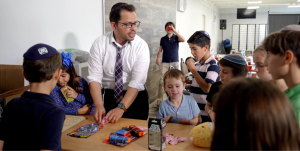
The number of Jewish schools in Florida nearly doubled over the past 15 years, boosted by parents using state school choice scholarships and the migration of families from New York, according to a new report from Teach Coalition and Step Up For Students.
Student enrollment between 2007-08 and 2022-23 rose 58 percent, from 8,492 to 13,379, while the number of Jewish day schools and yeshivas grew from 40 to 74, the report shows.
Over the same span, the percentage of Jewish school students using choice scholarships increased from 10 to 60 percent.
 The growth of Jewish schools in Florida is historic and unmatched anywhere else in America. The analysis is also likely to understate the trend lines, given it does not cover the 2023-24 school year, the first year every student in Florida became eligible for a choice scholarship. (The data for 2023-24 is not yet available.)
On a cautionary note, the report also points to increasingly pressing issues that could limit future growth – and not just for Jewish schools.
The vast majority of newer Jewish schools are on the smaller side, with fewer than 175 students. That’s not a function of parental preference, the report suggests, but the result of challenges schools face in navigating restrictive local zoning laws to find adequate and affordable facilities.
“With Florida’s existing Jewish schools at or near full capacity, more effort is needed to source suitably sized school buildings,” said Danny Aqua, director of special projects at Teach Coalition. “Without legislative and regulatory action to reduce the hurdles to opening new schools, the lack of school building space may throttle growth in Florida’s Jewish day schools.”
Full report here.
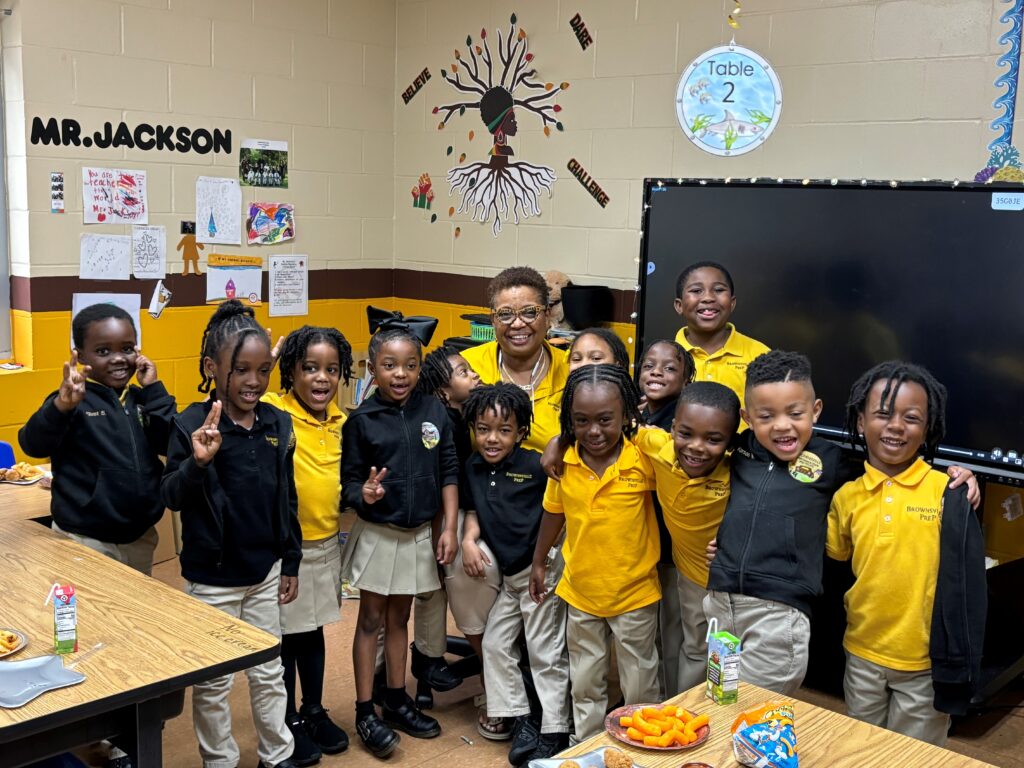
Brownsville Preparatory Institute founder Rita Brown, center, with her students. The private school focuses on teaching kids to read at age 3.
TALLAHASSEE, Fla. – Benjamin Crump, one of the most prominent lawyers in America, aka “Black America’s attorney general,” obviously could send his daughter to any school he wanted. So, it says everything that he and his wife, Genae Angelique Crump, chose a little private school that’s known as the place “where three-year-olds learn to read.”
This gem is Brownsville Preparatory Institute. It was founded 20 years ago by Rita Brown, a retired businesswoman, former homeschool mom, and force of nature who taught her own kids to read by age 3.
Brownsville Prep is “excellence personified,” Crump says in an audio recording on the school’s website. “And that’s why we chose to send our little princess … to be a proud student at Brownsville Preparatory Institute. And I would encourage you to send your brown, Black and beautiful little children to Black excellence.”
In school choice-rich Florida, about 140,000 Black students – fully one in five across the state – now attend a charter school or use a state-supported choice scholarship to attend a private school. That’s according to data from the Florida Department of Education and Step Up For Students, the nonprofit scholarship funding organization that administers nearly all of Florida’s K-12 school choice scholarships.
For context, 140,000 Black students in non-district choice schools is more than 31 individual states that have Black students in public schools.
Schools like Brownsville Prep are among the reasons why.
Rita Brown began her journey in education entrepreneurship in 2003, running a learning pod in her home for six kids in preschool. Now Brownsville Prep serves 80 students in PreK-3 – with more than 200 on a waitlist. All the students in K-3 use choice scholarships.
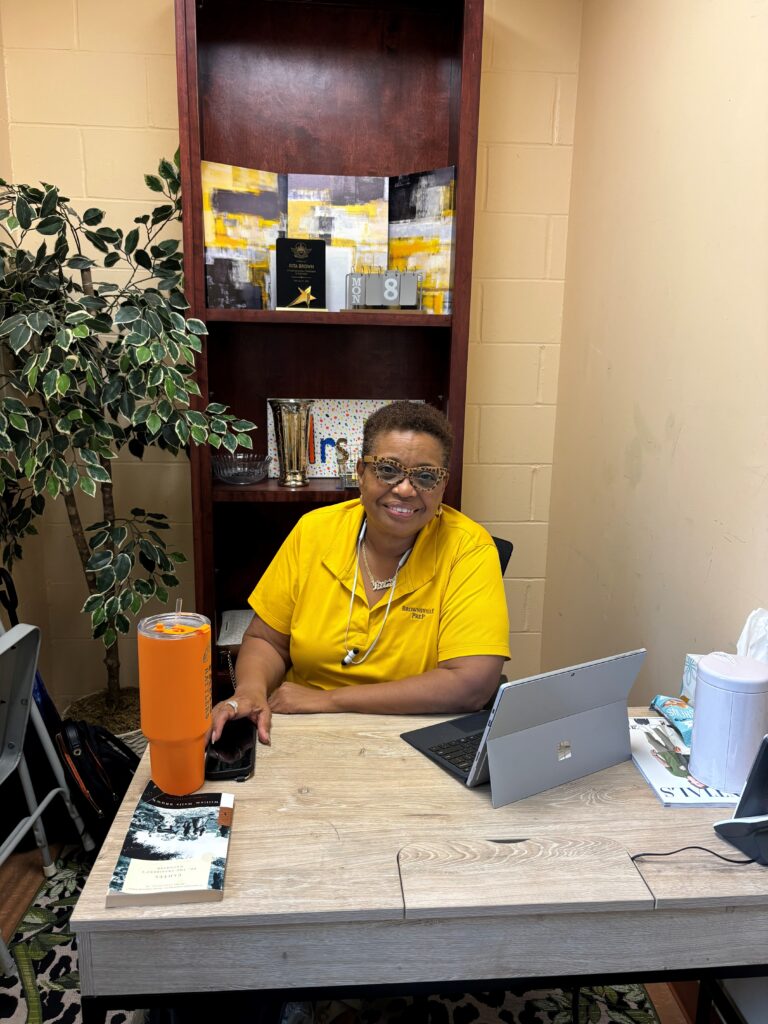
Rita Brown in her tiny office at Brownsville Preparatory Institute.
“We don’t advertise. You know how we advertise? These children,” Brown said from her tiny office at the school, which may be smaller than Harry Potter’s Cupboard Under the Stairs. “The other parents hear them talk – and they know. They know something is happening here that isn’t happening in other places.”
Brown is the daughter of a New York City police officer and a homemaker. She owned a beauty salon and beauty supply business in Rockland County, New York, before she and her husband, also a New York City police officer, retired and moved to Florida.
Early literacy is something she emphasized with her own children, using a phonics-based program to get them started. When her oldest began soaring past grade level in public school, Brown decided to homeschool. Today, all three of her children are Florida A&M University graduates. Her sons are the CEO and CTO, respectively, of the tech company Breakr. Her daughter is an international business consultant.
“It’s all because they were able to read early,” Brown said. “When you can read early, you become a self-taught person. Information is available. You just have to be able to read it and digest it.”
Besides early literacy and core academics, Brownsville Prep emphasizes Black history and culture. It’s important, Brown said, for her students to see people who look like them finding success at the highest levels in every realm.
At the same time, she said, parents know if a school is truly putting its students on that path.
“They’re sending their kids here because of the level of academic excellence,” she said. “They couldn’t care less about the Blackness if their kids weren’t learning.”
Brown didn’t set out to create a buzz.
Until 2010, her operation served only children in pre-school. But year after year, the parents of more and more of her former students grew frustrated, their kids no longer accelerating academically as they had at Brownsville. So, Brown decided to expand into the early grades. She moved to bigger digs in an office complex, and then, in 2019, expanded again, this time leasing space from a church.
Florida’s private school choice programs are key to Brownsville Prep’s mission. It has helped the school become an anchor for the whole community, Brown said, because it gives families from all walks of life the opportunity to access a high-quality option. At Brownsville, the sons and daughters of doctors and lawyers sit side by side with the children of working-class and lower-income families, and nobody knows the difference.
Kindergartner Kyree Thomas has attended Brownsville Prep since he was 3. His grandmother, Michelle Melton, said she chose it over his zoned school because it had the features she knew would help Kyree succeed: Smaller class sizes. A family-like atmosphere. No distractions with behavior issues. And more than anything, the highest expectations.
“I was like, ‘You expect them to write at 3? And read at 3?’ ”said Melton, a former home daycare operator who now works as a delivery driver while she cares for her mother. “Guess what? He did it, and he’s excelling.”
Every day, Melton continued, the school sends the message that the sky’s the limit.
“It doesn’t matter how much money you have,” she said. “You can do anything. You can conquer anything.”
Brownsville Prep has had its challenges, mostly in meeting demand.
Brown has been looking to expand again, but she’s had trouble finding a facility within the predominantly Black neighborhoods she serves.
Moving elsewhere isn’t an option.
“These neighborhoods need it more than other places,” Brown said. One way or the other, “we’re going to find a way to meet the needs of the people we serve.”
For more on Black families in Florida migrating to school choice options, see our 2021 special report with Black Minds Matter and the American Federation for Children.
DORAL – When he begins his freshman year this fall at Boston University, Alvaro Saenz plans to major in biomedical engineering, a decision driven by his lifelong love of science and his desire to dedicate his life to helping people with special needs – such as his brother.
“It combines the best of both worlds,” he said.
Alvaro has always been fascinated with science. The desire to work with those with special needs comes from his younger brother, Jose Pablo, who, at a young age, developed a form of epilepsy that cannot be controlled by medication.
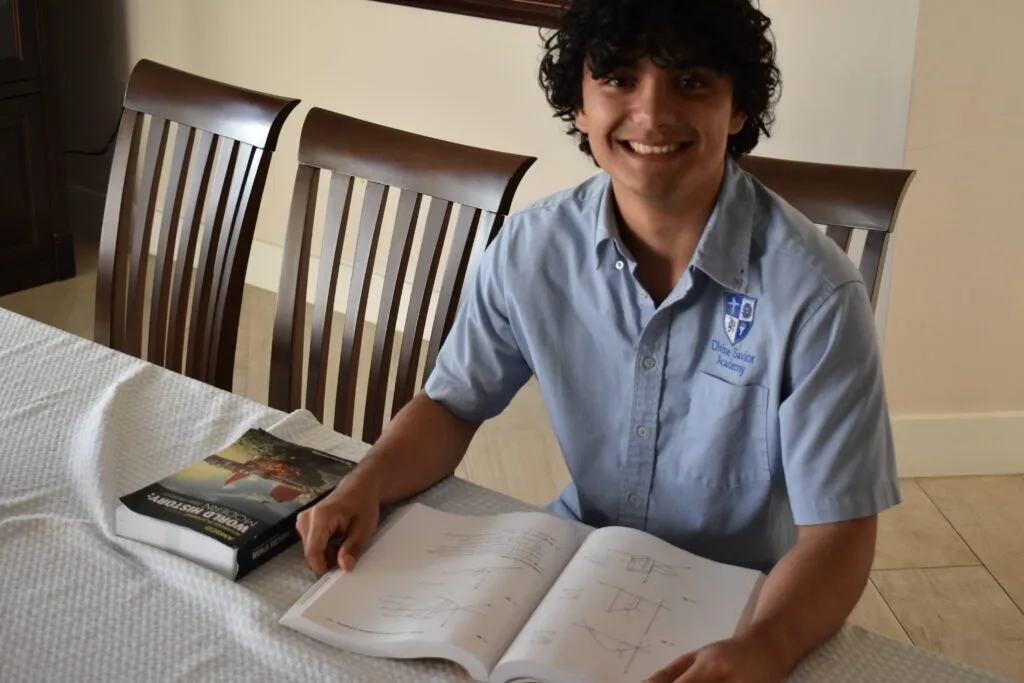
Alvaro will graduate this spring near the top of his high school class then study biomedical engineering at Boston University.
Alvaro was in second grade at the time. Since his parents, Ivan and Maria, needed to direct most of their attention toward Jose Pablo, who can suffer as many as nine seizures in a day, Alvaro decided to become as independent as possible. He helped more around the home and learned to do his homework without asking for help. No one had to tell Alvaro he needed to finish a school report on time or study for a test.
“It was tough on all of us,” Ivan said, “but especially on Alvaro.”
“But,” Maria said, “Alvaro never asked for help. Never.”
The result is a parent’s dream.
In a few weeks, Alvaro will graduate from Divine Savior Academy near the top of his class and with a QuestBridge National College Match scholarship. The scholarship pairs high-achieving high school seniors from low-income families with top universities across the country. It covers tuition and fees for four years.
Alvaro attends Divine Savior Academy (DSA) with the help of a Florida Tax Credit Scholarship, which is made possible by corporate donations to Step Up for Students. DSA is a faith-based, private pre-K-to-12 school in Doral, located a short walk from the Saenzes’ home.
Alvaro’s older sister, Sofia, is a 2017 graduate of DSA. She graduated last May with a law degree from Kent University in Canterbury, England, and is looking for a career in publishing.
Jose Pablo attends Divine Savior School (DSS) on Florida’s Family Empowerment Scholarship for Students with Unique Abilities. Divine Savior School is located next to DSA and opened four years ago. Jose Pablo, now in the tenth grade, was one of the first students.
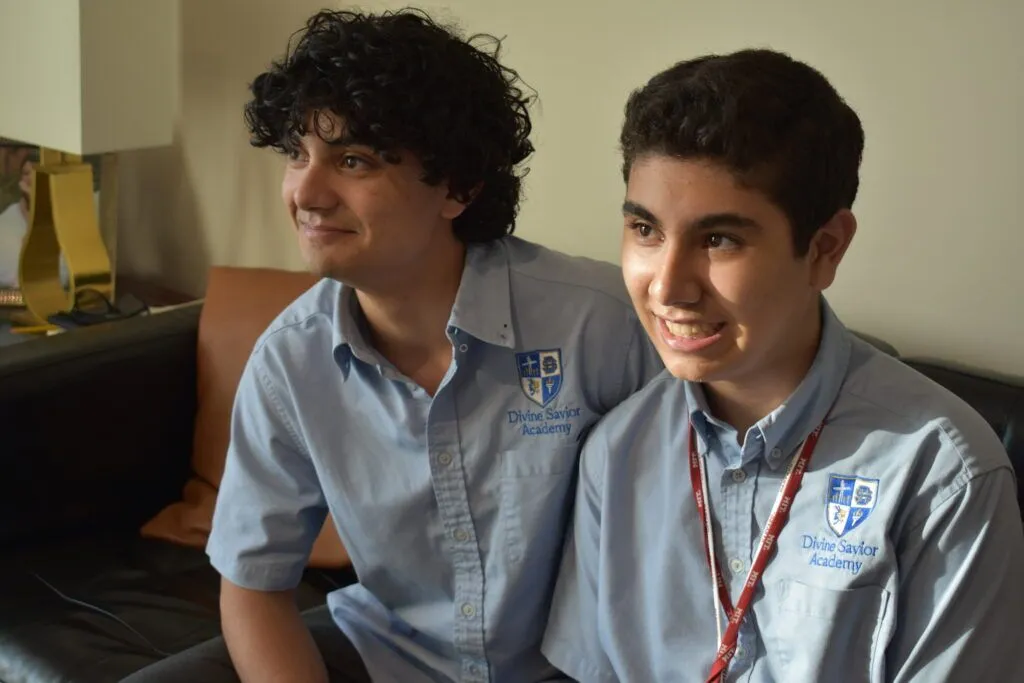
Watching his brother Jose Pablo (right) battle seizures nearly every day is one of the reasons why Alvaro wants to study biomedical engineering.
“The scholarships are a huge blessing,” Ivan said. “We can’t even begin to say how much these scholarships mean to us. My two oldest children have bright futures because of them, and with Jose Pablo, we found a place where he can thrive.”
The family immigrated from their native Bogota, Colombia in 2000, because Ivan and Maria wanted a better life for their children. That began with a faith-based education. Ivan and Maria felt DSA was the best educational setting for their children.
“They have bright futures because of Divine Savior Academy,” Ivan said.
Sofia said the academy prepared her for life after high school.
“The college counselors we had there were incredible,” she said. “Having that guidance helped me prepare to be very organized, very meticulous in college. The teachers themselves were all incredible. I have so many fond memories of so many teachers. They really dedicated themselves to making sure we had a proper education and prepared us for the world outside of our high school.”
Sofia attended Drexel University in Philadelphia for one year. But the high cost of tuition sent her to England, where a college education isn’t quite as expensive.
Alvaro was in middle school at the time and sensed the financial burden a college education could place on his family.
“When I saw what my sister went through with college, I started seeing all the difficulties the finances would be, I knew that I had to maintain a certain academic level so that I would be able to get a scholarship and achieve everything I wanted to,” he said.
In fact, Alvaro often wondered how his parents were able to send him to DSA.
“I was kind of glad that my parents had told me about the FTC scholarship,” he said. “It removed the sense of burden and gave me a great sense of appreciation honestly, that this whole time I was getting the support from this program.”
Since its inception in 2003, QuestBridge has awarded more than 14,500 scholarships, including 2,242 in 2023. Applicants must have an unweighted grade point average of 3.94 and can apply to as many as 15 schools involved in the QuestBridge program.
In addition to Boston University, Alvaro applied to Johns Hopkins University, the Massachusetts Institute of Technology, Columbia University, the University of Pennsylvania, and Yale University. He was matched with Boston University and received the acceptance email on Dec. 6.
“We were so relieved,” Maria said. “I could finally breathe.”
“The scholarship is a step forward towards reaching my dreams,” Alvaro said.
And that dream is to help find a treatment to help ease Jose Pablo and others like him wage their daily battle against epilepsy.
“I’ve spent pretty much my whole life helping him through this,” Alvaro said, “and it’s left me with this sense of duty to help others with similar conditions.”
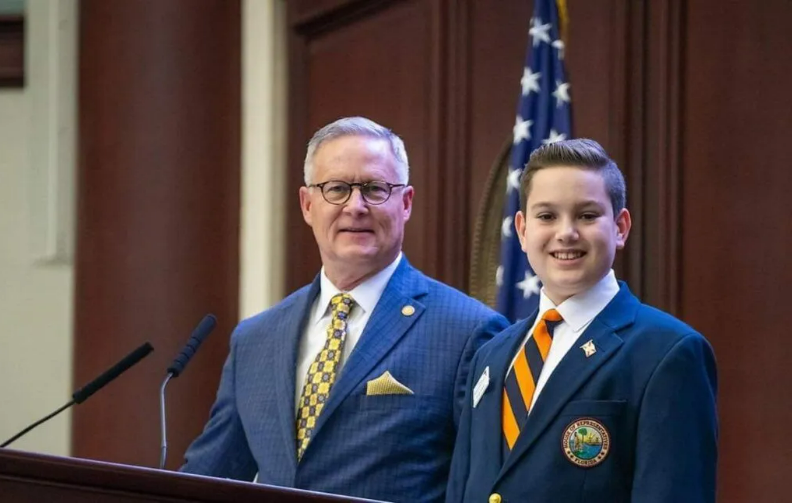
Cooper Campen, right, met House Speaker Pro Tempore Chuck Clemons, R-Newberry, while serving as a student page during this year's legislative session. Cooper and his younger brother, Alexander, receive education savings accounts as part of the state's Personalized Education Program.
More students would be able to use scholarships at hybrid schools, scholarship programs for students with disabilities would grow more quickly to meet demand, and religious virtual schools could become eligible to participate in scholarship programs under a bill passed during Florida’s 2024 legislative session.
Provisions in HB 1403, by Rep. Josie Tomkow, R-Polk City, and Sen. Corey Simon, R-Tallahassee, would:
The bill will be sent to Gov. Ron DeSantis for his signature.
The bill’s bipartisan passage drew praise from the Foundation for Florida’s Future, the nonprofit education organization founded by former Florida Gov. Jeb Bush.
“As Florida’s parental choice landscape continues to expand, we look forward to working with Gov. DeSantis, the legislature and the Department of Education to ensure Florida remains the national leader in parental choice,” the foundation said in a statement on its website.
TAMPA – Be a doctor, some say.
Be a lawyer, others suggest.
You’re so smart, you should do something big, they tell her.
Mikaela Powell politely listens to those who see her top-of-the-class grades and encourage her to pursue a lofty education and a lucrative career.
What they don’t know is the high school senior from Odessa wants to follow in the footsteps of her parents and pursue a career in education.
“I want to be a teacher,” Mikaela said. “Probably the second grade.”
Mikaela is only months away from graduating from Tampa Bay Christian Academy (TBCA), a K-12 private school in Tampa that she attends with the help of a Florida Tax Credit Scholarship. The scholarship is made possible by corporate donations to Step Up For Students.
“The scholarship being available to Mikaela has just been a blessing,” Mikaela’s mom, Joyann Powell said.
Joyann and her husband, Mike, are both in education. Joyann has been a teacher in district schools for the last 18 years. She and Mike both wanted a private school, faith-based education for their children (their son Justin graduated TCBA in 2022). They wanted a safe environment and a small setting.
They found that at TCBA, where Mikaela has excelled since entering the fifth grade.
“She’s a solid, solid student,” Head of School Matt Peavyhouse said.
Mikaela is on the short list of candidates to be valedictorian and has been accepted to the University of South Florida, Trinity College of Florida, Florida Southern College, and the University of North Florida. She is waiting to hear if she has been accepted to the University of Florida and plans to apply to the University of Central Florida.
Mikaela will major in education because she places teaching on par with the medical and legal professions. She wants to be that teacher who has a lasting impact on a student’s life. The one who often hears from former students.
She wants to be like her first-grade teacher, Miss Toussaint.
“The way she made people feel was wonderful,” Mikaela said.
“She put Mikaela on that path to do well in school,” Joyann said.
With their careers in education, Joyann and Mike instilled the value of education in their children.
Mikaela’s thirst for learning increased when she enrolled in TBCA in the fifth grade. There, she formed a small circle of close friends that includes Kendall and Gaby. Mikaela, Kendall, and Gaby are the finalists for valedictorian, their grades separated by mere decimal points. They rush to compare test scores to see who’s in the lead.
“They lift each other up, so that’s cool,” Joyann said. “I have no problem with that.”
There are others in the circle – Yara, Bitia, Mark, and Jon. They’ve formed a bond that Mikaela expects to last a lifetime. When asked about the impact TBCA has made on her life, Mikaela is quick to mention her friends.
“And then the school in general,” she added. “I like the size for me because the teachers all know you and care for you. And then it's easier to learn since the teachers all can adapt to your style, and you can adapt to their style.”

A talented artist, Mikaela is proud of this painting.
Mikaela has been in every class play since she began attending the school, playing such roles as a lost boy in “Peter Pan,” a librarian in “Matilda,” and an apple tree in “The Wizard of Oz.”
An above-average volleyball player who excels on her club team, Mikaela joined TCBA’s winless girls basketball team last year at midseason because, as she told her mom, they really needed the help. She helped lead the Rams to their lone victory, which came in the last game – a one-point win over a team that routed them earlier in the season.
Mikaela tutors younger students. She sings in her church choir. She is comfortable working with the younger children at her church. Joyann and Mike have been long-time foster parents, so Mikaela has been around young children for years. That experience, she said, gives her confidence that she will thrive as a teacher.
“She’s thoroughly driven to reach her goals,” Peavyhouse said. “She’ll be great at it.
“She’ll be the teacher who will be in their life because she’ll be their volleyball coach in middle school, their basketball coach in high school. She’ll be involved in the school play, choir, whatever they’re doing. She’ll be with them outside the classroom in other activities.
“I told her we’ll have a position for her here when she’s ready.”
Mikaela thinks the best teacher she can be is one who has rules but is not considered strict, one who helps create a foundation for learning, and one whom the students are happy to be around both in and out of the classroom. An avid baker and talented artist, she plans to incorporate both into her teaching.
“Maybe it’s a pipedream,” she said.
Or maybe it’s a wonderful career.
Editor's note: This story is published in celebration of National Catholic Schools Week, which runs from Jan. 28-Feb. 3.
Visit Guardian Angels Catholic School in Clearwater, and you’ll feel a deep sense of community as soon as you pull up to the entrance. School leaders stand at the curb, waving at parents and greeting each student as they leave their cars. The day starts with a student-run television news show, including announcements about frequent evening social events. Principal Mary Stalzer strolls through each room to ensure everything is running smoothly.
 By mid-morning, the youngest students are running around on the playground. Middle schoolers work in science labs. In another room, students read stories they have written or edit a classmate’s work. Outside, students tend vegetable gardens that are part of the school’s fully certified STREAM program. (STREAM stands for Science, Religion, Technology, Engineering, Arts and Math and is the Catholic school version of a STEAM program.) Teachers link the gardening projects to Jesus’ parable about what can be achieved by having faith the size of a tiny mustard seed.
Where Catholic schools are often tied to a single church, with which they often share a location, Guardian Angels is an inter-parish school, which means it has no specific church. Instead, support is spread across four local parishes. This may help explain why the school's leaders have made building community a priority.
The tree-shrouded campus sits tucked away in a neighborhood of modest homes and apartment complexes, not visible from major highways.
“We are the hidden gem of northern Pinellas County,” said Stalzer, whose career with Catholic schools has spanned a quarter century.
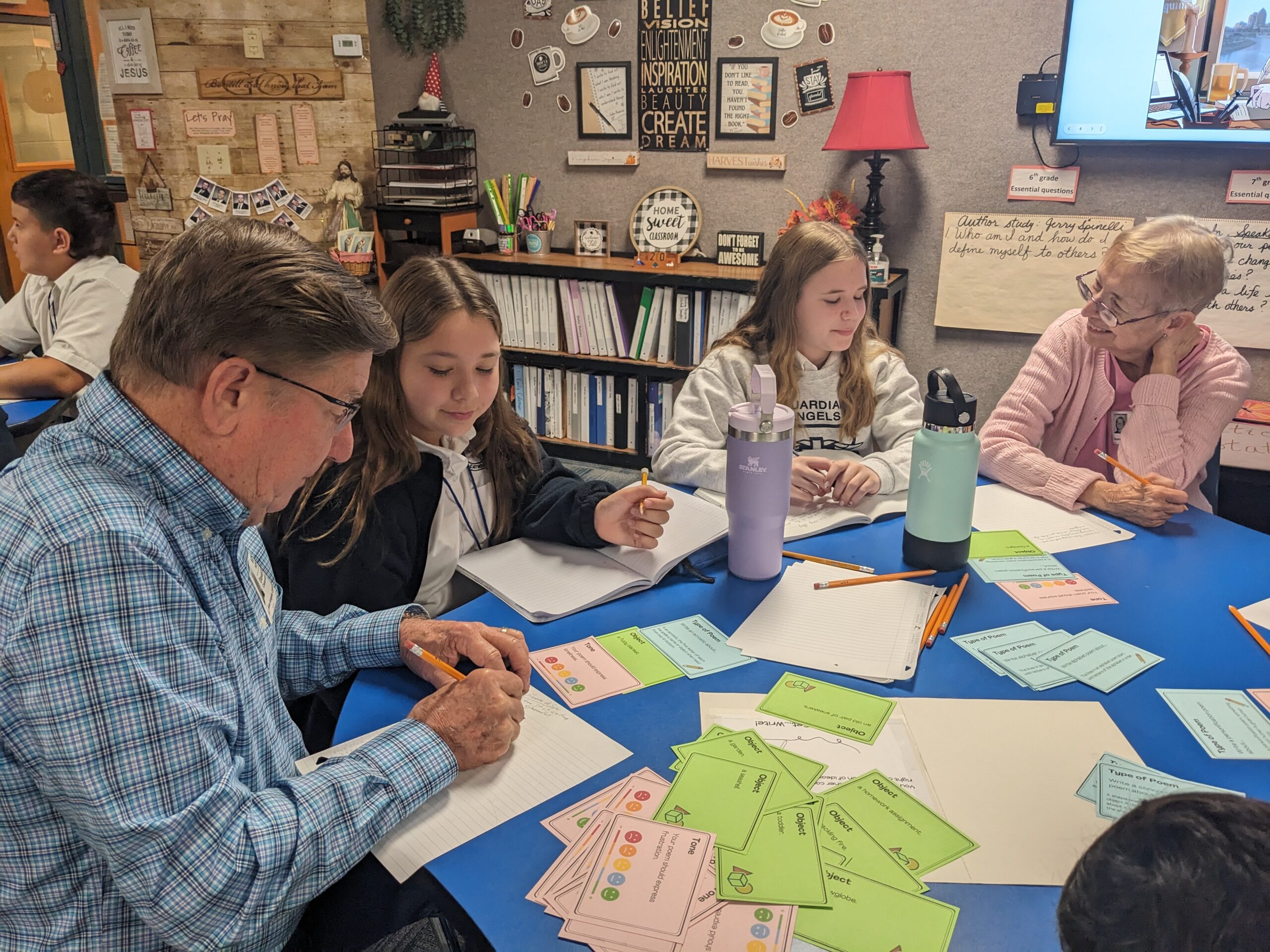
Guardian Angels Catholic School in Clearwater, Florida is known for its deep sense of community, which is fostered by the encouragement of parents and grandparents to be involved in school activities. Photo courtesy of Guardian Angels Catholic School
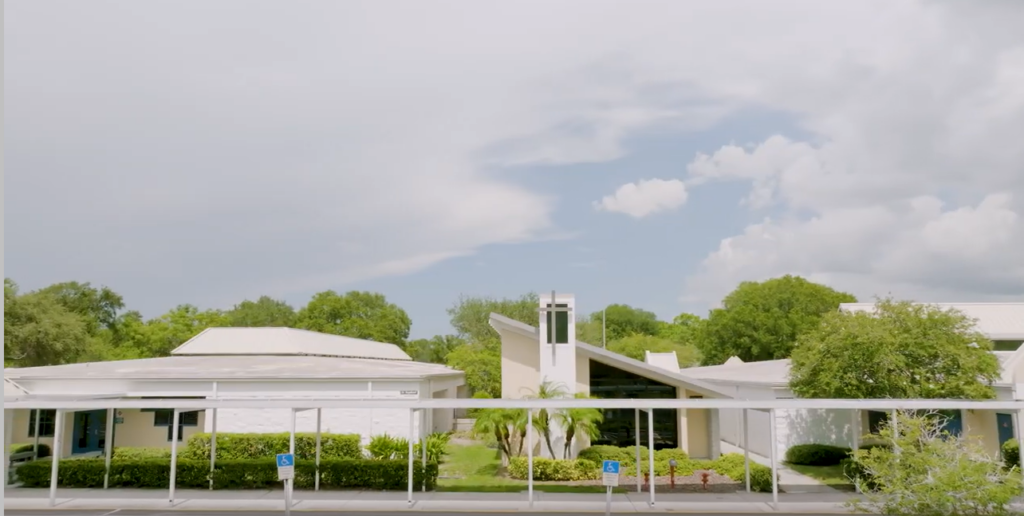
Guardian Angels Catholic School
 Over the years, she has taught elementary school, worked in the library, and served as assistant principal before becoming head of the school. “We are warm and welcoming. We know our students; we know their parents and their grandparents.”
This year, more people have discovered the sparkle of Guardian Angels, where enrollment spiked this school year by 19% after several years of decline due to the pandemic and other nearby schools.
Stalzer attributed the substantial increase to several factors, including a grassroots marketing campaign that included in-person and online meetings, letters, social media posts, and word-of-mouth. However, the primary reason she cited and other school leaders gave for their growth was the Florida Legislature’s passage of House Bill 1, the largest expansion of school choice in United States history.
While this year’s growth at Guardian Angels is sure to turn heads, it’s part of a much broader statewide trend. Recent data from the Florida Conference of Catholic Bishops show Catholic school enrollment grew by 4% across the Sunshine State in the 2023-24 school year. That increase is on top of the 4% growth seen over the past decade highlighted in a special report by Step Up For Students.
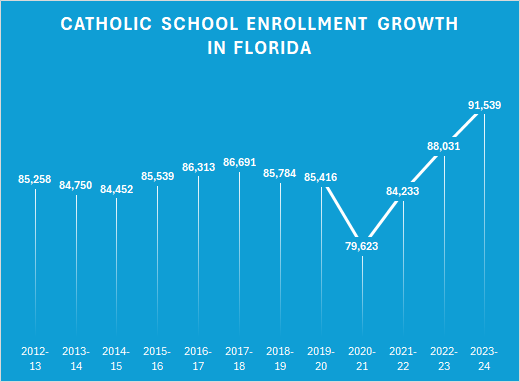
Chart courtesy of Ron Matus
Stalzer and the other Catholic school leaders across the state made every effort to make existing and new families aware of the new law, which extended scholarship eligibility to all Florida students regardless of their family’s income.
“People found it hard to believe that they didn’t have to qualify for it financially,” Stalzer said. “I have heard some families say it’s an answer to their prayers.”
Chris Pastura, superintendent of schools for the Diocese of St. Petersburg, where Guardian Angels is located, said the law helped many families who otherwise would not have been able to afford Catholic schools. The 34 elementary and secondary schools in the diocese, which cover five counties in the greater Tampa Bay area, reported a year-over-year growth rate of 3.8%
“What I found was an immense sense of gratitude from a lot of middle-class families,” Pastura said. Those families might be getting by, he said, but make financial sacrifices to provide their kids with a Catholic education.
“This is a great example of a program helping them at the bottom line,” he said.
With its current enrollment at 191, Guardian Angels still has plenty of room before it reaches what Stalzer called a “comfortable” count of 350 students. Other schools across the state are hitting their maximum capacity, which they attribute to Florida’s rising population and the availability of state school choice scholarships. This year, 78% percent of Florida Catholic school students received them.
“Catholic school enrollment continues to soar in the state of Florida,”’ said Deacon Scott Conway, superintendent of schools for the Diocese of St. Augustine, which reported 4% year over year growth across its 29 schools in 17 northeast Florida counties.
“One of our biggest struggles is not having enough seats for students, which causes us to have to turn many students and families away,” he said. “We are so blessed here in Florida that our legislature has recognized the importance of empowering school choice for families. For most people, there is no choice without the scholarship program.”
One of those schools is Holy Family Catholic in Jacksonville, which serves students in kindergarten through eighth grade. The school recently ramped up its Wildcat D.E.N.S. program to provide personalized tutoring for students struggling in key academic areas and enrichment for students identified as gifted.
This year, for the first time, the school had to start a waitlist for students in kindergarten through fourth grade, assistant principal Amanda Robison said.
Florida’s largest Catholic school region also reported growth of about 4% this year, continuing a trend that began four years ago.
“Enrollment is the largest it has been in over 10 years,” said Jim Rigg, who oversees 64 schools as superintendent of schools for the Archdiocese of Miami, which includes Miami-Dade, Broward and Monroe counties. “Over 50 percent of our schools are filled with waiting lists, and nearly all of the remaining schools are growing.”
Rigg cited the August re-opening of St. Malachy Elementary School in Tamarac, which had closed 14 years earlier due to declining enrollment, along with the addition of a high school to an elementary school in Key West as evidence of rising demand. Cristo Rey Miami High School also opened in 2022, the second Florida location for a national network of high schools that specialize in college preparatory academics and on-the-job work experience for students from financially constrained households.
“Unfortunately, there are now areas of the Archdiocese where we simply do not have open seats in our schools,” he said.
Rigg added that Archdiocese leaders are in “active conversations” about future openings and reopenings to accommodate the demand, which he attributed to Florida’s robust scholarship programs as well as an influx of families from the northern U.S., Latin America and the Caribbean.
“It is important that we do our best to meet the strong and growing demand for Catholic education in South Florida,” he said.

