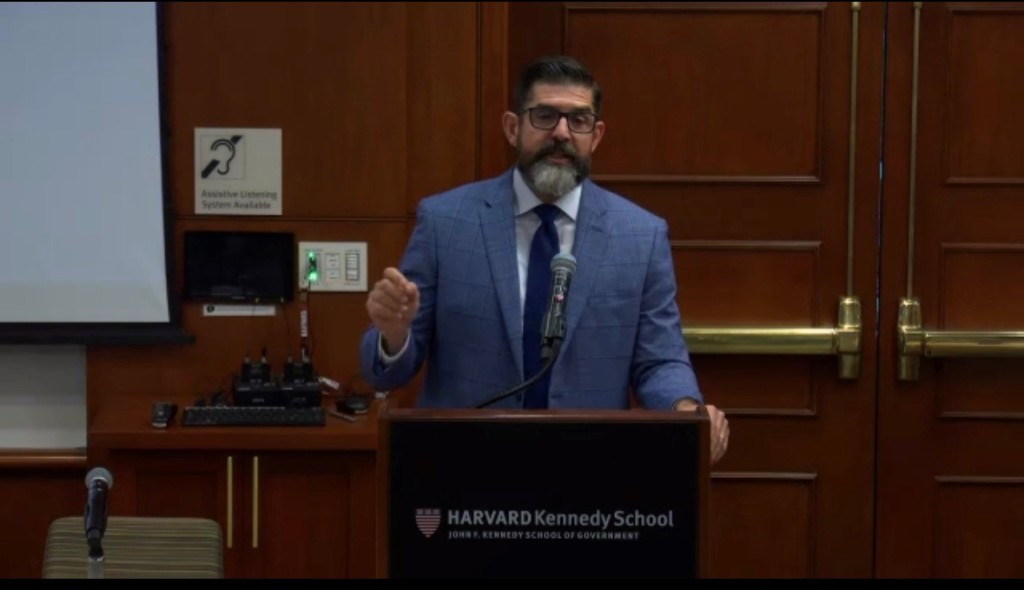
When it comes to education, a rising tide lifts all boats, Florida’s education commissioner told a national audience of school choice supporters and education entrepreneurs.
Look at Miami-Dade County, where leaders saw the tsunami coming and grabbed their surfboards.
“The district figured out that movement in South Florida was coming so fast and becoming so popular that the only way they could survive was to improve their services, (and) to improve their offerings,” Manny Diaz Jr. told those attending a conference sponsored by Harvard University called “Emerging School Models: Moving from Alternative to Mainstream.”
Despite the dire warnings that opponents have repeatedly issued since Gov. Jeb Bush and Florida lawmakers first began stirring up that school choice wave in 1999, none of the predicted devastation has come true, Diaz said.
Now, 70% of students in Miami-Dade attend a school of choice in the nation’s third-largest public school district. Those include charters, magnets, public schools with open enrollment policies and specialty academies, as well as the nation’s largest education choice scholarship programs.
Such a win-win situation didn’t stop the teachers unions and other school choice opponents from sounding the same alarms when he sponsored education choice legislation as a state senator.
“When we passed House Bill 1, they said the sky was going to fall,” Diaz said. “They were completely wrong.”
Over more than two decades, the legislation has created new options, including multiple scholarships with different funding sources that serve students with a variety of needs.
HB 1 was the latest advance. Signed by Gov. Ron DeSantis in 2023, it granted scholarship eligibility to all families regardless of income and converted all traditional private school scholarship programs to education savings accounts. The change allows parents the flexibility to spend their student’s allocation on tuition and fees, curriculum, part-time tutoring, and other approved expenses.
Diaz said the key to Florida’s success is its continuous quest for improvement, which at times has involved the passage of new expansions each year.
“It is a relentless chase of continuing to push,” he said. “The best defense is to be continually on offense.”
The Teach Coalition Office of Jewish Education Policy and Research released a study last week on enrollment in New York Jewish Day Schools. Enrollment growth has slowed, and after exploring multiple potential causes, they concluded that a primary driver has been Florida attracting young families:
"We therefore conclude that slowing enrollment growth in New York is likely because Jewish families are moving to other states…We cannot definitively answer why Jewish families appear to be leaving New York. However, since 2015 we have observed the highest Jewish kindergarten enrollment growth in states with a combination of lower cost of living, lower tuition costs, and/or government sponsored K-12 scholarships. It therefore seems likely that the high costs of living and Jewish education is driving young families out of New York…Indeed, California – which like New York has cost of living and tuition rates considerably higher than the national average – also saw a decline in Jewish kindergarten enrollment since 2015."
I suspect this trend is just getting warmed up. I’m aware of reports of families moving to Arizona from California and elsewhere in part to participate in K-12 choice programs. Governors have competed fiercely for companies for decades, but now that competition has trended to include a competition for residents and taxpayers.
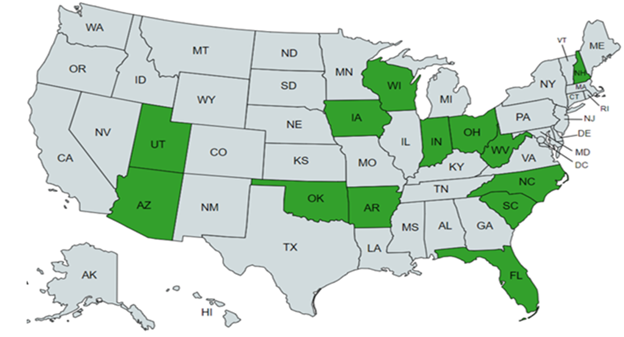
The governors of Alabama and Texas have announced their support for taking their states green on the above unofficial “rubusto choice” map. If you are the parent of young children, and you find yourself in a gray state, a readily available solution would be to move to a state that is willing to put you in the education driver’s seat. Life is short; best to take control of it.

Kaylia Powell graduated first in her class in May from Abundant Life Christian Academy.
MARGATE, Florida – Kaylia Powell’s home life is in a constant state of flux.
At times, she has lived apart from her mom and separated from her brothers and sisters. She has lived with friends and, for a few months this year, at the home of a teacher. She has lived with her grandmother. She has lived in a motel.
When asked recently about her hopes and dreams, she replied with one word: “Stability.”
The chaos used to leave her angry at her assigned school, sulking in class because she didn’t have the things her classmates had. Kaylia doesn’t know how close she came to quitting school and becoming a statistic. But she feels she was going down that path.
What changed was the opportunity to attend a private school with the help of a Family Empowerment Scholarship for Educational Options. It is one of several education choice scholarships managed by Step Up For Students,which hosts this blog.
At Abundant Life Christian Academy, a private K-12 faith-based school in Margate, Kaylia found classmates who didn’t judge, teachers who cared, academics that were challenging and enough sports and clubs to keep her nonstop busy.
Kaylia enrolled as a sophomore and called the move “life changing.”
To continue reading, go here.

Christina Sheffield’s son, Graham, was soaring ahead of classmates. She wanted a learning environment that challenged him, so she created one herself.
She pulled him out of a private school and created a customized education plan. Using her know-how as a certified elementary virtual school teacher, she enrolled him in a hybrid homeschool co-op and designed projects to enhance the curriculum his former private school as using.
But there was a missing piece in her son's custom education plan: Their neighborhood public school.
That changed when the Tampa Bay area mom received the results of her son’s test for academic giftedness. Now officially identified, Graham, like other gifted homeschoolers, was able to access services offered by his local school district. He started going to a weekly gifted class at his zoned elementary school.
“It was his favorite day of the week,” Sheffield recalled. “After I picked him up on the first day, he said, ‘Mom, I finally feel like I fit in.’ That made my mom’s heart happy.”
Other students in similar circumstances might not be so lucky. Florida law allows homeschoolers to enroll in dual enrollment classes that lead to college credit, free of charge. Students participating in the state's growing array of educational choice options have access to extracurriculars at their local public schools under the state's "Tim Tebow law." But that same guaranteed access does not extend to math class.
Districts can offer homeschoolers access to career and technical courses, or services for exceptional students, included gifted programming for students like Graham. And a new law allows districts to receive proportional funding for any student who chooses to enroll part-time while participating in other educational options.
But they are not required to offer this opportunity.
A new analysis by the advocacy group yes.everykid. evaluated policies in all 50 states and found that states vary widely in policies that grant students access to their local public schools, regardless of where they live or whether they want to enroll full-time.
Florida's policies place it in the top 10 among states, but it has not yet guaranteed that every student has the right to access public schools on their terms.
Among the findings:
Florida tied with Alaska for ninth place when it came to allowing nonpublic and homeschool students access to public schools. Idaho, which met every criterion used in the rankings, was No. 1, followed by Iowa and Minnesota, which tied for second place.
Though HB 1 codified the option for Florida public school districts to offer part-time enrollment options and receive prorated state funding, it left the decision whether to participate up to the individual districts.
Districts may be reluctant to embrace this new flexibility, and some state policies make this understandable. For example, state class size limits may add to the staffing headaches for districts hoping to accommodate students who enroll part-time.
The new law also creates a process for districts to identify regulatory barriers that are preventing them from responding to the needs of students and families.
For decades, some districts have resisted the oncoming tsunami of new education options. Others have chosen to ride it, and now have new flexibility at their disposal. The question is whether they will capitalize on that flexibility to meet the needs of their students.
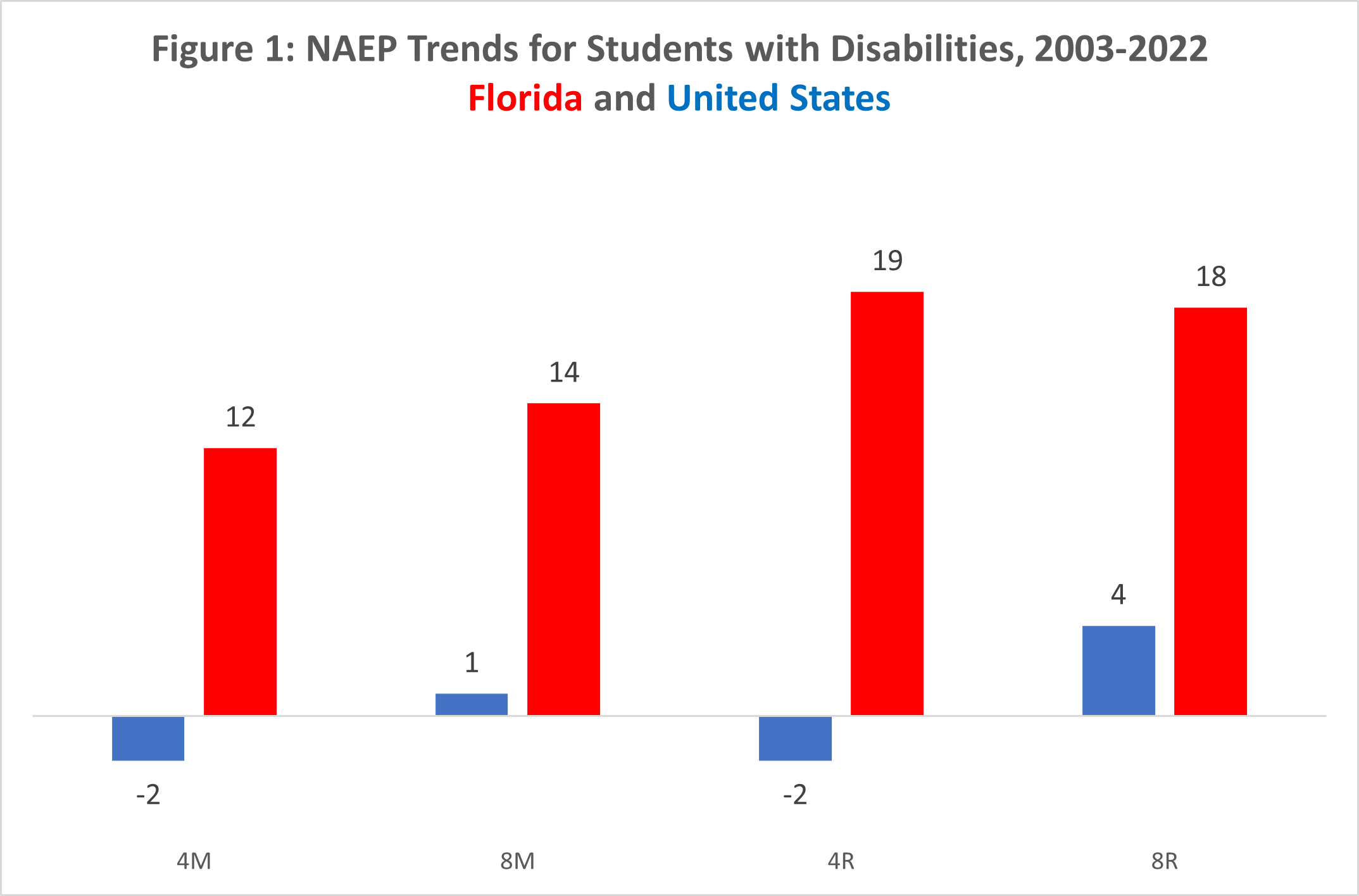
If you take the Nation’s Report Card data back as far as it will go to capture all 50 states (2003) and up until the most recent exams (2022), the trends for students with disabilities look like the chart above. For the United States across four exams you get a net 1-point increase. Let’s call that the midpoint between “spinning your wheels” and “playing in your food” spectrum. Meanwhile Florida made a net 63 points of progress, a grade level or more on each of the exams. A suite of reforms seems to have helped drive this progress.
Florida Gov. Jeb Bush’s reforms started in 1999 and included the creation of the nation’s first private choice program for students with disabilities. You can examine Figure 1 above and ponder whether the continual predictions of doom made by choice opponents seem the
least bit credible. Florida lawmakers created a separate education savings accounts, or ESA program, for students with unique abilities before consolidating the programs. Florida’s students with disabilities have had more choice access for a longer period of time than students in any other state.
Florida’s policies with a plausible connection to academic progress for students with unique abilities don’t end with choice. Florida pioneered the grading of schools A-F. Crucially, the Florida formula double weights the academic gains of the bottom 25% of students on the previous year’s state standardized exams.
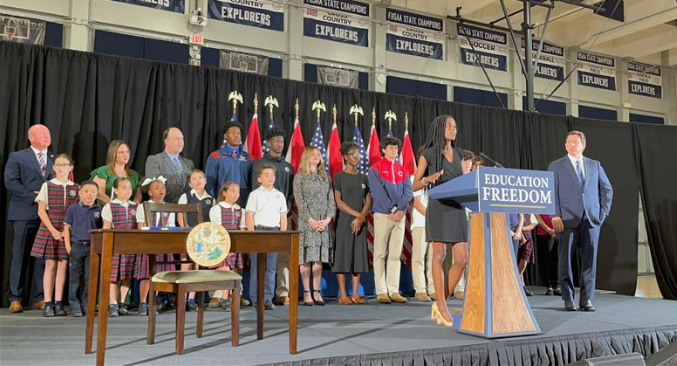
Hera Varmah, who received the Florida Tax Credit Scholarship, shares her story and expresses gratitude for the passage of HB 1. She was one of three speakers whose families have benefited from education choice scholarships.
Editor’s note: The signing of HB 1 to expand education choice on Monday is expected to empower many more Florida families to find the best educational fit for their students and even create customized plans to help them thrive. At the signing ceremony for this historic legislation, the crowed heard from a former student and two parents who benefited from education choice since it began in more than 20 years ago in the Sunshine State. Here are excerpts from their remarks. You can watch the entire bill signing ceremony here.
Hera Varmah, Florida Tax Credit Scholarship recipient, now a team member at American Federation for Children
As one of 12 children in my family, I know that students learn in different ways and have different needs. That’s why nine of us benefited from the Florida Tax Credit Scholarship, including myself. My parents immigrated from Jamaica and Liberia, and growing up we were very poor. But they would stop at nothing to give us the best education possible. They also believed a school’s values must align with theirs. The tax credit scholarship allowed them to send us to schools that gave us the best opportunity to learn and grow and succeed. So far, we have four college graduates, including one who is a chemical engineer, one who is a mechanical engineer, one who is going to medical school and myself working for the American Federation for Children seeking to give every child in America access to a quality education. We also have four more in college, and 4 currently in high school.
When people say school choice doesn’t work, I simply show them my family. This is the power of giving a child an education that fits their needs.
That’s why this new law expanding the Tax Credit and Family Empowerment scholarship programs is so important to Florida’s families. Turning them into education savings accounts gives parents more flexibility in spending their funds, which provides them more options to customize their children’s education to meet their individual needs.
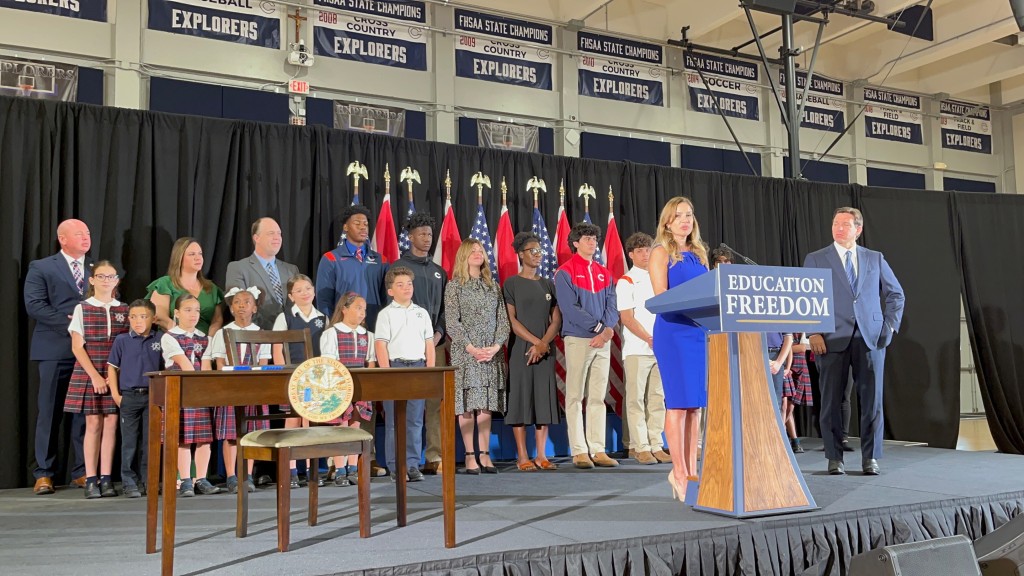
Aimée Uriarte Dobles, Miami, scholarship mom of two teenage sons who attend Christopher Columbus High School, site of the signing ceremony
Florida’s choice scholarship programs have been lifesavers for my two sons. I am a single mother originally from Costa Rica, raising two boys. I moved back here three years ago in large part because of the opportunities Columbus provides.
Columbus is more than a school, it’s like a family. If it’s true that it takes a village to raise a child, they are my village. They have helped us through many challenges and the emotional ups and downs. We would not have had these opportunities in a different school.
Education choice scholarships have been a blessing to my family. That’s why I would like to thank Gov. DeSantis for signing this bill passed by the Legislature that gives families more options to meet their children’s education needs. Governor, you have this mother's eternal gratitude for ensuring my boys have a promising future because of Columbus High School.
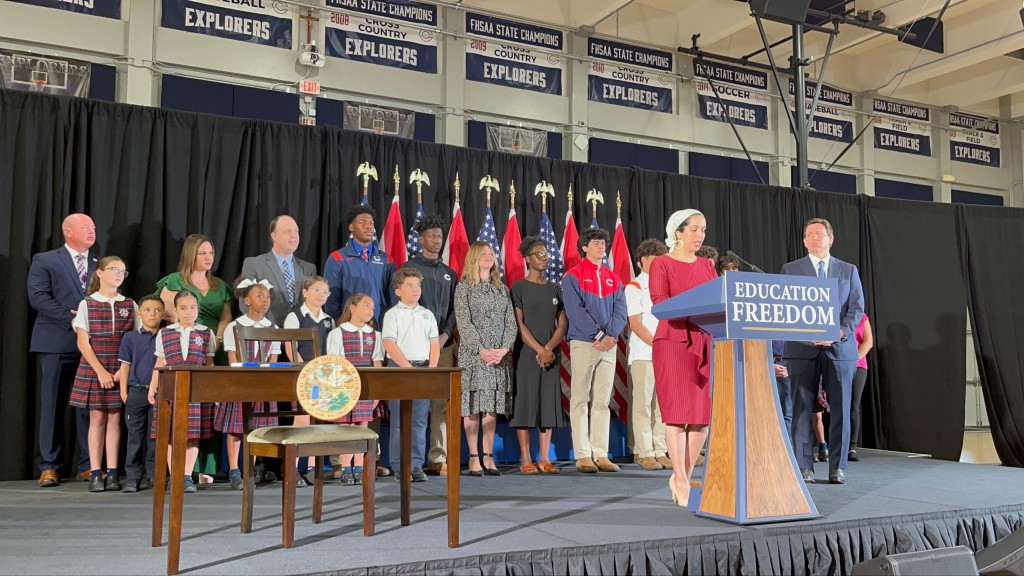
Rachel Hayon-Sabbah, Fort Lauderdale mother of four, including two daughters with unique abilities
As grateful as I am that we received (unique abilities scholarship) funding to pay for my daughter’s private school education this year, I am more grateful to have the opportunity to homeschool her next year by using that funding to structure a curriculum that cultivates (her) curiosity and love of learning by focusing on her strengths and makes learning fun.
Her 4-year-old sister has an expressive speech delay that qualified her for the scholarship, but she was previously waitlisted because of her age. Thankfully, she became eligible for funding this year, and it has enabled us to get her the therapies she needs, relieving our family of a financial hardship.
This legislation will cause the Unique Abilities waitlist to vanish and allow nearly 10,000 special needs families to get the funding they need. And families in the Tax Credit and Education Options scholarships will now have the ability to spend their program funds in ways that they can better tailor their children’s education to fit their individual needs.
Thank you, Gov. DeSantis, and legislative leaders, for making this dream come true.
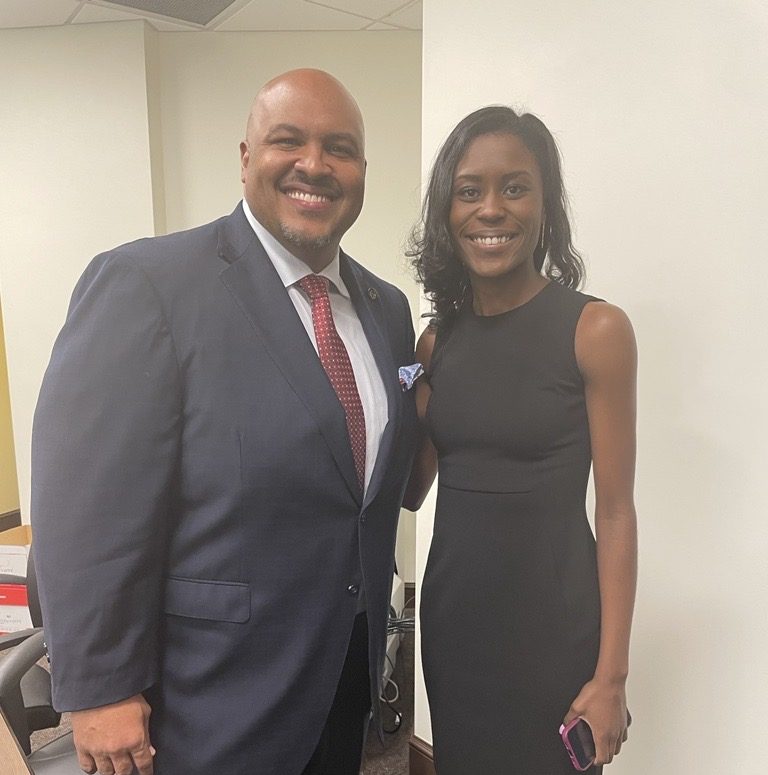
State Sen. Corey Simon, left, with Hera Varmah, a graduate who benefited from the Florida Tax Credit Scholarship program. Varmah, who now serves on the communications team at the American Federation for Children, spoke in support of SB 202.
Editor’s note: When state Sen. Corey Simon. R- Tallahassee, explained SB 202 last week at the Senate Education Committee on Pre-12, opponents expressed typical concerns. Among them: Would such a large expansion of education choice to all students be the death knell for public schools? Simon, whose bill includes measures to loosen regulations on public schools, assured them that public school supporters have nothing to fear. He also relayed his personal experiences with education choice as a student and as a parent that included both options. Here are excerpts from his remarks. You can watch the committee meeting in its entirety here.
We get so far down the weeds of public versus private…Let me say this, the vast majority, because our public schools are so well managed and do such a great job, will chose the public option. What we’re saying through this bill is that public school is also a choice.
And so, it’s not always the private school that’s the best school for that child who is growing up in an area that’s not conducive to learning.
Personally, for me when my mother made that choice, back when I was younger, before it was a legal choice, it wasn’t to for me to try and get into some private school, what it was was about getting me into a better public school.
We’re not trying to do away with public school in this bill. What we’re saying is that we want public schools to be an option for our parents.
From a personal standpoint, I had a son that was in private school here. And, for years there were things that I didn’t like about the private school. And then it became my choice. After ninth grade, I finally got fed up, and I didn’t like the direction, and so I moved my dollars and my child to another school. Now, he went to a public school for a year. And in that public school, we saw things that we liked; we saw things we didn’t like. And then we saw how our son was able to navigate those things.
At that point, we made another choice, and said, ‘No I want my son to be in a smaller environment, a Christian school,’ and that’s what we chose as parents, so we sat down with the schools that were on our list, and we said ‘Can you accommodate this; What’s your belief system; What are these things that go into making my child the young man that I want him to be and what he hopes to be?’ That’s the discussions we were having; that’s the discussions that parents are going to have as they look at making private school a choice. If they can’t find what they’re looking for in our private schools, if accommodations can’t be made in our private schools, then our public schools are an option and it’s still a choice.
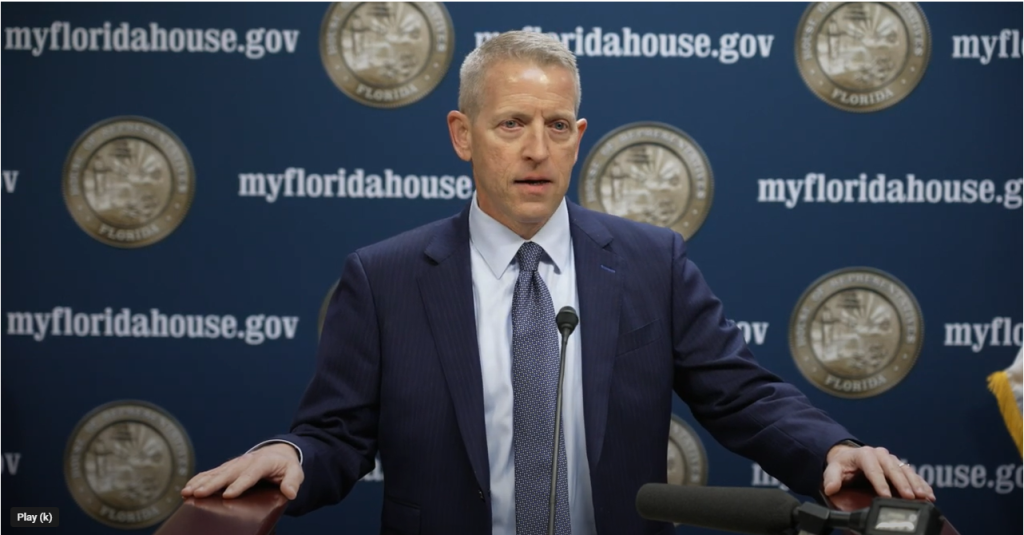
Florida House Speaker Paul Renner answers questions about HB 1, which would expand education choice eligibility to all K-12 students and allow for customization. Photo courtesy of Florida House YouTube channel.
Editor's note: Last week, Florida House leaders announced the filing of HB 1, a landmark bill that would expand education choice and customization to all students in the state through the availability of education savings accounts. If passed, the bill would also allocate enough funding to aid all students currently waiting to be awarded ESAs through the Family Empowerment Scholarships for students with Unique Abilities program. Here are excerpts from House Speaker Paul Renner’s remarks at a news conference. You can watch the event in its entirety here.
As I reflect on the bill we file today, I’m reminded that every single child in this state and this nation grows up with dreams, and as we celebrate Martin Luther King this week, I’m reminded of his dream that every child would one day reach their full potential.
Today’s bill is about doing exactly that and making sure every child in Florida reaches their full potential educationally. And on a more fundamental level, it’s really about freedom and opportunity.
And so today, we empower parents and children to decide the education that fits their needs. And one of the things I’m most excited about is that we currently have a waitlist for children with unique abilities. And it is a tragic thing for a parent to have to say no to their children to have the resources they need in this situation…this bill will completely clear the waitlist for our children with unique abilities.
I think you’re going to see bipartisan for his bill. Maybe I’m going out on a limb, but I don’t think so. I think people realize more and more how powerful it can be. Look, every business, everywhere we shop, has an entrance and an exit except in our public schools, traditionally, where you have to go to the school wherever you’re zoned for and that’s it, whether that school meets your needs or doesn’t meet your needs.
And we have great public schools. There are many people looking to hit the entrance into public schools…. but every school, like every business, should have an entrance and exit. And if the schools are performing well, more people will hit the entrance. If they’re not, more people can hit the exits.
And this bill in a powerful way provides both an entrance and an exit to all of our schools so we can match people up in the best way possible.
And the ESA component to the bill allows choice within choice, so that you can truly get to the goal of customized education.
Even brothers and sisters learn differently. Some are good in math; some are good in English. And this allows, as we look toward the choice navigator, to give advice and counseling, not dictates, but advice on based on scores, based on what’s going on in that child’s life which the parent uniquely knows, to further enhance and customize that child’s experience so we get the maximum potential out of every single child in the state.
I grew up and went to traditional public school my entire time. I got a good education. My mother was a public-school teacher. Many people will stay right where they are because they’re happy. But this is really about making sure there is increased competition and always striving to do better.
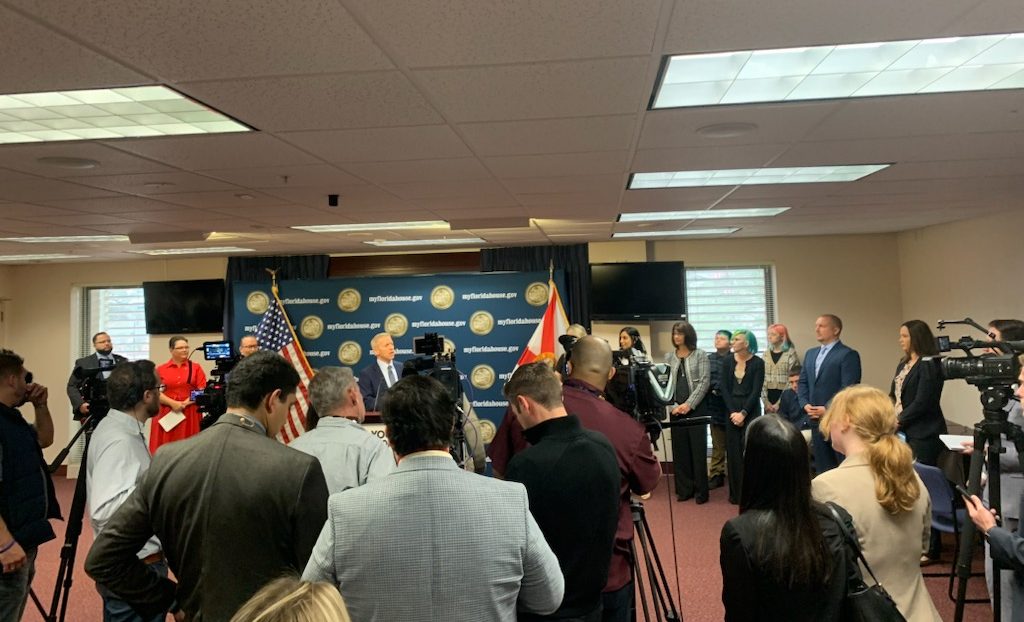
Florida House Speaker Paul Renner answers questions about newly filed landmark legislation that would greatly expand customized education choice options to every K-12 student. Photo by Amy Graham
A bill that Florida leaders are calling “transformational” would greatly expand the state’s 21-year-old education choice scholarship program by opening eligibility to all K-12 students in the Sunshine State and empowering parents to customize their children’s learning.
“Florida is about expanding freedom and opportunity,” said House Speaker Paul Renner, R — Palm Coast, who stood in front of a lectern with the sign, “Your Kids, Your Choice” during a news conference to introduce the bill. “Today, we empower parents and children to choose the education that best fits their needs.”
HB 1, which was filed Thursday morning, would remove income limits from all the state’s two major income-based programs, the Florida Tax Credit Scholarship Program, and the Family Empowerment Scholarship for Education Options. The bill also would convert traditional scholarships, in which money goes directly to a private school for tuition and fees, to education savings accounts. Also known as ESAs, these funds allow parents to direct funds toward other approved uses such as private tutoring, instructional material, including digital and internet resources, curriculum, a virtual program or online course that meets state requirements, or tuition and fees associated with homeschooling. (The number of homeschooled students using the formerly income-based programs will be capped and increased each year until 2027.) The law allows “choice navigators” to help parents sort through options and choose the best fit for their child. The expanded programs would be administered by state-approved scholarship funding organizations. (Step Up For Students, which hosts this blog, is one of two nonprofit organizations that manages these programs.)
Current law limits eligibility to lower- and middle-income families and students who meet certain criteria such as children of active-duty military members, law enforcement officers and children who are in out-of-home or foster care.
The bill also would eliminate the wait list for the Family Empowerment Scholarship Program for students with Unique Abilities. That program is already operates on an education savings account model. It places no limits on household income but restricts participation to students with certain special needs. More than 9,000 students are currently waiting to receive those scholarships.
“It is a tragic thing to have to say no to these children,” Renner said. This bill will completely eliminate the wait list for our children with unique abilities.”
The bill’s sponsor, Rep. Kaylee Tuck, R — Lake Placid, thanked the House leadership for allowing her to steer it through the legislative process.
“I think it’s clear to us that nobody, absolutely nobody, knows the needs and abilities of their child better than a parent,” said Tuck, who recently published a commentary on foxnews.com outlining how education choice works well in rural areas. “HB 1 empowers every parent to choose the customized and tailored system that fits best for their students…Florida is committed, has always been committed and will always be committed to providing the best education system possible.”
For Rep. Susan Plascencia, R — Winter Park, and Rep. Jenna Persons-Mulicka, R — Fort Myers, the bill was personal. Plascencia’s three children received education choice scholarships, and Persons-Mulicka’s son, Charlie, attends a private program for students with autism spectrum disorder that has allowed him to thrive.
“Within days and weeks, we could see the change and metamorphosis in our son,” Persons-Mulicka said. “We’re able to give our Charlie an opportunity, and it’s amazing we’ll be able to empower all our parents to give their children the same opportunity.”
Plascencia, who co-sponsored HB 1, said her children are now “leading productive, successful lives” and are happy in their chosen fields.
The bill is now in the House Choice and Innovation Subcommittee and is expected to be heard next week. From there it will go the PreK-12 Education Appropriations Subcommittee and then to Education and Employment Committee. A companion bill has not been filed in the Senate. The 2023 legislation session begins March 7.
“I think we’re going to see bipartisan support for this bill,” Renner said. “I think people will realize more and more how powerful (education choice) can be.”
The bill filing comes after two decades of support for education choice programs in Florida, which the Heritage Foundation named No. 1 in the nation last year for education freedom. Other states have recently followed Florida’s lead in establishing or expanding choice programs.
In 2021, West Virginia approved an education savings accounts program that was described at the time as the broadest expansions in the nation. That program will go into effect during the 2023-24 school year. Last year, Arizona enacted one of the most expansive education choice laws in the United States. The Arizona law allows any child who is not enrolled in a public or charter school to receive more than $6,500 per year per child to use toward private school, homeschooling, microschools, tutoring or any other form of education that does not fall under traditional public schooling. The law survived a challenge from opponents, who failed to gather enough signatures to put measure on the 2024 election ballot as allowed by the state constitution. However, newly elected Arizona Gov. Katie Hobbs has sought to block the expansion by not including the necessary funding in her proposed budget.

Editor’s note: Seven years ago this week, 10,000 supporters marched on Tallahassee to fight for the Florida Tax Credit Scholarship program, which was the target of a lawsuit backed the state’s largest teachers union and others who opposed the income-based K-12 scholarships. Headlining the parade of civil rights leaders who spoke that day was Martin Luther King III. The younger King has supported education choice, described recently as the civil rights issue of our time, as an extension of his father’s legacy. He has said he sees no reason for it to put public and private school supporters at odds. As for the lawsuit, the Florida Supreme Court rejected it a year later, though efforts to expand opportunities for parents to choose the best educational fit for their children continue. In honor of Martin Luther King Jr. Day, here are excerpts from his remarks. You can watch a video of all the speeches here.
My dad, I don’t really know if I can actually speak to what he would speak today, but I can say is that he would always stand up for justice. This is about justice; this is about righteousness. This is about freedom — the freedom to choose for your family and your child.
My dad told us a lot of things. He used to say that the ultimate measure of the human being is not where one stands in times of comfort and convenience. But where one stands in times of challenge and controversy.
He went on to say that on some questions, cowardice asks: Is the position safe? He said expediency asks: Is the position politic? He said vanity asks: Is the position popular? But that something deep inside called conscience asks: Is the position right?
He went on to say that sometimes we must stand up for positions that are neither safe nor popular nor politic. But we must stand up because our consciences tell us they’re right.
That’s what we are here for today. Because we’re standing on the right side of what’s right for our children …

