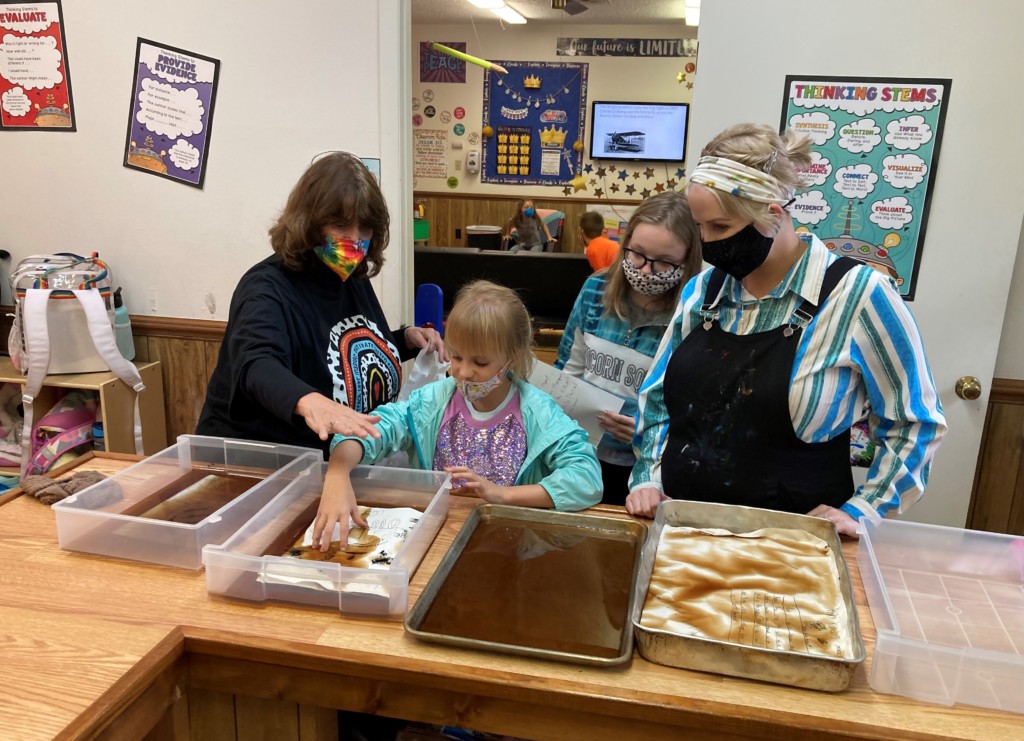
CREATE Conservatory celebrated the 101st day of school with a “101 Dalmatians” theme featuring lesson plans that tied the arts to historical happenings 101 years ago. Students made their own newspapers to show what they learned, soaking the papers in pans of tea to give them the look and feel of old newsprint. The school will move to the site of a former minigolf center after Thanksgiving.
Once in a great while, the hook for an article — that is, the thing that caught the journalist’s eye in the first place — winds up being the least compelling aspect of the entire story.
This does not mean that the hook in this case is any less cool. At a glance, what’s better than a private school in rural central Florida moving its campus seven miles to the site of the former Adventure Cove, a derelict miniature golf course?
Or that the school’s founder intends to preserve at least a couple of the holes for student recreation as well as on-campus festivals and fundraisers.
“You know, make a hole-in-one, win a car?” says Nicole Duslak, a former Orange County public school teacher and the dynamo founder behind CREATE Conservatory. Meaningful pause. Eyebrow raised. “Know anybody who’d like to donate a brand-new car?”
But it’s what CREATE does and has been doing with rousing success since opening to students in Leesburg (about an hour’s drive north of Disney World) in 2020 that steals this show: The K-8 nonprofit employs arts integration to teach STEM subjects. And it sounds like Leonardo da Vinci-level genius.
Ever get a song stuck in your head in an endless loop? Who hasn’t? Silly brains. But suppose instead of driving you batty, that annoying tune taught you the periodic table of the elements? Or the arrangement of bones in the human skeleton? Or the order of mathematic operations, so you no longer got stumped by your friends’ annoying what’s-the-answer posts?
“We hear a song at a wedding or in the elevator or a department store, and we pick it up without really trying,” Duslak said. “It’s still a part of us decades later. We all do that, so we’re teaching science that way, a way that it becomes part of our students.”
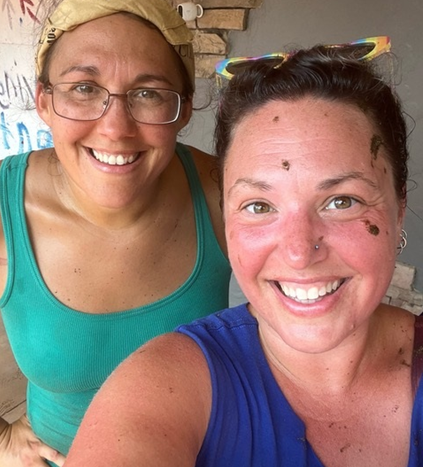
CREATE Conservatory founder Nicole Duslak, front, with parent Candi DeMers
It’s not just singing — although the idea of a school as a real-life musical has its charms. CREATE introduces concepts through crafts, art, model-building, clay-molding, dancing, script- and narrative-writing, drafting graphic novels, and acting … to name a few of the school’s arts-immersive activities.
CREATE’s curriculum can’t be bought off the rack or downloaded from a website. Instead, Duslak and her staff of five are constantly writing it, and rewriting it, drawing inspiration from “Schoolhouse Rock!,” the Saturday morning series of short videos that musically covered themes including grammar, science, mathematics, history, and civics. (Admit it: You’re humming “Conjunction Junction” right now.)
Creativity rules the academic day. State standards ensure rigor.
Terri Harper, a mental health counselor and Duslak’s longtime friend, sends sons Levi, 10, and Landon, 8, to CREATE on a Florida Tax Credit Scholarship and a Family Empowerment Scholarship for Students with Unique Abilities. Both are administered by Step Up For Students, which hosts this blog. She is amazed and gratified by the changes in both.
“My kids, who have never really been too into art,” she says, “now they’re asking for sketch books and sketching pencils and things like that, because they're discovering this whole different side of themselves. Wow. Yeah, it's great, it's really great.”
Kim Levine, a Leesburg-based partner with Core Legal Concepts — a graphic design shop for lawyers — became CREATE’s first corporate sponsor four years ago, well before the school opened its doors.
“She draws people in,” Levine says, "and I think that's great. Maybe the parents feel that, or the perspective parents, when they go on a tour, and they meet Nicky and hear her talk.
“She's got a ton of experience and assorted degrees, so she's got credibility, but she's so warm and loving, and she's so committed to this idea.”
Meeting Duslak and a few of her key allies for the first time at a reception designed to recruit community and corporate support (Levine was the only visitor), it wasn’t long before Levine felt like a billionaire panelist on “Shark Tank” blown away by the contestant’s pitch. “I love this idea,” she said. “Let’s do something together.”
That something became two full scholarships, worth about $6,500 each — one named for Stuart Levine, Kim’s late husband — and graphic arts support from Core Legal.
“One of the first things I thought was, I wish I'd had the school when I was a kid,” Levine says, “because I needed that sort of simulation. … Yeah, I just love it. I just thought,” This is perfect, I want to be involved.”
Duslak’s methods may sound exotic. They certainly are mold-busting. But wait.
“The modern education system has told our bravest and most creative thinkers to sit down and be quiet,” Duslak said. “And that's problematic, right? … I don’t want to sit still for eight hours a day in a desk, and I’m a fully grown adult who has complete control over my functioning.”
CREATE students do not sit at desks. Because there are no desks. Instead, there are beanbags and bounce-on exercise balls and couches and ample floor space. And windows. Oh, so many windows.
“Occasionally,” Duslak said, “I'll have a kid out to go over and just stand and look out the window, and I'll think, ‘There is no way they have any clue what's going on right now.’ Then I'll call on them and they're right with me; they just have to move to think. … They just have to look at something else.”
This is no free-for-all, Duslak said. “It's just about fostering an environment where kids can be themselves and we can honor everything about them that makes them, them.
“We have a lot of structure. … It's about slow down and get to know them and appreciate them for who they are as people.”
If a chef’s proof is in the pudding, an educator’s proof is in the testing. And the CREATE Conservatory students are crushing it: Youngsters have arrived testing nearly two years behind grade level on the Iowa Test of Basic Skills and finished their first academic year testing three years above grade level.
Area parents are taking note. From seven students when CREATE opened to 28 and a waiting list in two years is the stuff of dreams-in-the-making.
So, about the miniature golf course, the conversion and partial preservation of which brought Duslak to our attention. It’s not
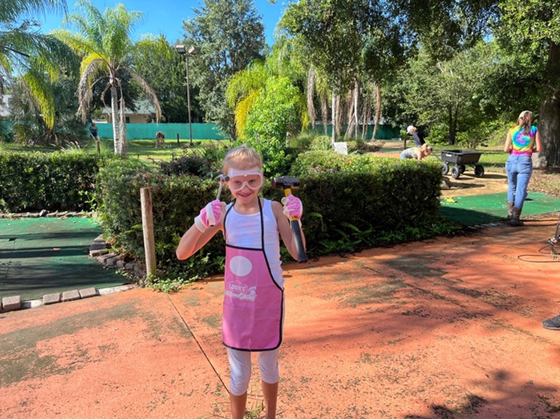
CREATE Conservatory student Amalie Weaver
exactly like a shut-down putt-putt course screams, Put a school here! There are bridges and boulders shaped from concrete, after all. And streams and a jungle temple that once had a waterfall running through it and a downed airplane stuck in one corner.
Those are a lot of attractive nuisances to demolish and haul away, at substantial expense, even with teams of volunteers swinging sledge hammers and loading wheelbarrows — $16,000 for the temple and airplane alone.
But Duslak had a best friend in her brother, David Slocum, a resort golf club professional who was working toward PGA status when he died in 2002.
“David has been and continues to be a huge motivator in my life, even though he's not here anymore,” Duslak said. “So, when we found this property and when all this came to be, I just sort of felt like that was his way of being involved in the process.”
Preserving a hole or two will honor both Slocum and the happy memories of Adventure Cove nostalgics. “It’ll be sort of an homage to what the property was,” Duslak says.
The 2.5 acres will be nice for Duslak’s long-range plans. She hopes to add a high school, and a theater for performing arts. For the moment, however, she’s happy to be moving into the attractive Key West-style two-story bungalow that once housed the business’ offices, storage, and concessions. The plan is to be fully relocated after Thanksgiving break.
The going, just now, is financially difficult, as the early days often are for many startups and pioneering entrepreneurs. But Duslak is dug in.
“I will be the greeter person at Walmart on my nights and weekends, if that's what I have to do,” she said, “because I will not let this fail.”
That’s the best hook of all.
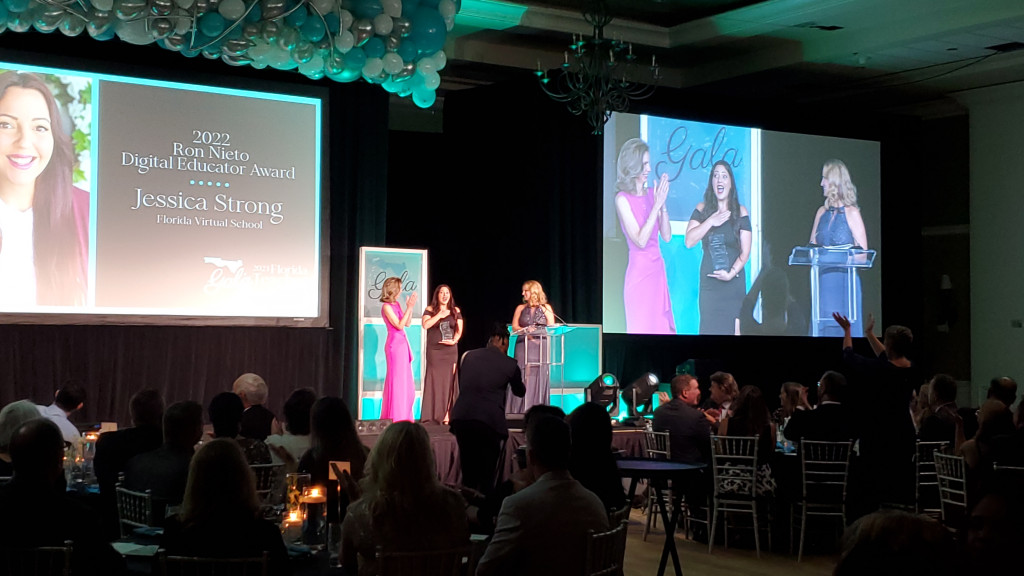
Jessica Strong, a sixth-grade teacher at Florida Virtual School and the first person in her family to graduate from high school and college, received the 2022 Ron Nieto Digital Educator Award.
On this episode, ReimaginED Senior Writer Lisa Buie talks with Jessica Strong, a sixth-grade English language arts teacher at Florida Virtual School, who recently received the Ron Nieto Digital Educator of the Year Award for 2022. Named in memory of Nieto, who served as Florida’s first deputy commissioner of innovation, it is given to a Florida educator who excels at using technology in the classroom to positively impact student outcomes.
https://nextstepsblog.org/wp-content/uploads/2022/08/Reimagined.jessstrong_mixdown-final.mp3
As the only child of a single mom whose struggles had forced her to leave school in seventh grade, Mrs. Strong never imagined she would go to college, much less become an educator. But not only has she become a teacher, but also one of the best digital educators in a state that pioneered high quality virtual education.
“My internship was with FLVS, and it was a unique experience, and I fell in love. I saw how innovative and interesting things can be done with a student who isn’t right in front of you…Students are tech natives, so their natural inclination is to learn and find out things on the computer, so putting education on computers is such a fascinating concept and with a little ingenuity, there’s nothing I can’t do.”
EPISIDE DETAILS:
RELEVANT LINKS
https://blog.flvs.net/inspiring-the-next-generation-2021-22-team-members-of-the-year/
https://store.classroomauthors.com/product/mnv-v6xn
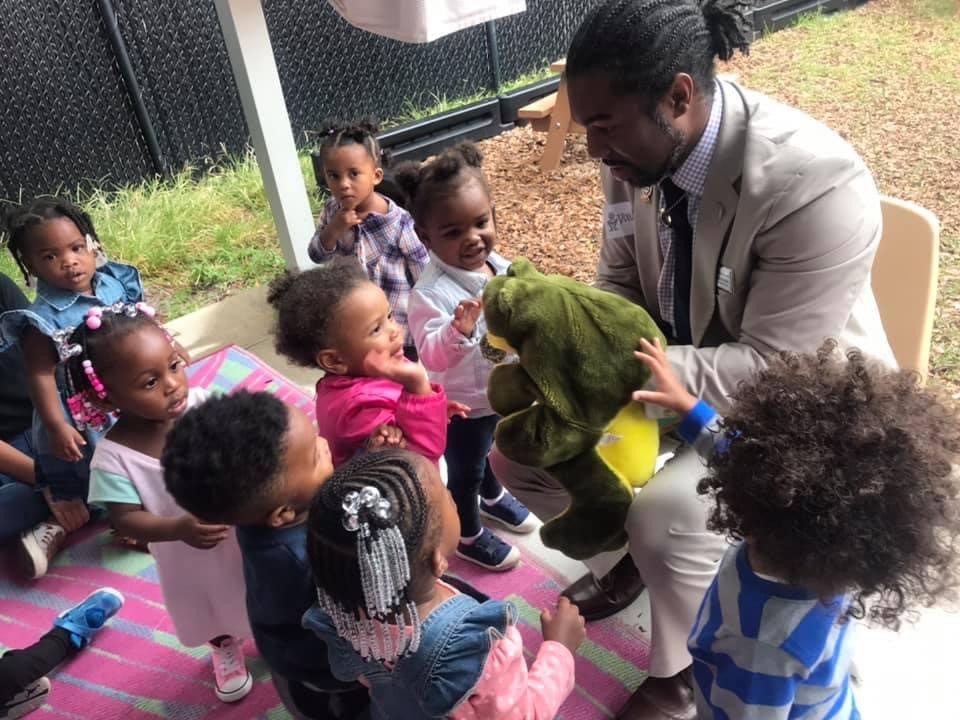
Dakeyan Dre Graham, Florida's 2020 Teacher of the Year, served as the Florida Department of Education's executive director of the Office of Independent Education and Parental Choice for two years.
“There are many people who don’t understand what school choice is. And there are others who have a very limited scope of school choice.” — Dakeyan Graham
After being named the Florida Teacher of the Year for 2020, Dakeyan Chá Dré Graham served as executive director of the Office of Independent Education and Parental Choice at the Florida Department of Education. Graham graduated from the University of Florida with bachelor’s and master’s degrees in music education. He also earned a master’s degree in educational leadership from Concordia University and a doctorate in music education from the University of South Florida. A proud graduate of King High School in Tampa, Florida, he spent 10 years as director of instrumental studies in the Hillsborough County School District.
After serving at the Florida Department of Education for two years, Graham stepped down to pursue other opportunities. Graham recently sat down with reimaginED to reflect on his time spent as an advocate for expanded education choice for Florida families. Answers have been edited for brevity and clarity.
Q. Before leading the Office of Independent Education and Parental Choice, what did you think of education choice? Did it turn out to be what you expected or like what you had heard?
A. Even though I am a product of a choice school program, I hadn’t fully considered the vast array of what school choice included. There are many people who don’t understand what school choice is. And there are others who have a very limited scope of school choice. I am much better informed now on that definition and feel equipped to leverage that understanding for the benefit of students.
Q. What was the most important lesson that you learned about choice during this time?
A. When implemented in the manner it was intended, school choice can be a powerful tool. The important part is making sure everyone understands what school choice actually is…and what it isn’t.
Q. This job represented quite a departure from being a band director in the classroom. What challenged you the most and what adjustments did you make?
A. The greatest challenge was not being able to physically see the immediate results of decisions and being disconnected from those on the ground level doing the work. As a high school band director, you are an administrator over a small school. Taking the administrative and supervisory skills and refocusing them for another avenue was a manner of adaptation. You take those skills and amplify them. But it’s important that one doesn’t lose sight of the main goal – which is doing what is best for students. With every decision. In the classroom, you see the benefits of what you sow. At the state level, you have to be intentional about remaining connected in order to maintain an accurate and applicable perspective.
Q. What improvements did you make while you were leading the department?
A. This question would best be answered by the stakeholders which I had the opportunity to communicate with during my time with the IEPC Office. Based on their feedback after my announcement, I would say it was the amount of communication, assistance, and tangibility that our office had during that time which was the greatest improvement. Personal connection and availability go a long way. I wish I could have accomplished more, but I believe the legacy left was one of improved ground-level communication. I hope it continues.
Q. Who was your biggest inspiration during your time in the department? It can be someone inside or outside the department. What did you learn from them?
A. It was always important to me to maintain contact and perspective with those on the ground level who were responsible for the actual implementation of policies and procedures being facilitated through our office. In this regard, I guess one could say that the teachers and administrators with whom I had the opportunity to connect with served as my greatest inspiration because they kept me informed of the effectiveness (or lack thereof) of what was coming down the pipeline. In turn, we could take that feedback and attempt to assist in improving access and, therefore, increasing opportunities for change.
Q. What advice do you have for your successor?
A. Communication is key. In order to ensure that students and families receive the opportunities they desire, it is integral to maintain open and transparent lines of communication with the ground level. It is always better to overcommunicate than to do so sparingly.
Q. What do you want to do next? Do you see yourself administrating in a local district, working in the private sector, or returning to the classroom?
A. I plan to pursue opportunities where I can best advocate for an equitable educational experience for all students, regardless of race, ethnicity, or socioeconomic status.
Florida Tax Credit Scholarship and Family Empowerment Scholarship for Educational Options (income-based scholarships):
Family Empowerment Scholarship for Students with Unique Abilities:
Hope Scholarship:
Reading Scholarship:
The following bill has been filed for the 2022 Florida legislative session, which begins Jan. 11 and runs through March 11.
BILL NO: SB 980
TITLE: Virtual Instruction Programs
SPONSOR: Sen. Manny Diaz Jr., R — Hialeah
WHAT IT WOULD DO: SB 980 would make it easier for out-of-state virtual schools to offer services in Florida by removing requirements that providers must have an administrative office in Florida, that their administrators are Florida residents and that their instructors are Florida-certified teachers. If passed, the bill would take effect in July 2022.
For more information, click here.
The following bill has been filed for the 2022 Florida legislative session, which begins Jan. 11 and runs through March 11.
BILL NO: HB 225
TITLE: Charter School Charters
SPONSOR: State Rep. Fred Hawkins, R — St. Cloud
WHAT IT WOULD DO: HB 225 would require charter school sponsors to make decisions on requests for charter school consolidation within 60 days of submission. Sponsors that deny consolidation requests must notify the charter school’s governing board and provide specific reasons for the denial. The bill also would require sponsors to notify charter school leaders in writing at least 90 days before the end of the school year of proposed actions to renew, terminate or not renew the charter. A companion bill, SB 892, has been filed and is sponsored by state Sen. Danny Burgess, R — Zephyrhills.
For more information about both bills, click here and here.
The following bill has been filed for the 2022 Florida legislative session, which begins Jan. 11 and runs through March 11.
BILL NO: HB 487
TITLE: State Scholarship Programs — 2022
SPONSOR: State Rep. James Bush III, D — Opa Locka
WHAT IT WOULD DO: The bill would rename Florida’s five state K-12 scholarship programs — Opportunity Scholarship, Family Empowerment Scholarship, Florida Tax Credit Scholarship, Reading Scholarship Account and Hope Scholarship — in honor of Mary McLeod Bethune, an educator and civil rights activist who founded what is now called Bethune-Cookman University in Daytona Beach, Florida. The bill would keep the original scholarship names but add Bethune’s last name to the beginning of each.
For more information, click here.
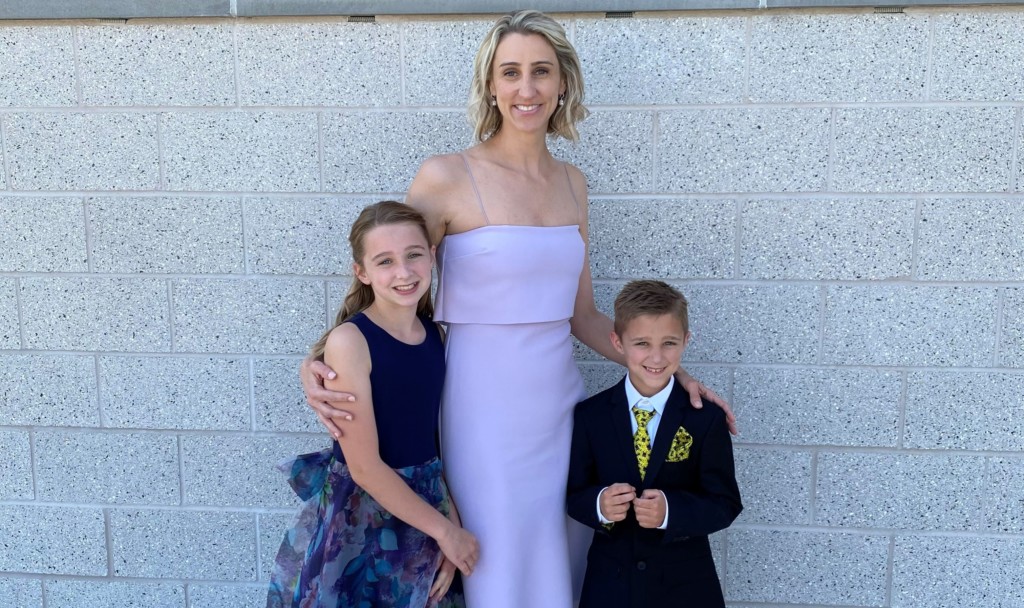
On this episode, reimaginED senior writer Lisa Buie talks with Shannon Bloodworth, a parent and education choice advocate from Archer, a small community 15 miles southwest of Gainesville, Florida. Her daughter, Ella, 11, and son, Holton, 7, receive the Family Empowerment Scholarship for students with Unique Abilities.
Bloodworth discusses her daughter’s medical condition and the challenge it created for her at her district school. She recounts the difficulties she had getting the school district to work with her on creating an individualized education plan, or IEP, eventually forcing her to consult a disability rights attorney. Once Bloodworth secured the IEP, she applied for and was awarded a McKay Scholarship, which at the time was the only state scholarship option for students with dyslexia.
“It’s made me very passionate and a warrior for other parents. You don’t know what you don’t know, and it’s a very lonely road.”
EPISODE DETAILS:

Editor’s note: The following study of the effects of increased education choice competition on students at neighborhood schools was done by David Figlio, Cassandra M.D. Hart and Krzysztof Karbownik and originally appeared in Education Next.
Advocates for taxpayer-funded school-choice programs cite the potential of market competition to spur educational improvement and promote equity for low-income students. When public schools don’t have to compete for students, the reasoning goes, they have less of an incentive to enhance their performance. Students whose communities don’t guarantee access to a high-performing public school are unfairly shortchanged if their families can’t afford to pay for a better alternative. Meanwhile, school-choice critics lament the exodus of talent and resources from public schools, which they argue such programs necessarily cause.
We often read about the launches and participation in publicly funded voucher or scholarship programs, which use tax dollars to help low-income students attend private schools. Most research on these programs examines their effects on voucher recipients, but that is only part of the story—and arguably not the most important part. What we really want to know is how market pressure affects the performance of local public schools over the long run. As a private-school choice program grows, how does increased competition affect educational outcomes for public-school students who don’t use scholarships or vouchers?
We examine these questions based on a rich dataset from the state of Florida, where a tax-credit scholarship program for low-income students has been operating since 2002. During that time, the number of participating students has grown sevenfold to nearly 110,000 as of 2017–18, or 4 percent of total K–12 school enrollment in the state. We construct an index of competitive pressure to measure the degree of market competition each student’s school faced prior to the program’s start. Our analysis then looks at whether non-scholarship students experience negative effects, either in terms of their scores on reading and math tests or their rates of absenteeism and suspensions, based on this pre-program market pressure and the expansion of the program over time.
Instead, we find broad and growing benefits for students at local public schools as the school-choice program scales up.
To continue reading, click here.
 Five Florida K-12 scholarship programs have landed in the top tier of education choice programs ranked by a national school choice advocacy group.
The Florida Tax Credit Scholarship and the McKay Scholarship programs each took top honors in their respective categories in rankings released today by the American Federation for Children.
The Florida Tax Credit Scholarship program, which serves lower-income families, finished first out of 20 in rankings of tax credit scholarship programs across the United States, followed by Florida’s Hope Scholarship program, which allows students who have been bullied in public schools to transfer to participating private schools.
The McKay Scholarship program for students with disabilities, which is open to all students who are on individualized education plans or other plans approved by law, took the No. 1 spot out of 17 programs in the special education category. The Gardiner Scholarship, an educational savings account that serves students with unique abilities and certain special needs, ranked fifth.
The Family Empowerment Scholarship program, which was approved by the Florida Legislature in 2018 and began serving families during the 2019-20 school year, ranked fourth on the list of the nation’s scholarship programs. In its first year, scholarships were awarded to 17,802 students.
Step Up For Students, which hosts this blog, helps manage all but the McKay Scholarship, which is administered by the Florida Department of Education. John F. Kirtley, the founder of Step Up For Students, is vice president of the organization’s 12-member board of directors.
“We were amazed to see that the Florida Family Empowerment program came so close to meeting its 18,000-student enrollment cap in 2019-20, the program’s first year of operation,” American Federation for Children officials said in a news release. “In response to the popularity of this program, Florida legislators raised the enrollment cap to 46,000 students; Florida is now reporting that over 32,000 students are enrolled in the program for the 2020-21 school year, all of whom meet the lower-income requirements for participating families.”
Each year, AFC compiles a guidebook of comprehensive information on private school choice programs in America. Today, those programs serve more than 575,000 children in 26 states, the District of Columbia and Puerto Rico. The organization’s leaders say the goal is for the guidebook is to serve as a resource for those looking to better understand educational choice and to advocate for new and improved private school choice policies in 2021.
AFC rankings were based on information primarily from the 2019-20 school year. The group singled out Florida, Pennsylvania and Ohio for their impressive growth in education choice programs.
“One commonality across these three states … is a strong nonprofit organization on the ground that does both legislative advocacy and parent empowerment work,” the news release said. “Creating strong educational ecosystems takes coordinated work at all levels, starting with parents and going all the way to governors.
“In the midst of so much uncertainty about the future of our education system, we’re happy to see that some of these ecosystems seem to be working for the best interest of kids.”

