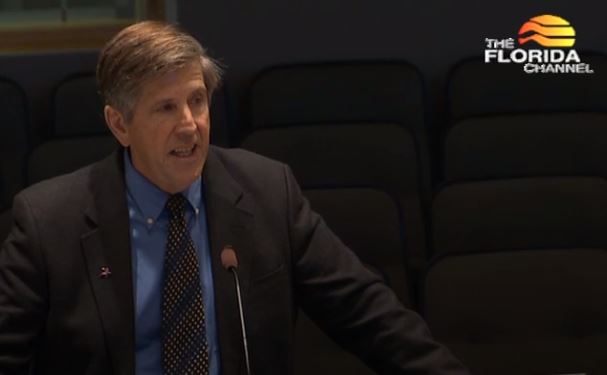
Step Up For Students president Doug Tuthill speaking before the Senate Education Committee
Step Up For Students president Doug Tuthill told a Florida Senate committee today that nearly 70,000 additional students could have been awarded Florida Tax Credit Scholarships had the requisite funding been available.
While nearly 13,000 students were found conditionally eligible for the scholarship and placed on a waitlist, the number of overall applicants was much higher.
“I don’t know what the full demand is,” Tuthill said. “We haven’t kept the application open for a full season the last couple of years because demand is so high.”
Tuthill explained to committee members that Step Up shut down the scholarship application process last June when it became apparent that demand could not meet supply. Had the organization allowed the process to remain open, evaluating and approving every application that was eligible, it would have offered “false hope” that Step Up didn’t think was ethically appropriate, Tuthill said.
Families of all students on the waitlist fall within 185 percent of federal poverty guidelines, qualifying them for a full scholarship. Tuthill vowed that Step Up, which hosts this blog, will be present during the upcoming legislative session to discuss the demand of low-income families fighting for their children.
“We need to figure out ways to address (the demand),” he said.
In response to a question from Sen. Bill Montford (D-Tallahassee) about other issues scholarship families may be facing, Tuthill said transportation is a main barrier for low-income students. He said Step Up is looking for ways to address the issue, perhaps by allowing families to use scholarship dollars toward transportation costs.
Tuthill also referenced the slow start in enrollment to the Hope Scholarship, created by the Florida Legislature in 2018 to give public school children relief from bullying and violence. While Floridians have contributed $14.3 million of their automobile purchase taxes to the scholarship, only 91 scholarships have been awarded.
Sen. Janet Cruz (D-Tampa) said she has heard from principals in her district who are grappling with the Hope application.
“The application process … is very burdensome on everybody,” Tuthill said. “I think we’ve overregulated the principals, the families and the schools. A more streamlined process may help (everyone).”

Manatee County middle school students participated in the annual Technology Student Association competition last month, showing off skills that included engineering and design. Photo provided by Manatee schools.
Career and technical education is attracting a lot of attention from Florida lawmakers this year, and an effort to expand it in the upcoming session appears to have bipartisan support.
CTE is the centerpiece of proposed legislation that builds on the state’s Career and Professional Education Act, which created industry-certification programs at the high school level.
Senate Bill 1076, filed last week by Sen. John Legg, R-Lutz, would add more partnerships with business and community leaders to develop similar initiatives in middle and elementary schools. It also would elevate industry certifications to a level that can satisfy certain high school requirements.
Senate President Don Gaetz, a Republican from Destin, told redefinED this week that passage of the legislation would result in historic changes that, ultimately, would make education in the Sunshine State more relevant. He said lawmakers should be able to back it no matter their party affiliations.
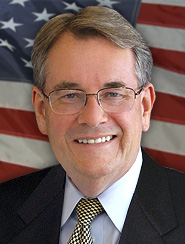
Sen. Don Gaetz
“All of us … want our graduates to walk across the stage and get a degree in their hands that results in a job,’’ Gaetz said. “It’s a sea change in educational delivery.''
Sen. Bill Montford, a ranking Democrat from Tallahassee, said he endorses the bill and the sentiment behind it.
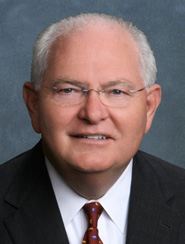
Sen. Bill Montford
“We need a different pathway for a lot of our students,” said the former Leon County schools superintendent, who heads the state superintendents association. “This is not a dumbing down of our curriculum. It’s not a retreat. This is what is best for our children in these schools.’’
Freshman lawmaker Shevrin Jones agreed. The Democratic representative from West Park has co-sponsored a bill that calls for more focus on career education.
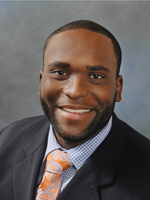
Rep. Shevrin Jones
“Not everyone is going to college,’’ said the former high school educator, who taught Advanced Placement Biology until his election to the House last year. “What this will do is allow us to make sure that our students are prepared to go into the workforce.’’
But expanding career education doesn’t shut the door on a college degree, Montford said. “Most college students work,” he said. “This is a good fit.’’
Legg’s bill is at the forefront of this overhaul, serving as the cornerstone of another bill the lawmaker filed last month that ties education to economic development.
The so-call STEM zone bill would create hubs that invite colleges and universities - as well as K-12 district schools, private schools and charters - to help develop a pipeline of highly-skilled workers for careers in science, technology, engineering and math fields.
Florida industry leaders like what they’re hearing.
“It’s very difficult to connect skilled workers to jobs,’’ Ron Avery, chairman of the St. Augustine-based Ronco Group, which includes industrial, engineering and manufacturing businesses, told lawmakers at a committee hearing last month. “There are 4,000 manufacturing jobs open in Florida. We need to figure out today how to fill these.’’ (more…)
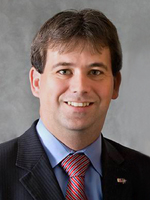
Sen. Legg
Florida state Sen. John Legg has a slogan ready for a bill he plans to file next week: “It’s not your daddy’s vo-tech.’’
The bill will focus on “high-end, high-skilled industry certifications at the high school level,’’ with one plank calling for some certifications to fulfill certain high school graduation requirements, said Legg, R-New Port Richey, who chairs the Senate Education Committee.
The certifications won’t replace any requirements, but serve as substitutions, he said. The idea is to put students on the fast-track for high-tech jobs that help grow the economy.
“Career education has changed since 1982,’’ Legg said. “It’s evolved. We’re trying to get the jobs back that we had in 2003, but we have failed. They’re not coming back, so we’ve got to train for jobs in 2023.’’
The bill, which is still being drafted, is part of a “very large package concerning career and technical education that will become a high priority for the senate,’’ he said.
It complements another bill Legg filed last month that would create “STEM zones” in counties with state universities that have high levels of research activity. Legg is looking primarily at the University of South Florida in Tampa.
Senate Bill 192 calls for partnerships between the Department of Education and Workforce Florida to build a gateway to science, technology, and engineering or mathematics careers.
The zones would create education hubs, not only looking to higher education facilities to train adults, but inviting traditional K-12 schools - as well as charters and private schools - to develop innovative curriculum for students and a pipeline of highly-skilled workers. In return, the schools would receive incentives, such as tax credits, expedited permits or grants, Legg said. (more…)

