In this episode, Kelly Garcia, co-founder and executive director of GuidEd Florida, discusses how Florida’s education choice landscape has evolved in the 25 years since the launch of the Florida Tax Credit Scholarship.
Garcia explains that as options have expanded beyond traditional district, private and charter schools to include microschools, virtual school, homeschooling and customized learning plans, families need trusted guidance to make informed decisions. GuidEd was created to help families understand scholarship options, ask the right questions, and find learning environments that fit their children’s individual needs. The conversation explores the organization’s neutral, family-centered approach; the practical barriers families face, and the growing need for human guidance even as AI makes basic information easier to find.
Key points:
Florida's education choice movement has transformed learning for millions of families, but the next generation of reforms will require expanding options, modernizing funding and continuing to trust parents, a panel of state education leaders said Tuesday.
The discussion, hosted by the James Madison Institute, featured former Gov. Jeb Bush, who spearheaded the education choice movement that put Florida two decades ahead of other states that have recently established choice programs. Joining him were state Sen. Danny Burgess, R - Zephyrhills, whose three children are homeschooled, and Ron Matus, research and special projects director at Step Up For Students, a nonprofit organization that manages the state’s K-12 ed choice scholarship programs.
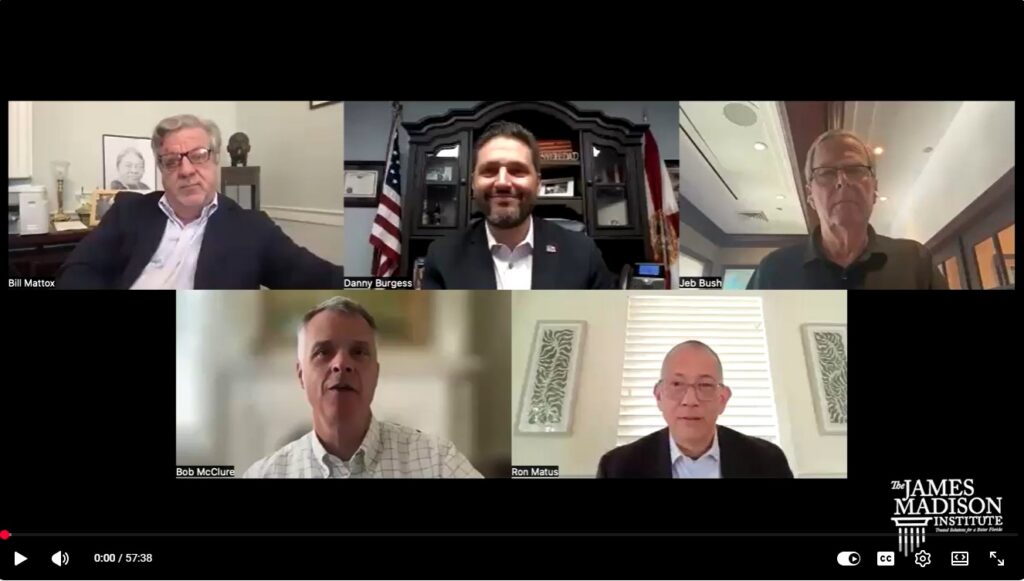
William Mattox, senior director of the James Madison Institute’s J. Stanley Marshall Center for Education Freedom, moderated the event, also sponsored by the Foundation for Florida’s Future (founded by Bush over 30 years ago) and Step Up For Students, to celebrate the 25th anniversary of the Florida Tax Credit Scholarship program. To see the full panel discussion, click here.
Bush recalled the early days of the ed choice movement, when he visited 250 schools during his campaign for governor and later established the state’s A-F grading system and a concurrent scholarship program for children in F-rated public schools. On the day Bush signed the bill, the Florida teachers union filed a lawsuit. (The state Supreme Court eventually struck down Bush’s scholarship program as violating the state Constitution's uniformity clause.)
The state also established the Florida Tax Credit Scholarship to ensure low-income students have access to options. That program ushered in an era of expanded choice that converted all scholarships to education savings accounts with universal eligibility. The change now empowers parents to customize their children’s education through a host of options, including private schools, microschools, homeschool hybrids, individual providers, online classes, and even individual public school courses. The long history of ed choice has made Florida the topic of many research studies with powerful results that show the programs are working and inform other states considering similar programs.
He said key findings include greater civic engagement, higher college attendance rates, academic gains, and improved outcomes for traditional public schools when parents have alternatives.
“Most importantly, Florida demonstrated that a child's ZIP code should not determine his or her future,” he said.
Matus, who was the statewide education reporter for the Tampa Bay Times as the movement took hold in 2004, covered the rise of charter schools, private school choice programs, Florida Virtual School (the nation’s first internet-based high school), and new forms of public school innovation.
However, meeting Black pastors in South St. Petersburg who strongly supported school choice particularly influenced his perception and challenged stereotypes about the movement.
“They simply wanted better options for the families they served,” Matus said. “That experience taught me that people support school choice for many reasons that often have little to do with the political narratives surrounding it.”
As the chief storyteller at Step Up, Matus has traveled the state to find evidence of how the rapid growth of learning options has allowed students and providers to flourish, including in Florida’s most rural areas.
“What I've seen is remarkable,” he said. “Today, roughly half of Florida's students participate in some form of educational choice. More than 500,000 students use scholarship programs. Hundreds of former public-school teachers have gone on to create their own educational options. Who could have imagined that 20 years ago?”
As for Burgess, he was a student sitting in class at Zephyrhills High School when the FTC was established 25 years ago and had organized a local Students for Jeb chapter when Bush was running for governor.
“I remain proud of my public school background,” he said. “But the educational landscape back then was very different.”
Choice was limited mainly to religious schools for those who could afford tuition. Homeschoolers were viewed as a fringe group.
Today, that has changed dramatically, he said.
Burgess and his wife use scholarship programs to customize the education of their three children through a rigorous hybrid classical Catholic program, piano lessons, and other enrichment activities.
“Watching our children thrive in that environment has been one of the greatest blessings of our lives,” he said. “The flexibility and opportunity we've been given through school-choice programs have made a tremendous difference for our family.”
Being a state lawmaker has given Burgess a front row seat to the evolution of ed choice.
As a House member in 2014, he saw changes that were largely incremental.
That changed in 2023, when lawmakers passed House Bill 1.
“When Florida embraced universal school choice, it represented the culmination of decades of work,” he said. “None of that would have happened without the foundation laid by Gov. Bush, the Tax Credit Scholarship Program, and the reforms that followed over the years.
“Today, Florida is leading the nation on universal school choice, and many other states are looking to follow that model.”
Universal came, but not without some important lessons that those in other states need to understand. Bush cited several:
“The tendency in government is always to solve problems by adding more rules,” he said. “You end up putting a blanket over the 99% of schools and providers that are working well because of problems caused by the other 1%.”
“Institutions that feel threatened by change will fight against it,” he said. “Policymakers pursuing these reforms need to understand that litigation is almost inevitable. If you're starting down this road in another state, you're going to get sued. I can virtually guarantee it.”
The panelists praised education savings accounts, which let parents direct funding to pre-approved uses spelled out in state purchasing guides, for empowering parents, who know what options best fit their children.
However, Burgess said some rules should be re-examined while leaving in place “reasonable safeguards.”
"Do we truly trust parents to make the right decisions for their children? I do. And I’m going to default to trusting parents every time.”
The conversation also turned toward equitable funding levels for different scholarship programs, the recommended removal of regulatory barriers that prevent innovation options such as microschools from opening and the need for school districts to see the benefits of sharing their underused school buildings with charter and private schools and allowing choice students to take individual district courses.
Bush challenged the assumption that if parents choose something other than a traditional public school, that public education suffers.
“We need a superintendent...that wakes up in the morning and says, ‘Every kid that is in my district...every child is my responsibility. I want to create an environment where parents have an abundance of choices, that kids are protected, that they dream big dreams, and when a school is successful as a microschool or homeschool option, or a hybrid option...or a traditional school or charter school or a Catholic school or a Jewish school, that I’m here to celebrate that success.’"
If education freedom were a hockey game, Florida just scored a Texas hat trick.
For the fourth consecutive year, Florida was ranked the No. 1 state for education freedom for K-12 students and families in The Heritage Foundation’s annual Education Freedom Report Card. The 2025 Heritage rankings come after a landmark year of state legislative sessions that delivered wins for students and families.
Florida leaders credited the state’s ranking to policies that give parents control over their children’s education dollars, offering a plethora of choices, including a la carte courses provided by school districts and charter schools.

Florida Gov. Ron DeSantis signs HB 1, which offered families universal eligibility to Florida education choice scholarship programs.
“In Florida, we are committed to ensuring parents have the power to make the education decisions that are best for their child,” said Gov. Ron DeSantis, who in 2023 signed legislation that offered universal eligibility for K-12 state education choice scholarship programs that allow families to direct their dollars toward the best options for their children. “Florida offers a robust array of educational choices, which has solidified our state as a national leader in education freedom, parental power, and overall K-12 education.”
Commissioner of Education Anastasios Kamoutsas said earning the top ranking for four years affirms the state’s long-term commitment to families.
“Under Governor DeSantis’ leadership, Florida will continue honoring parents’ right to choose the best educational option for their child’s individualized needs. I am proud that Florida offers so many educational options that parents can have confidence in.”
Since the Education Freedom Report Card began in 2022, Florida has earned the top ranking every year. The report card uses five categories: school choice, transparency, regulatory freedom, civic education, and spending to rank states.
In addition to Florida receiving the overall top spot for Education Freedom, it also earned high rankings in the following categories:
Earlier this year, the Sunshine State also earned national recognition for putting dollars behind its policies. In January, the national advocacy group EdChoice put Florida first on its list of each state’s spending on education choice programs proportional to total education spending.
 According to the EdChoice report, Florida became the first state to spend more than 10% of its combined private choice and public-school expenditures on its choice programs, rising from an 8% spending share in 2024.
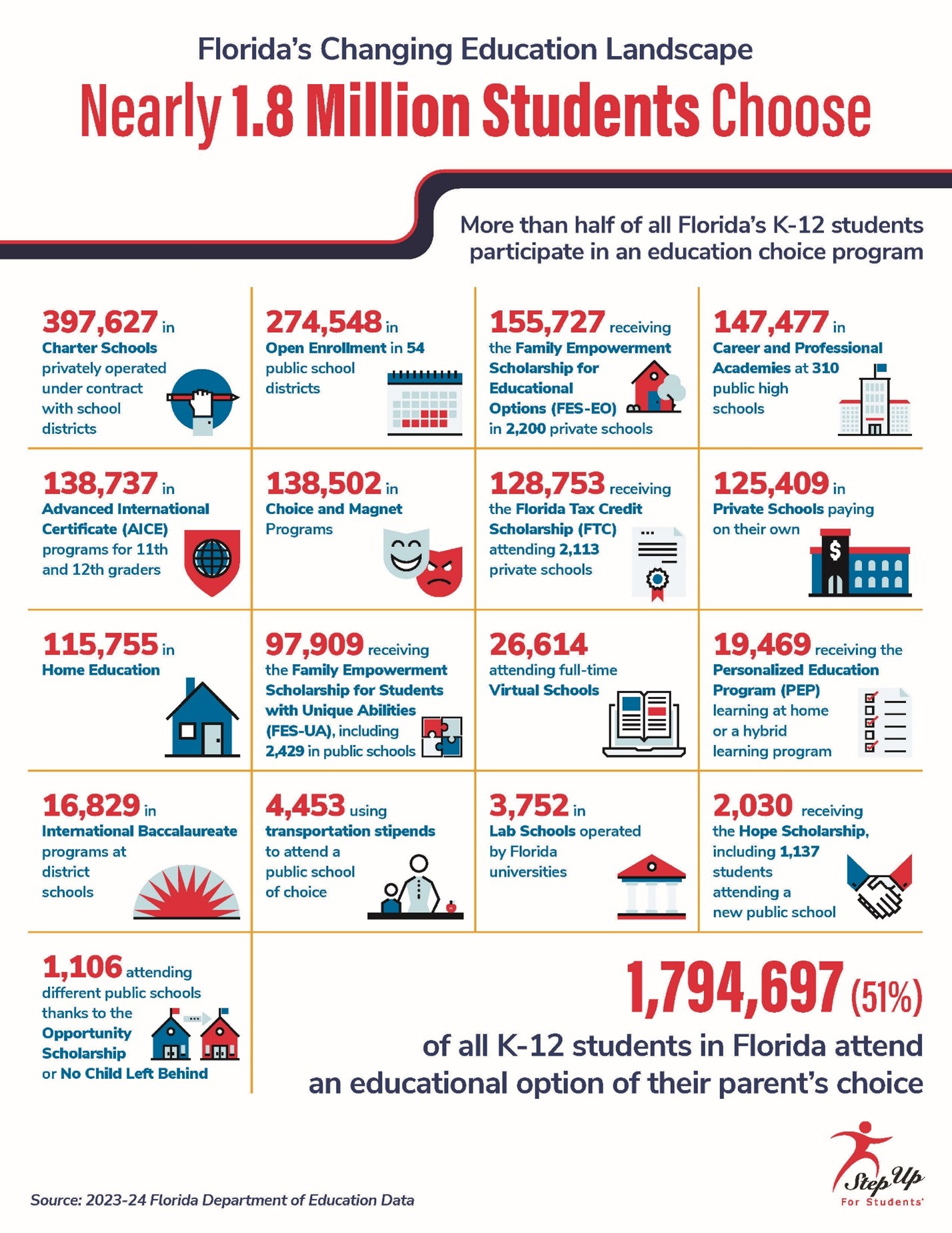
Florida also reached a historic milestone when, for the first time, more than half of all K-12 students were enrolled in an educational choice option. During the 2023–24 school year, 1,794,697 students, out of the state’s approximately 3.5 million K-12 population, used a learning option other than their assigned district school.

The Rev. H.K. Matthews, front row, second from left, and John Kirtley, front row, far left, joined more than 6,000 marchers at a 2010 Tallahassee rally to support expanding the income-based Florida Tax Credit Scholarship Program.
By John Kirtley
The Rev. H.K. Matthews passed away Monday at the age of 97. As I urge you to read in this obituary, he was one of the towering figures in the Florida civil rights movement.
He was arrested over 30 times fighting for equal rights in Northwest Florida. He was beaten, along with John Lewis and other brave activists, on the Edmund Pettus Bridge in their first attempt to march from Selma to Montgomery. There is now a park named in his honor in Pensacola. You can also read his autobiography, “Victory After The Fall.”.
On a 2010 visit to Pensacola to recruit schools for the Florida Tax Credit Scholarship program, former Step Up For Students grassroots organizer Michael Benjamin and I met the operator of a faith-based school in town. He urged us to meet with Rev. Matthews, who he thought might respond well to the social justice message of the scholarship program. At the time, the average household income of our students was less than $30,000, and 75% were minorities. Michael and I said we would love to meet him.
Rev. Matthews didn’t say much during our initial visit; Michael and I explained how the scholarship program empowered low-income families to choose a different school if the one they were assigned to wasn’t working for them. He seemed to just take it all in but offered neither affirmation nor disagreement.
Almost as an afterthought, I invited him to a march and rally we were having the next month in Tallahassee. We needed the legislature to pass a bill to expand the scholarship program to relieve our waitlist, and we asked scholarship families to come to the Capitol to show their support. To my surprise, he agreed to attend.
On that day, over 6,000 people marched from the convention center to the Capitol. I invited Rev. Matthews to walk in front of the crowd with other faith leaders. Normally I would never walk in the front row, but I wanted to make sure everything went smoothly for him. He was very quiet as the huge crowd marched.
When we had gathered for the rally in the Capitol, I placed him in a prominent seat on the stage. A few minutes into the event, he motioned me over and asked if he could speak to the crowd. I had no idea what he was going to say, but I wasn’t going to say no. I went to the minister running our show and asked him to introduce Rev. Matthews.
What would he say? Was he with us?
I soon had my answer.
“This reminds me of the old movement,” he said. “Seeing thousands walking in the streets, fighting for the right to determine their own future, to fight for what is best for their children. When I worked with Dr. King back in the day …”
When he said those words, there was a murmur in the crowd, both students and adults. These kids had read about Dr. King in their history books. Some of them knew that there were not one but two marches across the Pettus Bridge, and here was someone who was there at the first attempt, someone who took the blows.
He was indeed with us.
Immediately after the rally, Rev. Matthews was swarmed by students young and old, some asking questions about his time with Dr. King, some young ones who just wanted to touch him — I suppose just to make sure this hero was real. They did not let him go for at least 20 minutes.
I could tell at the time this moved him. He told me so later. After that day he would call me to ask if there was anything he could do to help the movement. We had him appear at events with donors, governors, and legislators.
He would lead another march for us in 2016, when over 10,000 people came to protest the lawsuit filed by the Florida teachers union demanding that the courts shut down the Tax Credit Scholarship, which would evict 80,000 poor kids from their schools. That day Rev. Matthews was joined at the front of the procession by Martin Luther King III, the son of the man Matthews marched with 50 years prior. You can watch a 60-second video of that march here.
I had the pleasure of joining him at his church in Brewton, Alabama, where he moved in later years. He was being honored for his years of service to that church. I was honored, though very surprised, when he called me up to speak that day. Luckily, the words to praise him came easily.
They come again easily today, but not without a few tears.
How fortunate I was to have my life intersect with his, however unlikely that would have been to me before this movement changed the course of my life.
How fortunate the education freedom movement was to have his blessing and his involvement.
How fortunate the state of Florida was to have his tireless efforts fighting for civil rights.
How fortunate, all.
Rest in peace, Rev. Matthews.
John Kirtley is founder and chairman of Step Up For Students.
DeLAND, Fla.– A black sweater, white shirt, and a red tie lay on Aaliyah Tape’s bed when she returned home from a summer vacation spent with family. She knew what they were: a private school uniform.
“Oh, Lord,” she thought.
It was a message from Aaliyah’s grandmother, Cat Gracia, that would drastically change Aaliyah’s life.
The 2023-24 school year began in two weeks, and Aaliyah would no longer attend her district-assigned high school. For her junior year, she was headed to DeLand Preparatory Academy, a grades 6-12 school, where Cat hoped Aaliyah would get her grades back on track.
The ensuing conversation between grandmother and granddaughter can be politely described as tense. Both sides dug in.
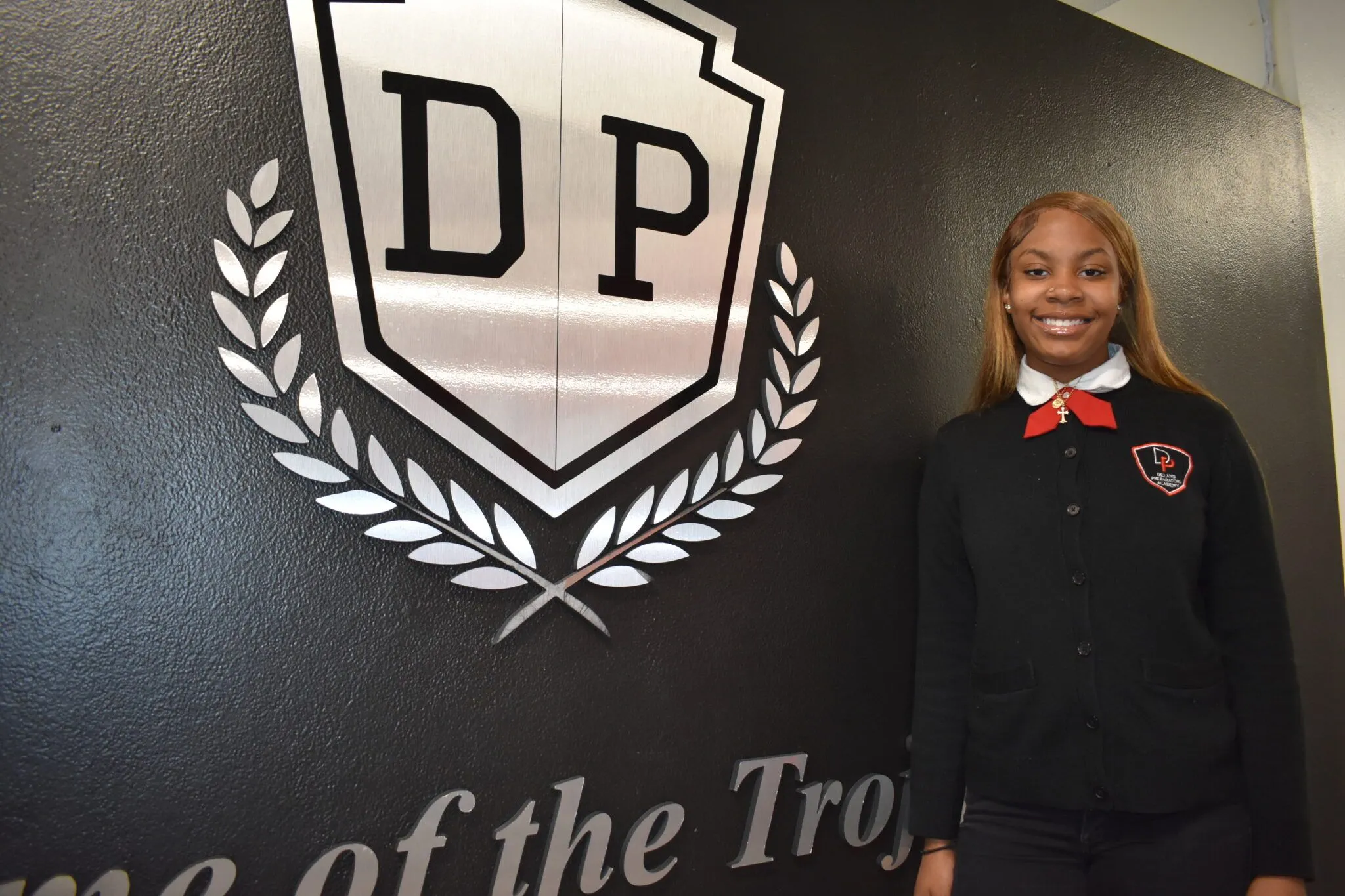
Attending college was something Aaliyah never thought about until she enrolled at DeLand Prep. Now she plans on going to Florida State University.
Aaliyah said she wasn’t going.
Cat said she was, that it was too late to turn back. Cat had applied for and received a Florida education choice scholarship for Aaliyah, and she was already enrolled.
Reluctantly, Aaliyah made the switch.
“I thought, ‘OK, let me give it a chance,’” she said.
And?
“I never thought I’d wear a red tie to school,” she said, “but here I am.”
Now a senior, Aaliyah never thought she’d be a straight-A student or headed to college, either, yet here she is, weeks from graduating with a future that is, well, a future.
Her goal is to attend Florida State University. She’s thinking of a career as a neonatal nurse or as a psychologist who works with children.
“She turned her life around,” Cat said. “We are so proud of her.”
It was a somewhat rocky journey to DeLand Prep, which Aaliyah attends on a Florida Tax Credit Scholarship, funded by corporate donations to Step Up For Students.
“The scholarship changed her,” Cat said. “It literally changed her academic journey. She’s refocused. It’s been night and day. It’s just incredible.”
Aaliyah had been an above-average student until middle school, Cat said. A lot of students encounter turbulent waters during those years, but Aaliyah was dealing with something more. Her mom, Shantrese Gracia, passed away when Aaliyah was 10.
The anger from losing her mom, mixed with the angst of a young girl moving from adolescence to a teenager, had Cat concerned.
“We’ve been through so much with her,” Cat said. “She has all this potential. She’s super smart, but she was making poor decisions, and there was absolutely no way we were going down that path with her. We had to do everything we could to get her refocused and understand what her purpose is in this life. But where do you start? And how do you get there?”
The answer was DeLand Prep.
“We had identified her strengths, areas for growth, and opportunities, and so we had a proactive approach to finding the best resources we possibly could to ensure she has an opportunity to succeed and have a bright future,” Cat said.
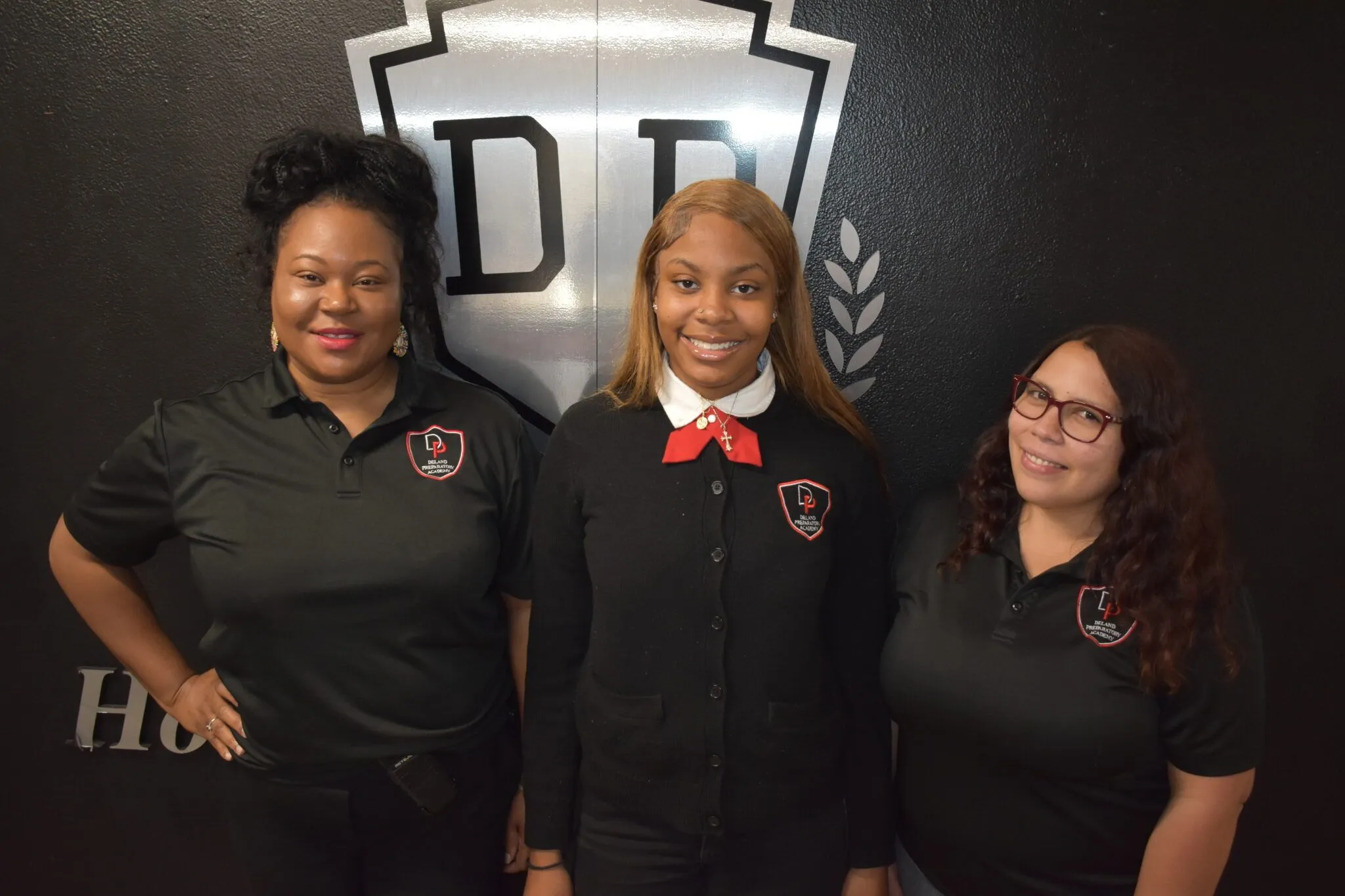
Donita Gordon, DeLand Prep's superintendent (left) and Melissa Castillo, the school’s director (right) helped to bring out the A-student in Aaliyah.
Dr. Donita Gordon, the school’s superintendent, said Aaliyah was the type of student who needed to be “repotted.” Her new “soil” had smaller class sizes with favorable teacher-to-student ratios and a college-like class structure – four courses a semester with classes running 90 minutes.
Located on the outskirts of DeLand’s quaint, award-winning downtown, the school has a motto: “Small School … Big Opportunities.”
That’s what Cat wanted. She knows her granddaughter can achieve so much. She just needed a setting that would allow Aaliyah to realize that, as well.
“I always tell her the sky’s the limit,” Cat said.
Aaliyah said her previous academic problems were the result of cutting classes, not doing her schoolwork, not pushing herself. She was hanging out with unmotivated students, and they were pulling her down.
At that time, Aaliyah wanted to be an ultrasound technician. She felt a college education was not in her future. Neither was attending a private school.

Aaliyah was honored as a Super Senior during Step Up For Students' annual Rising Stars Award event.
“Private school just didn’t sound pleasing to my ears, but it's actually not bad,” she said. “I actually like it better. It's just a small group of people. There’s not much going on, and there's a lot of time to just focus on the work. There’s less distractions. Everything is straight to the point. Our classes are longer, so we have more time to understand what we’re learning.
“It works in my favor.”
Cat met with Melissa Castillo, the school’s director, the summer before Aaliyah enrolled and said her granddaughter was a straight-A student who wasn’t getting straight-A’s. Castillo met Aaliyah on the first day of school and agreed with Cat.
“Aaliyah is a very unique student,” Castillo said. “She thrives in getting all her schoolwork done. When I first met her, she didn't have enough credits to graduate. Every meeting that I have with Aaliyah, she's always striving to complete her work and go to college. She is very aware of what she wants to do. I feel like out of all the students that I met in this school, she's one of the ones that stuck with me because of how driven she is.”
Aaliyah said she is motivated by the supportive teachers and administrators. She said she likes to study and do her homework and has surrounded herself with like-minded classmates.
“I got a lot of help that I needed, and not just on my assignments and tests, but college and school and advice, too,” she said. “I've got to experience a lot of things. I met a lot of people that I became friends with. I'm setting myself up for college.”
In February, Aaliyah was honored by the city of DeLand for being a Superstar Student and by Step Up For Students at its annual Rising Stars Awards event for being a Super Senior.
“All these awards she received, we’ve been in awe. It inspires her to strive for excellence,” Cat said. “We’re so proud of her growth. Here she is, ready to graduate.
“It’s been a journey beyond measure.”
LAUDERDALE LAKES, Fla.— Khyla Beaujin’s first fashion show as a designer was over, and she described the backstage chaos to her mother.
Where are the models?
Where are their shoes?
Who has the jewelry?
Khyla was frustrated at times and overwhelmed at others because the designers shared models and the models shared shoes, and confusion reigned. But she maintained her composure and pulled everything together, and the models strutted the catwalk with quiet poise, wearing Khyla’s spring collection.
It was a proud night for Khyla, then 12 years old, because she worked hard creating her collection during the months leading up to the event.
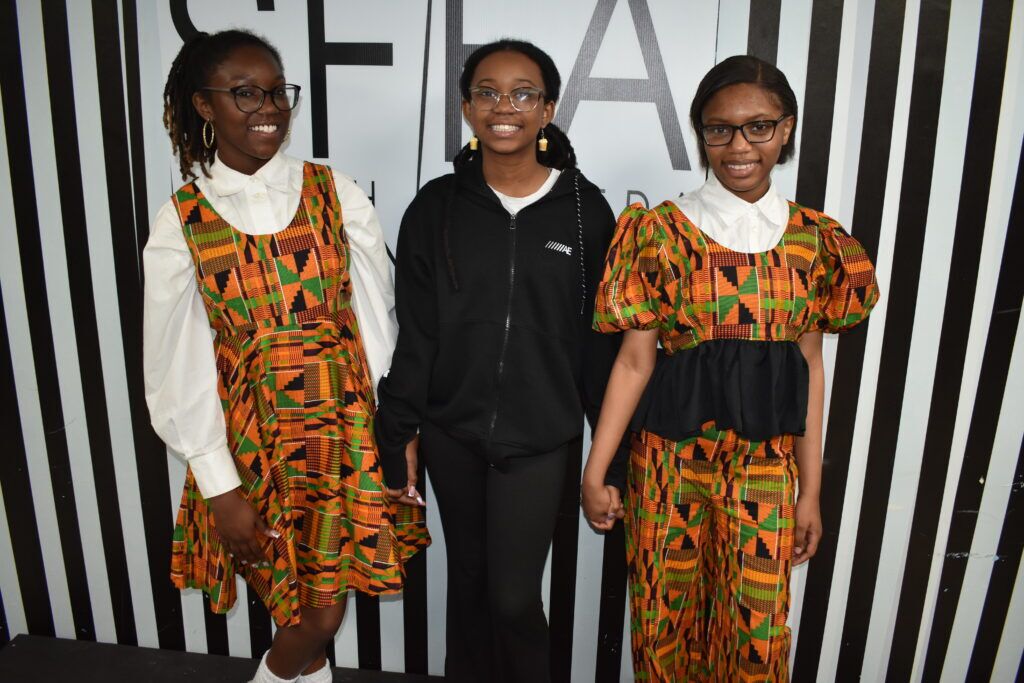
Khyla recounted all this to her mom post-show in a breathless monologue.
“The look on her face, the smile, I'm like, ‘Oh, I love this for you.’” Sheyla Bens Beaujin said.
Year One as a student at the South Florida Fashion Academy (SF/FA) ended that night for Khyla, and Sheyla knew her daughter was where she needed to be, attending a school that would nurture her love for fashion design.
Khyla is now a seventh grader at SF/FA, a private Pre-K-12 school in Lauderdale Lakes that incorporates fashion design, cosmetology, nail technology, barbering, skin care, business, and entrepreneurship with core classes. Khyla attends the school with the help of a Florida Tax Credit Scholarship managed by Step Up For Students and funded by corporate donations to the nonprofit.
“This is her passion,” Sheyla said, “so finding that school was really a life-saving experience. She’s found so much joy and purpose there.”
While Khyla was involved in a number of extracurricular activities and sports at her previous school, Calvary Christian Academy, her interest always returned to fashion design.
It’s something Khyla picked up from her mom at an early age, when Sheyla started her own children’s clothing line – KHYKOUTURE – and used Khyla as a model. Khyla enjoys walking the runway but not as much as she enjoys finding a top and a blanket at a thrift store and using her imagination, a sewing machine, and all the tools in her sewing kit to turn them into a dress or gown.
“I guess seeing my mom make all those outfits for me when I was little inspired me to do the same,” Khyla said.
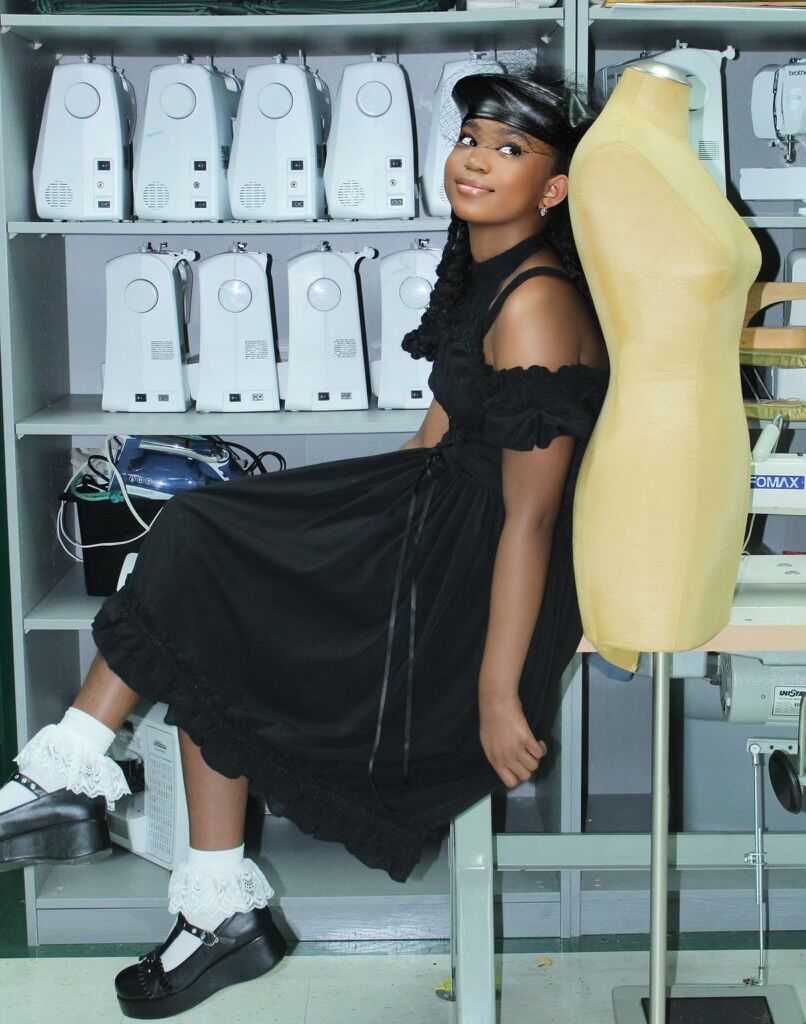
Khyla strikes a pose inside the sewing lab, her favorite room at the South Florida Fashion Academy. (Photo provided by Sheyla Bens Beaujin)
Sheyla learned of SF/FA on social media when Khyla was in the fifth grade. She and Khyla toured the school, which is a 30-minute drive from their Hollywood home. All Khyla had to see was Room 117, which is filled with mannequins and sewing machines, and she was sold.
“Best room in the school,” Khyla said.
She enrolled in the sixth grade for the 2023-24 school year, eager to see what the world of fashion was all about.
Now Khyla talks about attending a fashion school in New York City and having her work featured during Fashion Week in Paris, London, and New York.
“That's why I'm glad I'm going to this school so I can work on my skills,” she said. “I think I'm really going to do this. I'm really going to pursue this dream and stick to it till the end.”
***
In 2018, Taj McGill started a fashion program for students in South Florida that met in a one-room building on Saturdays. By 2021, she realized there was enough interest to start a dedicated school. SF/FA now has 75 students, many of them with dreams as big as Khyla’s.
McGill, who grew up in South Florida, has a degree in fashion design and merchandising. She has worked in various careers within the fashion industry for more than 20 years. She’s attending Fashion Week in those far-off cities. Her students are introduced to a cross-section of people from the fashion industry.
“South Florida isn't really known as a fashion capital although it is beginning to develop. I am intentional about exposing our students to the various careers within the industry and introducing creatives to professionals that inspire them to dream,” McGill said. “They can actually have a job in these specific career fields that we cater to here at SF/FA. They can flourish in those industries.
“If there were a school like this when I was a child, oh, my God, I would have been in heaven. If I was able to complete my core academic classes and then have classes in fashion or beauty or business, it would have been so great for me. So, I essentially created what I wanted as a child.”
In addition to the sewing lab, there is a room with barber chairs for hairstyling and another for nail technology and cosmetology. Students can dually enroll in the fashion program at Saint Thomas University in Miami Gardens, Miami Fashion Institute, or the University of South Florida.
“You don’t get this kind of experience anywhere else,” Khyla said.
Every student is involved in the end-of-the-year fashion show, from the designers to the models, to the cosmetologist to the hair stylist. The photography, video, social media, red carpet, and marketing are all done by students.
***
In nearly two years at SF/FA, Khyla has emerged as one of the school’s top students, with a 4.0 GPA. Her designs allow her to stand out, as well.
“She's determined,” McGill said. “She works really, really hard, and it's important to her to be a leader to her peers.”

Khyla and SF/FA founder Taj McGill. (Photo provided by Sheyla Bens Beaujin)
Last year, Khyla designed three outfits for the fashion show. This year, it could be as many as seven. It will feature a rainbow of princess gowns inspired by the movie “Inside Out 2,” where the emotions of the main character, a teenage girl, are represented by characters of different colors. Anger is red. Envy is green.
“It was a little confusing at first because I knew I wanted to do the theme, but I didn't know what I wanted to make it,” she said. “So, I was like, ‘OK, let me just do princess dresses,’ and I can just do them with the ‘Inside Out’ colors and incorporate them into the designs.”
Sheyla has never seen the movie, so she’s not sure what Khyla is trying to accomplish. But that’s the case with all of Khyla’s concepts.
“When she tells me about them and I don’t get what she’s trying to do, she tells me, ‘Wait till you see where it’s going,’ and then I see the final product and I’m amazed,” she said.
Sheyla took a sewing class in Miami before starting her children’s line. She was the only adult in the class. The rest were students who were homeschooled.
“That stuck with me because I wanted my children to have the same opportunities,” she said.
Now a detention sergeant with the Broward Sheriff’s Office, Sheyla can give Khyla the educational opportunity she wished she had, thanks to Step Up For Students.
“Without Step Up, Khyla would have never gotten the opportunity to be in this school,” Sheyla said. “So, it's a wonderful thing that kids like Khyla can have an opportunity to let their talent flourish while focusing also on her academics.”
At SF/FA, McGill serves as a role model, as do the guest lecturers. The students feed off each other’s creativity and dreams. Khyla talks about attending the Fashion Institute of Technology in New York and having her designs featured at all the big shows in Paris and London.
“That makes me proud,” Sheyla said, “and it allows me to encourage her because I know those dreams are attainable.”
CLEARWATER, Fla. — The Newton brothers’ reign at Clearwater Central Catholic High School ended on a Thursday night in December when Jershaun, the youngest, played his final football game.
It was quite a run for the family who lives down the road in St. Petersburg. It was quite a run for the high school’s football program, as well.
Five Newtons played for the Marauders every year but one since the 2015 season. Each brother earned a college scholarship to play football. One plays in the NFL, and another likely will join him there next season.

For nine seasons, the Newton brothers were a force for the Clearwater Central Catholic High School football program. (Photo provided by the Newton family).
“I didn’t expect this,” said their mom, Jovita Rich. “I just wanted them to have a better education, honestly. That’s why I sent them to private school.”
The brothers attended private schools with the help of education choice scholarships managed by Step Up For Students and funded by corporate donations to the nonprofit.
“I love the Step Up scholarship,” Jovita said. “It's been a godsend to my family to be able to put my kids through private school.”
It began with the twins, Jervon Jr. and Jerquan, who enrolled at Clearwater Central Catholic (CCC) as freshmen in 2013-14 and joined the football team as sophomores. Both played collegiately at the University of West Florida in Pensacola before finishing at Mars Hill University in North Carolina. Jervon, a running back, and Jerquan, a linebacker, majored in education and are both elementary school teachers.
Jerjuan followed, graduating CCC in 2019, and recently completed his senior season at the University of Toledo. He’ll graduate with a degree in mechanical engineering technology. A wide receiver who holds the school record for career touchdowns (32), Jerjuan was named to the All-Mid-American Conference first team for the second consecutive season. He was invited to the Hula Bowl, an all-star game for top NFL prospects.
Jer’Zhan (Johnny) was next. He graduated from CCC in 2020 and starred at the University of Illinois. He was a two-time All-American and the 2023 Big Ten Defensive Player of the Year as a defensive tackle, and graduated with a degree in general studies. He was selected in the second round of 2024 NFL Draft by the Washington Commanders and helped the team reach the NFC Championship Game.
And then there is Jershaun, or “Shauny,” the youngest who led CCC to three consecutive state title games. A knee injury he suffered in the state semifinal this year prevented him from playing in his third state championship game.
A quarterback, Shauny set Pinellas County career records for total yards (9,962) and total touchdowns (105) during his four years. He will follow Johnny to Illinois and plans to major in sports management.
“They are workaholics,” said their dad, Jervon Sr. “These kids, they work day in and day out. I knew they had the athletic ability, but they had the heart and desire to be better than everybody.”
***
The Newtons’ path to an education choice scholarship and football stardom began just over a decade ago inside a St. Petersburg laundromat when Jovita, to kill time during the wash and dry cycles, started a conversation with another mom doing laundry.
The topic of their children’s education came up, and Jovita mentioned her displeasure with the district school Shauny attended. The other mom said her kids attended private school.

Shauny, the youngest of the five Newton brothers, led CCC to three consecutive state title games. (Photo courtesy of Liz Holmes.)
“I was like, ‘Oh, I've looked into it, but it's just so expensive, I can't afford it.’ And then she said, ‘You should try Step Up For Students,’” Jovita recalled.
Jovita wasn’t familiar with Step Up or the scholarships it manages, but she was when she left the laundromat that night.
“She said, ‘It helped me out. I put all my kids through school through Step Up,’” Jovita said. “So, I checked it out, applied for it, and they were all approved.”
The twins headed to CCC while the others enrolled in private K-8 schools near their St. Petersburg home.
Eventually, all their paths led to CCC.
“I’m so glad that she washed those clothes in that laundromat, I promise you that much,” CCC football coach Chris Harvey said.
***
The 2020 season was the only one in the last 10 years that did not include a Newton on the roster. The Marauders were 5-5 that year. They are 98-19 with at least one Newton.
“That’s pretty impressive,” Harvey said.
In 2016, CCC reached the regional semifinals with Jervon Jr., Jerquan, Jerjuan, and Johnny on the team. The twins were seniors, Jerjuan was a sophomore and Johnny was a freshman.
“Johnny has a big personality,” Harvey said. “He’s the funny one. The twins were always laughing. Jerjuan was the serious one. He had to control the other three.”
Absorbing everything was Shauny, who was a presence around the CCC football team since he was 8. Not only was he starring for the Pop Warner football team coached by his dad, but he also attended CCC practices and trained with his brothers at the high school and at a local facility used by many of the area’s college and professional players.

Like his brother Johnny, Shauny plans on being a dominant player at the University of Illinois. (Photo courtesy of Liz Holmes.)
“They pushed each other,” Jervon Sr. said. “They’re their biggest fans but also their biggest critiques. And as Shauny got older you started seeing flashes of all of them in him.”
Not only the on-field ability but the off-field dedication that led to his success – worth ethic, desire to succeed, discipline.
“He’s the perfect combination of all four of them,” Harvey said. “He can play just about any position that you want him to play and play at a high level. When they say that the baby of the family is the best one, they're not lying. His future is about as bright as it could possibly be.”
***
When asked what it’s like to have a brother play in the NFL, Shauny shrugged and said, “It’s normal.”
That’s because it was the end game for all the workouts, all the time in the weightroom and all the work in the classroom.
“It helped a lot, seeing how they did things,” Shauny said. “I've been doing the same thing as they did, working out, keeping my body together, getting good grades.”
The theme running through it all, Shauny said, was “accountability.”
His one takeaway from all the time spent around his brothers and the CCC football program:
“Don't react when you don't have to react,” Shauny said. “Don't entertain foolishness.”
Jovita said the main reason for the brothers attending CCC was the education.
“The twins went on a tour, and we loved the school, we loved what it had to offer,” she said. “The rest is history.”
Jovita said her sons often talked about their college courses, and while demanding, they weren’t overwhelmed.
“The education at CCC is phenomenal. They've done an excellent job in college,” Jovita said. “They didn't call home saying, ‘I'm having trouble. This is hard.’ They went to college, and it was like, ‘Oh, we've been over this in high school. This is easy work right here.’ So, it’s the schedule that (CCC) puts the kids through and the classes that they take that just prepared them exceptionally for when they went to college.
“Their goal was to go to college, play football and try to make it to the NFL, and if not, they all have their college degrees to fall back on, which I'm very proud of that as well. They all graduated with a bachelor's degree.”
This school year, Florida is empowering half a million students to direct funding to education options of their family’s choice.
In the 2023-24 school year, after Gov. Ron DeSantis signed HB 1, Florida saw the largest single-year expansion of education choice scholarships in U.S. history. That growth continued in 2024-25.
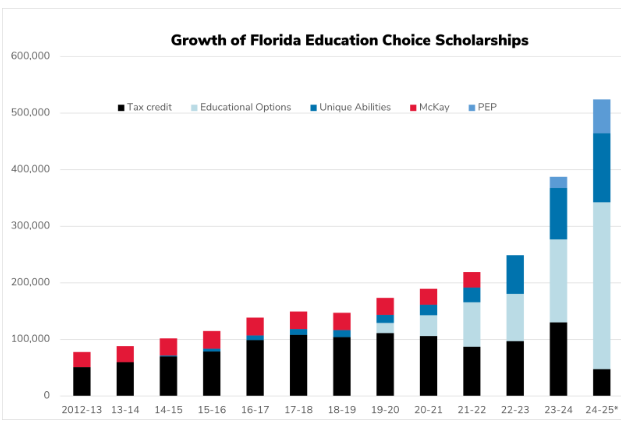
Florida’s education choice scholarship programs have grown steadily over the past decade. *Numbers for the 2024-25 school years are preliminary. In 2022, the McKay Scholarship and Unique abilities programs merged.
The numbers look like this:
With more than 500,000 K-12 students participating in some type of full-time education savings account, Florida is home to nearly 7 of every 10 students using such programs nationwide.
If the students using these programs in Florida counted as a school district, it would be the largest in the state and third-largest in the country, trailing only New York and Los Angeles.
Add it all up, and half a million Florida students will direct funding from a state-supported program to access a learning option of their family’s choice. This is a milestone 25 years in the making.
SANFORD, Florida – Charisma Lowery loves fractions, which is not something you hear every day from a third grader, but she does.
Mixed fractions, improper fractions – bring ’em on.
Charisma, 7, loves fractions so much that one morning while in the second grade, she jumped out of her mom’s car during drop-off and ran to the front door of her school because she knew fractions were on the menu during math class.
That’s how Charisma began the book she wrote during the 2023-24 school year as part of a schoolwide project at Prodigy Academy Advance Learning Center, the K-8 private school in Sanford that she attends with the help of a Florida Tax Credit Scholarship.

Charisma holds her labor of love, the book she wrote detailing her love of learning.
The scholarship is funded by corporate donations to Step Up For Students, which manages education choice scholarships for K-12 schoolchildren in Florida.
Megan Allen, Prodigy’s CEO and founder, had each student write a book about a topic of their choice. The books were printed and are available on Amazon.
“Charisma Goes to School” is about a day when Charisma’s class is learning about and being quizzed on fractions.
Spoiler alert: She aced the quiz.
“It's me going to school and how it feels and telling people how cool school feels like to me,” Charisma said.
What’s so cool about it?
“I get to learn stuff,” she said.
Math, science and social studies are her favorite classes. History, not so much.
Allen called Charisma the “ideal student” for her work ethic and her ability to learn the material. Charisma arrived in kindergarten with reading and math skills above her grade level. So, she skipped the first grade.
“Charisma is super, super, super smart, almost too smart,” joked her mom, Kim. “She uses words like ‘inappropriate’ instead of ‘bad’.”
Charisma said she’d like to be a teacher or a gymnast. Maybe an author.
“Charisma has told me since she was 2 that when she turned 34 she will be on the moon, and she has stuck to it,” Kim said. “That is a statement she makes frequently. ‘When I'm 34, I'll be on the moon.’ So, I see her in a science career, maybe teaching science, but I definitely see her in science.”
Kim wanted Charisma to attend a private school to learn in a small environment with more one-on-one attention from teachers and staff. Kim worried Charisma would get lost in a large educational setting.
Kim toured Prodigy Academy and said she felt comfortable with the setting and with Allen and her staff. And if she felt comfortable, she knew Charisma would, too.
“The fact that she gets to be here in a small environment with people that actually care about her and her future has definitely made her blossom into the child that she is right now,” Kim said.

Charisma is working on a second book, one which will feature teenage Charisma.
Their future was one of the reasons Allen had the students write books.
“I love giving the kids skills where they can take into their adulthood,” Allen said. “It was a way to start developing different skills and allow each kid to see this is something possible. A lot of times we don't do things because we don't know it's possible. So, the earlier we can expose them to things, to know these things are possible, the more they are more likely to continue doing it.”
The fledgling authors produced works that included superheroes, magic pets, a meteor that gives a boy wolf-like powers, and a menacing sea monster. They spent a month writing. The books were published last spring.
Charisma and her classmates not only wrote the stories, they also picked the art and saw the books through nearly all phases of production. They even kept the profit from the Amazon sales.
“When the book came out with my daughter's name on it, I was super, super proud. Proud is an understatement,” Kim said.
Kim owns a full-service salon. On the front desk just above a candy dish is a picture of Charisma and the cover of “Charisma Goes to School.”
“My clients come in and say, ‘Oh my gosh! That’s so cool!’ I say, ‘Yeah that’s cool. It’s even cooler when you buy it,’” Kim said.
This year, Allen is teaching the students how to market their books with T-shirts and mugs. The students are also designing Christmas wrapping paper they can sell. So, marketing and finance are on tap this school year.
And more writing and publishing.
At the end of each school year, Allen asks her students for feedback on what they liked and didn’t like. Overwhelmingly, the students said they loved writing books and wanted to do it again this year.
“Some even started over the summer,” Allen said. “Some of the older ones want to write chapter books. I said sure, give it a try.”
Charisma is going to continue with her story, though it takes place a few years in the future.
“Teenage Charisma,” she said.
Teenage Charisma is going to protect her classmates from bullies.
“That’s Charisma,” Kim said. “She’s a defender.”
And a published author.
LEESBURG, Fla. – The first tangible evidence of a new private school opening in town were the 1,500 fliers printed at Staples and handed to parents as they left a Publix supermarket.
That’s how Darryl Reaves and his wife, Anette During, hoped to attract students to the K-8 school in Leesburg they planned to open for the 2022-23 school year. They canvassed strip mall parking lots.
“We lived outside the stores the whole summer,” Reaves said.
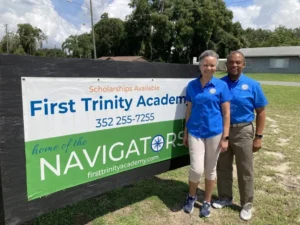
The couple watched a mother exit a store, a child or two in tow, and ask if she was interested in sending her kids to a school with small class sizes that was committed to helping children who didn’t have the means to a quality education receive one and reap its benefits.
Enough of them said yes to put Reaves’ plan in motion.
“We had 12 students and no building,” he said.
That problem was solved when Mt. Calvary Baptist Church offered rooms that could be used for classrooms, and in August 2022, First Trinity Academy opened its doors. There were 22 students, most in the lower grades.
Enrollment doubled in 2023-24 and is up to 76 this year, marking a remarkable growth that has Reaves already searching for a larger building.
Each student receives either the Florida Tax Credit Scholarship or the Family Empowerment Scholarship for Educational Options. Both are managed by Step Up For Students.
“The students who come here are from families that could never afford a private school without those scholarships,” said Reaves.
Tuition is $8,000 for grades K-3 and $7,500 for grades 4-8. There is also a $150 registration fee per family.
Students are required to take the Stanford 10, a Nationally Standardized Achievement Test. New students take the Let's Go Learn Diagnostic Test to evaluate their skill set so teachers have a baseline to measure the student’s progress.
Beacons of hope
There are eight teachers on staff at First Trinity Academy. During is the chief administrative officer. Reaves is headmaster, though he joked to a recent visitor that he’s also the janitor and dishwasher.
He wasn’t kidding. Before each lunch period, Reaves swept the dining room floor, cleaned the tables, and placed the students’ lunchboxes on the tables. He heated whatever lunches they brought that needed heating and cleaned whatever bowls needed cleaning.
“You have to be everything here,” he said. “We’re a small school, so we can’t offer the thrills.”
Reaves was raised in Miami by parents who were teachers. His dad served in the Florida Legislature. Reaves, who has a journalism degree from Florida A&M and a Doctor of Jurisprudence from the University of Florida, served in the Florida House of Representatives.
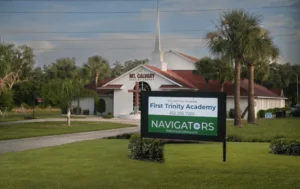
A Democrat, Reaves served in the Florida House alongside Tom Feeney. Feeney was Speaker of the House from 2000 to 2001 and shepherded the creation of Florida’s first tax credit scholarship bill. Though Reaves had left the legislature before the law’s passage, students at First Trinity Academy now benefit from it.
He said he thought of running a private school as far back as when he was in middle school. And, after spending several years as a teacher in the public school system, he decided to do just that.
“I learned from my parents that all children want to learn,” he said. “It's just a matter of giving them the opportunity. I have this philosophy that once you make children believe they can do the work, they will do the work.”
Reaves sees education as the means for families to break the cycle of poverty. He called it “the Civil Rights movement of our times.”
“It’s repetitive,” he said. “The parent doesn't graduate. The child is a parent. The daddy goes to jail. The son goes to jail. The grandsons go to jail. Drugs. Jail. Drugs. The community goes down, down, down.
“And somewhere along the line, there have to be beacons of hope that say, ‘Oh, you can be smart.’ We’re treading upstream, but that's our purpose.”
‘Be better than us’
Le’Shaun Gray considers himself one of those beacons.
A product of Florida State University, where he majored in interdisciplinary studies, Gray teaches science, social studies, and reading at First Trinity Academy.
“I wake up in the morning with a fire within me, because what an opportunity not only we have as educators, but our students have,” he said.
Gray was raised in Brooksville and attended district schools. He knows how easily a student can become overwhelmed at a big school. Some won’t ask questions because they are intimidated, and what was unclear to them remains unclear. First Trinity Academy’s classes are capped at 12 students; most are smaller. Gray can interact with every student every day.
“I can literally stop at each one of their desks and say, ‘Hey, how are you doing?’ We can slow down. We can speed up however we need to,” Gray said.
His goal is to teach his students how to think and understand a topic, not just memorize material to pass a test. That’s how teachers can make a difference in a student’s life, Gray said.
“I feel it's our responsibility to pass on a knowledge of legacy to the generation behind us,” he said. “The goal is for them to be better than us.”
Going in the right direction
Alejandra Ortiz had been scouting private schools in Orlando for her daughter London during the summer of 2022. That would make for a long roundtrip commute from Leesburg every day, but Ortiz was committed to finding a better education setting for her only daughter.
Then one evening, while shopping for dinner at Publix, she was approached by Reaves in the parking lot. Ortiz was interested in what Reaves had to offer, and London became one of the original 22 students.
“We were thinking the same way,” Ortiz said.
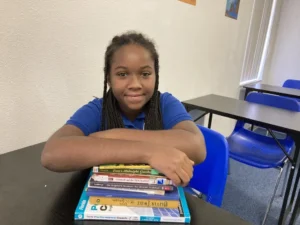
London arrived as a first-grader, two grades behind her class. In nine weeks, she was promoted to the second grade, and by the start of the 2023-24 school year, she had advanced to her grade level.
“I saw a 180-degree turnaround halfway through that first year,” Ortiz said. “Things that she was struggling with before, she was no longer struggling with. The discipline, the communication, and the academics are definitely there in the school. She's definitely going in the right direction.”
London said she loves going to First Trinity Academy. She likes her classmates and the teachers. She likes how math teacher Jodi Porter compared fractions to slices of a cake.
Even with all the fliers and the canvassing of parking lots, word-of-mouth is still the best recruiter for Reaves. Parents talk to parents, and the students talk to their friends. When asked what she would say to a friend whose mother was thinking of sending her to First Trinity Academy, London said, “I would say you should definitely come because it's a good school and the teachers will understand you and you will have a lot of fun understanding and learning about new things.”
The vision
Three years in and Reaves is already scouting for a bigger location for his school. There is an empty former CVS nearby. In another part of town sits a building that used to house a furniture store. Both offer enough space for First Trinity Academy to continue its growth.
“We've proven that we can expand at a rapid pace, and I'm looking forward to expanding, perhaps even to 400 [or] 500 students,” During said.
That’s ambitious, yet Ortiz thinks it’s realistic.
“I feel like they're progressing nicely, honestly, especially in such a short amount of time,” she said. “My experience has been really good as a parent because I have that safety net where I know I could drop my daughter off and I'm going to pick her back up. I've been very happy with the results because they take that time out to get to know the child.”
Ortiz’s feelings sync with the vision Reaves and During had when they began distributing fliers outside Leesburg-area supermarkets.
“That’s our vision.” During said. “Helping students that wouldn't otherwise have the opportunity to or would not be given the opportunity to succeed academically.”