Charter schools. Parents at the now-defunct Ben Gamla charter school tell Pinellas Superintendent Mike Grego that they're unhappy with its closing. Gradebook. Gainesville's oldest charter school goes to a year-round schedule. Gainesville Sun. A new charter in Hillsborough will serve high school students with disabilities. Tampa Tribune.
 Tax credit scholarships. SchoolZone writes up the state report that shows rapid growth in the tax credit scholarship program (which is administered by Step Up For Students, which co-hosts this blog).
Virtual schools. WGCU: " 'What the state has done is actually made a cut to education and disguised is as an operating protocol for virtual students.' ”
Standards. In 2011, Florida's proficiency bars in reading and math, relative to NAEP, don't stand out as particularly high, according to a new analysis. Education Next.
Mentors. Can boost FCAT scores, and groups like 100 Black Men of Orlando are heeding the call. Onyx.
School spending. Once again, the Palm Beach County School District's audit committee wants to know why so many schools have "money handling problems." Palm Beach Post. A new Orange County principal was demoted from his former job in Palm Beach County because he used a school credit card for $6,400 in questionable charges, including a $200 dinner with his wife at a Ruth's Chris Steak House. Orlando Sentinel. Flagler cuts its budget by another $1.1 million because "staff budgeted too high for this year." Daytona Beach News Journal. (more…)
Charter schools. In the face of low reading scores, the city of West Palm Beach takes steps to open its own charter school. South Florida Sun Sentinel. More from the Palm Beach Post. Is there room for charter schools in Jefferson County, one of Florida's smallest (and most struggling) school districts? Tallahassee Democrat.
 Tax credit scholarships. The program (administered by Step Up For Students, which co-hosts this blog) served 51,075 students in 2012-13, up 10,827 or almost 27 percent from 2011-12, the latest annual state report on the program shows. News Service of Florida.
Private schools. A new day school for children with autism is opening in Bradenton. Bradenton Herald.
School grades. Superintendents are right to ask for a few breaks on school grades this year. Tampa Tribune.
Common Core. Using it to stem summer learning loss. StateImpact Florida.
Jeb Bush. Mike Thomas at the EdFly Blog explains why the Foundation for Florida's Future puts out an annual report card for lawmakers.
School spending. Lake cuts back on busing and guidance counselors, among other changes, to fill a $16.3 million deficit. Orlando Sentinel. For the first time in years, Pinellas isn't facing big cuts. Tampa Tribune.
Schools and religion. Orlando Sentinel: "Lawyers for Orange County Public Schools did not review the Bible before it was given out to high-school students but did review atheist materials before they were distributed, school officials said Monday."
Virtual schools. The Tampa Tribune writes up legislative changes to digital education.
Charter schools. Several new charters in Jacksonville are moving into old buildings. Florida Times Union. Charter school enrollment in Pinellas is projected to climb 28 percent this fall. Tampa Bay Times (reprise of an earlier Gradebook blog post).
Magnet schools. Applications are still being taken for all of Hillsborough's magnet programs except IB. Gradebook.
Career academies. Summer means internships for many of those enrolled in Brevard's business academies. Florida Today.
Low-performing schools. Five of Pinellas' toughest schools hope to begin getting traction this summer. Tampa Tribune. A former student at struggling Lacoochee Elementary in Pasco is now the principal. Tampa Bay Times.
Dual enrollment. Another story on the financial hit to districts from the Legislature's decision to shift dual enrollment costs to them. TCPalm.com.
Teacher evaluations. Not a single teacher in the Palm Beach County School District is rated below effective. South Florida Sun Sentinel.
Teachers. A band teacher's departure from Lake County for a higher-paying gig at a charter in Connecticut is a sign teachers will "seek communities where teachers are respected and education is a priority, and that description doesn't fit either Lake County or Florida." Lauren Ritchie. (more…)
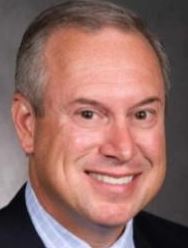
Hage
Vouchers, here. Charters, there. Virtual, over there. Politically, school choice sectors have been islands. But there are signs the movement is building bridges to advance common goals.
Florida's lead here surfaced at this week’s American Federation for Children summit, during a panel discussion on just that topic. In the Sunshine State, charter schools and supporters of vouchers and tax credit scholarships have teamed up to advance legislation, said panelist Jon Hage, founder and CEO of Florida-based Charter Schools USA.
“We realized it was time to join forces,” Hage said. “We felt we were sort of the Army, and they were the Navy … What we’re trying to do is have a common Department of Defense.”
The Florida school choice coalition doesn’t stop at two sectors. Through a group formed in 2010 – the Florida Alliance for Choices in Education – it includes online providers, home-schoolers and district school choice options like magnet schools. In the middle of this year’s legislative session, the group held a rally that, for the first time, brought parents together from across the spectrum.
Panelists suggested the benefits of a united front included strength in numbers, a more focused message and crossover appeal.
In response to a question from moderator Nina Rees, CEO of the National Alliance for Public Charter Schools, Hage said some Democratic lawmakers in Florida were more willing to support charter bills this year because they had supported tax credit scholarships in the past. Plus, the coalition offered a tighter, more compelling argument – one that emphasized school choice options even more and better deflected the usual criticisms. (more…)
 Gary Chartrand, a Jacksonville, Fla., businessman who helped bring a KIPP charter school to Florida and sits on its board of directors, was selected this morning as the new chair of the Florida Board of Education.
Chartrand (pictured here) replaces Tampa businesswoman Kathleen Shanahan, who said she was stepping down as chair to spend more time with her business but will continue to serve on the board.
"I do have a year and a little bit left on my term, but I think it might be time to bring in somebody new from the perspective of going through the search and bringing in a new commissioner," she said, referring to finding a replacement for outgoing Education Commissioner Gerard Robinson, who departed last week.
Shanahan, chairman and CEO of Uretek Florida, a soil stabilization company, added that being BOE chair "was a tremendous amount of time as a sidebar. And you know my little business, which when I first started a year ago was just Florida and now eight states and possibly growing to another six to eight states by the end of the year, it's a time constraint."
Chartrand has earned a reputation as an education reformer in northeast Florida. He led an effort to bring Teach for America to Jacksonville public schools. He and his wife also contributed $1 million to bring the highly regarded KIPP charter network to Jacksonville.
He and other board members praised Shanahan's leadership at this morning's meeting. But, he added, "If the board is looking for me to take the chairmanship job, I will do it, I accept. I take this seriously."
Patricia Levesque, executive director of Jeb Bush's Foundation for Florida's Future, released a statement immediately following the meeting.
“Kathleen has been a steady compass for the SBE during a pivotal point in Florida’s education reform story, ensuring student success was always at the forefront of board and department decisions," the statement said. "She held the Department of Education accountable as it underwent some of the most rigorous changes in more than a decade. Kathleen has dedicated herself to ensuring each Florida student has the tools needed to succeed in the 21st century, and she will remain a valuable member of the board. Gary Chartrand will be a great state leader, particularly as the board identifies and recommends a new education commissioner. We look forward to working with him and the entire board as Florida continues to improve the quality of education for its students."
The latest Alliance For School Choice yearbook once again does a remarkable job of cataloging the progress of private learning options across the nation, and Florida again sits at the top. But the vouchers and tax credit scholarships are only part of what distinguishes the transformation of public education in the Sunshine State. Nowhere is that better illustrated than in Miami-Dade, the nation’s fourth largest school district.
At a meeting of the School Board last week, superintendent Alberto Carvalho laid out a slate of 18 new magnet programs that include such offerings as a conservatory of arts, an iTech focusing on video gaming development and a technology-intensive program at a museum of science. “Parents will shop based on what they believe is the best fit, the best option for their kids,” he told the board.
Miami-Dade, with 70 percent of its 347,000 students on free or reduced-price lunch and 90 percent of them Hispanic or black, takes parental choice to a different level. It opened its first lab school more than a half-century ago and its first magnet schools nearly three decades ago, and reports that four of every 10 students attend a school of their choosing.
The district has 340 magnet programs in more than 100 elementary, middle and high schools with enrollment that exceeded 43,000 students last year. It has 25,000 students who choose schools through open enrollment practices and another 22,000 in career and professional academies. Nearly 10,000 low-income students choose Tax Credit Scholarships and 4,000 disabled students choose McKay Scholarships to private schools. Its charter school enrollment alone, roughly 39,000 students, is large enough to rank among the top 150 school districts in the nation.
Miami-Dade is, to a significant degree, the new definition of public education. Parents there are given legitimate options, whether their children are Ivy League material or struggling to keep on grade level, and the administrative team embrace a culture of choice. As Perla Tabares Hantman, the Havana-born board chairwoman put it: “This is about choice and giving the parents the opportunity to decide what is best for their children.”
That’s one reason Florida continues to be a place to watch.
A Florida judge has ruled that language in a proposed repeal of Florida's Blaine Amendment is ambiguous and misleading, and has ordered the Secretary of State to remove the proposal from the 2012 ballot for now, The Associated Press and St. Petersburg Times are reporting.
But the victory could be short-lived for the Florida Education Association, which challenged the amendment. Although Circuit Judge Terry Lewis found the ballot summary misleading, he's letting Florida Attorney General Pam Bondi rewrite the summary for another review.
The Brookings Institution's ranking of school choice met with mixed results today, and properly so. But one conclusion that may escape attention should have profound implications for choice and school governance in the years to come: One of every two households engages in some form of school choice, and more would do so if given the chance.
The report is limited to an examination of quality and competition in the nation's 25 largest school districts, but this hides the sweep of the enterprise. The Brown Center on Education Policy didn't just look at public school choice within each individual system. It surveyed private options in each district's boundaries, factoring in publicly funded alternatives such as vouchers or tax credit scholarships and paying attention to how performance is assessed. And it considered whether and how districts have embraced virtual education.
Thus, author and center director Russ Whitehurst writes:
... more than 50 percent of parents of school-aged children have engaged in some form of school choice, albeit primarily in the form of residential choice and private school tuition: two socially inequitable means of determining where a child attends school. There is little doubt based on the long waiting lists for popular public schools of choice that many more parents wish to exercise choice than are currently able to do so, and schools of choice consistently generate more positive evaluations from parents than assigned schools.
Each district was given a letter grade determined by factors as varied as the enrollment at "alternatively available schools" -- which included charter and voucher enrollments -- and student assignment systems where "preferences are maximized." But, honest intentions notwithstanding, the methodology may be misleading. For instance, seven Florida counties make the list, with Duval County (Jacksonville) getting the highest overall ranking within the state. With apologies to Rick Hess, Duval has done little to actively enhance school choice.
While the Duval County school board has begun to authorize more charter schools in the Jacksonville area in just the last year, Duval is near last among Florida districts on the Brookings index in density of charter schools, according to 2010-11 data from the Florida Department of Education. Just 2.7 percent of the public school population in Duval is enrolled in charter schools. By comparison, Miami-Dade County's charter school enrollment is at 10.2 percent of the county's total public school population, but is ranked just 20th of 25 districts overall at Brookings.
The State of Florida has done more to create the conditions for choice that Dade has embraced, just as it has created and enhanced the means-tested tax credit scholarships to private schools that have penetrated nearly 5 percent of the eligible population in Duval County. The growth of, and prospect for more, publicly funded private school options led Duval County school board chairman W.C. Gentry to tell a radio interviewer one year ago, "Fundamentally, [school choice] is very bothersome. The notion that we would effectively dismantle a system of public education and give students and parents choice and go do whatever they choose to do is anathema to the basic underpinnings of our society."
This is no attempt to discredit a report that was intended to celebrate "a fundamental rationale ... in creating a vibrant marketplace for better schools." In identifying an expanded definition of public education and a demand for more and better school options, Whitehurst brings sunlight to the differences between school systems in how they meet the needs of parents, and those differences often disappoint. Still, if the intent of the index is to create public awareness, a deeper dive is necessary.
Two years have passed since a coalition of public school supporters asked Florida courts to improve the quality of classroom education, and a divided 8-7 First District Court of Appeal ruling last week reminds us how messy these things can be. The merits of the case have not even been debated yet in the lower courts, and the appellate court has now asked the state Supreme Court to decide a procedural question as a matter of “great public importance.”
That question – whether the courts have the power to tell an elected Legislature how to run the school system – is procedural at this point because the court is being asked to take a position before depositions and fact-finding. But it is hard to miss the court’s ample citations to a 1996 state Supreme Court ruling that is directly on point. In that case, the high court rejected a similar plea for more education funding by writing that: “We hold that the legislature has been vested with enormous discretion by the Florida Constitution to determine what provision to make for an adequate and uniform system of free public schools.” This time, the court rejected a plea to immediately end the case, but added that “we are uncertain as to whether — and do not decide that — the trial court has any ability to grant relief.”
The 1996 high court ruling, of course, led to a movement to upgrade the constitutional language on adequate and high quality public education, which voters then ratified in 1998. And those new passages certainly raise the stakes in the current constitutional battle. That said, it is hard not to feel a little déjà vu. In 1995, with Democratic governor Lawton Chiles in charge, the plaintiffs included School Board members who argued the state was tying their hands with regulation and shortchanging schools in financial support. Fast forward to 2009, when Republican governor Charlie Crist was still in office, and the new coalition made almost precisely the arguments with almost precisely the same flair for drama.
The point is that educational matters, for better or worse, are inherently political and not necessarily partisan. The latter is best illustrated by the fact that these Florida legal attempts have persisted for decades, through Democratic and Republican administrations and in lean and fat economic times. Educators and parents understandably want more for their schoolchildren, but more is easier to demand than it is to define. Courts are right to be wary about substituting their judgment for that of elected policymakers.
The other point here goes to relevance. These constitutional fights over “adequacy” and “quality” tend to be steeped in age-old education traditions where success is often defined by monetary effort and per-pupil spending rankings and where the court is asked to referee policy quarrels or perceived slights to the natural order of daily classroom businesses. In that way, they feel like an anachronism, where one of the most jarring requests is for a court to decide that education must be dispensed with what the lawyers call "uniformity." As interpreted most recently by the high court, that edict could bring an end to special magnet programs, online learning, dual college enrollment, charter schools -- any education that attempts to be different from a "uniform" method.
The formal allegations in the current lawsuit, despite their sincerity, sound entirely too much like more of the same. Among the points alleged in the original complaint, for example, are: 1) “Florida uses the FCAT ... to deny students a high school diploma;” 2) “Florida’s current accountability policy is an obstacle to high quality;” and 3) “The state education budget in recent years ... eliminated funding for a seventh period.”
This case is only in the early innings, and it already seems strangely disconnected from a modern public education system that is rapidly evolving and increasingly defined by its ability to find new ways to tailor learning. Is it really constitutionally relevant whether a high school offers six or seven daily periods of instruction?
The St. Petersburg Times' education blog, The Gradebook, just landed what looks to be the first interview with Florida's newly appointed education chief, Gerard Robinson, the former president of the Black Alliance for Education Options and secretary of education in Virginia. The Gradebook noted that Robinson's support of charter schools and school vouchers has created some early buzz, but Robinson urged his critics to look at the issue of school choice more broadly:
When we think about it, we only think about it in terms of charters and vouchers. We don't accept the fact that the largest school choice programs in the country are parents that put their children in good public schools that work. Magnet schools have been in place a long time before charters and that. So I don't want to allow the school choice issue to be pigeonholed into just one issue, vouchers and charters. What I am for is quality education.
The work in Virginia expanded beyond charters. The work in other areas expanded beyond vouchers. For me, I am interested in making sure that parents, or taxpayers and others, have access to great public school systems. Florida has a great private school sector. It also has a great virtual school perspective. Guess what? Those are all aspects of school choice. But when we talk about the issue, we try to focus on what someone said about a contentious aspect of it, as surely there are. But there are contentious aspects of the traditional system that long preceded vouchers and charters.

