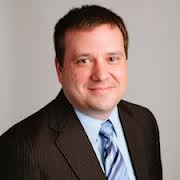
 The Florida Department of Education’s new director of charter schools might be a familiar name to readers of this blog. He is Adam Emerson, former director of parental choice for the Fordham Institute, former education reporter for the Tampa Tribune – and the creator and first editor of redefinED.
Emerson started his new job on Monday, and he’ll oversee a charter school landscape that has doubled in enrollment in just the past five years and now serves more than 200,000 students. He was hired by the man he replaced. Adam Miller, the former charter director, was elevated last fall to executive director of Independent Education and Parental Choice.
Those who read this blog will remember Emerson for his eagerness to find common ground between traditional educators and those involved in newer learning options. He brought calibration to his arguments about accountability and regulation, a theme on which he expanded while working at Fordham – an institute that serves as a moderate and responsible voice in the national debate over school options.
Emerson's appointment also reflects a growing professional diversity at DOE. Though he was schooled at Michigan State University as a journalist, he dug into education policy as a newspaperman and had become a bona fide wonk by the time he left Step Up For Students, the nonprofit that helps administer tax credit scholarships in Florida, and joined Fordham.
Having worked with Adam, I profess no objectivity here. I do know him as earnest and measured, the husband of a public school teacher, a believer in the public good and a sap for educational turnaround stories. He joins some talented and conscientious people in the choice office, and we wish him well.
Vouchers and testing. A new report from the Fordham Institute finds that mandated testing - and even public reporting of test results - isn't that big a concern for private schools worried about government regs tied to vouchers and tax credit scholarships. Coverage from redefinED, Choice Words, the Cato Institute's Andrew J. Coulson and Gradebook. AEI's Michael McShane says Florida's tax credit scholarship program (which, altogether now, is administered by Step Up For Students, which co-hosts this blog) finds the "sweet spot" with its testing and financial reporting requirements: "These regulations don’t sound too crazy to me; they seem to strike a good balance of accountability for safety, fiscal responsibility, and academic performance without being overly dictatorial in how schools must demonstrate any of those."
 Shooting rockets. Senate President Don Gaetz tells the Associated Press that Florida needs to slow down on ed reforms until it rights the new teacher evaluation system and other changes in the works: "We need to quit shooting rockets into the air. We need to give schools and school districts, teachers and parents time to institutionalize the reforms that have already been made. We need about a two-year cooling off period."
Ford Falcons. Schools need competition. EdFly Blog.
School choice. Education Commissioner Tony Bennett says at a National School Choice Week event in Tampa that some Florida districts deserve credit for expanding public school options such as magnets and career academies, reports redefinED. More from Tampa Tribune.
Charter schools. The National Alliance for Public Charter Schools ranks Florida fifth for its charter laws. SchoolZone. Gradebook. South Florida Sun Sentinel. StateImpact Florida. The Pinellas school district postpones a decision on whether to close a long-struggling Imagine school in St. Petersburg, reports the Tampa Bay Times and Tampa Tribune. The Volusia district's decision to shut down a struggling charter in Deland is headed to appeals court, reports the Daytona Beach News Journal. (more…)
 Hi everybody. My name is Ron Matus. I’m the new assistant director of policy and public affairs at Step Up for Students, a nonprofit in Tampa, Florida that oversees a tax credit scholarship for 38,000 low-income students. Among other responsibilities, I’ll be editing redefinED, which means I have the unenviable task of replacing the irreplaceable Adam Emerson, who put this forum on the map and is now the school choice czar at the Fordham Institute. I have mountains of homework to do before I can approach the depth and breadth of knowledge that Adam brought to redefinED. But I am pumped about keeping the blog’s spirit alive and finding ways to bring more people into the conversation. I think redefinED stands out for its tone and view. I appreciate its humility. And I know it is absolutely on point in 1) trying to reshape what is meant by “public education” and 2) accentuating the common ground between so many of us who have somehow been segregated into warring camps.
I’m sure I’ll be sharing more about myself in future posts, but for now I think two things are worth noting.
I was a newspaper reporter for 25 years. (more…)
A new report from Andrew Coulson helps bring context to one of the most bedeviling issues we face when sending public school students to otherwise private schools: What’s the right way to hold these schools accountable?
Let’s respect that Coulson, the astute director of Cato Institute’s Educational Freedom Center and a free-market advocate, is focused on what he views as the potential for “regulatory suffocation” of tax credit scholarship and voucher schools in 15 states. His report nonetheless presents an intriguing contrast between the levels of regulation. He finds that voucher regulations in places such as Ohio, Louisiana, and D.C., are multiple orders of magnitude more strenuous than those for tax credit scholarship programs in states such as Georgia, Arizona and Pennsylvania.
Coulson controlled for enough variables that he can plausibly make the case that “tax credits seem significantly less likely than vouchers to suffer the Catch-22 described in the introduction – less likely to suffocate the markets to which they aim to expand access.” But let’s leave aside the question of whether there is a genuinely different political impulse for accountability between these two programs, and address the responsibility for advocates of private choice.
Coulson is right that regulating private schools in precisely the same way as public schools tends to undermine their uniqueness and defeat the purpose of offering them as alternatives. But it is simply untenable in a public education world that is being measured and forced to account for student outcomes to suggest that private options are exempt. If tax money is being spent, directly or indirectly, then the schools need to answer for it. (more…)

