 Testing reforms: Under the proposed "Fewer, Better Tests" bills filed Wednesday in the Legislature, all K-12 assessment testing would take place in the final three weeks of the school year, starting in the 2017-2018. S.B. 926 and H.B. 773 would also require results be returned to teachers within a week of testing, and that an understandable report be sent to parents. It also directs the education commissioner to study the feasibility of replacing the Florida Standards Assessments with the SAT or ACT. If the changes are approved, the state would also have to renegotiate its contract with testing vendor American Institutes for Research. Bill sponsors Sen. Anitere Flores, R-Miami; Rep. Manny Diaz Jr., R-Hialeah; and Rep. Chris Sprowls, R-Palm Harbor, say the goal of the bills is to reduce stress and anxiety among students, parents and teachers. Miami Herald. Orlando Sentinel. News Service of Florida.
Per-student funding: Florida's spending per student ranks well below the U.S. average among states, according to a report by the National Center for Education Statistics. In the 2013-2014 school year, Florida spent $8,714 per student. The U.S. average was $10,936. Miami-Dade County spent the most per student among districts, $9,106. Gradebook.
Teaching incentives: Senators on the Florida PreK-12 education budget committee react coolly to Gov. Rick Scott's $58 million proposal for incentives to recruit and retain teachers. Specifically, senators criticized Scott's proposal for $10 million in hiring bonuses for new teachers who score in the top 10 percent in their subject-area exam. "It concerns me that we continue to look for the best performers in college -- and not the best teachers," said Sen. Doug Broxson, R-Gulf Breeze. Miami Herald.
Gun-free zones: Bills filed in the Legislature this week are aimed at ending gun-free zones in Florida - including at K-12 schools. Sen. Dennis Baxley, R-Ocala, and Rep. Don Hahnfeldt, R-Villages, filed S.B. 908 and H.B. 803 to eliminate all restrictions on where people with concealed-carry permits can take their guns. Miami Herald. (more…)
Some of the seeds of Florida’s virtual education system were sown more than two decades ago, at a Fort Myers elementary school, where Julie Young was running an IBM Writing to Read lab.
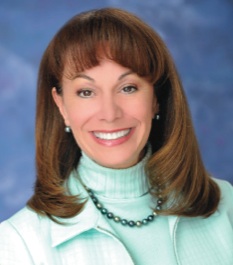
Julie Young
Students in the lab at San Carlos Park Elementary would move from one station to the next, using computers to explore concepts in different ways, tailored to different modes of learning. It was, Young said, "a blended classroom on steroids,” but years before blended learning became the hot topic it is now.
When, a few years later, the Orange County school district tapped Young to help lead the institution that became Florida Virtual School, that background had already given her an idea of what was possible.
“I had the opportunity to see the technology advancing for several years before I started to do this,” she said in an interview. "You could see a bit into the future, and know that it was coming.”
And by now, it clearly has arrived. Young said that is one reason she feels comfortable stepping down in June after 17 years at the helm of an institution that helped pave the way for online education around the country.
What started as a $200,000 grant project has grown into an award-winning juggernaut that annually serves more than 200,000 students. Students in the state are now required to take at least one of their courses online before they graduate. Last year, the full-time virtual education program bid farewell to its first graduating class, of about 275 seniors.
In other words, Florida Virtual School, like virtual education more broadly, has blossomed into maturity.
Many hands led to the creation of FLVS – from educators like Linda Hayes, a Central Florida computer science teacher who helped come up with the original concept, to state education leaders like Frank Brogan and John Winn, who helped design the policies that sustained it.
But it was Young who guided the institution that became a new model for education – one that maximizes technology to customize learning for individual students, that focuses on competency rather than “seat time,” that links funding directly to student success, and that makes more than 1,000 teachers available to students 12 hours a day.
Jeb Bush, who was governor during the school's early growth, recently called Young the "godmother of digital learning." Another early supporter, former Florida House Speaker and now U.S. Rep. Daniel Webster, R-Orlando, recognized her 30 years in public education with a statement for the congressional record.
"It was really a far-sighted option that they put in place. I think Julie had a lot do with making that (possible)," said Tom Vander Ark, an author and venture capitalist who serves with Young on the board of the International Association for K-12 Online Learning. "It's just, from top to bottom, inventing a new form of education," he added. "It's still, 17 years later, the best example in the country." (more…)
Frank Brogan: The outgoing Florida university system chancellor talks about Common Core, state grades and Tony Bennett. TCPalm.
Common Core: Polk County's new teachers get a primer on the new education standards during their district orientation. The Ledger.
Florida Virtual School: About 6,000 Polk County students took classes last school year through Florida Virtual School. Recent drops in enrollment statewide have resulted in teacher and staff layoffs. The Ledger. More from the Associated Press.
Early dismissal: Polk County's early dismissal days will be 1½ hours shorter this school year than last. The Ledger.
Safety: St. Johns County schools wants to limit each school to one entrance. St. Augustine Record.
First day: Summer is over for 86,000 Lee County students who are back in school. News-Press. More from Naples Daily News.
School supplies: Lipman and Pacific Tomato Growers hand out 1,400 back packs to needy Immokalee families. Naples Daily News.
More Bennett: Two more Tony Bennett hires, Anna Shultz and Katie Stephens, leave their Florida Department of Education posts. Tampa Bay Times. American Federation of Teachers and its Indiana affiliate request public records from the Indiana Department of Education, seeking all communications between Tony Bennett, Foundation for Excellence in Education, ALEC and others since 2009. School Zone. (more…)
Discussions about how best to improve student learning often get contentious, so at redefinED we try to make a positive contribution by identifying areas of possible common ground and clarifying the historical record when we see errors or omissions. Rita M. Solnet’s recent Huffington Post column on how Florida might better utilize its standardized testing data gives us an opportunity to do both.
Rita is a founder of Parents Across America, a group that opposes excessive reliance on high-stakes standardized tests. And since Rita lives in Florida, she is particularly unhappy with how Florida uses – or, she would say, abuses - its state testing data. Rita ends her column with some ideas that provide the basis for common ground, but her piece also includes some erroneous Florida history, which I want to correct.
In 1991, the Florida Legislature passed the Education Reform and Accountability Act, commonly known as Blueprint 2000. Florida had experimented with giving teachers and schools more decision-making power in the late 1980s, and Blueprint 2000 was intended to accelerate this effort. The grand bargain was that state and local government would stop micromanaging schools in exchange for individual schools being held accountable for results.
While the legislation passed with strong bipartisan support, the primary advocates were all Democrats. They included Gov. Lawton Chiles, Lt. Gov. Buddy McKay, Commissioner of Education Betty Castor, Rep. Doug “Tim” Jamerson and Sen. George Kirkpatrick.
Two months after the legislation passed, the Florida Commission on Education Reform and Accountability was convened to create the legislatively mandated standards, assessments and accountability system. I was the teachers union president in Pinellas County in 1991, and Commissioner Castor appointed me to be one of three teacher representatives on the commission.
The U.S. Department of Labor released the Secretary of Labor's Commission on Achieving Necessary Skills (SCANS) report in June 1991, outlining the knowledge and skills students would need to succeed in the 21st Century. Our commission was impressed and decided to base Florida’s standards on the SCANS recommendations, which included literacy skills (reading, writing, mathematics), thinking skills (problem solving, decision making), personal qualities (honesty/integrity), resource management (time, money), information management (organizing, processing, interpreting), and technological competence.
Several commissioners argued that we could measure the SCANS standards using an International Baccalaureate-type assessment system that included multiple internal and external assessments, but the Florida Department of Education’s student testing staff strongly disagreed. Its concerns were legal and operational. (more…)

