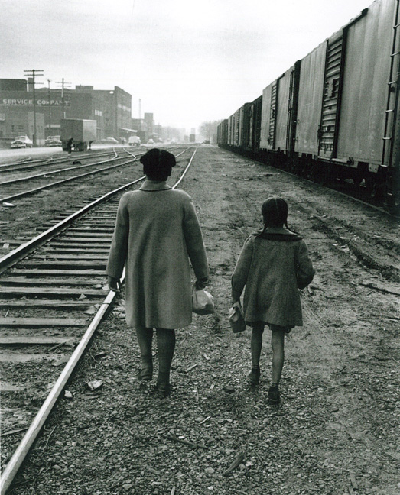
 Bill Maxwell, a highly regarded African-American columnist with the Tampa Bay Times, has used a new Hechinger Report to argue that charter schools are introducing a second wave of “white flight” in public education. His argument tracks the work of the Civil Rights Project at UCLA, which has called charter schools a “civil rights failure” and echoes the assertion of University of Minnesota researcher Myron Orfield that charters are “an accelerant to the normal segregation of public schools.”
Some of these findings are certainly cause for concern. But racial integration in American education is rooted in nearly a half-century of social policy and federal court intervention, which makes isolated conclusions about the new role of charter schools problematic. Yes, it could be that charter schools cause more racial segregation. It is also possible something else could explain the racial demographics. It could be, for example, that charter school enrollment merely reflects the racial makeup of the neighborhoods in which they operate.
In that sense, examining the racial ratios in charter schools is but one part of a much larger equation.
Maxwell’s column was inspired by an article in the Hechinger Report that began with an anecdote about a very white elementary charter school south of St. Paul/Minneapolis, Minn. The charter school, Seven Hills Classical Academy, was 82 percent white while the surrounding Bloomington Public School District averaged 57 percent white.
However, the school district obscures the vast range within the public schools themselves. Among Bloomington public elementary schools alone, the ratio of white enrollment ranged from 15 percent to 81 percent. In other words, there are also public schools with similar degrees of racial segregation.
Parent trigger. The House parent trigger bill clears a second committee in face of growing opposition. Coverage from redefinED and The Buzz. The parent trigger is all about privatizing, editorializes the Bradenton Herald (though the piece appears to be word for word the same one that ran in the Palm BeachPost.)
 School choice. Once again, there are far more applicants than slots at the "fundamental schools" in Pinellas, meaning lotteries will leave many parents unhappy. Gradebook.
Charter schools. Florida Virtual Academy, a network of online charters run by K12 Inc., will not seek to open three schools in Central Florida next years as it originally hoped, reports the Orlando Sentinel. A STEM-oriented charter on Marco Island is moving out of a church and into new digs, reports the Naples Daily News.
Graduation requirements. The Orlando Sentinel gives a thumbs up to plans for alternative diploma routes that tie into career education.
Teacher pay. Gov. Rick Scott takes a dig at House Speaker Will Weatherford for not supporting Scott's proposed across-the-board hike in teacher pay, reports The Buzz. More from the Associated Press. Lawmakers wrestle with how much to set aside and what constraints to put on it, reports the Tallahassee Democrat. Growing numbers of teachers are taking second jobs, reports the Sarasota Herald Tribune.
Testing. The Board of Education votes to create a task force to help districts reduce duplication as they create a massive number of end-of-course exams. Tallahassee Democrat. (more…)
Like other school choice programs where supply is overwhelmed by demand, the school district in Pinellas County, Fla. offers an option that causes plenty of joy and heartache. Some kids win the “fundamental school” lottery. Some kids lose. Some go on to the high-performing fundamentals, where they’re surrounded by peers with super-engaged parents. Others go to neighborhood schools that struggle mightily.
Are their outcomes different? Matthew Chingos, a respected researcher at the Brookings Institution, is aiming to find out.
Last week, the district agreed to give Chingos the data he requested so he could examine the impact of fundamental schools on math and reading scores. Once he gets the data, he expects to issue findings within a year, according to his research application.
His study is worth watching because it involves a school choice option offered by a school district, not by private schools or charter schools.
The fundamental schools in Pinellas stress parental involvement and student accountability. Students who fall short on academic, behavioral and dress code requirements can be reassigned to neighborhood schools. Ditto if their parents fail to meet requirements, including attending monthly meetings.
The 104,000-student Pinellas district created its first fundamental school in 1976, but expanded them rapidly in recent years. It now has more than 7,000 students in 10 full-fledged fundamental schools and two “school-within-a-school” fundamental high schools.
The schools boast some of the district’s highest test scores and lowest disciplinary rates. They also cause a fair amount of angst. (more…)
Bruce Baker at School Finance 101 offered a calibrated analysis Tuesday on how neighborhood and charter schools differ in the public education arena, but his distinctions miss the larger point. The current expansion of K-12 educational options cuts across all the traditional boundaries in ways that make public and private less relevant.
Take his assertion that charter schools are “limited public access.” Two of his supporting claims are that “they can define the number of enrollment slots they wish to make available” and that “they can set academic, behavior and cultural standards that promote exclusion of students via attrition.” In truth, these two descriptions could just as easily apply to many, if not most, district-operated public schools. All schools, including virtual schools, generally base enrollment on capacity, which has the effect of allowing some students in while excluding others. Of greater relevance is that many district schools now admit students based on test scores or other screening factors. Magnet schools and programs such as International Baccalaureate typically use grades and test scores and conduct to determine eligibility. Many district choice schools, notably the back-to-basics fundamental programs, remove students who don’t meet behavior standards or whose parents fail to meet participation requirements.
While individual district schools may select and reject students, Dr. Baker is right that a public school district must generally take all comers at any time of the year. But it is also true that parents in charter schools can simply leave whenever they are dissatisfied, a powerful tool that is not typically available to them in their assigned district school. Further, his failure to note the similarities in admission policies between many charter and individual district schools ignores the extent to which this remarkable transformation is blurring the lines between public and private. After all, a waiting list for a magnet school is no less disappointing to an eager parent than one for a charter school. Not surprisingly, a recent academic report on low-income students who choose the Florida Tax Credit Scholarship found that students in districts with few district school options were more likely to choose the non-district option.
Sherman Dorn, himself an astute academician who is a professor of education at the University of South Florida, reacted to Baker's post by placing the common school in historical context. Dorn correctly asserts that charter schools and vouchers and tax credit scholarships have “chipped away at the multi-level meaning of ‘public’ that had mostly consolidated by the end of the 19th century.” But this is nothing to rue. It speaks to an educational evolution that is strengthening public education by recognizing parents indeed have unique insights into which learning environments work best for their children.
In this emerging world of educational choice, parents simply want a school that turns on the light for their children. In that most personal of calculations, school governance is unlikely a significant factor.
 As students across the nation apply for entry into their public school districts' magnets, fundamental schools and special academies for the fall, the parade of winners and losers brings to mind The Lottery, Madeleine Sackler's provocative documentary on coveted charter school slots. It is also a reminder that many public schools, just like private ones, can be quite selective in their decisions.
In New York City, for example, the good news this year is the percentage of black and Latino students accepted into eight specialized high schools increased by 14 percent. That's encouraging, but the racial makeup of Stuyvesant High School, with four Nobel Laureates among its graduates and a student body that is only 1.2 percent black, is a reflection of the imbalance that remains.
In Pinellas County, a school district of 101,000 students on Florida’s Gulf Coast, 4,787 incoming kindergartners applied for 846 seats in the district’s magnet and fundamental schools. “I don't know how I got to be so lucky,” one parent of a sixth-grader told the Tampa Bay Times. “I feel like I won the lottery. This is better than money." In Brevard County, on Florida's Atlantic Coast, school officials are considering a plan to improve lottery odds by the unsual strategy of removing the preference they give for families wanting to keep brothers and sisters together. “For families like mine,” one mother told Florida Today, “we’ve counted on both of our children going to the same school.” (more…)
 Hi everybody. My name is Ron Matus. I’m the new assistant director of policy and public affairs at Step Up for Students, a nonprofit in Tampa, Florida that oversees a tax credit scholarship for 38,000 low-income students. Among other responsibilities, I’ll be editing redefinED, which means I have the unenviable task of replacing the irreplaceable Adam Emerson, who put this forum on the map and is now the school choice czar at the Fordham Institute. I have mountains of homework to do before I can approach the depth and breadth of knowledge that Adam brought to redefinED. But I am pumped about keeping the blog’s spirit alive and finding ways to bring more people into the conversation. I think redefinED stands out for its tone and view. I appreciate its humility. And I know it is absolutely on point in 1) trying to reshape what is meant by “public education” and 2) accentuating the common ground between so many of us who have somehow been segregated into warring camps.
I’m sure I’ll be sharing more about myself in future posts, but for now I think two things are worth noting.
I was a newspaper reporter for 25 years. (more…)

