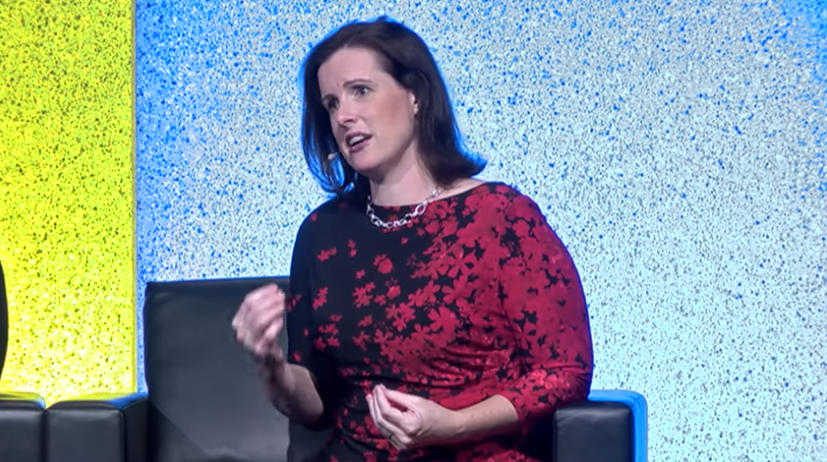
Katie Swingle of Winter Haven frequently champions the rights of parents to make educational decisions for their children.
Editor’s note: This piece from Katie Swingle, an active school choice parent and advocate in Polk County, appeared in the Lakeland Ledger in response to a column published in the Ledger in February.
As a mother whose children benefit from Florida education scholarships, I was offended by the recent "Your Turn" column by the Rev. Ray Johnson ("‘Scholarship’ program threatens education," Feb. 17).
He’s alarmed that under education choice, parents, not educators, evaluate their children’s educational progress. Apparently, he doesn’t trust parents to know what’s best for their own children. Perhaps he should meet some of the hundreds of thousands of scholarship families over the years who moved mountains trying to find the best learning environment for their children.
I’m one of them.
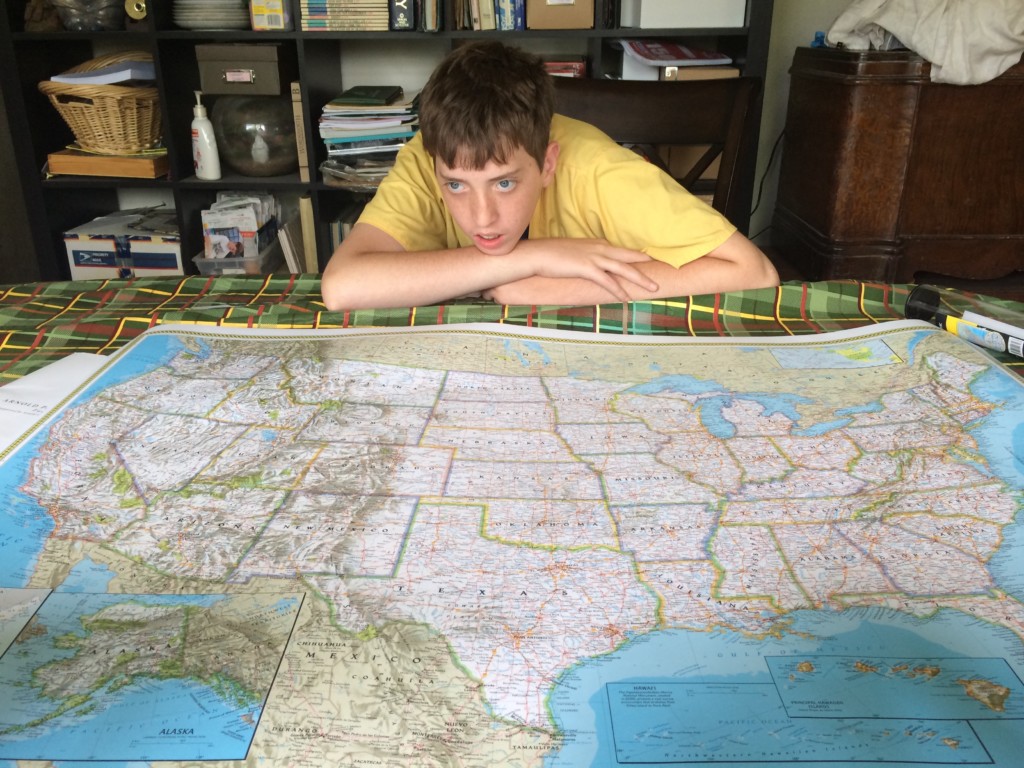
He uses scare tactics to misrepresent how education savings accounts work, likening them to “gift cards.” My son Gregory, who is on the autism spectrum, receives the Gardiner Scholarship for special-needs students. That program, which has been around since 2014, operates as an ESA, similar to how Senate Bill 48 would transform the Florida Tax Credit and Family Empowerment scholarships for lower-income students.
We do not receive a debit card. Funds are deposited into an account. Purchases must be made from a list of pre-approved items and services. If something is not on a list, parents must submit a pre-authorization request that is reviewed by a committee and approved before the money can be spent. I know this to be a rigorous process.
To continue reading, click here.
 On this episode, redefinED senior writer Lisa Buie speaks with Stephanie Conner, a mother of four from the tiny town of LaBelle, Florida. The former teacher and her husband, Joel, an adult education teacher, use the Gardiner Scholarship for their son, Eli and daughter, Madeline.
Their younger children, Meizie and Gideon, joined the family through adoption and use the Family Empowerment Scholarship to attend a nearby private school.
Conner discusses her children’s unique needs and how pre-approved therapy equipment made possible by Gardiner’s flexible spending accounts helped maximize her two older children’s ability to learn. She also describes how an arrangement with the school that her younger children attend allow her to mix and match services for Eli and Madeline, providing a truly customized learning plan for each.
“The main blessing of the Gardiner is being able to use it for whatever we think they need and not have other people tell us what they think we should do, being able to control and do what is best for our children … Flexibility has been the key to making it successful for us.”
EPISODE DETAILS:
· How the Conners’ homeschool journey began
· An overview of the Conner children’s unique educational needs
· How education choice allows the family to use “unbundled” services from a local private school
· What a typical school day looks like for the Conners
· How the Conners are using their education savings accounts to help Eli and Madeline get the most from their education, even in a rural area
· What Stephanie Conner would change about the Family Empowerment Scholarship
· Her thoughts on Senate Bill 48 and the flexibility it would offer
Editor’s note: To read more about how the Conners are exercising education choice, click here. To read a recent op-ed Stephanie Conner wrote on education choice that was published in the Naples Daily News, click here.
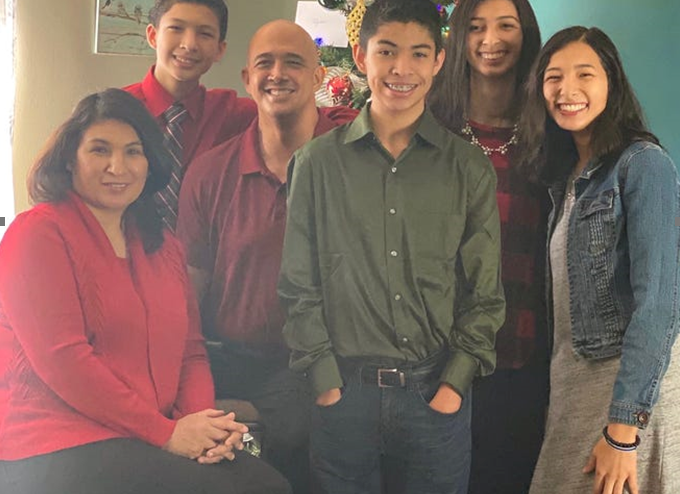
Olivia Huron-Schaeffer’s son David benefited for six years from a Gardiner Scholarship. Her other three children – Abigail, Alysia and Daniel – used the Florida Tax Credit Scholarship for low-income families to attend a private school.
Editor’s note: This opinion piece from Olivia Huron-Schaeffer, a parent in Brevard County, appeared Friday in Florida Today.
My 15-year-old son David is on the autism spectrum and for six years he has benefitted from a popular state program called the Gardiner Scholarship. The Gardiner Scholarship is a flexible spending account that allows parents to mix and match materials and services – tuition, tutors, technology, curriculum, etc. – to create exactly the right education program for their child.
Back in public school, David fell through the cracks. He was held to low expectations and never received the services he was entitled to under law. But with a Gardiner Scholarship, I’ve had the resources to homeschool him, and now he is learning and thriving in a way I never thought possible.
I wish the same thing were available for my other kids, and I know other parents do too.
This year, it might happen.
State lawmakers are set to consider a bill that would turn the state’s school choice scholarships into flexible spending scholarships. There are thousands of Gardiner parents like me who know what a life changer this would be for families all over Florida.
Read more here.
Despite being told her son, Brandon, would never learn to read, Donna Berman persisted in her quest to find an appropriate educational setting for him where he could thrive. Brandon died Sept. 10, 2017, at the age of 19.
Editor’s note: This commentary from Donna Berman appeared Sunday in the Daytona Beach News-Journal. You can read additional commentary from Berman here. You can read more about Step Up For Students’ administration of its 1-millionth scholarship here.
My late son Brandon began experiencing seizures at age 3 and was diagnosed with autism by 6. He spent his youth growing up with muscular dystrophy, an auditory processing disorder, cortical atrophy, and a brain tumor. Brandon was also non-verbal and his teachers believed he might never learn how to read.
No class setting – public or private, mainstream or hospital homebound – was adequately meeting Brandon’s needs. Brandon was a space-age kid living in a stone-age system.
Thankfully, we live in Florida, where choice in education is increasingly mainstream, and more and more options that can help kids like Brandon are becoming a reality.
This week, Step Up for Students, Florida’s largest nonprofit education scholarship administrator, announced it had awarded its 1 millionth scholarship since its founding in 2002. Brandon was one of those scholarship recipients, so I know how much of a difference they’ve made for families across this state.
Before Brandon received a scholarship, I faced a constant battle to ensure he received an adequate education. I began to feel like his federal rights under the Individuals with Disabilities Education Act (IDEA) weren’t worth the paper they were written on.
Eventually, Brandon’s daily seizures at school required me to care for him at home, and it ultimately cost me my career as a registered nurse.
I thought I was dreaming in 2014 when I learned about a new education scholarship program for students with special needs, now called the Gardiner Scholarship. Gardiner gives parents access to a flexible spending account, averaging about $10,000 a year, that can be used to pay for school tuition, fees, textbooks, school supplies, assistive technology, therapies and more.
Applying for this scholarship was a no-brainer – I had already tried every other option. Once Brandon was awarded the scholarship, I was in full control of my son’s education.
Gardiner paid for curriculum, class supplies, and helped make various projects possible. I could find a million unique ways to teach Brandon math, improve finger dexterity, learn how to plan projects, and even develop his social skills. Whether he was learning math by sewing, baking, or folding boxes at the local pizza shop, the Gardiner program ensured Brandon’s learning could happen anywhere.
Brandon could learn in the car, on the way to the doctor, at the hospital. No longer bound to learn between brick walls, Brandon became the space age kid he was meant to be.
Traditional paper books intimidated Brandon with the number of words per page. Instead of paper books, I downloaded books onto an e-reader and increased the font size. With fewer words on the screen Brandon found learning to read less frightening.
Against the odds, Brandon learned to love reading; “The Box Car Children” became his favorite series. He also became self-sufficient, eventually learning how to use his tablet to download and read restaurant menus and order food for himself.
That may not sound like a big deal, but when you have a child with special needs, little moments of progress like this can bring tears of joy to a parent’s eyes.
Brandon and I were such enthusiastic members of the Gardiner family that we defended the scholarship in court when opponents sued to dissolve it. After we won, Brandon made tremendous progress in the first year alone.
My son passed away in 2017, but I’m forever grateful Brandon finally got the chance to learn at his own pace. In his last years he discovered a love for learning, and he found self-worth.
I look forward to seeing a million more scholarships awarded, and a million more children find success just as Brandon did.
Berman lives in Port Orange, Florida.
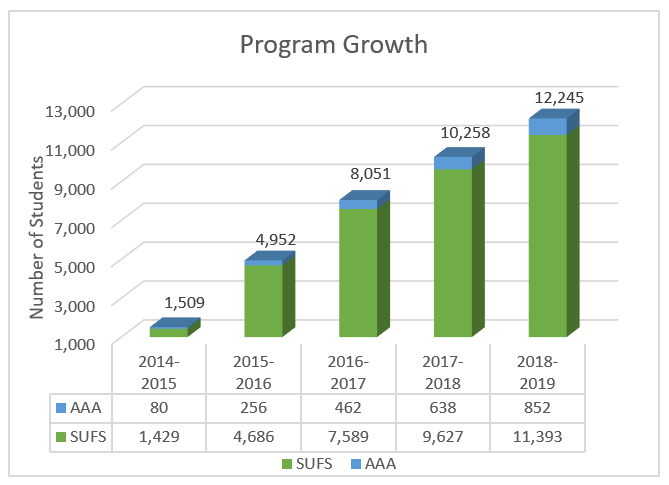 Growth in a Florida education savings account created for students with unique abilities continued its steady increase in 2018-19 according to figures released this week by the leading organization that administers the program.
A new report from Step Up For Students that includes information on enrollment, student eligibility and scholarship expenses shows that 12,245 students participated in the Gardiner Scholarship Program, a nearly 2,000 student increase from 2017-18.
For 2018-19, 11,393 students were enrolled in the program through Step Up for a total award of $117 million. Another 852 enrolled through the AAA Scholarship Foundation. A total of 71 percent of the students were renewing their scholarships, and 29 percent were receiving scholarships for the first time.
Funded by state legislative appropriations, the scholarships average $10,266 a year and increase in value, some exceeding $20,000, depending on the severity of a student’s medical diagnosis. Parents can spend the money on various educational expenses such as tuition, instructional material, therapies, tutoring and electronic devices.
Families of 6,648 students used the funds in 2018-19 for tuition at one of 1,130 participating private schools. Approximately 34 percent of students were enrolled in home education. The remaining students utilized a portion of their scholarship funding for private school tuition.
Nearly 58 percent of all funds, or $57.2 million, were spent on private school tuition and fees, while 22 percent, or $21.9 million, was spent on instructional materials. Families spent $8.9 million on therapies and specialized therapies and $4.7 million on part-time tutoring.
Students are eligible for the Gardiner Scholarship if they have one of several specific diagnoses including autism, Down syndrome, cerebral palsy and spina bifida. The majority – 63 percent – have a diagnosis of autism.
The full report, including additional breakdowns on expenses and enrollment, is available here.

