This is the latest in our series on school choice and the political left.
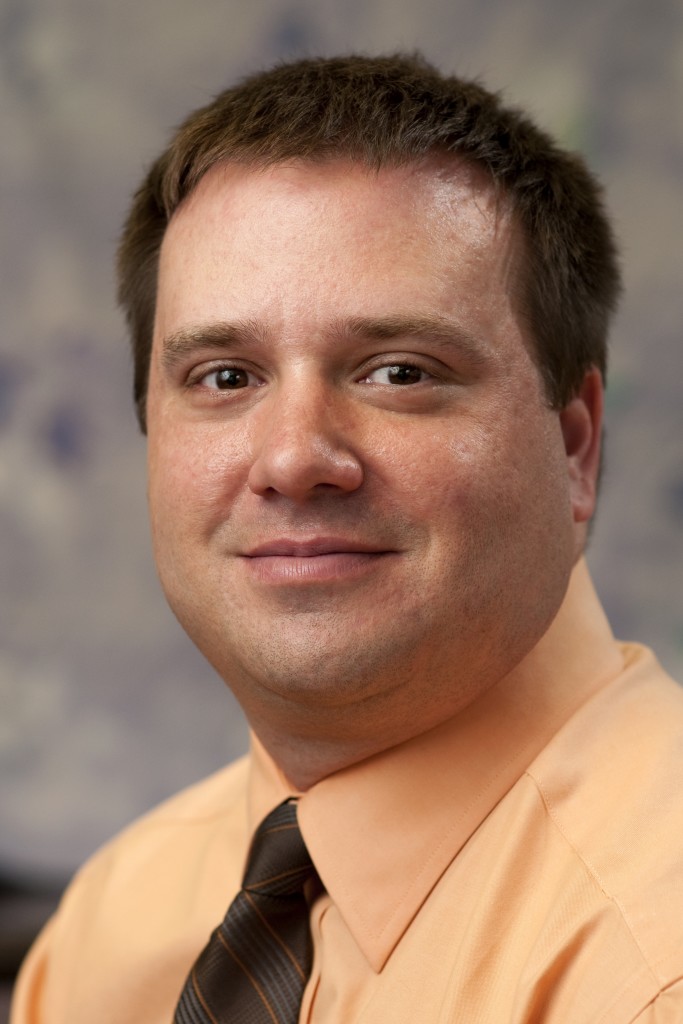
Adam Emerson
It’s amazing how many artifacts of the Voucher Left, but half buried and glinting in the sun, have been missed by so many. But not every potential archeologist has shrugged and walked on.
 Writers like Matthew Miller, in this piece for The Atlantic, and Peter Schrag, in this piece for The American Prospect, have accurately characterized the school choice movement in all its eclectic glory. Today, we’d like to pause and highlight the contributions of another.
Adam Emerson was redefinED’s founding editor before moving on to first, a gig as the Fordham Institute’s “school choice czar,” and now, charter schools director at the Florida Department of Education. At the same time he was setting the bar for quality at the blog’s dawn five years ago, Adam was unearthing gems from the sprawling dig that is choice and the left. Among them:
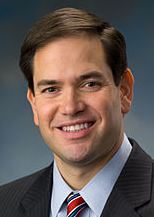
Sen. Rubio
America’s long-running, state-by-state battle over parental empowerment in education may be going national.
In what could be the most far-reaching school choice legislation in U.S. history, Sen. Marco Rubio, R-Fla., is proposing that low-income parents anywhere in the country be able to choose private schools through a federal initiative similar to the tax credit scholarship program in Florida.
“It’s not about unions. It’s not about school administrators,” Rubio told the Miami Herald for a story published Tuesday night - just after he delivered the Republican rebuttal to President Obama's State of the Union address. “This is about parents. The only parents in America who don’t have a choice where their kids go to school are poor parents.”
Rubio is certain to face headwinds in a Democratically-controlled Senate, but the bill he plans to file would give low-income families options in states that have yet to offer them private school alternatives. The fight in many states has pitted teachers unions and school districts against low-income parents who might benefit. And though state constitutions sometimes speak to the use of vouchers, the U.S. Supreme Court has ruled in two separate landmark opinions (here and here) that such programs are constitutional.
Politically, the bill gives Rubio – a potential Republican contender for president in 2016 – a vehicle to barrel into a Democratic vacuum over parental school choice, and to make inroads with black and Hispanic families who increasingly demand such options.
His proposal isn’t a complete surprise.
The Herald notes he called for it during his Senate campaign in 2010. He suggested it again in a December speech at the Jack Kemp Foundation. And as House Speaker in Florida, he helped pave the way for a major expansion of the country’s biggest such program.
The Florida program is funded by corporations that receive dollar-for-dollar tax credits in return for contributions. It serves more than 50,000 students – 68 percent of whom are black or Hispanic - and has won backing from a solidly bipartisan legislative coalition, including a majority of the Legislative Black Caucus. (It’salso administered by Step Up For Students, which co-hosts this blog).
The federal school choice proposal has already garnered the support of three progressive-minded parental choice groups – the Black Alliance for Educational Options, the Hispanic Coalition for Reform and Educational Options, and Agudath Israel, a Jewish advocacy organization. (more…)
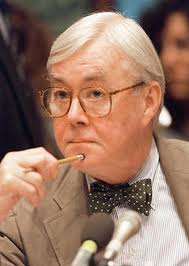
The late Democratic Sen. Daniel Patrick Moynihan once crafted a tuition tax credit measure with Republican Sen. Bob Packwood that garnered 50 co-sponsors, including Sen. George McGovern and 23 other Democrats.
Editor's note: This op-ed appeared over the weekend in the Huffington Post.
At least three more red states -- Texas, North Carolina and Tennessee -- will push for school vouchers in the coming months. But the familiar showdown between Republican lawmakers and teachers' unions masks a more intriguing political development on parental choice: Democrats are increasingly siding with parents.
Count me in the parent camp. I'm a lifelong progressive Democrat, former president of two local teacher unions, and current president of a Florida nonprofit that is the country's largest provider of tax credit scholarships for low-income students to attend qualified private schools. This year the Florida scholarship will serve more than 50,000 economically disadvantaged students who are mostly of color, and it aligns directly with the core Democratic Party values of social justice and equal opportunity.
For a host of complicated reasons, low-income kids are not generally doing well in traditional public schools. In 2011, according to the National Assessment of Educational Progress, the reading gap nationally between low-income and higher-income fourth-graders was 22 percentage points. Florida has seen encouraging progress with its disadvantaged students, yet startling gaps persist. Last year, 45 percent of low-income third graders scored at grade level or above on the Florida reading test, compared to 77 percent of higher-income students.
One way to combat the challenges faced by students in poverty is to give their parents more options. Affluent parents can buy homes in neighborhoods with preferred school zones, navigate the other public school choices, home school or pay for a private school. But low-income parents don't have these opportunities. Expanding choice is a way to help level the playing field.
This expansion is not either/or, and it's not public versus private. Educators understand that different children learn in different ways, and to that end, education is increasingly becoming customized. In Florida, we now have 1.5 million students -- about 43 percent of the total -- enrolled in something other than traditional neighborhood schools. Last year, there were 341,000 who chose through "open enrollment," 227,000 who picked choice and magnet programs, 180,000 in charter schools, 203,000 in career academies and 8,000 in full-time virtual instruction. Vouchers and tax-credit scholarships are not an invasive species on this fast-changing landscape, where lines between public and private are blurring. They're simply two more peas in a public education pod.
That's one reason the politics are changing. (more…)
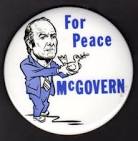 None of the recent obituaries of George McGovern - the former U.S. senator and Democratic presidential candidate who died Oct. 21 and was buried Friday - discussed his long struggle to reconcile loyalty to teachers unions with his belief that poor and working-class parents should be able to pick their children’s school.
McGovern, an end-the-war, feed-the-poor, liberal’s liberal, was for years a school choice champion. He once proposed his own tuition tax credit plan to help parents offset the cost of private school, and he was among 23 Democratic senators who co-sponsored a similar proposal from Sen. Daniel Patrick Moynihan, another liberal lion. But over time, his position changed, mirroring that of the Democratic Party as it became more dependent upon teachers union support.
Adam Emerson, founding editor of redefinED and now school choice czar at the Fordham Institute, wrote more about McGovern’s shift in this post from December 2011, shortly after the release of McGovern’s book, “What It Means to Be a Democrat.” Here’s a taste:
“We cannot abandon these schools and we will not,” McGovern announced to a throng of Catholic high school students in Chicago in the fall of 1972, according to the Washington Post. Catholic schools, McGovern added, are a “keystone of American education,” and without government help, families would lose the right to give their children an education in which spiritual and moral values play an important role.
Presidential candidates were born to flip-flop, but McGovern’s newest manifesto reminds us how far Democrats have strayed from a movement they once breathed life into. Moynihan was prophetic in 1981 when he wrote that as vouchers become more and more a conservative cause, “it will, I suppose, become less and less a liberal one.”
 Long-time Democratic education activist Jack Jennings, in a recent Huffington Post column, argued that Republican support for private school choice is a somewhat recent (i.e., the last 45 years) phenomenon, driven by a political desire to appeal to segregationists and weaken teacher unions. Jennings writes, “The Republicans' talk about giving parents the right to choose is a politically expedient strategy ... Just beneath the surface of the education rhetoric are political motivations to thwart integration, weaken the Democratic coalition, and cripple the teachers' unions.”
Jennings is being disingenuous by not acknowledging that Democrats have also changed their position on public funding for private school choice over the years. Democrats George McGovern and Hubert Humphrey both ran for president on platforms supporting tuition tax credits for private schools, and Senator Daniel Patrick Moynihan, D-N.Y., was the U.S. Senate’s leading advocate for giving parents public funding to attend private schools. The Democratic Party reversed its support of public funding for private school choice in the late 1970s - as a political payback to the National Education Association for giving Jimmy Carter its first ever presidential endorsement.
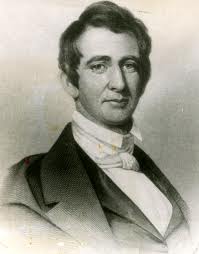
Jennings’ assertion that Republican support for publicly-funded private school choice didn’t exist prior to the 1960s would be news to the founders of the Republican Party, most notably William Henry Seward. Seward (pictured here) helped create the Republican Party and was one of Abraham Lincoln’s primary rivals for the Republican presidential nomination in 1860. After losing, Seward served as Lincoln’s Secretary of State during the Civil War.
Prior to seeking the presidency, Seward was elected governor of New York in 1838 as a member of the Whig Party. According to Doris Kearns Goodwin’s book, Team of Rivals, in his 1839 New Year’s Day inaugural address, Seward attempted to broaden his party’s political base by reaching out to “the Irish and German Catholic immigrants who formed the backbone of the state Democratic Party” (p. 82). As part of what Goodwin describes as Seward’s “progressive policies on education and immigration,” Seward “proposed to reform the school system, where the virulently anti-Catholic curriculum frightened immigrants away, dooming vast numbers to illiteracy, poverty, and vice. To get these children off the streets and provide them with opportunities to advance, Seward hoped to divert some part of the public school funds to support parochial schools where children could receive instruction from members of their own faith” (p. 83).
Seward’s attempts to give Catholic children access to more appropriate learning options drew a sharp rebuke from anti-Catholic Protestants. They accused him of tearing down the wall between church and state. At this time in U.S. history, the word “church” in the phrase separation of church and state meant the Catholic Church. (more…)
 We here at redefinED love to thump that drum, so it was nice to see the nation’s education paper of record picking up the beat this week. Three takeaways from Sean Cavanagh’s even-handed piece on the politics of school vouchers:
The big picture:
This year's presidential campaign offers at least one unequivocal contrast on education issues: The Republican candidate supports private school vouchers, and the Democratic incumbent does not. But at the state and local levels, Democrats' views on vouchers are more diverse and nuanced than what is suggested by the party's national platform …
The Florida example:
When Florida's GOP-controlled legislature in 2010 approved an expansion of a program that gives corporations tax credits for awarding needy students private school scholarships, the measure had significant backing from Democrats. When the original program was launched almost a decade earlier, only one Democrat in the entire legislature voted for it.
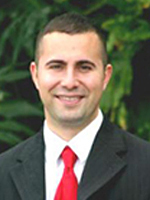
State Rep. Darren Soto, an Orlando Democrat (pictured above), said he supported the recent tax-credit expansion because it would help needy families in his district seek out Roman Catholic schools and other options.
"Religious education is very important and popular to a lot of my constituents," Mr. Soto explained in an interview. "There's room for a strong public education system, as well as private options." (more…)
This month, former Senator George McGovern frames his beau ideal of the crusading and committed progressive in his new book, What It Means to Be a Democrat. Addressing issues as varied as education, defense spending and universal healthcare, McGovern reminds the reader that “if there ever was a moment to define ourselves boldly, to stick to our ideals, it is now.” But now, McGovern’s ideal Democratic defense of public education is much narrower than it was when he ran for president 40 years ago.
“Yes, I’m sure that some private academies offer students more one-on-one attention and perhaps more intellectual stimulation than the neighborhood public school,” he writes. “But that doesn’t change my strongly held view that public funds should be invested in public education … Voucher programs that use public money to send kids to private school only divert money away from the overall goal of making U.S. public schools as robust as possible.”
When he ran for president in 1972, however, McGovern’s support for education was drawn more broadly. As Election Day neared, McGovern proposed his own tuition tax credit plan to help the parents of elementary and secondary schoolchildren offset the costs of a private or parochial education, just as advisers to Richard Nixon had done. Politically, McGovern wanted the Catholic vote, but this pretends that he was a maverick among liberal Democrats in wanting to aid families choosing a private, even faith-based, education. He was not.
Hubert Humphrey proposed his own tuition tax credit plan when he ran against Nixon in 1968. And McGovern joined 23 Democratic senators in 1978 to co-sponsor a plan championed by one of the nation’s most prominent Democrats, Daniel Patrick Moynihan, offering $500 in tax credits to families paying private school tuition.
“We cannot abandon these schools and we will not,” McGovern announced to a throng of Catholic high school students in Chicago in the fall of 1972, according to the Washington Post. Catholic schools, McGovern added, are a “keystone of American education," and without government help, families would lose the right to give their children an education in which spiritual and moral values play an important role.
Presidential candidates were born to flip-flop, but McGovern’s newest manifesto reminds us how far Democrats have strayed from a movement they once breathed life into. Moynihan was prophetic in 1981 when he wrote that as vouchers become more and more a conservative cause, “it will, I suppose, become less and less a liberal one.”
If that happens, he added, “it will present immense problems for a person such as myself who was deeply involved in this issue long before it was either conservative or liberal. And if it prevails only as a conservative cause, it will have been a great failure of American liberalism not to have seen the essentially liberal nature of this pluralist proposition.”
NOW: From the book, What It Means to Be a Democrat, published this month by Blue Rider Press, former Senator and presidential candidate George McGovern writes:
Yes, I'm sure that some private academies offer students more one-on-one attention and perhaps more intellectual stimulation than the neighborhood public school. But that doesn't change my strongly held view that public funds should be invested in public education. Especially now, with a growing array of public charter schools, parents have more choice than ever if they don't like what they see at the traditional school down the street. But voucher programs that use public money to send kids to private school only divert money away from the overall goal of making U.S. public schools as robust as possible.
THEN: From the Sept. 20, 1972, Washington Post, "McGovern Pledges Support For Aid to Private Schools":
CHICAGO, Sept. 19 -- Sen. George McGovern, calling Roman Catholic schools a keystone of American education, pledged his support today of federal tax credits to help offset tuition costs at parochial and other "bona fide" private schools.
"We cannot abandon these schools and we will not," the Democratic presidential candidate said here this morning before a bubbling crowd of Catholic high school students.
Without government help, he told them, their parents would lose the right to give their children an education in which spiritual and moral values play an important role.

