 Two more months. As expected, the Florida Board of Education decided this morning to extend the search for a new education commissioner. The board discussed the issue for about three minutes before voting unanimously in favor of a new timeline.
The original deadline for applications, Sept. 27, had drawn 16 candidates through last Friday, but no big names in ed reform and school choice circles. The new deadline is Nov. 30.
Several board members made brief reference this morning to candidate quality.
If the candidates are not "up to the level we have set - which is a very high level - I would like to have the flexibility to, if needed, to extend the deadline (again) or take other appropriate action," said board member Roberto Martinez of Miami. "I assume that would be implicit in all this."
Yes, said board chair Gary Chartrand: "We're not going to lower our standards here. And Bob, if we're not satisfied with the results, at that point in time, I think we certainly have the right to push that date out further."
The new timeline: (more…)
 The Florida Board of Education is expected this week to extend its search for a new education commissioner, marking the second time in as many years it has done so amidst mutterings that the initial pool is mediocre.
Through Friday, the board had received 16 applications to replace former Commissioner Gerard Robinson, a former head of the Black Alliance for Educational Options who left at the end of August. The deadline for applications is Thursday, but the board has scheduled an emergency conference call Tuesday to consider a new deadline.
The applications to date do not include any big names in ed reform circles, echoing what happened last year during the initial search for the previous commissioner. At that time, the board was seeking to replace highly regarded former Commissioner Eric J. Smith, who was pushed out by newly elected Gov. Rick Scott.
Robinson, then the ed commissioner in Virginia, applied after the deadline was extended. His brief tenure in Florida was dogged by problems with the state’s testing and school grading system, and by the biggest blowback to the state accountability regimen since the tenure of Gov. Jeb Bush.
Robinson’s replacement will be Florida’s fifth commissioner in eight years. Voters approved a constitutional amendment in 1998 to better insulate the position from shifting political winds, but it hasn’t worked out that way. Smith was hired in 2007 after newly elected Gov. Charlie Crist nudged out former Commissioner John Winn, a Bush ally. Scott is up for re-election in 2014.
Two of the 16 candidates have strong, obvious ties to school choice. (more…)
 As the Florida Board of Education ramped up its search this morning for a new state education commissioner, one of its board members offered a polite suggestion to Gov. Rick Scott and Florida lawmakers: Give the next commish some space.
"I think all of us, the board and the political establishment, needs to understand that we need to give that person a lot of autonomy so that they can function professionally with minimal interference from the political folks," said board member Roberto Martinez of Miami (pictured here). "I say that respectfully to our elected officials."
The board is looking to replace Gerard Robinson, who left last week after little more than a year on the job. The next commissioner will be Florida's fifth in eight years, not counting interim commissioners.
Technically, the state board of education hires the commissioner. Florida voters approved a constitutional amendment in 1998 to make the board responsible for that decision, in an attempt to keep education policy better insulated from shifting political winds. But it hasn't quite worked out that way.
After his election in 2006, former Gov. Charlie Crist nudged out former Education Commissioner John Winn, who was close to former Gov. Jeb Bush. The board replaced Winn with Eric J. Smith. But after Scott was elected in 2010, Smith was out, clearing the path for Robinson. Robinson abruptly announced his resignation July 31, saying he needed to return to his family in Virginia.
The board expects to have a list of candidates on Sept. 27. More from the Tampa Bay Times here.
 Number of the week: 87,062
That’s how many low-income Florida families began applications for tax credit scholarships this year, up from 69,000 last year. It’s another sign of fast-growing demand for the largest private school choice program of its kind in the country.
Demand is so high, in fact, that Step Up For Students, the Tampa-based nonprofit that administers the program (and is home to redefinED), had to close applications last week to new students for the 2012-13 school year. More than 50,000 scholarships have already been approved, and thousands more are in the pipeline.
Not all families who begin applications finish them. And not all students who are approved for scholarships take them. That’s in part because some families determine they can’t afford the difference between the scholarship amount ($4,335 this fall) and the private school’s tuition and fees. The scholarships are only available to students whose families meet the income eligibility requirements for free- or reduced-price lunch.
Last year, the tax-credit scholarships program served 40,248 students, according to a Florida Department of Education year-end report posted Monday. That's nearly double the 21,493 it served just five years ago. In the spring, the Legislature bumped up the program cap from $219 million to $229 million so about 9,000 additional students could be served.
A bigger problem for science in Louisiana
Two widely circulated stories recently noted the anti-scientific teachings of some private Christian schools that will be participating in Louisiana’s new voucher program.
The first, from the Associated Press, quoted a science advocate who lamented that public money will be used to finance creationism and other “phony science.” Meanwhile, Mother Jones headlined, “14 Wacky ‘Facts’ Kids Will Learn in Louisiana’s Voucher Schools.” Tops on the list: “Dinosaurs and humans probably hung out.”
From a scientific standpoint, such teachings are indefensible. But as I’ve written before, the poor track record of public schools in science instruction, particularly with low-income and minority students, can’t be defended either.
According to the latest NAEP results in science, Louisiana ranked 46th of 50 states. Twenty-two percent of its eighth-graders were deemed proficient.
And Florida's next education commissioner will be … (more…)
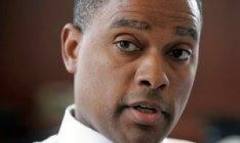 Florida: State education commissioner Gerard Robinson, a former president of the Black Alliance for Educational Options, resigns amidst tumult over the state's accountability system (Tampa Bay Times). Robinson says the move was for family reasons (Tampa Bay Times). Critics of Florida's education reforms see an opportunity to change direction (News Service of Florida).
Louisiana: There are far more applicants than seats available in Louisiana's new voucher program, leaving thousands of parents and students out of luck. (New Orleans Times-Picayune)
Wisconsin: Private school vouchers are a central issue in a Democratic primary for a state assembly seat in Milwaukee. (Milwaukee Journal Sentinel)
Maine: On the birthday of school choice champion Milton Friedman, choice proponents in Maine promise another legislative push for an expansion of learning options. (Bangor Daily News)
Mississippi: Gov. Phil Bryant pushes for charter schools as part of his education reform package (Jackson Clarion Ledger). Lt. Gov. Tate Reeves also says he'll continue pushing for legislation to boost charter schools despite the failure of a charter school proposal during the last session (Memphis Commercial Appeal).
North Carolina: The state board of education is set to consider allowing 25 new charter schools across 13 counties next year. (Associated Press)
South Carolina: Parents and teachers talk up the positives of a new charter school in the Myrtle Beach area. (Myrtle Beach Online)
Nevada: A state lawmaker proposes a voucher bill that would give parents half of the state's per-student funding to send their children to private schools. (Las Vegas Review Journal)
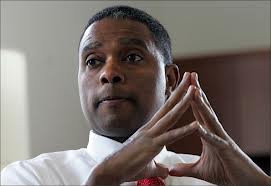 Florida education commissioner Gerard Robinson has made what appears to be an anguishing personal decision to return to his family in Virginia, because his wife, a law professor, has been unable to find a comparable position in Florida. And yet the announcement Tuesday was greeted with a level of vitriol that can only speak to the state’s nasty educational divide.
An anti-testing group released a statement deriding Robinson’s “so-called accomplishments” as tied to a testing system that “has been completely discredited.” A Democratic lawmaker called the departure “a clear indicator … that recent destructive education reform measures … are harmful to the morale and productivity of students and teachers.” A Florida School Boards Association leader accused Robinson of “doing the bidding” of the state Board of Education, as though she doesn’t expect the same of her own superintendent. Predictably, the Washington Post’s Valerie Strauss offered a conspiracy theory – that Robinson was being offered as a “scapegoat” to divert attention from the FCAT. A Democratic congresswoman who should know better actually called for a federal review of the FCAT.
You get the picture.
Now, it is certainly true that the Department of Education had issues with the FCAT writing test and bungled the initial release of school grades this year. And it is also true that much – maybe too much – rides on the performance of students on state testing. But nothing in Robinson’s 13 months on the job warrants such public venom, and you don’t have to defend him to recognize his convenience as a punching bag. So let’s call this another temperature check in the fever over educational accountability. (more…)
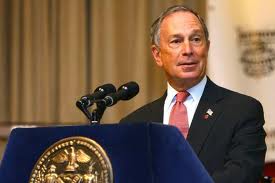 New York: For the third year in a row, New York City charter schools outperform traditional public schools, drawing praise from Mayor Michael Bloomberg, pictured here (New York Times). More from the New York Daily News.
New Jersey: The state teachers union fights new charters even as it attempts to unionize charter school teachers (NJ Spotlight). State education officials approve nine new charters, but reject 10 and postpone 13 (NJSpotlight), including a full-time virtual charter. (NJ.com)
Florida: State education officials reject appeals from three virtual charter schools seeking to open in the Miami-Dade school district. (Miami Herald) Education Commissioner Gerard Robinson defends charter schools at a town hall meeting (South Florida Sun-Sentinel). In a key Democratic primary in South Florida, state senate candidates differ over support for vouchers and tax credit scholarships. (Palm Beach Post)
Louisiana: Students and schools in the state's new voucher program are not likely to face the same regulatory accountability measures as public schools (Baton Rouge Advocate). A nonpartisan watchdog group recommends state education officials seek legislative guidance as they craft accountability rules (Associated Press). The state teachers union pans the academic results of the state's first all-grades, on-line charter school, but the school fires back with accusations of cherry picking (Baton Rouge Advocate).
Michigan: Democrats fear vouchers will be part of Gov. Rick Snyder's plans to overhaul school funding (MLive.com).
Washington: Gubernatorial candidates Rob McKenna and Jay Inslee agree on many aspects of education policy, but disagree on charter schools. (Seattle Times)
Elsewhere: Study finds students in K12 Inc. virtual charter schools are lagging behind their peers in traditional public schools. (Washington Post)
Editor's note: Here's another selection of "choice nuggets," a feature we started last week to keep some smaller but still blogworthy items from going to the compost heap. 
Are vouchers too popular, or not popular enough?
For years, school choice critics have posited that vouchers and tax-credit scholarships will open the floodgates for a mass exodus from public schools. So it was a bit of a monkey shock last week to read Diane Ravitch belittling Louisiana’s new voucher program because, in her view, too few students had applied.
“Not exactly a stampede for the exits,” Ravitch wrote. “No big rush to enroll in the little church schools that are supposedly better than the public schools … ”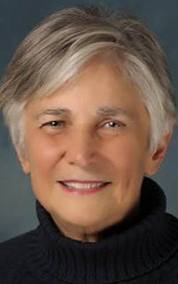
According to published reports, about 9,000 students applied for vouchers, not counting those already enrolled in the voucher program in New Orleans. Sounds like a lot of people to me. But if it’s obvious that only a small percentage of parents will opt for private schools (because, truth be told, most parents are satisfied with their public schools) then why are critics so upset? Doesn’t that undermine the argument that school choice is a Trojan Horse for profiteers?
Ravitch ends her piece by suggesting Louisiana officials puffed up the application numbers. “As usual,” she concluded, “they were playing the media for headlines.”
Two days later, the Washington Post’s “Answer Sheet” blog ran Ravitch’s piece in full.
A tale of two reports
Two national reports released in the last week purported to offer some gauge of academic progress in Florida’s public schools. One relied on apparently undisclosed measures to determine that Florida’s educational ranking dropped from No. 35 to No. 42 in the past year. The other tracked nearly 20 years of scores from the National Assessment of Educational Progress to conclude that Florida students have made more progress than their peers in every state but one.
Guess which report got more play? (more…)
Florida education officials recently posted a frank internal report about what led to the standardized testing flop that has consumed the ed reform debate for the past two months and sparked the biggest backlash yet against the state’s accountability system. Unfortunately, it received virtually no media coverage (one exception here), which is a bit head-scratching considering both the context and contents.
It essentially says, “We messed up.”
“The decision to make a significant change in scoring FCAT Writing in one year was flawed,” the report says. “Throughout the lifetime of the FCAT, there has never been such a dramatic change in scoring criteria in such a short time.”
Led by former Education Commissioner John Winn (pictured here), the just-the-facts review contrasts sharply with the bomb throwing from critics who fought change every step of the way and now deny progress, particularly for low-income and minority students. It is also, in a way, a good sign for the future – a reflection of leadership that is willing to admit mistakes and find remedies.
The report is humbling. It says the state moved too far, too fast in ramping up scoring criteria. External communication with school districts wasn’t strong enough. Internal communication with new Education Commissioner Gerard Robinson was lacking. Also, department staff didn’t move soon enough to determine potential impact of raising the bar: “Had this been done, perhaps the committee members and the Department would have changed the decision to move forward in less than a year.”
Robinson and other education officials have acknowledged some of these mistakes in general terms. But the report goes into more detail. It references confusion in a key July 5, 2011 memo to superintendents, and a year-long span in which the state Board of Education did not receive briefings about the changes. It points out that budget cuts forced the state to whittle away at a more optimal test design, and says transition at the top may have contributed to the communication problems. (After Gov. Rick Scott forced out former Commissioner Eric J. Smith, Winn stepped in as interim until the board hired Robinson.)
There’s no doubt the mistakes have undermined confidence in the state’s education system. It will require time and care to repair that. But it’s also true that many critics have gone beyond the kind of legitimate beefs soberly recounted in the report to flirt with demagoguery. (more…)
by Gerard Robinson
Florida has long been a national leader in the field of educational choice. From the introduction of charter schools and the Florida Virtual School in 1996 and 1997, to the creation of the McKay Scholarship program for students with disabilities and the Florida Tax Credit Scholarship program for low-income families in 1999 and 2001, Florida continues to offer its families more choices than ever.
While critics have argued that such programs are harmful to our traditional public school system, our experience in Florida shows the opposite is true. The effect of providing other educational options to our students has benefited not only the students who have participated in these choice programs, but the vast majority of students who have chosen to remain in our traditional public schools as well.
The positive effect of increased educational options is evident in the continuous upward surge in student performance in our public schools over the past 15 years. Although still only a small percentage of the population of our traditional public schools, the choice programs have created a healthy competitive environment that has contributed to the improvement of our traditional public schools’ existing educational programs. They have also helped motivate the introduction of new programs to meet the educational needs of public school students.
From magnet schools to career academies, controlled-open enrollment and Advanced Placement, Florida school districts have introduced numerous new programs and schools that provide unique learning opportunities tailored to the interests and aptitude of their students. In fact, the latest data provided by school districts indicates that of the 2,682,214 students who attend K-12 public schools, nearly 30 percent attend schools other than the one to which they were assigned.
But more than providing competition among the providers of education in our state, school choice is about giving parents, rather than geographic boundaries, control over their child's educational opportunities. School choice is not so much about one type of school being “better” than another as it is about empowering parents and helping them learn how to become active participants and decision-makers in finding the best educational environment for their child. While thousands of parents will continue to make the choice to keep their children in the public school to which they’ve been assigned, the very fact that they have a choice contributes to the type of parental engagement that is so important to the education of our children.
As the number of educational options available to Florida’s children continues to grow in both the public and private sector, there are two important goals that need to be at the forefront of how our state effectively manages this growth. (more…)

