John Giotis, a Republican activist who heads a Catholic school in St. Petersburg, Fla., is among 15 people named to a new National Educators for Romney group.
The 15-member group is headed by Rod Paige, who served as U.S. Secretary of Education during President George W. Bush's first term.
Giotis, headmaster of The School of the Immaculata, was among the social conservates in Florida who sided with Romney in the Republican primary. He is the latest Floridian to assume a high-profile position in Romney's education circle. Jeb Bush wrote the forward to Romney's education plan. Former Florida Board of Education Chair Phil Handy co-chairs one of his education policy advisory groups. And Julio Fuentes, president & CEO of the Hispanic Council for Reform and Educational Options (as well as a Step Up For Students board member), serves on an ed policy committee.
A Romney campaign said the new group will lead efforts to support "Romney and his bold education reforms that will put students first."
Paige said in the release: "I’ve worked with Republicans and Democrats to bring quality education to all of our children, and I can say with authority that Mitt Romney understands the reforms this country needs. For too long, we’ve watched as our most disadvantaged children have been denied the one tool they need to rise from poverty and live a successful life—a world-class education. Mitt Romney has proposed real reforms that will finally bring the change we need and that our children deserve. In Chicago, we are seeing again that entrenched special interests will oppose those efforts, but Governor Romney is a leader who can overcome that opposition. I am proud to support him in this endeavor.”
Darren Soto, a Democratic state representative from the Orlando area, isn't out to privatize public schools. He supports public schools at the same time he backs vouchers and tax credit scholarships for low-income kids. And he is among a growing number of Democrats who are doing so.
In the clip above (which comes to us from our friends at the Hispanic Council for Reform and Educational Options), Soto makes it clear that he doesn't see expanded school choice as an either/or. "I'm supportive of that careful balance," he says, "where we provide opportunities for folks for who the public school isn't working or who are seeking a parochial or other specialized program, while still making sure that we fund the base program in public schools as well."
On a related note, check out this op-ed in last week's Huffington Post. It's on the connection between vouchers, Hispanics and revitalized Catholic schools. (Ignore the headline. It's completely at odds with the content of the piece.)
 If President Barack Obama and Mitt Romney want to win over Latino voters, a new survey of five battleground states suggests they do two things: Talk up education. And emphasize school choice.
More than voters in general, Latino voters are more likely to say education is a leading issue, just behind the economy and jobs, found the survey, released Tuesday by the American Federation for Children and the Hispanic Council for Reform and Educational Options. The survey also found Latino voters are more likely than voters in general to support vouchers, tax credit scholarships and education savings accounts.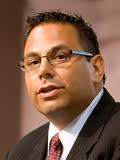
For instance, while 57 percent of likely voters said they supported vouchers, 69 percent of Latino voters did.
“Unfortunately a lot of our Latino families come from low-income areas (where) choice is the only way that they are going to be able to achieve that American dream, graduate high school and go on to make something of themselves,” Julio Fuentes, president and CEO of HCREO (and a Step Up for Students board member) said in the redefinED podcast attached below.
The survey results suggest both Obama and Romney will have challenges swaying Latino voters.
For Obama, it's a matter of position. The president has endorsed school choice options such as charter schools, but has stopped short of backing vouchers and tax credit scholarships. For Romney, it's a matter of emphasis. Hard-line positions on immigration may fire up the Republican base, but it's not a top-tier concern for Latinos.
"The immigration debate from a national level has taken the spotlight. And this educational crisis that we find ourselves in, especially within our Hispanic community, just seems to never be discussed," Fuentes said. "In a professional, politically roundabout way, we asked our candidates, President Obama and Gov. Romney, to basically give us their take. What's their plan when it comes to the Hispanic educational crisis?"
The survey was conducted with likely November voters in Florida, Arizona, Nevada, New Jersey and New Mexico. You can see the full results here.
Today at redefinED we’re going to smash another stereotype: not all public school teachers oppose expanded school choice.
Lorena Castillo is chairwoman of CHISPA, the Coalition of Hispanic Instructors in Support of Parental Awareness. CHISPA falls under the umbrella of the Hispanic Council for Reform and Educational Options, and its 180 members – almost all of them teachers in traditional public schools - support charter schools, private school vouchers and tax credit scholarships.
Castillo sees no conflict between that support and support for public schools. The bottom line for CHISPA, she said in the redefinED podcast below, is finding the right fit for Hispanic students who are struggling. That way, they can catch up, earn diplomas, become good citizens – and not become statistics. “We have great public schools, and dedicated public school teachers,” said Castillo, who teaches middle school science in Dade County, Fla. “But for some students with special needs, they need other options in order to graduate.”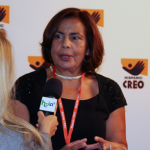
Castillo can relate. She was a teacher and principal in her native Nicaragua but moved to the U.S. 25 years ago. Before becoming certified to teach here, she worked a full-time job, a part-time job and attended night school to learn English – all at the same time.
“We were out of our environment. Different language. Different culture. So we had to struggle a lot to adapt,” she said of herself and her family. “When I see any Hispanic student in my classroom struggling, the same way I did and my kids did, I completely understand and I can make a complete connection.”
As far as we know, there are no other organized groups of public school teachers who openly support expanded school choice options. Coincidentally, “chispa” is Spanish for “spark.”
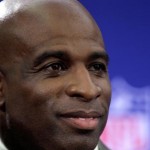 Coincidence or not, an impressive roster of superstar professional athletes with strong Florida ties have become major league champions for school choice. Tim Tebow was homeschooled outside Jacksonville. Derrick Brooks of Pensacola co-founded a charter school in Tampa. Andre Agassi, who trained in Bradenton, did the same in Las Vegas. And Jorge Posada, who lives in Tampa (or did until recently), put his name behind the Lake Worth-based Hispanic Council for Reform and Educational Options.
The latest to step up: Deion "Prime Time" Sanders, a Fort Myers native who starred at Florida State before going on to electrify pro football and baseball.
Sanders is starting two charter schools in the Dallas-Fort Worth area. The Prime Prep Academy schools, set to open this fall, will feature a technology-heavy curriculum aimed at inner-city kids.
"It's been a 3-year process," Sanders told the Forth Worth Star-Telegram Feb. 20. "Nothing I have ever done compares to this. We are going to have the best teachers and coaches. These schools will have no color and no boundaries. We plan to educate and influence kids to go and make a true difference in their community." (more…)

