
“Gradually,” Cesar Chavez predicted, “we’re going to see an awful lot of alternative schools to public education.” (Image from Wikimedia Commons)
Cesar Chavez, the iconic labor leader, would have been 90 years old today, and progressives, including teacher union leaders, are pausing to honor him. But few of them probably realize Chavez’s vision of a better world – the same vision that led him to organize the most abused workers, and battle the biggest corporations – included scenes of community empowerment from earlier chapters in the school choice movement.
Chavez was a steadfast supporter of Escuela de la Raza Unida, a forgotten “freedom school” in Blythe, Calif. that sprouted in 1972, in the wake of mass parental frustration with local public schools. Some of his comments about this school in particular, and public education more generally, can be found in this rough-cut documentary about the school’s creation.
“We know public education has not … been able to deal with the aspirations of the minority group person or, in our case, our kids who have been involved with the struggle for social betterment,” Chavez tells an interviewer at about the 7:30 mark in the video.
“The people who run the institutions want everybody to think the same way, and it’s impossible,” he continued at another point. “We have different likes and dislikes, and different ideals. Different motivations. And so I’m convinced more and more that the whole question of public education is more and more not meeting the needs of the people, particularly in the case of minority group people … “
The success of Escuela de la Raza Unida is proof, Chavez said, that truly community-led schools are needed – and can work.
“Gradually,” he predicted, “we’re going to see an awful lot of alternative schools to public education.” (more…)
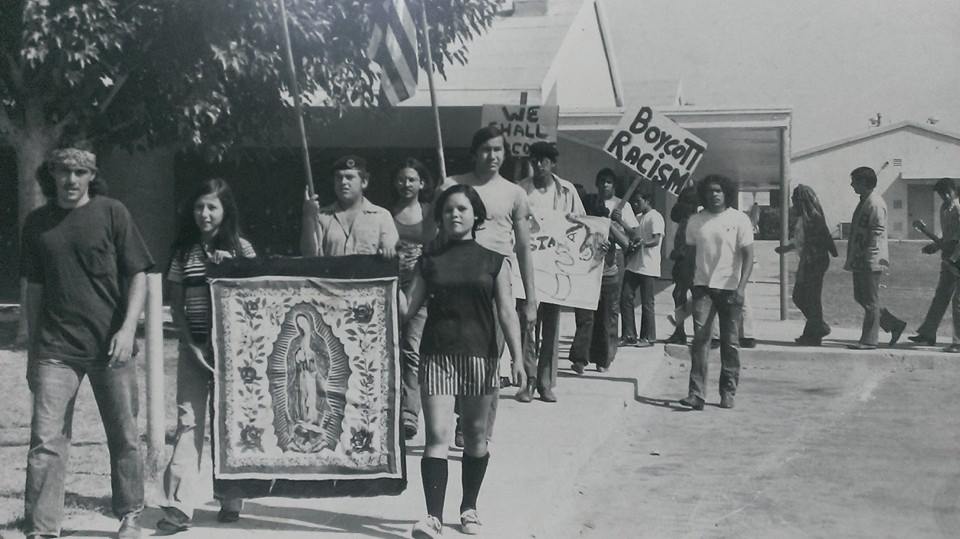
Students picketed public schools in Blythe, Calif. when tensions between the Hispanic community and school district boiled over. The conflict led to the creation of a private school, Escuela de la Raza Unida, which remains in operation.
This is the latest post in our occasional series on the center-left roots of school choice.
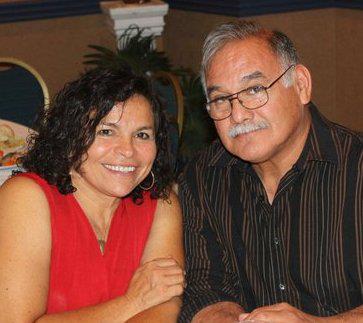
Carmela and Rigoberto Garnica have run Escuela de la Raza Unida for more than 40 years.
If the American left had fully championed school choice decades ago, we may be celebrating what happened in 1972 in Blythe, Calif. as the spark of a movement.
That spring, the Mexican-American community’s frustration with the public school system boiled over, spurring creation of a scrappy “freedom school” that became Escuela de la Raza Unida, which still exists today.
This lost story from a remote desert town is steeped in the progressive politics of another era.
In Chicano Pride. In empowering the “poor.”
Even in Cesar Chavez and the United Farm Workers.
“We were ahead of the curve,” said Carmela Garnica, who has led the school with her husband, Rigoberto Garnica, since the beginning.
Hispanic support for school choice runs strong. But if there is anybody who has chronicled that history, even Hispanic school choice leaders are unaware. Perhaps the story of Escuela de la Raza Unida can inspire the deep dive that this subject deserves.
The school sprang from years of dissatisfaction. The fuse-lighter was an allegation that the principal of the public middle school in Blythe manhandled a female honor roll student, apparently for showing a politically provocative film to a Hispanic student group. But parents had complained about other issues for years. They wanted diversity in the nearly all-Anglo teaching corps. They wanted history lessons that acknowledged contributions of Native Americans and Mexican Americans.
Students picketed the public schools for weeks. In the meantime, the community rallied to create an on-the-fly school where everybody pitched in to teach, cook, clean – whatever they could do. Initially, they met at a local park, according to newspaper articles and “A Choice For Our Children,” a 1997 book by California school choice supporter Alan Bonsteel. At some point, the dissidents decided to rent space for classes, a tiny former post office that could hold 50 students.
They never left.
Escuela de la Raza Unida began as a K-12 private school, and Garnica says it would have preferred to stay that way. But California doesn’t have vouchers or tax credit scholarships, despite multiple attempts at the ballot, including this liberal-led campaign in the late 1970s. Over the years, the school had to shift its mission to best match community needs with available funding. (more…)
This op-ed, by prominent Florida pastor Nino Gonzalez, originally appeared in Spanish in the latest edition of La Prensa. Here is the English translation.
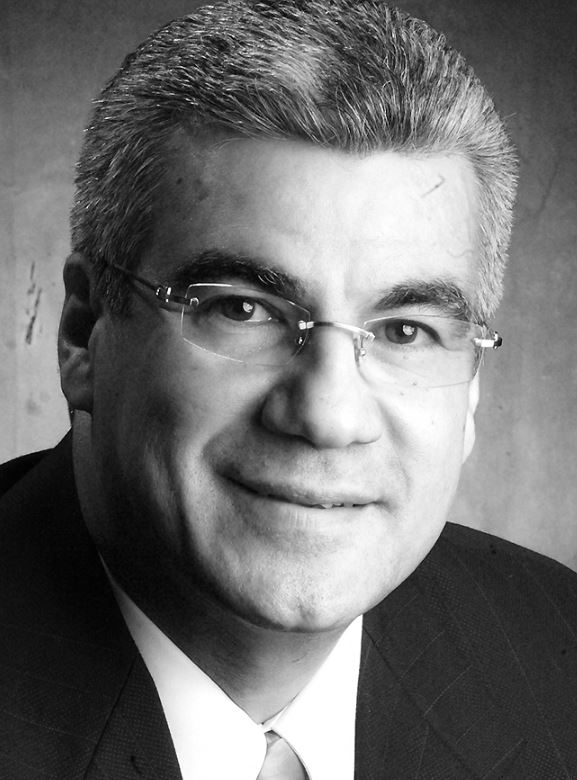
Pastor Gonzales
A lot of people misread our poor communities. They think because people are financially poor, they must be intellectually poor. But we know all of our children have the ability to learn at the highest levels, and to live up to their God-given potential. We also know a key to making that happen is matching them to the learning environments that are best for them.
This is why I support school choice. And this is why I am so disappointed with the lawsuit that seeks to kill the Florida tax credit scholarship program.
A year ago, the teachers union filed suit to end the program, which is the biggest private school choice program in America. Never mind that it has been in existence for 14 years and serves 77,000 low-income children, including about 30,000 Hispanic children. And never mind that a judge ruled in May that the union did not have standing to sue, and that its claims of harm to public school students were “speculative.” The union decided to appeal, and its president promised to fight all the way to the Florida Supreme Court.
This is wrong. Freedom and choice are core American values, so why is education an exception? Why does the union want to block poor parents from schools that work for their children? There are no good answers.
The suit is even more wrong when you consider how many Hispanic students struggle. In 2014, only 50 percent of Hispanic 10th graders in Florida passed the reading test they must pass to graduate. The numbers were even worse in Central Florida. In Orange County, 46 percent passed. In Osceola, 41 percent. In Polk, 36 percent.
I don’t bring this up to disparage public schools. Many of them are working tirelessly. But other schools can help our children succeed too. (more…)
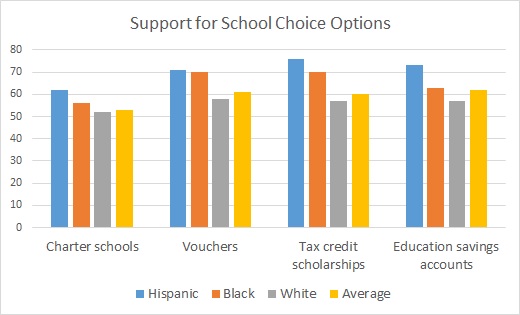
A Friedman Foundation survey shows Hispanics are among the strongest supporters of various school choice options. Note: The survey has a 3.1 percent margin of error, which was larger for subgroups. More methodological details can be found here.
Hispanics strongly support privately operated school choice options, at rates higher than the national average for all groups, according to the results of a new national survey released today.
Hispanic backing for school choice programs exceeds the national average for charter schools, vouchers, tax credit scholarships and education savings accounts, found the survey, which was funded and sponsored by the pro-school-choice Friedman Foundation.

Hispanic support was particularly strong for tax credit scholarships.
Sixty-two percent of Hispanic respondents favor charter schools, compared to 56 percent of African-Americans and 52 percent of whites. Seventy-one percent favor vouchers. Seventy-three percent favor education savings accounts.
Hispanic support was strongest for tax credit scholarships, with 76 percent in favor and 16 percent opposed. The national split was 60 percent in favor and 29 percent opposed.
The findings are another example of the disconnect between popular support for choice programs and the political divisions that dog them. Other surveys have also found particularly strong support for choice programs in minority communities, even as those communities are disproportionately represented by Democratic lawmakers who are more likely than Republicans to oppose them. (more…)
Editor’s note: This is the sixth post in our school choice wish series. See the rest of the line-up here.
by Jason Crye
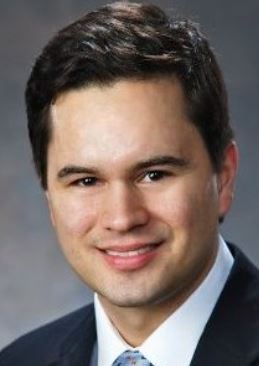
Jason Crye
My school choice wish is more children, particularly Hispanic children from low-income and working-class families, have access to educational options that will help them flourish. Unfortunately, statistics show there is a lot of rocky ground to plow before my wish is granted.
Hispanics lag behind their counterparts in nearly every meaningful education statistic. For example, recent figures show the Hispanic graduation rate has improved to 76 percent, while the Hispanic dropout rate is the lowest it has been in decades at 14 percent. It is mildly encouraging that these numbers are heading in the right direction, but they are clearly not where they should be.
To achieve my wish, the education reform community, including organizations like my own, school leaders, elected officials, and other advocates, must continue to help parents engage in the public square. They must continue to stand up for the reforms that poll after poll shows are supported throughout the country.
This is exactly what I saw earlier this month at the Hispanic Council for Reform and Educational Options conference in Miami. It was so heartening to see education advocates, community activists and business leaders from around the country all focusing on the crisis we are facing, and standing together for common-sense solutions. It was also gratifying to see how partisan political differences have been put to the side when it comes to policies that work for our children.
I heard Republicans and Democrats, conservatives and liberals, all supporting the expansion of school choice programs like charter schools, vouchers, tax credit scholarships and education savings accounts. One of them, Assemblyman Marcos Crespo of New York, a Democrat, spoke at a press conference after a student named Valentin movingly told us how a school choice scholarship changed his life.
Said Crespo: “I hope that as the rest of this conference progresses that we can continue to build this network and demonstrate that there are a lot of us who believe in real success and not just our own interests, or partisanship, or labels. Our goal is to be judged by the Valentins of the world, and not by you know, who our traditional political friends are, or how much they’ve invested in our campaign. It’s not about that. It’s about Valentin.”
There is a sleeping giant in American politics. It’s the parents, who, when armed with the facts, demand excellence from the schools their children attend; who, when necessary, will march to show their strength in numbers; and who will vote to change the status quo. Many of those voters are Hispanic. Indeed, 66,000 Hispanics turn 18 years old every month, and an increasing number of them have been affected positively by various education reforms.
I look forward to a future when voters are more informed about the positive impact of school choice. I look forward to a future when parents are made aware of their educational options and have the freedom to choose the school where their child can succeed.
In the meantime, I know it is my responsibility, and the responsibility of all education reform advocates, to do everything possible to engage parents and educators. We must help children today so we can achieve that brighter future together.
Jason Crye is executive director of Hispanics for School Choice.
Coming Monday: Wevlyn Graves, Florida parent of a tax credit scholarship student.
The authors of the latest Education Next-PEPG Survey highlight the growing disconnect between the general public, the affluent and teachers when it comes to sweeping public policies in education. But, just as notably, the results show a wide range of attitudes between the affluent, Hispanics and African Americans when it comes to school choice.
Vouchers have gained more support nationally since the 2010 survey, but support slips when the results are broken down by the affluent and by teachers. In some cases, the difference is stark among minority groups and the affluent, but those differences disappear when the policies (and the questions) change.
Depending on how the question was asked, as much as 60 percent of Hispanic respondents and 53 percent of African Americans supported vouchers compared to 47 percent of affluent respondents.
However, when it comes to individual or corporate tax credit scholarships, support among the affluent increases to 57 percent, which is the same result among African Americans and closer to that of Hispanics, a group that showed no difference in support among tax credits or vouchers.
Adam Schaeffer at the Cato Institute has more on the differences in support of vouchers and tax credits here.

