For families in states that allow parents to use scholarships to customize their children’s education, the opportunities can be exciting. However, the plethora of choices can also make the process overwhelming. To help parents seeking to personalize their child’s learning, entrepreneurs have begun to offer a range of services, from assessments to establish benchmarks to curricula and other programs that best fit a child’s needs. Megan Santini, a second-generation home educator who holds a bachelor’s degree in elementary education and a master’s degree in special education, was recently hired as director of FUE Academy to help West Virginians navigate this new landscape of customization made possible by the Hope Scholarship. (Answers in this interview have been edited for clarity.)
Q. Please describe your role with West Virginia Families United for Education (WV FUE) and its affiliated organization, FUE Academy. Can families use part of their Hope Scholarship to pay for your services?
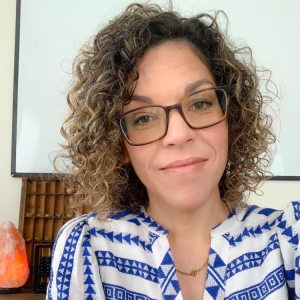
Megan Santini, director, FUE Academy
A. WV FUE is a participating provider with the state’s expansive ESA program called the Hope Scholarship. We currently have nine approved services that participating families can purchase using their funds. We also accept private pay from traditional homeschooling families for some of the services that they find valuable. My role is to provide essential academic and state compliance support to families educating at home. We like to call it unbundling and assembling options — unbundling education into customizable parts, and then assembling those parts into a program of study that fits the child and the family.
Q. What is the difference between the general navigation services that WV FUE provides and the type of navigation you provide at FUE Academy for Hope Scholarship parents seeking to design a customized education plan for their children?
A. Jamie Buckland, executive director of the WV FUE, has primarily focused on ensuring families have the information they need to determine which option is best for them. If they choose a bundled option such as a traditional public school, public charter school, or private school, there isn’t as much of a need for additional support navigating compliance with assessments or planning out the course of study for their academics. Traditional homeschool groups don’t quite meet the needs of Hope scholars. Our organization sees a lack of resources to support Hope families who choose an unbundled option, such as home educating with Hope funds, and we feel passionately that these families deserve sustainable support.
Q. Let’s say I’m a parent who just got their Hope Scholarship and wants to know how best to educate my 8-year-old, who has been in a district-zoned school since kindergarten. Where do I start, and what are the next steps necessary to get there?
A. Once a family reaches out looking for academic support, I lay out the options we have available for their student. Usually, this communication occurs over email. Once a family determines they want my assistance in creating their plan, they reserve their funds in the portal. I go in and submit the invoice, and then it takes about two weeks for us to receive the funds. During that time, I have them complete an intake form so I can get to know their family well enough to begin to customize their options. As a second-generation homeschooler, I have years of experience in home education. I have a master’s degree in special education, which has given me the training to individualize education to meet all kinds of students’ needs. I have worked in various educational settings such as public schools, higher education, tutoring, brain training, and providing support to families using state-funded educational programs. I utilize my wide variety of experience to create a plan based on the needs articulated by the parent. We find that it’s always best if the parent chooses the benchmark assessment as well, because the data from the benchmark along with the intake process really gives me a clear picture of what the students need and what next steps are best.
Q. What are some of the most innovative programs you have recommended so far?
A. While it may not seem incredibly innovative on its head, I feel that I help families to see through the shiny and fancy bids for their funds and their time to find the programs and curricula that will actually be sustainable and life-giving to the learners and home. I know how a homeschool functions. I know that curriculum and programs need to fit the learners, and the parents, and fit into the lifestyle of the family. Sometimes that means online programs or a specialist. Sometimes that means a library card. In a time where there are so many options and programs to wade through, I think it’s pretty innovative to encourage families to spend time in nature with a nature journal.
Q. What questions and concerns do you hear most often from parents, and how do you respond to those?
A. Many parents ask me how to make home education work in their full and complicated lives. I’ve helped a family who has a child with medical issues requiring frequent trips to a hospital in another state. They spend a lot of time in the car. I helped them design an educational plan that fit their needs. I have helped families with lots of little ones develop a plan to manage the toddlers' and their school-aged children’s learning. I have helped families find educational specialists for their children with disabilities. I’ve helped families with children who are gifted find programs and curricula to support their learners. Many families come to home education because they have unique needs, and they need help navigating their options to create a plan that will fit their family and lifestyle.
Q. Where is West Virginia in terms of making it possible for district schools to offer unbundled services to students? Is there a mechanism for that now? Do you expect there to be one created soon, and if so, how do you think it should be designed to make things as smooth as possible for schools and families?
A. It’s actually been in practice for years here. Traditional homeschoolers don’t have to pay to participate in public education up to part-time participation, but Hope Scholars do. This is why we believe so strongly in our work. Often the family just needs to know what they can do and what they must do. We can provide information and guidance built on decades of experience. Additionally, we find with new legislation, the agencies at the county level aren’t familiar with the code, so they may provide inaccurate information to families. If a family gets told no, hopefully, they will find out about us and reach out. We hope to expand the staff this year so Jamie can train a school options navigator to take over that role.
Q. What advice do you have for those working in a similar role in other states that followed West Virginia’s lead and approved ESAs?
A. Listen to families and help find ways for their feedback to be used to improve the experience. Be prepared not to be paid what you’re worth as things get off the ground.
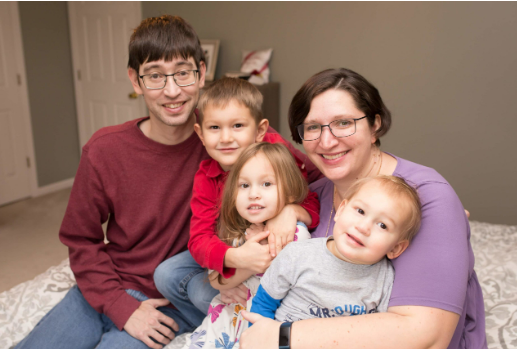
A West Virginia Supreme Court ruling will allow the state’s Hope Scholarship to move forward will make it possible for families like Katie Switzer’s to choose the best education options for their children.
Editor's note: Post author Amanda Kieffer is the communications director for the Cardinal Institute For West Virginia Policy. The institute supported the establishment of the state's Hope Scholarship education savings account program.
Parents across the Mountain State shouted for joy as news of the West Virginia Supreme Court’s ruling in favor of the Hope Scholarship was announced Oct. 6, —just two days after the State Supreme Court heard oral arguments in the case.
The battle for education freedom in West Virginia has been long and hard-fought. West Virginia went from virtually no education freedom in early 2019 to having charter schools, open enrollment, learning pods, micro-schools, and the Hope Scholarship (a near universal education savings account) now available to families in 2022. The change is dramatic and brings new opportunity for children in a state that has historically underserved its children in the education system and has limited opportunities for economic advancement in adulthood.
The Hope Scholarship has been aptly named—representing hope and new opportunity for many families who have struggled to meet the educational needs of their children.
To continue reading, go here.
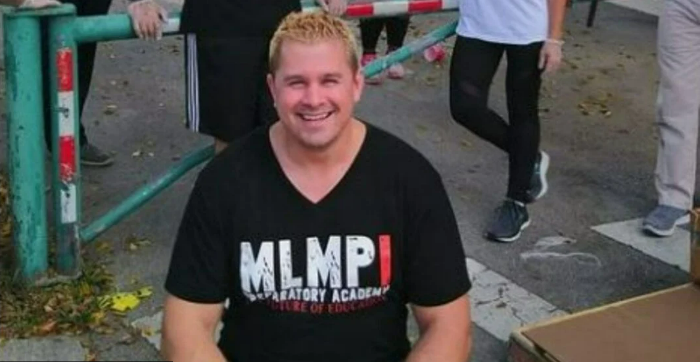
Professional wrestler turned private school owner Daniel Puder is determined to create options that best serve students and families in West Virginia despite a court ruling that has halted implementation of a West Virginia education savings account program.
A retired professional wrestler from Miami is poised to prove that innovation and compassion are worthy opponents to a court battle playing out in West Virginia over one of the nation’s most expansive education saving accounts programs.
Longtime youth advocate and undefeated professional mixed martial arts fighter Daniel Puder, who owns private schools in Florida and serves as president for brand-new Montgomery Preparatory Academy in the West Virginia suburb of Montgomery, has pledged to cover tuition for 25 students who had expected to receive Hope Scholarships before a circuit judge ruled the new program unconstitutional.
“This injunction saddens me, and our team is committed to supporting the families of West Virginia,” Puder said in a news release issued by the school.
Describing the injunction as “an obstacle,” the release states that if carried out, the ruling will negatively affect the education of thousands of West Virginia youths.
“Daniel Puder is determined to change the system and create an option that best serves students and families,” the release continues. “This scholarship is providing great hope for families, and we are committed to the future of education in the great state of West Virginia. We will be opening the doors of Montgomery Prep Academy with or without the Hope Scholarship funding.”
Puder realizes the 25 scholarships he’s making available fall far short of helping all 3,000 students who were offered assistance when the program first became law. But Puder told MMA News, an online outlet from the world of mixed martial arts, he is using all the assets he can to help.
“Does it cost us money? Sure. It’s going to cost us anywhere from $150,000 to $200,000 this year,” Puder said. “It’s going to be expensive. But why? I wish I had (this) when I was a kid and had a challenge like some of these other kids are going through.”
The reprieve has 16-year-old Jason Criner literally jumping for joy.
“This will change everything about my schooling,” said Jason, who had been approved for a scholarship. A solid B and C student, Jason, along with many of his classmates, often were left to fend for themselves at their district school during the height of the pandemic when teachers were absent.
Jason’s mother, Jamie, couldn’t be happier with Puder’s generosity.
“Jason stayed in school, but the majority of the time had nothing to do,” she said. “The only classes he consistently had were JROTC and band. Eventually, he knew his teachers weren’t going to be there, so he just went in late.”
On the verge of dropping out despite his desire to pursue a technical education path, Jason is excited that Montgomery Prep will allow him to fulfill his dream of becoming a diesel mechanic or underwater welder.
“My (former) school made me feel like a nothing, and this has given me hope to continue my goals,” he said.
Puder isn’t alone in his desire to provide a ray of hope in a difficult situation. Vandalia Community School, a privately owned microschool in Charleston, has pledged to cover the amount of the scholarship to offset tuition for families who had been impacted by the judge’s ruling.
Longtime education choice advocate Jamie Buckland, a consultant for West Virginia Families United for Education who has been working to raise awareness of the new Hope Scholarship program, praised Puder and Vandalia for their willingness to help families affected by the ruling.
“Offering these scholarships demonstrates Daniel and his team see this for what it is, a fight to transform K-12 education in the Mountain State,” said Buckland, who homeschools her four children. “We are so thankful to be allies with the folks from MPA and with leaders from Vandalia Community School in Charleston, West Virginia, who are offering similar relief for families.”
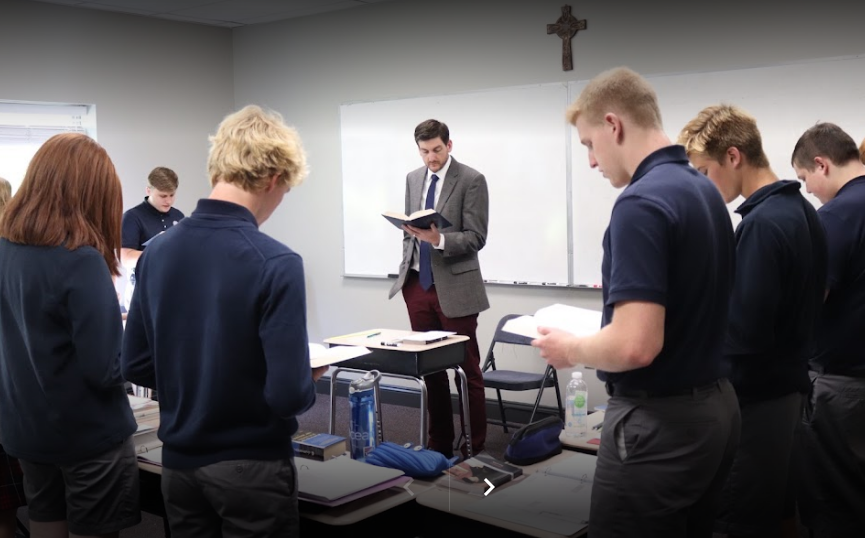
Covenant School in Huntington, West Virginia, one of 119 private schools in the state, is a non-denominational classical Christian K-12 school that derives its educational goals, content and methods from traditions of classical and Christian culture.
Unwilling to leave more than 3,000 families in limbo when school begins next month, West Virginia state officials are asking an appeals court to let the Hope Scholarship programs continue while a court battle plays out over one of the nation’s most expansive education savings account programs.
West Virginia Attorney General Patrick Morrisey filed a motion to stay a circuit judge’s ruling that the new Hope Scholarship is unconstitutional.
“The district court acted without jurisdiction, awarded relief that no party had requested, agreed with baseless claims, and speculated harms into existence,” the motion states, adding that allowing the order halting the program would harm the 3,200 families who signed up for the program.
“A validly enacted law will stand mute because the Legislature’s policy judgments ‘troubled’ a single judge, and students across the State will be stripped of educational opportunities for at least a year. On the other hand, a stay will not hurt Respondents because the Act does not disturb public school funding for the upcoming academic year.”
The motion followed a July 6 order from Kanawha Circuit Judge Joanna Tabit that declared the new law establishing education savings accounts “null and void.” Tabit concluded after hearing a challenge to the law that the scholarship violates the state constitution by diverting funding away from the public education system.
The ruling forced the program, which allowed awarded families to access $4,300 per student this year to spend on approved education expenses, to an immediate halt. As a result, families began scrambling for alternatives with only weeks left before the 2022-23 school year begins.
West Virginia education choice advocates are hopeful the stay will be granted so families can move forward with their plans.
“We are happy to see the Attorney General and the Institute for Justice continue to fight for families by requesting a stay of the injunction,” said Andrew Bambrick, outreach education coordinator for Cardinal institute for West Virginia, a nonprofit organization that supported the new law. “We hope that the Appellate court will see the injury this injunction causes to over 3,000 students and grant the stay allowing the program to continue so these families can access the options that they need.”

