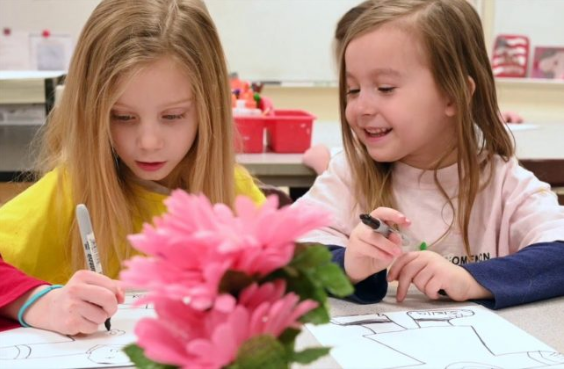
Crown Point Christian School in St. John, Indiana, is one of about 650 private schools in the state. Committed to academic excellence, Crown Point trains children to understand the world around them and to recognize that "every part belongs to God."
Editor’s note: This article appeared Tuesday on stateaffairs.com.
Eligibility for Indiana’s school choice voucher program is poised to dramatically increase next school year, enabling roughly 97% of students to use state money to attend private schools, according to school choice advocates.
State lawmakers have slowly expanded the program since they implemented it more than a decade ago. The state released its annual school choice report last month which provides insight into where the program stands ahead of arguably its largest expansion to date.
Already, between the 2021-2022 school year and the 2022-2023 school year, the cost to state taxpayers for the program grew by 30%, the report shows. That’s before the latest eligibility expansion goes into effect.
The 2022-2023 school year was the state’s largest increase in the number of students claiming vouchers since the 2014-2015 school year.
This past school year, a family of four had to earn around $154,000 per year or less for a student to qualify to receive state money to attend a private school. In the two-year state budget passed in April, lawmakers expanded the eligibility to allow those making 400% of the income required to qualify for free or reduced-price lunches to participate in the school choice program.
Likewise, state lawmakers simplified eligibility by removing other requirements.
That means a family of four earning up to $220,000 per year will qualify this upcoming year, including students who have already been attending private school on their family’s own dime. Robert Enlow, the president and CEO of EdChoice, called Indiana’s program “effectively universal.”
“It’s unfair to pay twice, once in taxes and once in tuition,” Enlow said. “[The new policy has] basically said to almost every parent in the state of Indiana that we trust your choices.”
Costs for the program are expected to balloon by more than 70% in the first year. By fiscal year 2025, the state will spend an estimated $600 million on vouchers per year.
To continue reading, click here.
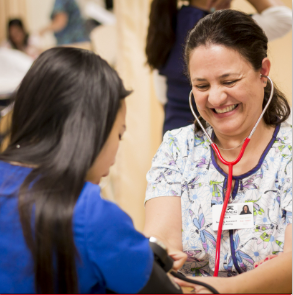
Blue River Career Programs in Shelbyville, Indiana, offers career training certification programs in construction, nursing, and child development.
Editor’s note: This article appeared Monday on in.chalkbeat.org.
Loriann Beckner can’t imagine the idea of going to nursing school without her internship. A senior at Southwestern High School in Shelbyville, Beckner interns at a hospital, Major Health Partners, through the work-based learning program at Blue River Career Programs.
Working with Blue River instructor Ray Schebler, she’s learned about financial literacy and career development skills that she says she would not have learned otherwise, in addition to what she learns at the hospital.
“He’s taught me how to do interviews and so [much] workplace learning stuff that my high school never would’ve taken the opportunity to teach me,” Beckner said. “I just think without my internship, I’d be super scared.”
But the future of Blue River — one of 52 career centers across the state that offers high schoolers academic credits, industry certifications, and more — has been thrown into doubt this year after Indiana lawmakers enacted a law that creates Career Scholarship Accounts.
These will provide funding for students to pay for internships and apprenticeships with local employers without necessarily relying on current career and technical education programs.
GOP lawmakers said the law, which Republicans said would be a top priority this year, will help “reinvent” high school in response to declining college enrollment and evolving employer needs. They also say the accounts will make career training more accessible.
Critics worry these new accounts will hurt programs like Blue River and the public schools that partner with them to provide career and technical training, without truly providing new or additional benefits.
The Career Scholarship Accounts are part of a push by state leaders to shift some authority and funding away from traditional public schools and educators to constituencies like parents and the business community.
To continue reading, click here.

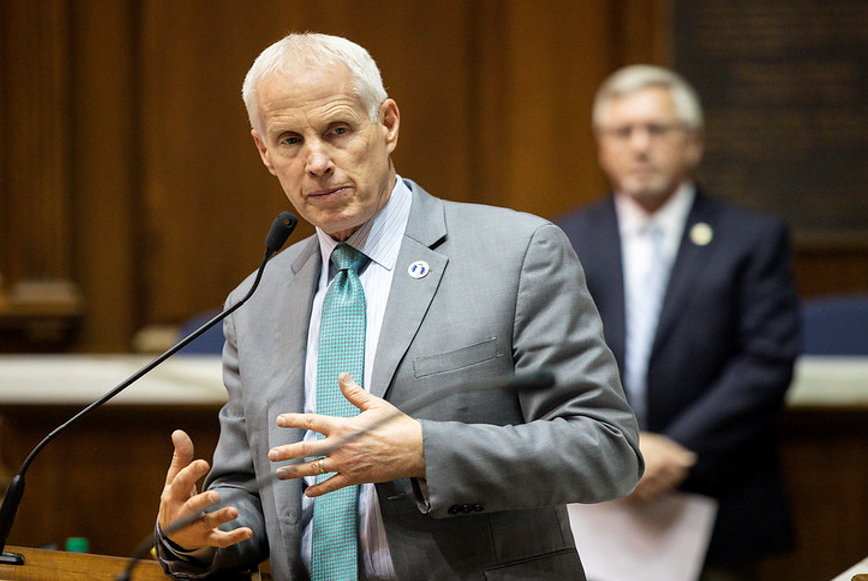
Indiana House Ways and Means Committee chairman Jeff Thompson, left, the top House budget writer, defended the voucher program expansion, saying it gives parents the opportunity to choose what they believe is the best school for their children.
Editor’s note: This article appeared Friday on Indiana’s wrtv.com.
Republican legislators pushed through a new state budget plan early Friday that greatly expands eligibility for Indiana’s private school voucher program after they added money for traditional schools amid complaints over small funding increases they were set to receive.
This year’s legislative session came to an end with the budget vote that drew criticism of the GOP school funding plan from public schools groups and Democrats, who claimed it short-changed traditional public schools with funding increases less than the inflation rate.
The school voucher expansion in the initial budget deal announced Wednesday by Republican leaders was set to consume more than $500 million of the nearly $1.2 billion increase planned for general K-12 funding over the next two years. The revised plan added about $300 million to boost the total increase to about $1.5 billion.
House members voted 70-27 and senators voted 39-10, largely along party lines, in favor of the budget as the Republican-dominated Legislature adjourned this year’s session around 2:30 a.m.
Longtime education lobbyist Dennis Costerison said school district leaders began contacting lawmakers with concerns after school funding projections released Wednesday showed that nearly 75% of the state’s school districts would receive funding increases of less than 2% in the budget’s second year.
“With schools, and everybody else from the governor to the General Assembly, wanting to get more money for teacher salaries, where’s that money going to come from?” said Costerison, executive director of the Indiana Association of School Business Officials.
The GOP budget agreement announced Wednesday boosted total base K-12 school funding by 6% in the first year and 2% the second year. But traditional school districts would only see projected average increases of 3.5% and 1.1% after more than $500 million was diverted to pay for a 75% increase in the number of students receiving the state vouchers toward paying private school tuition.
Thursday’s revisions pushed the funding boost for public school districts to 5.4% in the budget’s first year and 1.3% in the second year, according to projections from the nonpartisan Legislative Services Agency.
To continue reading, click here.
Victory College Prep, a charter school that opened in Indianapolis in 2005, received a seven-year charter renewal from the Mayor’s Office of Education Innovation in 2018. The Urban League of Indianapolis has recognized Victory College Prep as a School of Excellence.
Editor’s note: This article appeared last week on in.chalkbeat.org.
Republican lawmakers are advancing major changes to the state’s school funding system to benefit charter schools and districts with relatively low property tax values.
The proposed Republican House budget, along with a newly amended GOP Senate bill, would rework Indiana’s property tax system to pump more funding into charters and level what lawmakers say is an unfair playing field for charters and traditional public schools. Lawmakers also might create a dedicated funding stream for charters’ capital expenses that would replace the so-called “$1 law.”
But the proposals have been sharply criticized by Democrats and traditional public school leaders, who argued that the changes would come at the expense of thousands of students in traditional public schools.
The bills channel issues at the heart of a recent dispute over tax revenue in Indianapolis Public Schools. The district withdrew its plan to ask voters for new property taxes on the May ballot, amid criticism from charter school supporters that the draft ballot measure did not provide charters enough money. If the proposals become law, they could change the long-term balance of fiscal power within the state’s public education system.
Together, House Bill 1001 and Senate Bill 391 would do the following to boost funding for charters and school districts with low property values:
To continue reading, click here.
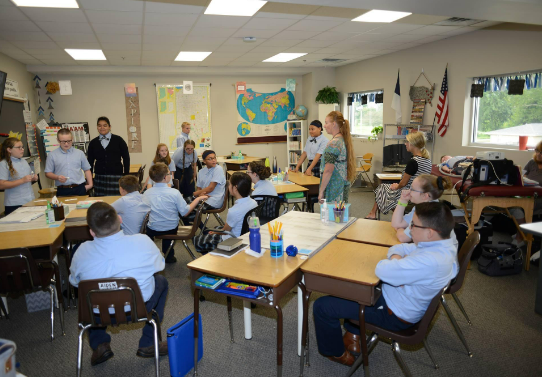
Sandy Creek Christian Academy in Seymour, Indiana, is one of 636 private schools in the state serving more than 115,000 students. The academy’s mission is to prepare students to excel through outstanding academics and Christian principles which are grounded upon the word of God.
Editor's note: This article appeared last week on in.chalkbeat.org.
A bill that would expand school choice in Indiana has advanced with major changes. Senate lawmakers enlarged the pool of students who could receive state money to attend private schools, but backed away from an initial proposal that would have opened the state’s Education Scholarship Accounts to all students regardless of family income or education needs.
Sen. Brian Buchanan amended his bill on Wednesday to limit the accounts to families meeting the program’s current income requirements. His changes also would reserve half of the total appropriation for students who receive special education services — the group the accounts currently serve.
The amended legislation passed the Senate Committee on Education and Career Development by a vote of 8-5, with GOP Sen. Jean Leising joining the four Democrats on the committee in opposition. It now heads to the appropriations committee.
The bill could become one of the more notable education policy legacies of Indiana’s 2023 legislative session. Proponents say it puts more control in parents’ hands over their children’s education.
“Any time you can give more choice and more options for parents, I believe it’s better,” said the bill’s author, Buchanan, in committee hearings last week.
To continue reading, click here.
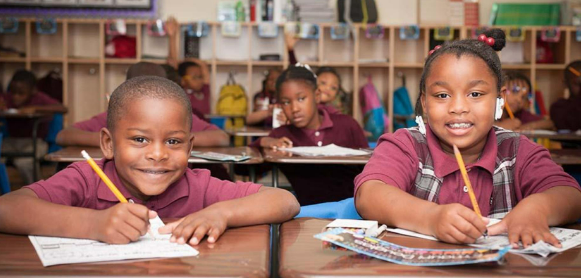
Tindley Genesis Academy, an Indianapolis charter school, serves 446 students in grades K-6, 99% of whom are minority.
Editor’s note: This article appeared last week on The 74.
New research on pre-pandemic academic achievement in Indianapolis is delivering a mixed bag of results: Students in K-12 schools there posted weaker learning gains in both reading and math than students statewide, while students who attended charter or charter-like “Innovation Network Schools” posted better results across virtually every demographic.
The study, released June 9 by Stanford University’s Center for Research on Education Outcomes (CREDO), focused on pre-pandemic performance, looking at the 2017-18 and 2018-19 school years.
It found that in the 2018-19 school year, charter school students learned the equivalent of 64 more days of instruction in reading and 116 days in math, compared to their district school peers. Black charter school students had even bigger gains, with 86 more days in reading and 144 days in math relative to Black students in district schools.
In a statement, Indianapolis Superintendent Aleesia Johnson said the study “provides another piece of critical data in our relentless mission for all schools to be better.”
The findings reinforce the district’s belief that diving into data about academic performance at all schools helps educators “build on what works, and fix where we aren’t delivering for students,” she said.
To continue reading, click here.
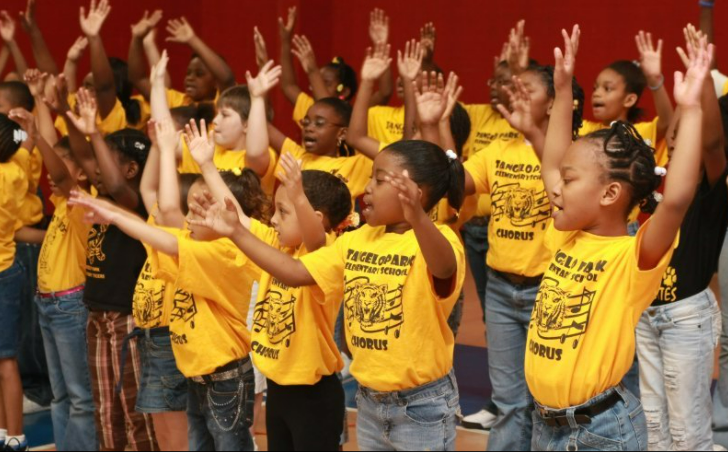
The Tangelo Park Program in Orlando, Florida, has become a positive model for other communities, demonstrating that assistance to high-risk youth can yield an attractive, long-term return on investment for society through educational gains and community empowerment.
Editor’s note: This article appeared today on the Journal Gazette of Fort Wayne, Indiana.
Fort Wayne Community Schools is exploring options to expand a program unfunded by the state – pre-K.
“There are students who come to us in kindergarten that are two years to three years behind their peers,” FWCS Superintendent Mark Daniel said. “That has to change. That's a gap that is way too wide.”
FWCS is looking to the Sunshine State for inspiration. A team of six, including Daniel, recently visited the Tangelo Park Program in Orlando, Florida.
Created in 1993 by Orlando hotelier and philanthropist Harris Rosen, the program provides free preschool for every 2-, 3- and 4-year-old living in the Tangelo Park neighborhood, among other offerings. It is funded through Rosen's philanthropy, the Harris Rosen Foundation.
The program – which also includes full college and vocational school scholarships for high school graduates – has produced “unbelievable results,” Daniel said. He cited its almost 100% graduation rate and post-secondary successes, including how 77% of Tangelo Park Program alumni who attend four-year colleges earn a degree.
Previously, the predominantly Black neighborhood of about 1,000 homes faced overt drug problems, poor school attendance, declining test scores and high dropout rates, according to the Tangelo Park Program website.
To continue reading, click here.
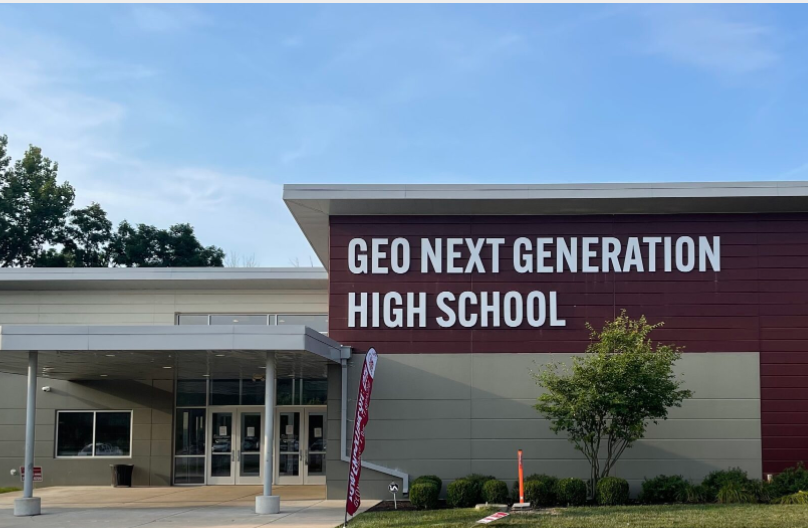
GEO Next Generation High School in Indianapolis is part of a network of high-quality charter schools managed by GEO Academies. Students in GEO’s College Immersion Program take free college courses on a college campus for college credit while earning a high school diploma.
An Indianapolis-based nonprofit that aims to break the cycle of poverty by providing students in impoverished neighborhoods with access to quality education options has earned an $8.3 million grant from the Indiana Department of Education.
The nonprofit, Greater Educational Opportunities Foundation, will direct the funding to its newest initiative: a first-of-its-kind statewide virtual/in-person K-12 college-preparatory school. The immersion program allows students to take courses on a college campus for college credits while earning a high school diploma.
Part of GEO’s mission is convincing students whose families may not have had the opportunity for a college experience that they are college capable, according to GEO Foundation founder and superintendent Kevin Teasley.
“We take them to Ivy Tech, IUPUI, IU Northwest or Purdue Northwest so that they take real college classes while they are in high school … so that they’re getting a real experience from a college professor sitting next to students that don't look like them, aren't the same age as them,” Teasley said. “And so, they become more college acclimated and ready to go to college.”
Since its founding in 1998, the organization has launched several GEO academies in Indianapolis and Louisiana and recently launched GEO Focus Academy, a combination of its charter school system with a virtual school.
GEO supports all quality means of educating children, including public, private, charter and religious schools as well as homeschooling and assists families in choosing the option that is the best fit for their child. The organization also works to develop community understanding of school choice to align with its belief that providing families with a menu of educational options will strengthen all schools.
Mooresville Christian Academy in Mooresville, Indiana, is one of 969 nonpublic private schools in Indiana that serve 111,872 students.
Editor's note: You can listen to Step Up For Students president Doug Tuthill's interview with Indiana state Rep. Bob Behning here.
School choice legislation in Indiana has resulted in savings for the state of $88 million, or about 1 percent of its annual general fund spending on education, in the 2019-20 school year according to a new study from Ball State University.
Using data on 2019-20 student transfers between Indiana’s 289 traditional public school districts, transfers between traditional public school districts and charter schools, and transfers between traditional public schools and private schools accepting the Choice Scholarship, researchers from the university’s Center for Business and Economic Research examined differences in state funding if these transfer students had attended the traditional public school in the district in which they reside versus the enrolled district or school.
Another finding: More students transferred out of schools with the highest per-student funding than into them.
“The biggest winners in terms of receiving transfers are local public schools,” said Michael Hicks, one of the study’s authors. “So, the number one group of people in the state who have moved from one school to another are those who have moved from one local public school to another local public school nearby. And then, number two is from a local public school to a charter school. And number three is from a local public school to a private school with a voucher.”
School choice has been available in Indiana since the 2011-12 school year, providing families the option to choose whichever school they want, including private and charter schools. The state started offering vouchers that cover up to 90% of children’s private school tuition to low-income families to help them afford private schools the same year.
 Education Next senior editor Paul Peterson spoke recently with Robert Behning, a Republican member of the Indiana House or Representatives and chair of the house education committee, about new legislation in his state that expanded the Indiana Choice Scholarship Program.
A consistent message throughout the interview was Behning’s insistence that education choice benefits everyone, and that education choice programs must expand beyond urban centers and not be limited to children in poverty and failing schools.
One excerpt from the conversation:
I think that when choice really works, it lifts up everyone. And our data have demonstrated that. Indianapolis probably has the most choice options of all the communities in our state. They have the most charters per capita, and we’ve created other options for them.
We have traditional charter schools, or legacy charters, and we’ve created an option called innovation network charters, which are charters that are located within traditional school buildings. [Both the traditional and the charter schools] have embraced competition, and academic performance overall has actually increased. When you get robust competition, you’ll find that it has uplifted everyone’s performance.
Behning also discussed the long-range efficacy of more adaptable and personalized education options such as education savings accounts.
You can read the full interview here.
To listen to a podcast Step Up For Students president Doug Tuthill conducted with Behning for redefinED, click here.

