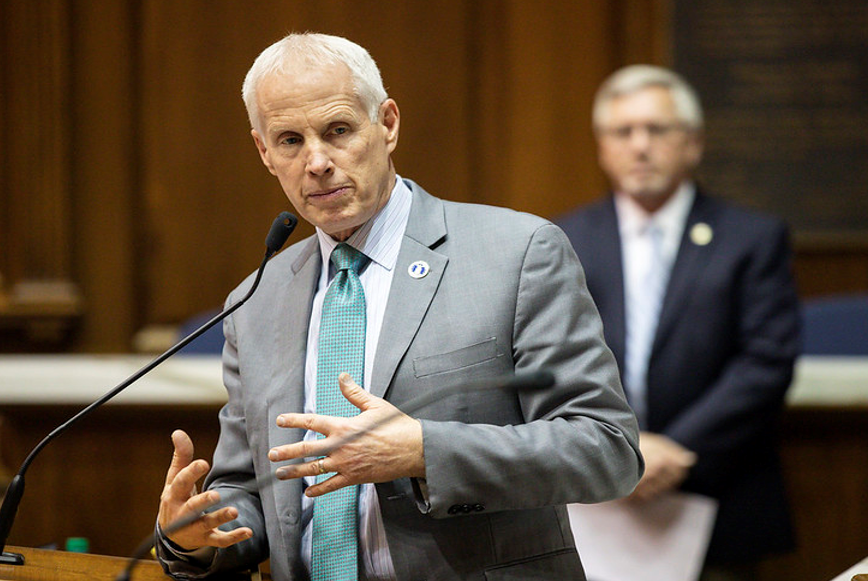
 On this episode, Tuthill talks with the chairman of Indiana’s House Education Committee. Behning carried a choice bill this legislative session that was folded into the state’s budget, creating a new $10 million education savings account program for students with special needs that will be funded at 90% of regular per-pupil funding. The voucher program will have the highest income eligibility of any means-tested program in the country.
The two discuss the landscape of Indiana’s choice programs, which already were considered a national model, and ponder choice expansion opportunities to come, including better transportation options for families. Behning argues that the more choice families have, the better off the Hoosier state’s education system will be.
"I see this as a social justice issue. Providing opportunities for parents that don't have the ability to make a choice by moving to a community where schools are better – we’re giving them another option."
EPISODE DETAILS:
· An overview of Indiana’s robust education choice programs
· This year’s legislative process that led to the creation of a new special needs education savings account
· How federal funding impacted Indiana’s overall budget this year in the wake of COVID-19
· Opportunities public school districts have to unbundle services to better serve students who utilize education savings accounts
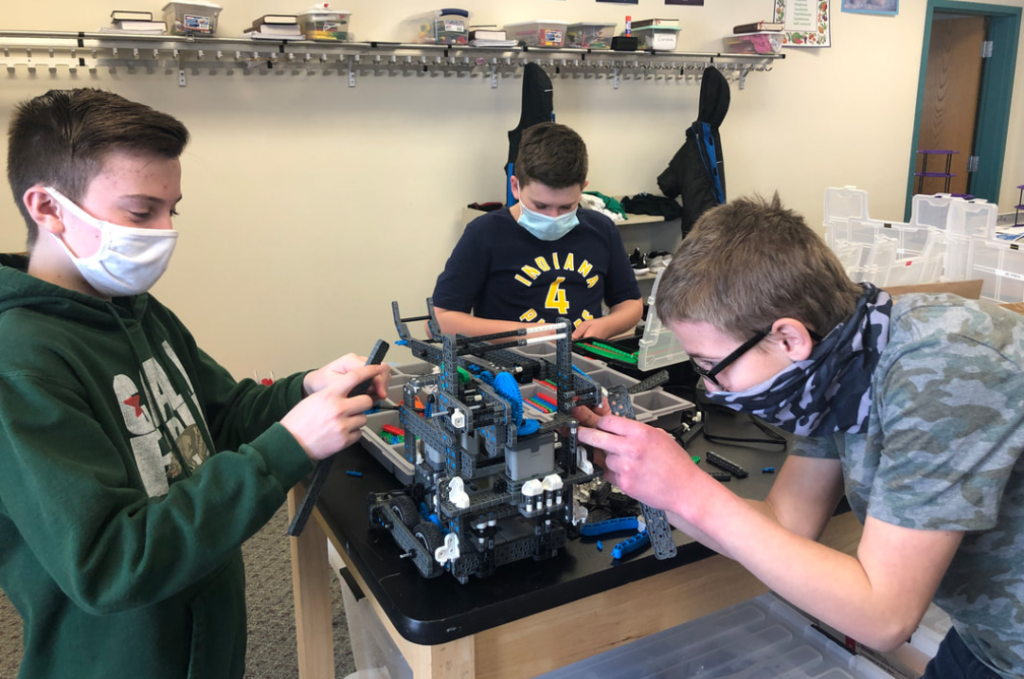
Saint Peter Immanuel Lutheran School is among more than 200 choice participating schools in Indiana. In 2018-19, the state’s choice programs served 36,290 students.
The Indiana Legislature on Thursday joined the growing ranks of policymakers nationwide who either are launching or shoring up programs to provide more educational choice to families.
In Indiana’s case, it’s the latter; the state created its first voucher plan in 2011, in which more than a quarter-million students have participated.
This week, the Legislature approved a budget that will take the program to 48,000 students a year from about 37,000. Choice provisions in the budget have three main components.
The first raises the income cap for eligibility from $96,000 to $145,000 per year, which would allow up to 90% of the state’s children to participate. The bill also would increase the voucher amount to 90% of tuition support levels.
Another provision would establish education savings accounts for children with special needs.
Additionally, the budget increases per-student grants for charter schools from $750 to $1,000 next year and $1,250 in the second year.
Betsy Wiley, president of the Institute for Quality Education, hailed the decision.
“Ten years after Indiana passed the Choice Scholarship Program, the state legislature has acted,” Wiley said, “once again to make Indiana a national leader in K-12 education by expanding educational options to many more hard-working middle-class Hoosier families and students.”
Former Gov. Mitch Daniels echoed Wiley.
“Providing poor and minority families the same choice of schools that their wealthier neighbors enjoy is the purest example of ‘social justice’ in our society today,” Daniels said.
Arizona: A former school teacher criticizes the state superintendent of public instruction for his support of Common Core and school choice (East Valley Tribune). The Sierra Vista Herald editorial board says the state superintendent's support of ESAs hurts public schools. Applications for Empowerment Scholarship Accounts doubles (Heartlander). The Arizona Republic editorial board opposes allowing public funding to go to private schools, especially now that the state support for ESAs exceeds the state support for public schools (note: the editorial board's calculation excludes local support for public schools). A consultant at a scholarship organization is indicted for stealing $529,000 in scholarship money (Arizona Republic).
California: Vanila Singh, a professor and physician at Stanford University and congressional candidate, says school choice is the key to student success (Mercury News). The California Charter Schools Association has sued the West Contra Costa School District for withholding tax revenue intended to fund charter schools (Contra Costa Times). Charter schools struggle with online assessments (FSRN Radio).
D.C.: Two charter schools allegedly under federal investigation for possible discrimination say they have never received a complaint from a student or parent (Washington Post). President Obama sends his daughters to Sidwell Friends, an elite private school that refuses to release information on student course completion and graduation rates (Washington Post).
Florida: The tax-credit scholarship expansion will allow the program to serve higher-income families (Education Week, Tampa Tribune, WJHG TV). More low-income families will benefit from the tax-credit scholarship program if the Governor signs the bill into law (Florida Times-Union). The state passes the nation's second education savings account program (Foundation for Excellence in Education). Daphne Cambell (D-Miami-Dade) says she voted to expand the program because giving poor kids more options is the right thing to do (Miami Herald). The Tampa Tribune editorial board says the scholarship expansion is justified because every student deserves to find a school that works well for them. Brian Tilson, owner of a communications firm in Boca Raton, says the scholarships are unpopular and are hurting public schools (Gainesville Sun). Ron Matus, the editor of redefinED, says more progressive Democrats support parental choice (Gainesville Sun). The scholarship program helps families afford Jewish day schools (Chabad News). State Impact talks with Sen. John Legg about the legislative session including the passage of the scholarship bill. Marc Yacht, a retired physician, say charter schools should be more regulated and held to the same standards and rules as traditional public schools (Sun Sentinel).
Georgia: The Southern Education Foundation helps file a suit to overturn the state's tax-credit scholarship program (Watchdog). A former reporter sends her daughter to a charter school and says each school is so different it is difficult to compare them to each other let alone public schools, and that is a good thing (Atlanta Journal Constitution). (more…)
 Alabama: The Institute for Justice, a national civil rights law firm, says vouchers are constitutional in the state (Al.com).
Alaska: School choice opponents voice their concerns at a public hearing over a constitutional amendment to allow public funding of private schools (Anchorage Daily News, Nonprofit Quarterly). The proposed constitutional change passes the House Education Committee but the amendment faces a tough road ahead (Anchorage Daily News). There are 27 charter schools in the state with no cap on how many schools may operate (Alaska Dispatch).
Arizona: The state has many school choice programs (Camp Verde Bugle). A state court rules the Department of Education cannot recoup $5.9 million in over-payments to charter schools due to a change in teacher performance pay because it didn't notify the schools of the rule change (Arizona Republic). Charter school operators plan to open 25 new charter schools in Phoenix (Arizona Republic).
California: Parent trigger elicits emotions from parents on both sides (Hechinger Report). The superintendent of LA Unified says every "student has the right to a choice of a highly effective school" (Reason Magazine). San Diego school board members are attempting to exclude some charter schools from receiving bond money approved by city voters (Fox 5 San Diego).
D.C.: A new study reveals area charter schools are being shortchanged on student funding compared with district schools (Washington Post).
Florida: School choice is growing by leaps and bounds (Sunshine State News). The Palm Beach Post editorial board says giving students public school choice could reduce the disadvantages faced by low-income students. After 17 years as president and CEO of Florida Virtual School, Julie Young announces her retirement (redefinED, Orlando Business Journal). Gov. Rick Scott proposes allowing charter schools access to construction funds if they serve students within attendance zones of low-performing public schools (Tallahassee Democrat).
Georgia: A lawmaker wishes to expand the tax credit scholarship program with a $100 million cap (GPB News).
Illinois: Nobel charter schools name thee schools after donors who give $1 million or more, but the donors do not decide curriculum or which teachers to hire (Chicago Sun Times).
Indiana: The Lafayette Journal & Courier editorial board argues that private schools should continue to take the state test in order to create a fair comparison with public schools. Since vouchers can be worth no more than 90 percent of per-pupil state funding to local school districts, vouchers save the state money (Indianapolis Daily Star). Five voucher schools in the state say they teach intelligent design or creationism (Journal-Gazette). The Star Press editorial board worries that allowing students to use vouchers without ever attending public school creates two classes of education. (more…)
Alabama: Applications for the state's new tax credit scholarship program are now open (Alabama Opportunity Scholarship Fund, WTVY)
Arizona: Three charter schools will be shut down for poor performance (Arizona Business Journal).
California: The L.A. metro area has the largest number of students attending charter schools in the nation (LA School Report). Charter school growth booms in L.A. and San Diego (San Diego Union Tribune).
Georgia: NPR asks "what is school choice?" (WABE). Hall County ranks No. 1 in the nation for charter school enrollment growth (Access North Georgia). Charter school enrollment grows in the state as more schools request permission to convert to charters (Atlanta Journal Constitution).
Florida: If Catholic schools were a district, they'd be the 9th largest in the state (redefinED). 80,000 students attend charter schools in Miami-Dade, making it the 6th largest (numerically) metro charter area in the nation (Miami Herald). A virtual charter school is approved to set up shop in Pinellas County (Tampa Bay Tribune). Across the bay in Hillsborough, a school board votes down a charter school request by MacDill Air Force Base (redefinED). The number of students using "opportunity scholarships" to leave poor-performing schools doubles in Duval County (Florida Times Union). Florida Virtual School offers students flexibility (Townhall.com).
Indiana: Gov. Mike Pence wants vouchers for pre-k students (Indianapolis Star, Greenfield Reporter). Pence thinks charter school networks should be allowed to operate more like school districts (Courier-Journal). Public school districts will have to hold lotteries for public school choice if demand exceeds supply (Education Week). Gary ranks 5th in the nation for charter school enrollment (Post Tribune).
Louisiana: The Louisiana Association of Business and Industry is the most influential organization on education reform, according to a Brookings Institute study (Times Picayune). New Orleans has the largest percentage of students attending charter schools of any city in the nation...for 8 years in a row (Times Picayune). (more…)
Alabama: The Alabama Education Association sued to stop the state's education tax-credit program but a parent steps forward to try and block the suit with the help of the Institute for Justice (Associated Press).
Arizona: The Friedman Foundation for Educational Choice surveys parents using education savings accounts and finds they're happy with the program (Friedman Foundation).
Colorado: Two internet radio talk show hosts speak in Douglas County against school vouchers and "corporate" education reform (Lone Tree News).
D.C.: The government shutdown threatens the funding of the District's public school system including charter schools (Washington Times).
Florida: Tampa Bay area private schools are seeing enrollment growth thanks to a rebounding economy and school choice (Tampa Bay Times). GEICO donates $2 million to Step Up For Students, the non-profit that operates Florida's education tax-credit scholarship program for low-income students (PR Web). The McKay scholarship program serves 27,000 special needs students in Florida (Tallahassee.com). A group is suing the state to get more money for public schools, saying it is unfair to devote resources to charter and virtual schools (Miami Herald). Florida Virtual School wins the first round of court battles against K12 Inc. over trademark violations (EdWeek).
Georgia: Atlanta area KIPP charter schools received a group charter allowing them to pool resources (Atlanta Journal-Constitution).
Indiana: The state could be the No. 1 state for school vouchers if the growth continues (Indianapolis Star). Gov. Mike Pence talks education reform and school choice at the Education Nation summit (WNDU.com). A state report says voucher schools outperform the public schools but it is still unclear if the voucher schools are creating a bigger impact per student (Associated Press).
Iowa: A new survey by the Friedman Foundation shows a majority of parents in Iowa support having a school voucher program (Quad City Times, Waterloo Cedar Falls Courier). One local newspaper columnist calls school choice "insidiously popular" (Daily Iowan).
Louisiana: The state's voucher program actually promotes desegregation (National Review). A Ruston area private school that was kicked off the voucher program sues, claiming discrimination (The Advocate). Parents in Lafayette protest two charter school operators seeking authorizing in the parish (KATC.com). (more…)
Editor's note: This post was written by Bert Gall, senior attorney with the Institute for Justice and the institute's lead attorney in the Indiana voucher case.
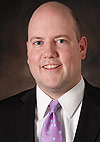
Gall
Yesterday, in Meredith v. Pence, the Indiana Supreme Court held that Indiana’s Choice Scholarship Program (CSP) does not violate the state constitution. By unanimously rejecting the legal claims brought by national and state teachers unions, the court ensured that the school voucher program - which provides publicly funded scholarships that low-and middle-income families can use to send their children to private schools or out-of-district public schools - will survive. Indeed, because about 62 percent of Indiana families are eligible to receive the school vouchers, the legal path is now clear for the CPS to become the largest school-choice program in the country.
That’s great news, not just for Indiana parents, but for all parents in every state who are clamoring for school choice so they can provide their children with a quality education. This is because the unions’ legal claims focused on two types of constitutional provisions that are common in most other state constitutions: 1) provisions requiring that states provide a “general and uniform” system of public education; and 2) provisions forbidding state support of religion.
The unions principally rely upon these two types of provisions when they challenge school choice programs. But unfortunately for them, state courts - particularly those that have yet to apply their provisions to school-choice programs - will now look to the Indiana Supreme Court’s decision for guidance when evaluating claims brought under those provisions. Fortunately for advocates of school choice, that guidance is both persuasive and intellectually sound.
First, the court showed that the duty to provide a “general and uniform” system of public schools is not violated when a state provides educational options above and beyond that system. Significantly, the court refused to adopt the Florida Supreme Court’s terribly flawed decision in Bush v. Holmes, a 2006 case which held that Florida’s analogous provision only allows educational funds to be spent on public schools. Just as they did in Indiana, teachers unions are attempting to export the holding of that decision (in which the Florida Supreme Court ignored both the plain language of its provision and misapplied basic canons of statutory construction) to other states with similar provisions. That task just got a lot harder: Holmes was already considered a flawed decision and a legal outlier, but today’s decision further marginalizes it. (more…)
From the Indianapolis Star:
Public tax dollars may be used to fund private school tuition under Indiana's school voucher program, the state Supreme Court unanimously ruled today.
"We hold that the Indiana school voucher program, the choice scholarship program, is within the legislature's power under Article 8, Section 1, and that the enacted program does not violate either Section 4 or Section 6 of Article 1 of the Indiana Constitution," the justices wrote in the 5-0 decision.
The ruling, on a teachers union-supported lawsuit from 2011, ends the legal challenge to the school voucher program at the state level. The case could be made again in federal court. But in 2002 the U.S. Supreme Court upheld a similar program in Ohio, making any further appeal a long shot.
The Florida Department of Education just released the last batch of applications for state education commissioner, including Tony Bennett's.
In his cover letter to Board of Education Chairman Gary Chartrand, dated Nov. 29, Bennett notes his work in Indiana and says he would welcome the opportunity to continue in Florida. "Your state was the leader in starting this movement of making decisions based solely on kids," he writes, "and I would like to take Florida to the next level."
Bennett's resume highlights a long list of initiatives in the Hoosier State, including a number related to parental school choice. The statewide voucher program has garnered the most attention, but Bennett notes progress in other sectors, too: "Successfully defended against caps on the number of charter schools, implemented a virtual voucher pilot program and ushered the program from pilot to full implementation, and proposed and developed the Indiana Charter Board - all while bringing accountability to charter schools in the form of A through F grades."
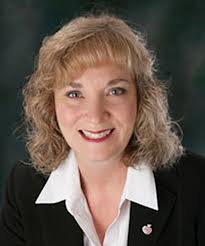
Glenda Ritz
Indiana: State superintendent Tony Bennett, a leading light in the school choice and ed reform movement, loses his bid for re-election to Glenda Ritz, an elementary school media specialist (Indianapolis Star). Gov.-elect Mike Pence promises to continue pushing reform (Indiana Public Media).
Georgia: Voters back a constitutional amendment that creates a new state commission than can approve charter schools (New York Times).
Washington: Vote on the charter school ballot initiative is still too close to call (Seattle Times).
California: Mayor Antonio Villaraigosa vowed to fix public education by pushing for groundbreaking initiatives such as Public School Choice, which allowed teachers, charters and other outside operators to bid on low-performing schools. The result: dramatically improved test scores and graduation rates (Huffington Post op-ed).
Tennessee: The Memphis school district and charter schools snipe over funding (Memphis Commercial Appeal).
Mississippi: Republican lawmakers plan a big push for charter schools next year (Madison County Journal).
Florida: Voters reject Amendment 8, a "religious freedom" measure that critics claimed was about private school vouchers (Tampa Bay Times). Speculation abounds about Tony Bennett as a possibility for state education commissioner (redefinED).
New York: Tensions rise over proposal to convert low-performing schools in Buffalo into charters (Buffalo News).
Washington D.C.: Charter school academic ratings are released for a second year (Washington Post).

