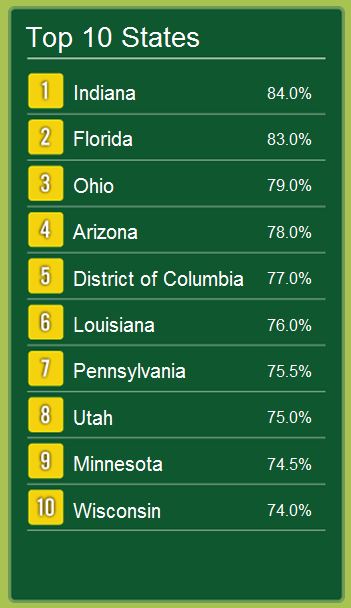
 We like to think of Florida as School Choice Central, but there is more competition for that title every year and, alas, according to the Center for Education Reform, it may now belong to Indiana. The Hoosier State takes the top spot in the center's newly created “Parent Power Index,” released today, while Florida comes up short by a hair.
The center credits Florida for being a leader in private learning options and online course enrollments. But it says the state should allow independent bodies such as universities to authorize charter schools (there are constitutional questions here) and adds that “funding of charter schools in Florida has become increasingly inequitable.” It also notes: No parent trigger law.
Indiana, meanwhile, gets praise for its fledgling statewide voucher program and a “much tested and improved charter school law.”
The center says the upcoming movie Won’t Back Down inspired the index, which “measures the ability in each state of a parent to exercise choices, engage with their local school board, and have a voice in the systems that surround their child.”
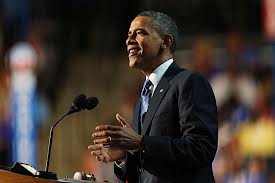 DNC: President Obama suggests Mitt Romney would gut education spending, but avoids mention of Race to the Top (redefinEd). (Image from Minnesota.publicradio.org) Panel discussions sponsored by Democrats for Education Reform highlight the battle within the party over education policy (redefinED). Teachers union leaders promise to campaign hard for Obama, despite difference over teacher evaluations, charter schools and other policies. (Education Week)
Florida: The new chair of the state Board of Education helped bring the KIPP charter school network to Florida (redefinED).
North Carolina: The state board of education authorizes the opening of 25 more charter schools next year. (Associated Press)
California: The Los Angeles school district, which has more charter schools than any district in the country, is scheduled to discuss a moratorium on new ones. (Los Angeles Times)
Indiana: Republican gubernatorial candidate Mike Pence unveils an education agenda that includes expanding vouchers, but it's light on details. (Associated Press)
Pennsylvania: Cyber charter school are growing rapidly in the state, creating tensions with traditional school districts. (Pittsburgh Post-Gazette)
Tennessee: The state education commissioner blasts a privately-owned online school for its test results, calling them "demonstrably poor." (TheLeafChronicle.com)
New Mexico: The state's first virtual charter school begins classes. (Santa Fe New Mexican)
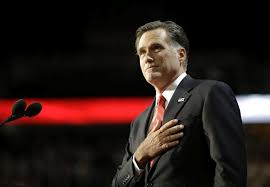 Choice at the RNC: Mitt Romney drops a line about school choice in his big speech, while Jeb Bush and Condoleezza Rice say more (redefinED). A former voucher student from Florida joins Jeb Bush on stage, saying in an interview later, "Because I had choice in my education, I was granted a better life (redefinED). (Image from minnesota.publicradio.org)
Louisiana: A statewide teachers union accuses the Black Alliance for Educational Options and other school choice groups of supporting a pro-KKK educational curriculum. (Choice Media)
Washington: The political landscape around charter schools has changed as voters get ready to vote on a charter measure for the fourth time. (Seattle Times)
Florida: A powerful lawmaker and school choice supporter is puzzled by charter schools that want to set up in one of the school districts in his legislative district. (St. Augustine Record)
Ohio: Hundreds of special needs students are benefiting from a voucher program. (Cincinnati.com) (more…)
 Texas: State lawmakers talk vouchers and hear about expanded learning options in Louisiana and Florida (KVUE.com). A judge rules that a charter school support group's concerns can stay in a lawsuit over state education funding. (Austin American Statesman)
California: A local school board won't allow a school to be converted into a charter school, even though that's what parents using the state's parent trigger law wanted. (Education Week)
Florida: The superintendent of the state's biggest school district says the educational environment is now driven by choice. (redefinED)
Indiana: The state's public school districts are marketing themselves with billboards and door-to-door campaigns in an effort to persuade parents to steer clear of vouchers and private schools. (Associated Press)
New Hampshire: The state's "Blaine Amendment" becomes an issue in the race for governor. (Concord Monitor)
Michigan: A community debates as a charter school operator begins to run all of its schools. (Detroit News)
Missouri: An appeals court rules that a judge was wrong in ordering charter schools to pay millions to the Kansas City School District. (Associated Press)
Pennsylvania: A private foundation will manage 20 financially struggling Catholic schools in the Archdiocese of Philadelphia. (Education Week)
Washington D.C.: Despite growing enrollment, charter schools are overshadowed by traditional public schools in funding and other matters. (Washington Post)
 Florida: The Seminole County School District, one of the state's biggest, offers more online classes and other educational options to compete with private and charter schools and home schooling (Orlando Sentinel). Meanwhile, another large district receives 36 applications for new charter schools (Palm Beach Post).
Tennessee: Gov. Bill Haslam says questions remain on a voucher proposal that's expected to get legislative attention next year (Nashville Public Radio). State education officials and the Nashville school board are in a standoff over a proposed charter school that wants to open in an affluent part of the city (Education Week).
Louisiana: In the wake of the new voucher program, state education officials will consider tightening rules for the establishment of new private schools. (New Orleans Times Picayune) Expanded online learning options give Louisiana students a chance to graduate early or catch up on credits. (The Advocate)
Washington: The state PTA opposes the charter school initiative on the November ballot. (The News Tribune)
Texas: Some charter school supporters oppose a state education funding lawsuit that suggests state resources are inadequate. (Austin American Statesman)
Indiana: Between vouchers and charter schools, northwest Indiana parents have more school choices than ever before. (Post Tribune) (more…)
 Louisiana: State education officials set accountability rules for private schools participating in the state's new voucher program (Reuters). More from the New Orleans Times Picayune. The state deems a troubled private school ineligible to receive vouchers (Alexandria Town Talk). Meanwhile, a law firm representing a state teachers union sends letters to participating private schools, threatening them with litigation unless they opt out of the program until a lawsuit is settled (New Orleans Times Picayune).
Wisconsin: A Milwaukee charter school gets help from a national fund co-run by tennis legend Andre Agassi (Milwaukee Journal Sentinel)
Michigan: Speaking at the American Federation for Teachers convention, Vice President Joe Biden takes aim at vouchers and says teachers are under "full blown attack" from Republicans. (MLive.com)
Indiana: The state's year-old voucher program is becoming more diverse as it grows (Indianapolis Star). The mayor of Indianapolis tussles with parents over the future of a low-performing charter school (Indianapolis Star).
Florida: The school board in Pinellas County votes to allow an F-rated charter school to remain open after students and teachers plea for more time. (Tampa Bay Times)
Illinois: Charter school leaders in Chicago fear budget cuts because of uncertainty over the district's contract with teachers. (Chicago Tribune) (more…)
 Ideologues tend to exaggerate political debate, but Louisiana school superintendent John White reminded us Tuesday that rational policy is the key to integrating vouchers into a robust public education system. The accountability that White introduced, and the Board of Elementary and Secondary Education (BESE) adopted, represents a thoughtful balance of testing, regulation and market forces that ultimately will require vouchers to prove their value.
That's a formula for how private learning options will become mainstream.
Lawmakers have shown themselves to be particularly inept at writing policy framework for vouchers so, in expanding the New Orleans voucher program to the rest of the state, the Louisiana Legislature punted accountability to the bureaucrats. That left White, a former Teach For America administrator and New York City schools executive under chancellor Joel Klein, with a task that requires careful calibration in a volatile environment. (As if to reinforce the rhetorical excess, one BESE board member on Tuesday assured his colleagues they were about to bite into the forbidden fruit of Eden and could be assured that “evil is going to arise.”)
What makes accountability so difficult is that there is still no clear blueprint. Every state with a voucher or tax credit scholarship has a different iteration, and the loudest voices are usually at the extremes – the voucher critics who demand the private schools be held to precisely the same standard as a public school and the voucher advocates who argue that no regulation is necessary because the market will force schools to respond. So the chore is to find the right balance, one with academic and financial oversight that taps into the accountability that follows from a parent who can walk out the door. This is made all the more challenging by the fact that, in most states, the students who receive the scholarship or voucher represent a minority of the enrollment in the private school.
White navigated the academic maze this way: 1) Every voucher student takes the state test; 2) The results of every test are reported on a statewide basis; 3) Any school with at least 40 students taking the test is held accountable; 4) Those schools will be evaluated on a scale similar to that of public schools. If they fail three out of any four years, their students will be given priority to attend other schools. Furthermore, the failing school will not be allowed to take new students and could be dropped from the program.
The rule has been criticized because the accountability portion is projected to capture only about a fourth of the participating schools in the first school year and schools will not be banned after one failing year. But the small number of schools with at least 40 tested students is the very nature of this school landscape. The 5,600 Louisiana students who receive vouchers this fall will not generally be attending schools where every student receives public support. Instead, they will go to private schools with mostly private-paying students, and you can’t reliably measure a school’s fitness based on two or three or a dozen student test scores.
That said, there is nothing sacrosanct about the lines that are drawn in this new Louisiana accountability rule, and they will no doubt be amended and improved over the years. But the rule is a commendable start and one, similar to the approach in Indiana, that makes an important statement about private learning options. They are part of, not in competition with, the public education system, and they need to be properly held to account.
Editor's note: This is the second of two posts we're running this week to commemorate the landmark U.S. Supreme Court decision in Zelman v. Simmons-Harris.
 As we commemorate the 10th anniversary of the landmark Zelman Supreme Court case, its implications are widely visible in the expansion of voucher programs, such as those in Indiana and Louisiana, as well as the growth of tax credit scholarship programs from Florida to Arizona. But the primary Zelman principle - that parents can utilize scholarship funding to enroll in any qualified school that they believe will best educate their children - is also at the heart of an important court battle in Douglas County, Colorado.
Conceivably, Zelman could not only lead to the reinstatement of an innovative voucher approach that local school districts could adopt more broadly, but also provide a pillar for arguments to overturn Colorado’s discriminatory and prejudiced Blaine Amendments.
Beginning in June 2010, the Douglas County School District’s School Choice Task Force began a series of community discussions to align its programs with its overarching policy of “universal choice.” The purpose: to create “multiple pathways for educational success” and then to assist families in choosing the best educational program for their child. This led in March 2011 to the adoption of a pilot Choice Scholarship Program (CSP) whereby in the 2011-12 school year up to 500 families could receive either the lesser of a private school’s tuition or 75 percent of the per-pupil revenue the district received. This amounted to a scholarship of $4,575 for 2011-12.
Just before its implementation in fall 2011, the Denver District Court issued a permanent injunction against the program because it caused state funds to flow to religious schools, violating the Blaine Amendments in the Colorado constitution and the Public School Finance Act. The appeal to overturn this decision attracted high-powered support from the Colorado Attorney General, the Beckett Fund for Religious Liberty, the Institute for Justice on behalf of families that had received scholarships, and the school district itself. Zelman is at the heart of their legal briefs.
The Institute for Justice notes that neither the school district nor the state has any role in selecting the school in which the family enrolls, i.e., this is a private choice program that Zelman specifically endorsed as constitutional. Citing the Zelman decision, when a scholarship program “permits government aid to reach religious institutions only by way of the deliberate choices of numerous individual recipients, the circuit between government and religion is broken,” and any “incidental advancement of a religious mission…is reasonably attributable to the individual recipient, not to the government.” This principle of parental choice, which state supreme court decisions upholding voucher programs in Wisconsin and Ohio recognized even prior to Zelman, led an Indiana court this year to reject a challenge to the Indiana Choice Scholarship Program. Yet, for some reason, the Colorado trial court chose to ignore this precedent. (more…)
Arlene Ackerman, Tony Bennett and Kenneth Whalum are hardly a representative sample of elected and appointed officers in public school systems across the nation today. But their participation on an American Federation For Children National Summit panel Friday does chip away at the imaginary wall between public education and parental choice.
 "We have allowed our opponents to draw a caricature of us that says we're against public schools," said Bennett, state superintendent of public instruction in Indiana (pictured here). "I'm not an adversary of public schools. I'm an advocate for public school children."
Whalum, an elected member of the Memphis Board of Education, was more dire in his remarks. He used a Titanic analogy to describe the educational predicament facing this generation of students. But he sees nothing inconsistent in providing public or private options or anything in between. "I'm responsible," he said with a degree of volume in his voice, "for distributing the lifeboats."
To a manager such as Bennett, charter schools or voucher schools are simply another tool to meet the needs of individual students and to stimulate traditional public schools to think of new and better ways to answer those needs. For Ackerman, the former superintendent for Philadelphia schools, the issue is also intensely personal.
Ackerman spent 40 years in the traditional public education system. She says she was proud to see the growth in reading and math achievement for Philadelphia students until she asked her staff to compute how long it would take the district, at that pace, to assure that all students met basic proficiency standards. The answer is part of the reason she left and is now trying to bring about change from the outside. That answer: 2123.
"That's a number I cannot get out of my head," she told the audience. "How can any of us live with that?"

