Charter schools. News Service of Florida writes up an administrative law judge's ruling that a district cannot require charter schools to provide transportation.
College credit. Few students receive top scores on Advanced Placement physics exams. Bridge to Tomorrow. More Hillsborough students graduate with International Baccalaureate diplomas. Gradebook.
Bright Futures. Should precalculus be mandatory for students to qualify for merit-based financial aid? StateImpact.
Budgets. A funding boost means schools find themselves better off than last year. Naples Daily News.
Turnover. Some parents raise concerns about teacher turnover in struggling Duval schools. Florida Times-Union. An incentive pay program helps draw high-performing teachers to struggling, high-turnover schools. Fort Myers News-Press. (more…)
The Washington Post recently released its annual list of America's most challenging high schools, and like in previous years, dozens of Florida schools land high in the rankings.
Almost all of the top-rated Florida schools are magnet schools, charter schools, or International Baccalaureate academies — in other words, schools of choice.
There's a notable newcomer: The Orlando Science Charter School, which we've visited twice recently, and which has vaulted into the top 100 schools in the country.
Duval County's elite magnets continue to find themselves in and near the top 10. Several Hillsborough magnets also do well. MaryEllen Elia, the district's now-former superintendent, was a longtime magnet supporter and just won an award from the national magnet school association, where she previously served as president.
The Post's ratings are based on the percentage of students who took exams that could qualify them for college credit, so these rankings complement the recent promising statistics on Florida's Advanced Placement results. (See a fuller description of the methodology, which screens out certain elite, limited-admissions schools, here.)
Of course, like the AP numbers, there are likely important issues the top-line numbers obscure. For example, if a school like Gainesville's Eastside High School lands high in the rankings while half its students qualify for free or reduced-price lunch, how many of those low-income students are actually enrolled in the IB program that contributes to its high ranking?
Below is a list of the top 20 Florida schools in the Post's rankings. All of them are also in the top 100 nationwide. (more…)
School choice. In an editorial, the Florida Times-Union criticizes the way school choice legislation passed this year, but also argues school districts should offer students more options. The Pinellas school board agrees to expand its magnet offerings but shelves a plan to add more fundamental schools. Tampa Bay Times. A federal grant could help the district diversify its offerings. Tampa Tribune.
Charter schools. Students at an Alachua County charter school are headed back to school. Gainesville Sun.
Common Core. Glenn Beck leads a national event mobilizing people against the standards. Sunshine State News.
Safety. A lawsuit contends an inflatable sumo match gone wrong led to child's brain injury at a Miami-Dade charter school. Miami Herald.
School grades. Parents rally around an IB program despite the school's grade falling to a D. Miami Herald.
Funding. Polk Schools see a slight funding boost. Lakeland Ledger. Manatee schools project a surplus. Bradenton Herald. Sarasota Herald-Tribune.
Minority students. Duval schools support a national effort to close the achievement gap. Florida Times-Union.
Common Core. Gov. Rick Scott signs a suite of bills aimed at responding to the controversy around the standards, as well as a school grading overhaul. Associated Press. News Service of Florida. Reuters. Jeb Bush pushes back against Common Core critics – again– during an appearance in New York. The Buzz.
Charter schools. Dual enrollment programs at some Miami-Dade charter schools allow students to graduate high school with a more advanced degree already in hand. WLRN.
Virtual schools. Pasco eSchool teachers seek relief from large classes. Gradebook.
No Child Left Behind. Officials defend the learning goals in the state Department of Education's strategic plan, which have come under fire from activists. Tampa Tribune. Sentinel School Zone.
Valedictorians. "With honors" and "with distinction" are set to replace the more exclusive honors once bestowed on Bay County high school graduates. Panama City News Herald.
Reading instruction. A shortage of books can be a limiting factor for students. Daytona Beach News-Journal.
Desegregation. StateImpact recalls its early days in Florida.
School safety. A state Representative who sponsored a bill that would have allowed certain school employees to carry guns said he intends to focus on adding resource officers at more campuses. Sarasota Herald-Tribune.
Arts. A private grant helps fund art, music and drama programs for low-income students. Sun-Sentinel. A high school band teacher joins students rallying to preserve a middle school program. Tampa Bay Times.
Transportation. Crowded bus rides to an International Baccalaureate campus are the latest flashpoint in the controversy over Hillsborough's bus system. Tampa Bay Times.
Pay raises. Orange County teachers begin voting on a new contract. School Zone.
Editor's note: This op-ed by Steve Knellinger, a longtime former public school educator and now private school administrator, ran this week in the Tampa Bay Times. Here's a snippet:
 More than 30 years ago, parents in Pinellas County showed up at meetings to protest a new school choice program. Schools said they couldn't compete with it. Critics raised fears of cherry-picking the academically and athletically talented students. But in the end, the program got a green light. Now it's such a vital piece of the school system, parents would fight to keep it.
The fight back then was over the International Baccalaureate program at St. Petersburg High, the first IB in Florida. It became a bona fide star in the Pinellas school system and helped usher school choice into the district. I bring it up now because of the school choice concerns with Florida's tax credit scholarship program.
Lawmakers want to modestly expand the program, which now serves about 60,000 low-income children in 1,425 private schools across the state. The teachers' unions, the PTA, and the Tampa Bay Times editorial board object. I know there is some controversy, and I know there are some issues like testing where people can respectfully disagree. But I also know the program works for most of the struggling children who choose it, and, like IB and so many other choice schools, is an asset to public education.
I know because I've been an educator for 44 years, 39 of those years in public schools. I know because I witnessed that IB controversy. And I know because I am now the lead administrator at St. Petersburg Christian School, where some of our 450 students in grades K-8 are on scholarship. They represent less than 20 percent of our school population but are involved in 100 percent of the academic and athletic curriculum.
Like the IB program, the tax credit scholarship program is needed because of something we all know: Different children have different needs. We're now comfortable with the IB program at St. Petersburg High because we've accepted the fact that high-performing students need more options to reach their full potential. It's only a matter of time before we fully realize the same is true for the students who struggle. In fact, in all probability, they're the ones who need the most options. Read full op-ed here.

Robinson: Parents care about results. They usually have one concern - is their child learning and thriving? If so, you won’t find many complaints.
Even if the CEO responsible for the curriculum is making a profit.
One of the arguments I hear from people determined to limit school choice options is that private companies shouldn’t be involved in the business of educating our kids. Activists against accountability rail against corporations that administer tests. Charter school opponents argue that for-profit companies are trying to profit from our children. Anti-choice proponents label those of us involved in school choice as conspirators in an effort to privatize public education.
The truth is, numerous companies conduct legitimate and valuable business with our public schools. These entities produce textbooks, assessments, curriculum guides, software, and so much more. Schools could not effectively educate students without these supplemental tools and supplies.
But for the sake of argument, let’s put aside those facts and consider this:
Like thousands of other kids across the country, my own children benefit from the involvement of a huge, international conglomerate, an important player in one of this country’s most popular magnet programs - the International Baccalaureate program.
According to its website, “the IB works with 3,665 schools in 146 countries to offer the four IB programmes to approximately 1,133,000 students.”
How’s that for outside involvement?
My children attend an IB program at Williams Middle School in Tampa, Fla. I’ve been both a member of the school’s PTA and an elected officer for the past three years. As such, I’ve never heard a single parent complain about the fact that a foreign company is operating in Hillsborough County schools, nor have I heard anyone complain about lack of local control. In fact, parents aren’t complaining at all. They are lining up to get their kids into the program. Many don’t even know the background of this Geneva-based organization and even fewer seem to care.
All they know is the program works for their kids.
That's what matters. (more…)
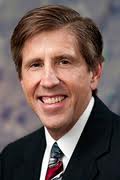
Tuthill
School choice in general is in the news a lot nowadays. And lately and more specifically, so is Florida’s tax credit scholarship program for low-income students. Administered by Step Up For Students (which co-hosts this blog), it’s the largest private school choice program in the country; it will serve about 60,000 students this fall; and as a number of stories in recent weeks have noted, including this one by the Tampa Bay Times/Miami Herald capital bureau, it continues to grow rapidly.
We know there are many questions about the program and its expansion, so we’ve asked Step Up President Doug Tuthill to do a live chat on the blog next week. He’ll answer as many questions as possible over an hour or so.
Doug joined Step Up in 2008. Before then, he had been a college professor, a classroom teacher, the president of two teachers unions and a driving force behind the creation of Florida's first International Baccalaureate high school.
At redefinED, we strive not to be an echo chamber, so we’re hoping we’ll get questions from a wide range of folks, including (and maybe even especially from) people who are skeptical or critical of what we do. We also strive not to be a promotional vehicle for Step Up, but we thought the recent news coverage justified a spotlight. Quite frankly, we’re also new to this live chat thing, and Doug is our guinea pig. 🙂
To participate in the chat, come back to the blog on Tuesday, Aug. 6. We’ll start promptly at 10:30 a.m., so click in to the CoveritLive program a few minutes before then.
In the meantime, if you have questions for Doug that you’d like to send in advance, please email them to [email protected], tweet them to @redefinedonline or post them on our facebook page.
Editor’s note: Most discussions of school choice today are focused on newer options – charters, vouchers, tax credit scholarships – that are intended to empower parents without the ability or means to access the right school. But Catherine Robinson, a Tampa mother and assistant director of outreach for the Step Up For Students scholarship program, writes that old-fashioned methods can work as well.

School choice time again with the Robinsons.
I’ve been through this before. Many times.
Searching for the right school for my children has never been easy, but since we all know the importance of education in determining a good future, every few years, I skip some happy hours and dedicate myself to finding the best choice for my twin sons.
Ten years ago, Jacob and Zachary were ready for preschool and over the course of several months, I researched local providers. I consulted trusted friends, official “studies” and interviewed administrators in ways that put Senate confirmation hearings to shame.
I finally decided on a school 45 minutes away from our home. Quite a drive, but my husband deferred to me in this area, as I was a teacher at the time, the way I deferred to him, as the father, when deciding which coaches to ignore at T-ball practice.
Our children did well in preschool and precedent was established.
A few short years later, in preparation for their elementary years, I conducted similar research. I looked at school grades, asked around, and visited facilities at drop off and pick up times before choosing a wonderful public school, this time only a half-hour drive from our home.
The Big Recession threw us some unexpected curve balls and we relocated to Colorado Springs. Where it snows. In May. Within a year, we high-tailed it back to Tampa. This was 2008, the height of the economic crisis, and so we rented a home rather than buy.
I didn’t realize then what a blessing that would be. (more…)
School technology. StateImpact Florida takes a look at the One Laptop Per Child program.
 Accelerated classes. In Pasco, enrollment is climbing fast in AP, IB and dual enrollment. Tampa Bay Times.
FCAT. Gains not as good as they sound, writes Shanker Blog. Three Pinellas elementary schools have among the worst math scores in the state, reports Gradebook.
Parent trigger. A distraction and faddish. Sherman Dorn.
Superintendents. The new Lee super is Naples High Principal Nancy Graham, but it's not clear whether she's temporary, reports the Naples Daily News. Tony Bennett's a fan of Pinellas' Mike Grego, reports Gradebook.
Ed summit. Speaking of Grego, he's among the speakers at the Florida Sterling Council's annual summit. StateImpact Florida.
Gifted students. Pinellas is eliminating programs for gifted students at a few schools in lieu of offering gifted services at all elementary schools. Tampa Bay Times.
School spending. Broward gets no legislative funding help for its technology and building needs, reports the Miami Herald. More from the South Florida Sun Sentinel. Broward wants to charge a developer $3.6 million in impact fees for four students, the Sun Sentinel also reports. (more…)
FCAT. FCAT writing scores up. FCAT reading and math scores flat. Miami Herald. South Florida Sun-Sentinel. Palm Beach Post. Orlando Sentinel. Florida Times Union. StateImpact Florida. Gainesville Sun. Ocala Star Banner. Associated Press. Naples Daily News. Bradenton Herald. Sarasota Herald Tribune. Pensacola News Journal. Tallahassee Democrat. Panama City News Herald. StateImpact has more from Education Commissioner Tony Bennett.
FCAT success. How a Tampa elementary magnet school got traction. Gradebook.
FCAT retakes. Daytona Beach News Journal.
Vals and sals. Backlash is growing to Hernando's decision to ban vals and sals. Gradebook.
Nerds. Spelling bee champ Nupur Lala of Tampa helped make nerdy cool. Associated Press.
Turnaround schools. Hillsborough is proactive about trying to spark them. Tampa Bay Times.
Teacher training. The Hechinger Report uses Florida to base a story about reformers' aims with teacher training and recruitment. (more…)

