Editor’s note: This column originally appeared in redefinED on Aug. 26th, 2013, as part of a series to commemorate the 50th anniversary of Martin Luther King Jr.’s “I Have a Dream” speech. We are reprising it as the nation prepares to celebrate what would have been King’s 90th birthday.
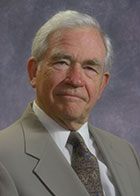
Coons
I grew up in a Minnesota city of 100,000 with - in my time - one black family. My introduction to the reality of public school segregation came in 1962 as - now at Northwestern in Chicago - I agreed to probe the public schools of the district on behalf of the U.S. Commissioner of Education. The racial separation was there as expected, but there was one big surprise; I was astonished to find enormous disparities, not only in taxable local wealth - hence spending - among the hundreds of Illinois districts, but even in individual school-by-school spending within the Chicago district itself. I wrote about both problems, sprinkling research with “action” including marches and demonstration both in Chicago and in Selma (prior to the main event there).
My interest in deseg politics had already provoked a law review article on the risks of anti-trust liability for King et al. who were planning boycotts of private discriminators. On the strength of that essay, Jack Greenberg, then director of the NAACP Inc. Fund, invited me to meet with King and his lieutenants at dinner in Chicago to discuss the question. We spoke at length - mostly about boycotts but also about schools. By that time I was already into the prospects for increasing desegregation in Chicago, partly through well-designed school choice.
I won’t pretend that I recall the details of that evening. What I can say is King’s mind was at very least open to and interested in subsidies for the exercise of parental authority - which clearly he valued as a primary religious instrument. I took my older boys next evening to hear him at a South Side church and, possibly, to follow up on our conversation, but he had to cancel. We heard sermons from his colleagues, some to become and remain famous. I did not meet King again.
King’s “Dream” speech does not engage specific public policy issues - on schools or anything else. Essentially a sermon, it is a condemnation of the sins of segregation and an appeal to the believer to hear scripture, with its call for indiscriminate love of neighbor, as the life-task of all who recognize the reality of divine love for us - his image and likeness. It is purely and simply a religious appeal that declares the good society to be one that rests upon benign principles that we humans did not invent but which bind us. I don’t know King’s specific understanding of or attitude toward non-believers, but this document clearly rests the realization of the good society upon its recognition of our divine source and its implication of the full equality of all persons.
Given that premise and the Supreme Court’s insistence upon the “wall of segregation” in the public schools, plus - on the other hand - the right of parents to choose a private religious education, the logic is rather plain.
Private schools live on tuition, and many American families couldn’t afford to enroll then or now. If low-income families were to exercise this basic human right and parental responsibility enjoyed by the rest of us, government would have to restructure schooling to insure access to an education grounded upon, and suffused with, an authority higher than the state. Given the economic plight of so many black parents, the only question would be how to design the system to secure parental choice without racial segregation by private educators.
And that possibility was to be the principal crutch of “civil rights” organizations in hesitating about subsidized choice.
Of course, many of their members were public school teachers who wondered about their jobs. Still, in the early 70’s, both the NAACP and the Urban League were sufficiently interested in parental choice to engage the usual suspects, including myself, to describe solutions to the apparent problem. In 1971, Steve Sugarman and I published a book which was a first crack at designing a structure that would preserve the integrity of the private school while assuring non-discriminatory access. Others made similar proposals. The civil rights groups still dallied.
One political difficulty was media domination of the argument for choice by free-market libertarians who fretted at - and opposed - every suggestion that would in the least diminish private school control of admissions. Their narrow focus forfeited a good deal of centrist support. But the more fundamental problem was the teachers’ unions, which froze at the prospect of competition and gave the civil rights groups plausible (and tangible) reason to balk. One example: in a long private conversation, Cesar Chavez expressed to me his regret that the Farm Workers couldn’t sign on for a popular initiative for school choice in California, because the UFW would risk the annual 200k they enjoyed from the AFT.
The idea thus remained largely a specialty of the market enthusiasts for 30 years. My guess is King could have changed all this, precisely because of his theological focus. The problem has not gone away, and we miss him.

Public school parents in Rhode Island are looking towards the justice system to curb what they say is a disturbing lack of civics instruction in the state's high school classrooms.
Public school parents in Rhode Island have asked a federal court to declare that the state’s very spotty provision of instruction in civics and related humanities violates constitutional rights of its high school students. Their complaint has it that, especially in poor neighborhoods, children are taught shockingly little about our state and federal governments and the expected role of the citizen in jury service, voting, taxation and so forth. It seems that fewer than half our states even require the teaching of civics, and the Rhode Island suit would put that failure to the test of “equal protection” and other guarantees.
The New York Times suggests this complaint by parents and children will face unfriendly Supreme Court precedent, specifically, the Rodriguez decision of 1973 which held roughly that states had no federal constitutional duty to assure each school district equal power to spend per pupil above some minimum. The Times takes Rodriguez to be a serious impediment to the Rhode Island suit, though the writer suggests Chief Justice Roberts just might cross the line and give plaintiffs the deciding fifth vote.
I applaud the Rhode Island plaintiffs and am a bit cheerier about their prospects. The Rodriguez decision had nothing to do with any right to specific intellectual content; it concerned only the inequality among the school districts in their capacity, via locally chosen property tax rates, to raise dollars per pupil. The Court decided 5-4 that the disadvantage of property-poor districts was no violation of a child’s right to equal protection.
The Rhode Island complaint is focused, rather, on spending for specific educational purposes; it is about ideas. A part of the child’s basic ideological diet – civic affairs and citizen responsibilities – is being neglected. This is not a money case. It is, rather, the claim that the state cannot conscript children from poor families for an education that is limited to the purely instrumental – to learning skills, not serious civics or personal morality.
The founders of our government school systems saw and emphasized exactly what these plaintiffs seek; it was for those pioneers the primary justification for compelling formal education. Governmental failure here today, if proved, might well implicate a child and parent’s right to an introduction of our young draftees to the endless conversation about civic morality. After all, there is that strong judicial concern about access to ideas, a basic caution lodged in our First Amendment.
I have not seen the complaint. I doubt the lawyers overlooked this source of strength for their clients’ cause, and I wish them luck. Their victory would avail nothing, however, toward correcting the sad reality that low-income parents still would lack the authority of the more financially able to choose their children’s school, either by residential location or paying tuition. The poor will still get whatever the local system decides, or is directed by the courts, to offer in the way of intellectual support for a democratic society.
And still another idea denied the mind of the child will be that the making of a full person may entail the quest for a good that one does not invent – that entails more than “finding yourself.” Every 6-year-old senses a responsibility that no government has decreed but which all states should respect and nurture in their schools. Once that native hunch in the child’s mind has been starved and shrunken, what sort of civic responsibility are we entitled to expect?
I hope these plaintiffs succeed, but let’s be realistic. Such a victory will do little to liberate the lower-income family from the “civics” curriculum to be selected and imposed upon them by unchosen strangers.
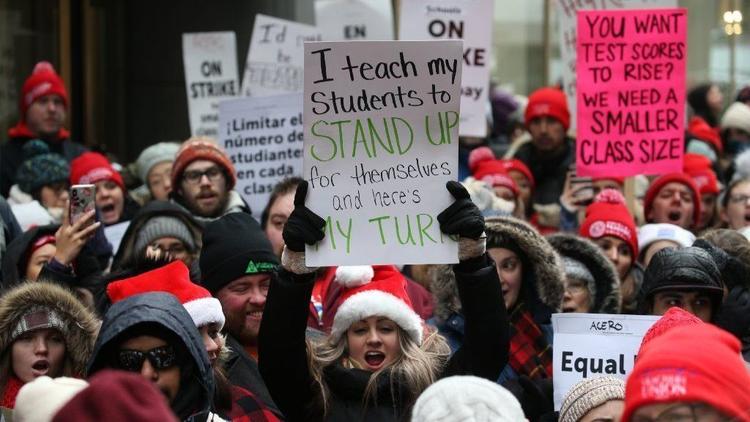
The nation's first strike by charter school teachers is underway in Chicago.
In Chicago, the teachers from a system of fifteen charter schools that serve 7,000 mostly Hispanic students have gone on strike. These schools are among the few charters in the country that are unionized.
Well, good luck to them all, but it is only fair to remind these folks of the essentially private and voluntary nature of these schools, and the risk that this entails. In the private sector, parents freely choose. A strike by teachers, just as a strike by widget makers, puts their own employment at risk. Their company's product has competitors all hoping to see another one of them go belly-up.
Private schools are widget makers, only more so. Their customers have trusted them with care of the most valuable of all goods, to provide them the only service that is compulsory for every family. There is many another supplier waiting to serve these parents and children. Consider the competitive effect that the birth of public charters had upon the Catholic schools serving low income families in the inner-city. Consider the hovering presence of other choosable charters (and traditional public) schools upon these charter schools now under strike.
One possibly positive message of strike like these in Chicago is the clarity bestowed upon the truly private nature of charters. One day that reality may serve a high purpose in litigation before the Supreme Court. The issue will be whether ban of religion in the charters schools of Illinois or any other state prohibits the free exercise of religion under the First Amendment of our federal constitution.
Whether a school that teaches religion would want to put up with any of this very minor general regulation of charters would pose a judgment for its management. My expectation would be that many a faith-based school would find the burden tolerable.

Jack Coons of Berkeley Law muses that all parents should be free to choose a school that considers the concept of equality in class.
Are we clear what we mean (or even could mean) when we fight for “human equality?” In what would a truly “equal” world consist? As a lawyer, I have more than once invoked the equal protection clause of the 14th Amendment:
“No state shall … deny to any person … the equal protection of the law.”
But let us be clear: These words do not proclaim humanity’s universal equality. They assert only the right of every person under our national law to receive the same treatment that is accorded every other person in his specific situation. “All six-year-olds” are entitled to the same benefit or subject to the same school requirement.
True, the Supreme Court has given a certain few of our human qualities special attention. For example, law must behave with extra care in enforcing classifications by race. To a point, it may favor person of a class that has historically been victimized; a little “affirmative action” may be OK. But law in general is required first to make rational classifications, then to accord the same treatment to every person who fits in that class. That’s what law means for us.
We must not confuse these rather unsurprising words of the 14th Amendment with the very different proclamations of fact (not law) made in 1776 by the Declaration of Independence. It was “self-evident” that:
“ ... all men are created equal.”
The founders plainly believed that, whatever categories of specific persons – thieves or mothers – that human law might come to adopt, nothing that law does could ever change this hardcore fact of equality. The Declaration of Independence clarifies this distinction ‘twixt law and fact by adding quite separately that, in addition to this “truth” of our equal natures, all of us deserve certain broadly stated guarantees:
“ … they are endowed by their Creator with certain unalienable rights.”
We simply are equal; we are so in such a way that our own nature deserves certain positive concerns, and not only from King George. This distinction between the fact and law of equality is seldom made clear in our own media discourse – and even among legal academics – but it is the most basic of human claims.
Are we in fact already “equal” as the founders assert? What could the expression mean, and how might it matter? To be understood as a fact not a right against government equality would require our acceptance of some particular and universal aspects of our own nature. But, how could this be when, at every moment we witness gross and important differences in our individual capacities – not to mention our luck? Susie is really smart; I’m not, nor could I ever be. Bill is agile and will star at basketball; I am a stumbling klutz. Is there really any meaningful quality that the three of us might share, and in the same degree? The founders plainly thought so. Or did they? Could Jefferson have found a way to ascertain human “independence” for his slaves without releasing their legal bond? Could a slave be his equal?
Equality as an existential human quality seems impossible to picture without resort to the transcendental – exactly as the founders put it. The concept, whether one likes it or not, makes Susie, Bill and myself equal in a way that the signatories could defend. We weren’t all endowed by creation with freedom from King George’s tea tax, but everyone of us can claim the same dignity as a child of God, and no less (or more) so than the King himself. We simply are equal.
How could this be so? I find no answer other than the design of every minimally rational human person freely either to seek or to ignore the true and the good – and whether or not the seeking individual always finds that true good or, instead, makes wrong choices out of well-intended ignorance. If perfection of the self comes by honest quest for right answers, we would all be equal in our freedom to make the true good our primary objective; we would thereby fit ourselves for a happy and timeless perfection we cannot imagine.
What is the relevance, if any, of “created equal” to school choice? Consider the classroom in some inner-city, low-income high school. Can the teacher invite her students – who are there by no choice of either child or parent – to reflect on this basic proposition and ponder any meaning for our true “equality” other than our universal access to self-perfection and its permanent reward? Or does the First Amendment forbid?
It is the only plausible – and happy – response I know to the many unchangeable and otherwise merciless realities of our differences. All parents should be free to choose a school that considers the concept in class.

Professor Jack Coons of Berkeley Law writes that defenders of the government’s subordination of poor parent's right to choose must justify the profound and debasing distinction we have drawn between social classes.
Assemblyman Snodgrass would appreciate your thoughtful response to questions about school choice she will face this year in the legislature. You may respond at length if you choose.
Who is better able to decide upon the school that the individual child will attend?
a. Whoever draws the boundary lines of the attendance zones that determine the specific public schools to which individual children are assigned according to family residence?
b. That child’s parent?
If you answered “a,” is this because, without having met the child, the government is a better decider of this issue?
a. Yes.
b. No.
If “yes” to Question No. 2, should well-off parents still be permitted to choose a private school or to buy into the attendance zone for the public school they prefer?
a. Yes.
b. No.
If “yes” to Question No. 3, is this because wealthier parents:
a. Care about their child?
b. Know more about their child?
c. Both a and b?
d. Other? Explain [space at the end]
Would the system work better for child and society if lower-income parents received financial aid from the state sufficient for them to choose a private school? (And explain at the end.)
a. Yes.
b. No.
Should society worry that such indigent parents might choose a religious school?
***
And so on. Any reader can invent such a questionnaire. My point, of course, is that we sorely need a clearer recognition – and either justification or replacement – of our studied conscription of the lower-income child and parent for the local public school.
The social consequences of the system appear to me horrific but insufficiently studied. After 60 years in academia, writing as an observer, I worry that the social scientists in our ed schools remain focused on test scores as the sole measure of school excellence; of course, even by that standard, choice seems to improve things a bit. That modest improvement those experts hostile to school choice for the poor assign to tricky admission controls by the private schools.
Whoever is right, one thing is plain. A policy of subsidized school choice for the poor does no harm in respect to scores. I say, stop the fuss; there are more important things at issue. If defenders of our government’s subordination of the parent because of poverty are to make their case, they must somehow justify the profound and debasing distinction we have drawn between social classes. So far as this observer can see, our historic, and quite conscious, disqualification of lower-income parents may well be a primary cause of some of America’s most menacing social realities. To name a few:
My wife was – and one of our sons still is – a public school teacher. Our daughter taught for years in inner-city Catholic schools. By chance and choice, our kids spent exactly half their total semesters in public schools.
We could choose, and we are grateful.

Jack Coons of Berkeley Law writes that it's time we all grasp that what we have called "public education" is actually anything but - and it's long time to make it so through school choice.
In much of American society, children attend a school that has been chosen by their parents. Mom and Dad have picked out a home in the attendance area of a certain school that is owned and run by the government. At the very least, when they moved they knew its reputation. Whether or not the school was a major consideration, they accepted it as a substantial part of the culture that would count greatly in shaping their child’s worldview.
That school of theirs will be called “public.” My Webster’s defines this word in various ways, but most prominent among these meanings, and consistent with all, is this one: “Open to all persons.”
Think about it. Is that government school that you chose for your child open to all children? Of course it is, with one condition – namely that every American family can afford to live where you have chosen to live. Is this public?
Of course, your chance of location in this “public” school attendance area may have had little to do with your finding that dream home. You may be able to afford a private school, and that is your choice now. It may be Saint Mary’s or the Free Thought School, but it is there for the picking, and you pick it. Now my question: Is this private school any less public than the Eleanor Roosevelt Elementary in your attendance area? (more…)
Coons: "What government has done is properly to recognize minimal education as a parental duty, but then improperly arranged its provision by a de facto conscription of families of lower income. "
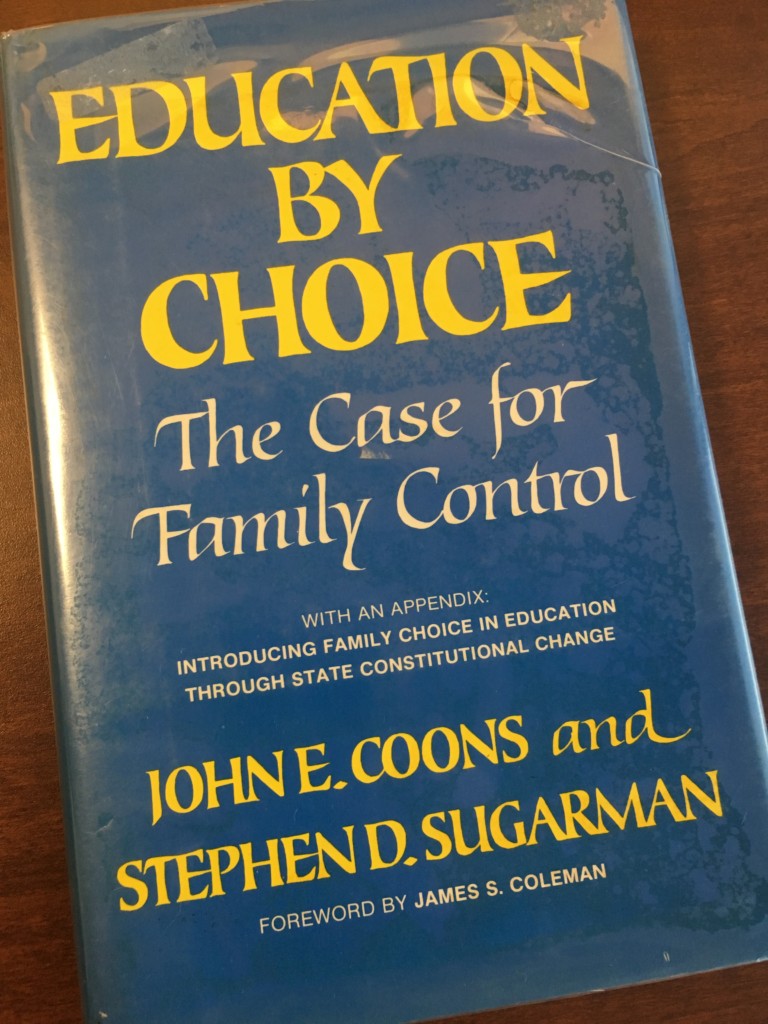
The humble interim editor of this worthy school choice blog, one Ronald Matus, recalls to me the 40th anniversary of a certain book, “Education by Choice: The Case for Family Control” (University of California Press, 1978), hereafter EBC. I am to call up its conception, its ideological focus, its faults and future.
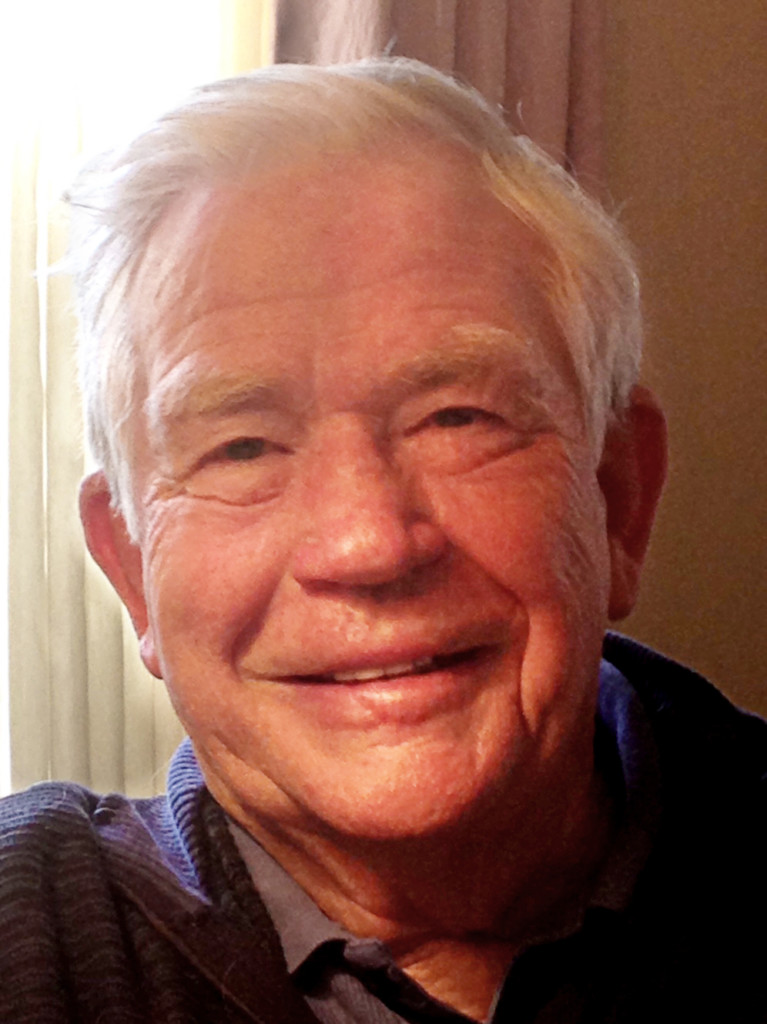
Jack Coons, pictured here, co-authored "Education by Choice" in 1978 with fellow Berkeley law professor Stephen Sugarman. It remains a must read.
To begin, my Berkeley colleague and collaborator, Stephen Dwight Sugarman, and I had already co-authored two books on school finance, the first with William Clune, long a professor at Wisconsin, and, like Steve, my student at Northwestern in the ‘60s. “Private Wealth and Public Education” (Harvard, 1970) was our expose of the irrationality of our then state systems of school finance. A substantial segment of that book was devoted to a critique of Milton Friedman’s pure market conception of subsidized parental choice. Still needed, we argued, was a full account of the arguments from all sides of the question of just why and how to truly empower the lower-income parent.
The second book, “Family Choice in Education” (Institute of Government Studies, 1971), was essentially the text of a model statute for parental choice with substantial comment by Steve and myself upon each section. The model presupposed the participation of public as well as private schools in the market created by vouchers.
The question of subsidized choice was, by then, in the academic air. What remained to be written, we supposed, was a more accessible display and critique of the various arguments for and against choice, one addressed to all serious readers. The existing literature was good but remote, academic and largely unread. The possible exception was Friedman’s brief but classic portrayal of an unregulated system that would bestow vouchers of the same dollar value upon parents of every income level. The idea was simple, clear and attractive – but a bit too much so.
I had known Friedman rather well in Chicago. He had been an oft-repeated guest on my half-hour weekly radio show – later I appeared on his television show. Both of us had, in the late ‘60s, moved west to the Bay – he to San Francisco, I to Berkeley, where Steve was soon to be my colleague. About 1973, the latter and I concluded that the market of serious readers deserved a more complete and accessible argument for a form of parental choice more inviting than that of the “libertarians,” a system that would take a form more engaging for political centrists. It would describe a form of governmental engagement that would in practice empower those parents of low or modest income who had for so long suffered de facto conscription of their child by the public system – literally segregation by wealth.
So at last came EBC in 1978; and at long last I have re-read it. I feel the satisfaction typical of geezers who rediscover, then relive, something to be proud of, some deed or artifact that is still in the game. EBC now appears to me sufficient as a battle plan for beginning the rescue of the conscripted parent and child, not trying to exterminate public education but, rather, inviting it to become truly public. This just might be a time and place where interested parties can join freely in common cause – the enhancement of young lives, the professionalization of education, the strengthening of families and the good of the civil order. (more…)
This is the latest post in our series on the center-left roots of school choice.
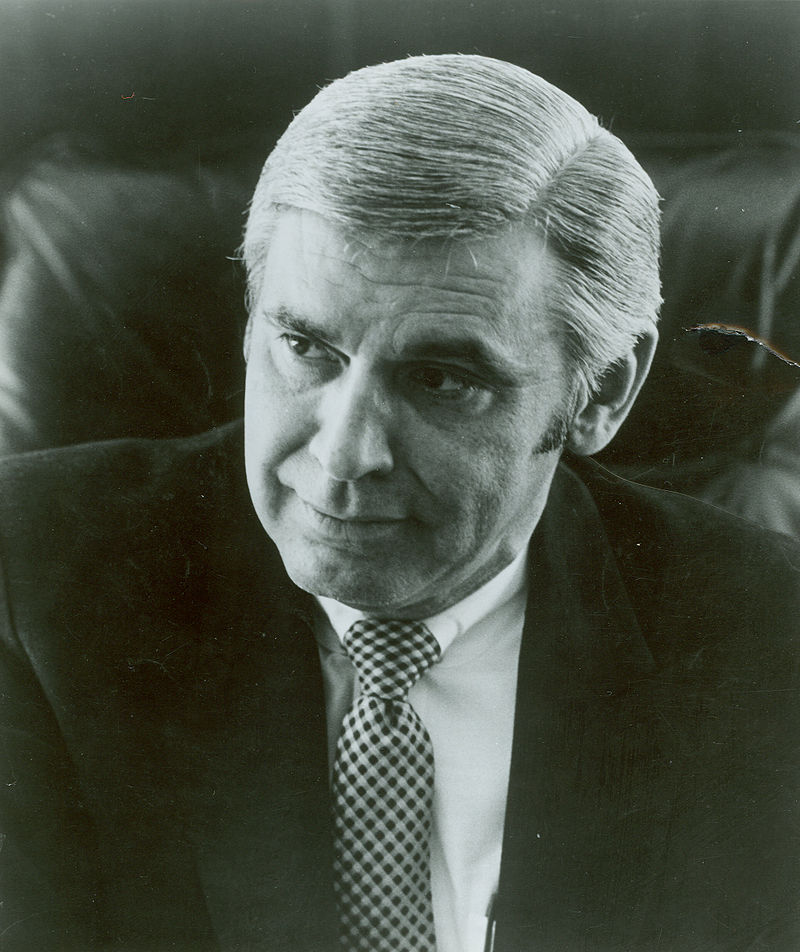
U.S. Congressman Leo Ryan was a popular Democrat who favored school choice. In 1978, he started working with Berkeley law professors Jack Coons and Stephen Sugarman on a plan to put school choice on the statewide ballot in California. An early poll showed 59 percent of voters were in support.
All of us know Lincoln was assassinated. But not many know the twist of fate that left historians asking: What if? Had it not been for a clown of a cop named John Frederick Parker – who was supposed to be protecting the president at Ford’s Theatre, but instead slipped next door to the Star Saloon – America after the Civil War may have coursed in dramatically different directions.
The history of school choice has its own forgotten twist of fate.
It involves Berkeley law professors, a murderous cult, and U.S. Rep. Leo Ryan, a school choice Democrat. Given relentless attempts by choice critics and the press, in this age of Trump and hyper-tribalism, to portray choice as right-wing madness, it’s worth revisiting Ryan and what happened 40 years ago. Would white progressives still view choice as a Red Tribe plot had white progressives been the first to plant the flag? And in big, blue California to boot?
 In 1978, Berkeley law professors Jack Coons and Steve Sugarman laid out a social justice case for school choice in “Education by Choice,” a book that also offered a detailed policy blueprint. The prevailing system of assigning students to schools by zip code, they argued, was elitist and dehumanizing to low-income families. Their sweeping alternative included private school vouchers and independent public schools (which we now call charter schools). It also included visions of a system that would allow parents to build their kid’s educational programs a la carte, like today’s education savings accounts.
Coons and Sugarman wanted to plant seeds, not spark an instant revolution.
But then, serendipity.
Congressman Ryan, enjoying his third term representing the San Francisco Bay area, was a former public-school teacher and a product of Catholic schools. “Education by Choice” moved him. As fate would have it, his cousin went to church with Coons. So he had her invite Coons to dinner.
Ultimately, the professor and the congressman decided they’d try to get the California Initiative for Family Choice on the statewide ballot. All they needed was enough signatures. Ryan agreed to be the face of the campaign.
Choice couldn’t have found a better spokesman. Before Ryan was elected to Congress, he was a state lawmaker who practiced what one newspaper called “investigative politics,” and his aide Jackie Speier – now U.S. Rep. Jackie Speier – called "experiential legislating."
Ryan worked as a substitute teacher to immerse himself in high-poverty schools. He went undercover to experience Death Row at Folsom Prison. As a Congressman, Ryan trekked to Newfoundland to investigate the slaughter of baby seals, and even laid down on the ice to save a seal pup from a hunter.
It’s not a stretch to think Ryan’s popularity would have rubbed off on the ballot initiative.
I get The New York Times. Each morning, it identifies the world's battlegrounds — military and ideological, political and economic. I discount and forgive its plainly "liberal" bent. If I owned a paper, it would have a tone of sorts.
But there are limits. One, I suggest, is the duty of all media, at an ethical minimum, to recognize, if only to dismiss, plausible arguments on all sides of any public issue. Readers deserve to know the writer's pre-judgments.
The Times is a collection of heady folk; one expects the best from them. Sadly, along with most of their profession, they have remained silent on the strongest argument for extending to the lower-income parent the same power of choice among all educators that is available, and so precious, to our middle- and upper-income classes.
In April, the Times offered its view on the efficacy of one form of empowerment for the non-rich under the headline: "Vouchers Found to Lower Test Scores in Washington Schools." The article discussed a study originating from the anti-voucher Obama Department of Education; it found that vouchers for choice of private schools by poor families in D.C. were followed by slightly lower scores on required tests. The Times cited a few concurring studies but strangely failed to note that these reports contradict two dozen other professional analyses.
But that particular form of selective reportage is not the only concern here. Much more troubling is the Times writer's assumption that test scores are the litmus test for success in school, and that, if scores slightly declined, there would be no justification for letting poor parents make those choices so dear to the rest of us.
The test score infatuation is still widely shared by the media. Historically, it stems in considerable part from the purely economic argument for choice so welcome to the utilitarian minds of the '60s and even today. (more…)
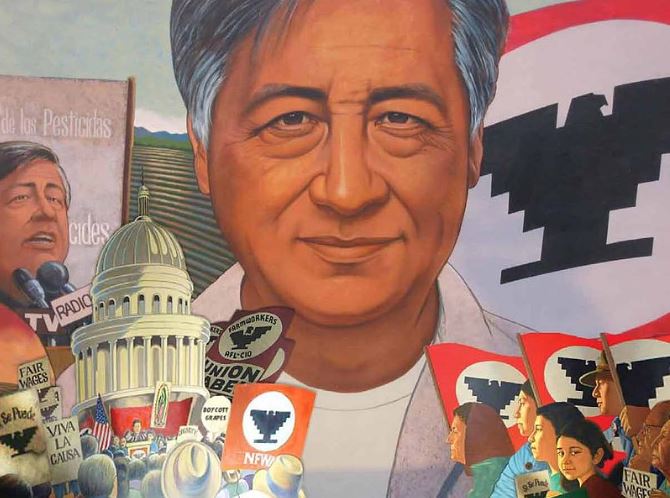
“Gradually,” Cesar Chavez predicted, “we’re going to see an awful lot of alternative schools to public education.” (Image from Wikimedia Commons)
Cesar Chavez, the iconic labor leader, would have been 90 years old today, and progressives, including teacher union leaders, are pausing to honor him. But few of them probably realize Chavez’s vision of a better world – the same vision that led him to organize the most abused workers, and battle the biggest corporations – included scenes of community empowerment from earlier chapters in the school choice movement.
Chavez was a steadfast supporter of Escuela de la Raza Unida, a forgotten “freedom school” in Blythe, Calif. that sprouted in 1972, in the wake of mass parental frustration with local public schools. Some of his comments about this school in particular, and public education more generally, can be found in this rough-cut documentary about the school’s creation.
“We know public education has not … been able to deal with the aspirations of the minority group person or, in our case, our kids who have been involved with the struggle for social betterment,” Chavez tells an interviewer at about the 7:30 mark in the video.
“The people who run the institutions want everybody to think the same way, and it’s impossible,” he continued at another point. “We have different likes and dislikes, and different ideals. Different motivations. And so I’m convinced more and more that the whole question of public education is more and more not meeting the needs of the people, particularly in the case of minority group people … “
The success of Escuela de la Raza Unida is proof, Chavez said, that truly community-led schools are needed – and can work.
“Gradually,” he predicted, “we’re going to see an awful lot of alternative schools to public education.” (more…)

