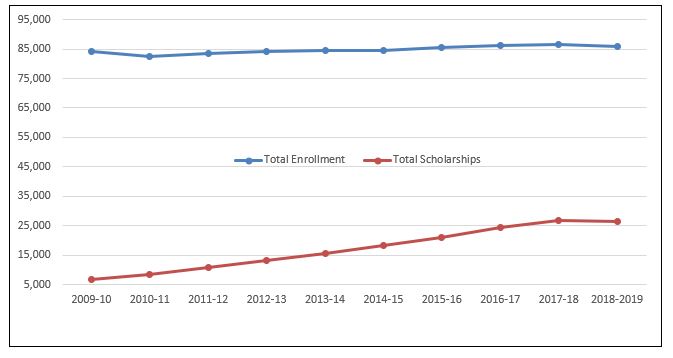
The last ten years of Catholic school enrollment numbers
CLEARWATER, Fla. – After seven years of slow but steady growth, Catholic school enrollment in Florida experienced a 1 percent decrease over last year, according to a preliminary report from the Florida Conference of Catholic Bishops.
Total enrollment for the current academic year stands at 85,784 compared with 86,691 in 2017-18, a drop of 907 students. But as Floridians prepare to celebrate Catholic Schools Week, which starts Monday, it is important to put the numbers in context.
Despite precipitous drops in Catholic school enrollment in other states – national enrollment in 2017 was just over a third of what it was at its peak of 5.2 million students in 1965 – Florida has been the exception to the rule.
In 2010-11, 82,464 students attended Catholic schools in Florida. That number has edged up each year until 2017-18, with the largest increase in 2015-16.
It also is important to note that Florida’s recent enrollment dip coincides with a decrease in the number of students participating in state school choice programs, such as the Florida Tax Credit Scholarship (FTC) for economically disadvantaged families and the Gardiner Scholarship for students with certain special needs. (Those programs are administered by Step Up For Students, which hosts this blog.)
In 2017-18, Catholic schools educated 18,690 FTC students. This year, that number has fallen slightly, to 18,428.
James Herzog
James Herzog, associate director for education with the Florida Council of Catholic Bishops, said the current enrollment decrease is not triggering alarms.
“We try not to get too high or too low about any one year,” Herzog said. “We just try to take it a year at a time. We look at (the numbers) to some degree, but enrollment has been stable for several years.”
Herzog noted that the last major enrollment dip came during the Great Recession in 2007 and 2008, after which enrollment leveled off and began climbing back up.
“The climb was fueled by the state scholarship programs,” Herzog said. “They’ve been a huge benefit to the students and families we serve.”
Enrollment in FTC, the nation’s largest scholarship program for economically disadvantaged K-12 students, dropped this fall for the first time in 14 years. The decline was caused by a slowdown in corporate contributions and has led to a gap between scholarship supply and demand.
The Department of Education reported that as of November, the scholarship was serving 99,453 students in 1,799 private schools. That’s 7,505 fewer than the same period last year, and 8,645 fewer than last year’s total. In the previous 13 years, the average annual growth rate was nearly 20 percent.
“We’re working hard to raise more scholarship funds, but we’re bumping up against a ceiling,” Doug Tuthill, president of Step Up For Students, said recently.
Tuthill recognizes that even a 1 percent dip affects many families who are being deprived of school choice, characterizing the number of students who are being turned away as “devastating.”
For two years, Florida private schools have faced a dilemma affecting students who want a jump start on college. A change in the way the state funds dual enrollment has meant that for some of them, it's no longer free.
Sen. Stargel
This year, though, a fix may be in the works. The proposed legislation could also make college courses more accessible to home-school students.
In 2013, the Legislature shifted some of the costs of dual enrollment courses from colleges to school districts. The change wound up affecting many private schools, which started receiving charges of $72 per credit hour for students who enrolled in college courses. That meant private schools either had to come up with money to cover their costs, or take dual enrollment options away from their students.
Legislation by Sen. Kelli Stargel, R-Lakeland, approved last week by a Senate panel, would change the way private school students participate in dual enrollment.
The bill would create a new system, similar to the one that exists for home education students. Private-school students could enter articulation agreements with colleges, allowing them to take dual enrollment courses free of charge.
"I think it would be prudent to allow these kids the opportunity to attend our dual enrollment opportunities at our community colleges, and not charge them, the way that we don't charge other students," Stargel told the Senate Education Committee.
The bill, SB 874, would also require colleges to offer textbooks to home- and private- school students. Under the current law, they often have to supply their own. Similar legislation has been filed in the House.
The call came on the first day of school, first thing in the morning, from another private school a few blocks away. An intruder had just tried to break in. He took off before police arrived.
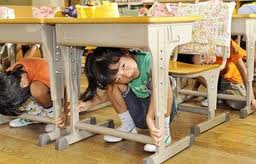
Shouldn't private school be notified, like public schools, in case of emergency situations in the neighborhood?
Mary Staley, the principal of St. Paul Catholic School in Leesburg, Fla., knew she had to err on the side of caution. She ordered her school locked down.
“You have to think worst possible scenario,” Staley said.
Luckily, police caught the guy quickly, and nothing bad happened. But Staley said it would have been far better if police rather than a cautious neighbor had notified her.
In Florida, there is no requirement for emergency response agencies that routinely contact public school districts about major incidents - fires, SWAT team raids, you name it – to do the same with private schools. At a time when the definition of public education is expanding, it’s a reminder of old dividing lines. But bills to change that got their first hearings before House and Senate committees Tuesday, and cleared both.
The identical bills – SB 284 by Sen. Joe Negron, R-Palm City, and HB 369 by Rep. Mike La Rosa, R-St. Cloud - would require emergency agencies that already notify districts to also notify private schools. Only private schools that voluntarily opt in would be affected.
“I think it would be excessive to require emergency personnel to go identify every school,” Negron told the Senate Education Committee. But “if it’s simply a matter of putting them on the list, I don’t think that’s unreasonable so they’re treated with the same parity as public school.”
The committee voted unanimously for the bill. So did the House Choice & Innovation Subcommittee with its counterpart. (more…)
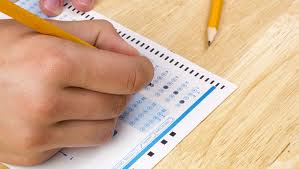 At least 13 private schools that accept the Florida Tax Credit Scholarship have applied to administer the FCAT and end-of-course exams next year.
The schools, mostly faith-based and in South and Central Florida, have submitted their applications to the Florida Department of Education, which will decide in August whether to approve them.
DOE spokeswoman Tiffany Cowie said there may be more schools that made the March 1 deadline, but the department won’t know the final number until the mail is cleared towards the end of the week.
A state law passed in 2012 allows private schools with at least one student receiving the tax credit scholarship to offer the Florida Comprehensive Assessment Test and/or end of course exams, which are required in public schools.
Of the 13 schools that applied, eight signed up only for EOCs.
“The FCAT is a dinosaur,’’ said Principal Sandra Basinger of St. Mary’s Catholic School in Brevard County, where her seventh- and eighth-graders hope to take EOCs in Algebra I and Geometry next spring.
Like a lot of Catholic schools, St. Mary’s administers the Iowa Test of Basic Skills to its students in grades 2-8. The test is as good as if not better than the FCAT, Basinger said. And with Florida phasing out the state assessment for other tests in line with the new Common Core standards, “really, I just don’t think it would be worth it,’’ she said.
James Herzog, associate director of education for the Florida Catholic Conference in Tallahassee, said in an email to redefinED that he has heard the same sentiment from other Catholic schools.
“From a practical standpoint, it would … not make any sense for Catholic schools (or most other nonpublic schools) to offer the FCAT for a year or two only and then have to switch again to something else … ,’’ he said.
Herzog originally anticipated 30 to 40 Catholic schools would apply to give the FCAT.
“Obviously, I was way off,’’ he said. (more…)
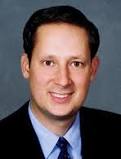
Negron
Florida private schools would get safety alerts just like public schools under a bill filed this week.
SB 284, sponsored by Sen. Joe Negron, R-Palm City, would require police departments and other emergency response agencies to notify private schools about fires, bomb threats and other major incidents just like they do now with public schools. Only private schools that opt into a school district's emergency notification policy would be affected.
Similar bills fell short of passage in recent years, but school safety is shaping up to be a bigger issue in the Florida Legislature this year in the wake of last month's shooting tragedy in Newtown, Conn.
So far, there is no House companion bill. More details, background and context from James Herzog with the Florida Catholic Conference here.
Florida Catholic schools are embracing Common Core academic standards and seriously considering whether to take the coming state tests aligned to them. In the meantime, their leaders say, 30 to 40 Catholic schools want to administer the FCAT in 2014, in what would be a trial run for potential transition to Common Core testing.
“Our mission is the same, public or Catholic school, to create productive citizens in our world that actually have the skills in life they need,” Alberto Vazquez-Matos, schools superintendent for the Diocese of St. Petersburg, told redefinED. “We’ll all be raising the standards and talking the same academic language.”
The push by Catholic schools towards common standards - and perhaps common tests - is an interesting counterpoint to the debate that followed last week’s comments by Gov. Rick Scott. Scott re-opened the door to a long-running conversation about voucher and tax-credit scholarship programs by saying he wants to see students in those programs take the same tests as their public school peers.
Right now, the state does not require tax credit scholarship students to take the FCAT, but they are mandated to take another comparable, state-approved test such as the Stanford Achievement Test or Iowa Tests of Basic Skills. Disabled students who use McKay vouchers to attend private schools are not required by the state to take any such tests.
This year, Catholic schools in Florida enroll 7,673 tax credit scholarship students. (The scholarship program is administered by Step Up for Students, which co-hosts this blog.)
Scott’s comments sparked suggestions from some school choice critics that private schools were dodging comparisons to public schools. But Florida’s Catholic schools have been quietly moving towards Common Core for more than year. In fact, all 237 Catholic schools in Florida will be rolling out a “blended’’ version of the language arts standards, right along with public schools, in 2014. (more…)

