Florida's education choice movement has transformed learning for millions of families, but the next generation of reforms will require expanding options, modernizing funding and continuing to trust parents, a panel of state education leaders said Tuesday.
The discussion, hosted by the James Madison Institute, featured former Gov. Jeb Bush, who spearheaded the education choice movement that put Florida two decades ahead of other states that have recently established choice programs. Joining him were state Sen. Danny Burgess, R - Zephyrhills, whose three children are homeschooled, and Ron Matus, research and special projects director at Step Up For Students, a nonprofit organization that manages the state’s K-12 ed choice scholarship programs.
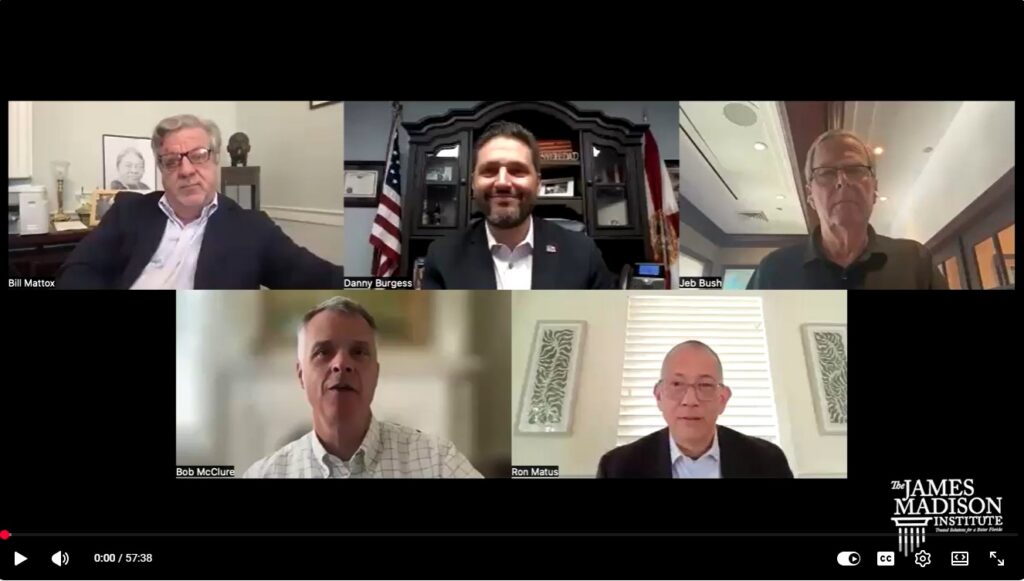
William Mattox, senior director of the James Madison Institute’s J. Stanley Marshall Center for Education Freedom, moderated the event, also sponsored by the Foundation for Florida’s Future (founded by Bush over 30 years ago) and Step Up For Students, to celebrate the 25th anniversary of the Florida Tax Credit Scholarship program. To see the full panel discussion, click here.
Bush recalled the early days of the ed choice movement, when he visited 250 schools during his campaign for governor and later established the state’s A-F grading system and a concurrent scholarship program for children in F-rated public schools. On the day Bush signed the bill, the Florida teachers union filed a lawsuit. (The state Supreme Court eventually struck down Bush’s scholarship program as violating the state Constitution's uniformity clause.)
The state also established the Florida Tax Credit Scholarship to ensure low-income students have access to options. That program ushered in an era of expanded choice that converted all scholarships to education savings accounts with universal eligibility. The change now empowers parents to customize their children’s education through a host of options, including private schools, microschools, homeschool hybrids, individual providers, online classes, and even individual public school courses. The long history of ed choice has made Florida the topic of many research studies with powerful results that show the programs are working and inform other states considering similar programs.
He said key findings include greater civic engagement, higher college attendance rates, academic gains, and improved outcomes for traditional public schools when parents have alternatives.
“Most importantly, Florida demonstrated that a child's ZIP code should not determine his or her future,” he said.
Matus, who was the statewide education reporter for the Tampa Bay Times as the movement took hold in 2004, covered the rise of charter schools, private school choice programs, Florida Virtual School (the nation’s first internet-based high school), and new forms of public school innovation.
However, meeting Black pastors in South St. Petersburg who strongly supported school choice particularly influenced his perception and challenged stereotypes about the movement.
“They simply wanted better options for the families they served,” Matus said. “That experience taught me that people support school choice for many reasons that often have little to do with the political narratives surrounding it.”
As the chief storyteller at Step Up, Matus has traveled the state to find evidence of how the rapid growth of learning options has allowed students and providers to flourish, including in Florida’s most rural areas.
“What I've seen is remarkable,” he said. “Today, roughly half of Florida's students participate in some form of educational choice. More than 500,000 students use scholarship programs. Hundreds of former public-school teachers have gone on to create their own educational options. Who could have imagined that 20 years ago?”
As for Burgess, he was a student sitting in class at Zephyrhills High School when the FTC was established 25 years ago and had organized a local Students for Jeb chapter when Bush was running for governor.
“I remain proud of my public school background,” he said. “But the educational landscape back then was very different.”
Choice was limited mainly to religious schools for those who could afford tuition. Homeschoolers were viewed as a fringe group.
Today, that has changed dramatically, he said.
Burgess and his wife use scholarship programs to customize the education of their three children through a rigorous hybrid classical Catholic program, piano lessons, and other enrichment activities.
“Watching our children thrive in that environment has been one of the greatest blessings of our lives,” he said. “The flexibility and opportunity we've been given through school-choice programs have made a tremendous difference for our family.”
Being a state lawmaker has given Burgess a front row seat to the evolution of ed choice.
As a House member in 2014, he saw changes that were largely incremental.
That changed in 2023, when lawmakers passed House Bill 1.
“When Florida embraced universal school choice, it represented the culmination of decades of work,” he said. “None of that would have happened without the foundation laid by Gov. Bush, the Tax Credit Scholarship Program, and the reforms that followed over the years.
“Today, Florida is leading the nation on universal school choice, and many other states are looking to follow that model.”
Universal came, but not without some important lessons that those in other states need to understand. Bush cited several:
“The tendency in government is always to solve problems by adding more rules,” he said. “You end up putting a blanket over the 99% of schools and providers that are working well because of problems caused by the other 1%.”
“Institutions that feel threatened by change will fight against it,” he said. “Policymakers pursuing these reforms need to understand that litigation is almost inevitable. If you're starting down this road in another state, you're going to get sued. I can virtually guarantee it.”
The panelists praised education savings accounts, which let parents direct funding to pre-approved uses spelled out in state purchasing guides, for empowering parents, who know what options best fit their children.
However, Burgess said some rules should be re-examined while leaving in place “reasonable safeguards.”
"Do we truly trust parents to make the right decisions for their children? I do. And I’m going to default to trusting parents every time.”
The conversation also turned toward equitable funding levels for different scholarship programs, the recommended removal of regulatory barriers that prevent innovation options such as microschools from opening and the need for school districts to see the benefits of sharing their underused school buildings with charter and private schools and allowing choice students to take individual district courses.
Bush challenged the assumption that if parents choose something other than a traditional public school, that public education suffers.
“We need a superintendent...that wakes up in the morning and says, ‘Every kid that is in my district...every child is my responsibility. I want to create an environment where parents have an abundance of choices, that kids are protected, that they dream big dreams, and when a school is successful as a microschool or homeschool option, or a hybrid option...or a traditional school or charter school or a Catholic school or a Jewish school, that I’m here to celebrate that success.’"
Join The James Madison Institute, Step Up For Students, and Foundation for Florida's Future for a special celebration marking the 25th anniversary of the Florida Tax Credit Scholarship.

For a quarter century, the Florida Tax Credit Scholarship has helped transform education in the Sunshine State and paved the way for Florida to become a national leader in educational freedom. What began as a bold effort to give more families access to educational opportunities has helped build a movement that empowers parents and expands opportunity for students across the state.
As we celebrate this monumental milestone and reflect on how far Florida has come, we must also recognize that these hard-won freedoms cannot be taken for granted. The policies and opportunities that have empowered generations of Florida families must continue to be defended against efforts to weaken, restrict, or roll back school choice.
Join us via Zoom as we celebrate 25 years of progress, honor the leaders who helped make it possible, and look ahead to the work still required to ensure that every Florida family continues to have the freedom to choose the educational path that works best for their child.
When: 11 a.m. to noon, Tuesday, Sept. 15
To register: Go here.
ORLANDO, Fla. — The name of a panel discussion at the State Policy Network’s 34th annual meeting was designed to get attention. But the most intriguing thing on the slide deck was the asterisk beside the huge letters that promised to reveal “Where the Wild Schools Are.”
“There is an asterisk on ‘schools’ for a reason: Virtually all of the programs you will hear about today are not technically schools,” said William Mattox, senior director of the J. Stanley Marshall Center for Education Freedom at the James Madison Institute in Tallahassee. “That is one reason we believe education choice, not just school choice, is so important. ESAs and other flexible scholarship tools make many of these options possible. Many of these programs simply would not exist without flexible scholarship funding.”
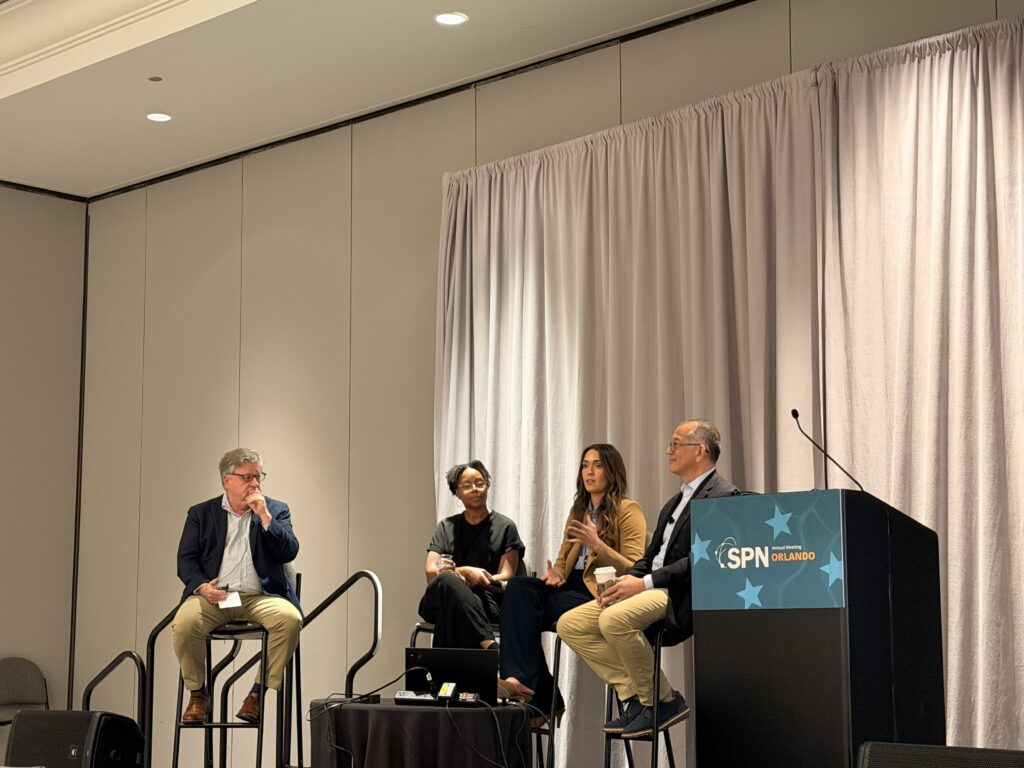
Mattox introduced two providers, one who founded a homeschool hybrid that operates near downtown Tampa, the other for a private school set on a 10-acre farm in Lakeland.
The third panelist, Ron Matus, director of research and special projects at Step Up For Students, also shared stories of programs across the state that he has written about since Florida lawmakers converted all scholarship programs to education savings accounts in 2023. Those include a Panhandle ranch school near the Alabama line, where students dehorn cattle and administer blood tests alongside classes in reading, math, science and social studies, as well as a South Florida couple who teach science with surfing and skateboarding.
“Much of the rest of the country is still trying to understand school choice. In Florida, we are moving from school choice to education choice in a big way,” Matus said.
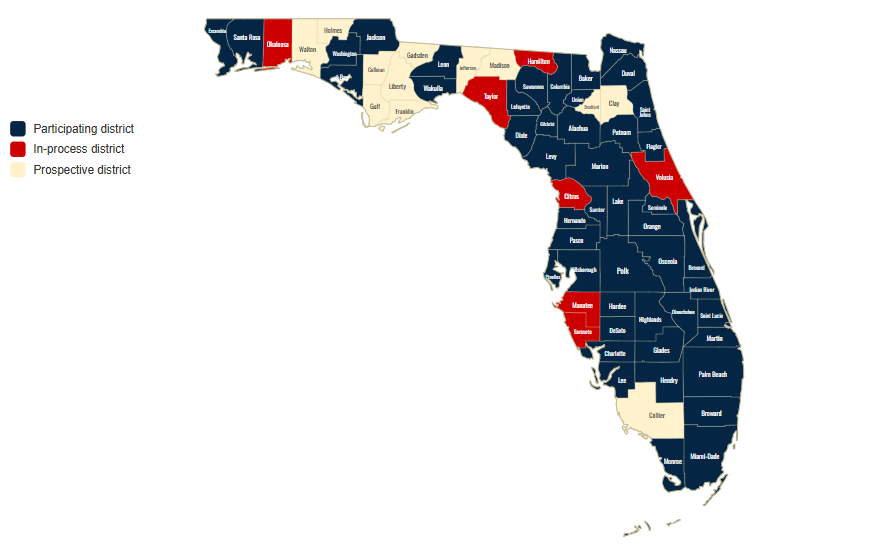
For example, more than half of Florida students are now in something other than their zoned neighborhood schools. Of those, about 150,000 students are doing “a la carte learning,” receiving state support through scholarships that allow parents to mix and match education options outside of full-time schools, he said.
The point of the discussion was to share the experience of Florida with a national audience of policy researchers to show what is possible when states adopt education choice policies that give families maximum flexibility.
Tiffany Thenor shared her story of how she left her public school teaching job because she wanted the freedom to help students keep their sense of imagination and creativity as they learned core academics. In 2016, she and a friend opened a microschool in Lakeland they named WonderHere.
“The idea is that wonder should not be confined or restricted to the classroom,” said Thenor, whose program won a Yass Prize grant last year. “We created WonderHere as a proof point that we do not have to suffocate joy, wonder, and curiosity out of children in order to get strong academic outcomes.”
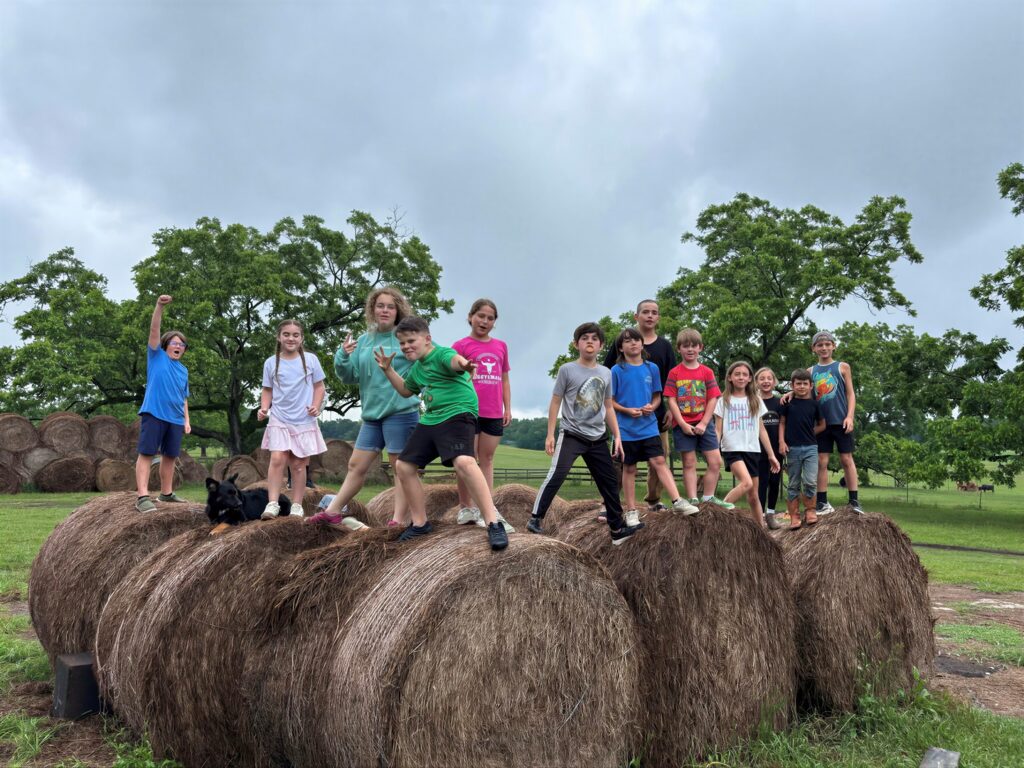
The main campus sits on a farm and serves 140 students. Students start the day with chores and gardening, then move into traditional academics taught in a non-traditional format. They spend at least two hours a day outside in nature and play.
Most of the students receive state education choice scholarships, so they complete required testing at the end of the year. WonderHere has been so successful that it has now expanded to locations in other parts of Florida and in South Carolina.
The county school district where the initial campus is located recently started a pilot project to offer the WonderHere model in the same public school where Thenor formerly taught.
Marissa Hess described her homeschool hybrid model, which also emphasizes learning through play. But unlike WonderHere, which is located near a small city, her Urban Cottage Educational Collaborative is only two miles north of bustling downtown Tampa in a federal opportunity zone.
“That might not seem ideal for a traditional outdoor program, but that was exactly the point,” said Hess, who was homeschooled and taught in U.S. public, private and Montessori schools. While living abroad before moving back to Tampa, she observed forest schools in northern Europe.
She said today’s children go to urbanized playgrounds that have rubberized mulch, shallow slides and no teeter-totters, no opportunities for risk, climbing or physical development.
At the same time, she heard many parents talking about their children’s occupational therapy and sensory processing challenges.
She wondered if children had enough opportunities to build core strength, ride bikes, climb, dig, and move their bodies in natural ways.
In 2015, she created Urban Cottage as a part-time program to help meet those needs. The forest playschool program uses a garden on a main thoroughfare. Hess worked with an occupational therapist and a speech pathologist to create a two-year curriculum focused on language, vocabulary, fine and gross motor development, speech and vocabulary.
In the playschool program, children grow food, compost, and learn through nature and play. There is a constant waitlist.
“Millennials are very aware of outdoor education and want it for their children because they remember part of their own childhood being analog. They want to bring back traditional childhood experiences: playing in dirt, digging holes, building strength, and learning how to grow food.”
Urban Cottage also offers instruction in core subjects, after-school tutoring and summer camps. It employs experienced educators and subject-matter experts, including professionals in science, physics, literature, and research. Classes are small and ability-based, with students often working closely with experts in one-on-one or small group settings. She intentionally caps enrollment to preserve nimbleness, allowing the program to adapt quickly to student and family needs. She also described Urban Cottage as a positive environment for teachers, giving educators freedom to teach in meaningful ways.
Hess is now working on partnerships with art studios, therapy services and other a la carte providers located near Urban Cottage to create an eco-system that offers families access to multiple services in one area.
Matus pointed out that private providers aren’t the only ones benefiting from the new era of education freedom. Public schools can participate in the new marketplace rather than stand apart from it. Florida has not mandated that school districts offer a la carte courses, but 55 of 67 districts have signed up to do so with Step Up For Students. Districts can market underused classes, such as advanced courses or specialized labs, to scholarship and homeschool families while generating revenue.
The key takeaways were that education choice is no longer about letting families choose from among existing traditional schools but about making room for new kinds of learning. In Florida, that means programs being built around beaches, barns, gardens, buses, shared public school buildings, and neighborhoods.
For families, the promise is customization. For educators, it is the chance to build around their strengths. For policymakers, it is a reminder that flexible funding and flexible rules can expand supply in ways no single system could plan from the top down.
As Mattox said, Florida’s wildest “schools” may not be schools at all. But they may point to where the future of education choice is headed as other states follow Florida’s lead.
 Editor’s note: This commentary from William Mattox, director of the Marshall Center for Educational Options at the James Madison Institute, appeared Friday on RealClear Policy.
Throughout America, a very important – and highly racialized – conversation is taking place about overcoming injustice. Here in Florida, that conversation has often gone in a markedly different and very promising direction. And schoolchildren of color are among the greatest beneficiaries.
The conversation in Florida, at least as it pertains to education, has focused on what might be called “systemic privilege.”
If you are unfamiliar with this (de-racialized) mash-up term, try this: Go to a public forum and suggest that all families should be treated fairly – that all parents should have access to the per-pupil funds for their children even if they choose to educate them outside the public school system.
Then, watch the defenders of “systemic privilege” come out of the woodwork.
“You want to take money out of the public school system,” they’ll say. “We should be spending more on the public school system, not on school choice alternatives for students outside the system.”
To the defenders of “systemic privilege,” the system is more important than the students. And the people who benefit from the system’s privileged position matter more than the families trapped within its coercive tentacles.
Thankfully, here in Florida, a bipartisan (and multi-ethnic) coalition of leaders have been working to end “systemic privilege.” Over the last two decades, they have succeeded in adopting education choice policies that enable low- and middle-income parents to find the learning environment that best meets their children’s unique needs, aptitudes, and interests.
As a consequence, nearly half (48%) of all Florida K-12 students currently attend something other than their zoned public school. And the Florida Legislature just passed a measure adding 61,000 students to Florida’s K-12 scholarship rolls.
Lest there be any doubt, Florida still has some work to do – in education and in other areas. But the Sunshine State has done more to end “systemic privilege” than any other state. And Florida students are greatly benefitting.
In fact, Education Week now ranks Florida No. 3 in the nation in K-12 student achievement. A research team from Harvard and Stanford found that, over the last quarter-century, Florida students showed greater learning gains than the students in all but one other state (even though Florida increased per-pupil spending less than every other state!).
And a recent study found that the (mostly minority) students in Florida’s largest school choice scholarship program are more likely to go to college – and to graduate – than their public school peers.
So, the future is bright for Florida’s students – and not just for those taking advantage of Florida’s new learning options. In fact, a recent National Bureau of Economic Research study found Florida public school students showed significant academic improvement after school choice was adopted (presumably because greater competition spurred greater public school achievement).
In other words, Florida’s rising tide of education choice is lifting all boats. And while ending “systemic privilege” in K-12 education is not the only “justice” issue Americans should be concerned about, no other policy reform is apt to do more to alter the trajectory of the next generation than education choice.
During the civil rights era, the city of Atlanta used to boast that it was the City Too Busy to Hate. Considering its remarkable success in K-12 education, Florida now probably ought to be known as the State Too Busy Creating Bright Futures for All Our Students to Let Haters Divide Us Along Racial Lines.
Which may just be another way of saying, once again, that Florida is the Sunshine State.
"Blended learning." "Customized education." "Student-centered." It's hard to write about what's possible in the future of education without getting stuck in a morass of jargon and buzzwords.
William Mattox of the James Madison Institute has produced a new policy brief that paints a clearer picture of what those mind-fogging terms aim to describe.
Imagine middle and high schools that look more like college, where students set flexible course schedules. Picture community institutions offering individual courses, and parents working with school administrators to create unique educational paths for each child.
Mattox, the director of the Tallahassee think tank's J. Stanley Marshall Center for Educational Options, writes that these things are already happening at institutions like Circle Christian School, which was founded by a group of Central Florida homeschool parents. It now serves roughly 700 students in multiple locations, and boasts alumni with stories like this: (more…)
Florida's status. Matt Reed, Florida Today's editorial page editor, takes a look at NAEP data and the most recent Education Week Quality Counts report and concludes: "We obviously have room to improve. But our system is neither starving, as educators always say. Nor is it “broken” or “failing,” as reformers keep telling us."
Florida's status, Part II. Diane Ravitch's latest take, after quoting a Florida teacher at length: "There is no Florida miracle. Education has only gotten worse over the past few years, no matter how schools, districts and the state itself game the system. And, contrary to what the media will tell you, it is NOT teachers’ fault, unions’ fault, and I won’t even blame it on the kids or their parents this time. It is the fault of education “reform” led by Jeb Bush et al."
Charter schools. The South Florida Sun Sentinel writes up the bill that would require school districts to share unused or underused facilities with charter schools. Bad idea, editorializes the Palm Beach Post.
Gays and lesbians. The Lake County School Board considers rules that would keep a Gay-Straight Alliance from forming at a middle school. Orlando Sentinel.
Teacher evaluations. Tampa Bay Times on one impact (or not) of the new system in Hillsborough: "After years of planning and training, observation and deliberation, the first wave of firings has begun under a teaching-improvement project funded by the Bill & Melinda Gates Foundation. The tally: Three teachers." (more…)
Next steps. Florida should adopt parent triggers and education savings accounts to keep the reform momentum going, writes William Mattox at the James Madison Institute. Florida Voices.
More on teacher raises. Gov. Rick Scott’s proposal is “long overdue,” writes the Miami Herald. Teachers deserve it, writes the Tampa Tribune. Agreed, writes the Florida Times Union. A "major leap in his new commitment to education," writes the Tallahassee Democrat. A good deal if it’s part of a long-term commitment, writes the Fort Myers News Press. A "naked political ploy," writes the Orlando Sentinel: "The best teacher in Florida will get the exact same raise as the worst teacher in Florida. We're having trouble seeing the merit in that."
It clashes with other items on the education wish list, notes StateImpact Florida. "A lot of details need to be worked out," writes Sunshine State News. A tradeoff for pension ruling? asks Education Week. State Rep. Kevin Rader, D-Boca Raton, has filed legislation for a constitutional amendment that would push teacher salaries to the national average, notes SchoolZone. Florida PTA likes the idea, SchoolZone also notes. Scott talks up his plan at Twin Lakes Elementary in Tampa, reports the Tampa Bay Times, and at Gainesville High, reports the Gainesville Sun.
Teacher evals. Gradebook: Work in progress, lawmakers say. StateImpact Florida: Districts have flexibility, a DOE official tells lawmakers. Associated Press: Race and poverty have little impact on evaluation scores, a DOE official tells lawmakers. SchoolZone: SB 736 may need some work, Gov. Scott says. Florida Times Union: A Duval middle school principal accidentally emails evaluation ratings to her entire staff.
Teacher quality. Gradebook logs in the NCTQ report that gives Florida a B- on teacher prep. So does the Associated Press.
School spending. An audit finds the Broward school district’s transportation department is missing about $1 million worth of equipment, including “two 2009 Ford Explorers worth $20,000 each, six generators worth $300,000, a forklift valued at $20,000 and 250 radios each priced at more than $1,000,” reports the South Florida Sun Sentinel. The Franklin County school district's financial crisis could mean 19.5 percent pay cuts for employees, reports the Tallahassee Democrat. (more…)